Uncover the Secrets of the Medersa Bou Inania
Ever wondered what makes Medersa Bou Inania in Fez, Morocco, a timeless masterpiece of Islamic architecture?
This historic religious school, built in the 14th century, is famous for its intricate craftsmanship and stunning design. Exploring the medersa’s details, you’ll learn about its rich history and cultural significance. It’s a beloved landmark in Fez.
Exploring Medersa Bou Inania, you’ll uncover the secrets of its construction and its community impact. With its beautiful architecture and historical importance, Medersa Bou Inania Morocco attracts visitors worldwide.
The Historical Significance of Medersa Bou Inania
Medersa Bou Inania was built between 1351 and 1357. It shows the rich history of Fez, Morocco. Sultan Abu Inan Faris, a ruler of the Marinid Dynasty, commissioned it. He wanted to create a place for learning and spiritual growth.
The Founding by Sultan Abu Inan Faris
Sultan Abu Inan Faris ruled from 1348 to 1358. He built Medersa Bou Inania. His dream was to make it a center for learning and spiritual growth. The medersa was named after him, showing his importance in Fez’s history.
The Marinid Dynasty’s Architectural Legacy
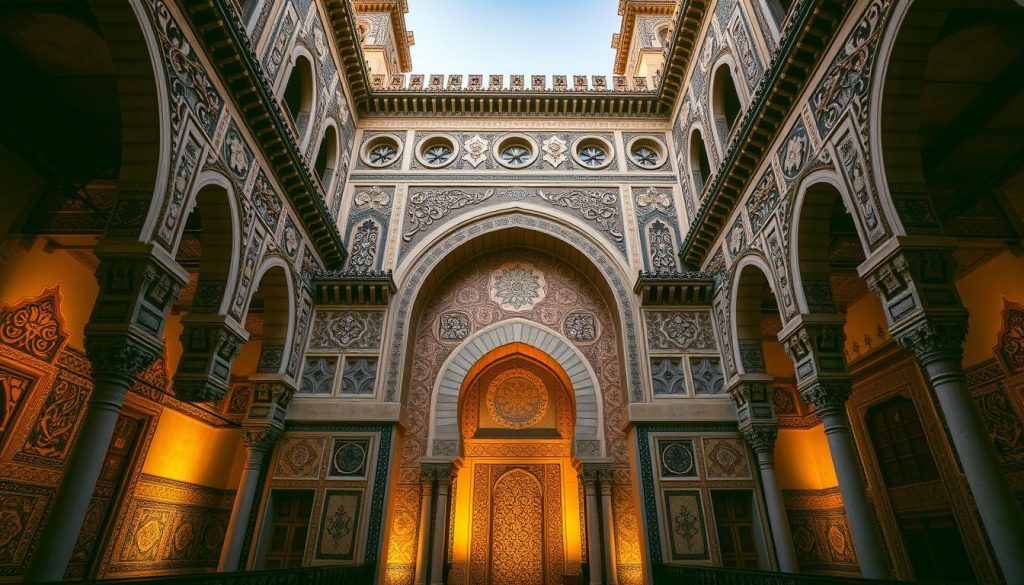
The Marinid Dynasty ruled Morocco from the 13th to the 16th century. They left a lasting mark on the country’s architecture. Medersa Bou Inania showcases their style, with zellij tilework, cedar wood carvings, and Arabic calligraphy.
Their architecture mixed Islamic, Andalusian, and Moorish styles. This created a unique cultural identity.
“The Marinid dynasty’s architectural achievements, such as Medersa Bou Inania, are a testament to their refined taste and cultural achievements.”
Timeline of Key Historical Events
| Year | Event |
|---|---|
| 1351 | Construction of Medersa Bou Inania begins |
| 1357 | Completion of Medersa Bou Inania |
| 1348-1358 | Reign of Sultan Abu Inan Faris |
Medersa Bou Inania has stood the test of time. It remains a key historical and cultural site in Fez. Its construction during the Marinid Dynasty shows the period’s architectural innovation and educational values.
Medersa Bou Inania Insights: Understanding Its Cultural Importance
Exploring Medersa Bou Inania’s history shows its big impact on medieval Morocco. It was a key cultural and historical site. It still draws visitors from all over.
Religious and Educational Functions
Medersa Bou Inania was a school and a spiritual place. It taught Islamic studies, law, and theology. It was crucial for Morocco’s religious and intellectual growth during the Marinid dynasty.
The medersa’s classes covered many Islamic sciences. It drew students from across the Islamic world. This made it a cultural and educational hub.
Social Impact in Medieval Morocco
Medersa Bou Inania was more than a school and mosque. It was a social center for medieval Morocco. It was a place for community events and helped the local people.
- Hosted community gatherings and celebrations
- Provided lodging for travelers and students
- Supported local artisans through its architectural projects
Transition from Active School to Historical Monument
Over time, Medersa Bou Inania changed from a school to a historical site. This change shows how Morocco’s education and religion evolved.
Now, it’s a symbol of the Marinid era’s architecture and culture. It draws tourists and historians.
Architectural Marvels of the Medersa
When you enter the Medersa Bou Inania, you’re hit with its stunning beauty. It’s a work of Andalusian-Moorish design. This style shows the cultural mix between Andalusia and Morocco in the medieval times.
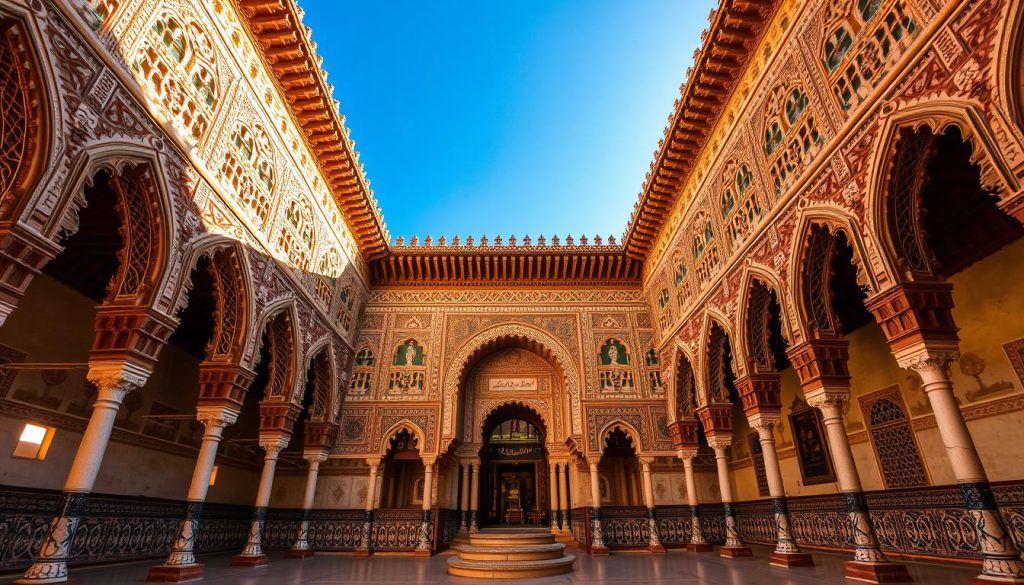
Andalusian-Moorish Design Elements
The Medersa Bou Inania combines Andalusian and Moorish styles. This mix creates a unique look that’s both beautiful and historically important.
Geometric Patterns and Their Meanings
The medersa’s geometric patterns are more than pretty. They symbolize the infinite and God’s unity in Islamic beliefs.
Structural Innovations
The architects used arches and domes in the Medersa Bou Inania. These features add beauty and make the space feel grand and spacious.
The Intricate Zellij Tilework
The Medersa Bou Inania is famous for its intricate Zellij tilework. Zellij tiles form complex patterns. This tilework showcases Moroccan skill and adds color to the medersa.
| Feature | Description | Significance |
|---|---|---|
| Zellij Tilework | Intricate, glazed tile patterns | Moroccan craftsmanship, geometric patterns |
| Cedar Wood Carvings | Intricately carved cedar wood | Decorative element, symbol of craftsmanship |
| Arabic Calligraphy | Inscriptions from the Quran and other texts | Religious significance, decorative element |
Cedar Wood Carvings and Arabic Calligraphy
The Medersa Bou Inania is also known for its cedar wood carvings and Arabic calligraphy. The carvings feature floral and geometric designs. The calligraphy includes Quran verses and other texts, adding spiritual depth.
The Stunning Courtyard: Heart of the Medersa
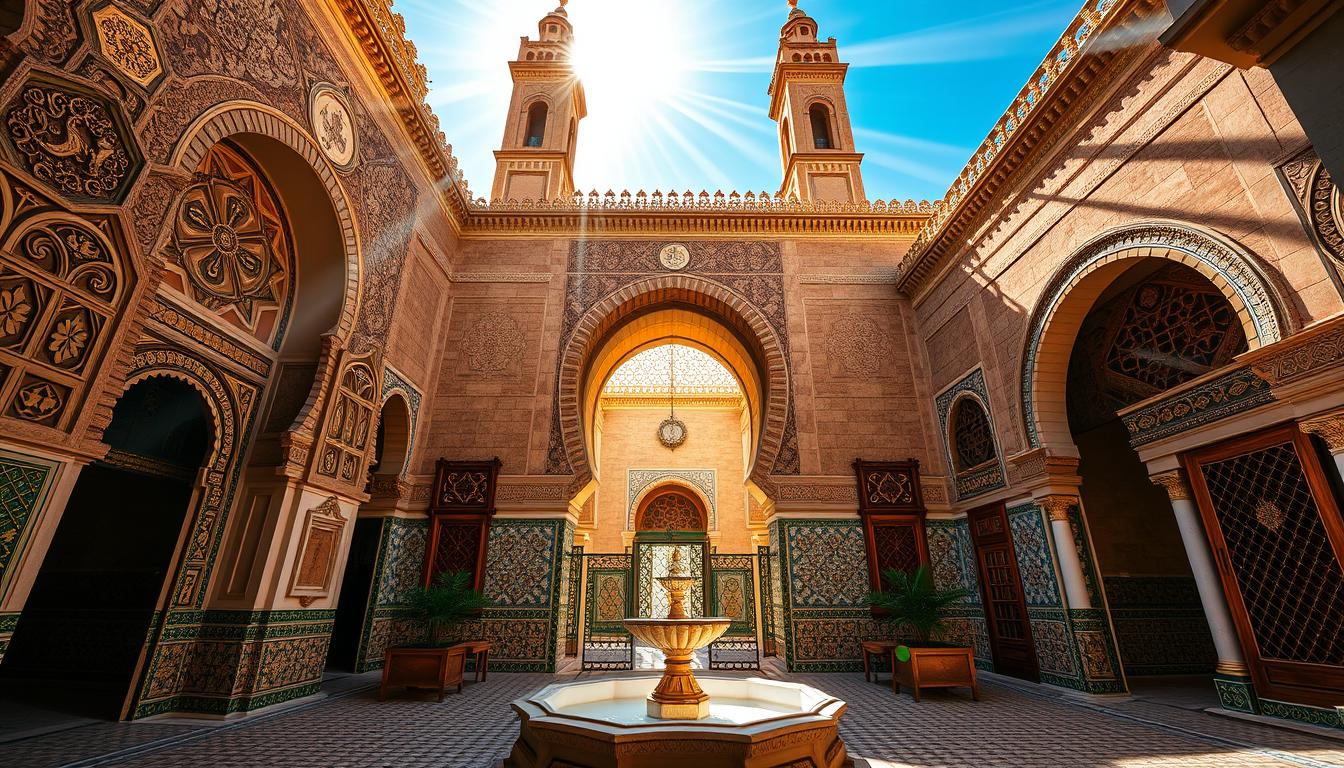
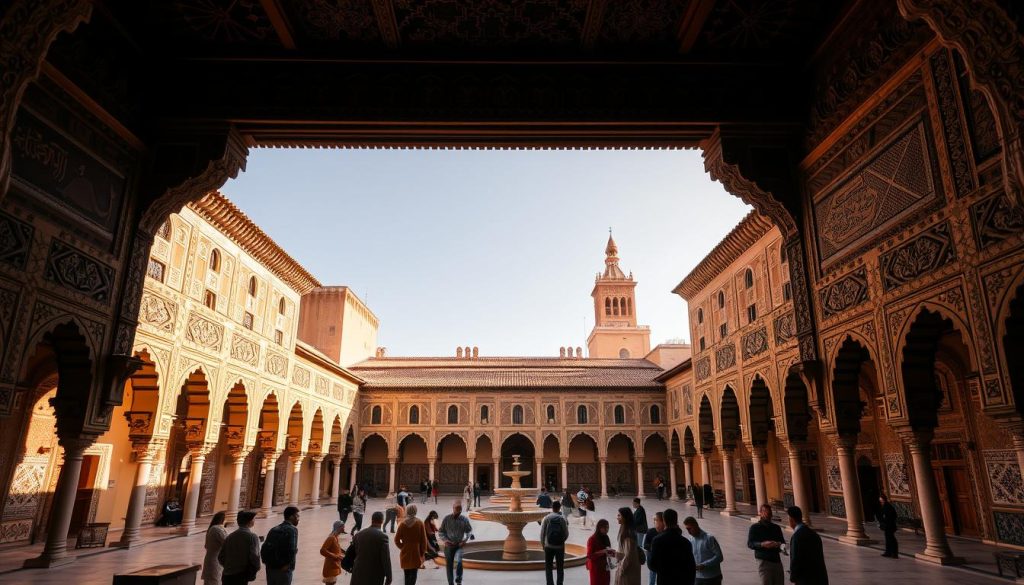
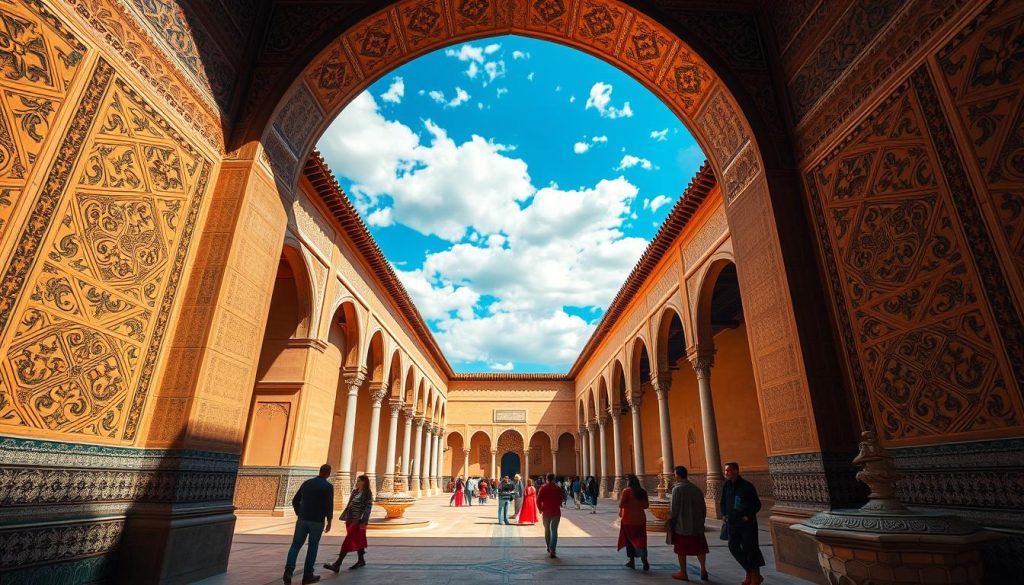
At the heart of Medersa Bou Inania lies a stunning courtyard. It shows the beauty of Moorish design. This central space is not just beautiful but also the spiritual and functional heart of the medersa.
The Central Fountain and Ablution Area
The courtyard is dominated by a beautiful central fountain. It’s surrounded by an ablution area where students once washed their hands. The water adds a soothing element, creating a calm atmosphere for study and contemplation.
The ablution area shows the medersa’s role as a place of religious learning. The intricate tile work and carvings highlight the importance of cleanliness in Islamic practice.
Symbolic Elements in the Courtyard Design
The courtyard’s design is full of symbolic elements. These elements reflect Islamic culture and learning. They are not just for show; they carry deep meaning.
Astronomical and Mathematical References
The courtyard’s layout and architecture include references to astronomy and math. These elements show the advanced knowledge and interest in sciences during the Marinid era.
Religious Symbolism
The courtyard is also rich in religious symbolism. Geometric patterns, calligraphy, and other decorations remind students and visitors of their faith’s spiritual dimensions.
| Symbolic Element | Meaning |
|---|---|
| Geometric Patterns | Representation of the unity and harmony in Islamic belief |
| Arabic Calligraphy | Conveys religious texts and messages, enhancing the spiritual ambiance |
| Central Fountain | Symbolizes purity and the life-giving aspect of knowledge |
Exploring the Prayer Hall
When you enter the Medersa Bou Inania, you’re welcomed by the prayer hall. It’s a place that shows the spiritual and cultural heart of the building. The prayer hall is a work of art in Islamic architecture, with important elements that make it stand out.
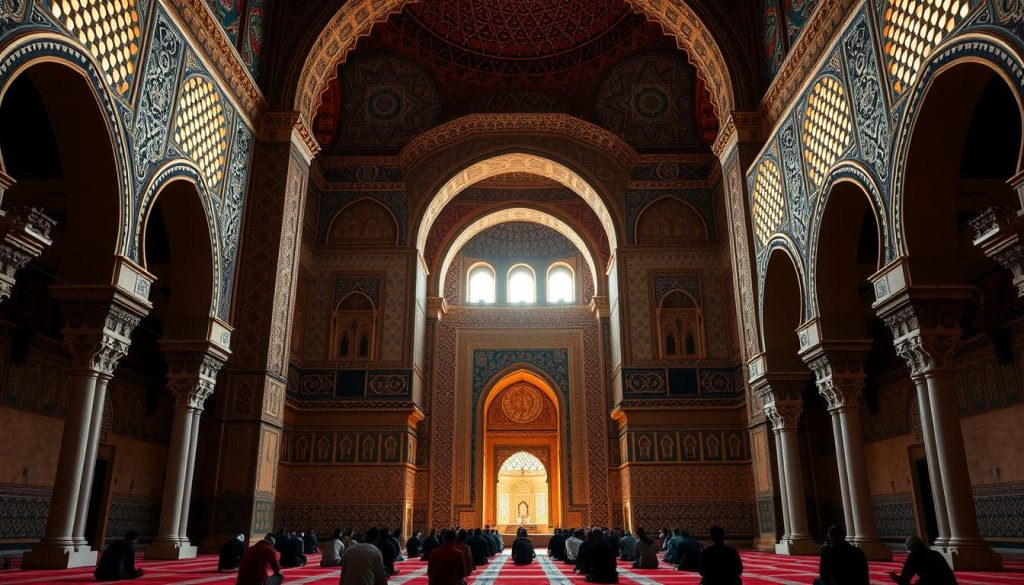
The Mihrab and Its Significance
The Mihrab is a key spot in the prayer hall. It points to Mecca, showing the direction for prayer. It’s covered in zellij tilework and cedar wood carvings, highlighting the role of prayer in Islam.
The Mihrab is not just a guide for prayer. It also shows the skill of the Marinid era.
The Minbar (Pulpit) Design
Next to the Mihrab is the Minbar, where sermons are given. The Minbar is famous for its detailed design. It has geometric patterns and Arabic calligraphy.
This piece is not just for speaking. It’s also a key part of the prayer hall’s beauty.
Decorative Elements and Religious Symbolism
The prayer hall is filled with decorations like zellij tiles, cedar wood carvings, and Arabic calligraphy. These decorations are more than pretty. They hold deep religious meaning, adding to the prayer hall’s spiritual feel.
- Intricate geometric patterns that symbolize the unity and perfection of Allah.
- Arabic calligraphy that adorns the walls with verses from the Quran, emphasizing the importance of scripture in Islam.
Student Life at the Medersa Through the Centuries
Walking into the Medersa Bou Inania is like stepping into a long tradition of learning. It has been a key place for Islamic education, drawing students from all over.
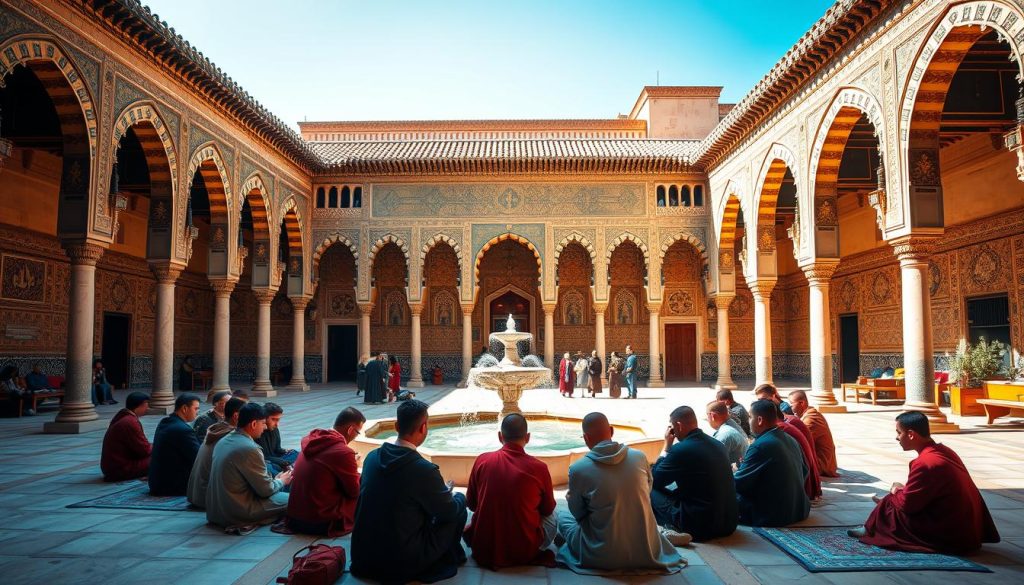
Daily Routines and Religious Studies
At Medersa Bou Inania, students followed strict daily routines. They started with prayers and then learned about Islamic law, Arabic, and more. The goal was to deeply understand Islam.
Living Quarters and Facilities
The medersa had living quarters for its students. It was simple but worked well for studying. Students lived together, building a strong community.
Notable Scholars and Their Contributions
Medersa Bou Inania is home to many notable scholars. They taught and wrote works that shaped Islamic thought. Their work still inspires today.
Learning about students at Medersa Bou Inania shows us Fez’s rich educational past. It highlights the medersa’s role in Islamic learning.
The Unique Water Clock of Bou Inania
Exploring Medersa Bou Inania reveals a remarkable feature: the water clock. Known as Dar al-Magana, it’s a sign of medieval ingenuity. It was crafted by the Marinid dynasty’s skilled craftsmen.
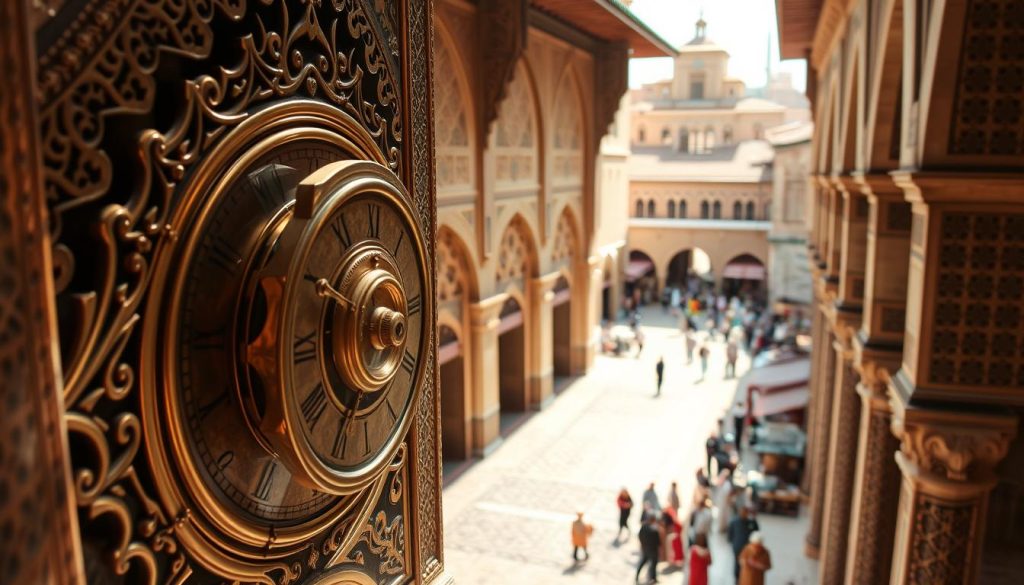
Mechanics and Function of the Hydraulic Clock
The water clock works by water flowing from one container to another. This flow, driven by gravity, marks the hours of the day. Its design shows a deep understanding of fluid dynamics and time.
“The water clock was not only a practical tool but also a symbol of the advanced technological capabilities of the time,” as noted by historians. Its presence in Medersa Bou Inania highlights the importance of timekeeping in religious and educational institutions.
Historical Significance and Technological Innovation
The water clock of Medersa Bou Inania is a significant innovation of the 14th century. It shows the advanced engineering skills of the time. It also points to the cultural exchange and knowledge transfer along ancient trade routes.
The clock’s complex mechanism and its continued operation, even centuries later, show the ingenuity and craftsmanship of its makers. Learning about this device, you’ll see the mix of function and art that defines Medersa Bou Inania.
Restoration Efforts and Preservation
The Medersa Bou Inania has seen many restoration projects over the years. These efforts aim to keep its cultural heritage alive. As a key historical site in Fez, Morocco, it needs constant care to stay intact.
Major Restoration Projects Through the Centuries
Many restoration projects have helped the Medersa Bou Inania stay strong. These efforts have kept it a lively part of Morocco’s culture. Restoration efforts have fixed broken tiles, restored wood carvings, and preserved the beautiful calligraphy on its walls. 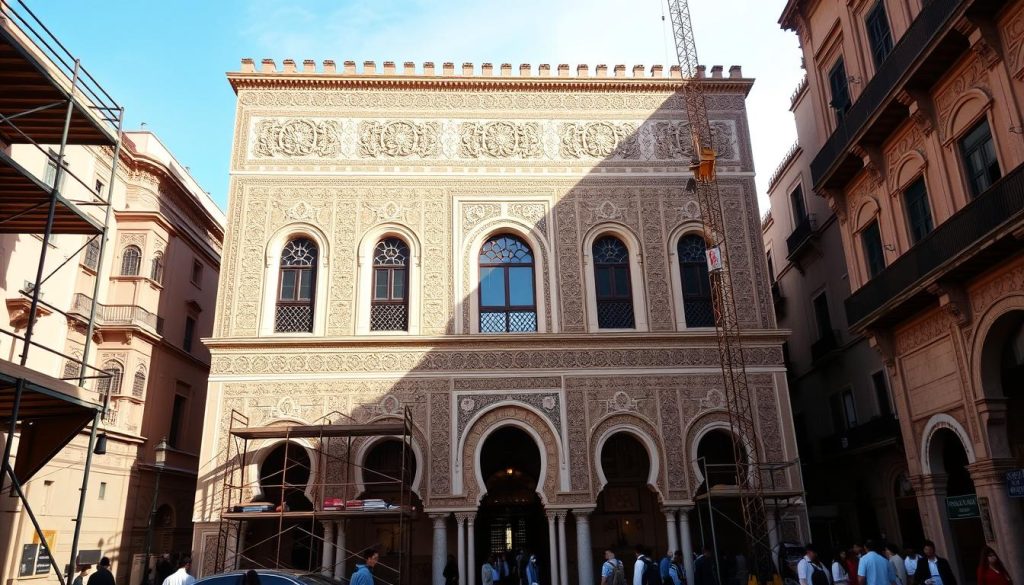
Current Conservation Challenges and Solutions
Even with past successes, the Medersa Bou Inania still faces challenges. Weather and erosion are big threats. To fight these, experts use new methods and traditional materials to keep it real.
‘Preserving historical monuments like Medersa Bou Inania requires a delicate balance between modern conservation techniques and respect for traditional craftsmanship.’
Visiting Medersa Bou Inania Today
Planning a visit to Medersa Bou Inania in Fez, Morocco? You’ll want to know the key details. This historic site showcases the Marinid dynasty’s architectural skill. It’s a living piece of history that draws visitors from everywhere.
Practical Information for American Visitors
For a smooth and respectful visit, here are some tips for American visitors:
Opening Hours and Admission Fees
Medersa Bou Inania is open from 9:00 AM to 6:00 PM. Admission costs about 20 MAD, or $2 USD. Always check the current hours before you go, as they might change.
Dress Code and Cultural Etiquette
Dress modestly, covering your shoulders and knees. This shows respect for the local culture. Also, remove your shoes before entering some areas.
Guided Tours vs. Self-Guided Exploration
Guided tours offer insights into Medersa Bou Inania’s history. But, exploring on your own lets you enjoy the atmosphere at your pace. Choose what suits your interests and learning style.
Best Times to Visit and Seasonal Considerations
The best time to visit is from October to March. The weather is cooler, perfect for walking. Expect more people during peak seasons.
Photography Guidelines and Lighting Tips
Photography is okay, but be considerate of others. Avoid tripods and flash in crowded spots. The best light is in the early morning or late afternoon, highlighting the medersa’s beauty.
Medersa Bou Inania in Context: Exploring Fez’s Religious Architecture
Exploring Fez’s historic city, Medersa Bou Inania’s significance becomes clear. It’s not just a single monument. It’s part of a larger tapestry of religious sites that define Fez’s culture and spirit.
Comparison with Other Medersas in Morocco
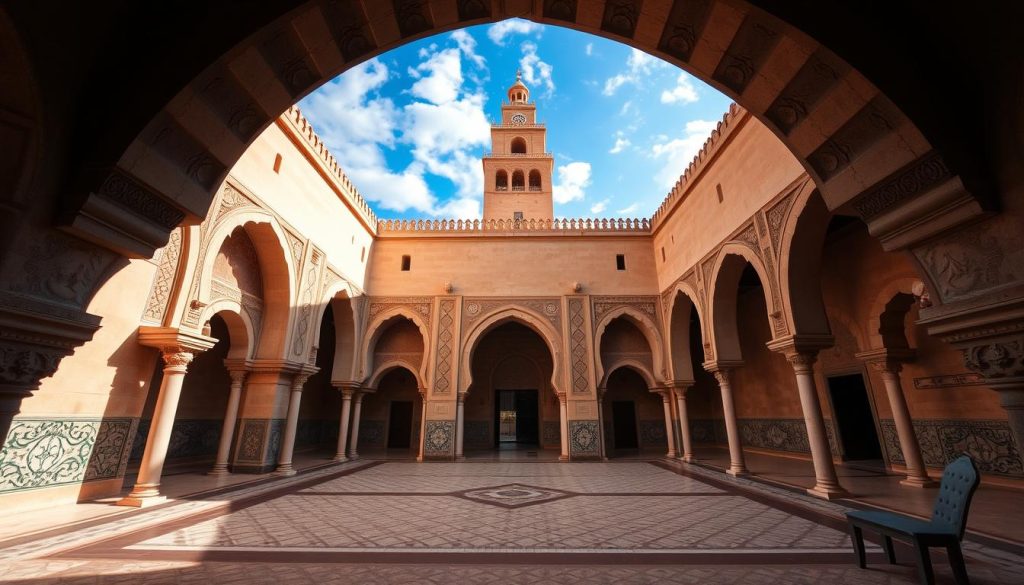
Medersa Bou Inania is often compared to other medersas in Morocco. Places like Marrakech and Meknes have their own styles. But Medersa Bou Inania is special for its zellij tilework and cedar wood carvings. It shows the best of Marinid dynasty craftsmanship.
The Medersa’s Place in Fez’s UNESCO World Heritage Site
Medersa Bou Inania is a key part of Fez’s UNESCO World Heritage Site. It helps make Fez a cultural and historical treasure. Since 1981, the Medina of Fez, where the medersa is, has been recognized as a World Heritage Site. This highlights its role in preserving Islamic architecture and education.
Recommended Itinerary for Exploring Fez’s Religious Sites
When you visit Fez, see Medersa Bou Inania as part of a bigger tour. Begin with the Al-Attarine Madrasa, known for its beautiful architecture. Then, visit the Mosque of Al-Qarawiyyin, one of the oldest universities in the world. End your tour at Medersa Bou Inania, where you can see its unique features in Fez’s rich religious heritage.
Conclusion: The Enduring Legacy of Medersa Bou Inania
Exploring Fez, Morocco, reveals the Medersa Bou Inania’s importance. It showcases the city’s rich culture and architecture. The insights from its history, design, and cultural value highlight its lasting impact.
The Medersa’s role as a religious and educational center is clear. Its Andalusian-Moorish design and Zellij tilework are stunning. Reflecting on its history and architecture, we see the skill and creativity that make it a cherished site.
Medersa Bou Inania’s legacy endures as a cultural and historical gem. Visiting this magnificent place, you see its beauty and help preserve it for others to enjoy.