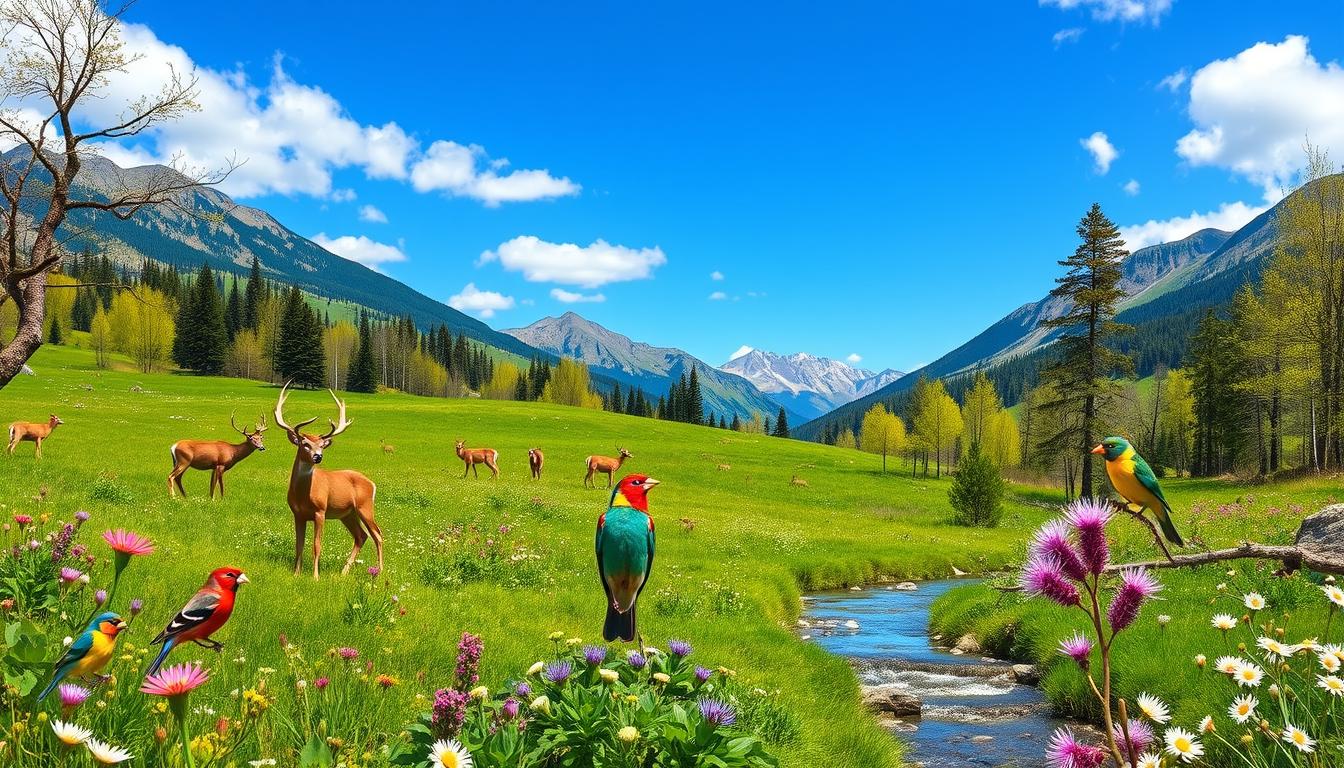
Spring Awakenings: Best Wildlife Watching Destinations in May
Get ready for nature’s grand revival! National parks burst with wildlife activity in spring. They offer amazing chances for wildlife watching and nature photography.
May brings magic to America’s wilderness. Animals wake from winter sleep and newborns take their first steps. Migrations reach their peak, turning parks into lively stages.
Yellowstone National Park leads this natural show. It’s a top spot for wildlife fans from mid-April to Memorial Day. Black bear sightings are common in Tower Junction and Lamar Valley.
Spring wildlife watching has special perks. As snow melts, animals become more visible. Migration patterns start up. Bison begin their calving season.
Photographers can catch rare animal behaviors. Nature lovers can see moments not often visible in other seasons. Your spring adventure is waiting!
Grizzly bears wake from hibernation. Wolf pups explore their new world. These national parks promise unforgettable encounters with nature’s wonders.
Understanding Peak Spring Wildlife Activities in National Parks
Spring brings life to national parks. Animals become active, creating exciting wildlife watching opportunities. The landscape wakes up, offering remarkable eco-tourism experiences.

Spring months reveal unique animal behaviors. Creatures emerge from hibernation and start mating rituals. They also begin raising their young, providing extraordinary moments for nature lovers.
Best Times for Wildlife Observation
Timing is key for wildlife watching. Early morning and late afternoon are the most active periods. Here are the best times to observe:
- Dawn (5:30-7:30 AM): Peak activity for most mammals
- Dusk (6:00-8:00 PM): Predators become more visible
- Mid-morning: Ideal for bird watching
Essential Wildlife Photography Equipment
Capturing spring wildlife requires special gear. The right tools can enhance your observation experience. Here’s what you need:
| Equipment | Recommended Specifications |
|---|---|
| Binoculars | 10×42 magnification, waterproof |
| Camera | DSLR with telephoto lens (300mm+) |
| Tripod | Lightweight, compact travel model |
Safety Guidelines for Wildlife Encounters
Wildlife watching requires respect and caution. Always keep a safe distance from animals. Seek professional guidance when exploring national parks.
“Observe from afar, respect wildlife habitats, and never approach or feed wild animals.” – National Park Service
- Stay at least 100 yards from large mammals
- Use telephoto lenses for close-up shots
- Carry bear spray in applicable regions
- Follow park ranger instructions
Proper preparation ensures a great spring wildlife experience. It also helps maintain personal safety and environmental conservation. Follow these guidelines to make the most of your adventure.
Yellowstone National Park: A Spring Wildlife Paradise
Spring transforms Yellowstone into a wildlife wonderland. As snow melts, the park bursts with animal activity. Nature lovers flock here to witness this incredible awakening.

Spring offers unique wildlife viewing with fewer crowds. Temperatures warm in April, making exploration more comfortable. Visitors can enjoy intimate encounters with nature during this time.
Lamar Valley Wildlife Spotting Guide
Lamar Valley, known as “America’s Serengeti,” offers amazing wildlife viewing. Field guides help identify various species in this vibrant season.
- Wolf packs hunting in open meadows
- Coyotes roaming the landscape
- Herds of elk and their newborn calves
Grizzly and Black Bear Viewing Areas
Spring marks bears’ emergence from hibernation. Conservation efforts have made Yellowstone ideal for observing these magnificent creatures. Key viewing areas include:
- Hayden Valley
- Fishing Bridge
- Tower Junction
Bison Calving Season Highlights
Bison calving season is a magical wildlife experience in Yellowstone. From late April to early May, adorable red dogs (baby bison) explore the grasslands.
“Witnessing a newborn bison calf is like watching nature’s most incredible performance.” – Wildlife Expert
Adult male bison can weigh up to 1,800 pounds. Females average around 1,300 pounds. Each cow typically bears one calf yearly, creating a spectacular display.
Grand Teton National Park’s Spring Migration Spectacle
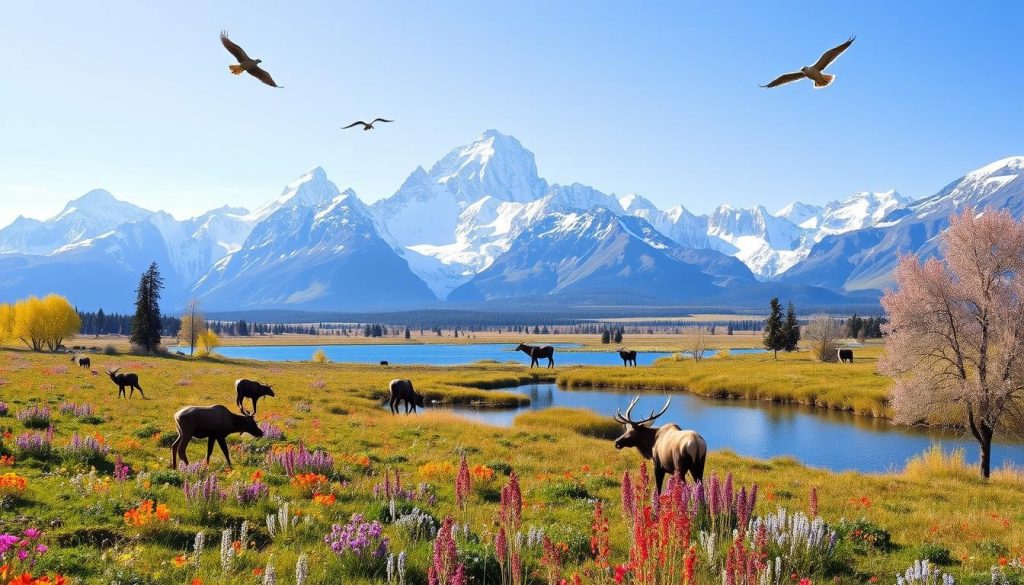
Spring transforms Grand Teton National Park into a wildlife watching haven. Over 300 bird species thrive in this ecosystem. Nature lovers can witness remarkable migration activities during this season.
Wildlife watching peaks from April to May in Grand Teton. Migratory patterns create stunning natural displays. Hiking trails offer great spots to observe diverse animal populations.
“The spring migration is nature’s grand symphony, where every wing beat and animal movement tells a story of renewal and survival.” – Local Wildlife Expert
Spring Migration Highlights
- Peak bird migration occurs between April and May
- Approximately 50 different bird species can be spotted in a single day
- Optimal wildlife watching times are early morning and late afternoon
Bird Watching Opportunities
| Bird Species Category | Approximate Numbers | Best Viewing Locations |
|---|---|---|
| Migratory Birds | 150+ Species | Taggart Lake Trail |
| Resident Birds | 50+ Species | Jenny Lake Area |
| Rare Sightings | 15-20 Unique Species | Cascade Canyon Trail |
Professional bird watching tours cost $110 to $250 per person. These guided experiences boost chances of spotting rare species by 30%. Small group sizes ensure personalized wildlife watching adventures.
Pack hiking gear and binoculars for your spring migration adventure. Follow the park’s wildlife viewing guidelines. Respect nature to fully enjoy Grand Teton’s spectacular spring migration.
Wildlife Watching Hotspots in Jackson Hole, Wyoming
Jackson Hole is a prime spot for wildlife watching. This Wyoming region offers unique chances to observe animals in spring. Its geography creates a natural haven for diverse species.
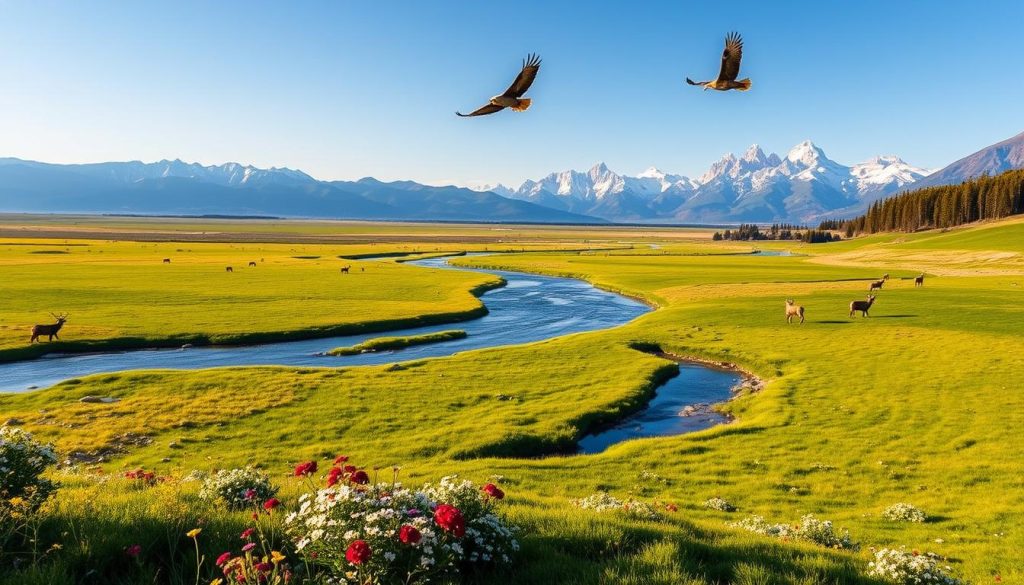
Spring brings Jackson Hole to life. Animals become active, drawing nature lovers and photographers worldwide.
Premier Observation Points and Hiking Trails
Boost your wildlife watching by visiting these key spots:
- National Elk Refuge – spanning 25,000 acres
- Grand Teton National Park trails
- Bridger-Teton National Forest pathways
- Snake River corridor
Local Guided Wildlife Tours
Expert guides offer insights into animal behaviors and migration patterns. Local tours increase your chances of seeing wildlife up close.
| Wildlife Species | Viewing Probability | Best Observation Time |
|---|---|---|
| Elk | High | Dawn/Dusk |
| Bison | Medium | Early Morning |
| Moose | Low | Late Afternoon |
Seasonal Wildlife Movement Patterns
Knowing animal movements helps you spot wildlife. In spring, animals wake from hibernation and start migrating.
Key events include:
- Bison calving season from early April through July
- Elk herds becoming more active
- Migratory bird species returning to the region
“Wildlife watching in Jackson Hole is not just an activity, it’s an immersive experience into nature’s most intimate moments.” – Local Wildlife Guide
Stay safe by keeping your distance: 25 yards for most wildlife, 100 for predators. Bring binoculars and wear earth-toned clothes.
Move quietly to improve your chances of seeing wildlife. This will help you blend in with nature.
Alaska’s Spring Wildlife Renaissance at Chena Hot Springs

Alaska’s spring transformation creates unique wildlife watching opportunities. Increasing daylight hours breathe new life into the landscape. This creates perfect conditions for nature photography and wildlife observation.
Chena Hot Springs shines as a top spot for wildlife watching. As temperatures rise, the wilderness bursts with animal activity. Your spring adventure can reveal extraordinary encounters with Alaska’s diverse wildlife.
“Spring in Alaska is not just a season, it’s a wildlife renaissance waiting to be discovered.” – Alaska Wildlife Federation
Wildlife Highlights at Chena Hot Springs
- Emerging bear populations from winter dens
- Migratory bird arrivals in forest and tidal regions
- Active local bird species like chickadees and redpolls
- Potential gray whale migration observations
Conservation efforts protect these incredible habitats. The Arctic National Wildlife Refuge, established in 1960, spans 19.6 million acres. Your visit supports ongoing research and environmental preservation initiatives.
Photography and Observation Tips
- Bring medium-weight insulated clothing
- Use specialized wildlife photography equipment
- Maintain safe observation distances
- Check local wildlife movement patterns
Pro tip: April offers the driest month in Alaska, providing clearer skies and optimal viewing conditions for your wildlife watching adventure.
Bird Watching Paradise: Seasonal Migration Routes
North America buzzes with bird activity in spring. Migratory routes come alive with spectacular avian movement. Wildlife watchers can explore incredible paths showcasing nature’s remarkable seasonal journeys.
Bird watching reveals nature’s intricate rhythms. In spring, many species travel vast distances. This creates unique chances for wildlife observation and field guide exploration.
Sandhill Crane Migration Patterns
Sandhill cranes make an impressive migration across North America. These majestic birds typically follow these key routes:
- Central Flyway through Nebraska’s Platte River
- Rocky Mountain corridors
- Midwestern grassland regions
“Migration is a powerful reminder of nature’s incredible endurance and interconnectedness.” – Anonymous Ornithologist
Osprey Nesting Locations
Ospreys return to specific nesting sites with amazing accuracy. You can observe these remarkable raptors in:
- Coastal regions of Maine
- Great Lakes watershed
- Pacific Northwest river systems
Mountain Bluebird Spotting Guide
Mountain bluebirds herald summer with their bright plumage. You can find these beautiful birds in:
- Western mountain meadows
- Open grassland habitats
- Elevated prairie regions
With the right field guides and patience, your spring bird watching can be unforgettable. Explore North America’s diverse landscapes and discover amazing avian wonders.
Conservation Areas and Wildlife Sanctuaries
The U.S. has an impressive network of wildlife sanctuaries and conservation areas. These protected spaces shelter diverse ecosystems and provide critical habitats for numerous species. Over 570 National Wildlife Refuges offer incredible opportunities for eco-tourism and wildlife observation.
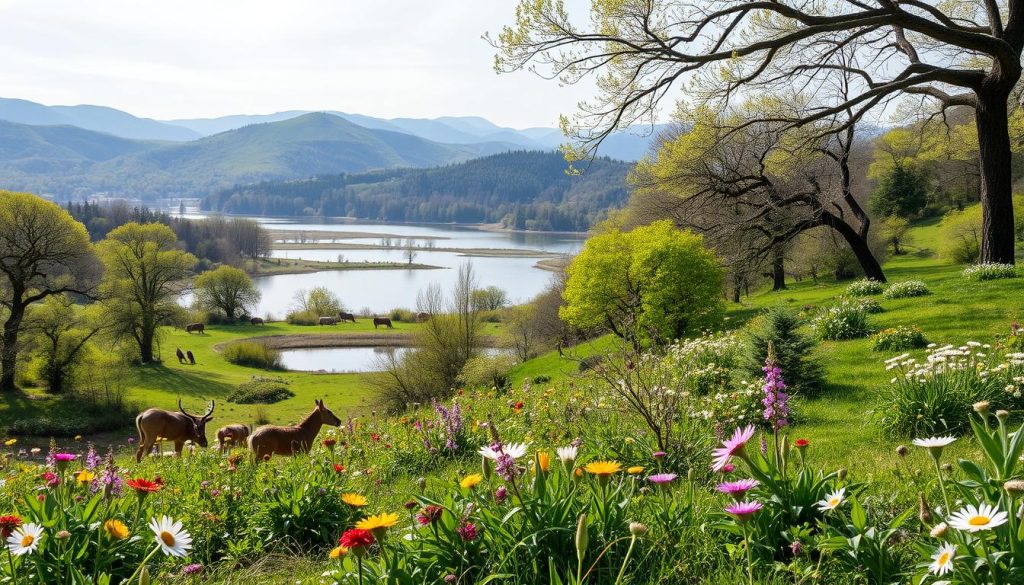
Wildlife sanctuaries are vital for preserving natural environments and supporting biodiversity. These protected areas serve multiple important purposes.
They protect endangered species habitats and maintain ecological balance. Additionally, they support scientific research and provide educational opportunities.
- Protecting endangered species habitats
- Maintaining ecological balance
- Supporting scientific research
- Providing educational opportunities
“Conservation is a state of harmony between men and land.” – Aldo Leopold
Visiting these remarkable conservation areas can enhance your spring wildlife watching adventure. The National Wildlife Refuge System offers diverse experiences, from coastal marshes to inland forests.
| Refuge Type | Number | Key Features |
|---|---|---|
| National Wildlife Refuges | 570+ | Nationwide habitat protection |
| Wetland Management Districts | 38 | Critical wetland ecosystems |
| Marine National Monuments | 5 | Ocean and coastal preservation |
Exploring these wildlife sanctuaries helps support conservation efforts directly. You’ll experience the incredible biodiversity of the United States firsthand. Each sanctuary offers unique chances for eco-tourism, wildlife photography, and connecting with nature.
Essential Equipment and Preparation for Wildlife Watching
Proper gear and planning are key for wildlife watching. Your success hinges on being well-equipped and informed about the environment you’ll explore.
The right tools can turn a good experience into an amazing one. Being prepared ensures safety and memorable encounters with nature.
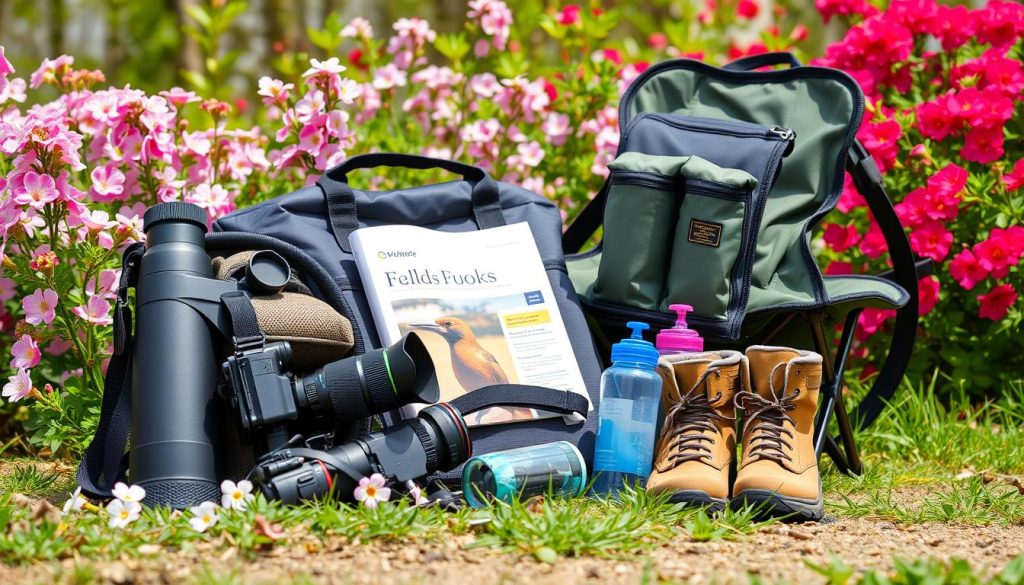
Recommended Gear Checklist
Before hitting the trails, gather these vital items:
- High-quality binoculars (8x or 10x magnification recommended)
- Comprehensive field guides specific to the region
- Lightweight, neutral-colored clothing
- Sturdy hiking boots
- Daypack with multiple compartments
Weather Considerations and Clothing
Spring wildlife watching requires smart clothing choices. Layer your outfits for easy adjustments. Choose colors that blend with nature.
Khaki, beige, and olive green are best for not disturbing wildlife.
“The right gear can transform a good wildlife watching experience into an extraordinary one.” – Wildlife Photography Expert
Navigation Tools and Resources
| Navigation Tool | Purpose | Recommended Brands |
|---|---|---|
| GPS Device | Location tracking | Garmin GPSMAP, Magellan |
| Topographic Maps | Terrain understanding | National Geographic, US Geological Survey |
| Compass | Direction navigation | Suunto, Silva |
Don’t forget to pack a first aid kit, high-SPF sunscreen, and non-perishable snacks. These items are crucial for your safety.
With proper preparation, you’ll have a safe and unforgettable wildlife adventure on scenic hiking trails.
Spring Wildlife Photography Tips and Techniques
Spring is a magical time for nature photography fans. Animals are active and landscapes burst with new life. Field guides offer tips to capture amazing wildlife moments during breeding season.
Wildlife watching becomes an art form in this vibrant season. Photographers can create stunning images by using the right techniques.
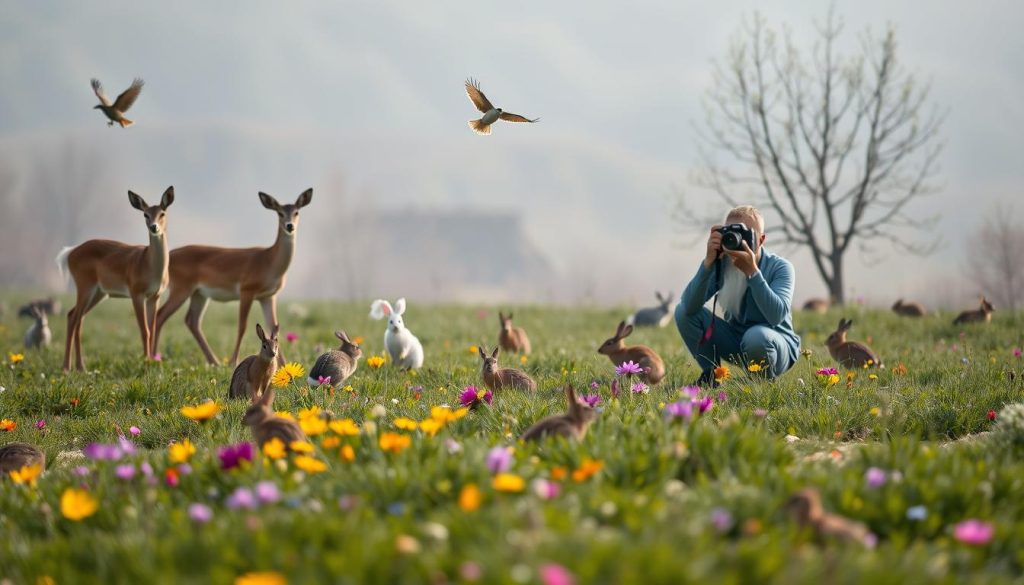
To master wildlife photography, you need to understand animal behavior and camera skills. Here are some key strategies to consider:
- Use fast shutter speeds (1/2000 second) to capture rapid animal movements
- Select optimal times for photography: early morning and late evening
- Maintain ethical distance from wildlife habitats
- Adjust camera settings based on lighting conditions
Camera settings are crucial for wildlife photos. Spring brings unique challenges with changing light and animal behaviors.
“The secret to great wildlife photography is patience and respect for your subjects.”
Here are some recommended camera settings for spring wildlife photography:
| Subject | Shutter Speed | ISO Range |
|---|---|---|
| Birds in Flight | 1/2000 second | 400-800 |
| Mammals | 1/500 second | 200-400 |
| Low Light Conditions | 1/250 second | 800-6400 |
Ethics are vital in wildlife photography. Always put animal welfare first. Keep a safe distance and avoid disturbing breeding seasons.
Pro tip: Research wildlife behaviors and migration patterns to catch perfect photo moments.
Responsible Wildlife Watching Guidelines
Wildlife watching requires respect and careful planning. Your approach can impact conservation efforts and animal habitats. Understanding the balance between human curiosity and wildlife preservation is crucial.
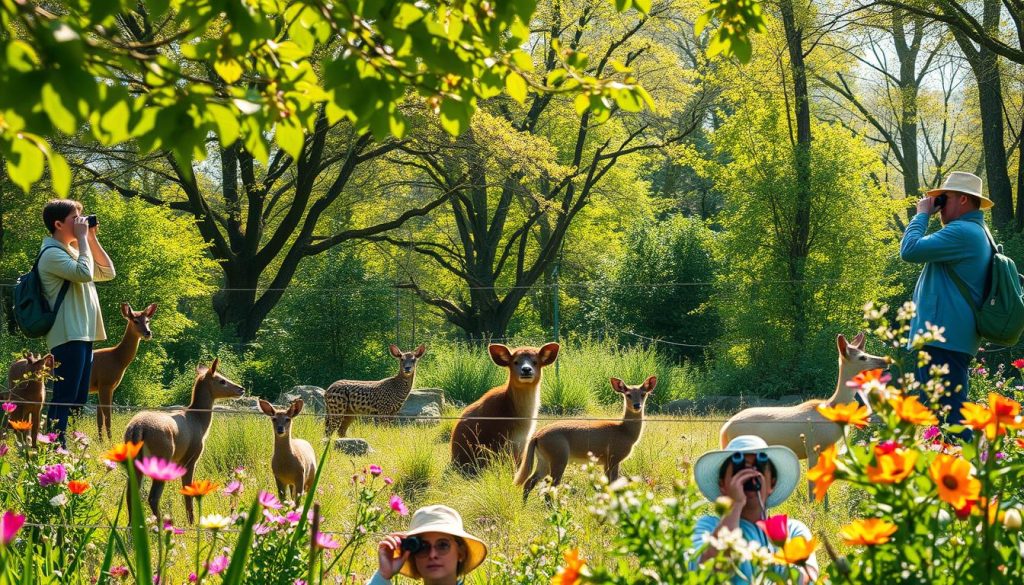
Maintaining Safe Distances
Protecting wildlife starts with keeping proper distances. Different species need unique safety zones to prevent stress. National parks and sanctuaries often provide specific guidelines.
- Keep at least 100 yards from large mammals like bears and bison
- Maintain 50 yards from smaller animals and bird nesting areas
- Use binoculars or telephoto lenses for closer views
- Never approach or feed wild animals
Environmental Impact Awareness
Your wildlife watching habits affect ecosystem health. The Marine Mammal Protection Act and Endangered Species Act guide responsible interactions.
“Every step you take in nature leaves a footprint – make it a gentle one.” – Wildlife Conservation Expert
| Wildlife Behavior Indicator | Potential Disturbance Sign |
|---|---|
| Head-bobbing | Increased stress levels |
| Rapid movement | Feeling threatened |
| Loud vocalizations | Defensive response |
Local Regulations and Permits
Each wildlife spot has its own rules. Look up permit needs before your eco-tourism trip. Many areas limit viewing to 30 minutes to reduce animal stress.
- Check specific park guidelines before visiting
- Obtain necessary permits in advance
- Follow designated wildlife viewing areas
- Support local conservation initiatives
Responsible wildlife watching isn’t just about observation – it’s about preservation, respect, and creating meaningful connections with nature.
Conclusion
Spring wildlife watching is more than a vacation. It’s a chance to bond with nature and support conservation. National Parks showcase vibrant ecosystems that sustain our planet’s biodiversity.
Ethical wildlife watching turns observation into active conservation. Responsible practices help protect vulnerable species and their habitats. Your mindful approach minimizes human impact while creating meaningful experiences.
Every wildlife encounter is a privilege. Memories from national parks represent a commitment to preserving natural ecosystems. Your respect can spark awareness about wildlife conservation and sustainable tourism.
Wildlife watching invites exploration and growth. Your journey adds to the global story of environmental stewardship. Embrace this chance to connect with nature and become a wildlife protection advocate.