Best Time to Visit Greece: Weather & Less Crowds
If you’re planning a trip to Greece, you may be wondering when is the best time to visit for the perfect combination of weather and fewer crowds. Greece is a popular tourist destination year-round, but certain times of the year offer better conditions, depending on your preferences and priorities.
Whether you’re interested in sunny beaches, exploring historical sites, or experiencing local festivals, this guide will help you determine the ideal time to visit Greece. We’ll explore the different seasons, weather patterns, and popular tourist activities to help you plan a memorable vacation.
By the end of this article, you’ll have a clear understanding of the best time to visit Greece for the weather and fewer crowds, and be ready to plan your dream vacation in this stunning Mediterranean destination.
Seasons in Greece
When planning a trip to Greece, it’s important to know what to expect from each season. Greece has a Mediterranean climate, which means mild winters and hot summers, but each season has its unique weather patterns and cultural experiences.
| Season | Best Time to Visit | Weather | Popular Tourist Activities |
|---|---|---|---|
| Spring | April to mid-June | Mild and pleasant temperatures with occasional rain | Flower festivals, hiking, beach activities, historical site visits |
| Summer | Mid-June to August | Hot and dry weather with occasional heatwaves | Beaches, water sports, island hopping, nightlife |
| Fall/Autumn | September to mid-November | Mild temperatures with occasional rain and storms | Wine festivals, olive harvest, hiking, cultural events |
| Winter | December to March | Cool temperatures with occasional snow in the mountains | Skiing, holiday celebrations, visiting historical sites without crowds |
If you’re looking for a balance between good weather and fewer crowds, consider visiting Greece during the shoulder seasons of spring and fall. However, if you’re a beach enthusiast, summer is the ideal time to visit Greece for that sun-kissed skin. Keep in mind that popular tourist destinations can be crowded and expensive during peak seasons, so plan accordingly.
Spring in Greece
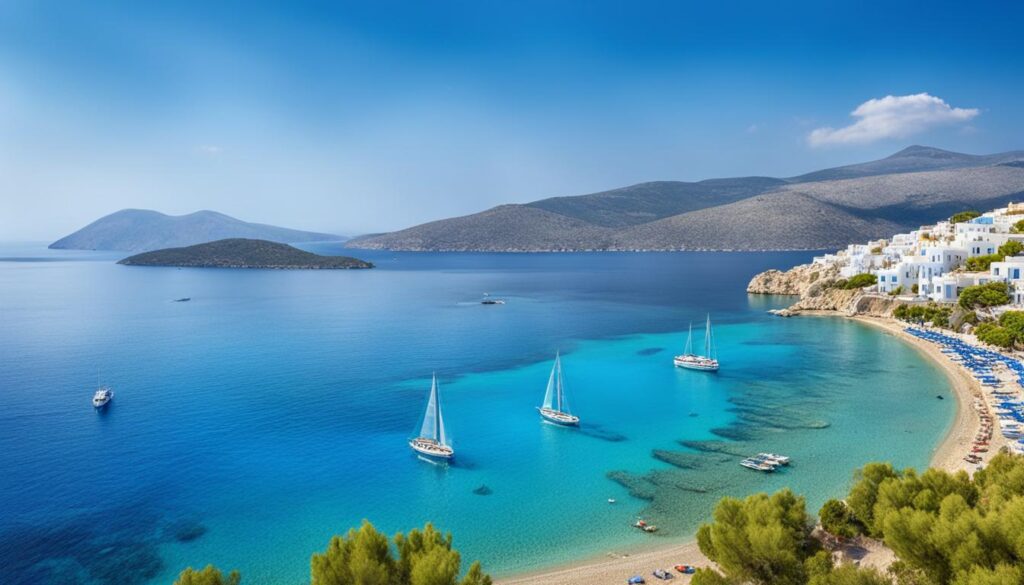
Springtime is considered by many to be the best time to visit Greece, offering pleasant weather conditions and fewer crowds compared to the peak summer months. The weather in Greece during spring is mild, with comfortable temperatures averaging between 15°C to 25°C, making it a great time to explore the country’s charming towns and ancient landmarks.
The picturesque Greek landscapes burst into bloom during the spring season, covering the hillsides with colorful flowers and lush greenery. From the stunning Caldera cliffs of Santorini to the idyllic beaches of Crete, Greece’s natural beauty is at its finest during this time of the year.
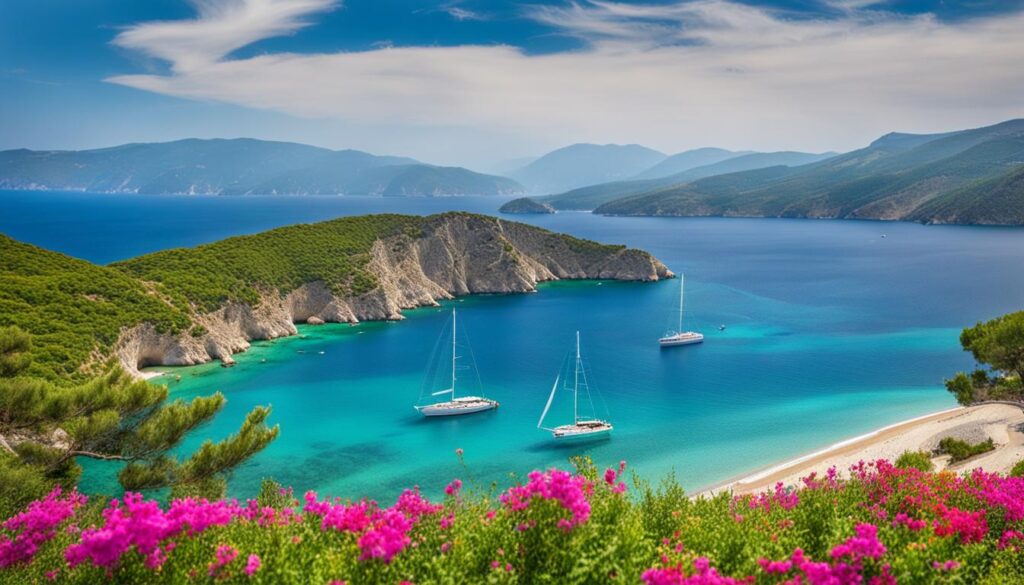
Spring is also the perfect time to enjoy an outdoor activity in Greece, including hiking, biking, and sailing, without being subjected to the scorching heat of summer. You can also take advantage of the low tourist season to enjoy the sights and sounds of Greece’s big cities like Athens or Thessaloniki, without the crowds that usually populate them.
“The Greek islands are stunning in any season, but spring may be the best, with wildflowers and empty beaches.”
– Rick Steves
Spring Festivals in Greece
Spring is also a time of celebration in Greece, with many traditional festivals taking place throughout the country. One such event is Easter, which is a significant religious holiday in Greece celebrated with vibrant processions, feasting, and fireworks. On the island of Corfu, visitors can experience the lively custom of “Pot Throwing” on the morning of Holy Saturday, where locals toss pots out of their windows to celebrate the end of the fasting period.
| Festival | Location | Date |
|---|---|---|
| Greek Orthodox Easter | Nationwide | April |
| May Day | Nationwide | 1st May |
| Rose Festival | Greek island of Rhodes | May |
Overall, spring in Greece offers the perfect combination of pleasant weather, fewer crowds, and exciting events, making it an ideal time to plan your Greece vacation.
Summer in Greece
Summer in Greece is a dream come true for many visitors. If you’re looking for warm weather and long sunny days, this is the perfect time to visit. The temperature can range from 25°C to 40°C, depending on the location. In Athens, temperatures can soar, but you can escape the heat by heading to nearby beaches or islands.
If you’re interested in experiencing Greece’s lively beach culture, summer is the best time to visit. From famous party destinations like Mykonos to quieter beaches like Elafonisi Beach in Crete, there’s a beach for everyone. And if you’re a fan of water sports, you’ll find plenty of activities to keep you entertained. Snorkeling, scuba diving, and windsurfing are all popular options.
However, be aware that summer in Greece also means larger crowds and higher prices. Many tourists flock to Greece during this time, which can make popular destinations quite crowded. You’ll want to book accommodations and activities well in advance to ensure availability. And, while prices are still affordable compared to other European countries, it’s worth noting that prices for flights, accommodations and restaurants can be higher in popular tourist areas.
Overall, if you’re looking for a vibrant atmosphere and lively beach culture, summer in Greece is a great time to visit. Just make sure to plan accordingly and be prepared for larger crowds and higher prices.
Fall/Autumn in Greece
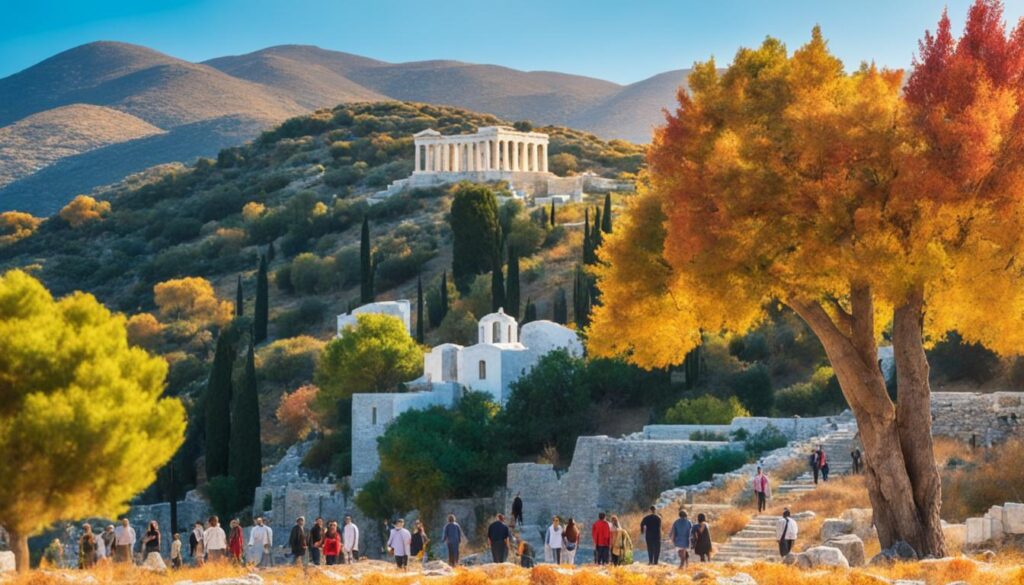
If you are looking for the ideal time to visit Greece, fall or autumn (September-November) can be a great option. During this season, you can enjoy mild weather with average temperatures ranging from 15 to 25°C (59-77°F) and fewer crowds compared to the summer months. Plus, you can experience local festivals and harvest traditions that are unique to this time of the year.
If you plan to visit Athens, you can attend the Athens International Film Festival or the Athens Marathon, the Authentic, both taking place in November. On the island of Chios, you can witness the traditional mastic harvest, while on the island of Crete, you can participate in the gastronomical celebration of the Tsikoudia festival.
Don’t forget to pack accordingly with a mix of both warm and cool clothing, as temperatures can fluctuate throughout the day. Also, keep in mind that some tourist sites may operate on limited schedules during the off-season, so plan your itinerary accordingly.
Weather Conditions in Fall/Autumn
To help you plan your trip, here is an overview of the weather conditions in Greece during the fall/autumn season:
| Month | Average High/Low Temperature (°C) | Average Sea Temperature (°C) | Average Rainfall (mm) |
|---|---|---|---|
| September | 26/17 | 24 | 30 |
| October | 21/13 | 22 | 70 |
| November | 17/9 | 20 | 90 |
As seen in the table, the average temperature starts to cool down in September but remains mild, making it a great time to visit Greece. It is important to note that rainfall increases in October and November, so waterproof gear may come in handy.
Winter in Greece
If you’re looking for a unique experience in Greece, consider visiting during the winter season. While it may not be the typical time for tourist travel, winter in Greece offers its own set of special attractions and activities. Not to mention, the ideal time to visit Greece is different than during peak summer season with its more extreme weather and larger crowds.
Best Time to Visit Greece:
Winter in Greece usually lasts from December to February, although sometimes it can start as early as November and extend into March. One of the major advantages of winter travel is the significantly fewer tourists, making it the ideal time to visit if you want to avoid crowds and enjoy the quieter side of Greece.
Weather in Greece:
Winter in Greece can be mild and rainy, with average temperatures around 10-15°C (50-59°F) in the lowlands and coastal regions, while the mountainous inland areas can be much colder and experience snowfall. This variation in weather creates a great opportunity to try different activities, from exploring the snow-capped peaks of Mount Olympus or one of the many ski resorts, to thermal spa retreats located in places such as Edipsos, Loutraki, and Aedipsos on the island of Evia.
Ideal Time to Visit Greece:
The ideal time to visit Greece during the winter season would be early December, which allows you to experience the holiday festivities that fill the capital, Athens, and other cities with vibrant decorations and light displays. It’s easy to get into the holiday spirit with the smell of roasting chestnuts, street markets, and traditional music echoing through the streets.
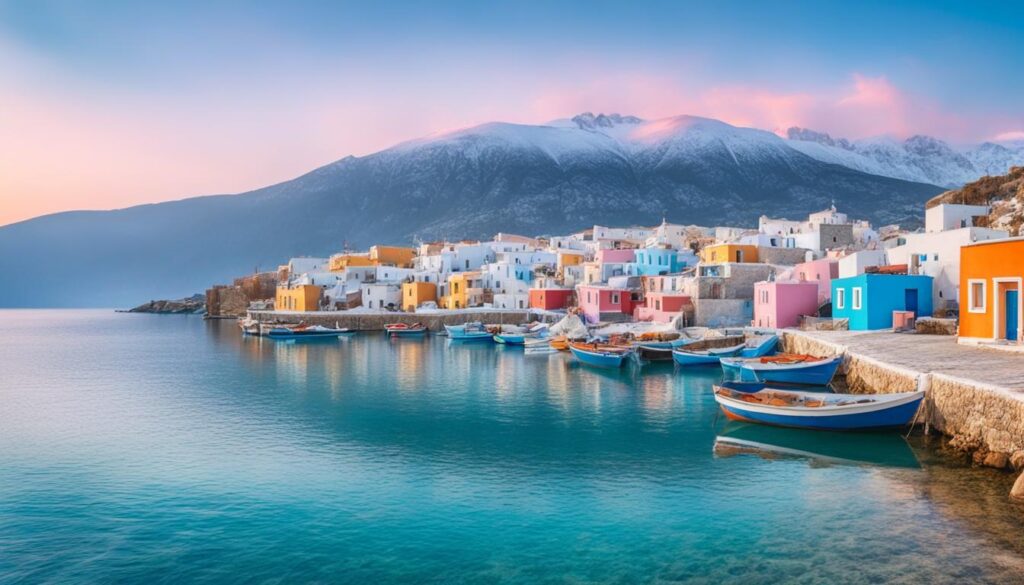
“Winter in Greece offers visitors a unique opportunity to experience its cultural wonders and beautiful landscapes without the crowds of peak summertime tourism.”
The Best Months to Visit Greece
Planning your Greek vacation is not complete without finding the best time to visit Greece. The weather and the level of tourist activity are important factors to consider when deciding on the perfect time to visit Greece. Here is a month-by-month breakdown of the best times to visit:
| Month | Reasons to Visit |
|---|---|
| March | Beginning of spring, mild weather, and fewer tourists. Great time to explore ancient sites and museums in Athens. |
| April | Spring blooms and comfortable weather. Ideal for hiking in the hills and valleys of Greece’s countryside. |
| May | Warm and sunny weather. Perfect for visiting Greece’s stunning beaches and island hopping. |
| June | Peak season and high tourist activity. Hot temperatures perfect for beach days and lively nightlife. |
| July | High temperatures and lively beach culture. Perfect for those seeking a summer paradise with abundant sunshine. |
| August | Peak season and high tourist activity. Sunny weather and vibrant nightlife, but expect bigger crowds and higher prices. |
| September | Milder temperatures and fewer crowds than in peak season. The sea water is still warm for swimming and great for island hopping. |
| October | Pleasant weather, fewer tourists, and stunning autumn colors. Ideal for those looking for a more relaxed and authentic Greek experience. |
| November | Serene landscapes and mild weather. Perfect for exploring Greece’s famous olive groves and vineyards. |
| December – February | Less tourist activity and the opportunity to experience Greece’s winter traditions, such as Christmas and New Year’s celebrations. Great time to visit the mountains for winter sports, too. |
There you have it! You can now choose the best time to visit Greece, based on your preferences and interests. Whether you are looking for a hot summer vacation or a quiet and authentic experience, Greece has it all.
Avoiding Crowds in Greece
Undoubtedly an alluring destination, Greece is often crowded with tourists, especially during the peak season. However, you can still avoid the crowds and make your Greek vacation as peaceful and serene as possible. Below are some tips and strategies to avoid the crowds:
Choose Less Popular Destinations
In Greece, there are plenty of off-the-beaten-path destinations that are often overlooked by tourists. Consider visiting smaller islands or less popular towns and villages to relax and take in the stunning views Greece has to offer.
Visit During Shoulder Seasons
If possible, plan your trip to Greece during the shoulder seasons – spring and fall – when the crowds are thinner and the prices are lower. You’ll still be able to enjoy beautiful weather and fewer crowds while experiencing Greece’s rich cultural and historical offerings.
Plan Your Activities Wisely
It’s important to plan your activities carefully to avoid crowds. Consider visiting popular tourist attractions early in the morning or late in the afternoon to avoid the crowds. Book your tickets in advance to avoid long lines and make the most of your time exploring Greece.
Tip: If you’re planning to visit the Acropolis in Athens, book your tickets online in advance to skip the long lines and avoid the crowds.
By following these tips and strategies, you can avoid crowds and experience the true beauty of Greece on your next vacation.
Weather in Greece
When planning your trip to Greece, it’s essential to know what kind of weather you can expect during your stay. Typically, Greece experiences a Mediterranean climate with hot summers and mild winters.
The best time to visit Greece for warm weather is undoubtedly during the summer months from June to August. At this time, you can expect temperatures to reach around 85°F (29°C) and plenty of sunshine. However, it’s worth noting that the beaches and popular tourist destinations can be crowded during this time.
If you prefer milder temperatures, spring and fall/autumn can be the best times to visit Greece. In spring (April to May), temperatures average around 68°F (20°C), and you can experience beautiful blooming landscapes across the country with fewer tourists around. Similarly, in fall/autumn (September to November), temperatures remain mild, averaging around 67°F (19°C), and you can find fewer crowds and more affordable prices than summertime.
Winter in Greece (December to February) can be chilly, with temperatures averaging around 51°F (11°C). While you won’t get a typical beach vacation during these months, Greece offers excellent opportunities for winter sports such as skiing in the mountains. Plus, you’ll find many holiday celebrations and fewer tourists during this time.
Planning Your Greek Vacation
Congratulations, you’ve decided to visit Greece! Now it’s time to start planning your trip. This section will provide you with practical advice and tips to ensure your Greek vacation is unforgettable.
Book Accommodations in Advance
When traveling to Greece, it’s always a good idea to book your accommodations in advance. During peak tourist season, hotels and vacation rentals can fill up quickly, leaving you with limited options and potentially higher prices. By booking in advance, you can ensure you have a comfortable place to stay and at a reasonable price.
Create a Flexible Itinerary
While it’s essential to have a general plan for your trip to Greece, we recommend creating a flexible itinerary. This will allow you to adjust your plans based on unforeseen circumstances or sudden changes in your mood. By having some flexibility in your itinerary, you can make the most of your trip by taking advantage of unexpected opportunities or spending more time in areas that interest you.
Consider Transportation Options
When planning your trip to Greece, it’s essential to consider transportation options. While renting a car can give you more flexibility and independence, it can also be more expensive and challenging to navigate. Alternatively, public transportation is readily available and affordable, with options such as buses and ferries connecting you to various destinations in Greece.
Finally, don’t forget to take advantage of local expertise. Whether it’s asking your hotel staff for restaurant recommendations or talking to locals for hidden gems, their insights can enhance your experience and provide a unique perspective on Greek culture and traditions.
By following these tips and staying open to new experiences, you’ll be well on your way to planning the ultimate Greek vacation.
Exploring Greece’s Island Gems
Visiting Greece and not exploring its many islands is like not having a slice of pita with your gyro! From the popular and cosmopolitan to the secluded and romantic, Greece’s islands are some of the top vacation spots in Greece.
Some of the best-known islands include Santorini, which boasts stunning sunset views, Mykonos, known for its bustling nightlife, and Corfu, with its Venetian-style architecture and stunning beaches. But there are hundreds of other islands to discover!
Each island has its own unique charm, ranging from lively nightlife to quaint fishing villages, and from sandy beaches to rugged cliffs. Many of the islands have historical sites to explore, such as the ancient ruins of Delos on Mykonos or the medieval old town of Rhodes.
When planning your Greece vacation, consider visiting some of the lesser-known islands, such as Milos with its stunning rock formations, or Folegandros with its peaceful hiking trails and unspoiled beaches.
But when is the best time to visit each island? Here are some highlights:
| Island | Best Time to Visit |
|---|---|
| Santorini | May to October |
| Mykonos | June to September |
| Corfu | April to October |
| Milos | May to September |
| Folegandros | June to September |
Of course, these are just general recommendations, and each island has its own unique climate, events, and activities that might affect your decision. Be sure to research further to find the best time to visit the islands on your Greece itinerary.
Take a break from the mainland and discover the beauty of Greece’s islands.
Conclusion
Planning a Greek vacation can be a thrilling experience, but it’s important to choose the right time to visit in order to make the most of your trip. Whether you prefer warm summer days or cooler fall weather, Greece offers a diverse range of options for travelers of all kinds.
By taking into account the weather conditions and the level of tourist activity, you can plan a Greek vacation that meets your needs and exceeds your expectations. Consider visiting during the shoulder seasons or exploring lesser-known destinations to avoid crowds and save money on accommodations and activities.
Remember to plan your itinerary in advance, book your accommodations early, and consider transportation options to ensure a smooth and enjoyable trip. Whether you’re interested in exploring the ancient sites of Athens, discovering the island gems of the Aegean Sea, or simply soaking up the Mediterranean sun, Greece offers plenty of opportunities for adventure and relaxation.
So pack your bags, grab your sunscreen, and get ready for an unforgettable Greece vacation that will leave you with lasting memories of this beautiful and historic country.