Mastering Travel: How to Use the London Underground?
Are you planning a trip to London and wondering how to use the London Underground? Look no further, as we provide you with a comprehensive guide on navigating this iconic transit system. Whether you’re a first-time traveler or a seasoned pro, our essential tips and tricks will help you make the most of your journey. With our London Underground guide, you’ll be able to explore the city like a local in no time.
From purchasing tickets and understanding the fare system to etiquette and safety tips, we’ve got you covered. We’ll also provide insights into the extensive network of London Underground routes and lines, including the official London Underground map. Additionally, we’ll discuss the timetable and frequency of trains, as well as navigating the complex London Underground stations.
Our guide will also offer helpful tips and information for those who need assistance or have specific requirements while using the London Underground, such as traveling with luggage or disabilities. We’ll even highlight nearby attractions and landmarks that you can easily visit using this transportation system.
With our advice on planning your London Underground journey, including using online resources and mobile apps, you’ll be able to optimize your travel time. So, embrace the convenience of this iconic transit system and use our London Underground tips to explore everything that London has to offer. Happy travels!
Understanding the London Underground Network
The London Underground is an extensive transportation system that covers much of Greater London. With over 270 stations, it provides access to all corners of the city. Understanding the various routes and lines is crucial for navigating the system effectively.
London Underground Routes
The Underground is organized into several routes, each represented by a different color on the official map. Some routes cover large areas of London, while others are more localized. The routes are:
| Route | Color | Terminus Stations |
|---|---|---|
| Bakerloo | Brown | Harrow & Wealdstone / Elephant & Castle |
| Central | Red | Ealing Broadway / Epping / West Ruislip |
| Circle | Yellow | Hammersmith / Edgware Road |
| District | Green | Upminster / Richmond / Ealing Broadway |
| Hammersmith & City | Pink | Hammersmith / Barking |
| Jubilee | Grey | Stratford / Stanmore |
| Metropolitan | Purple | Amersham / Chesham / Uxbridge |
| Northern | Black | High Barnet / Edgware / Morden |
| Piccadilly | Dark blue | Heathrow / Uxbridge / Cockfosters |
| Victoria | Light blue | Walthamstow Central / Brixton |
| Waterloo & City | Turquoise | Waterloo / Bank |
London Underground Map
The official London Underground map is an essential tool for navigating the system. It is available in print form at stations and online. The map is designed in a way that makes it easy to understand, with each route represented by a different color.
It is important to note that the map is not to scale and does not show the exact distances between stations. However, it provides a clear overview of the network and the connections between different routes and lines.
Using the official map in conjunction with online systems such as Google Maps can help you plan your journey efficiently.
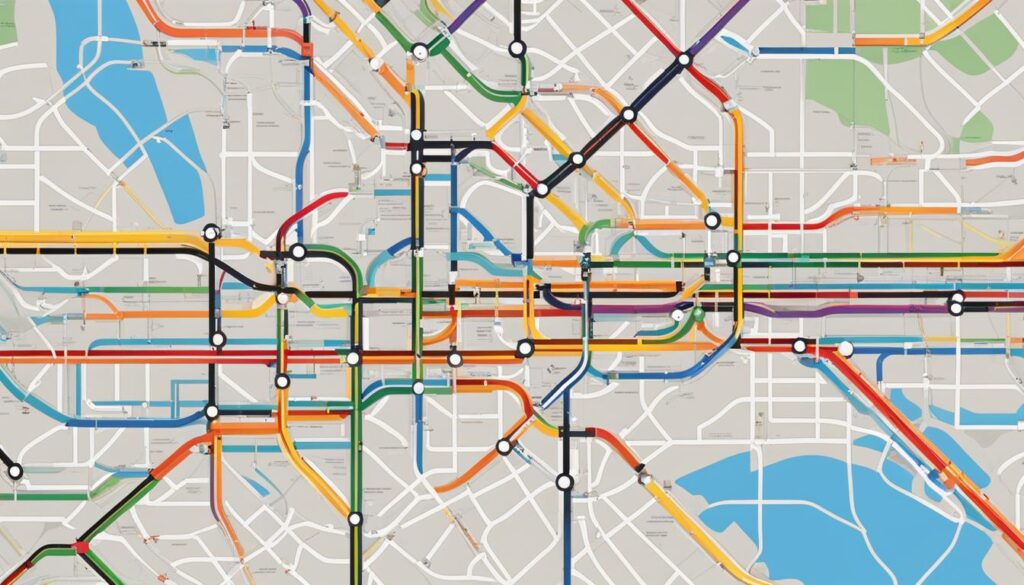
With a basic understanding of the routes and the map, you are ready to start exploring the London Underground system.
Purchasing Tickets and Fares
When using the London Underground, it’s crucial to understand the ticketing system and fares to avoid any issues during your travels. There are several options available to purchase tickets, including at the station, online, or using the TfL Oyster app.
The fare system is based on zones, with Zone 1 being the central area of London and zones 2-9 covering the outer areas. The fare varies depending on the zones you travel through and the time of day. Peak hours are from Monday to Friday, 6:30 am to 9:30 am and 4 pm to 7 pm, and off-peak hours are outside of these times and on weekends.
It’s important to note that purchasing a paper ticket is more expensive than using an Oyster card or contactless payment card. For example, a single journey in Zone 1 with a paper ticket costs £4.90, but using an Oyster or contactless payment card costs only £2.40 during peak hours and £2.40 during off-peak hours.
| Travelcard | Price (off-peak) | Price (peak) |
|---|---|---|
| Zone 1-2 | £6.80 | £9.50 |
| Zone 1-3 | £7.20 | £12.30 |
| Zone 1-4 | £10.40 | £13.90 |
| Zone 1-5 | £12.30 | £19.70 |
| Zone 1-6 | £13.50 | £22.00 |
Another option to consider is purchasing a Travelcard, which allows you to travel unlimitedly within a specific zone or a combination of zones for a set period. This can be cost-effective if you plan to use the London Underground multiple times during your stay.
Overall, understanding the ticketing system and fares is essential to make the most of your London Underground experience and save money in the process.

Etiquette and Safety Tips
When using the London Underground, it’s essential to follow certain guidelines to ensure the safety and comfort of yourself and others. Here are some important etiquette and safety tips to keep in mind:
Mind the Gap
When boarding or exiting a train, pay attention to the gap between the train and the platform. Be sure to step over it carefully to avoid tripping and falling.
Stand on the Right
When traveling on an escalator, stand on the right side to allow others to pass on the left. This is particularly important during rush hour when many people are in a hurry to catch their train.
Don’t Block the Doors
When boarding or exiting a train, allow others to get off before you get on. Once inside, move to the center of the carriage and avoid blocking the doors. This will allow others to enter and exit the train smoothly and quickly.
Keep Your Belongings Close
When traveling on the London Underground, it’s important to keep your belongings close to you at all times. Be aware of your surroundings and avoid displaying valuable items such as phones or jewelry.
Respect Quiet Zones
Some carriages on the London Underground are designated as quiet zones, where passengers are encouraged to refrain from making loud noises or talking on their phones. If you need to make a call or have a conversation, move to a different carriage.
Give Up Your Seat
If you see someone who is pregnant, elderly, or disabled, it’s polite to offer them your seat. This is particularly important if they are standing while you are seated.
Don’t Rush
While it’s important to be punctual, rushing can often lead to accidents and injuries. Allow yourself plenty of time to get to your destination, and give yourself time to navigate the station and find your platform.
Be Aware of Emergency Procedures
In the event of an emergency, it’s important to know what to do. Take the time to familiarize yourself with emergency procedures and exits, and listen for announcements or instructions from staff members.
By following these simple etiquette and safety tips, you can help ensure a smooth and pleasant experience for everyone on board the London Underground.
Timetable and Frequency of Trains
Knowing the London Underground timetable and the frequency of trains is essential for planning your journey and avoiding unnecessary waiting times. The trains typically operate from 5 am until midnight, with some variations on weekends and holidays. During peak hours, which are usually from 7 am to 9 am and 4 pm to 7 pm on weekdays, trains run more frequently, so plan accordingly to avoid overcrowded trains.
Each line of the London Underground has its own schedule, so it’s essential to check the timetable for your specific route. You can find the London Underground timetable on the official website or through various travel apps on your mobile device.

Keep in mind that the frequency of trains may vary depending on the line and time of day. Some lines run less frequently compared to others, and there may be longer waiting times on weekends or during off-peak hours.
To avoid any surprises, it’s always a good idea to check the timetable and plan your journey in advance. By doing so, you can save time and travel more efficiently.
Navigating London Underground Stations
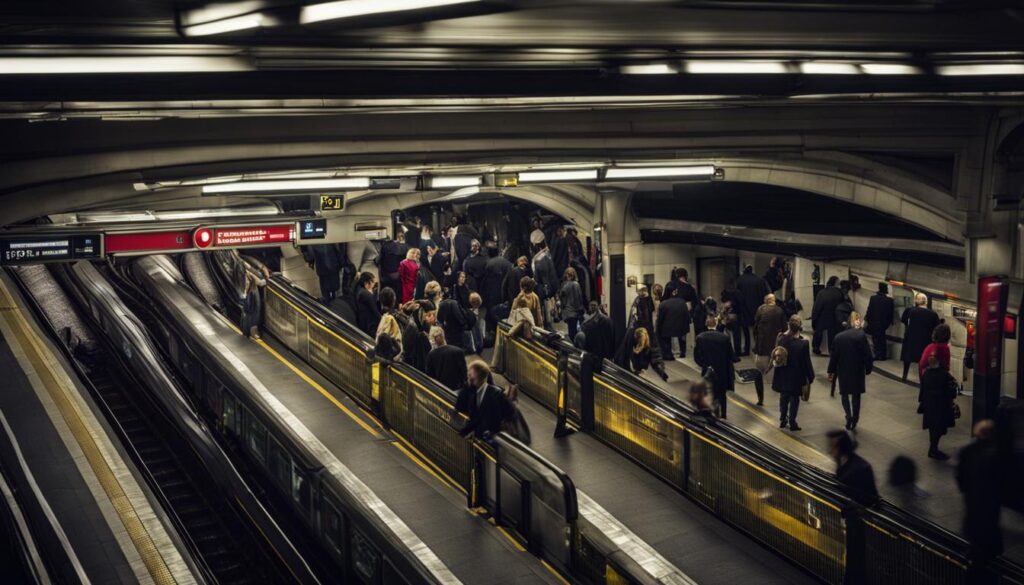
London Underground stations can be complex and busy, but with a bit of knowledge, you can navigate them with ease. Here are some essential tips to keep in mind:
Finding the Entrance and Exit
Before entering a station, make sure you know which entrance and exit you need to use. Some stations have multiple entrances, and not all of them connect to the same lines. You can find entrance and exit information on the official London Underground map or by using an online journey planner.
Following Signage
Once you’re inside a station, follow the signage to find the right platform and train. Signs will indicate the direction of travel, line, and final destination. It’s important to pay attention to these signs as some platforms may have trains going in different directions.
Using Escalators and Elevators
Many stations have escalators and elevators for convenience and accessibility. If you’re using an escalator, stand on the right side to allow others to pass on the left. If you’re traveling with luggage or have mobility issues, use elevators instead. Note that some stations may have limited elevator access, so plan accordingly.
Changing Trains
If you need to change trains, look for the signs indicating connecting lines. Some stations may require you to walk a bit to transfer, so allow enough time to reach your next train. Note that not all stations have step-free access, so check in advance if you require this service.
By following these tips, you’ll be able to navigate London Underground stations with confidence and ease.
Tips for Traveling with Luggage or Disabilities
Traveling on the London Underground can be challenging with luggage or disabilities. However, with proper planning and awareness of accommodations, you can navigate the system with ease. Here are some useful tips:
- Pack Lightly: The London Underground displays clear signs prohibiting large suitcases, so pack lightly and opt for a smaller bag or backpack.
- Use Step-free Stations: A majority of London Underground stations have stairs and escalators, which can be difficult to navigate with luggage or disabilities. However, the London Underground offers step-free access at various stations. Refer to the official Transport for London website for a list of such stations.
- Avoid Peak Hours: Rush hour on the London Underground is extremely busy, and traveling with luggage or disabilities can make it challenging to move through the crowds. Try to avoid peak hours (7:30-9:30 am and 4:30-6:30 pm) if possible.
- Request Assistance: If you require assistance while traveling on the London Underground, do not hesitate to ask. Uniformed staff members are available at all stations and are happy to help.
- Use Priority Seating: London Underground trains feature priority seating for passengers with disabilities, pregnant women, and elderly passengers. Be sure to use these seats if you are entitled to them.
- Be Mindful of Others: When traveling with luggage or disabilities, be mindful of other passengers. Do not block the aisles or doors, and be ready to move aside for other passengers if necessary.
Following these tips will ensure a safe and comfortable journey on the London Underground, regardless of any additional requirements you may have.
Exploring Nearby Attractions and Landmarks
One of the best things about the London Underground is its convenient access to many famous attractions and landmarks. From world-renowned museums to historical landmarks, there’s no shortage of things to see and do.
If you’re a history buff, don’t miss the chance to visit the Tower of London, located just a short walk from the Tower Hill station. This ancient fortress has been home to kings and prisoners alike since the 11th century and is now a UNESCO World Heritage Site. You can explore the walls and towers, the Crown Jewels, and the Royal Armouries Museum.
Art lovers should head to the Tate Modern, housed in a former power station, which has become one of the most visited galleries in the world. With a collection spanning from contemporary to classical art and artists from all around the world, it’s a must-visit attraction for anyone interested in culture and creativity. The gallery is conveniently located near the Southwark and Blackfriars stations.
London’s Iconic Landmarks
Of course, you can’t visit London without taking in some of the city’s iconic landmarks. The London Eye, located on the south bank of the River Thames, is one of the most popular attractions. You can get stunning views across the capital from this 135-meter-tall Ferris wheel. The closest station is Waterloo on the Bakerloo, Jubilee, Northern, and Waterloo & City lines.
Another must-see attraction is Buckingham Palace, the official residence of the UK’s monarchs. You can witness the Changing of the Guard ceremony outside the palace gates, or take a tour of the staterooms. The palace is situated near the Victoria station on the Circle, District, and Victoria lines.
Travel Tips
When planning to visit these attractions and landmarks, be sure to check the opening hours as they may vary depending on the day or time of year. Also, purchasing tickets online in advance can help you save time and money, as some attractions offer discounted prices for online bookings.
Furthermore, be aware of the peak hours, as the trains can get quite crowded during rush hour. You might want to consider traveling outside of these times to avoid the crowds.
With so much history and culture to explore, the London Underground is the perfect way to get around and see all that London has to offer.
Planning Your London Underground Journey
Planning your London Underground journey is essential to ensure a stress-free commute. The following tips will help you navigate the system like a pro:
Use Online Resources and Mobile Apps
Before you begin your journey, take advantage of the numerous online resources and mobile apps available. You can view live departure times, plan your route, and even purchase tickets directly from your smartphone. Some popular apps for navigating the London Underground include Citymapper, Tube Map, and Station Master.
Check the Status of Lines and Stations
Check the status of your intended line and stations to avoid any surprises on your journey. You can use the TfL website or mobile app to check real-time updates on any disruptions or delays. You can also sign up for email alerts to receive notifications in case of any changes to your route.
Arrive Early
If it’s your first time using the London Underground or you’re not familiar with the station, it’s best to arrive early. This will give you enough time to locate your platform and get comfortable with your surroundings. Arriving early can also help you avoid the rush-hour crowds.
Purchase Tickets in Advance
To save time, purchase your tickets in advance. You can use contactless cards, Oyster cards, or mobile payment options to pay for your journey. If you’re planning an extended stay in London, consider purchasing a travelcard or an Oyster card, which will offer you discounted fares.
By following these tips, you can make your London Underground journey a seamless experience. Remember to plan ahead, check for updates, and arrive early to make the most of your trip.
Conclusion
Congratulations! You have now become a pro at using the London Underground. With the knowledge and tips provided in this comprehensive guide, you can navigate the intricate network with ease and efficiency. Remember to plan your journey beforehand, utilize the official map, and take advantage of any discounts or travel cards.
As you use the London Underground for your travels, keep in mind the importance of safety and proper etiquette while on board. And don’t forget to explore the nearby attractions and landmarks accessible through this iconic transit system.
Thank you for taking the time to read this guide. We hope it has been informative and helpful for your London Underground journeys. Happy travels!