Winter Wanderlust: Best January Hiking Trails for Adventure Seekers
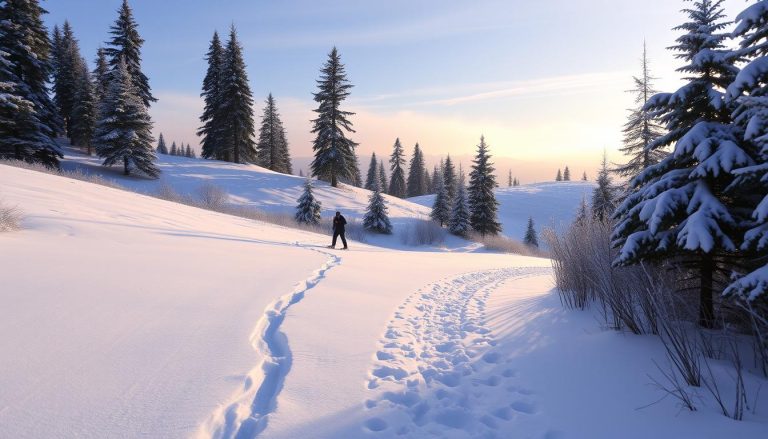
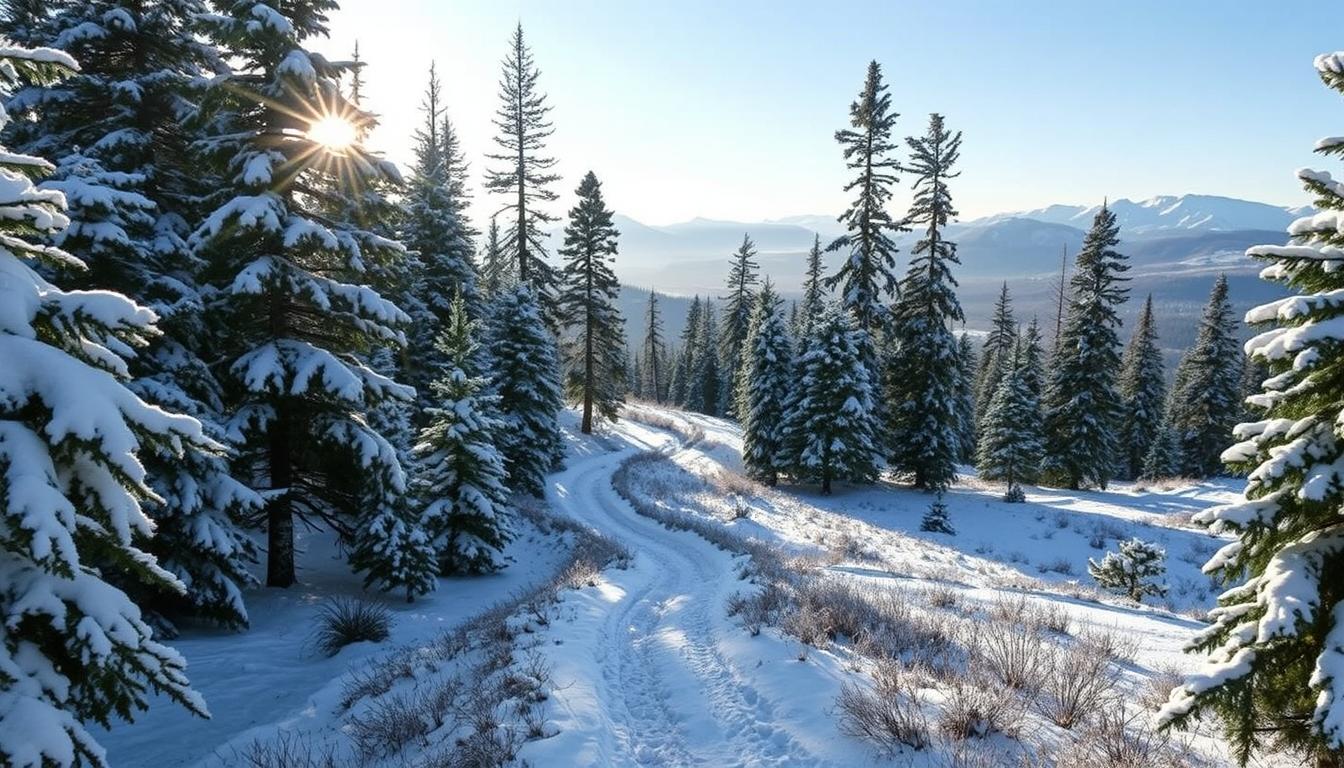
January’s frosty landscapes offer unique allure for outdoor enthusiasts. Snow-covered trails reveal nature’s quiet beauty. Winter hiking adventures await those ready to embrace the chill.
Winter trails hold a special magic for seasoned adventurers. Crisp air fills your lungs as snow crunches beneath your boots. January hikes provide an invigorating escape from post-holiday blues.
Indiana’s state parks offer over 30 locations for outdoor challenges. Turkey Run State Park, established in 1916, is a prime destination. Its Trail 7 is a moderate 0.7-mile loop, perfect for a brisk winter walk.
Winter outdoor safety is crucial for enjoyable January excursions. Proper gear and layering techniques are essential. Awareness of changing weather conditions ensures a safe hiking experience.
With the right preparation, you’ll be ready to explore. The serene beauty of winter landscapes across the United States awaits. Get ready for unforgettable cold-weather adventures.
Embracing the Winter Wilderness: Why January Hiking is Special
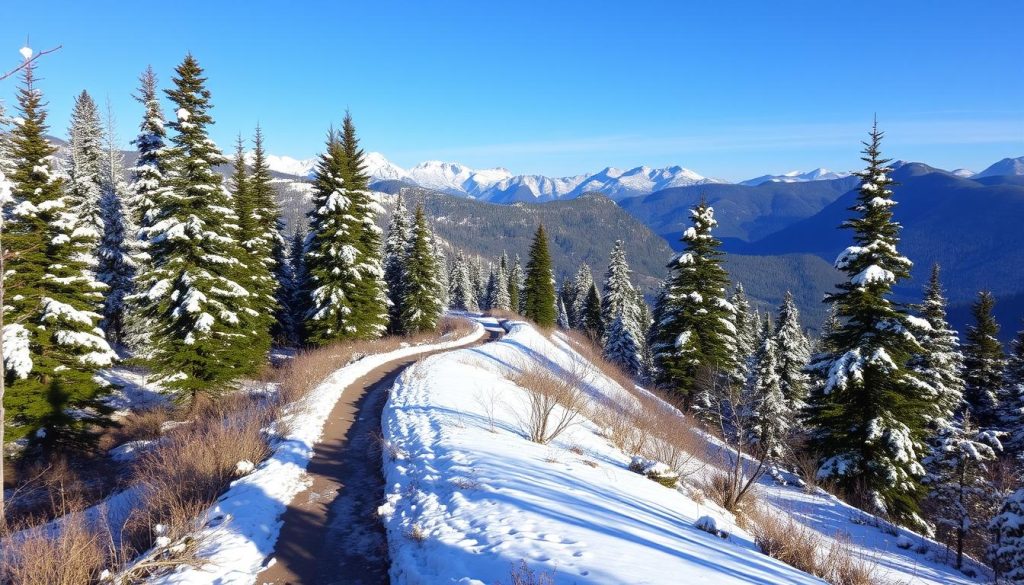
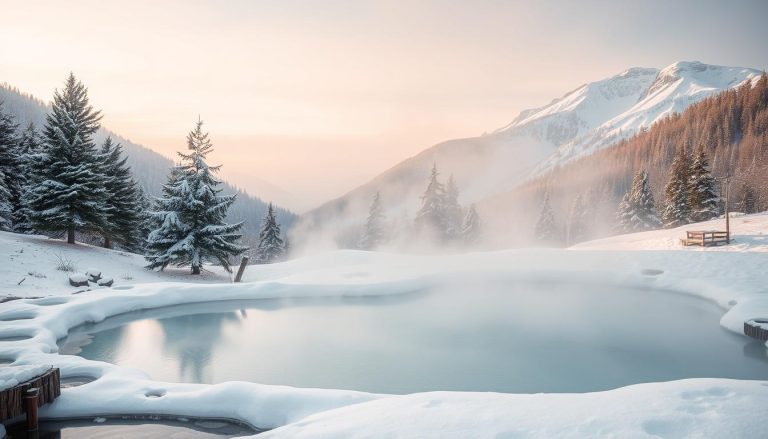
January hiking turns familiar trails into magical winter wonderlands. Snow-covered paths offer unique adventures for thrill-seekers and photographers. With proper gear, you can enjoy nature’s serene beauty in winter.
Winter hikes reveal breathtaking scenes often missed in warmer months. Frozen waterfalls and snow-laden trees create perfect backdrops for photography. The crisp air and quiet surroundings allow for peaceful reflection.
“Winter is not a season, it’s a celebration.” – Anamika Mishra
Winter hiking needs some changes to your routine:
- Dress in layers to regulate body temperature
- Use snowshoes or traction devices for icy terrain
- Hike with a buddy for safety
- Start early, as daylight hours are shorter
- Be prepared for wildlife encounters
January trails are less crowded, offering a chance to truly connect with nature. The challenge of winter adds excitement to your outdoor adventures. Braving the cold reveals a new world of winter hiking spots.
You’ll discover stunning landscapes and unique wildlife viewing opportunities. Winter hikes test your skills and reward you with unforgettable experiences. So gear up and explore the winter wilderness this January.
| Winter Hiking Benefits | Considerations |
|---|---|
| Stunning snow-covered landscapes | Need for proper cold weather hiking gear |
| Fewer crowds on trails | Shorter daylight hours |
| Unique wildlife viewing opportunities | Challenging weather conditions |
| Perfect for winter landscape photography | Importance of layered clothing |
Essential Cold Weather Hiking Gear for January Adventures
Winter hiking demands proper gear. The right equipment ensures a safe and comfortable adventure. Let’s explore the essentials for conquering snowy trails.
Layering Techniques for Optimal Warmth
Layering is key for winter hiking comfort. Start with a moisture-wicking base layer to manage sweat. Kari Traa and Smartwool offer excellent options.
Add a versatile mid-layer, like fleece, for extra warmth. The Melanzana Micro Grid Hoodie or Patagonia R1 Pullover work well.

Must-Have Winter Hiking Equipment
Down jackets provide superior insulation. Try the Arc’teryx Cerium Down Hoodie or REI Co-op 650 Down Jacket. For wet conditions, consider synthetic alternatives like the Arc’teryx Atom Insulated Hoodie.
A waterproof outer shell protects against rain and snow. REI Co-op and Arc’teryx offer reliable jacket and pant options.
Safety Gear for Snow-Covered Trails
Waterproof boots are crucial for winter hiking. Consider the Danner Mountain 600, Columbia Newton Ridge, or Salomon OUTpulse.
Warm accessories like hats, wool socks, and gloves are vital. Try the Arc’teryx Mallow Toque or Coal The Uniform Knit Cuff Beanie.
For socks, Darn Tough Hiker Micro Crew Cushion Socks excel. Protect hands with Outdoor Research Vigor Gloves or Black Diamond Mercury Mittens.
- Microspikes or snowshoes for stability on icy terrain
- Polarized sunglasses to protect against glare
- Nalgene bottles to prevent water from freezing
- Garmin inReach Explorer+ for emergency communication
Adjust layers frequently and stay hydrated for winter safety. With proper gear, you’ll enjoy magical January hiking adventures.
Winter Hiking Adventures: Top Trails in the United States
The United States offers many winter hiking spots for adventurers. You can find snow-covered trails and sunny landscapes across the country. Let’s check out some top winter hiking adventures.
Northeast: White Mountain National Forest, New Hampshire
White Mountain National Forest has tough trails and amazing views. The Franconia Ridge Loop is an 8.3-mile trail that’s hard but worth it. This hike needs the right gear because of snow.
Midwest: Pictured Rocks National Lakeshore, Michigan
Pictured Rocks National Lakeshore turns into a winter wonderland. Ice forms along Lake Superior, making a special backdrop for hikers.
For an easier hike, try the 1.7-mile trail at Thompson County Park in West Saint Paul, Minnesota. It has lights and hot cocoa.
West: Yosemite National Park, California
Yosemite Valley Loop Trail is 11.5 miles of medium-hard hiking. This trail shows famous landmarks covered in snow. It’s a magical winter hike.
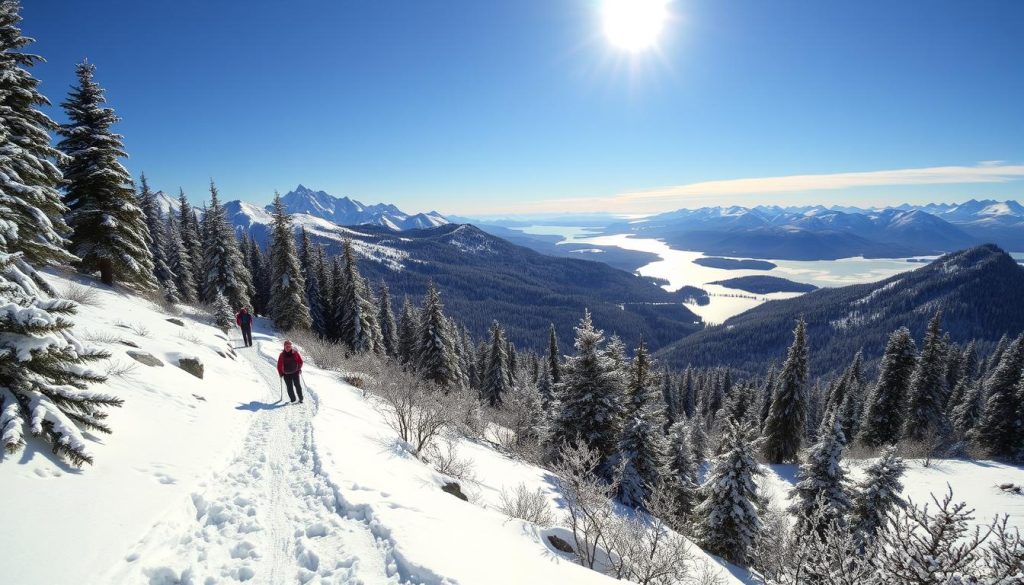
If you want warmer weather, try Flagstaff, Arizona. It has 266 sunny days each year.
| Location | Trail Length | Difficulty | Snow Cover |
|---|---|---|---|
| Death Valley, CA | 3-8 mile loop | Moderate | None |
| Big Sky, MT | 1.6 miles out-and-back | Easy | Moderate + Icy |
| Colorado Springs, CO | 1-10 miles | Easy to Moderate | Light |
| North Cascades, WA | 1-38 miles out-and-back | Easy to Moderate | None to Light |
The US has many choices for great winter hiking trips. You can find snowy trails or warmer spots. There’s something for everyone who loves hiking in winter.
Capturing Winter’s Beauty: Landscape Photography Tips
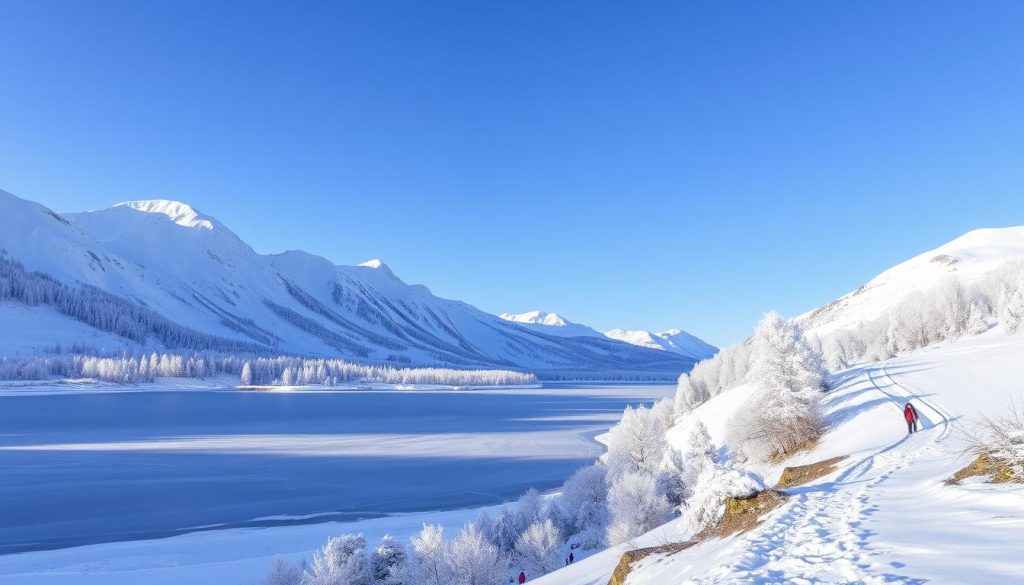
Snowy trails offer magical scenes for stunning landscape photos. Winter hikes provide perfect chances to capture breathtaking images. These tips will help you make the most of your photography trips.
Shield your camera from moisture with rain sleeves and lens hoods. Keep a microfiber cloth nearby to wipe off snowflakes. Avoid changing lenses in snowy weather to prevent damage.
Use low ISO settings around 64 to keep snow details clear. Try apertures between f8 and f11 for sharp focus. A tripod is crucial for steady shots.
- Carry extra batteries and keep them warm
- Use wide-angle lenses (14-15mm) for expansive scenes
- Experiment with composition techniques like leading lines and framing
Dark backgrounds make snowflakes stand out in photos. Look for unique landscape features to create interesting layers. Winter’s stark beauty offers endless chances for creative shots.
“Winter photography is about capturing the quiet magic of snow-covered landscapes. It’s a chance to see familiar places transformed into wonderlands.”
These tips will help you capture stunning winter landscapes on snowy hikes. Stay safe and warm while creating beautiful memories. Happy shooting!
Snowshoeing Trails for Beginners and Experts
Snowshoeing offers thrilling winter hiking for all skill levels. Novices and experts alike can find suitable trails. Let’s dive into snowshoeing gear, popular spots, and key techniques.
Choosing the Right Snowshoes
Picking the right snowshoes is key for a great outing. Think about the terrain and your weight when choosing.
Beginners should go for flat terrain snowshoes. Advanced hikers might prefer models for steep or icy conditions.
Popular Snowshoeing Destinations
The U.S. has many stunning snowshoeing trails. Here are some top picks:
- Rocky Mountain National Park, Colorado
- Adirondack Mountains, New York
- Mount Hood, Oregon
- White Mountains, New Hampshire
- Mount Rainier National Park, Washington
- Grand Teton National Park, Wyoming
- Acadia National Park, Maine
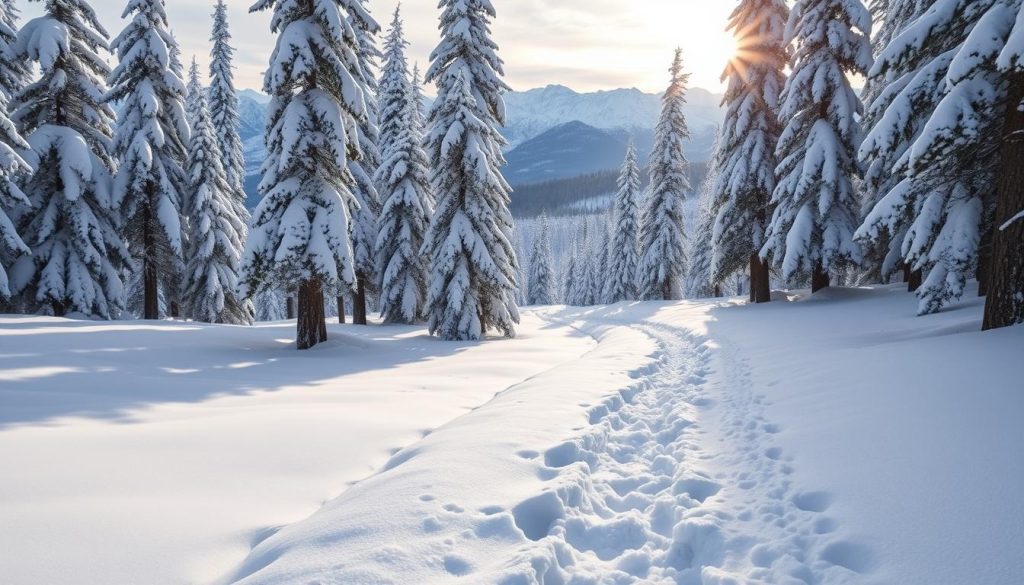
Snowshoeing Techniques and Safety
Learning basic snowshoeing skills boosts your fun and safety. Try uphill kick stepping and traversing with snow poles.
Adjust your method for downhill travel. Keep these winter safety tips in mind:
- Dress in layers to regulate body temperature
- Carry essential survival gear and maps
- Snowshoe in groups for added safety
- Stay hydrated and nourished during your trek
Follow these tips for amazing snowshoeing trips in beautiful winter scenes. You’ll be ready for unforgettable adventures.
| Skill Level | Recommended Trail | Location | Key Features |
|---|---|---|---|
| Beginner | Bear Lake Trail | Rocky Mountain National Park, CO | Flat terrain, scenic views |
| Intermediate | Cascade Mountain Trail | Adirondack Mountains, NY | Moderate incline, forest scenery |
| Expert | Tuckerman Ravine Trail | White Mountains, NH | Steep terrain, challenging conditions |
Winter Fitness and Training: Preparing for Cold Weather Hikes
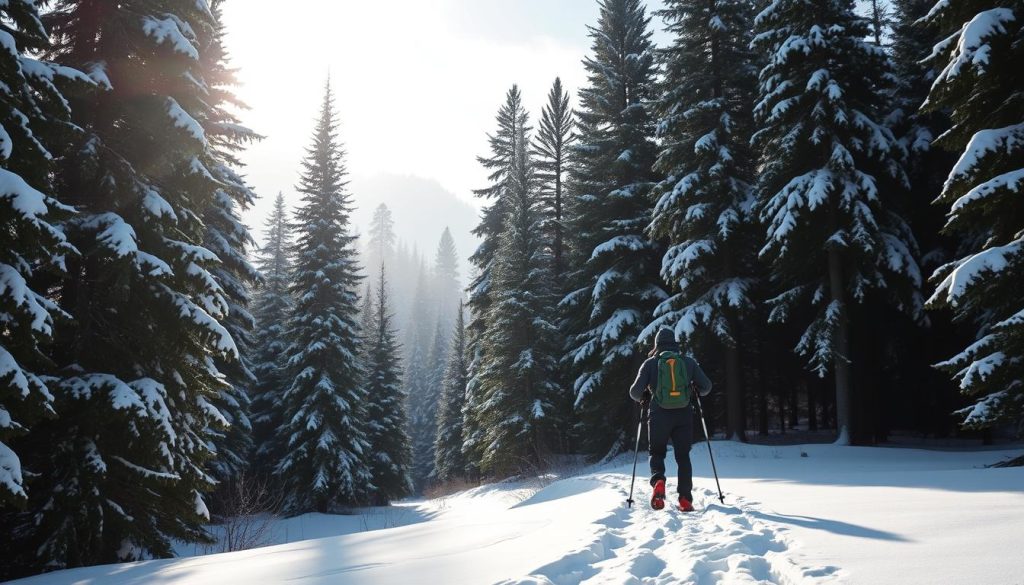
Winter fitness is crucial for safe cold weather hiking. Prepare your body for snowy trails and icy conditions. Create a strength and conditioning plan to build endurance and muscle strength.
Cardiovascular exercises boost stamina for long hikes. Strength training prepares you for carrying heavy gear and navigating tricky terrain. Include balance exercises to improve stability on slippery surfaces.
Adapting to cold weather is important. Begin with short outdoor sessions and gradually increase duration. Practice using winter gear like snowshoes or crampons before hiking.
“Winter has been my favorite season for adventure over the last 20 years. Living in Alaska for 9 years deepened my connection to winter outdoor activities.”
Remember these winter outdoor safety tips:
- Get a physical check-up before starting winter activities
- Train with friends or join a hiking group
- Always inform someone of your planned route and return time
- Carry essential gear including a GPS device, fully charged phone, and external battery
- Bring hard copy maps and learn to use a compass
Stay committed to your winter fitness routine. You’ll be ready for exciting cold weather hiking adventures. Stay safe and enjoy the winter wonderland!
Backcountry Winter Camping: Extending Your Hiking Adventure
Backcountry winter camping has grown by 40% from 2019 to 2021. A third of campers now enjoy winter outdoor adventures. This trend has boosted specialized gear and cold-weather exploration techniques.
Selecting the Right Winter Camping Gear
Proper equipment is vital for backcountry winter camping. Key items include a 4-season tent and cold-weather sleeping bag. An insulated sleeping pad with an R-value up to 8 is also essential.
Don’t forget a reliable stove and extra fuel. A headlamp is crucial for long winter nights.
| Category | Essential Items |
|---|---|
| Shelter | 4-Season tent, Cold-weather sleeping bag, Insulated sleeping pad |
| Clothing | Heavyweight down jacket, Hardshell jacket, Baselayers, Gloves, Warm socks |
| Safety Gear | Avalanche beacon, Probe, Shovel |
Setting Up Camp in Snow Conditions
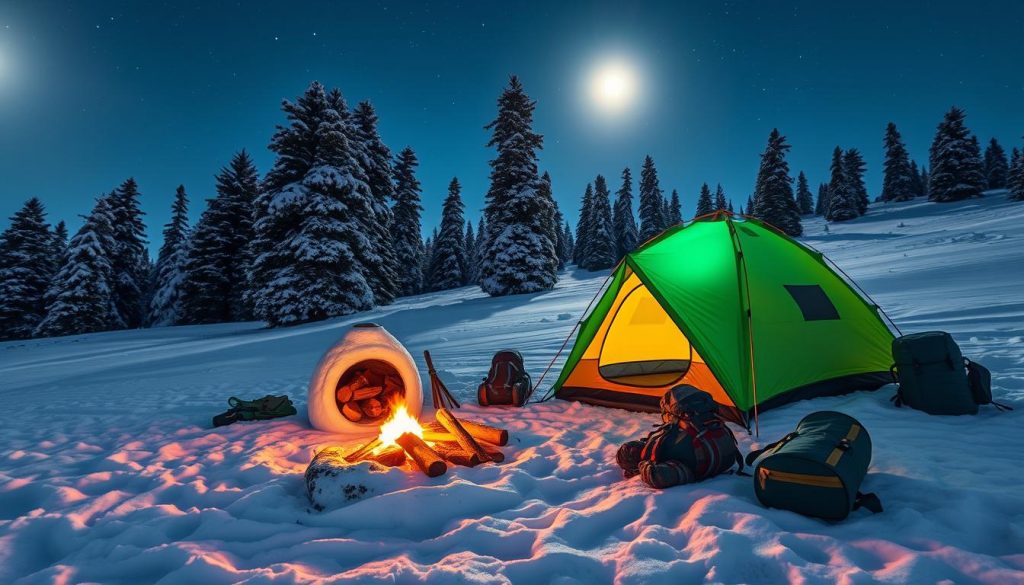
Creating a comfy campsite in snow needs special methods. Pack down snow to form a solid base. Secure your tent using guylines and deadman anchors.
Dig out vestibule areas for extra space and gear storage. Avoid windy ridgelines and seek natural shelter for a peaceful night.
Winter Camping Safety Precautions
Safety is crucial in winter hiking adventures. Avoid avalanche-prone areas and runout zones. Layer your clothing to prevent moisture buildup, which can be dangerous.
Always carry avalanche safety gear and know how to use it. Pack a first aid kit, hand warmers, and extra food for emergencies.
“Winter camping is at an all-time high, with enthusiasts investing in gear and embracing the outdoors during colder months.”
These tips will prepare you for an amazing backcountry winter camping trip. Proper planning and the right gear are key to enjoying winter landscapes safely.
Winter Survival Skills Every Hiker Should Know
Winter hiking requires essential survival skills. Being prepared is crucial for your safety on snowy trails. Let’s dive into key outdoor safety tips for cold-weather adventures.
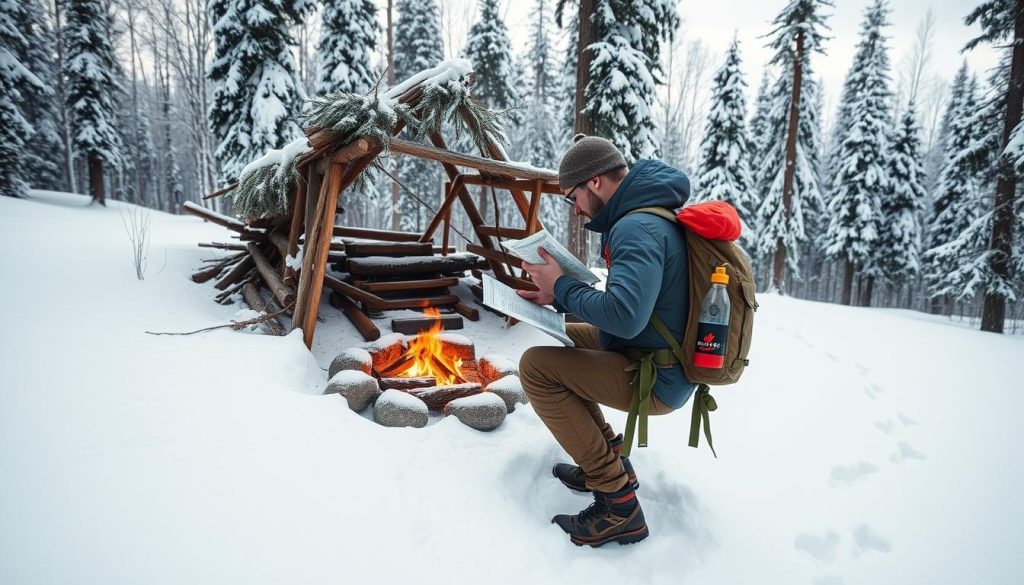
Snow can make navigation challenging. Always carry a map and compass. Learn to use them effectively. GPS devices may fail in extreme cold.
Recognize landmarks and leave trail markers. This helps you find your way back safely.
Know how to spot hypothermia and frostbite. Watch for shivering, confusion, and poor coordination. If you notice these signs, find shelter immediately.
Warm up gradually to avoid further harm. This applies to both you and your fellow hikers.
- Build emergency shelters using snow or natural materials
- Start a fire for warmth (82% of winter hikers carry fire starters)
- Melt snow for drinking water to stay hydrated
- Signal for help using bright colors or mirrors
Mountain hikers must understand avalanche safety. Learn to assess snow conditions carefully. Carry proper avalanche rescue gear at all times.
Practice using beacons, probes, and shovels before your trip. These skills could save lives in emergencies.
| Survival Gear | Usage | Importance |
|---|---|---|
| Emergency blanket | Insulation | High |
| Firestarter | Warmth, signaling | Critical |
| Multi-tool | Repairs, shelter building | Medium |
| Headlamp | Navigation, signaling | High |
Good planning is vital for winter hiking safety. Check weather forecasts and tell others about your plans. Always pack extra food and warm clothing.
These skills will help you enjoy cold-weather hiking safely. Stay prepared and make the most of winter’s beauty.
Exploring Caribbean Hiking Trails: A Warm Winter Alternative
Discover Caribbean hiking trails for your next adventure. These warm destinations offer tropical scenery and challenging treks. Let’s explore the best Caribbean trails for unforgettable winter hiking adventures.
Saint Lucia: Conquering the Pitons
Saint Lucia’s iconic Pitons are a must-visit for hikers seeking a challenge. These volcanic peaks offer stunning views of lush rainforests and pristine beaches.
The Gros Piton trail is a 4-mile round trip, taking about 4-6 hours to complete. Bring plenty of water and hire a local guide for safety.

Dominica: The Waitukubuli National Trail
Dominica boasts the Waitukubuli National Trail, the Caribbean’s first long-distance hiking path. It spans 115 miles across 14 segments, showcasing diverse ecosystems.
Hikers can explore rainforests, montane thickets, and elfin woodlands. The trail is divided into day-long segments, suitable for both beginners and seasoned hikers.
Jamaica: Blue Mountain Peak Trail
Jamaica’s Blue Mountain Peak Trail is perfect for coffee lovers and hiking enthusiasts. This 7-mile trail leads through coffee plantations to the island’s highest point.
Start your hike early to catch a breathtaking sunrise at the summit. Don’t forget to sample the world-renowned Blue Mountain coffee during your trek.
| Island | Trail | Length | Difficulty |
|---|---|---|---|
| Saint Lucia | Gros Piton | 4 miles | Challenging |
| Dominica | Waitukubuli National Trail | 115 miles | Varies |
| Jamaica | Blue Mountain Peak | 7 miles | Moderate |
Caribbean hiking trails offer warm adventures for all skill levels. You’ll find diverse landscapes and unforgettable experiences on these tropical islands.
Conclusion: Embracing the Magic of Winter Hiking
Winter hiking offers a unique chance to explore nature’s frozen wonderland. Snow-covered landscapes transform into enchanting realms. Frozen waterfalls become ice sculptures, while snow-drifted trees turn into delicate art pieces.
Microspikes have revolutionized cold-weather trekking for outdoor safety. Most hikers prefer less windy conditions, even in colder temperatures. Guided winter hikes, like Trolltunga from March to May, ensure safety and breathtaking views.
Consider the many benefits and tips for winter hiking as you plan your adventures. With proper preparation, you’ll be ready to tackle any winter trail. Bundle up and step out to discover the magic of winter landscapes.
Crystal-clear frozen lakes and wildlife tracks in pristine snow await your exploration. Winter hiking unveils nature’s hidden beauty in ways you’ve never seen before. Get ready for an unforgettable journey through winter’s wonderland.