Winter Skies: Top Destinations for Stargazing This January.
Have you ever wondered why January is perfect for stargazing? The clear, crisp nights offer an amazing view of stars. Events like the Quadrantid meteor shower and the visibility of the Andromeda Galaxy make it special. You can enjoy these from places like Joshua Tree National Park or many Dark Sky Parks in the U.S. The air in winter has less hazy moisture, which is great for stargazing. Are you ready to explore the best spots for stargazing this month?
This January, don’t miss the stunning night sky sights. The cold air makes the views clearer and reduces air disturbances. This ensures you see the brightest and most vivid stars. Stay tuned to learn more about winter stargazing, upcoming meteor showers, and top places to see the night sky’s magic.
Introduction to Winter Stargazing
Winter offers some of the best stargazing experiences, with clear, bright views of the January sky. The air has less humidity, which means less haze and better visibility of stars and cosmic events. As nights are longer after the winter solstice, you get plenty of time to explore the cosmos.
Why Winter is Perfect for Stargazing
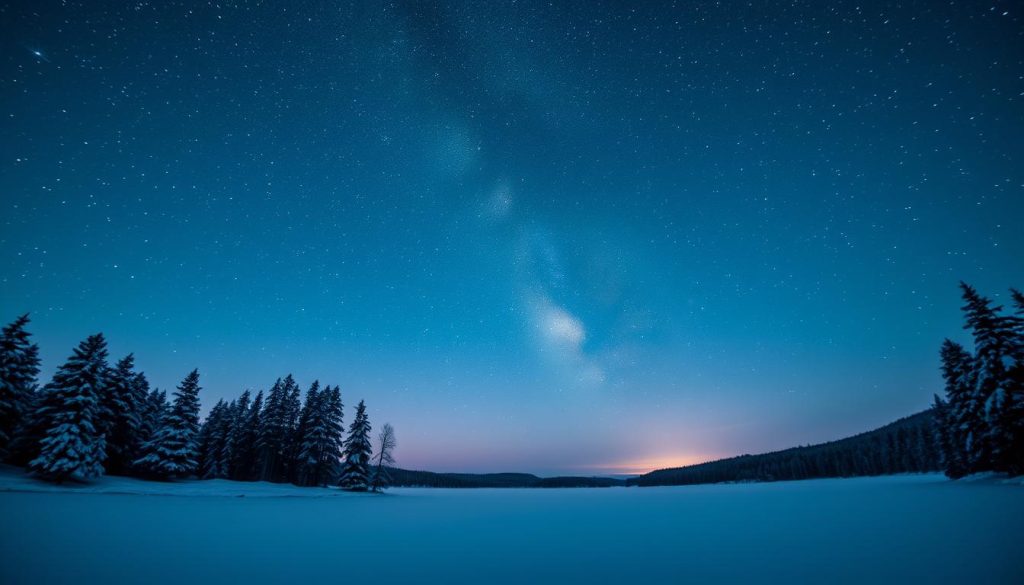
Winter air is cold and holds less moisture, making the sky clearer. This lets you see stars and cosmic events in sharp detail. For example, the Pleiades star cluster and Sirius shine brightly, offering beautiful views.
Benefits of Cold Air
With cold air’s low moisture, winter nights are perfect for stargazing. It reduces light scattering, so stars and galaxies appear more defined and bright. In January, you can see the y-Ursae Minorid meteor shower with minimal moonlight, revealing even the faintest meteors. These conditions create unforgettable sights in the winter sky.
The Quadrantid Meteor Shower: A January Highlight
The Quadrantid meteor shower lights up January skies like few other events can. It used to be named after the constellation Quadrans Muralis, which isn’t recognized anymore. This shower is famous for its intense, short peak.
Those who love watching the night sky especially look forward to it in the Northern Hemisphere.
Peak Viewing Times
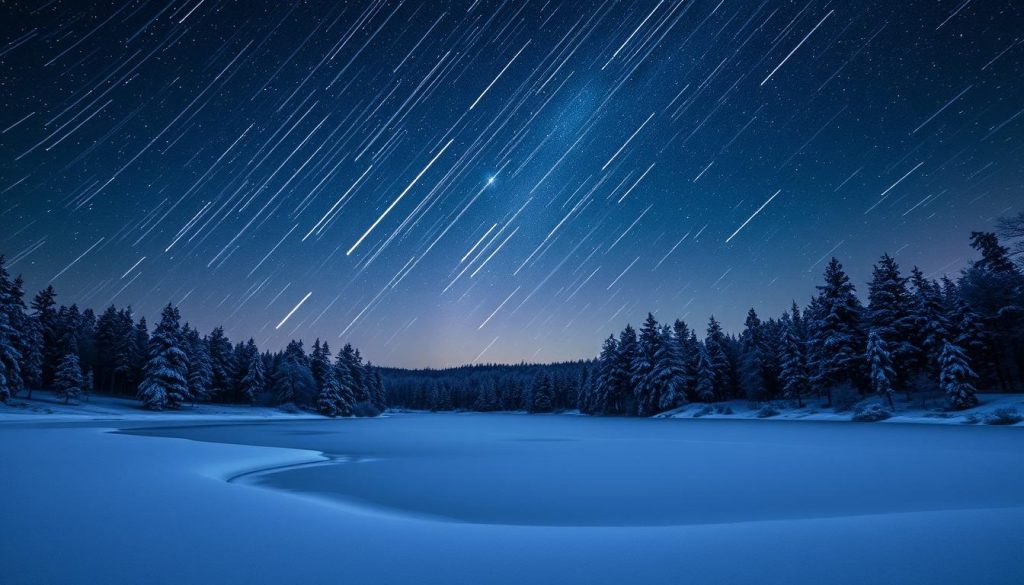
The best view of the Quadrantid meteor shower in January is from 1 a.m. to 5 a.m. on the 4th.
Conditions allowing, one might see over a hundred meteors in an hour. This year, a bright moon might lower that count to about 25. But, even with fewer meteors, the shower will still be a sight to behold.
The shower can be seen from mid-November to mid-January, peaking most in early January.
- Peak Activity: January 4 (1 a.m. to 5 a.m.)
- Ideal Conditions: Clear, dark skies with minimal moonlight
- Expected Meteors: 25 per hour (due to moonlight)
- Observation Locations: Preferably areas far from city lights
What to Expect
Viewers of the Quadrantid meteor shower can expect an unforgettable show. The meteors are fast and bright, often leaving behind trails of light.
This year’s moon phase means slightly diminished visibility. Yet, with clear skies and some patience, viewers will get to see something magical.
This shower’s origins are tied to objects like 2003 EH1 and Comet 96P/Machholz, intriguing astronomers. Despite the challenges, it remains a highlight for January’s astronomy events.
Here’s a quick look at factors that affect how well you can see the shower:
| Element | Impact on Viewing | Optimal Conditions |
|---|---|---|
| Moonlight | Reduces meteor visibility | New moon, clear sky |
| Light Pollution | Significantly lowers visibility | Dark sky parks, remote areas |
| Weather Conditions | Cloud cover obscures view | Clear, cold nights |
| Location | Higher latitude favored | Northern Hemisphere, away from city lights |
Dark Sky Parks: Top Choices for January Stargazing
If you’re looking for perfect stargazing spots in January, turn to *Dark Sky Parks*. Certified by the International Dark-Sky Association, these parks offer refuge from light pollution. This allows for a clear view of the stars above.
What are Dark Sky Parks?
*Dark Sky Parks* are special spots known for their clear starry nights. They’re perfect for watching the stars and help in saving our night skies. When you visit, you also fight against light pollution, a big problem in cities.
Best Parks in the United States
The U.S. is home to many *Dark Sky Parks*, great for January’s chilly nights. Let’s look at some top choices:
- Big Bend National Park, Texas: This remote park offers year-round ranger programs for stargazing. Its wide-open spaces and dark skies make it a top choice.
- Cherry Springs State Park, Pennsylvania: Known as a very dark spot on the East Coast, it’s great for seeing the Milky Way.
- Natural Bridges National Monument, Utah: You can spot up to 15,000 stars here, unlike the few hundred in cities.
- Death Valley National Park, California and Nevada: Its vast area boasts some of the darkest and brightest star views.
- Mauna Kea, Hawaii: This high-elevation dormant volcano offers clear skies for stargazing.
- Grand Canyon National Park, Arizona: Granted Dark Sky status in 2019, it’s perfect for stargazing, with special ranger events.
- Joshua Tree National Park, California: A Dark Sky Park since 2017, it has areas specifically for admiring the winter stars.
- Boundary Waters Canoe Area Wilderness, Minnesota: Known for its natural beauty and minimal light pollution, it’s ideal for January’s night sky viewing.
Before heading out, check the weather for the best stargazing conditions. Bring binoculars, a telescope, comfy shoes, a red light flashlight, and warm clothes.
Start a memorable trip to these *best stargazing spots* in the U.S. Enjoy the night sky’s beauty in its true glory.
Astronomy Events in January
January’s sky is full of wonders for both new and experienced stargazers. Highlights include the Quadrantid meteor shower and close views of planets. Each event offers unique excitement to the night sky.
The New Moon
The new moon on January 11 creates perfect stargazing conditions. Without moonlight, it’s easier to see dim objects and stars far away. This moon phase makes other January celestial events even more visible.
Saturn and the Moon
On January 13 and 14, Saturn will be very close to the moon. Saturn appears 2.1 degrees north of the moon, creating a stunning view. This event is great for January stargazers, as Saturn’s bright glow at 0.98 mag stands out.
Jupiter and the Moon
Jupiter will be near the moon on January 17 and 18. It’ll be just 2.8 degrees south, shining brightly. This event is excellent for night sky watchers. It combines a beautiful sight with a chance to learn about our solar system.
| Event | Date | Details |
|---|---|---|
| New Moon | January 11 | Optimal stargazing conditions |
| Saturn and the Moon | January 13-14 | Saturn 2.1°N of the Moon |
| Jupiter and the Moon | January 17-18 | Jupiter 2.8°S of the Moon |
January is packed with amazing celestial events worth seeing. Remember these dates to catch these incredible views.
Best Winter Destinations for Stargazing
January’s night sky is a breathtaking view, best seen from world-renowned stargazing spots. Here are the top locations for an amazing stargazing experience this winter.
Boundary Waters Canoe Area Wilderness
The Boundary Waters Canoe Area Wilderness in Minnesota is perfect for those who love the stars. Its long nights offer clear views of constellations and even the Northern Lights. With little light pollution, it’s a dream spot for stargazers.
Big Bend National Park
Big Bend National Park in Texas is another top pick for stargazing. Its skies are so dark that the Milky Way shines brightly. It’s one of the darkest spots in the United States, perfect for night sky wonders.
Joshua Tree National Park
California’s Joshua Tree National Park is known for its Dark Sky Park status. Despite being close to cities, it offers stunning night sky views. Its clean skies and easy access make it perfect for astronomy buffs.
| Location | Special Features |
|---|---|
| Boundary Waters Canoe Area Wilderness | Prolonged dark hours, Northern Lights |
| Big Bend National Park | Darkest skies in the contiguous U.S., Milky Way views |
| Joshua Tree National Park | Dark Sky Park recognition, low light pollution despite nearby urban areas |
Stargazing Equipment and Tips
Preparing for winter stargazing? The right gear and tips are key. You’ll need good equipment and warm clothes for comfort and amazing views of the sky on cold January nights.
Essential Gear
A basic telescope with a 25mm eyepiece for wide views and a 10mm for closer looks is essential. Or, you might like Cometron 7×50 binoculars for a stunning view of space objects such as the Andromeda Galaxy.
Bring along a red flashlight to keep your night vision sharp, and a white one for packing up. A star map or an app like SkyPortal by Celestron will help find stars and planets. Also pack a bubble level, a screwdriver, and something for cleaning, like a LensPen. A finderscope, like the Telrad, makes finding stars quicker if you’re using a telescope.
- A telescope with 25mm and 10mm eyepieces
- Binoculars like Cometron 7×50
- Red and white flashlights
- Star map or apps like SkyPortal
- Tools: bubble level, screwdriver, cleaning kit
- Finderscope: Telrad or StarPointer Pro
Tips for Cold Weather Stargazing
Stargazing in winter is great but dress warmly. Start with a thermal layer, add wool socks, insulated pants, a fleece, and a winter coat. Don’t forget waterproof boots and hand warmers.
Hot drinks like cocoa or tea can keep you toasty outside. Wear a hat with earmuffs and gloves. Put a blanket or mat under your telescope for a clean spot and a bit of warmth.
- Dress in layers
- Wear wool socks and insulated pants and jackets
- Use waterproof boots and hand warmers
- Bring hot beverages in a thermos
- Wear a warm hat with earmuffs and gloves
- Use ground padding like kitchen mats or yoga mats
For the best stargazing, pick clear, moonless nights away from city lights. Sites like Clear Dark Sky offer forecasts. Joining an astronomy club can also add fun and learning to your stargazing.
Popular Winter Constellations
The winter sky is filled with breathtaking constellations. Orion, Taurus, and Gemini shine especially bright during January. Stargazers find these patterns captivating.
Orion
Orion, called the Hunter, stands out in the sky. Its bright belt consists of three stars: Alnilam, Alnitak, and Mintaka. These stars help find other celestial sights.
Betelgeuse and Rigel highlight Orion’s top and bottom. Below the belt, the Orion Nebula (M42) can be seen without a telescope. It’s a stunning sight.
Taurus
Taurus is next to Orion. Its brightest star, Aldebaran, is a red giant. The Hyades and Pleiades clusters are part of it, visible with binoculars.
The Pleiades, or Seven Sisters, are close to Earth. These bright blue stars make Taurus a great target for stargazers in January.
Gemini
Gemini sits above Orion. It features two main stars: Pollux and Castor. Pollux is 34 light-years away, while Castor is a bit further at 51 light-years.
These stars make Gemini fascinating. The constellation also has Messier 35, a beautiful cluster visible with basic stargazing tools.
| Winter Constellation | Main Features | Distance from Earth |
|---|---|---|
| Orion | Orion’s Belt, Betelgeuse, Rigel, Orion Nebula (M42) | 500–1,300 light years (Orion Nebula) |
| Taurus | Aldebaran, Hyades cluster, Pleiades cluster | 65.1 light years (Aldebaran) |
| Gemini | Pollux, Castor, Messier 35 star cluster | 34 light years (Pollux) |
Discovering these constellations adds magic to stargazing in January. Using a star map or app, you can start exploring the stars from home. Every clear night becomes an amazing view of the universe.
Using Stargazing Apps
Exploring the night sky is now easier with stargazing apps. These apps make star gazing better by providing interactive maps and alerts for celestial events.
Top Apps for Night Sky Viewing
Several stargazing apps are known for their great features. Let’s look at some top choices.
| App | Operating System | Cost | Key Features |
|---|---|---|---|
| Stellarium Mobile | iPhone, Android | Free + Pro Version | Real-time star identification, constellation maps |
| Astrospheric | iPhone, Android | Free + Paid Version | 48-hour astronomy weather forecast |
| SkySafari 7 Plus | iPhone, Android | Paid | Largest database, telescope control, planning tools |
| PhotoPills | iPhone, Android | Paid | Photography planning for night sky |
| Clear Outside | iPhone, Android | Free | Reliable cloud cover forecasts |
| Celestron StarSense Explorer | iPhone, Android | Free but requires telescope | Real-time telescope positioning |
| Polar Scope Align Pro | iPhone | Paid | Precise polar alignment |
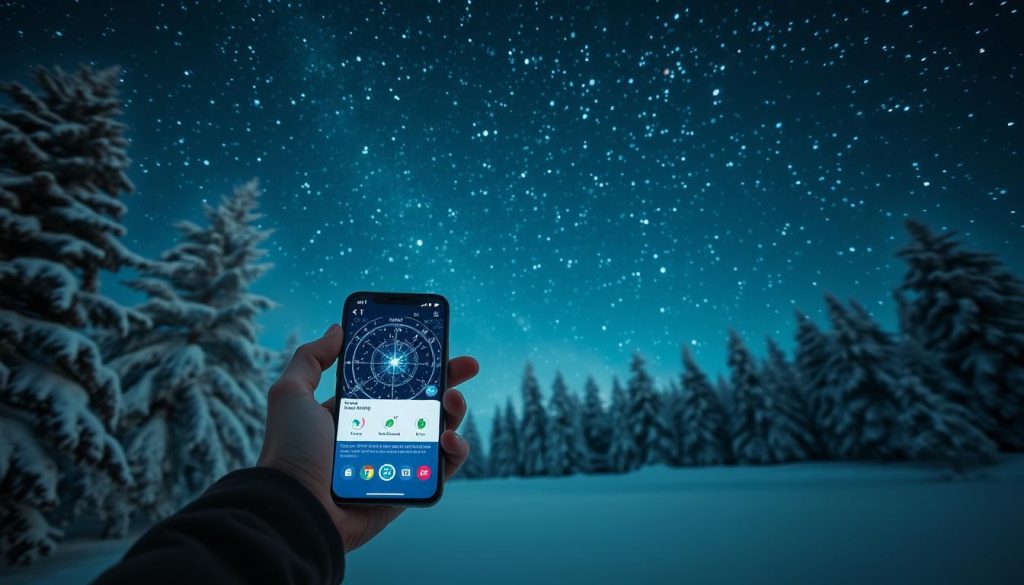
Features to Look For
When choosing stargazing apps, look for useful features. Some must-haves are:
- Detailed Constellation Maps: Easy star and constellation identification.
- Real-time Tracking: Watch celestial bodies move based on your location.
- Augmented Reality: Combine star maps with the real sky for easy spotting.
- Customization Options: Adjust the app to fit your stargazing needs and location.
- Weather Forecast Integration: Plan your viewing around the best weather.
The right app can make viewing the night sky both fun and educational. It lets you discover the wonders of the universe easily.
January Stargazing: Key Celestial Events
January is packed with amazing events for stargazers at any level. The Quadrantids Meteor Shower is a highlight. It reaches its peak between January 3rd and 4th. You can see up to 40 meteors per hour during this time.
This meteor shower is one of the year’s first major ones. It’s best seen in dark places far from city lights.
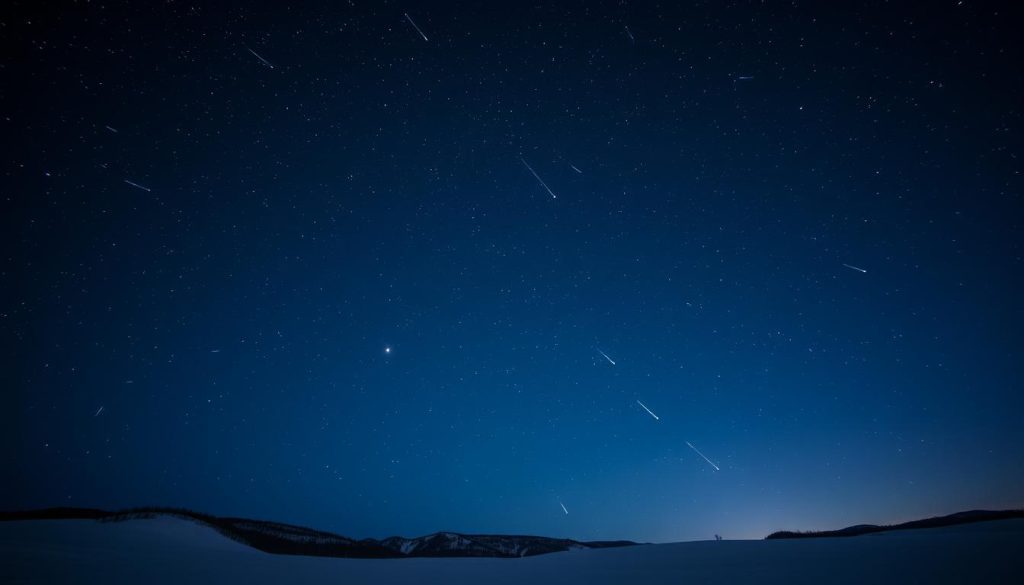
Then, there’s the New Moon on January 11th. This makes the sky extra dark, perfect for seeing distant galaxies and nebulae. It gives us a great chance to see the night sky at its darkest.
But there’s more than just the Quadrantids. Saturn and Jupiter will also come close to the Moon. Saturn shows up first on January 16th, and then Jupiter follows on January 19th. You can view these planets close to the Moon using telescopes or binoculars. This lets you see the details of each planet and how they’re positioned near the Moon. Don’t miss these amazing sights in January!
| Date | Event | Description |
|---|---|---|
| Jan 3/4 | Quadrantids Meteor Shower Peak | Up to 40 meteors per hour, best viewed under dark skies. |
| Jan 11 | New Moon | Clear dark skies, ideal for observing deep-sky objects. |
| Jan 16 | Saturn and the Moon | Saturn appears close to the Moon, visible through telescopes and binoculars. |
| Jan 19 | Jupiter and the Moon | Jupiter’s close approach to the Moon offers stunning planetary views. |
Night Sky Sights: Planets and Comets
The January night sky is full of planets and comets waiting to be discovered. To see them best, a clear and cold night is ideal. This makes January perfect for looking up at the stars.
Viewing Planets
In January, spotting planets is easy. Saturn and the Moon will be close on January 13 and 14. This allows an amazing view of Saturn’s rings with a telescope. Jupiter meets the Moon on January 17 and 18. You’ll see Jupiter to the left and below the Moon on these nights.
Mercury will be farthest from the Sun on January 12, a great chance to see it. Mars passes near the stars Castor and Pollux in Gemini, visible before dawn in October. This offers another neat experience for those who love the stars.
Spotting Comets
January also has its share of comets. Comet 144P/Kushida comes closest to the sun on January 25. Your best chance to see it is from January 8 to 18 or after January 28. Look for it with good binoculars or a telescope. The “Christmas comet,” Comet 62P/Tsuchinshan, is nearest to Earth on January 29. It may be seen with medium-sized binoculars. These events make January an awesome time for comet watchers.
Conclusion
January nights are cold but perfect for stargazing. Earth is closest to the Sun on January 2nd, making the sky clear for looking at stars. Events like the Quadrantid meteor shower on January 4th light up the sky with 120 meteors an hour.
Don’t miss the moon hiding Antares on January 8th. This month is full of amazing sights.
For the best view, head to Dark Sky Parks or places like Boundary Waters Canoe Area Wilderness. These spots are great for seeing the Full Wolf Moon on January 25th. You can also spot Mercury and Mars together on January 27th.
The dark locations mean you see more stars with less light around.
To make the most of your stargazing, dress warm and use good gear. There are apps that help you find stars and constellations. Stargazing in January is not just beautiful. It also makes you love the winter sky more.