Wild Encounters: Best Wildlife Safaris to Experience in February
Have you ever thought about why February is the best month for a wildlife trip?
It’s because the weather is perfect and animals are everywhere. You might see the Great Migration in the Serengeti or the Big Five in stunning places. The average temperature is a comfy 17°C (62°F). There are many guided tours and eco-friendly travel choices. February is truly a special time to witness the wild beauty of Africa.
Are you ready for an adventure? You should check out these amazing safaris in February. From watching herds move across the Serengeti to meeting gorillas in Uganda’s Bwindi Forest.
Find out why February is the best month for a safari. There’s a 50% off deal on a Big Five Safari in Tanzania, now just $1,785! If you love nature or want to meet animals responsibly, February is the time to go.
Introduction to February Wildlife Safaris
February is an amazing time to go on wildlife trips. The weather is moderate, making the trails dry. This weather promotes the growth of lush greenery. Because of this, animals are more active around watering holes. This is especially true for wildlife tours in places like Kenya, Botswana, and Tanzania.
In Tanzania, February brings warm days and cool nights. This perfect weather makes spotting animals easier. During the wildebeest birthing season in the Serengeti, thousands of baby wildebeests are born daily. This makes safaris more exciting. Moreover, the cool average temperature of 73°F in Ngorongoro makes safaris there very enjoyable.
| Location | Average Temperature (°F) | Highlights |
|---|---|---|
| Serengeti, Tanzania | 82 / 61 | Wildebeest birthing season, predator activity |
| Zanzibar, Tanzania | 95 | Ideal for beach activities, warm seas |
| Ngorongoro, Tanzania | 73 / 50 | Cooler climate, scenic landscapes |
| Botswana (Southern Region) | Varies | Green season, migratory bird species |
| Kruger National Park, South Africa | Hot, with thunderstorms | Big Five sightings, guided tours |
| Rwanda and Uganda | Mostly dry | Gorilla trekking, warm sunny weather |
In Tanzania’s Southern Circuit, things are less crowded. This makes safaris more personal. In places like Ruaha and Mikumi, the lush scenery and diverse animals make up for the slightly muddy paths. Ngorongoro offers comfy temperatures for watching animals. Zambia’s South Luangwa National Park is perfect for spotting leopards and taking peaceful walks.
In Kenya, the hot and dry February makes watching wildlife easier. The animals gather around the few watering holes. Kenya’s private conservancies also offer unique safari experiences. They have activities like off-road driving and walking safaris at night.
To wrap it up, February wildlife safaris are unbeatable. You could explore the calm Zambian bush or see the predators in Tanzania and Kenya. This month is perfect for anyone dreaming of a safari.
Explore the Great Migration in Serengeti and Masai Mara
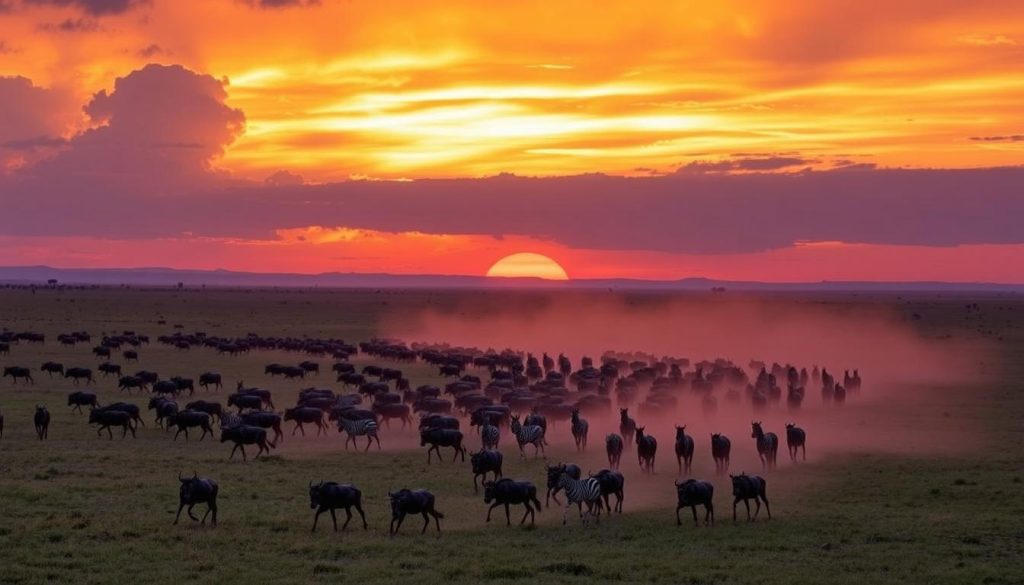
The Great Migration is a marvel that defines African safaris. It promises unmatched wildlife watching. Covering 800 kilometers, it includes over two million animals like wildebeest, zebra, and gazelle. This event is Africa’s most incredible wildlife show and a must-do for safari lovers.
Why February is Perfect for the Great Migration
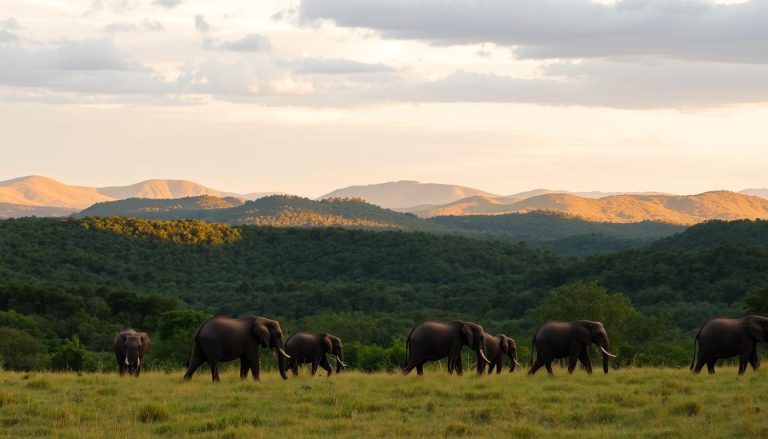
February is an amazing time for the Great Migration, especially in the southeastern Serengeti near Ndutu. This is the calving season. Here, thousands of wildebeest and zebras give birth. Every day, about 8,000 wildebeest calves enter the world, creating a spectacle of new life.
Predators including lions and hyenas closely follow, making the viewing very thrilling.
What to Expect During the Migration
The Great Migration follows a yearly pattern influenced by rainfall. It consists of several phases from December to November. In February, expect to see big herds in the southeastern Serengeti’s green fields. This birthing time draws many predators, providing great wildlife watching moments.
River crossings, like at Grumeti and Mara Rivers, introduce danger and excitement. These crossings are risky with crocodiles awaiting.
Pro Tips for Wildlife Photography
Capturing the Great Migration takes preparation and patience. Here are expert advice to catch memorable scenes:
- Gear Up: Choose a quality camera with fast shutter speed for capturing speedy animals and predators.
- Guided Safaris: Join a guided safari with experienced photographers. They know the best spots and times for photos.
- Study Animal Behavior: Knowing how wildebeests and predators act helps anticipate and capture unique moments.
- Be Patient: Great shots often mean waiting many hours, so being patient is crucial for wildlife photography.
- Use Natural Light: Shoot in early morning or late afternoon for the most dramatic and vivid lighting.
Seeing the Great Migration in Serengeti and Masai Mara in February is an unforgettable journey. It is filled with amazing wildlife and photo opportunities. This vast trek across the savannah is the heart of African safaris. It’s a pivotal experience for all who love nature and photography.
Big Five Adventures in Kruger National Park
When you go on an African safari in Kruger National Park, you enter a world full of wildlife. It’s where the Big Five: lions, leopards, elephants, rhinos, and Cape buffalos live. This park covers over 19,000 square kilometers and is perfect for wildlife photography and exploring nature.
Spotting the Big Five
Seeing the Big Five in Kruger National Park is an amazing experience. The park covers nearly two million hectares and is home to more than 147 mammal species. With 507 bird species, various reptiles, and insects, it’s a biodiversity hotspot.
Skilled guides with deep knowledge of animal behavior help enhance your safari. Thanks to the park’s well-maintained roads, visitors often see the Big Five.
Guided Safaris and Game Drives
Guided safaris and game drives are great for seeing Kruger National Park’s vast landscapes. These tours are known for top-notch service and cultural lessons. Companies like Endless Summer Tours come highly recommended by those who have used their services.
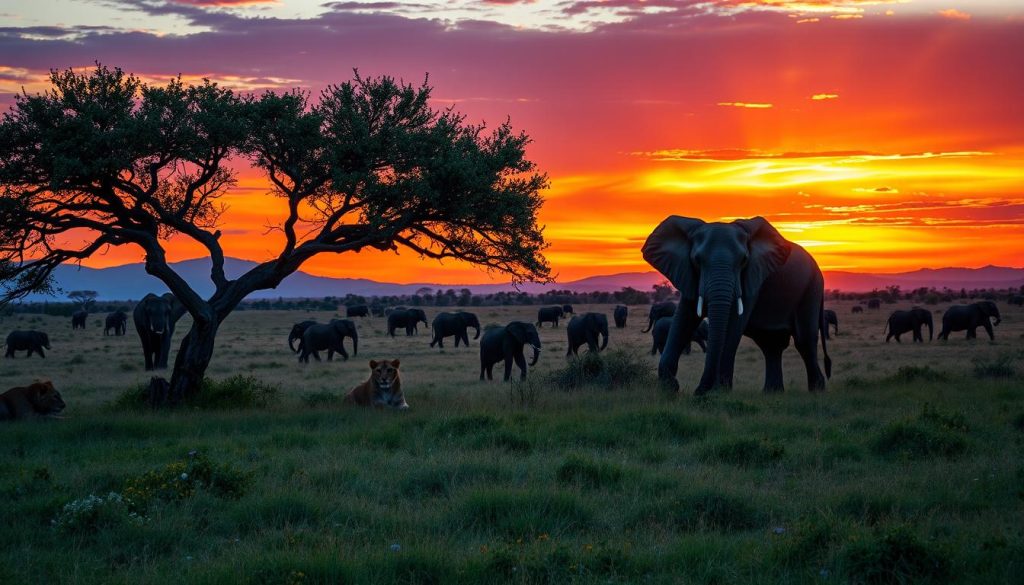
Guided safaris usually include open vehicle drives, increasing your chances of seeing the Big Five. You can choose from a short morning drive or a full-day adventure. Both are superb for wildlife photography and nature exploration. Reviewers often praise the friendliness and helpfulness of tour operators.
| Kruger National Park Statistics | Data |
|---|---|
| Trip Date Range | February 2015 – February 2020 |
| Positive Reviews | All Participants |
| Review Score | Positive |
| Key Aspects Mentioned | Knowledgeable guides, wildlife sightings, quality service, cultural insights |
| Big Five Encounters | Multiple Reviewers |
| Recommended Tour Operators | Endless Summer Tours |
| Appreciated Elements | Guide’s knowledge, wildlife identification, local culture |
| Positive Feedback | Friendliness and responsiveness of tour operators |
February Wildlife Safaris in Kenya’s Maasai Mara
February in Kenya’s Maasai Mara means amazing wildlife adventures. You’ll see green landscapes and many animals. The weather starts cool at 14 degrees Celsius, warming to 30 degrees by noon. It’s perfect for those who love guided wildlife tours.
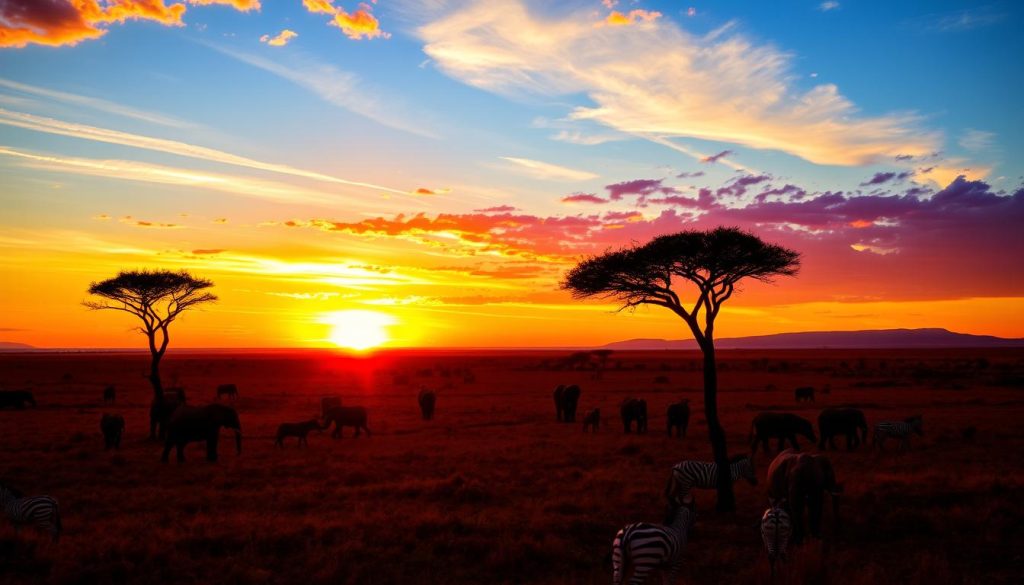
This month, the area is alive with nature. You’ll see baby elephants with their herds. It’s a touching sight for anyone. Also, groups of 500 Cape buffalo might be seen relaxing together.
February is key for the wildebeest since it’s their calving season. The plains become full of new life. This attracts cheetahs, lions, leopards, and hyenas, adding excitement to your safari.
Bird lovers will enjoy February too. Migratory birds from Europe join local birds like storks and herons. The variety of birds here is impressive.
In the lush Paradise Plains, you might spot the rare African serval. Male topis defend their territories, showing the wild side of nature. These sightings add to the thrill of wildlife adventures.
Early birds can see banded and dwarf mongooses at Governors’ campgrounds. They come out to find food. With fewer tourists in February, your guided wildlife tours are even better. You’ll feel closer to nature without the crowds.
Here’s a breakdown of what animals you might see in February:
| Animal | Activity |
|---|---|
| Elephants | Displaying young calves |
| Cape Buffalo | Large herds grazing |
| Wildebeest | Calving season |
| Predators (Cheetahs, Lions, Leopards, Hyenas) | Hunting vulnerable young animals |
| Banded and Dwarf Mongooses | Foraging at sunrise |
| Birds (European Migratory Birds, Storks, Herons) | Active birding season |
| African Serval | Sightings on grasslands and flats |
| Topis | Protecting their ‘leks’ |
The Maasai Mara in February is perfect for wildlife adventures. You’ll see the cycle of life up close. From baby animals to predator scenes, it’s a month full of discovery. It promises scenes and moments you’ll always remember during your guided wildlife tours.
Gorilla Trekking in Uganda’s Bwindi Impenetrable Forest
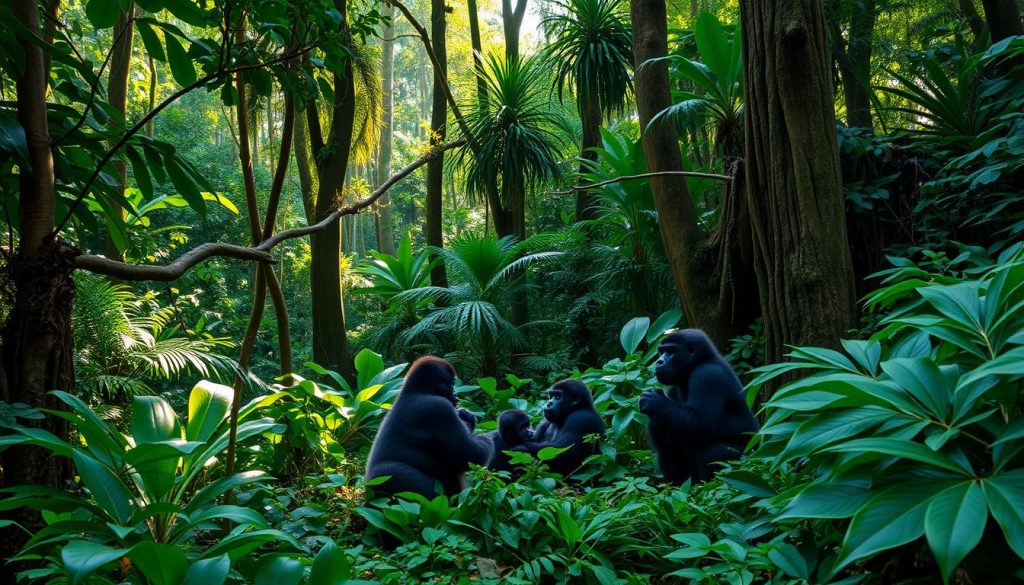
Set off on an exciting journey into Uganda’s Bwindi Impenetrable Forest. Here, you get to partake in a great wildlife adventure—gorilla trekking. This remarkable experience lets you watch mountain gorillas in their natural setting. It is a unique chance to explore nature like never before.
Why February is Ideal for Gorilla Trekking
February is the best time for gorilla trekking in Bwindi due to drier weather. The pathways in the rainforest are less muddy, making it easier to walk. This also improves your chances of seeing the gorillas. With less vegetation, you can see these incredible animals more clearly. The success rate of spotting gorillas is over 98% in the dry season.
Preparing for a Gorilla Trek
Getting ready for a gorilla trek means packing right for dry forest conditions. Choose sturdy boots and clothes that breathe well to move comfortably in the forest. Bwindi is home to 17 gorilla groups, more than anywhere else. This ensures an amazing wildlife adventure.
- Permits: Make sure to get your gorilla trekking permit early. In Uganda, permits cost $700, less expensive than Rwanda’s $1500.
- Acclimatization: Arrive a day earlier to get used to the altitude. This helps lessen tiredness.
- Guides and Briefing: Expert guides and trackers will give you a briefing at 7:30 am at the park’s headquarters. They make sure you are ready for your trek.
- Rules and Regulations: It’s important to follow rules to keep both you and the gorillas safe. Keep a 7-meter distance from the gorillas and don’t eat near them.
By following these guidelines and preparations, you can dive into the peaceful and captivating world of Bwindi. Your gorilla trekking adventure will become a key part of your exploration of nature and wildlife.
| Location | No. of Gorillas | Permits Available Daily | Cost of Permit (USD) |
|---|---|---|---|
| Bwindi Impenetrable National Park, Uganda | 500 | 170 | 700 |
| Volcanoes National Park, Rwanda | 150 | 96 | 1500 |
| Virunga National Park, Congo | 300 | N/A | 400 |
Bird Watching in India’s Ranthambore National Park
Ranthambore National Park offers a stunning experience for bird lovers and photographers. It’s home to over 300 bird species. This makes it a perfect place for wildlife tours and capturing nature’s wonders.
Best Spots for Bird Watching
Ranthambore has various habitats like grasslands, lakes, and hills. These places are great for spotting different birds. The best locations for bird watching are the lakes. Here, water birds such as ducks, pelicans, and storks can be seen.
The best time to visit is from October to February. This period attracts both local and migratory birds.

Wildlife Photography Opportunities
February is prime for wildlife photography in Ranthambore. The park’s lush setting and diverse birds make for great photo ops.
Whether it’s the elegant Indian Peafowl or the colorful Painted Stork, each moment is unique. Photographers can capture amazing wildlife moments.
Encountering Bengal Tigers
Besides birds, Ranthambore is great for seeing Bengal tigers. It’s one of the top places to witness these big cats. The park’s varied terrains give chances to see tigers in the wild.
Here is a comparison of top bird-watching spots in North India:
| Location | Prime Species | Highlights |
|---|---|---|
| Ranthambore National Park | Graylag Goose, Indian Gray Hornbill, Bee Eaters | Over 300 bird species, ideal from October to February, diverse habitats |
| Bharatpur Bird Sanctuary | Shoveller Duck, Northern Pintail, Common Teal | Evening boat rides, 29 sq km, migratory birds from Siberia and Central Asia |
| Pangot and Sattal | Green-tailed Sunbird, Eurasian Griffon, Red-billed Blue Magpie | Around 250 Himalayan bird species |
Exploring Ranthambore is an amazing experience. It offers majestic birds, thrilling tiger sightings, and beautiful scenery. It ensures a memorable adventure.
Nxai Pan in Botswana: Witness the Zebra Migration
Nxai Pan in Botswana is a beautiful place for nature lovers. It’s known for one of Africa’s longest mammal migrations. Every year, over 20,000 zebras travel a route over 1,000 kilometers long.

Highlights of the Zebra Migration
Watching tens of thousands of zebras migrate is truly amazing. They move from December to February and March to May. This offers great chances for those who love watching wildlife.
Nxai Pan is also a home for more than 200 bird species. Bird lovers find the migration period a perfect time for exploration.
Best Time to Visit Nxai Pan
The rainy season from December to March is the best time for visiting. The green landscape brings many zebras here for birthing. Plus, there are fewer tourists, making your visit more special.
Zebras gather on the park’s western edge before their return in March. To see the migration’s full glory, plan your trip around these times.
| Highlight | Description |
|---|---|
| Chobe-Nxai Pan Zebra Migration | Over 20,000 zebras migrate over 1,000 km each year, offering exciting wildlife watching opportunities. |
| Bird Species | Nxai Pan is home to over 200 bird species, particularly active during the migration period. |
| Ideal Visit Time | December to March during the rainy season for lush green landscapes and active wildlife. |
| Accommodation | The Migration Expeditions Camp provides comfortable stays, with rates of $3,564 per person for a 6-night stay. |
Untamed Adventures in Tanzania’s Tarangire National Park
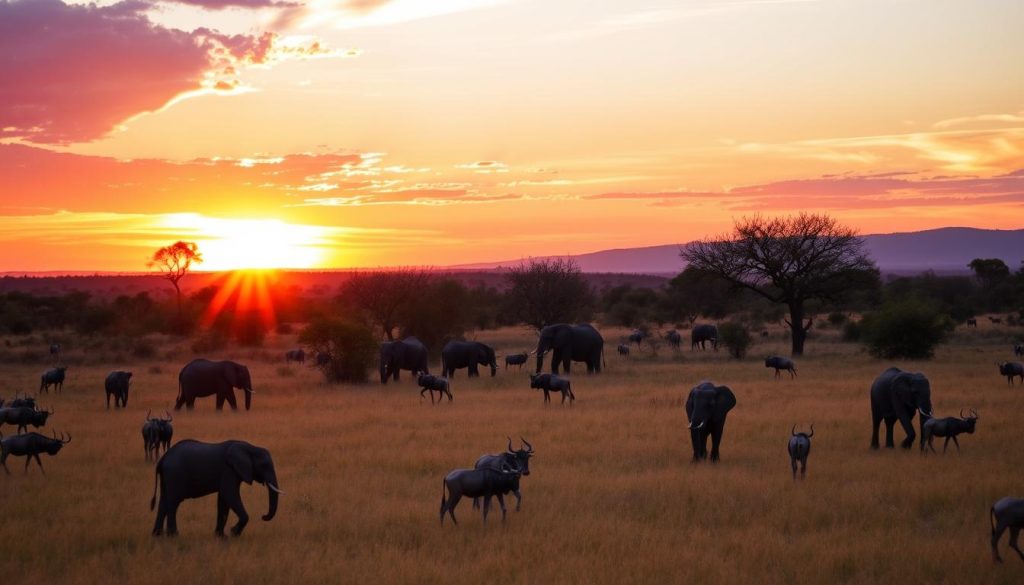
Tarangire National Park, nestled in northern Tanzania, offers some of the most exciting African safaris. It’s known for its wide landscapes and rich wildlife. The park is about 2,850 square kilometers big. It’s famous for its large number of elephants, open savannas, and unique baobab trees.
Landscape and Wildlife Diversity
The park’s landscape includes swamps, rivers, grasslands, and lush woodlands. This mix makes for a real wildlife adventure. It’s home to one of the biggest elephant groups in Tanzania. Visitors can also see wildebeest, zebras, giraffes, and over 550 bird species up close.
The wet season, from November to May, is perfect for bird lovers. It brings many migratory birds to the area.
Recommended Safari Tours
There are many safari tours in Tarangire National Park to fit any budget. Options range from luxury lodges like Tarangire Treetops and Oliver’s Camp to cost-effective camping. Group tours can save money, while private tours give a more personal touch.
A top choice is the 5-Day Tanzania Safari Adventure of a Lifetime. It includes Tarangire, Serengeti, Ngorongoro, and Manyara National Parks. This trip covers large distances each day, offering a full safari experience.
Hot air balloon safaris offer a bird’s eye view of the Serengeti at about $550 per person. The dry season, from June to October, is the best time for seeing animals gather at the Tarangire River.
Tarangire National Park, with its vast landscapes and variety of safaris, is a must-see for those wanting to experience African safaris and wildlife tours.
Wildlife Safaris in India: Tracking the Black Panther in Nagarhole
Nagarhole National Park is in Karnataka, India. It’s perfect for thrilling wildlife safaris. This park is known for a wide range of wildlife species. It’s a top spot for 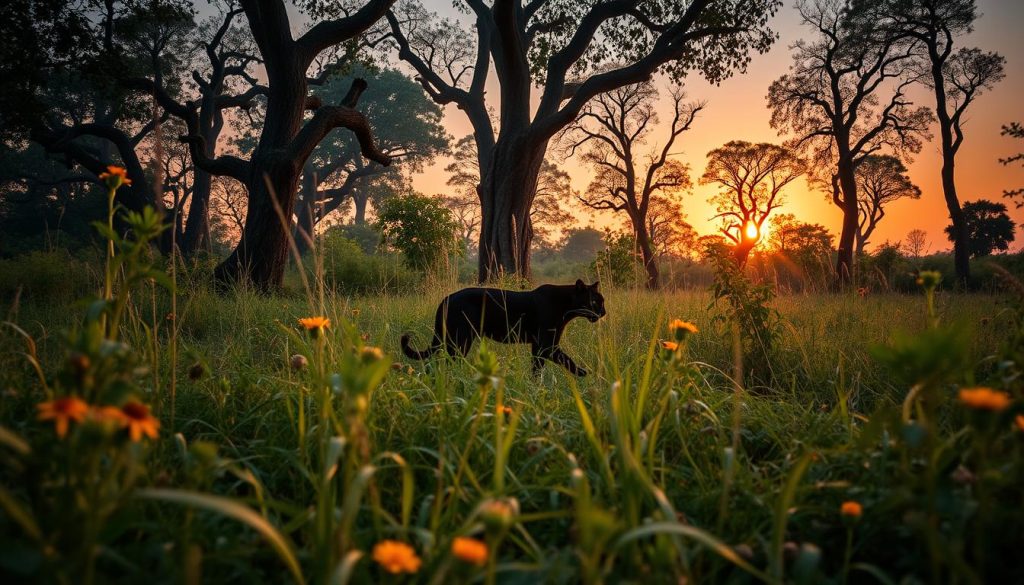 . One of the big draws is trying to spot the elusive Black Panther. However, seeing one is not guaranteed. This is due to the increasing numbers of tigers and leopards. So, patience and sharp observation skills are key.
Chances of Spotting the Black Panther
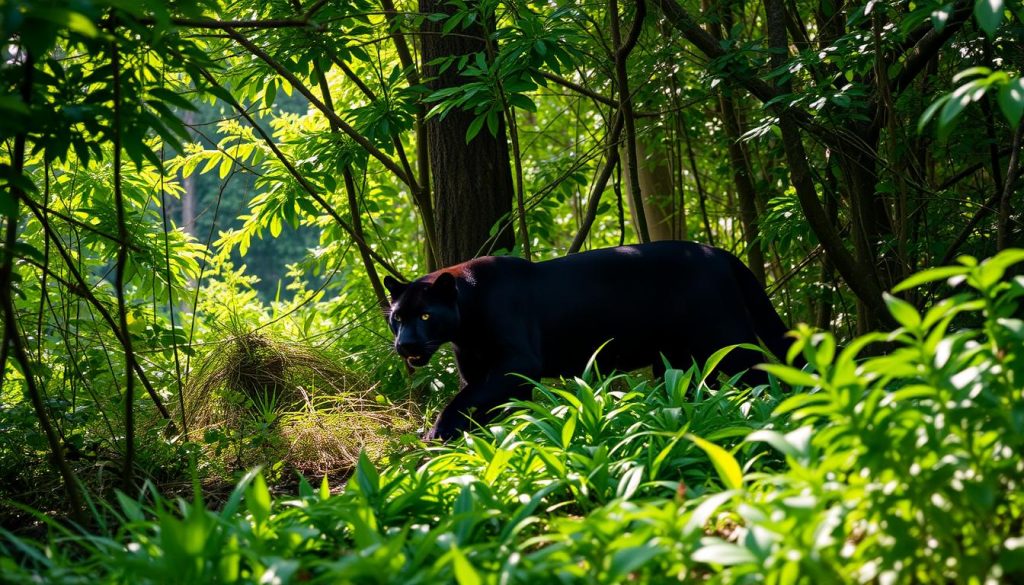
Trying to find a Black Panther in Nagarhole National Park is an incredible experience. Although these sightings are rare now, the park’s landscape and limited vehicle entries make it special. If you stay for 7 nights at the Kabini River Lodge, you can go on several safari drives. This increases your spotting chances. Expert guides from Indian Naturetrek will help you out. They share insights that make your adventure more interesting.
The Black Panther is harder to spot these days, mainly because there are more tigers and younger leopards around. Spotting this rare animal takes a keen eye and a bit of luck.
Other Animal Encounters
- Tigers: They are often seen on safaris, making each trip exciting.
- Leopards: Their agility and secretive behavior heighten the thrill of your wildlife adventures.
- Asian Wild Dogs (Dholes): These pack predators are always fascinating to observe.
- Asian Elephants: With over 1,000 elephants in Nagarhole, sightings are frequent, which is great for wildlife photography.
- Bird Species: The park has over 200 bird species, making it a haven for bird watchers.
A safari in Nagarhole offers more than just Black Panther sightings. You’ll also see animals like sloth bears, gaur, sambar, and chital. Not to mention, unique birds such as the Blue-winged Parakeet and Malabar Grey Hornbill are around. This variety ensures unforgettable wildlife trips for all. Whether you’re a seasoned photographer or a nature lover, there’s something for everyone.
Exclusive Safaris in Victoria Falls and Chobe National Park
Experience the best of nature by pairing safaris at Victoria Falls with Chobe National Park’s wildlife tours. This exclusive trip shows iconic landscapes, diverse animals, and memorable moments.
Victoria Falls: A Bucket-list Destination
Victoria Falls is a natural beauty, also known as “The Smoke That Thunders.” It’s known for its stunning waterfalls. The area offers guided safaris with scenic views and local wildlife.
It’s a must-visit for nature lovers. You can enjoy helicopter rides or walking tours. There are many ways to see this natural marvel.
- Tour Duration: 7 Days
- Total Destinations Visited: 4
- Accommodations: 3 luxury lodges
Game Drives and Boat Cruises in Chobe
Chobe National Park is famous for its large number of elephants, close to 80,000. Game drives and boat cruises offer up-close wildlife sightings. It’s a dream location for safari fans, providing unforgettable wildlife experiences.
A typical safari package might include:
| Features | Description |
|---|---|
| Wilderness Area | 260,000 acres at Okavango Delta |
| Elephant Population | 80,000 |
| Tour Type | Shared, max capacity 7-20 people |
| Luxury Accommodations | 3 Luxury Lodges |
| Inclusions | Meals, National Park fees, permits, emergency medical evacuation, laundry service |
| Exclusions | International flights, travel visas, tips, personal items |
This safari adventure combines Victoria Falls’ scenic beauty with Chobe’s wildlife thrills. It offers an unforgettable journey into nature.
Conclusion
As your adventure in nature comes to an end, remember February is the best time for safaris in Africa. You can witness the Great Migration in the Serengeti and Masai Mara. There’s also gorilla trekking in Uganda’s Bwindi Impenetrable Forest. February gives you a front-row seat to Africa’s most amazing wildlife.
Tanzania is magical in February for anyone who loves wildlife. Even though it’s hot, with temperatures reaching up to 33°C (91°F), the experience is unmatched. The Northern Safari Circuit is less crowded but filled with animals. It’s perfect for unforgettable safari photos.
If bird-watching in India’s Ranthambore National Park excites you or if you’re amazed by the zebra migrations in Botswana’s Nxai Pan, February has much to offer. You also won’t want to miss the magnificent Victoria Falls and the animals of Chobe National Park. There are safari options for everyone, making it possible to find the perfect adventure.
To summarize, safaris in February are a great way to deeply connect with nature. You might track the elusive Black Panther in Nagarhole or enjoy the vibrant scenes in Victoria Falls and Chobe National Park. Your journey will surely be filled with memorable moments and a new appreciation for the wild.