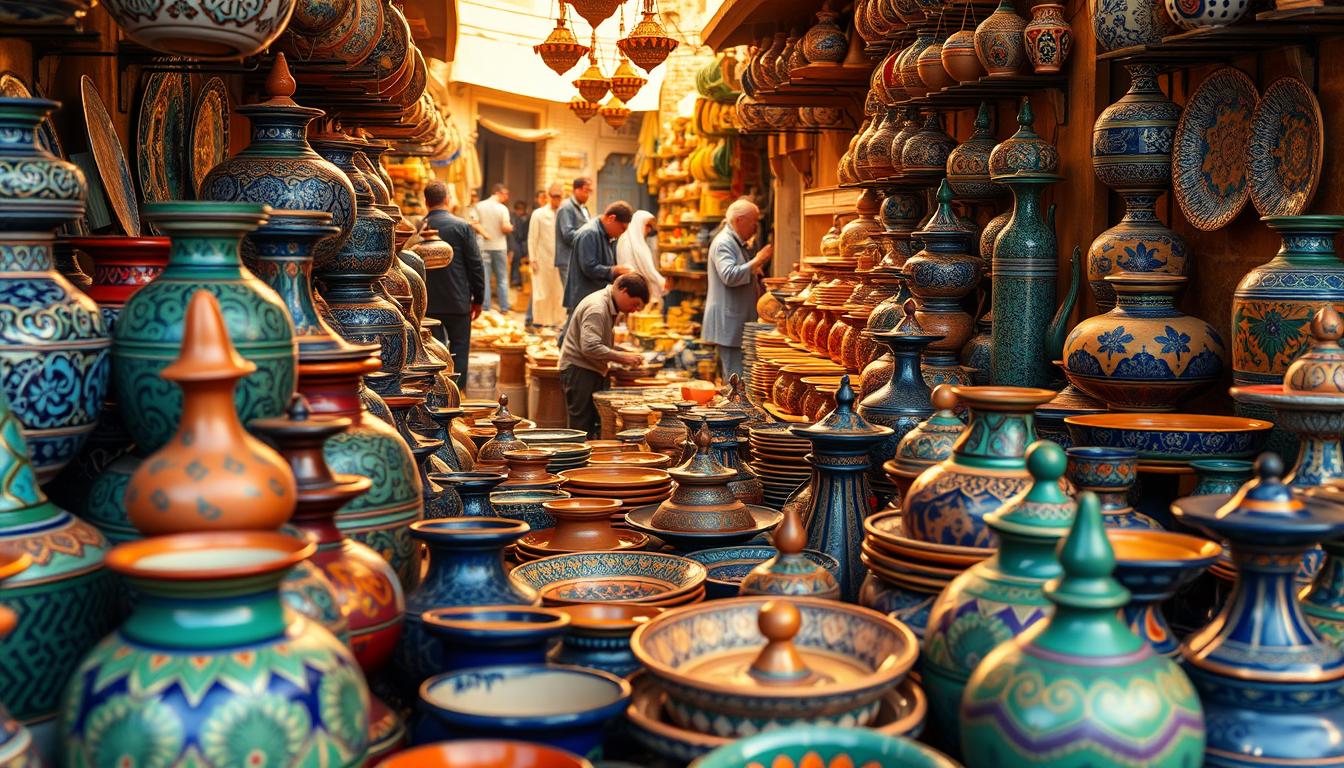
Visit the Fes Pottery Quarter: Immerse in Moroccan Ceramic Art
Ever wondered where Moroccan ceramics come to life? Picture walking through narrow streets. You’re surrounded by the sights, sounds, and smells of pottery production.
Exploring the historic district, you’ll find Morocco’s rich cultural heritage. The artisans shaping clay and the vibrant ceramics will amaze you.
By visiting this iconic quarter, you dive into Moroccan ceramic art. It’s where tradition and creativity meet. Prepare to discover the secrets of this ancient craft and see Morocco’s cultural beauty.
The Cultural Significance of Moroccan Ceramic Art
The art of Moroccan ceramics is deeply tied to the country’s history and daily life. Walking through the Fes Pottery Quarter, you’ll see ceramics are more than just decorations. They are functional items and symbols of culture.
A Living Museum of Moroccan Craftsmanship
The Fes Pottery Quarter is a living museum of Moroccan craftsmanship. Here, traditional techniques are kept alive and passed down through generations. You’ll see artisans working with methods unchanged for centuries.
This shows the skill of the artisans and the importance of ceramics in Moroccan culture.

The Role of Ceramics in Moroccan Daily Life and Culture
Ceramics are key in Moroccan daily life, used for everything from tableware to decorative tiles in mosques and palaces. The designs and patterns on these ceramics often have symbolic meanings. They add cultural depth to their beauty.
Understanding ceramics in Moroccan culture gives you a glimpse into the country’s rich heritage. It shows how traditional crafts remain important in today’s world.
Historical Evolution of Fes Ceramic Traditions
The Fes ceramic tradition has a long history, starting in the 9th century. Fes became a key place for making ceramics. It has seen many changes thanks to different cultures.
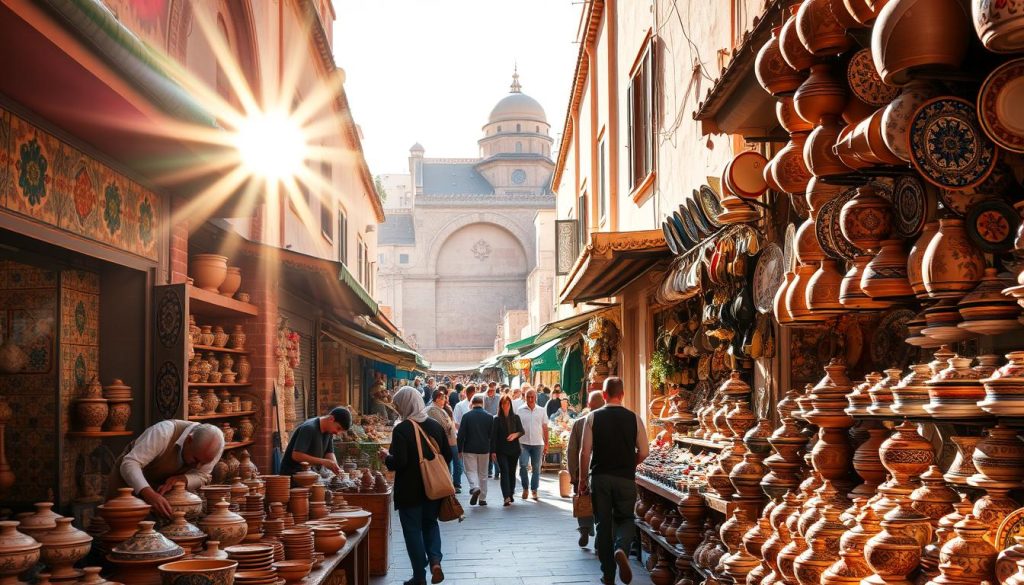
Origins Dating Back to the 9th Century
The story of Fes pottery began in the 9th century. This was when ceramics first started in the city. It set the stage for Fes to become famous for its pottery.
The city’s mix of cultures and its location helped its pottery grow. This made Fes pottery special.
Andalusian Influence on Fes Pottery
The Andalusian influence is clear in Fes pottery’s designs and techniques. Andalusian refugees came in the 15th century. They brought new skills and art, adding to Fes pottery.
This mix of styles has made Fes pottery unique. It’s what makes it stand out today.
How the Tradition Survived Through Centuries
Despite many challenges, Fes pottery has kept going. Local artisans’ hard work and the demand for Fes pottery helped. Efforts to keep the techniques and designs alive have kept the tradition alive.
Visiting the Fes Pottery Quarter lets you see this tradition up close. The traditional pottery of Fes shows the city’s rich history and the skill of its artisans.
Navigating the Fes Pottery Quarter: Location and Layout
Exploring the Fes Pottery Quarter is an adventure. Its narrow streets and busy souks are full of surprises. Located in the old medina’s heart, it’s a maze of workshops, showrooms, and handcrafted ceramics Fes souks.
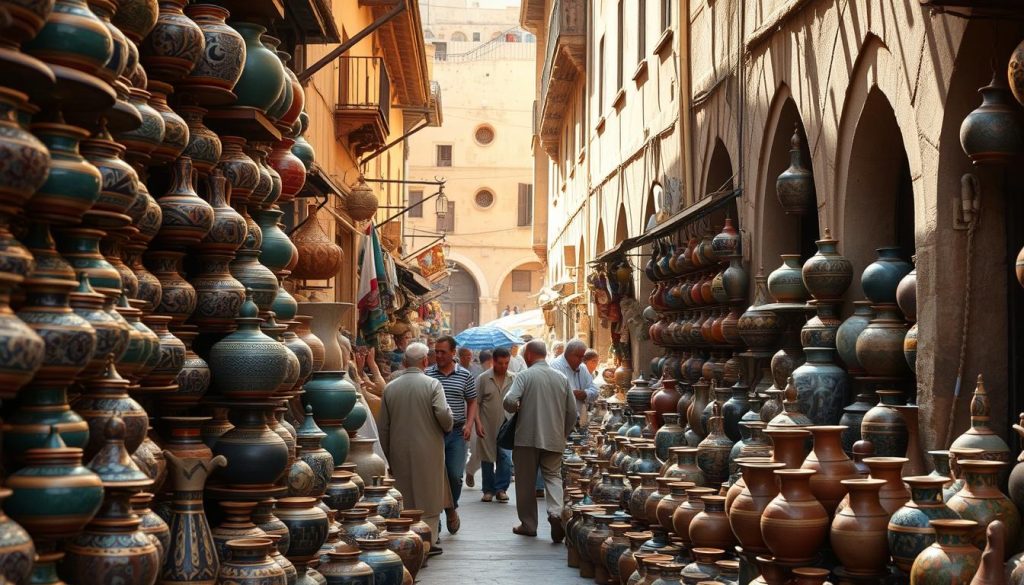
Finding Your Way to the Pottery District
Start at the Bab Bou Jeloud, the ancient gate to the old medina. Follow signs to the pottery district. Walking is easy, or hire a local guide to find hidden spots.
The Organization of Workshops and Showrooms
Workshops and showrooms are grouped by craft. You’ll see potters, decorators, and experts in glazing and firing. This setup lets visitors see the whole process and admire the handcrafted ceramics Fes.
Recommended Routes for First-Time Visitors
First-timers should start at the main square. Watch artisans at work. Then, wander the alleys to see workshops and showrooms. Don’t miss the souks for a wide range of ceramics and the lively Fes pottery souk vibe.
The Mesmerizing Process of Fes Ceramic Production
When you enter the Fes Pottery Quarter, you’re surrounded by the magic of artisanal ceramics Fes. Skilled artisans shape, mold, and fire clay, turning it into stunning art.
The making of these ceramics is a detailed process. It starts with preparing the clay. Local artisans use traditional methods to ensure top quality.
Clay Preparation and Molding Techniques
The first step is preparing the clay. The raw material is selected, cleaned, and mixed with water. Then, artisans use different techniques to shape the clay into the desired form.
| Technique | Description | Skill Level |
|---|---|---|
| Hand-building | Shaping clay by hand to create unique forms | Advanced |
| Wheel-throwing | Using a potter’s wheel to create symmetrical pieces | Expert |
The Traditional Firing Process
After molding, the pieces are dried and fired in a kiln at high temperatures. This firing is key for durability and quality. Fes ceramic artisans have perfected this over centuries.
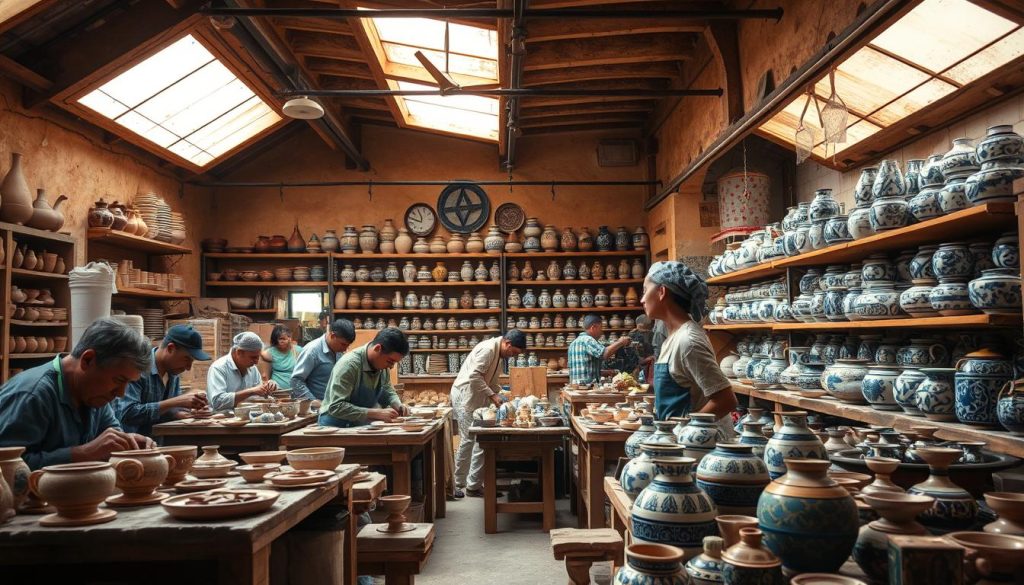
Glazing and Decorating: Where the Magic Happens
The last steps are glazing and decorating. Artisans add intricate designs and patterns, often using cobalt pigments for the signature blue of Fes. This step requires skill and detail, as the glaze beautifies and protects the ceramic.
Watching the artisans work, you’ll appreciate the craftsmanship and tradition of artisanal ceramics Fes. Each piece shows the skill and dedication of the Fes ceramic artisans.
Distinctive Features of Fes Pottery and Ceramic Art
Fes ceramics stand out with their blue glaze, symbolic patterns, and regional flair. As you explore Fes pottery, you’ll see why it’s so valued in Moroccan pottery tradition and Fes ceramic heritage.
The Famous Blue of Fes: Cobalt Pigments
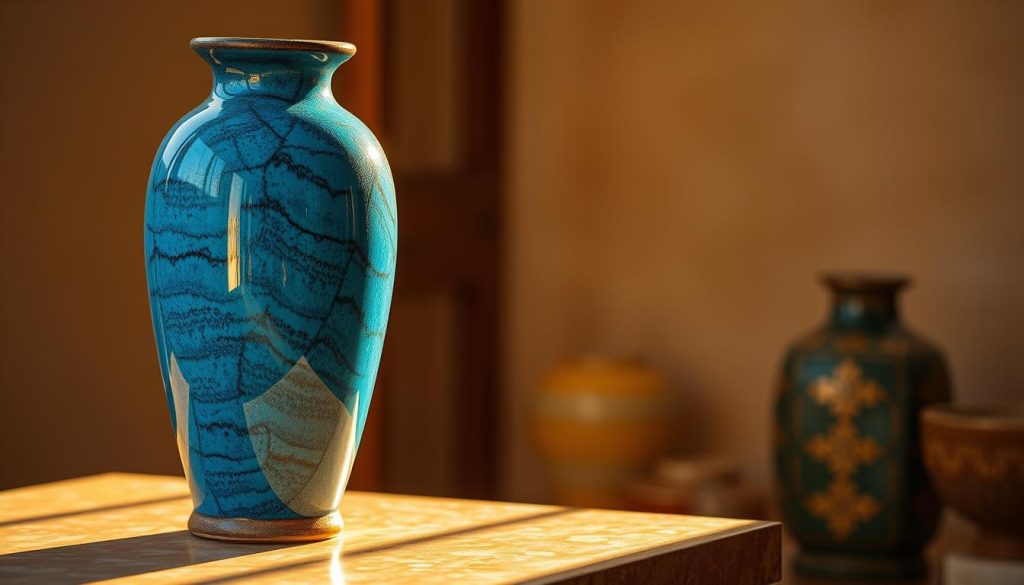
Fes pottery is famous for its bright blue glaze, made from cobalt pigments. This blue is a hallmark of Fes ceramics, showing the city’s rich history and cultural exchange. Artisans mix cobalt oxide with other materials to get the perfect blue, a skill passed down through generations.
Traditional Patterns and Their Symbolic Meanings
The patterns on Fes ceramics are more than just pretty designs. They carry deep symbolic meanings from the city’s culture and religion. Geometric patterns might symbolize unity and harmony, while floral motifs can mean prosperity and good luck. Knowing these meanings adds a new level of appreciation for Fes pottery.
| Pattern Type | Symbolic Meaning |
|---|---|
| Geometric | Unity, Harmony |
| Floral | Prosperity, Good Fortune |
| Calligraphic | Spiritual Significance, Blessings |
Regional Variations Within Moroccan Pottery
Fes is known for its unique ceramics, but Morocco’s other regions have their own styles too. For example, Fes has blue and white ceramics, while Meknes is famous for green-glazed pottery. Safi is known for terracotta wares. These differences show the diversity and richness of Moroccan pottery tradition, with each area adding its own flair to the national heritage.
Meet the Master Artisans of the Fes Pottery Quarter
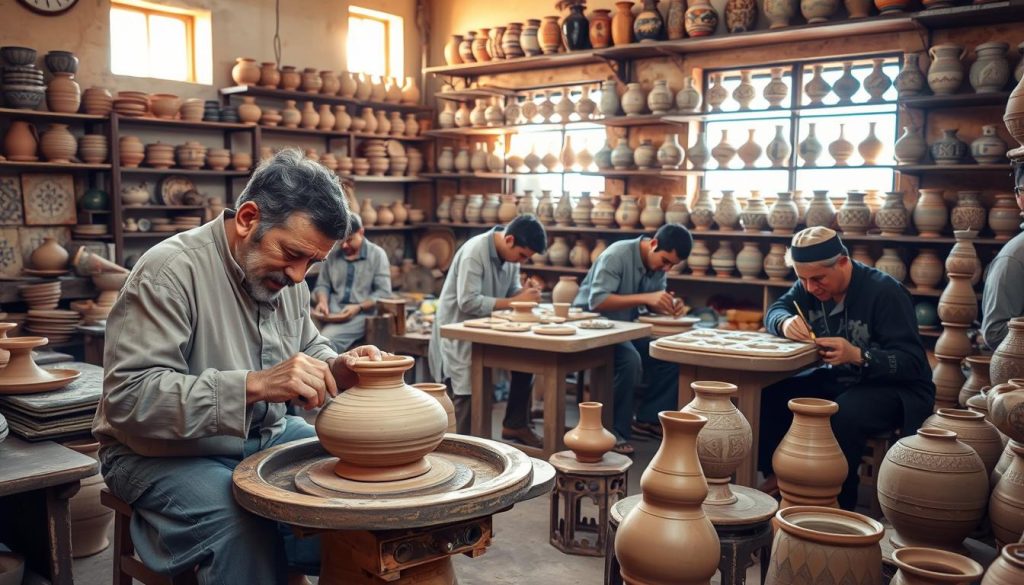
As you explore the Fes Pottery Quarter, you’re surrounded by master artisans. They have perfected their craft over generations. The quarter is filled with skilled Fes ceramic artisans whose talent shines in every piece.
Generations of Family Expertise
Many artisans in the Fes Pottery Quarter come from families with a long history in pottery. This legacy is not just about skills; it’s about the cultural value of each piece. You can see the pride in their work, showing years of dedication and tradition.
The Apprenticeship System
The traditional apprenticeship system is still used in the Fes Pottery Quarter. Young artisans learn from experienced masters, keeping techniques and traditions alive. This system teaches pottery skills and respects the art form deeply.
Stories from Notable Ceramic Artists
Some artisans are known for their exceptional skill and innovative designs. Their stories highlight the quarter’s vibrant community. By visiting Fes pottery workshops, you can hear these stories and appreciate the craftsmanship more.
The master artisans of the Fes Pottery Quarter are more than craftsmen. They are the keepers of a centuries-old tradition. By supporting them, you help preserve Moroccan ceramic art.
Hands-On Experiences: Workshops and Demonstrations
Step into the Fes Pottery Quarter and get ready to get your hands dirty. You’ll take pottery-making classes and demonstrations led by local artisans. This is a unique chance to learn about Moroccan ceramics and appreciate the art.
Pottery-Making Classes for Visitors
Visitors can join pottery-making classes for all skill levels. You’ll learn how to shape clay and glaze finished pieces. Skilled artisans will help you create your own handcrafted ceramics to take home.
Demonstration Schedules and What You’ll Learn
The Fes Pottery Quarter has regular demonstrations. Check the schedule to see a live demonstration. You’ll see the artisan’s skill from start to finish, learning about Fes ceramics.
Cultural Etiquette When Visiting Workshops
When visiting workshops, respect local customs. Dress modestly and remove your shoes if needed. Be polite and respectful to the artisans. This will make your experience better and show respect for the community.
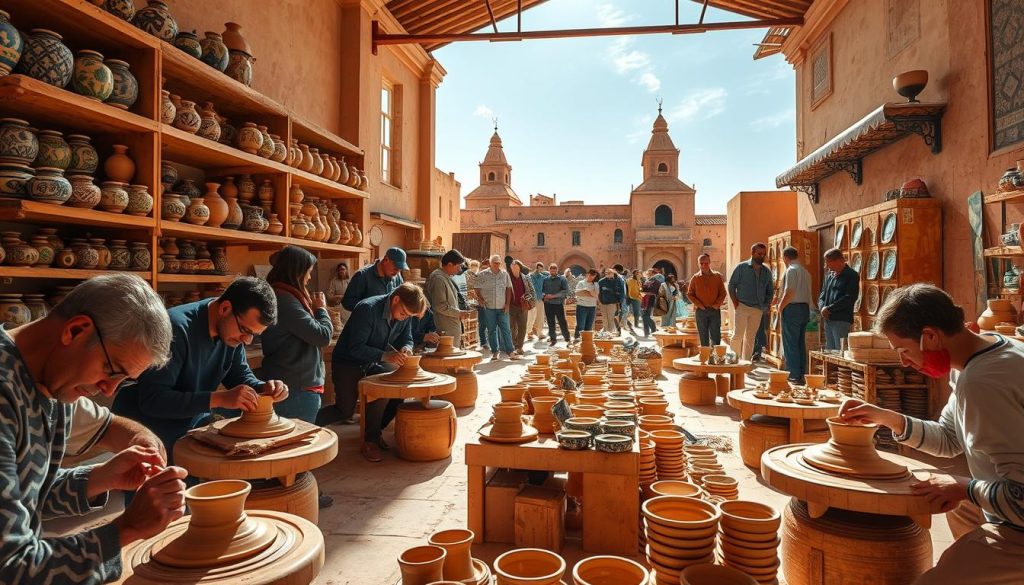
By joining these experiences, you’ll love Fes pottery even more. You’ll make your own ceramics or watch artisans work. The Fes Pottery Quarter is a place where you can connect with Moroccan ceramics’ rich culture.
- Engage in pottery-making classes tailored to your skill level.
- Witness live demonstrations of traditional pottery-making techniques.
- Respect local customs and etiquette during your visit.
Shopping Guide: Finding Authentic Fes Ceramics
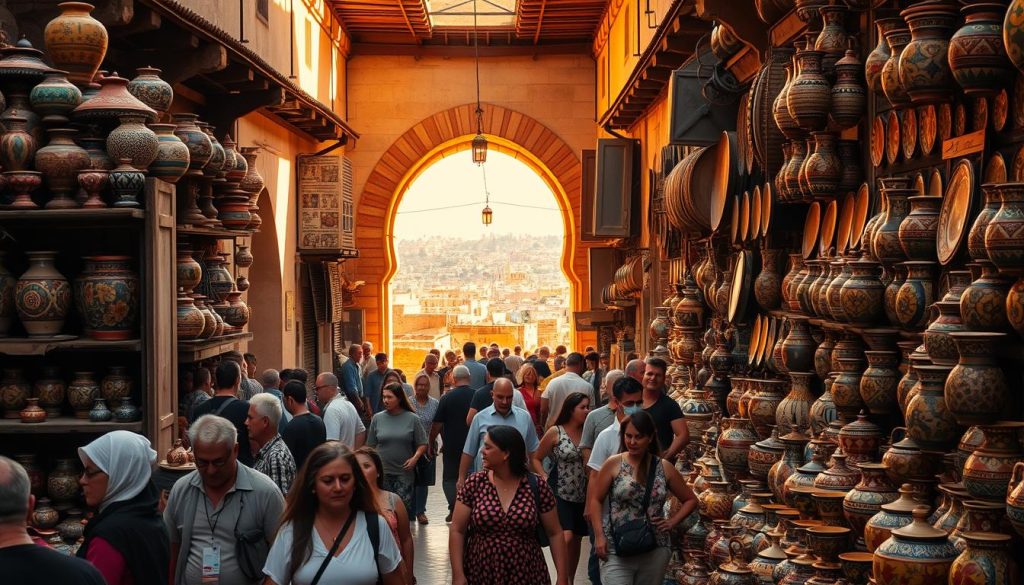
As you explore the Fes Pottery Quarter, you’ll find a wealth of authentic ceramics. These pieces showcase Morocco’s rich cultural heritage. The Fes pottery souk is a key spot for experiencing Fes’s traditional pottery.
Quality Craftsmanship
When looking for Fes ceramics, focus on quality craftsmanship. Seek out items with traditional techniques and fine details. Intricate designs, vibrant colors, and a smooth glaze are signs of good craftsmanship. You can also ask the artisans about their process to learn more about their skills.
Popular Ceramic Items
Fes is known for its traditional pottery, including decorative tiles, vases, and dinnerware. Traditional pottery Fes is valued for its unique designs and historical importance. Make sure to visit different workshops and souks to find the ideal piece.
Negotiating Prices
Negotiating prices is common in the Fes Pottery Quarter. To negotiate well, research the average prices of items you like. Be respectful and ready to walk away if the price isn’t fair. Building a good relationship with the seller can help you get a better deal.
Shipping Your Treasures Home
After finding the perfect item, make sure it’s shipped safely. Ask the seller about their shipping policies and procedures. Many places offer professional packaging and shipping to protect your purchase. Consider getting shipping insurance to cover any damage.
Photography and Visitor Tips for the Fes Pottery Quarter
Exploring the Fes Pottery Quarter is a mix of skill and respect. It’s filled with artisanal ceramics Fes and lively workshops. You’ll see the beauty of ancient crafts up close.
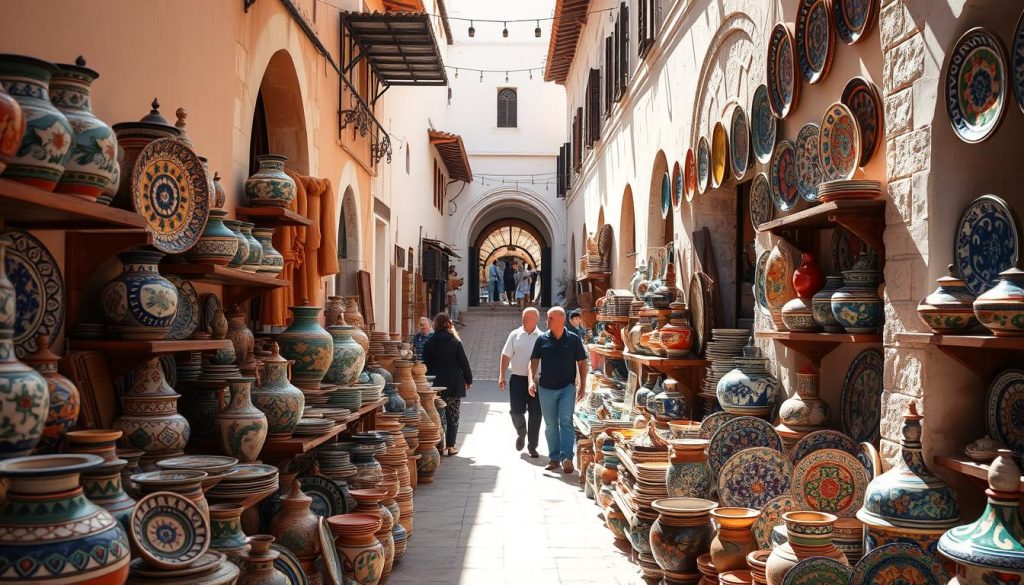
Best Photo Opportunities and Lighting Conditions
The Fes Pottery Quarter is perfect for photos, with morning light being the best. Look for scenes of artisans at work or the pottery’s patterns.
- Take advantage of the golden hour for warm, soft light.
- Experiment with different angles to capture the intricate details.
- Be mindful of the artisans and their workspace.
Respectful Photography Practices
Respect is key when taking photos in the Fes Pottery Quarter. Always ask before taking someone’s picture. Be careful not to disturb the artisans’ work.
“Photography is a powerful tool, but it’s equally important to respect the privacy and work of the artisans.” – A local artisan
What to Wear and Bring for Your Visit
Wear modest and comfy clothes for your visit. Choose shoes that are good for walking. Bring a hat and sunscreen to protect yourself from the sun.
- Comfortable walking shoes.
- Light, breathable clothing.
- Water and snacks to stay hydrated.
Being prepared and respectful lets you enjoy the Fes pottery quarter fully. You’ll leave with great photos and memories.
Conclusion: Preserving the Legacy of Fes Ceramic Art
As you finish your tour of the Fes Pottery Quarter, you’ll have a new respect for its rich culture and art. This place shows the beauty of Moroccan pottery tradition. It’s a living piece of history.
It’s important to keep Fes ceramic art alive. By supporting local artists and honoring their ways, you help preserve it. Moroccan pottery is more than just making ceramics. It’s about keeping a cultural tradition alive for future generations.
When you leave the Fes Pottery Quarter, you’ll remember the bright colors, detailed patterns, and the warmth of the artisans. You can help keep this craft alive by sharing your experiences and appreciating Moroccan pottery tradition.