

Explore Thimphu’s Artisan Workshops & Markets
Ever thought about how a simple craft can tell a culture’s story? In Thimphu, Bhutan’s capital, local workshops and markets show off rich traditions and art. Artisans here use old techniques to make famous handcrafted goods, like textiles and incense.
Visiting these workshops, you’ll see the crafts Thimphu is known for. You’ll also hear the stories behind each piece. It’s a chance to connect with the culture and the people who make it.
Thimphu is a key place for traditional arts, full of life. The Weekend Market is a hub where vendors sell their work. Places like the National Institute for Zorig Chusum train the next generation of craftsmen.
Talking to local artisans, you’ll learn more about Bhutanese culture. You’ll see how much they value their artistic heritage. Are you ready to explore Thimphu’s artisan scene?
The Heart of Bhutan’s Artisan Culture
Bhutan’s artisan culture is a key part of its identity. The traditional crafts in Thimphu show the history and spiritual traditions of its people. Each piece made by local artisans carries values of daily life, respect for heritage, and community ties.
Artisans mostly work from home or in small workshops. They make crafts for both local use and the tourism market. This helps the Thimphu artisan community thrive, keeping traditional skills alive.
In the artisan world, community spirit is crucial. Artisans work together, encouraging creativity and innovation. This shows how traditional crafts in Thimphu can grow while staying true to their roots. Visitors to Thimphu feel this mix of old and new, bringing Bhutan’s artistry to life.
Understanding Zorig Chusum: The 13 Traditional Arts
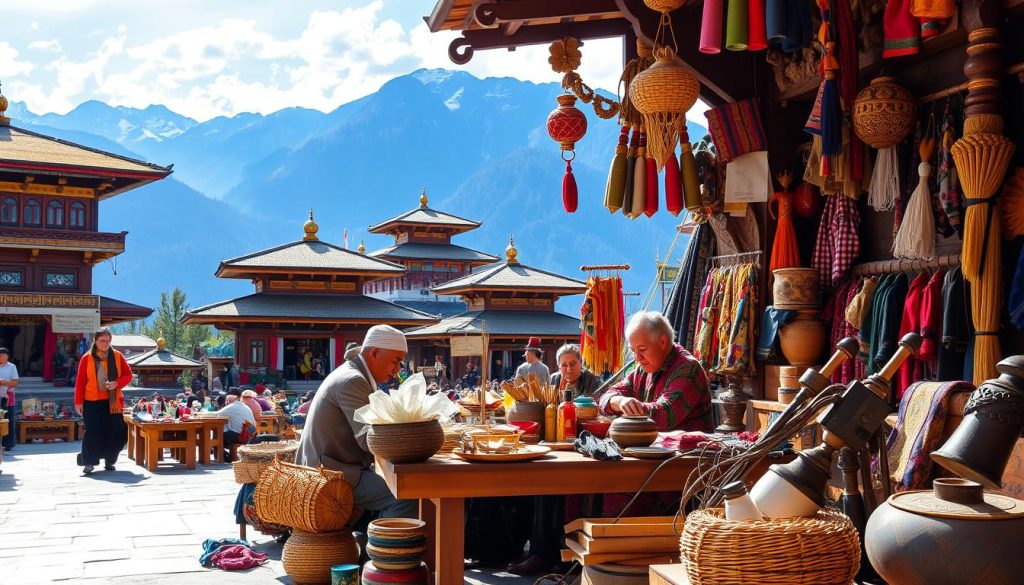
Zorig Chusum, or “the 13 arts,” is at the heart of Bhutan’s traditional crafts. It includes a wide range of skills that show off Bhutan’s culture and spiritual values. Each art form is special, showing the creativity of Bhutanese artisans.
The 13 traditional arts included in Zorig Chusum are as follows:
| Art Form | Description |
|---|---|
| Lhazo | Traditional painting showcasing religious themes and nature. |
| Jimzo | Sculpting art mainly used for creating intricate religious statues. |
| Parzo | Woodcarving that produces detailed architectural elements and designs. |
| Jinzo | Clay art, which includes the crafting of pottery and clay masks. |
| Lugzo | Bronze casting, introduced by Newari artisans from Nepal. |
| Shingzo | Woodwork that involves creating furniture and traditional tools. |
| Troeko | Goldsmithing and silversmithing, often creating traditional jewelry. |
| Thagzo | Weaving textiles from various materials like cotton and silk. |
| Tshemzo | Embroidery and tailoring crucial for traditional garments. |
| Tshazo | Bamboo and cane crafts, significant for local economies. |
| Dezo | Paper making, using the bark of the Daphne tree. |
| Dozo | Stonework, an ancient craft related to architecture. |
| Zozo | Blacksmithing, crucial for producing tools and ceremonial items. |
Exploring Zorig Chusum shows more than just the skills of traditional crafts. It tells stories of Bhutan’s culture and religion. It’s a chance to see Bhutan’s art and the skills passed down through generations.
Local Artisan Workshops and Markets in Thimphu
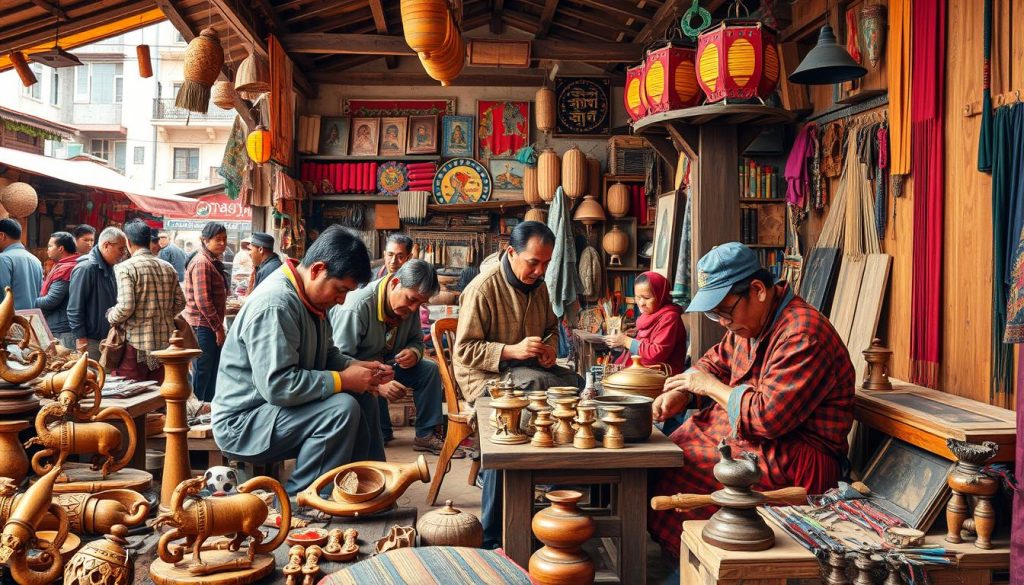
Thimphu is a vibrant place filled with local artisan workshops and markets. Here, you can explore Bhutan’s craft heritage. The Craft Gallery is a key spot, showcasing works from 15 established artisans and 42 new talents.
These artists create amazing pieces that show off Bhutanese culture. You can find everything from textiles to ceramics and woodwork here.
The Craft Gallery is open on weekdays. In summer, it’s open from 10:00 AM to 6:00 PM. In winter, it’s open from 10:00 AM to 5:00 PM. It’s a place where artists can get their work seen by more people.
The gallery also works with an international partner in Singapore. This lets artisans sell their work all over the world.
The Handicrafts Emporium is another must-see in Thimphu. It’s filled with high-quality handicrafts like textiles, wood carvings, and traditional clothing. It’s a place where locals and tourists can find authentic Bhutanese products.
Visiting the Local Craft Bazaar is a great way to dive into Bhutanese craftsmanship. It’s near the Handicrafts Emporium and comes alive during festivals. Here, artisans sell their handmade goods, offering a chance to meet the creators.
The bazaar focuses on authenticity and community. It’s a key part of Thimphu’s artisan scene.
Engaging with Local Artisans
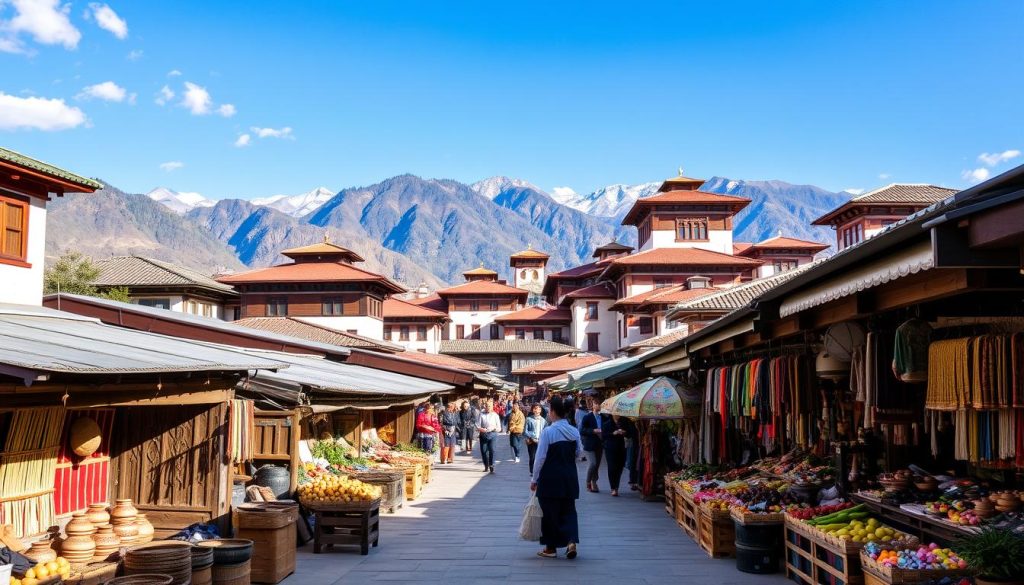
Visiting Thimphu lets you see the skill behind Bhutan’s art. The city is full of handcrafted goods that show off the country’s culture.
At places like the Handicraft Emporium and CSI Market, you meet artisans. They share their passion and the hard work that goes into their work. Each item, from woven textiles to wooden bowls, has a story.
Talking to artisans at these spots helps you understand their dedication. Buying their work supports them and brings a piece of Bhutan’s art home. It makes your visit more meaningful, showing you the heart of Bhutan’s creativity.
Key Artisan Workshops to Visit
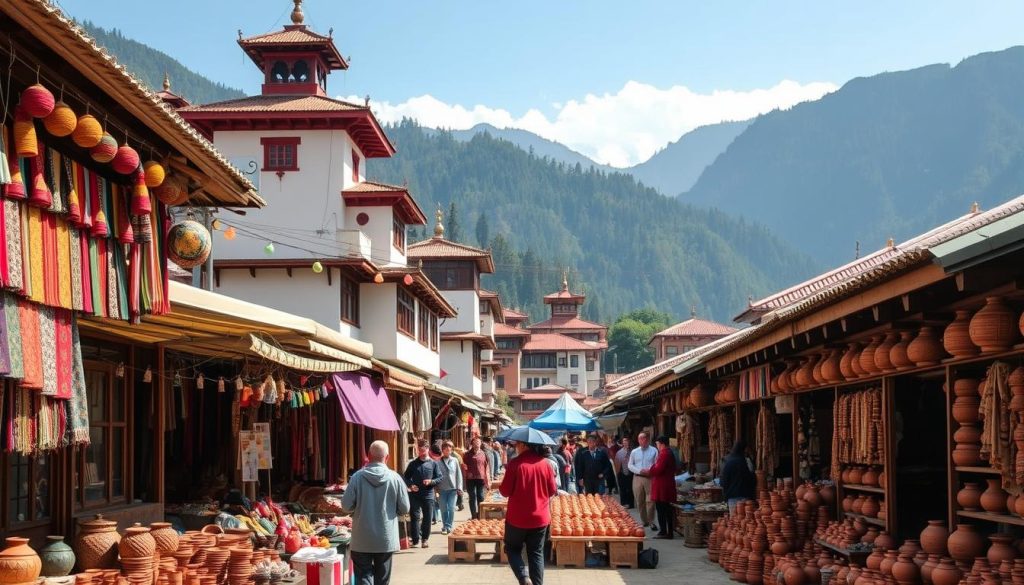
Exploring Thimphu’s local artisan workshops and markets is a unique chance to see Bhutan’s rich traditions. These workshops help keep cultural heritage alive. They also show the skills of local artisans.
The National Institute for Zorig Chusum
This institute is key to keeping Bhutan’s traditional crafts alive. Visitors can watch students learn various arts. They can also join workshops to see the detailed skills needed.
The institute’s nurturing environment shows the hard work needed to master these crafts.
The Royal Textile Academy
The Royal Textile Academy brings Bhutan’s textile heritage to life. A museum shows off beautiful textiles and the natural dyes used. You can join weaving workshops to connect with this craft.
This enriches your experience of Thimphu’s traditional crafts.
Gagyel Lhendrup Weaving Center
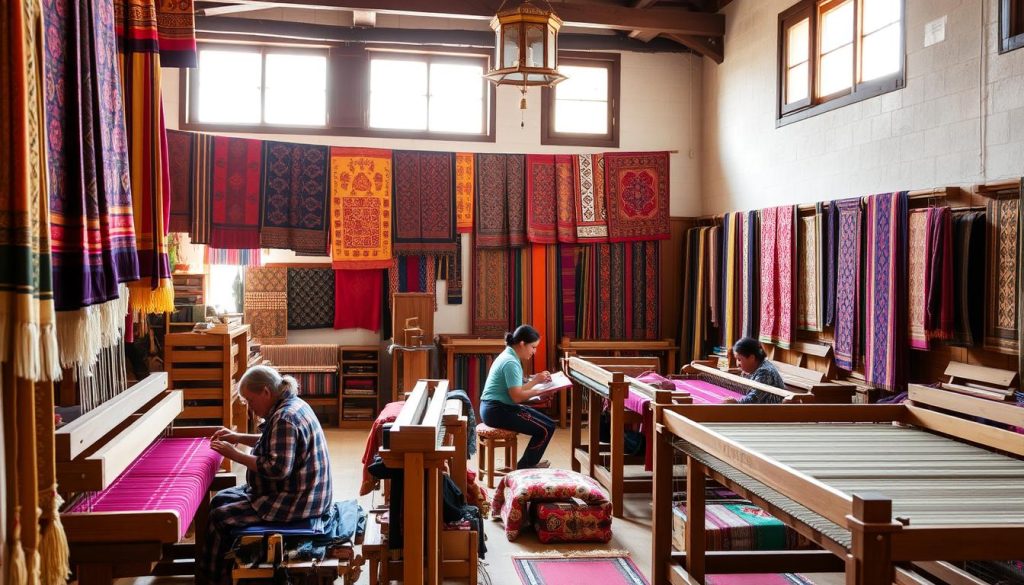
Gagyel Lhendrup Weaving Center works to keep weaving traditions alive. They use backstrap looms and natural dyes to make stunning fabrics. Here, you can buy textiles for traditional attire or unique home decor items.
This center captures the heart of Thimphu’s local artisan workshops and markets.

| Workshop Name | Focus | Activities Offered | Unique Features |
|---|---|---|---|
| The National Institute for Zorig Chusum | Traditional Arts | Artisan workshops, Classes | Preservation of 13 traditional arts |
| The Royal Textile Academy | Textile Heritage | Weaving workshops, Museum tours | Natural dye techniques, Rich heritage display |
| Gagyel Lhendrup Weaving Center | Weaving Traditions | Handloom weaving, Product sales | Use of backstrap looms, Variety of fabrics |
Exploring Thimphu’s Artisan Markets
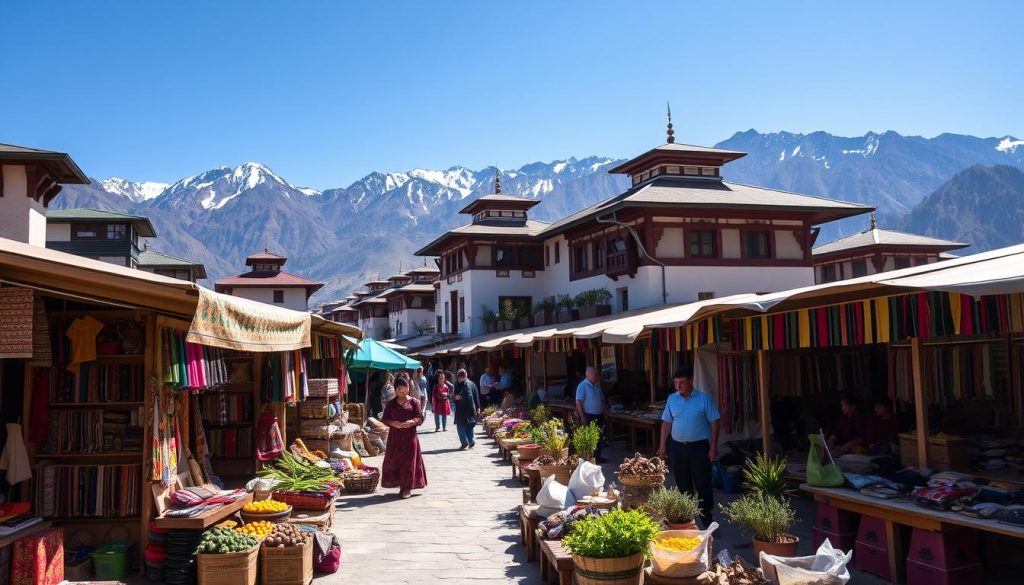
Visiting Thimphu’s artisan markets is a must when exploring its vibrant culture. These markets are filled with unique products that show off Bhutan’s artistic heritage. You can meet local artisans and see their creative work up close.
CSI Market
The CSI Market is a favorite spot for local handicrafts, organic goods, and artisanal foods. Its lively stalls offer a wide range of beautiful items made by skilled craftspeople. It’s not just for shopping; it’s a place for community and creativity.
Here, you can find handcrafted jewelry, colorful textiles, and tasty food items. These items celebrate Bhutan’s entrepreneurial spirit.
Handicraft Emporiums
In Thimphu, the handicraft emporiums have a wide variety of traditional crafts. You’ll see paintings, sculptures, and handmade textiles made by local artisans. Shopping here lets you talk with the creators and learn about their work.
This connection makes your shopping experience richer. You can buy unique items like thangka paintings or woven baskets. Each purchase supports the local community and keeps Bhutanese art alive.
| Market Name | Products Available | Experience |
|---|---|---|
| CSI Market | Handmade crafts, organic foods, artisanal snacks | Vibrant atmosphere, community engagement |
| Handicraft Emporiums | Traditional crafts, textiles, paintings, sculptures | Direct interaction with artisans, learning about techniques |
Unique Artisan Products to Discover
Thimphu is a special place filled with unique artisan products. The culture and traditions here are reflected in the handmade arts and crafts. Each item tells a story and shows the skill of local artisans, making them treasures to find and buy.
Handwoven Textiles and Fabrics
Handwoven textiles, like kiras and ghos, are highly sought after in Thimphu. These traditional clothes have intricate patterns and bright colors, showing the importance of Bhutanese culture. They not only show the skill of the region but also tell stories of Bhutan’s heritage.
When you visit local markets, you’ll see these fabrics. They are a testament to the artistry in Thimphu.
Traditional Bhutanese Crafts
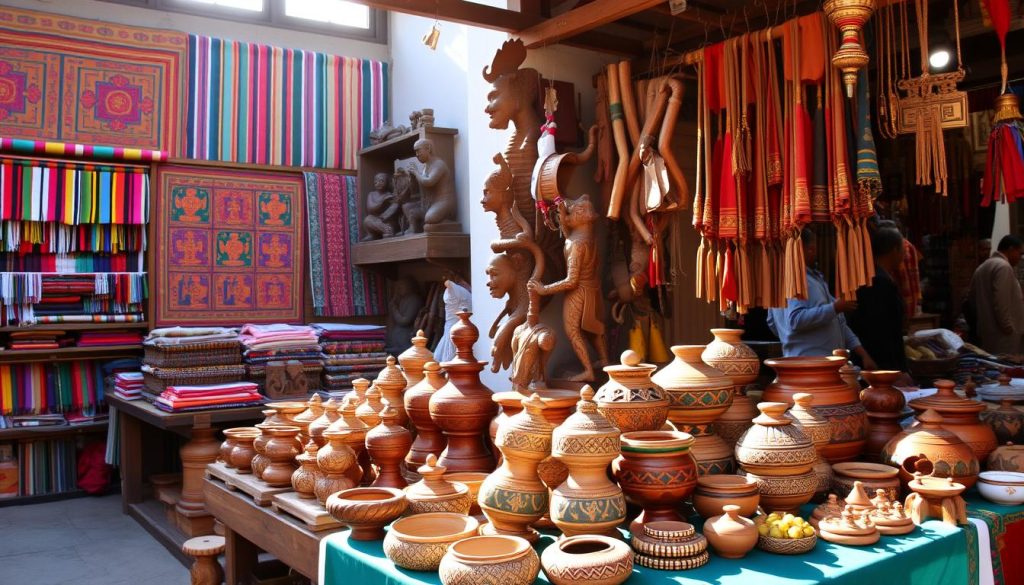
The markets also have a variety of traditional crafts. You can find beautiful pottery and thangkas, which show the spirituality of Bhutan. Each piece of pottery and wooden carving is made with great care, showing the cultural importance in every item.
Buying these handmade arts and crafts in Thimphu is not just about getting beautiful items. It also helps the talented artisans make a living.
| Product Type | Description | Unique Aspects |
|---|---|---|
| Handwoven Textiles | Kiras and ghos | Intricate patterns and colors that reflect cultural stories |
| Pottery | Bowls, cups, and vases | Traditional craftsmanship made with local materials |
| Thangkas | Religious paintings on cotton or silk | Depictions of Buddhist themes and teachings |
| Wood Carvings | Statues and household items | Reflect traditional Bhutanese motifs and spirituality |
Experiencing the Art of Weaving
Weaving is a key part of Bhutan’s rich artistic traditions. At artisan workshops in Thimphu, you can dive into this ancient craft. You’ll get hands-on experience at places like the Royal Textile Academy and Gagyel Lhendrup Weaving Center.
Here, you’ll learn the detailed steps of making textiles. From setting up the loom to using natural dyes, it’s a unique learning experience. Master weavers will show you how raw materials become stunning textiles.
By working with these experts, you’ll see the skill needed to create these crafts. You’ll also get to meet artisans and hear their stories. This helps you understand the importance of their work in Bhutan’s culture.
These workshops are part of Textile and Handicraft Tour packages. These tours also let you see other crafts, like wooden bowls and Bhutanese paper. You’ll learn about the spiritual and symbolic value of textiles in Bhutanese life.
| Workshop | Location | Features |
|---|---|---|
| Royal Textile Academy | Thimphu | Focus on textiles and exhibitions |
| Gagyel Lhendrup Weaving Center | Thimphu | Hands-on weaving experiences |
| Traditional Weaving Villages | Rural Bhutan | Observation of master weavers |
Weaving is more than just a craft; it connects you to Bhutan’s traditions and communities. At the artisan workshops in Thimphu, you’ll learn weaving skills. You’ll also gain a deep respect for Bhutanese artistry.
Supporting the Thimphu Artisan Community
Helping the Thimphu artisan community is key to keeping traditional crafts alive. Buying goods from local workshops in Thimphu does more than just support artisans. It also helps grow the economy.
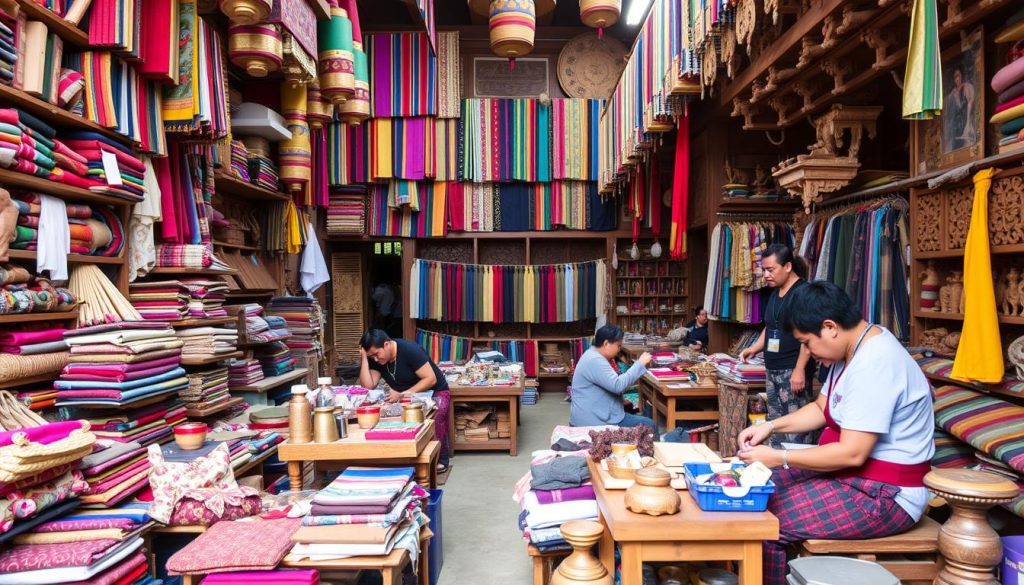
The Handicrafts Emporium in Thimphu is a treasure trove of handcrafted items. You’ll find handwoven textiles, wood carvings, and ceramics. Each piece shows the hard work and skill of the artisans.
Visiting local workshops in Thimphu lets you meet the makers of these special items. The Local Craft Bazaar is another place where artisans sell their work directly. It’s a chance for cultural exchange and community growth.
Buying from these artisans does more than just get you a unique item. It helps keep Bhutan’s culture alive and encourages new ideas. By taking part in local markets and workshops, we help traditional crafts flourish.
| Community Impact | Description |
|---|---|
| Economic Growth | Poverty alleviation through sustainable livelihoods for artisans. |
| Preservation of Culture | Promotion of traditional crafts through community engagement. |
| Global Awareness | Highlighting Bhutanese culture at international fairs and exhibitions. |
| Innovation | Support for artisans adopting new ideas and technologies. |
| Skills Development | Training programs encouraging craftsmanship and product development. |
Conclusion
To truly get the essence of Bhutanese culture, you must visit Thimphu’s artisan workshops and markets. Each visit shows a rich mix of traditional crafts and lively art. This art reflects the unique heritage of the area.
From Thangka paintings that tell Buddhist stories to the detailed textiles at the Royal Textile Academy, every piece tells a story. It gives a peek into Bhutan’s creative soul.
Going beyond just looking, talking to local artisans connects you to Thimphu’s heart. Joining workshops at places like the National Institute for Zorig Chusum lets you see the skill passed down through generations. The Thimphu artisan markets are also full of life, offering local foods like Ema Datse and a chance to meet the community every weekend.
By diving into this artistic journey, you join Bhutan’s story of creativity and tradition. Supporting these artisans not only keeps their craft alive but also deepens your love for Bhutanese culture. So, your trip through Thimphu, its workshops, markets, and people, becomes a valuable piece of evidence of their art and spirit.





