Explore Bhutanese Cuisine: Cooking Classes in Thimphu
Have you ever wondered why Bhutanese cuisine is still a secret to many? As you explore Thimphu, the capital of Bhutan, you’ll discover its bold flavors and unique ingredients. Bhutanese cooking classes let you dive into authentic dishes and experience local culture.
Join us as we explore Thimphu’s culinary world. We’ll look at essential ingredients and the benefits of mastering traditional techniques.
The Flavorful World of Bhutanese Cuisine
Bhutanese cuisine is known for its bold and unique tastes. It uses local ingredients and ancient recipes. The flavors are shaped by red rice, yak meat, and chili peppers, showing a strong bond with the land.
Spices in Bhutanese cooking do more than add flavor. They represent the culinary traditions in Bhutan. These traditions aim to warm people up in the cool mountain climate.
Ema Datshi, a mix of cheese and chilies, is Bhutan’s national dish. Shakam Paa, a hearty dish, reflects the country’s values. You’ll find dishes like Jasha Maru, known for its heat, and Phaksha Paa, a favorite pork dish.
Food waste is a big issue in Bhutan, but they’ve found creative solutions. Zow Shungo is a dish made from leftovers, showing their resourcefulness.
By taking culinary classes, you’ll learn more than just cooking. You’ll dive into a culture that values community and sustainability. You’ll enjoy dishes that blend tradition and modernity, offering a deep dive into Bhutan’s unique flavors.
Introducing Authentic Bhutanese Cooking Classes in Thimphu
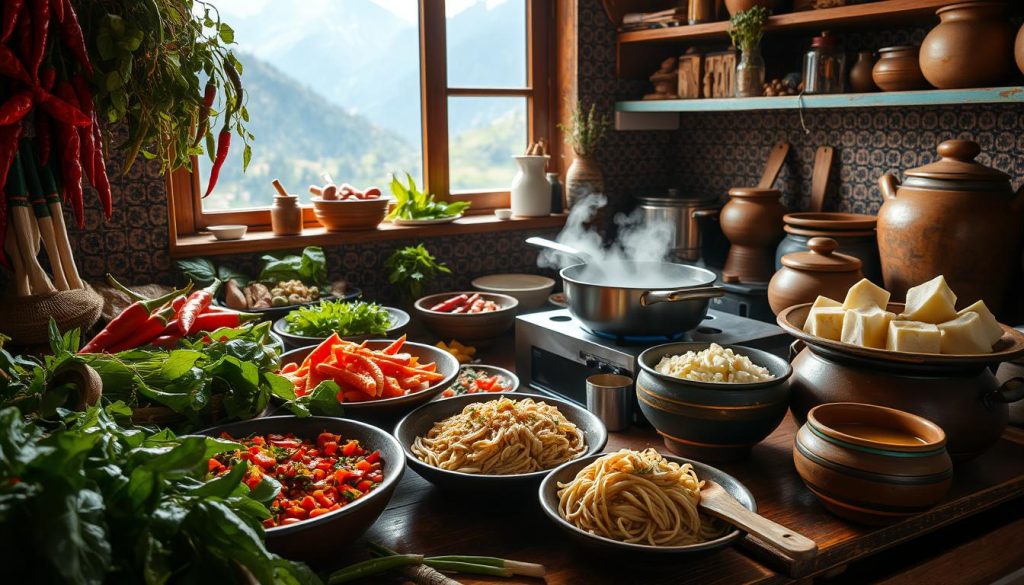
Joining Thimphu cooking classes is a deep dive into Bhutanese culture. You’ll learn not just how to cook but also the traditions behind Bhutanese food. You’ll start by picking fresh ingredients at local markets, essential for authentic dishes.
What to Expect from a Cooking Class
At MK Restaurant, in Centre Point, Clock Tower Square, Thimphu, you’ll make five traditional Bhutanese dishes. These include:
- Ema Datshi (Chilli Cheese)
- Pork Pa
- Jhasa Maru (Chicken Stew)
- Rainbow Trout
- Jhaju (Spinach Stew)
You’ll learn various cooking methods like stir-frying and stewing. Rice, a staple, is served with these dishes, often eaten with your hands.
Benefits of Learning Bhutanese Cooking
Thimphu cooking classes let you explore Bhutan’s unique flavors. You’ll learn about air-dried produce, herbs, and spices. It’s more than cooking; it’s about understanding Bhutan’s hospitality and food traditions. It’s a fun and enriching experience.
Popular Dishes You Will Learn to Cook
When you take Bhutanese cuisine lessons, you’ll discover many traditional recipes. These dishes are loved in Bhutanese homes. You’ll learn to cook popular dishes that show off Bhutan’s rich flavors and traditions.
Ema Datshi: The National Dish
Ema Datshi is Bhutan’s national dish. It’s a simple stew made with chili peppers and cheese. This dish is a staple in Bhutan, enjoyed with almost every meal. You can try different cheeses and chilies to make it your own.
Momos: Traditional Dumplings
Momos are another dish you’ll learn to make. These dumplings are filled with minced vegetables or meat. They’re a quick snack that shows off Bhutan’s culinary heritage. People love Momos not just in Bhutan but across the Himalayas.
Phaksha Paa: Spicy Pork Dish
Phaksha Paa is a spicy pork dish that showcases Bhutan’s bold flavors. It’s served with rice, which is a big part of Bhutanese meals. Making Phaksha Paa will teach you about the importance of spices in Bhutanese cooking.
Learning to cook these dishes will improve your cooking skills. It will also help you appreciate Bhutan’s flavorful traditions. Each dish has its own story, inviting you to explore Bhutan’s culinary world.
Where to Find Cooking Classes in Thimphu
Thimphu is a great place for food lovers to discover Bhutanese flavors. Many cooking workshops in Thimphu offer hands-on learning. They are perfect for both beginners and experienced cooks.
Top Cooking Schools and Their Offerings
COMO Bhutan is a top cooking school in Thimphu. They offer 6-night culinary retreats. Prices vary by season.
| Season | Price (USD) | Deposit (30%) | Remaining Payment Deadline |
|---|---|---|---|
| Low Season | $7,797 | $2,339.10 | 30 days prior |
| Mid Season | $8,715 | $2,614.50 | 60 days prior |
| High Season | $9,021 | $2,706.30 | 60 days prior |
The cooking classes teach traditional recipes. Skilled instructors guide you. You’ll learn about important ingredients like pork, chicken, and spices.
Working with local chefs, you’ll see how Bhutan’s culture is reflected in cooking. It’s a unique way to learn.
Local Kitchen Experiences for Authentic Learning
Local kitchens in Thimphu also offer special culinary experiences. You can join Bhutanese families in their kitchens. It’s a chance to see how they cook and share meals together.
These experiences let you dive deep into Bhutanese culture. You’ll learn about cooking traditions and make new friends. It’s a memorable way to connect with the local way of life.
Cooking Workshops in Thimphu: A Cultural Immersion
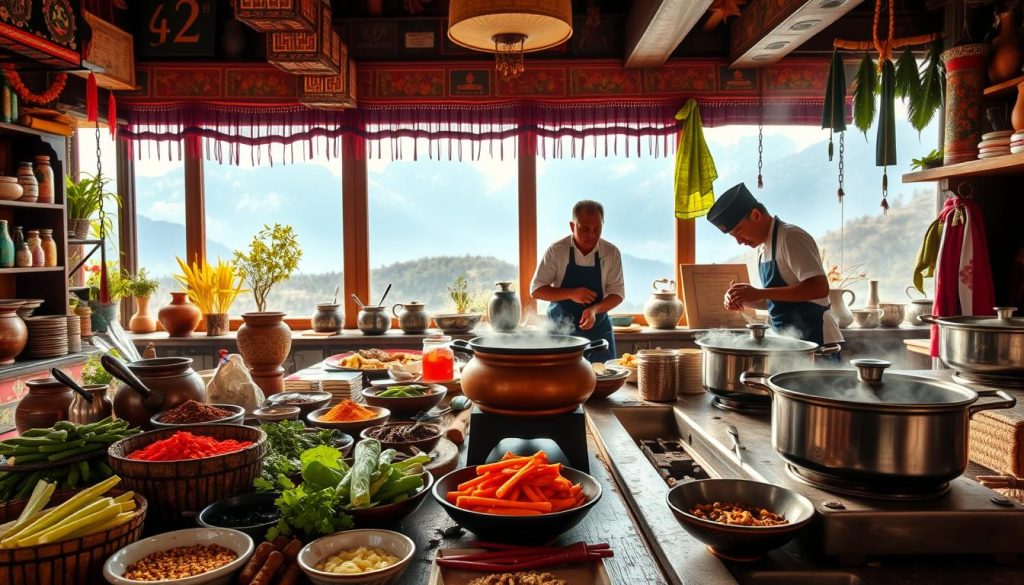
Cultural cooking sessions in Thimphu offer a unique chance to explore Bhutanese cooking traditions. You’ll get to appreciate local heritage more deeply. Many visitors enjoy these immersive experiences, learning from local chefs and families.
Hands-on cooking classes are a hit, with about 70% of tourists eager to dive into Bhutanese cuisine. They learn about seasonal ingredients and community eating practices. This deepens their understanding of Bhutan’s culture.
These workshops do more than teach cooking. They also offer insights into Bhutan’s traditions. You might visit artisan studios and see old craft-making techniques. Traditional ceremonies and dinners add to the sense of community.
An 8-day educational trip often includes:
| Day | Activities |
|---|---|
| Day 1 | Hands-on cooking class led by a renowned Bhutanese chef in Thimphu |
| Day 2 | Visit to a local cheese factory to taste Ema Datshi, a Bhutanese staple |
| Day 3 | Cooking session focused on traditional dumplings and seasonal vegetables |
| Days 4-5 | Stay in Gangtey Valley, exploring cultural sites |
| Days 6-7 | Hiking options to Taktsang Monastery in Paro |
| Day 8 | Farewell dinner prepared by an LGBTQ+-owned restaurant |
This mix of cooking and culture makes your trip unforgettable. It shows off Bhutan’s food scene and its values of Gross National Happiness. These sessions help you connect with the land and its people.
Essential Bhutanese Ingredients to Know
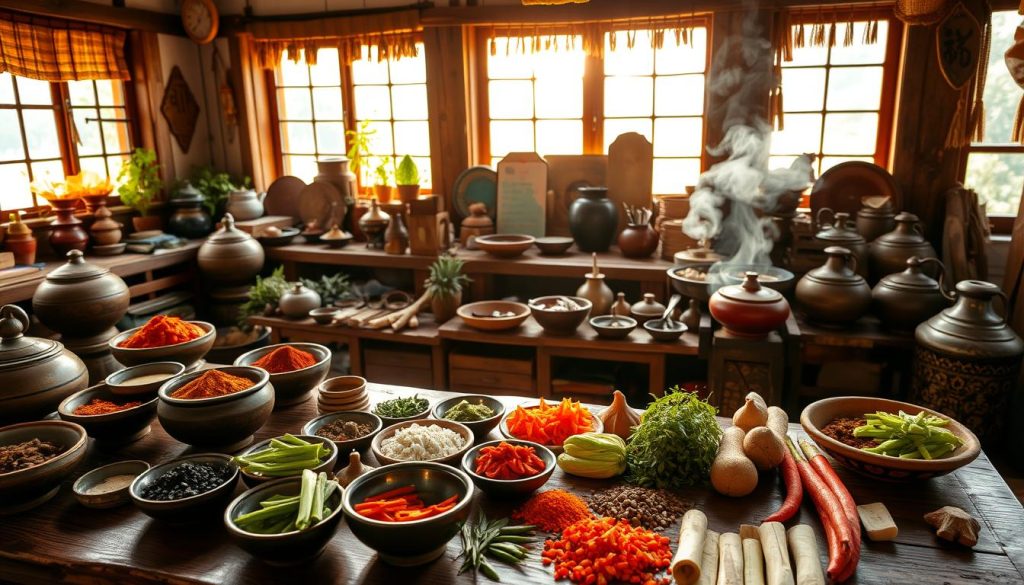
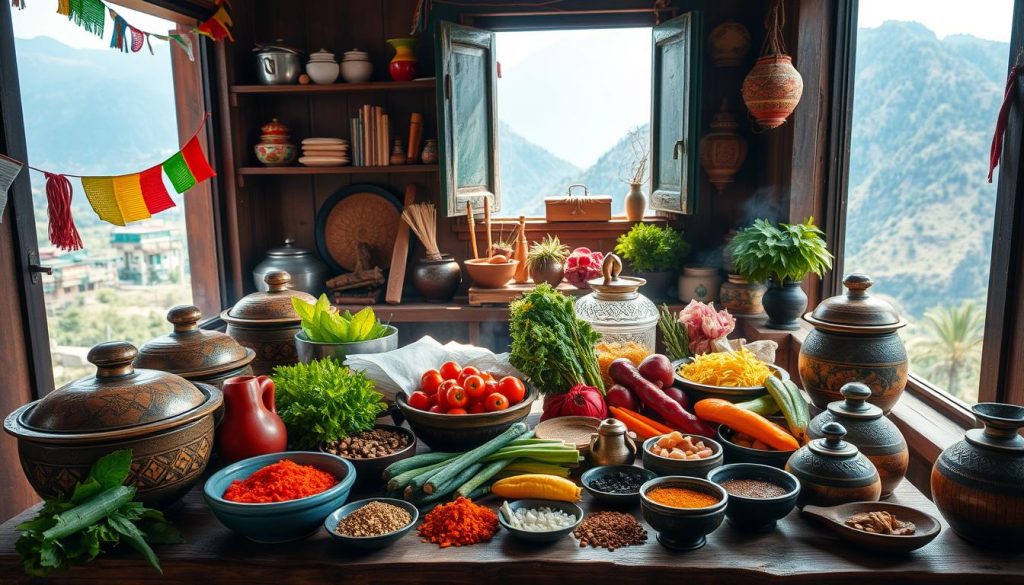
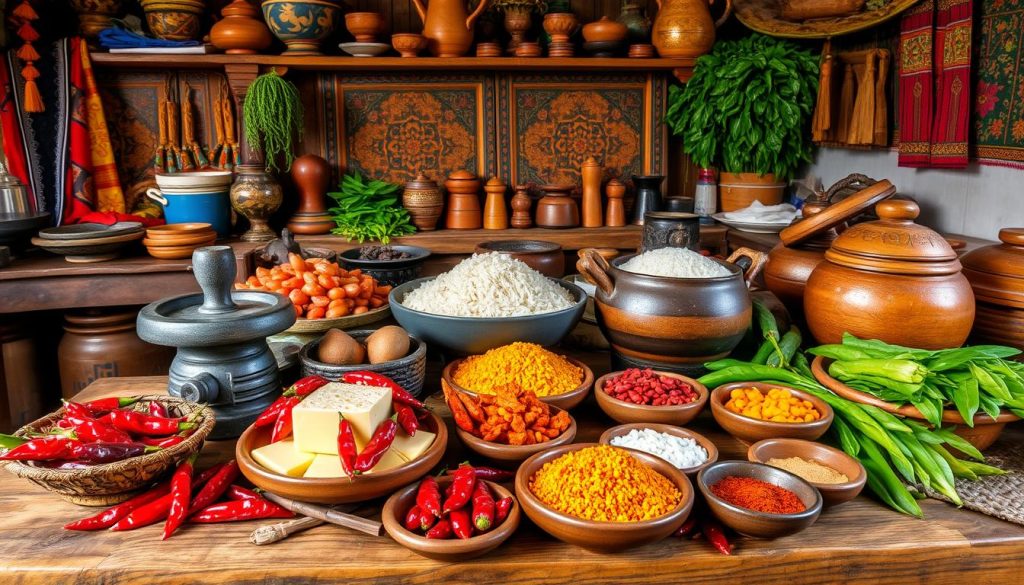
Learning about Bhutanese ingredients is key to mastering Bhutanese cooking. These ingredients add flavor and shape the country’s culinary identity. Chilies, often seen as a vegetable, are a big part of Bhutanese dishes. They bring a lot of heat to many traditional meals.
Spices that Define Bhutanese Cuisine
Bhutanese spices add depth and complexity to dishes. Here are some important ingredients in Bhutan:
- Chilies: Used a lot in dishes like Ema Datshi, with assorted chilies and yak cheese.
- Mustard Seeds: Adds a nutty flavor when used for tempering in many dishes.
- Coriander: Common in Bhutanese cuisine, it boosts the taste of soups and stews.
- Sichuan Pepper: A unique spice that adds a numbing heat, often used in dishes like Ezay.
When you take cooking classes, you’ll learn with these essential Bhutanese ingredients. You’ll not only improve your cooking but also learn about the cultural meaning behind Bhutanese meals.
The Role of Fresh Produce in Bhutanese Cooking
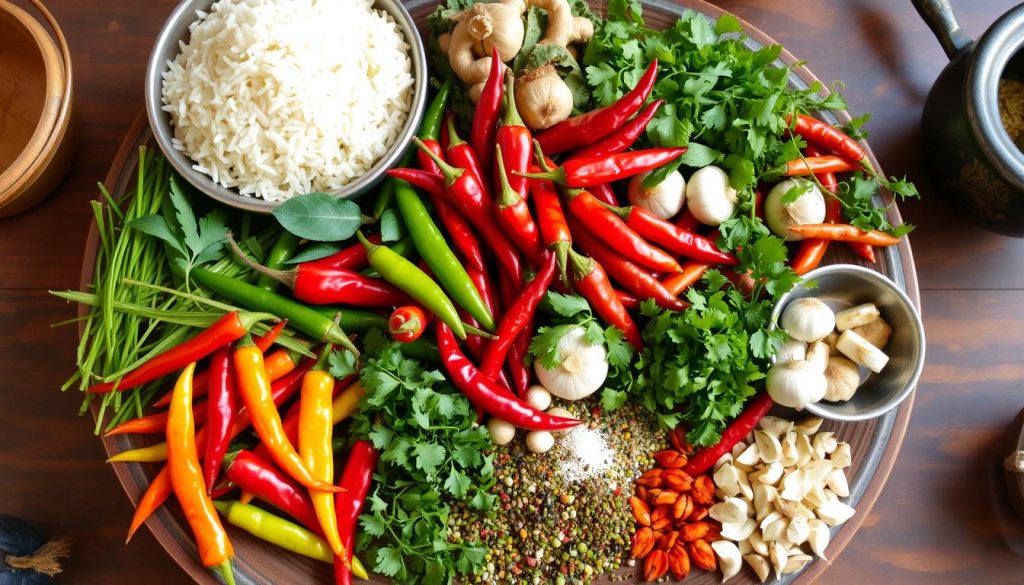
Fresh produce is key in Bhutanese cooking, adding flavor and nutrition to dishes. Thimphu’s markets are full of seasonal veggies, herbs, and fruits. These ingredients highlight Bhutan’s focus on local produce, sustainability, and health.
Using fresh ingredients connects you with Bhutan’s farming and cooking traditions. Vegetables like spinach, turnips, and radishes are common. Herbs and spices, like chili, add a unique heat to meals. Traditional meals use local products, making cooking diverse and healthy.
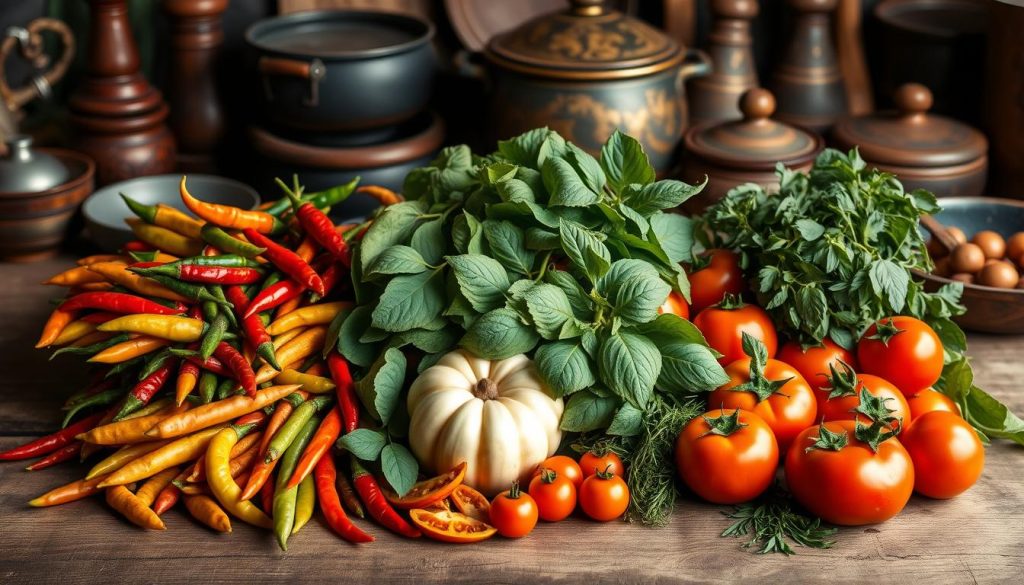
Bhutanese communities value local produce, promoting sustainable farming. Rice, a staple, pairs well with spicy meats and veggies. Foraged items like mushrooms and herbs also connect us to nature.
| Region | Key Fresh Produce | Signature Dishes |
|---|---|---|
| Punakha | Spinach, River Weed | Ema Datshi, Phaksha Paa |
| Bumthang | Buckwheat, Turnips | Khuli (Buckwheat Pancakes) |
| Trashigang | Radishes, Chilies | Jasha Maru |
| Samtse | Tropical Fruits, Pumpkins | Dishes with Fresh Fruits |
Adding fresh produce makes your cooking more appealing and authentic. It turns your cooking class into a journey into Bhutan’s rich culture and heritage.
What to Expect During Your Cooking Session
Starting a cooking class in Thimphu is more than just learning to cook. It’s a journey filled with excitement and discovery. You’ll get to explore local markets in Bhutan. Here, you can pick fresh ingredients for your dishes.
Touring Local Markets for Ingredients
This part of the class lets you meet local farmers and vendors. They share their knowledge of Bhutan’s culinary traditions. You’ll see the wide variety of produce used in Bhutanese cooking.
After the market tour, you’ll learn how to cook like a pro. You’ll use the ingredients you picked to make authentic Bhutanese dishes. This makes your cooking experience in Thimphu truly special.
Here’s what you can look forward to:
| Activity | Details |
|---|---|
| Market Tour | Visit local markets to select fresh ingredients, interacting with farmers and vendors. |
| Cooking Techniques | Learn authentic cooking methods typical to Bhutanese cuisine. |
| Ingredient Sourcing | Gain knowledge about sourcing and the importance of seasonal produce. |
| Hands-On Cooking | Prepare dishes using fresh ingredients picked from the market, enhancing your culinary skills. |
| Authentic Experience | Enjoy a unique blend of cultural interaction and culinary practice. |
Enhancing Your Culinary Experience in Thimphu
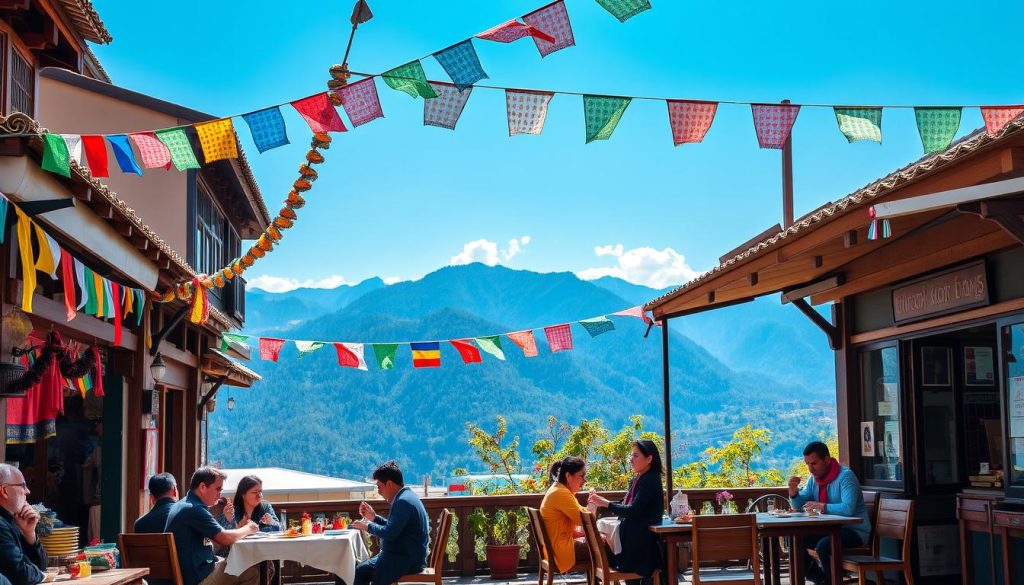
Dive into Thimphu’s culinary world with guided food tours. These tours let you try traditional Bhutanese dishes and learn about the country’s dining culture. You’ll see how local farms and markets add unique flavors to Bhutanese food.
Food Tours: Exploring Local Eateries
A Thimphu food tour takes you to lively markets and secret spots. Here, you can taste dishes like ema datshi and spicy phaksha paa. You’ll also meet local chefs and learn about their cooking methods and ingredients.
On the tour, you might:
- Try dishes like Jasha Maru and Hoentoe, showing Bhutanese cooking’s simplicity.
- Sample suja, a butter tea made with yak butter.
- Discover how red rice and yak cheese are used in meals.
- Learn about the importance of local spices, like chili peppers, in Bhutanese food.
Visiting local eateries not only fills your belly but also deepens your understanding of Bhutan’s food culture. Joining Thimphu food tours lets you enjoy each dish’s unique flavors, making your dining experiences in Bhutan unforgettable.
| Activity | Description | Highlight Dish |
|---|---|---|
| Market Tour | Visit local markets to source fresh ingredients. | Seasonal Vegetables |
| Cultural Exchange | Meet local chefs and learn cooking techniques. | Ema Datshi |
| Dining Experience | Savor an authentic meal at a local eatery. | Phaksha Paa |
Travel Tips for Your Culinary Trip to Bhutan
Going on a culinary trip to Bhutan means learning about its customs and planning your cooking classes. It’s not just about cooking; it’s also about respecting Bhutan’s rich culture. When you join cooking classes or eat with local families, remember to follow some key travel tips for Bhutan.
Respecting Local Customs
It’s crucial to understand and respect local customs in Bhutan. When you’re in cooking classes, wear modest clothes that show respect for Bhutan’s traditions. Always remove your shoes when entering homes or monasteries, and ask before taking pictures. Knowing a few words in Dzongkha can make your classes more fun and meaningful.
Best Times to Attend Cooking Classes
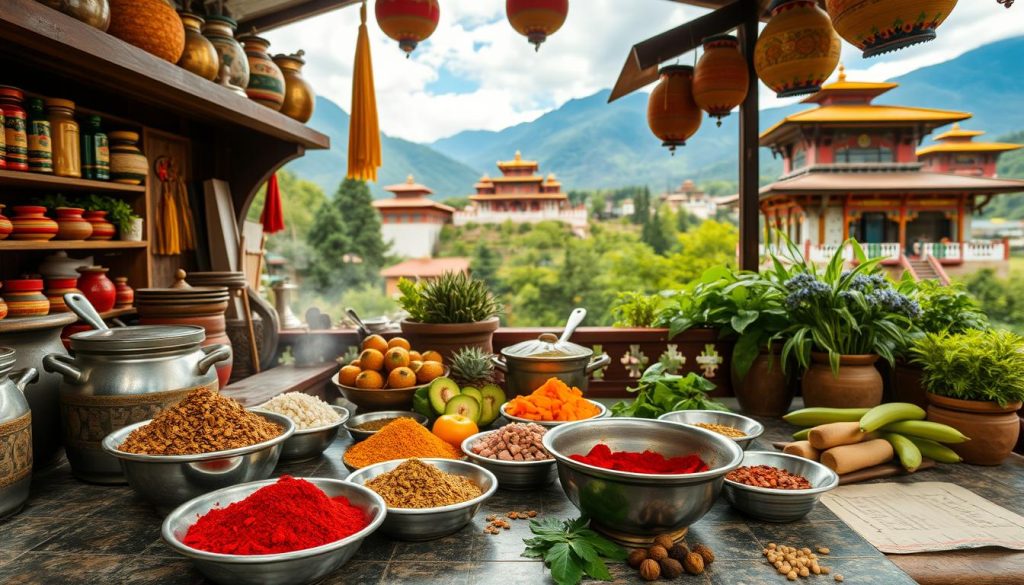
The timing of your trip to Bhutan can greatly affect your experience. The best seasons for cooking classes are spring (March to May) and autumn (September to November). These times offer fresh produce and colorful festivals, making your culinary journey richer.
Conclusion
Joining authentic Bhutanese cooking classes in Thimphu is a unique chance. You dive into Bhutan’s rich culinary world. You learn about the culture and history behind each dish.
These classes are great for everyone, no matter your cooking skill. Novice cooks and seasoned chefs can both enjoy the lively kitchen atmosphere.
Your cooking adventure in Bhutan can change you. You’ll learn to make Ema Datshi and momos. Each class deepens your love for Bhutanese cooking.
Along with cooking, you can hike to monasteries or meditate with monks. These experiences make your trip unforgettable.
By exploring local flavors and traditions, you’ll take home lasting memories. Start this culinary journey and discover the wonders of Bhutan. The mix of food, culture, and stunning landscapes will make your visit unforgettable.