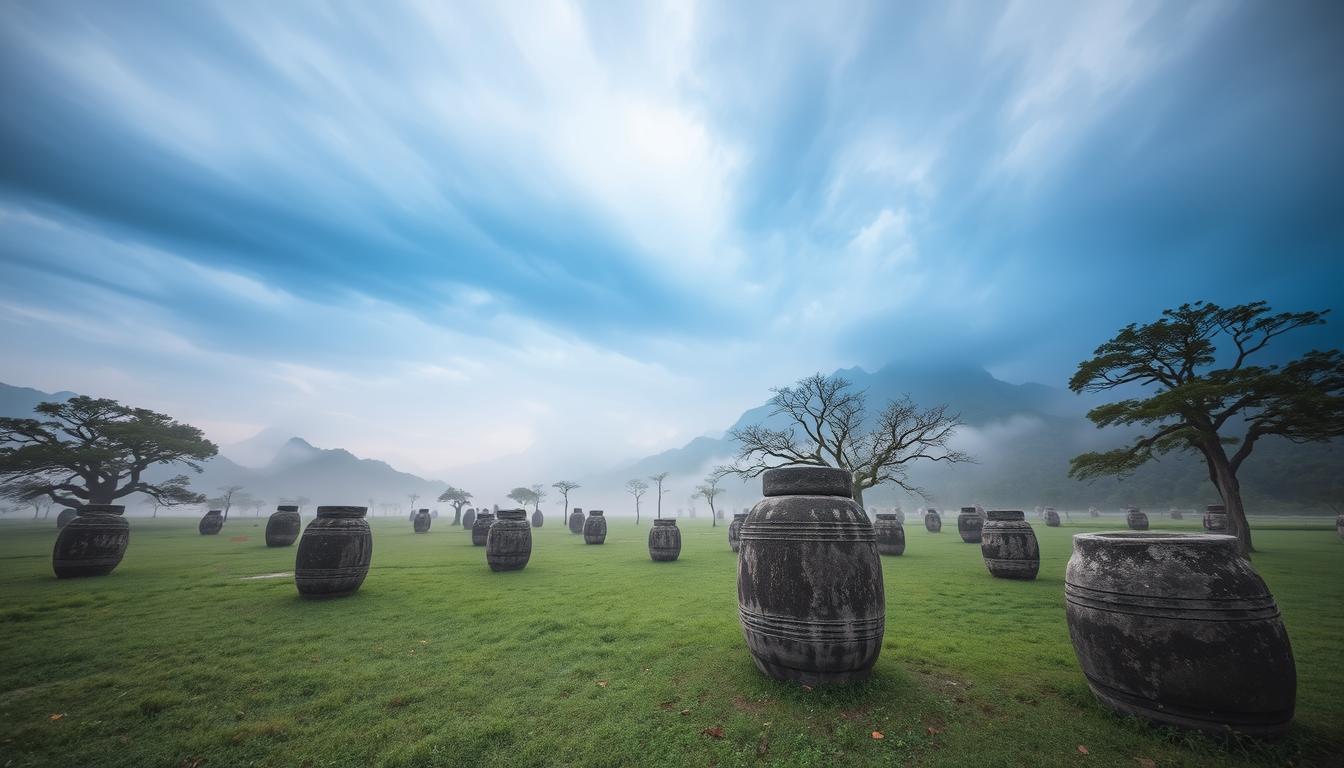
Unveiling the Mystery: Plain of Jars History
Standing before the stone jars in Laos, a question pops up: What secrets do these ancient artifacts hold? The Plain of Jars is a site full of history, with jars that might be 2,500 years old. They could tell us about ancient rituals, social bonds, and hidden pasts.
The Plain of Jars challenges what we thought we knew about it. It has over 60 sites with these huge jars. Each jar might be a key to understanding human history and culture. Exploring the Plain of Jars history helps us grasp a time long gone, where the land’s silence might reveal the stories of our ancestors.
Introduction to the Plain of Jars
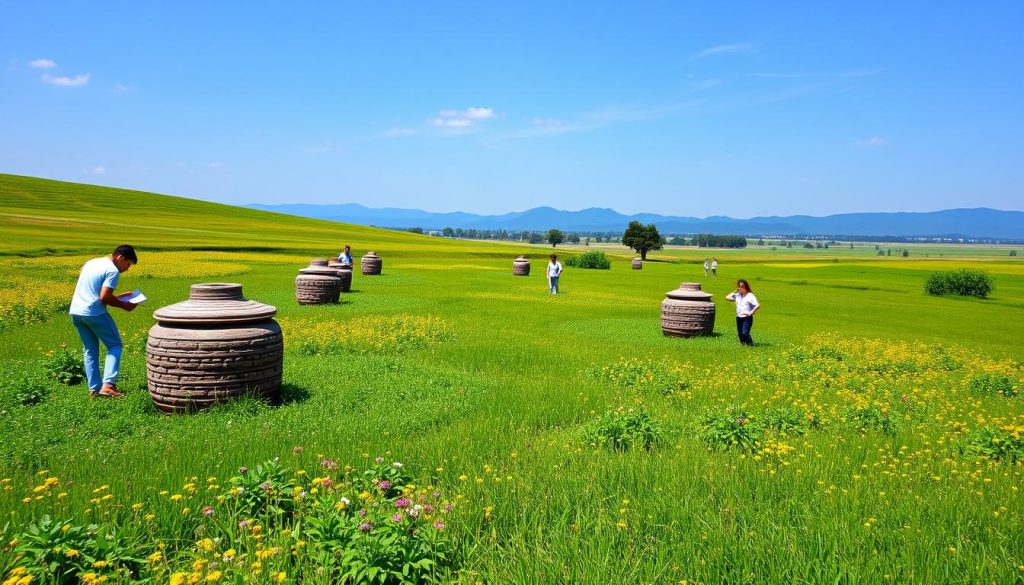
The Plain of Jars is a fascinating site in Xiangkhouang Province, northern Laos. It has over 90 jar sites, with many stone jars. Each site has jars ranging from one to 400, all hand-carved from local rock.
These jars are 1 to 3 meters tall. They are amazing reminders of ancient civilizations.
Location and Overview
The jar sites are mostly cylindrical, with the bottom wider than the top. They are made from sandstone, granite, and limestone. These jars are simple, showing the skill of their makers.
They are believed to be from 660 BC to 1240 AD. Scientists used special techniques to figure this out. The jars show a lot about ancient burial and cultural practices.
Significance in Archaeology
The Plain of Jars is very important in archaeology. It was named a UNESCO World Heritage Site in 2019. This shows its importance in studying Laos history.
In the 1930s, French researcher Madeleine Colani found out about the jars’ connection to burial customs. Today, sites like Site 1 are open to visitors. This lets people explore this key part of ancient history.
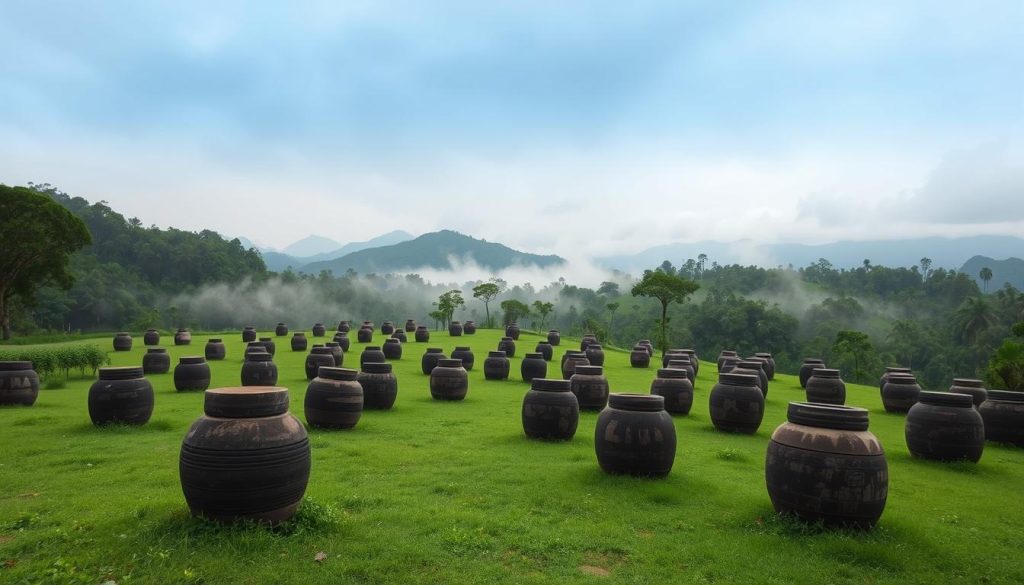
The Archaeological Significance of the Plain of Jars
The Plain of Jars is a key archaeological site. It holds secrets about ancient civilizations in Southeast Asia. Over 2,100 stone jars are spread out, making it a treasure for historians and archaeologists.
Exploration and Discoveries
Since the early 20th century, the site has been explored. Archaeologists found many things, like 1325 large stone jars and tombstones. They also found human remains near the jars, dating back 700 to 1,200 years.
This shows how ancient cultures practiced mortuary rituals.
UNESCO World Heritage Site Status
In 2019, the Plain of Jars became a UNESCO World Heritage Site. This recognition shows its cultural value and the need to protect it. The site includes not just the jars but also the area around them.
But, the area is still dangerous because of unexploded ordnance from the Vietnam War. This makes it hard for archaeologists to fully explore and study.
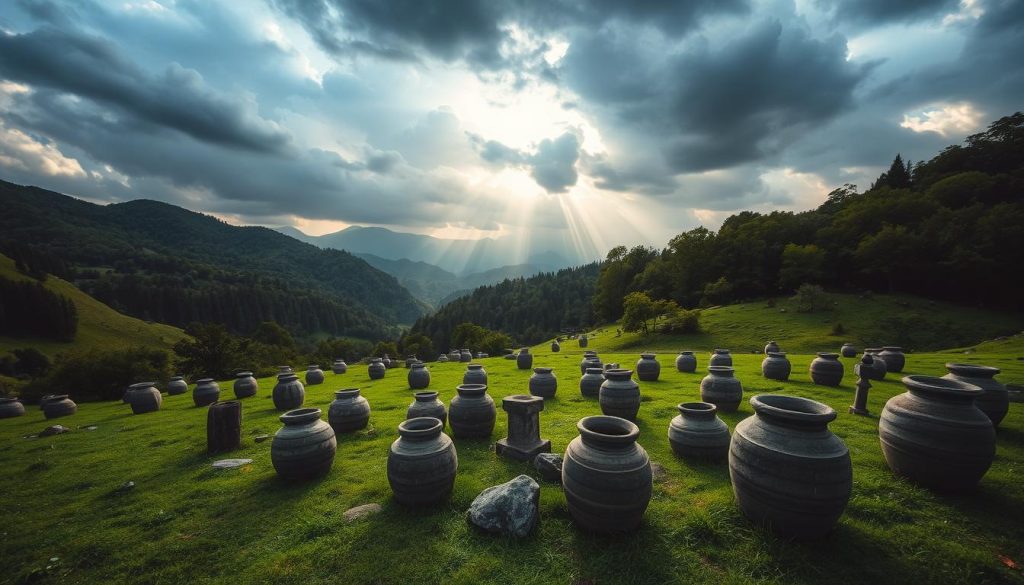
Plain of Jars History
The Plain of Jars has revealed a rich history that touches Laos and its ancient cultures. The discovery journey began in the 1930s, thanks to archaeologists like Madeleine Colani. Each artifact found helps us understand Laos’s past and the cultures of old.
Timeline of Discovery
At first, researchers found over 2,000 stone jars across many sites. They used five types of stone, like coral limestone and sandstone. These jars date back to around 660 BC, making this area even more significant.
Excavations uncovered human remains and burial items. This gives us a glimpse into how these jars were used and their cultural value.
Connection to Ancient Civilizations
The Plain of Jars is linked to ancient trade routes in Southeast Asia. Similar jar sites in India and Vietnam show a shared culture of trade and rituals. The jars might have been used for cremation or storing things, revealing complex social practices.
This adds to our understanding of Laos’s history and the importance of these ancient artifacts.
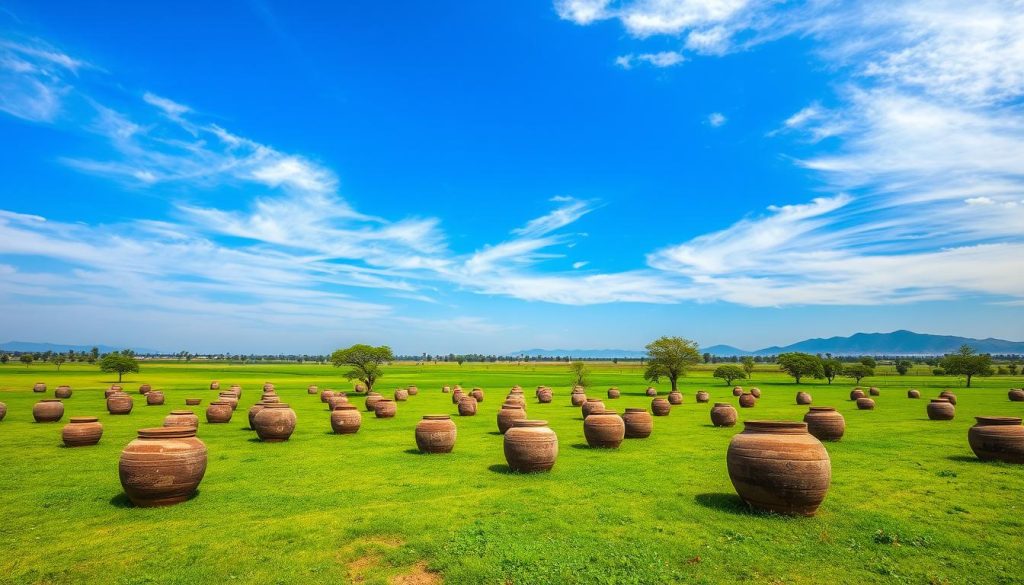
| Feature | Detail |
|---|---|
| Sites | Over 90 sites containing more than 2,000 stone jars |
| Size of Jars | Ranging from 1 to 3 meters in height and 1 meter wide, weighing up to 14 tons |
| Timeframes | Some jars date back to 660 BC; artifacts from 500 BC to 800 AD |
| Research Findings | Burnt human remains, glass beads, and burial artifacts found inside jars |
| Exploration Costs | Entrance fee to sites: 10,000 Kip (~$1.30) |
The Enigmatic Purpose of the Jars
The Plain of Jars is full of mysteries. Many theories try to explain why these ancient jars were made. Each theory adds to the story of this place, showing how important the jars were to ancient people.
Theories on Usage
One idea is that the jars stored food or wine. This suggests that farming and making drinks were key activities in the area. Finds of human remains and burial items near the jars support this theory, showing the jars’ role in burial customs.
Another theory is that the jars collected rainwater. This helped travelers on old trade paths. It shows the jars had a practical use, helping trade and cultural exchange. Beads and ornaments found nearby hint at the site’s role in salt trade.
Local stories add to the mystery. They tell of giants making the jars for rice wine after winning battles. These tales mix myth and history, making the site even more fascinating.
Legends and Folklore
Stories about the jars capture the local people’s imagination. Tales of giants making the jars show how history and myths blend. This makes the site a fascinating topic for discussion.
The many theories and stories about the jars highlight the Plain of Jars’ mystery. Exploring these ideas helps us understand ancient civilizations. It also makes us think about how myths help us understand historical artifacts.
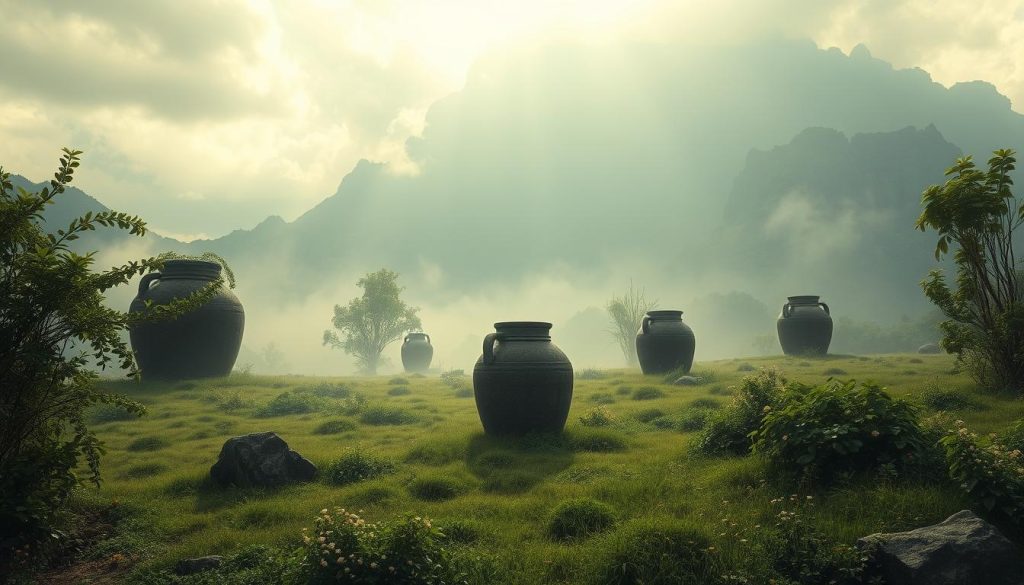
The Mythical Giants of Laos
The Plain of Jars is filled with local legends about mythical giants. These stories are not just fun tales. They show how these stories shape Laotian culture. As you wander around, you’ll see how these legends are part of everyday life.
Local Legends and Cultural Impact
For generations, stories of giants making the jars have been told. These tales help locals feel connected to their heritage. The Plain of Jars history is made richer by these stories. They link old traditions to today’s culture.
- Mythical giants are often shown in local art and crafts.
- Folklore shapes festivals, drawing in both visitors and locals.
- Stories are key in education and cultural programs.
Representation in Modern Laotian Culture
Today, these legends are seen in many ways, like in books and art. The stories’ impact is felt in tourism too. People come to learn about the Plain of Jars history and its myths.
| Type of Representation | Description |
|---|---|
| Art | Giant figures appear in murals and sculptures around the area. |
| Folktales | Stories of the giants are shared at local events, keeping traditions alive. |
| Festivals | Every year, festivals include giant-themed parades that celebrate these myths. |
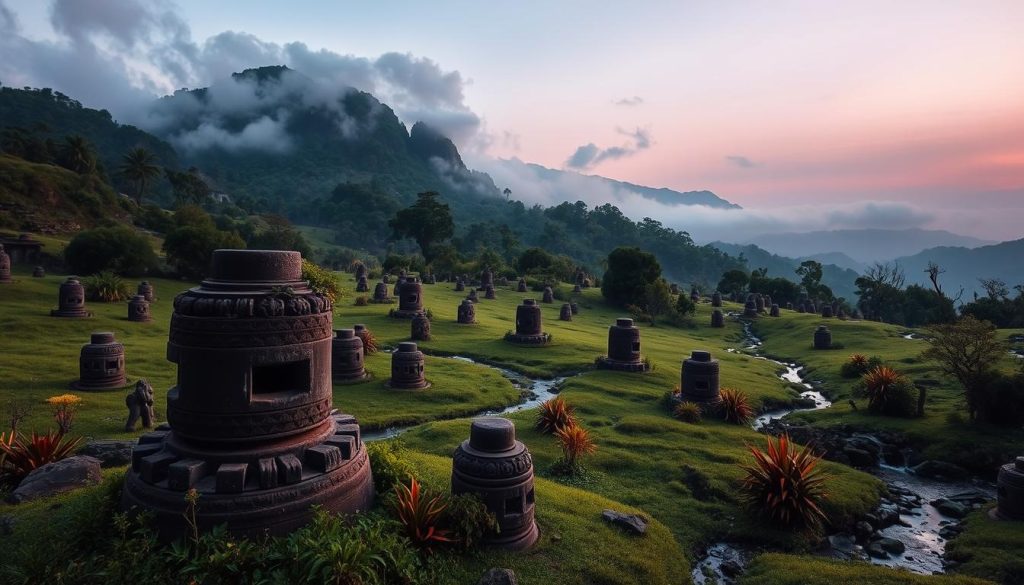
The Role of Archaeologists in Research
Archaeologists play a key role in uncovering the secrets of the Plain of Jars. They study this site to learn about its history and culture. Madeleine Colani, a famous archaeologist, has greatly contributed to our knowledge of the site.
Key Figures in The Research
Madeleine Colani, a French archaeologist, was crucial in early studies. She wrote a detailed 719-page book about the megaliths of Upper Laos. Her work set the stage for today’s research.
Today, researchers follow in her footsteps. They aim to understand the significance of the giant stone jars in this area.
Challenges Faced in Excavation
One big challenge is safety, due to unexploded ordnance from the Vietnam War. This makes the Plain of Jars very dangerous. It’s a risk for researchers and local people.
Despite these dangers, archaeologists keep working hard. They want to learn about the burial and cultural practices of the past. Their efforts help us understand the history of the Plain of Jars and tackle current issues.
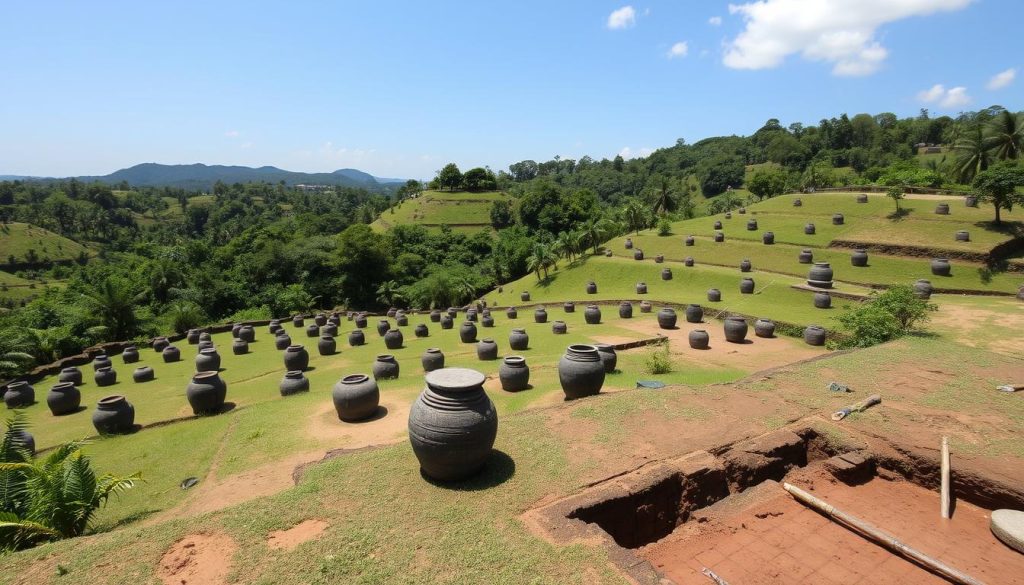
Historical Context of Laos During the Jar Era
The history of Laos during the jar era is complex. It involves war, culture, and the lasting impact of unexploded ordnance. The Vietnam War made Laos a key battleground. This led to widespread bombing, leaving behind many unexploded bombs.
These bombs still affect local communities today. Understanding the significance of the Plain of Jars requires looking at how war and culture intertwined. This shaped the sociopolitical environment and the growth of ancient civilizations.
Impact of War and Unexploded Ordnance
War has left deep scars in Laos. Xieng Khouang Province is home to over 2,000 large stone jars. The U.S. Air Force dropped millions of cluster bombs in the 1960s.
Today, around 80 million unexploded bombs remain. This makes it hard for locals and researchers to study Laos’ history. Only a small part of the province has been cleared of these dangers.
The Sociopolitical Environment
The era of the jars was marked by significant trade and cultural exchanges. Discoveries, like human burials near the jars, show their importance. These burials date back to between 773 and 987 CE.
They include ceramics with remains of infants and children. This highlights the deep connection between culture and environment. Yet, only a few jar sites have been cleared of American explosives. This makes archaeological work dangerous and limits our understanding of these ancient societies.
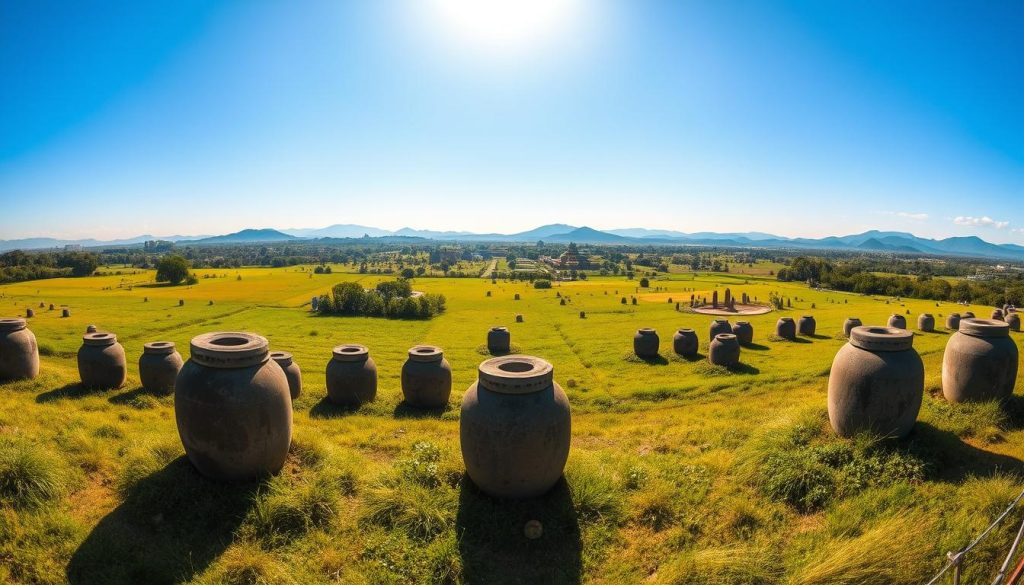
Current Preservation Efforts for the Plain of Jars
Keeping the Plain of Jars safe is key to its cultural and historical value. Many groups are working together. They aim to protect this site for the future while also supporting tourism that is respectful.
Collaboration with Organizations
Protecting the Plain of Jars is a team effort. Local authorities, UNESCO, and groups like the Mines Advisory Group (MAG) are all involved. They focus on several important areas:
- Clearing unexploded ordnance: Safety is a top concern, as old bombs can still be dangerous.
- Research and documentation: Studies are uncovering more about the site, including new discoveries and artifact analysis.
- Community engagement: Local people are playing a big role in saving their cultural treasures.
Tourism and Its Impact on the Site
Since the Plain of Jars was named a UNESCO World Heritage site, tourism has grown. Visitors are drawn to the site’s rich history. But, it’s important to manage tourism well to protect the site.
- Promoting sustainable tourism: Making sure tourism doesn’t damage the site or its surroundings.
- Visitor education: Teaching tourists about the site’s history and why it needs to be preserved.
- Infrastructure development: Building better access and facilities for visitors while caring for the site’s environment and heritage.
Conclusion
The Plain of Jars is a key site in archaeology, full of history and mystery. It has over 90 sites with more than 10,000 jars. This area gives us a peek into the Iron Age civilization that once lived here.
Learning about the jars helps us understand the funerary practices and beliefs of its makers. Only three sites are open to the public now. But, it’s vital to keep these artifacts safe for the future.
With over 2,000 jars in the UNESCO World Heritage site, research and preservation are ongoing. Your visit helps in recognizing and protecting the Plain of Jars. By exploring its history, you contribute to its preservation for generations to come.