Explore Mysteries of Plain of Jars Hidden Sites
Have you ever wondered about the secrets of the Plain of Jars in Laos? This site is home to over 2,100 ancient stone jars. It offers a glimpse into a civilization that thrived from 500 BCE to 500 CE.
The Plain of Jars is a must-see for anyone visiting Laos. It’s not just beautiful; it’s also filled with history and mystery. The jars’ purpose and origins are still unknown, sparking curiosity in all who visit.
Introduction to the Plain of Jars
The Plain of Jars is a mysterious archaeological site that fascinates many. It’s filled with thousands of ancient jars on the Xieng Khouang plateau in Laos. These jars are a mystery and a treasure, showing the history of the area.
These jars date back to the Iron Age, between 500 BCE and 500 CE. Early studies linked them to ancient burial customs. By 2013, over 100 jar sites were found in Xieng Khouang province. This led to the discovery of 1,999 stone jars in the region.
Site 1 is the biggest and most studied, near Phonsavan. It’s famous for its largest jar and only decorated jar found. Visiting Site 1 takes about two hours, allowing time to see everything and learn at the information center. The cost to enter varies, with Site 1 at 15,000 kip. Sites 2 and 3 cost 10,000 kip each.
Location and Access to the Plain of Jars
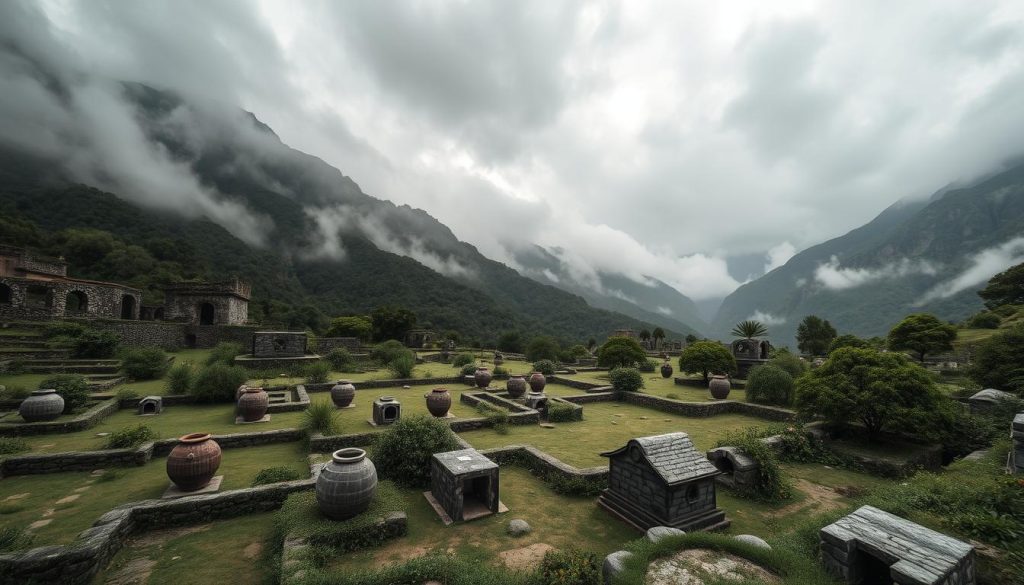
The Plain of Jars is a wonder in Laos, about 400 km northeast of Vientiane. It’s in the Xieng Khouang province, a treasure for those looking for lesser-known attractions. Phonsavan, the nearest town, is just south of this ancient site.
You can get to Phonsavan by bus or flight with Lao Airlines. The drive from Vientiane takes seven to eight hours. Luang Prabang is closer, about 263 km away. The area has rolling hills and grassy fields with stone jars, making it unique.
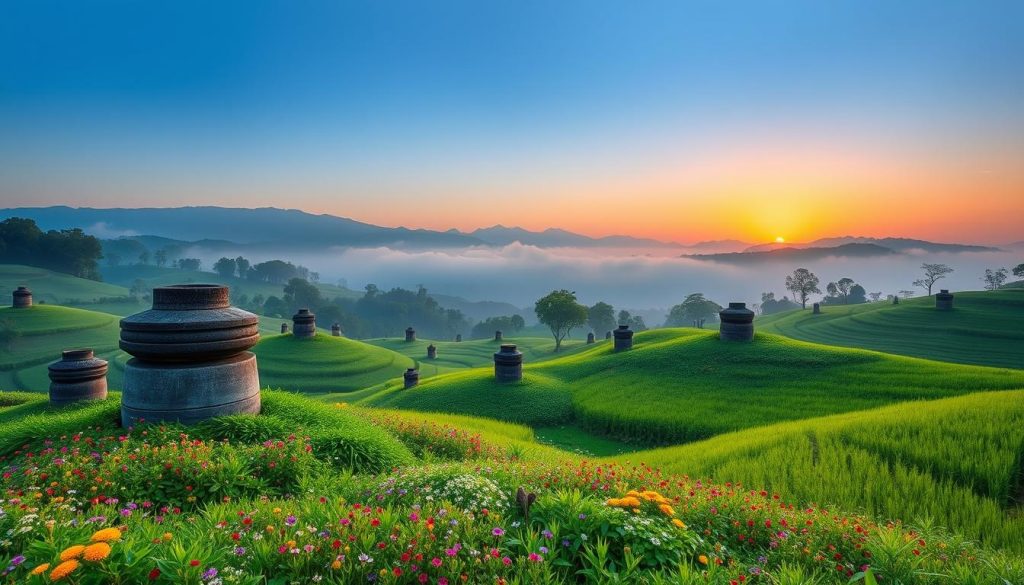
Exploring the region is easy with local transport. There are seven jar sites open to tourists. Only a few sites are safe due to past conflicts, making it an off-the-beaten-path destination.
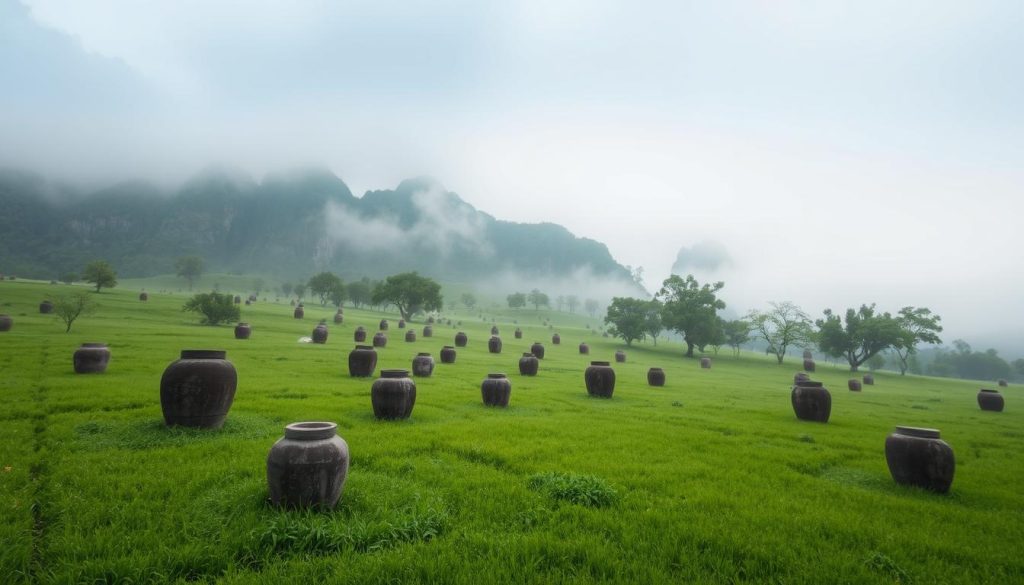
The stone jars are from the Iron Age, up to 3 meters tall and weigh tons. Their purpose is still a mystery, with theories like brewing rice wine or holding whisky.
| Site Number | Distance from Phonsavan | Jars Count |
|---|---|---|
| 1 | Close to town | 50 |
| 2 | About 15 km | 93 |
| 3 | About 30 km | 33 |
| 16 | About 25 km | 75 |
| 23 | About 27 km | 100 |
| 25 | About 20 km | 40 |
| 52 | 43 km (27 km paved, 16 km dirt) | 392 |
These Laos tourist attractions offer a peek into the region’s heritage. Exploring each site deepens your understanding of this culture.
Discovering the Plain of Jars Hidden Sites
The Plain of Jars in Laos is a fascinating archaeological site. It has many plain of jars hidden sites that show the mystery of the stone jars. Each site is unique, making them a must-see for those who love adventure.
Overview of Accessible Sites
Four main sites are open to the public. They let visitors see the ancient jars safely. These sites help us understand why these jars were made.
Significance of Site 1
Site 1 is famous for its easy access and over 300 jars. It’s the most visited spot among the plain of jars hidden sites. The jars here are huge, up to 14 tons, and range from 3 to 10 feet tall. It’s not just a tourist spot but also a key archaeological site.
Exploring Site 2
Site 2 is peaceful, perfect for thinking and enjoying the views. It’s a great place to learn about the jars’ history. Visitors can think about why the jars might have been used, like as funeral urns or for food.
Highlights of Site 3
Site 3 is special because of its quiet setting among trees. It offers a close-up look at the jars. You’ll see jars of all sizes, even small ones. The site also shows the impact of the Secret War, adding to its historical value.

| Site | Number of Jars | Height Range | Significance |
|---|---|---|---|
| Site 1 | Over 300 | 3 to 10 feet | Most accessible and well-documented |
| Site 2 | Varied | 3 to 10 feet | Tranquil atmosphere for exploration |
| Site 3 | Varied | 3 to 10 feet | Intimate setting; historical impact |
Exploring these plain of jars hidden sites lets you see ancient culture up close. It’s a chance to think about the history that makes this part of Laos so special.
Mysterious Archaeological Sites Around the World
Across the globe, many archaeological sites are full of mysteries, like the Plain of Jars. Famous sites like Stonehenge in England and the Moai of Easter Island draw visitors and researchers. They ask questions about the sites’ purposes and how they were built, giving us glimpses into ancient civilizations.
Visiting these secret sites reveals a rich tapestry of human history. Though less famous than some landmarks, they hold secrets that show the cultural and historical depth of their areas. For example, Gobekli Tepe in Turkey changes how we think about the rise of complex societies, showing advanced social structures existed earlier than we thought.
Exploring these sites helps us appreciate humanity’s quest for meaning and connection. The massive stone jars in Laos, some up to nine feet tall and weighing 14 tons, and the carved stone discs near them, invite us to learn their stories. History lovers should seek out these sites to deepen their understanding of our shared history.
| Site | Location | Notable Features | Year Dated |
|---|---|---|---|
| Plain of Jars | Laos | Over 2,100 jars used for funerary practices | 500 BCE – 500 CE |
| Stonehenge | England | Massive stone circle and burial sites | 3000 – 2000 BCE |
| Moai Statues | Easter Island | Monolithic human figures | 1400 – 1650 CE |
| Gobekli Tepe | Turkey | Ancient megalithic structures | 9600 – 9500 BCE |
Unraveling the Origin and Purpose of the Jars
The origins and purposes of the jars at the Plain of Jars are still a topic of much debate. Many theories try to explain why these massive stone structures were built. They also aim to understand their role in the ancient culture that created them.
As you explore these theories, you might find interesting links to fermentation and funerary practices. These practices were important in ancient times.
Theories Behind Their Creation
Many theories exist about the purpose of these ancient wonders. One theory suggests the jars were used to prepare the dead before cremation. Excavations have found human remains, leading researchers to think about possible funerary rites.
Studies show that remains from 2500 to 3000 years ago were used in different burial practices. This includes whole burials, bundled bones, and bones in ceramic vessels. It shows a complex relationship between the jars and ancient mortuary customs.
Fermentation and Funerary Practices
Local folklore adds another layer to the mystery of the Plain of Jars. Stories tell of an ancient king of giants who used the jars for brewing rice wine. This suggests a culture that valued both fermentation and honoring the dead.
The discovery of ancient burial contexts and artifacts, like funeral urns, supports this idea. It shows that these jars had multiple uses. They are seen as mysterious archaeological sites that go beyond simple explanations.
Local Legends and Folklore
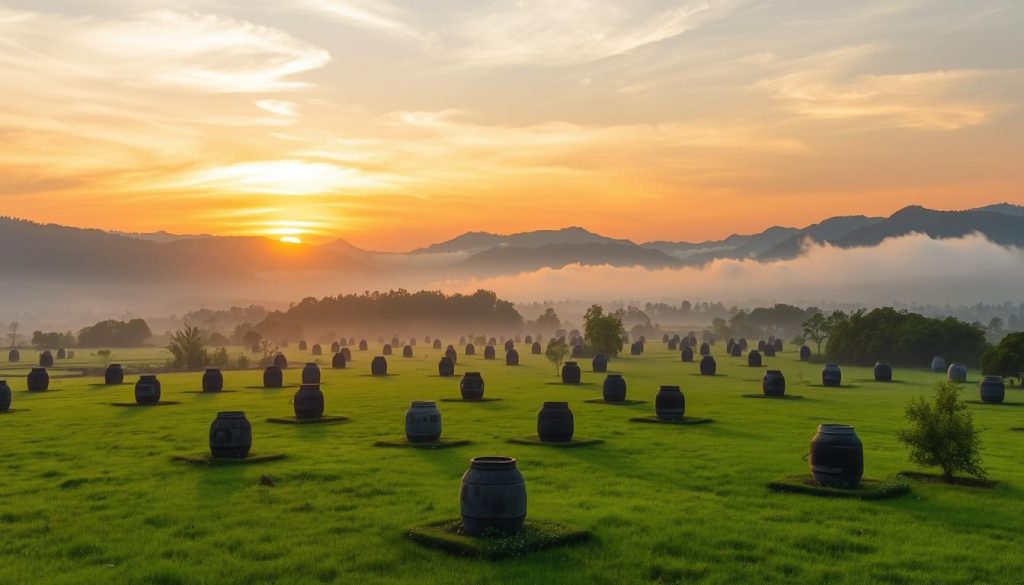
The Plain of Jars is more than ancient wonders; it’s a treasure trove of local legends. One famous story tells of a cruel leader who was overthrown. The people, celebrating their freedom, built the jars to make rice wine.
These stories show the rich culture of the area. They connect modern Laos to its ancient roots. Legends of giants and rituals add depth to the site’s history.
Exploring these tales deepens your understanding of the Plain of Jars. They reveal the values and struggles of the past. Visiting, you might feel the echoes of these stories, making your experience unforgettable.
Environmental Setting of the Plain of Jars
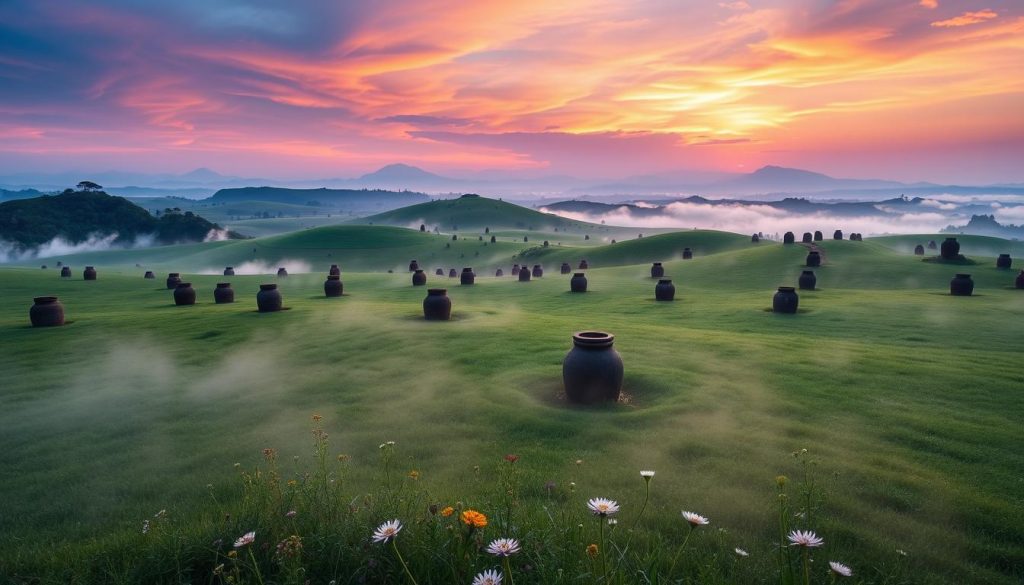
The Plain of Jars is a unique place with interesting geography and climate. It’s located on the Xiangkhoang Plateau. The area has rolling hills and wide meadows. The average height is about 1,300 meters, making it both beautiful and challenging to preserve.
Geographical Features
The Plain of Jars is home to over 90 groups of large stone jars. These jars, some as tall as nine feet, are carved from solid sandstone. They are often found in groups.
The area’s rough terrain is both captivating and difficult for archaeologists. The dense vegetation and varied heights make exploration hard. Bomb craters and trenches from past wars also add to the site’s complexity, showing the impact of history.
Climate Impact on Site Preservation
The climate plays a big role in keeping the Plain of Jars safe. The seasonal monsoons can damage the soil and make the jars unstable. This weather can also harm archaeological sites and increase the danger of unexploded bombs.
It’s crucial to understand how climate affects the site. This knowledge helps in creating plans to protect the jars and the history they hold.
The Historical Context of the Plain of Jars
The Plain of Jars is a key part of ancient history. It shows the importance of trade routes and cultural exchanges. This area in northern Laos has over 2,100 stone jars, each up to 5 feet tall and weighing six tons. These jars are a big part of ancient funerary practices.
Learning about the Plain of Jars helps us understand its importance. It also shows its ties to secret historical sites around the world.
Link to Ancient Trade Routes
The Plain of Jars is at a key spot for ancient trade routes. It connects Laos to countries like Cambodia, Vietnam, and Thailand. These routes helped share goods, ideas, and cultures, boosting the area’s growth.
Studies show the site was important in Southeast Asian trade. It highlights how communities worked together and shared resources over time.
Archaeological Discoveries and Research
Archaeologists are still finding new things at the Plain of Jars. Recent finds suggest some jars are over 2,500 years old. They’ve found burial items and beads, showing the complex relationships and cultural exchanges of the past.
But, finding these sites is hard because of unexploded ordnance. Only about 10% of jar sites are safe for study. The site’s history is still a big topic for scholars.
| Feature | Details |
|---|---|
| Region Size | 500 square miles |
| Jar Height | Approximately 5 feet |
| Estimated Jar Weight | Up to 6 tons |
| Trade Route Importance | Links to neighboring countries |
| Cultural Artifacts Found | Burial items and beads |
| Percentage of Cleared Sites | Less than 10% |
| Radiocarbon Dating Evidence | Activity between 9th and 13th centuries CE |
Plain of Jars Hidden Sites and Unexploded Ordnance
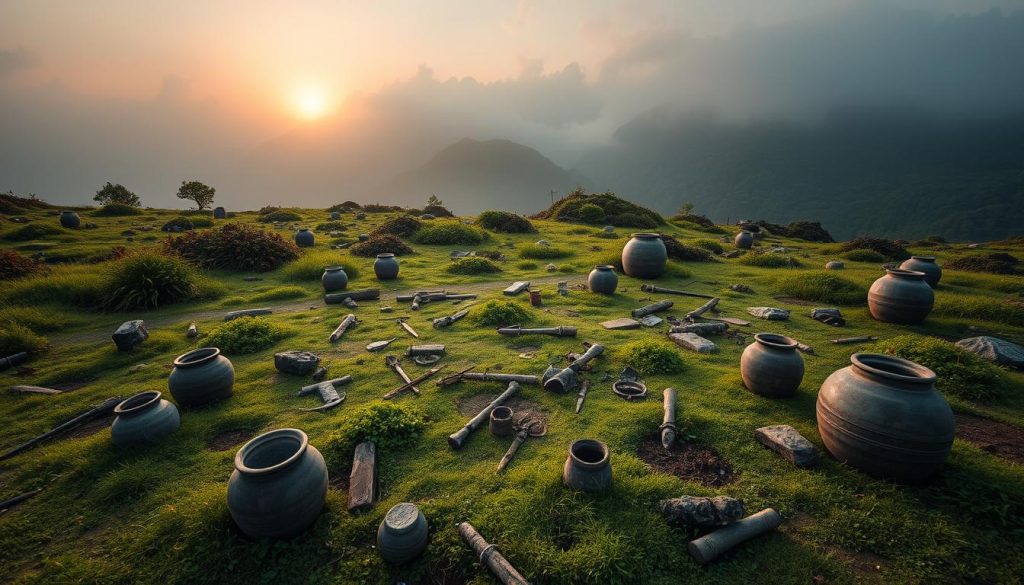
The Plain of Jars is famous for its mysterious stone jars across the landscape. But, it also has hidden dangers from unexploded ordnance (UXO) left from the Vietnam War. This area was one of the most bombed places in the world, making it both fascinating and dangerous to explore.
About one-third of the bombs from the war didn’t explode, posing a big risk to visitors. The UXO makes it hard to get to many jar sites. Only about 10% of the sites are safe to visit. Groups like the Mines Advisory Group (MAG) work hard to make it safer, so people can still see these sites.
There are 52 sites in the Plain of Jars, and visiting times vary. For example, Site 1 closes at 5 PM, giving visitors a short time to explore. Getting there can take a long time, like an 8.5-hour bus ride from Luang Prabang to Phonsavan. But, there are also flights from Vientiane to Phonsavan three times a week, making it quicker to get there.
The sites are very important for history and archaeology, despite the dangers. Researchers have found artifacts and human remains over 2,500 years old. These finds give us a glimpse into ancient funerary practices. More excavations will help us learn more about the Plain of Jars culture, making it a key place for history lovers and archaeologists.
| Aspect | Details |
|---|---|
| Sites Cleared of UXO | Less than 10% of sites are accessible due to unexploded ordnance |
| Public Tours Cost | A private tour can cost around $50 |
| Travel Time from Luang Prabang | 8.5 hours by bus |
| Flight Frequency | Three flights a week from Vientiane to Phonsavan |
| Total Number of Sites | 52 sites identified in the Plain of Jars |
| Human Remains Excavated | Estimated to be 2,500 years old |

Visiting the Plain of Jars: Tips and Recommendations
Planning a trip to the Plain of Jars requires understanding the local environment. This area has over 90 jar sites, full of mystery. It’s not just an archaeological wonder but also a place with hidden gems. With the right preparation, your visit will be unforgettable.
Safety Precautions When Exploring
Exploring the Plain of Jars comes with safety concerns. There might be unexploded ordnance (UXO) around. To stay safe, follow these tips:
- Stick to marked trails to avoid hazardous areas.
- Heed local advice regarding safe zones and restricted areas.
- Wear sturdy footwear to navigate uneven terrain.
- Bring ample food and water, as amenities may be limited.
- Use sunscreen for sun protection during outdoor exploration.
Best Times to Visit
The best time to visit the Plain of Jars is during the dry season, from October to February. The weather is perfect for exploring and taking photos. The landscape is green, and the views are clear, making your visit even more special.
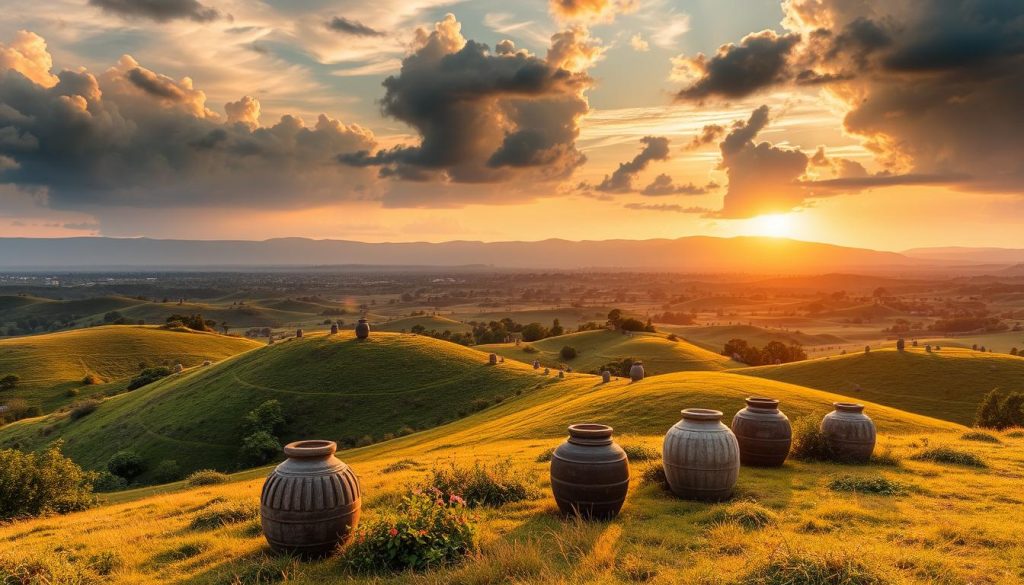
With the right planning and awareness, visiting the Plain of Jars is an adventure. Discover the ancient stories these jars hold and enjoy the beauty of the region.
Conclusion
The Plain of Jars offers a deep look into Laos’s ancient wonders. It draws in anyone who walks through its magical landscape. With thousands of mysterious jars across 15,000 square kilometers of Xieng Khouang Province, each jar has its own story.
Exploring the plain, you can’t help but think about the ancient people who made these huge jars. Some jars are as tall as 10 feet and as heavy as 14 tons. It’s amazing to think about who built them and why.
The stories of these jars are as fascinating as the jars themselves. The area saw a lot of fighting from the 1940s to 1973. Today, there’s still danger from unexploded bombs, making it a UNESCO World Heritage Site with a big challenge.
But, groups like the Mines Advisory Group are working hard to make it safe. They want to keep this important part of history safe for the future.
Seeing the Plain of Jars is more than just looking at unique sights. It’s a chance to learn about history, culture, and local legends. Walking among these ancient stones, you feel the past come alive. It’s a place that changes you, leaving a lasting impression.