

Unveiling Punakha’s Herbal Medicine Traditions
Have you ever thought about how old healing ways still exist today? In Punakha, Bhutan, traditional herbal medicine is a big part of life. It’s not just old; it’s a key part of the community’s health and culture. This article will show you how Punakha’s herbal medicine has grown over time.
Punakha is full of over 600 medicinal plants, making it a place of natural healing. As we explore Punakha’s herbal traditions, you’ll see why Sowa Rigpa, Bhutan’s ancient healing, is so important. You’ll also learn how the community keeps nature and health in balance.
The Essence of Herbal Medicine in Bhutan
Herbal medicine is a key part of Bhutanese life, blending old wisdom with everyday activities. It takes a whole-person approach, focusing on diet, spirit, and community. This shows a deep understanding of health that’s more than just treating sickness.
Sowa Rigpa, Bhutan’s traditional medicine, is known for its special ways. It uses natural items from the local plants. Over 600 medicinal plants are found, with 300 used in treatments, showing Bhutan’s rich plant life.
Medical hydrology adds to this, using hot springs and mineral waters for healing. Herbal baths are a favorite treatment in BSM hospitals and Basic Health Units. BSM started in 1967, mixing old medicine with new health care for quality and safety.
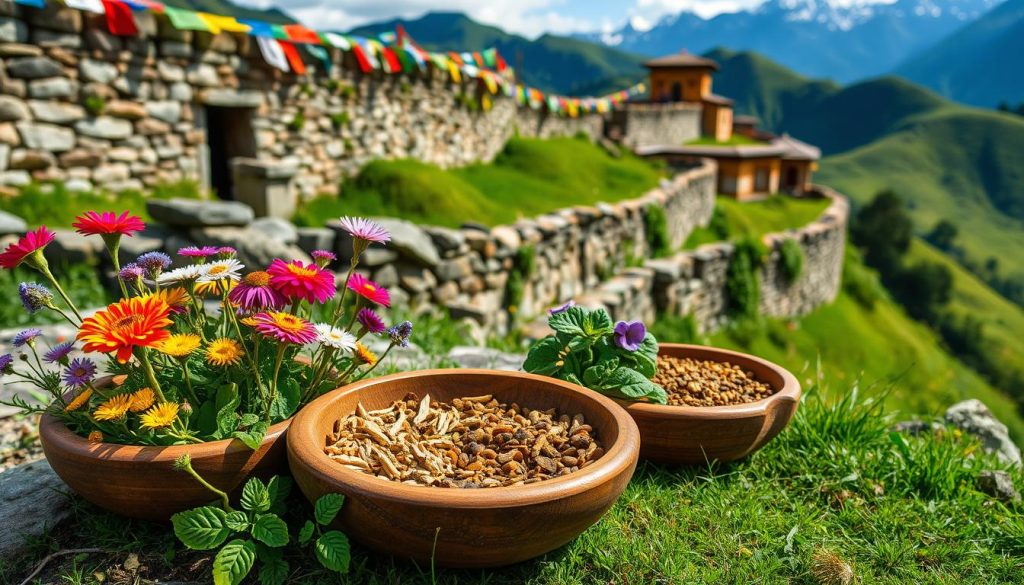
Getting people involved is key to these traditional methods. Local materials and skilled practitioners, like Drungtsho Pema Dorji and Drungtsho Sherab Jorden, help spread knowledge. Exploring herbal medicine in Bhutan reveals a beautiful mix of tradition, culture, and nature.
Punakha’s Rich Biodiversity and Medicinal Plants
Punakha is famous for its rich biodiversity. It has a treasure trove of medicinal plants. These plants are key to its herbal medicine traditions.
The region’s unique climate and geography support over 600 species of medicinal plants. Many of these plants are found only in Bhutan.
Some notable plants include Artemisia, Rhodiola, and Polygonatum. Each plays a crucial role in traditional healing. It’s important to preserve these plants.
They help keep people healthy and support local economies. Local communities use sustainable practices to collect these plants.
A national initiative aims to map and document these plants. It was started under the Royal command. This ensures their use and preservation for the future.
| Plant Species | Medicinal Uses |
|---|---|
| Artemisia | Treats fevers and digestive issues |
| Rhodiola | Enhances mental performance and reduces fatigue |
| Polygonatum | Supports respiratory health and boosts immunity |
| Berberis | Improves liver function and aids digestion |
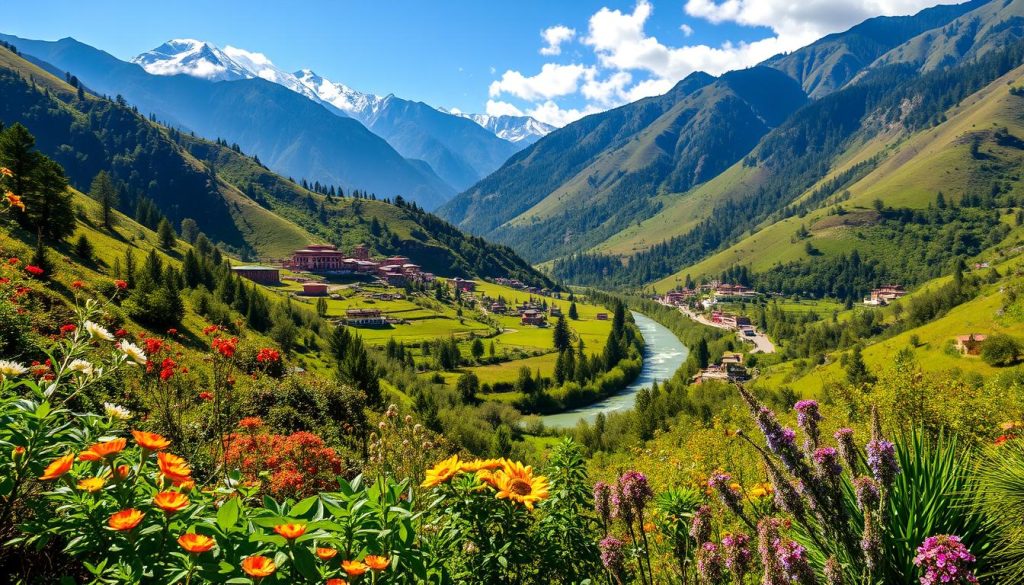
Herbal medicine traditions in Punakha are vital for health. They also show the deep cultural value of these practices. By focusing on conservation and sustainable use, we can ensure future generations benefit from these natural resources.
Punakha’s Traditional Herbal Medicine Practices
Punakha’s herbal medicine is deeply rooted in Sowa Rigpa. This ancient healing system comes from 7th-century Tibetan and Indian Ayurvedic traditions. It focuses on balance and harmony, seeing the body, mind, and spirit as connected.
Overview of Sowa Rigpa
Sowa Rigpa is a complete view of health and disease. It uses many methods to help people feel well again. Practitioners look at patients carefully, check pulses, and ask about their lives and health.
This shows how Punakha’s herbal medicine works. It creates special herbal remedies for each person. These remedies aim to fix symptoms and improve overall health.
Role of Local Flora in Treatments
Punakha’s nature is key in its treatments. Healers use over 300 medicinal plants from the forests. These forests cover more than 72% of Bhutan.
They make infusions, pastes, or powders from these plants. This makes treatments both effective and meaningful. It shows the skill of local healers and keeps important plant knowledge alive.

Traditional Remedies Passed Through Generations
Herbal medicine traditions in Punakha are a treasure trove of history and culture. They go back centuries, showing the deep roots of herbal medicine in Bhutan. Over time, local knowledge of plants for healing has been kept alive and updated for new health needs.
Stories and hands-on learning have passed down the secrets of plants’ healing powers. This has shaped the unique world of medicine we see today.
Historical Context of Herbal Medicine in Bhutan
Bhutan has a long history of medicine, influenced by Tibetan traditions. Tibetan medicine brought new herbal treatments and ideas. These were adapted to fit Bhutan’s local plants and environment.
This blending of traditions has created a rich cultural mix. It has strengthened the herbal medicine traditions in Punakha.
Influence of Tibetan Medicine on Bhutanese Practices
Tibetan medicine has been key in shaping Bhutan’s medicine. It started in the 7th century and focuses on balance in body, mind, and spirit. Herbal remedies fit into this holistic approach.
Local changes have made these remedies work well with Bhutan’s plants and environment. This has helped keep healing traditions alive while celebrating Bhutan’s natural beauty.

Key Ingredients Used in Punakha’s Herbal Medicine
Punakha is known for its rich herbal medicine history. Traditional healers use many herbs in their treatments. These herbs show the deep connection between nature and health in Punakha.
Popular Herbs and Their Healing Properties
In Punakha, over 300 medicinal plants are used. These plants grow due to the area’s varied altitudes. Here are some popular herbs and their benefits:
| Herb Name | Healing Properties |
|---|---|
| Turmeric | Anti-inflammatory, antioxidant, and aids digestion. |
| Ginger | Supports digestion, combats nausea, and has anti-inflammatory effects. |
| St. John’s Wort | Effective for mood regulation and alleviating depression. |
| Dandelion | Detoxifies the liver and promotes healthy digestion. |
| Holy Basil | Reduces stress and supports immunity. |
Indigenous Healing Methods in Punakha
The healing methods in Punakha focus on the body and environment connection. Sowa Rigpa, Bhutan’s traditional medicine, aims to balance the body’s energies. Treatments use herbs tailored to each person’s needs.
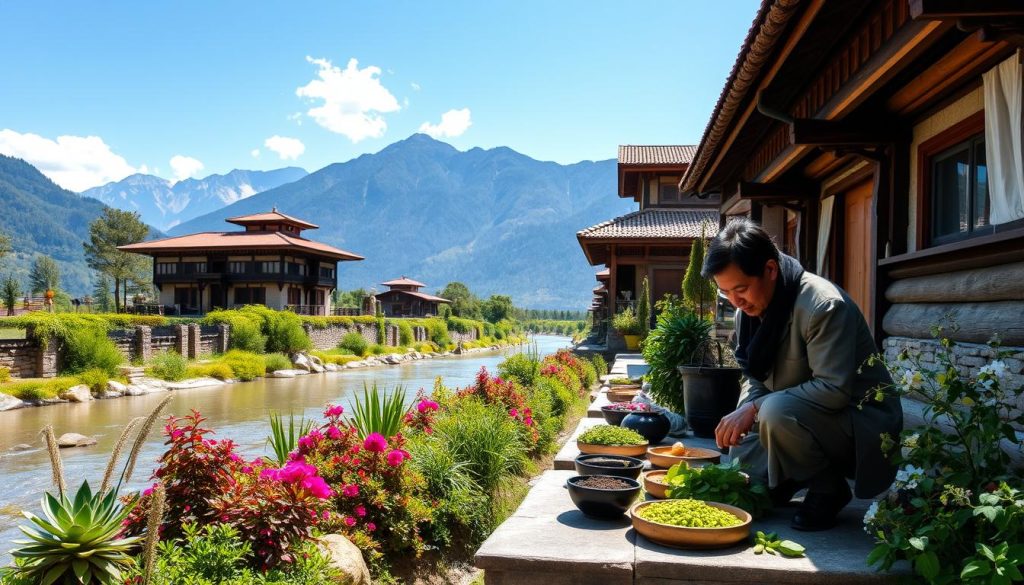
Preparing remedies involves spiritual practices. Prayers and meditation are part of the process. These rituals are believed to enhance the remedies’ power. Pulse diagnosis and urine examination help tailor treatments, showing the cultural importance of herbal medicine in Punakha.
The Role of Traditional Practitioners
Traditional practitioners are key to keeping Punakha’s herbal medicine traditions alive. They have deep knowledge passed down through generations. As more people seek natural healing, it’s important to know about these practitioners.
Qualifications and Training of Herbal Healers
To become a herbal healer in Punakha, one needs a lot of training. Herbalists study for years in special schools. They learn about plants and how they heal.
They focus on:
- Knowing local plants well
- Learning old ways to diagnose
- Understanding treatments that fix the whole body
This training helps them treat many health issues while keeping traditional medicine alive.
Modern Adaptations in Traditional Practices
Even though they stick to tradition, many healers are changing their ways. They use new tech and ideas to improve their work. This keeps their practices relevant today.
- They use new tools to help with old ways of diagnosing
- They listen to what patients say to make treatments better
- They work with doctors to offer more care options
These changes help traditional medicine stay strong and useful in today’s world.
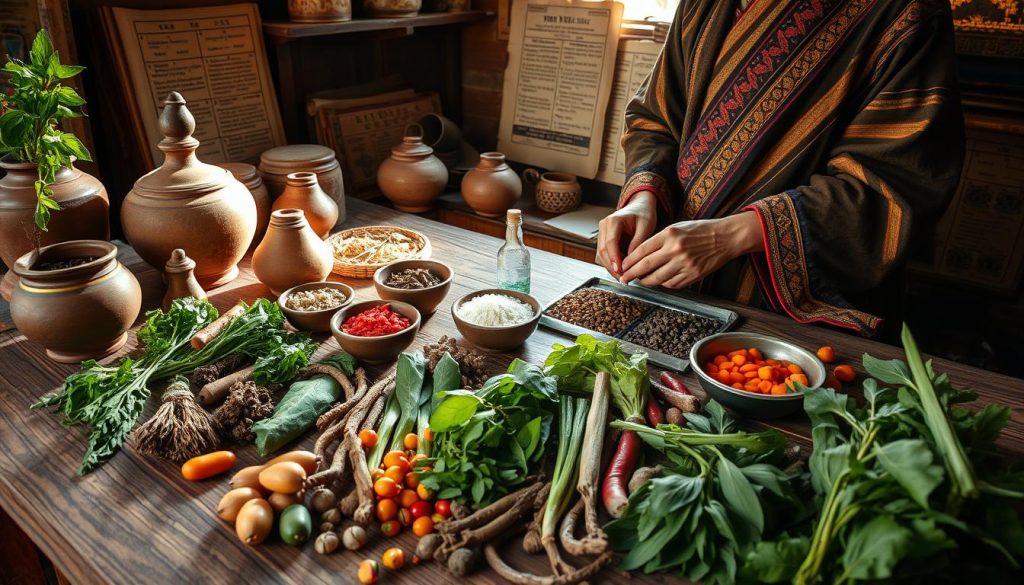
Natural Healing in Punakha: Hot Stone Baths and More
In Bhutan, natural healing in Punakha is special, thanks to hot stone baths. These baths use heated stones in water with artemisia to soothe aches and pains. At COMO Uma Punakha, guests can enjoy these baths, blending local rituals with relaxation.
Hot stone baths are more than a treatment; they’re a way to heal body and mind. People feel deeply relaxed and refreshed after them. COMO Shambhala Retreat offers these baths and massages for US$250 for singles and US$350 for couples.
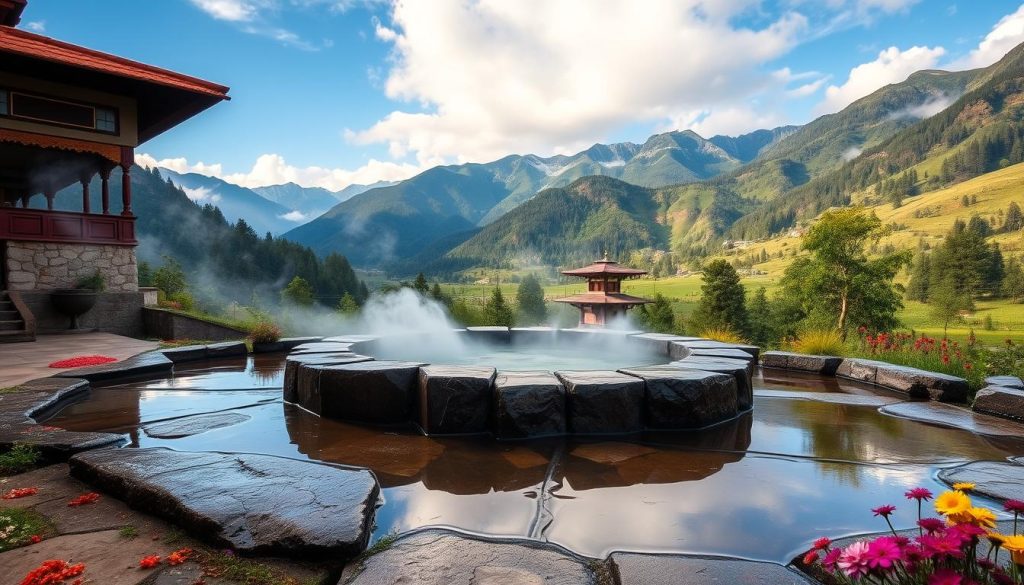
The local culture is key in these healing practices. Traditional games and rituals add to the experience. Activities like archery and khuru, the local dart game, help visitors connect with Punakha’s traditions.
COMO Uma Punakha also focuses on wellness through food. Its restaurant serves fresh juices and various cuisines. This approach to health combines physical treatments with nutrition, benefiting both tourists and locals.
| Service | Description | Price (USD) |
|---|---|---|
| Hot Stone Bath | Traditional treatment using artemisia-infused water. | 250 for singles / 350 for couples |
| Massage Package | Combined with hot stone therapy for enhanced relaxation. | Included in bath pricing |
| Helicopter Excursion | Scenic aerial views of the Punakha Valley. | Starting at 24,711 for two in low season |
Herbal Medicine Traditions in Punakha: Community Involvement
Exploring Punakha’s herbal medicine traditions shows how local efforts support natural healing. This blend of old and new shows respect for tradition and meets today’s needs. People join workshops to learn how to use medicinal plants in a way that’s good for the planet.
Local Workshops and the Promotion of Sustainable Practices
Workshops in Punakha are key for teaching herbal medicine. They cover:
- How to harvest medicinal plants without harming the environment
- How to make traditional remedies
- The impact of harvesting on nature
Being part of these workshops helps people learn and protect nature. It makes sure Punakha’s herbal gifts are here for future generations.
Tradition vs. Modernity: Public Perception
In Punakha, there’s a mix of views on herbal medicine and modern health care. Some people stick to herbal remedies, while others see value in combining them with modern treatments. This change shows how health services are evolving, aiming to be better and more accessible.
What people think about herbal medicine depends on many things:
| Factor | Traditional View | Modern View |
|---|---|---|
| Effectiveness | Herbs provide holistic healing | Modern medicine offers advanced treatments |
| Cultural Value | Herbal medicine is a key cultural heritage | Focus on scientifically supported practices |
| Accessibility | Limited access to modern healthcare | Improving infrastructure and services |
| Education | Emphasis on traditional knowledge | Demand for educational resources in modern medicine |
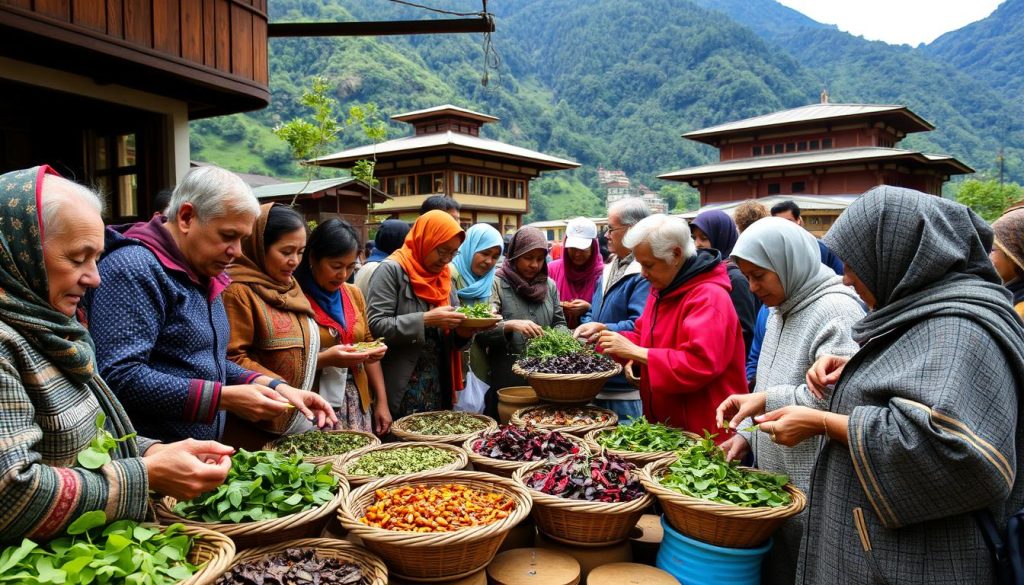
This ongoing conversation highlights the need for balance. It’s important to respect traditional ways while also welcoming new ideas. The community’s dedication to herbal medicine shows a strong commitment to both nature and tradition.
The Future of Herbal Medicine in Punakha
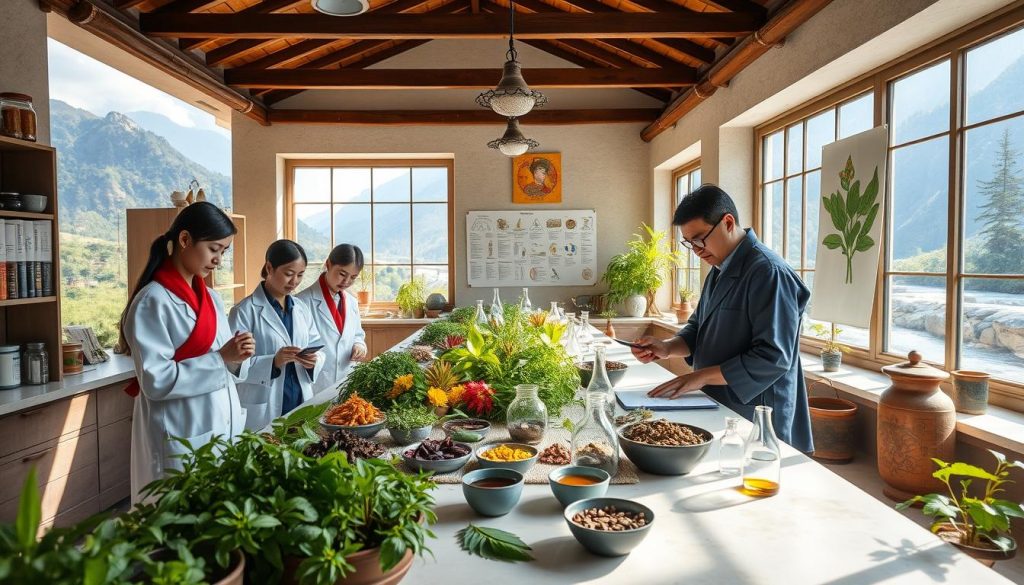
The future of herbal medicine in Punakha is bright. This is thanks to ongoing research and development in Bhutanese herbal practices. These efforts aim to keep traditional knowledge alive while meeting today’s health needs.
Working with international groups is key. It helps us learn more about local herbal remedies. This ensures these valuable traditions keep growing.
Research and Development in Bhutanese Herbal Practices
There’s a big push to study Bhutanese herbal practices more. This involves collecting lots of data on local plants and their health benefits. It’s all about proving traditional methods work and finding new uses for them in modern medicine.
It’s also about using plants in a way that’s good for the environment. This way, we can mix old wisdom with today’s health standards.
But it’s not just about research. Community involvement is also crucial. Local experts are being asked to share their knowledge. This helps keep traditions alive and connects them with the world of science.
This mix of old and new makes herbal practices more respected. It also brings them to people worldwide who are looking for natural ways to stay healthy.
Conclusion
Punakha’s holistic healing practices are alive and well in Bhutan today. Over 600 medicinal plants are known, with at least 300 used by healers. These traditional remedies connect us to the land and its natural gifts.
This blend of old and new makes Bhutanese herbal remedies still valuable. They offer effective treatments that are deeply rooted in culture. This ensures they stay relevant for community health.
The Royal Institute of Traditional Medicine supports these practices. It works alongside modern medicine to promote indigenous herbal treatments. This shows the importance of herbal medicine in Bhutan’s health system.
Exploring Bhutan’s ecological heritage reveals the power of herbal medicine. It not only heals but also strengthens our bond with Bhutan’s culture and history. Future research and policy integration will make these ancient practices even more valuable in our wellness journey.





