Punakha’s Guide to Sustainable Farming & Community Projects
Have you ever thought about how old farming ways can live together with new green efforts? In Punakha, sustainable farming and community projects show us this is possible. They prove that caring for the earth and keeping traditions alive can go hand in hand.
This guide explores the importance of organic farming in Punakha. It shows how these practices help communities grow and protect our environment. As you read on, you’ll see how Punakha is leading the way to a greener future. It’s doing this while honoring its farming roots and community projects.
Introduction to Sustainable Farming in Punakha
Sustainable farming in Punakha is key to the area’s farming scene. It’s needed because of environmental issues, climate change, and the need for food. Sustainable farming projects help local communities, making farming more resilient.
The Peri-Urban and Urban Farming initiative is a great example. It helps farmers work together, sharing resources. This way, local people can improve their lives and farm more sustainably.
In Bhutan, 66% of farmers work together, showing the value of teamwork. Without this, some farmers might harm the environment. Supporting sustainable farming helps small farmers and reduces harm.
Organic farming costs more, by 7–13% on average. This is because it needs more labor for pest control and weed management. Bhutan aims for 100% organic farming, showing its dedication to sustainability and food security. Your support for sustainable farming is crucial for Punakha’s future.
Understanding the Importance of Sustainable Agriculture
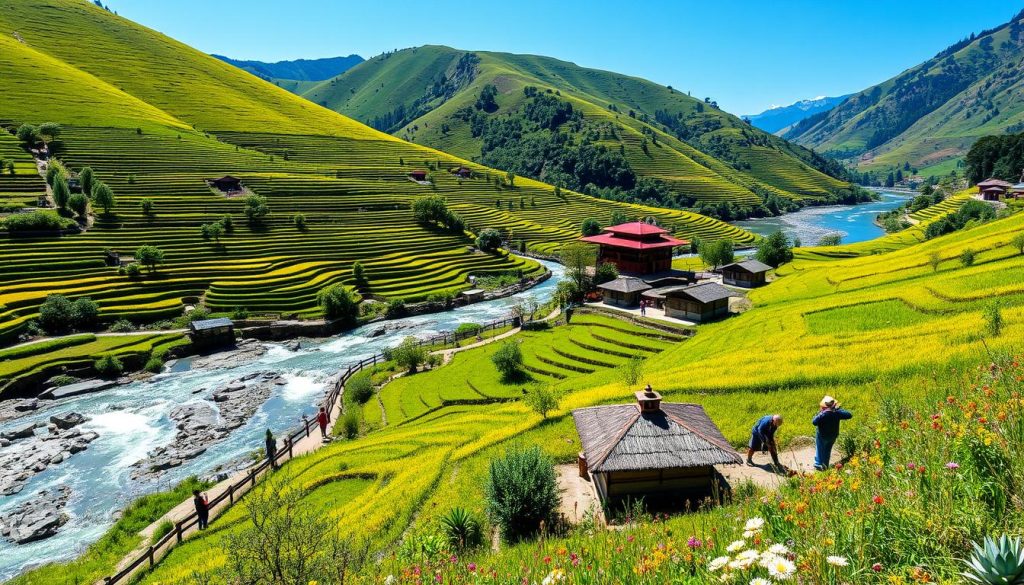
Sustainable agriculture is key to solving big problems like climate change, food security, and harming the environment. It’s crucial for both our planet and our economy. This method focuses on better soil health, less use of chemicals, and more biodiversity.
In Punakha, sustainable farming helps the community a lot. Over 60% of people farm, making the local economy strong. Bhutan’s goal to farm organically is supported by the RNR sector, which is 15.2% of the GDP.
The Bhutanese government has big plans, like becoming fully organic by 2020. But, they face funding issues for the National Organic Program. Yet, places like Gasa Dzongkhag show it can be done.

Research centers across Bhutan are working hard to improve farming. They aim to make farming more productive and resilient. By focusing on sustainable agriculture, we can protect the environment and grow the economy for the next generations.
Sustainable Farming and Community Projects in Punakha
Punakha is now a center for new community projects. These projects focus on sustainable farming. They make farming better and keep local traditions alive.
They also help farmers use methods that are good for the community. This way, food is grown in a way that benefits everyone.
Overview of Sustainable Practices
In Punakha, many projects are working on sustainable farming. For example, the B-KIND project got a big grant from Canada. It aims to improve irrigation for farmers.
This project will give 400 meters of HDPE pipes to 193 families. It will help with rice farming and make water more available.
- The ACREWAS project will help over 37,000 people in Gasa, Punakha, and Tsirang.
- Nearly 19,391 people, including many women, will get better irrigation and water.
- 38,518 hectares of watersheds and 41,910 hectares of land will be restored.
Switching to sustainable farming helps the local economy. For example, Pema Dorji makes about Nu 30,000 from strawberries. This shows that sustainable farming can be profitable.
Impact on Local Economy and Environment
Sustainable farming has big benefits for the environment too. For instance, drip irrigation and greenhouses have improved vegetable production.
Also, new farming technologies have helped farmers try vermicomposting. This has made the soil healthier and more productive.
| Project/Initiative | Impact | Beneficiaries |
|---|---|---|
| B-KIND Project | Grant of 1.2 million CAD | Local farmers |
| ACREWAS Project | 37,000 individuals benefitted | Multiple districts |
| Irrigation Scheme | Improved rice farming conditions | 193 households |
| Vermicomposting Trials | Enhanced soil fertility | Participating farmers |

Organic Agriculture Practices in Punakha
Punakha is moving towards organic farming. This shift focuses on the environment and community health. Organic farming makes soil better and grows healthier crops. It also helps Bhutan’s goal of a sustainable planet.
Benefits of Organic Farming
Organic farming in Punakha brings many benefits. These include:
- Improved Soil Health: Organic farming makes soil better with natural help, creating a healthy ecosystem.
- Higher Quality Produce: Organic crops are fresher and more nutritious, meeting the demand for healthy food.
- Environmental Protection: It uses fewer harmful chemicals, reducing pollution and improving water quality.
- Community Health: Organic farming is good for everyone’s health, lowering chemical exposure for farmers and consumers.
Challenges Faced by Local Farmers
Local farmers in Punakha face challenges in organic farming. It’s important to understand these issues to find solutions. Some of these challenges are:
- Limited Resources: Farmers lack access to organic seeds and soil amendments.
- Financial Constraints: Starting organic farming costs a lot, which is hard for small farmers.
- Lack of Technical Knowledge: Many farmers need more training in organic farming.
- Impact of Climate Change: Weather changes can hurt crops and farming efforts.
- Pest Management: Without chemicals, farmers face more pests that harm organic crops.
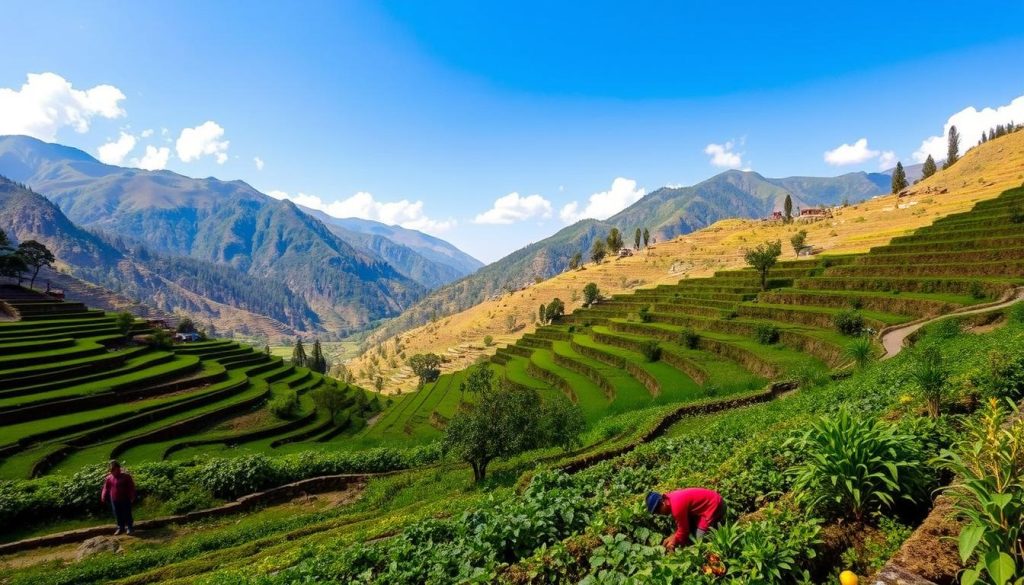
It’s crucial to tackle these challenges for organic farming in Punakha to thrive.
Environmental Conservation Initiatives in Punakha
In Punakha, efforts to protect nature and support growth are strong. The government has set aside Nu. 79.219 million for 2023-2024. From 86 proposals, eight projects were chosen. These projects aim to protect wildlife, help people and animals live together, and fight climate change.
Projects in Punakha aim to improve farming and manage water better. They also work to save local crops and plants. Groups in Punakha, Paro, and Trashigang are leading these efforts. They help protect Bhutan’s nature.
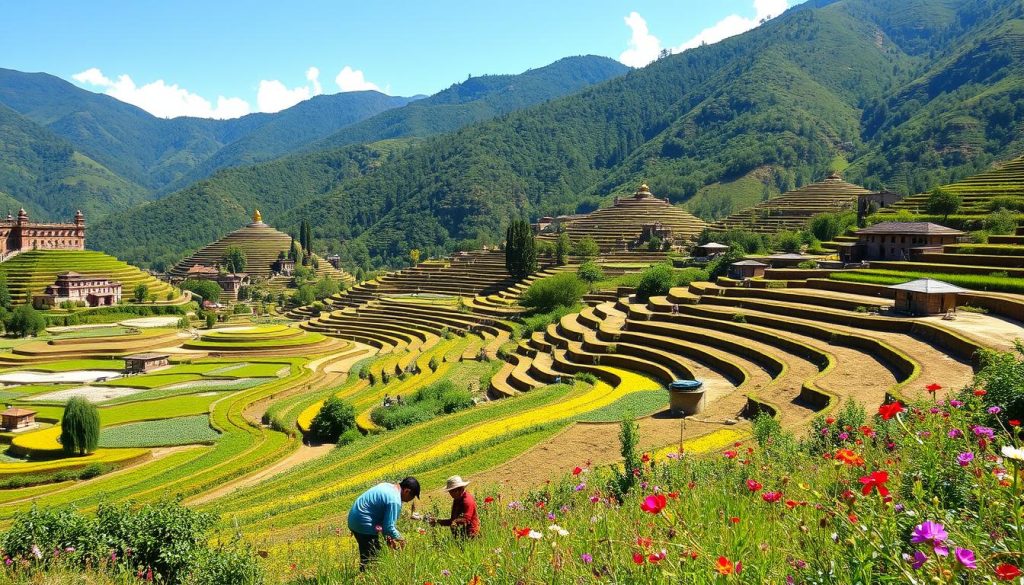
Women are leading the way in managing waste in places like Chukha and Samtse. They show how important community work is for the environment. Educational tools are being made to help study and protect nature. The Bhutan Trust Fund supports these efforts every year.
Bhutan is rich in forests, covering 72.5% of its land. This supports both the economy and people’s lives, mainly farmers. The country’s plan for the environment works with growth in power, industry, and farming. It aims to fight climate change with a strong plan.
| Project Areas | Description |
|---|---|
| Preserving Biodiversity | Projects aimed at maintaining the diverse ecosystems and species in Punakha and surrounding areas. |
| Human-Wildlife Co-existence | Initiatives designed to reduce human-wildlife conflict, promoting safer environments for both communities and wildlife. |
| Climate Resilient Water Management | Strategies focusing on sustainable water management to combat climate-driven scarcity and promote agriculture. |
| Conservation of Crop Diversity | On-farm projects aimed at maintaining and enhancing the diversity of native horticulture crops. |
| Sustainable Waste Management | Community-led initiatives focusing on reducing waste and promoting recycling and proper waste disposal. |
Rural Development Programs Supporting Farmers
The Bhutanese landscape is built on rural development programs. These programs help farmers succeed in sustainable agriculture. They provide financial and technical help to local farmers, helping them grow and sustain their work.
Key Policies and Government Support
The Centre for Sustainable Mountain Agriculture (CSMA) leads in agricultural development. It works on improving crop production and food processing. CSMA’s research helps strengthen policies that support farmers.
Government programs, like the B-KIND project, get funding for important projects. These projects tackle issues like climate change and food security across different areas.
- Government support for farmers includes initiatives that enhance self-reliance and household food security.
- Collaboration with organizations ensures effective research outcomes and advisory services for policy formulation.
- Financial backing from international sources, such as the grant from the Government of Canada, emphasizes the commitment to supporting vulnerable communities.
- Emphasis on gender equality ensures women’s significant contributions to agriculture are recognized and valued.
These rural development programs improve farming practices. They also build a strong base for sustainable rural livelihoods. This helps communities face environmental challenges better.
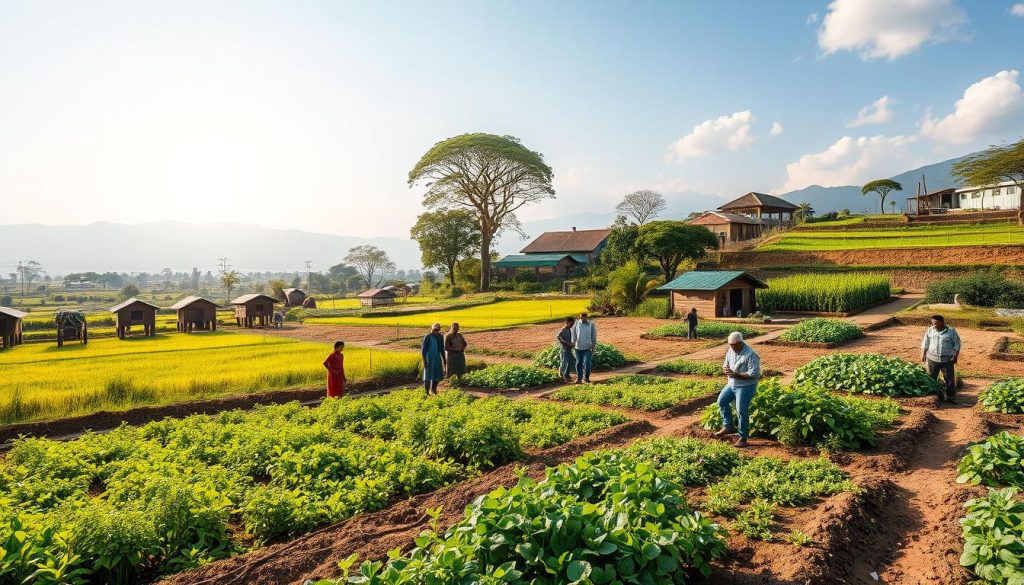
Community Engagement Activities in Agriculture
Getting local communities involved in agriculture is key to sustainable practices. It makes people feel they own and are responsible for the land. This leads to better decisions that fit local traditions and needs.
Being part of the community in agriculture has big benefits. It improves farming methods and brings people together. Farmers talking about their challenges can solve problems like pests and finding enough workers.
Working together also brings new ideas. These ideas can make crops grow better and reduce losses. When everyone’s voice is heard, farming practices that work for the community are used.
Importance of Local Involvement
Being part of the community in agriculture can really help. It leads to better farming and stronger community bonds. When farmers talk about their issues, they can tackle big problems together.
Together, they come up with new ways to grow crops. This not only helps farmers but also protects the environment. It shows what can be done when everyone works together.
Successful Community-Driven Projects
In Punakha, community projects show the power of local involvement. Programs like “Green Hands” get young people into organic farming. They grow different crops using green methods.
These projects are examples of what can be done when the community works together. By using organic farming, farmers improve their crops and help the environment.
| Project Name | Objectives | Outcomes |
|---|---|---|
| Green Hands | Engage youth in organic farming | Increased crop diversity and environmental awareness |
| Farm Diversity Programs | Promote specialty crops for market | Diverse fruit offerings and enhanced market access |
| Community Education Workshops | Train farmers in modern techniques | Improved adoption of sustainable practices and technologies |
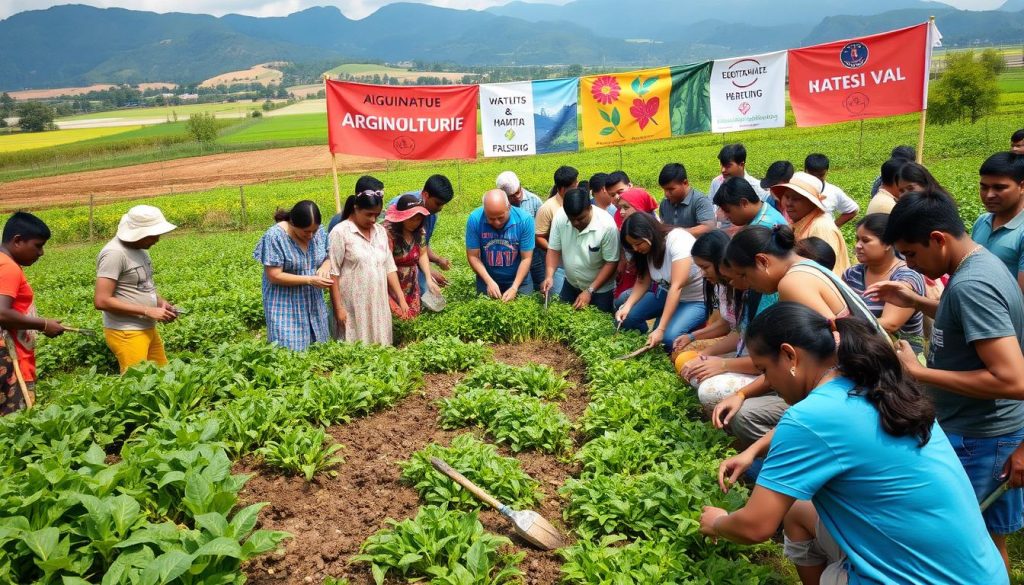
These projects show how important community involvement is. They help make farming sustainable and build a culture of working together.
Sustainable Agriculture Techniques Adopted by Local Farmers
In Punakha, local farmers use many sustainable methods to grow food. They practice crop rotation, intercropping, and organic pest management. These methods keep the soil healthy, control pests, and save resources.
They mix old farming ways with new ones. Farmers save heritage seeds like amaranths and millets. They also grow turmeric and avocados for sale. This mix respects tradition and boosts biodiversity.
Changes in weather have made farmers adapt. They now use bio-pesticides in an integrated pest management system. This helps protect crops like maize from pests.
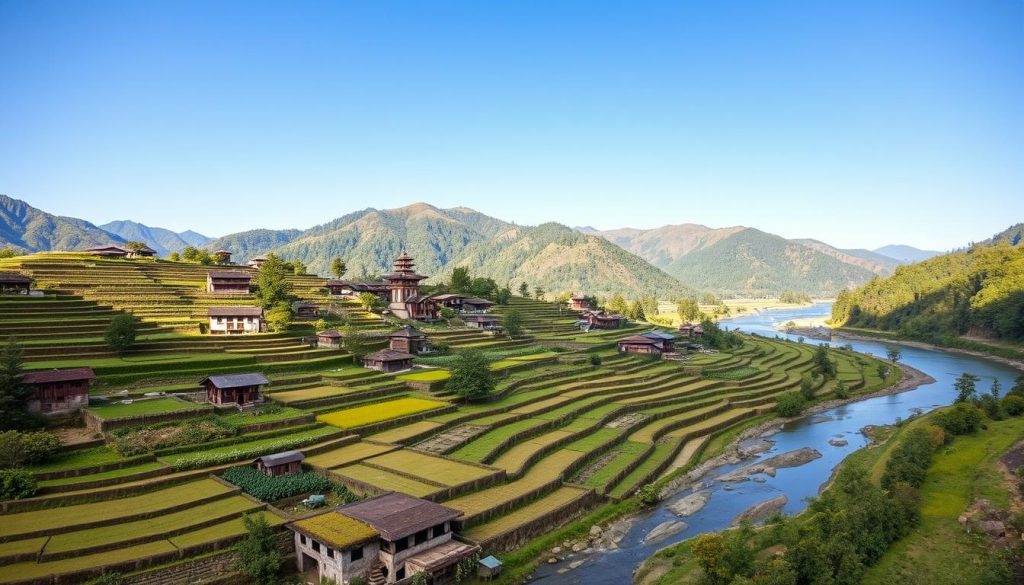
Success in Punakha’s farming comes from working together. About 66% of farmers share labor to save costs. This teamwork makes sustainable farming easier and strengthens the local economy.
Education and training help farmers learn new ways. They share these methods with each other. This keeps farming productive and supports the local economy and environment.
The Role of Youth in Sustainable Farming
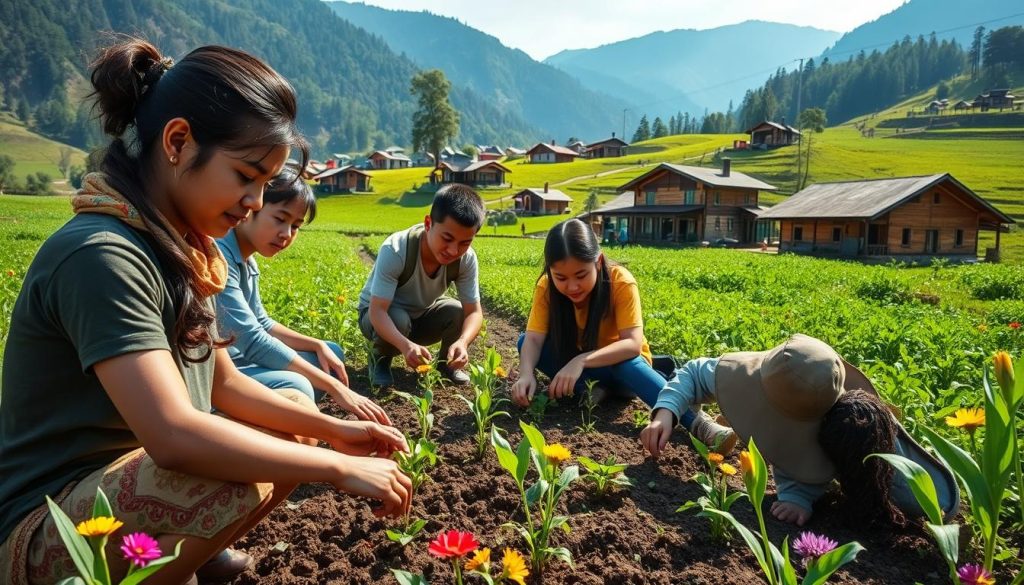
Youth play a key role in making farming in Punakha sustainable and growing. They bring new ideas and energy. This helps a lot in projects that promote farming in a green way.
By getting involved, young people learn important skills. They also help make farming more attractive to others. This is good for the future of agriculture.
Youth Programs and Their Contributions
In Punakha, programs like the Youth in Agriculture Program help young people learn about sustainable farming. These programs give them the tools and knowledge they need. They make farming more interesting for the younger crowd.
Young people can:
- Learn about organic farming.
- Help with food production.
- Support projects that protect the environment.
- Meet with local farmers and experts.
These programs help young people feel connected to the land. They are key in making Punakha’s farming future strong and green.
Conclusion
The journey to sustainable farming in Punakha shows the importance of working together. Farmers, local communities, and government agencies must collaborate. This teamwork not only helps the environment but also improves life for those in agriculture.
The people of Punakha are showing great resilience and adaptability. They face many challenges but keep moving forward. This article has highlighted their efforts and success.
In Bhutan, over 70 percent of people depend on agriculture. The future looks bright but challenging. Education and new techniques are key to overcoming financial and market issues.
Punakha is leading the way in sustainable development. It shows how eco-friendly practices can be part of rural life. This is a model for other areas to follow.
The Ministry of Agriculture and Forests is committed to innovation and local initiatives. This is a positive sign for agriculture and the environment. Together, we can ensure a bright future for Bhutan’s agriculture and its people.