Stargazing on Easter Island: An Otherworldly Astronomical Experience
Imagine being on a remote island, surrounded by the vast Pacific Ocean. Easter Island, over 2,000 miles west of South America, is perfect for star gazing. It’s one of the best places to see the southern hemisphere’s celestial beauty.
What makes Easter Island great for stargazing? And what can you expect from this unique experience?
Visiting Easter Island for stargazing is a special treat. Its dark skies and lack of light pollution make it ideal for astronomy fans. We’ll look at the best spots for star gazing, the island’s astronomy history, and the tours available. It’s a top spot for dark sky experiences.
The Mystical Night Skies of Easter Island
When you arrive on Easter Island, you’ll feel a deep calm and vastness. Its location far from Chile and cities makes it perfect for stargazing. Here, you can see the Milky Way, constellations, and stars without any light pollution.
The island’s clear skies during the dry season, from October to April, are ideal for stargazing. You can explore the night sky’s wonders and join guided tours to learn about the island’s astronomy.
Some key reasons Easter Island is great for stargazing include:
- Remote location, with minimal light pollution
- Clear skies during the dry season
- Unique seasonal sky variations
- Guided astronomy tours and stargazing experiences
Easter Island is perfect for anyone who loves the night sky. Its natural beauty and astronomical wonders offer an unforgettable experience.
Ancient Polynesian Celestial Navigation
Exploring the night sky on Easter Island lets you see the ancient Polynesians’ amazing navigation skills. They used the stars, sun, and moon to guide their canoes across the sea. Today, many tours on Easter Island celebrate this rich astronomical heritage.
On Chile stargazing tours, you’ll learn about the Polynesians’ incredible ocean navigation. They could tell five different ocean swells by feeling the boat’s rhythm. This skill started to fade around 1500 A.D. but was revived in 1975 with the Hokule’a’s launch.
The Polynesian triangle, including Hawaii, New Zealand, and Easter Island, covers almost 30% of the Pacific. They could sense the rebound of waves from islands up to 160 kilometers away. This shows the beauty and complexity of the night sky on Easter Island and the skill of Chile stargazing tours.
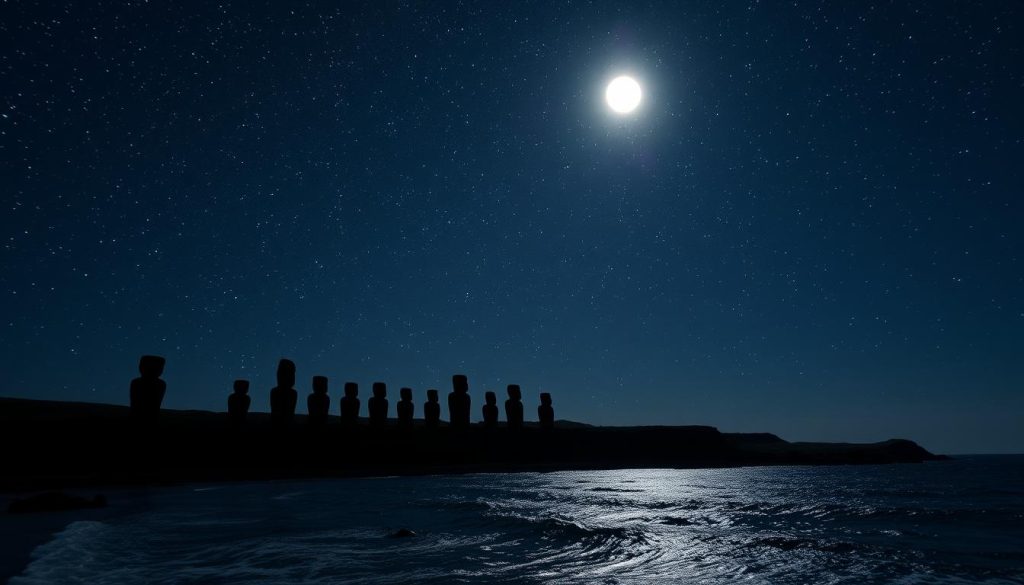
Best Times for Easter Island Star Gazing
Planning a trip to Easter Island? It’s key to pick the best times for stargazing. The island’s spot and little light pollution make it perfect for star watchers. Rapa Nui observatories let you see the night sky, with Easter Island offering a top stargazing spot.
The winter months are best for stargazing here, with clear skies and cool weather. The moon is barely seen, with a moon visibility of 1.4%. This means great stargazing conditions. You’ll have about 11 hours and 18 minutes of night to explore the sky.
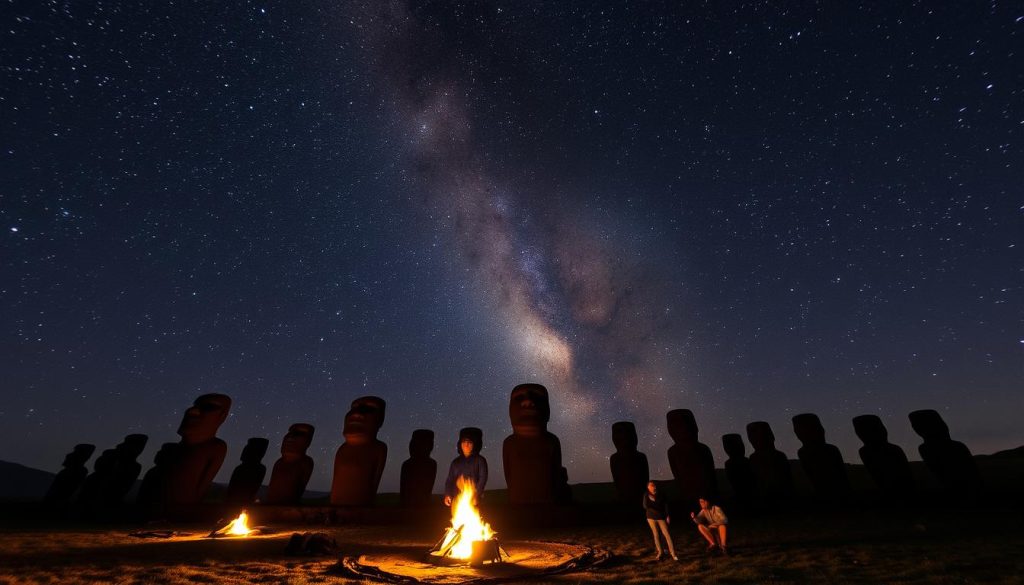
When planning your stargazing trip, think about the monthly sky calendar, weather, and moon phase. Here are a few tips:
- Mars is visible for over 7 hours after sunset
- Jupiter is visible for over 4 hours after sunset
- Uranus and Neptune are best seen with binoculars, just after sunset
By keeping these in mind and planning well, you’ll enjoy Easter Island’s stargazing. You’ll see the amazing night sky at a top dark sky spot.
Prime Stargazing Locations on Rapa Nui
Exploring Easter Island reveals some of the best spots for star gazing. The island’s minimal light pollution makes it perfect for gazing at the night sky. Anakena Beach is a favorite, offering stunning views of the Milky Way and constellations.
Rano Raraku and Ahu Tongariki are also top choices. They provide incredible views of the night sky. These spots are great for experiencing the island’s unique stargazing opportunities. The island’s dark skies are among the darkest on Earth.
Some of the key features of these locations include:
- Minimal light pollution
- Stunning views of the Milky Way and constellations
- Rich astronomical heritage
- Breathtaking natural beauty
Visiting these spots lets you enjoy the beauty of Easter Island star gazing. Rapa Nui’s natural beauty and minimal light pollution make it ideal for stargazing enthusiasts.
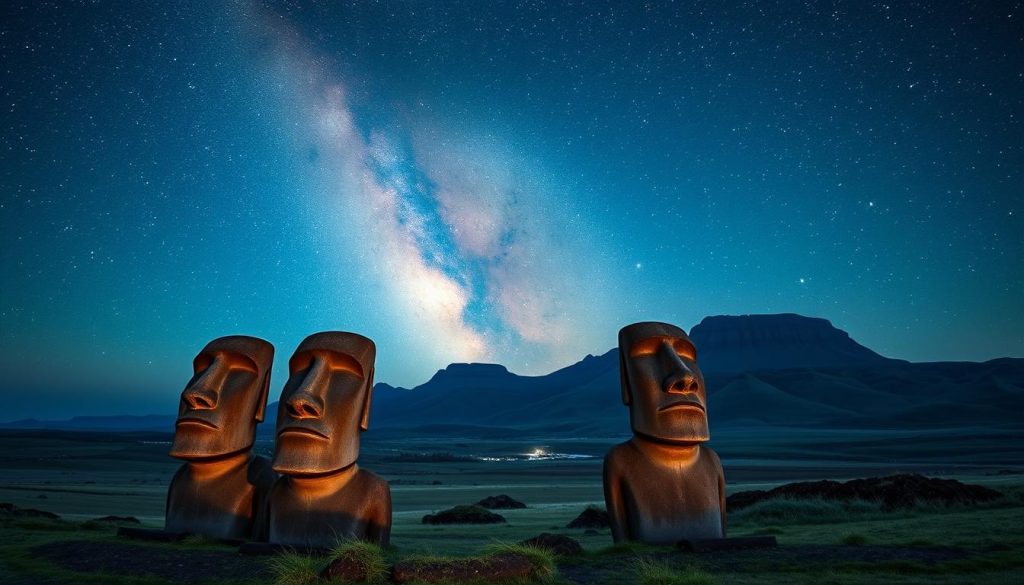
Essential Equipment for Your Stargazing Adventure
Getting ready for stargazing on Easter Island means having the right gear. The island’s dark skies are perfect for seeing stars. Bring binoculars or a portable telescope for a closer view.
Photographers should pack a camera with a wide lens and a tripod. Don’t forget blankets, chairs, and snacks for comfort. The Rapa Nui Stargazing Experience offers a chance to see the sky with expert guides and telescopes.
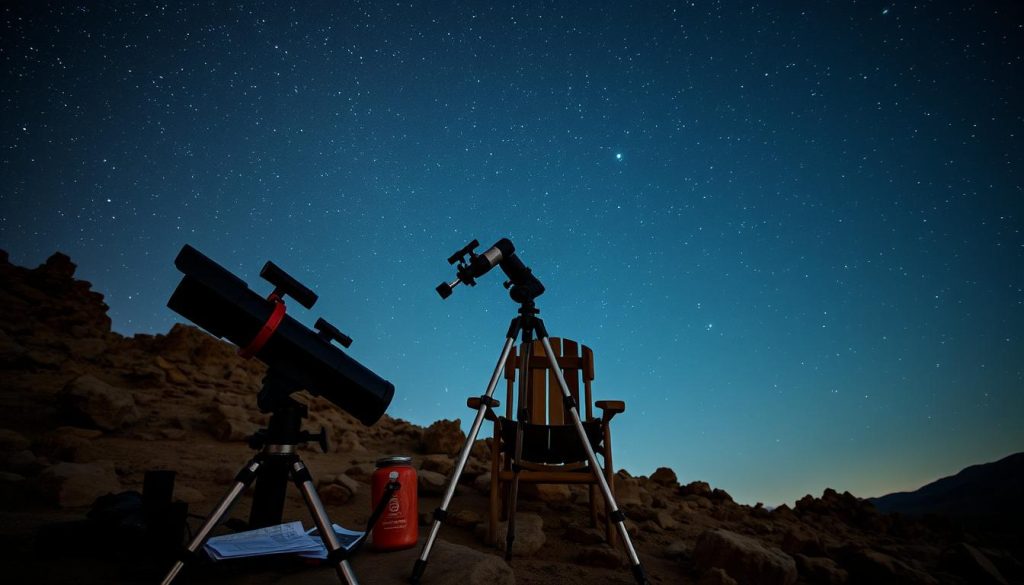
- Telescope or binoculars for a closer look at the stars
- Camera with a wide-angle lens and tripod for capturing photos
- Comfort items like blankets, chairs, and snacks
- Red light flashlight to preserve your night vision
With the right equipment and planning, your stargazing trip will be unforgettable. Enjoy your astronomy tours on Easter Island.
Professional Astronomy Tours and Guides
Join a professional astronomy tour on Easter Island for an unforgettable night sky experience. These tours offer expert guides and high-powered telescopes. You’ll see the island’s stunning night sky and learn about its astronomical heritage.
Some tours, like the Rapa Nui Stargazing Experience, last 7 days. They include guided tours to sites like Rano Kau volcano and Ahu Tongariki. You’ll also help with beach cleanup activities and learn about conservation.
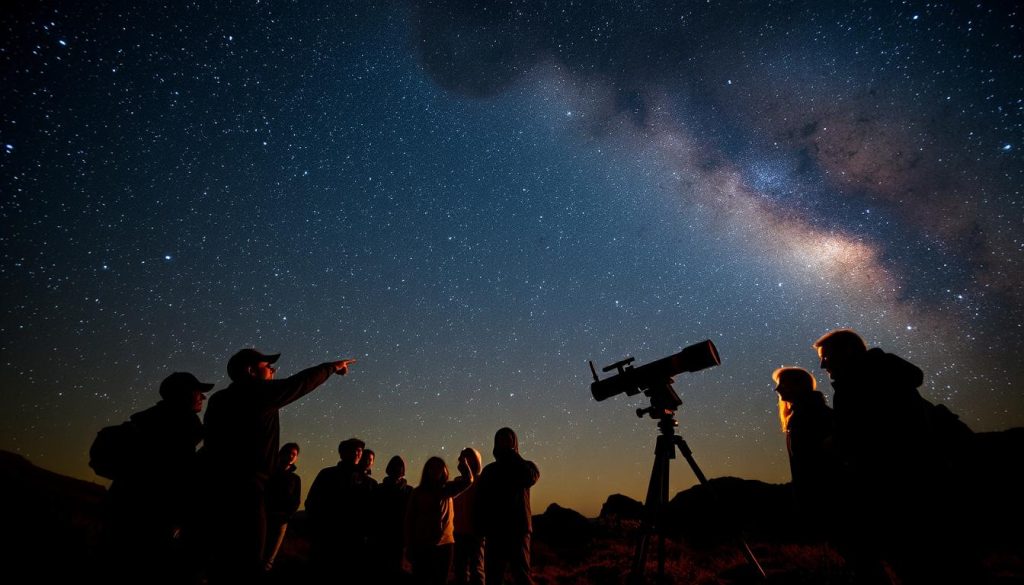
When picking a tour, look at the tour duration, group size, and cost. Some tours might visit the Atacama Desert or show you an annular solar eclipse. Compare different tours to find the best fit for your interests and budget.
By joining a professional astronomy tour, you’ll enjoy Easter Island’s night sky activities. You’ll learn a lot and make memories that last a lifetime. Expert guides and top-notch equipment make it all possible.
Cultural Significance of the Stars to Rapa Nui People
Exploring Easter Island’s night sky reveals the Rapa Nui people’s deep bond with the stars. Their culture is rich with stories and legends that highlight the island’s astronomical importance. These tales show their deep understanding of the universe, reflected in their traditions.
Visiting Rapa Nui observatories is a great way to learn about the island’s cultural significance. You can also join Chile stargazing tours to explore the night sky. These tours offer a chance to learn about the island’s history, astronomy, and culture, enriching your trip.
Some key aspects of the Rapa Nui people’s cultural significance include:
- Traditional stories and legends that celebrate the island’s astronomical heritage
- Astronomical alignments of the Moai statues, which reflect the island’s rich cultural heritage
- Connection to the universe and the stars, which is reflected in their ancient traditions and practices
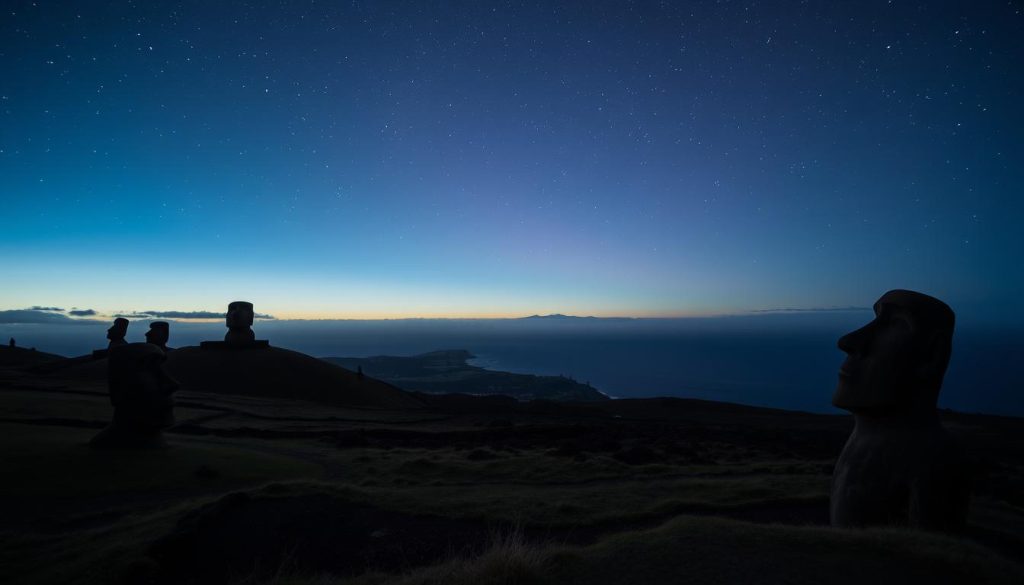
Visiting Easter Island lets you understand the Rapa Nui people’s bond with the stars and universe. The island’s unique features and rich culture make it a captivating place for those interested in astronomy and culture.
Southern Hemisphere Constellations Visible from Easter Island
Looking up at the night sky on Easter Island is a breathtaking sight. This place, known for its dark sky destinations, offers a unique stargazing experience. With over 200 clear nights a year, you’ll have plenty of chances to see the stars.
Stargazing on Easter Island is special because of the Southern Hemisphere constellations. The island’s southern location is perfect for seeing these stars. For example, the Southern Cross is visible about 90% of the time from Easter Island.
Notable Constellations
Some of the notable constellations visible from Easter Island include:
- Centaurus
- Carina
- The Southern Cross
These constellations are a highlight of the island’s stargazing opportunities. You can fully appreciate them throughastronomy toursthat offer guided viewing experiences.
Stargazing Experience
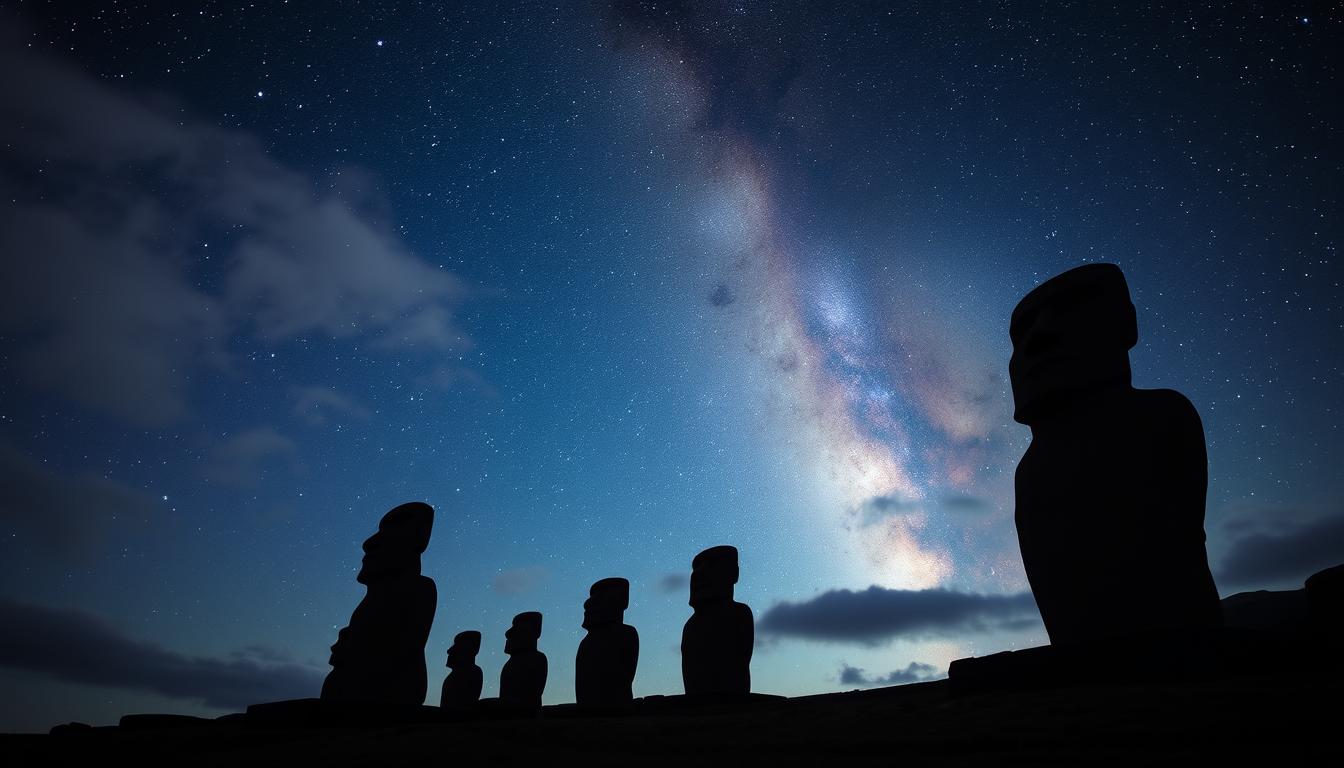
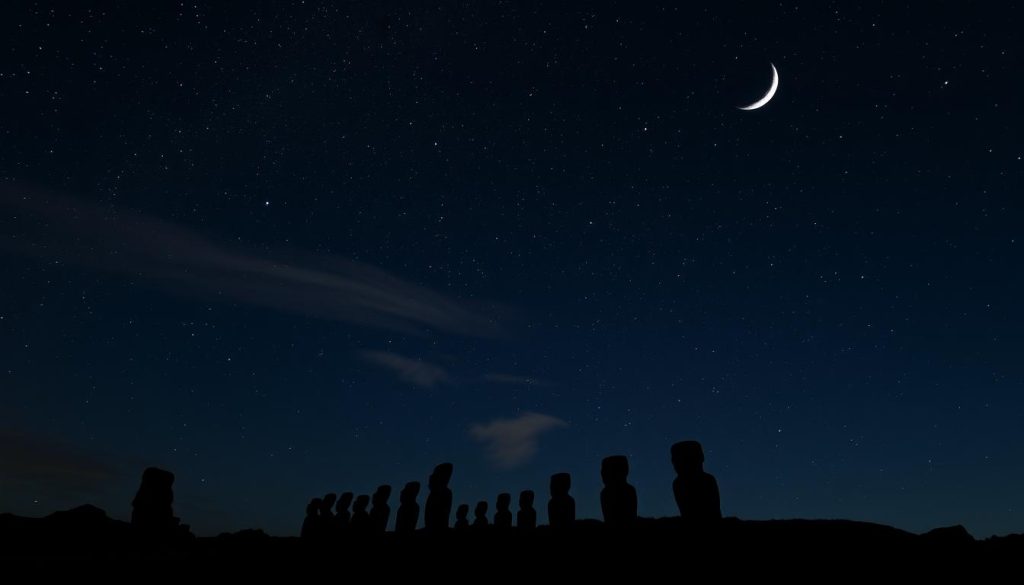
The island’s unique geological formations, like the Moai statues, add to the stargazing experience. About 30% of stargazing tours include cultural elements. You’ll learn about the cultural significance of the stars in Polynesian navigation.
Whether you’re an experienced astronomer or just starting, Easter Island is a must-visit. It’s a top spot for any stargazing enthusiast.
Combining Moai Visits with Night Sky Viewing
Exploring Easter Island is a unique experience. You can see the Moai statues and enjoy the night sky. The island offers amazing Easter Island star gazing and a rich culture. It’s perfect for both stargazers and history lovers.
At Rapa Nui National Park, you can see the night sky in all its glory. This is one of the best star gazing spots globally. The tour costs $695.00 per person and has a maximum of 10 travelers. This ensures everyone gets personal attention from English-speaking guides.
Some key highlights of the tour include:
- Exclusive nighttime access to Rapa Nui National Park
- Expert guidance from English-speaking photography-focused guides
- Access to 2 iconic sites for astrophotography: Ahu Nau Nau and Ahu Tongariki
- Full refund available for cancellations made with at least 24 hours’ notice
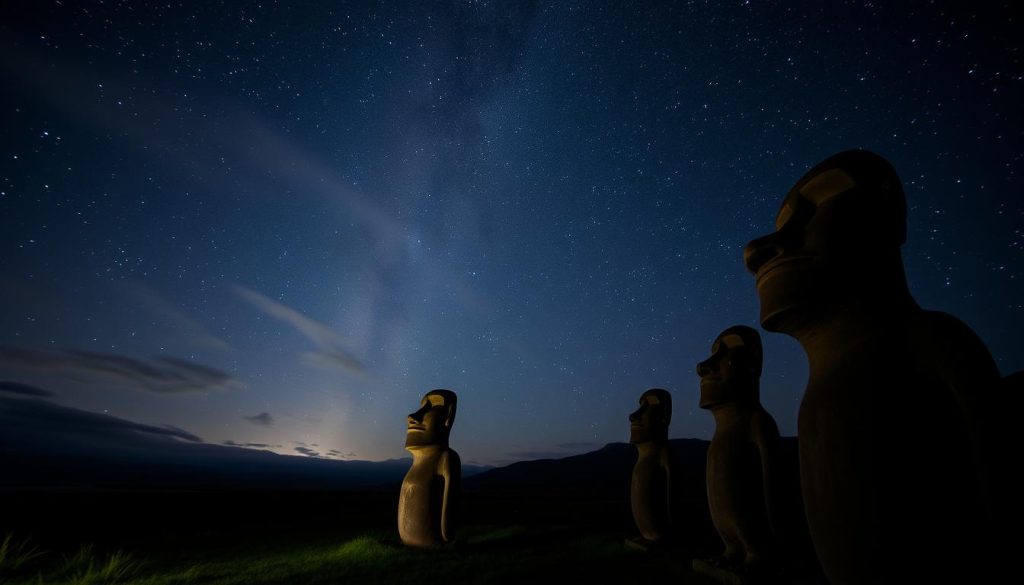
To enjoy your Easter Island star gazing trip, dress warmly. It gets cold at night. Bring your DSLR camera, wide-angle lens, and tripod. This way, you can capture the night sky’s beauty at one of the best star gazing spots in the world.
Photography Tips for Capturing the Night Sky
Exploring the night sky through photography is exciting, thanks to the right techniques. Easter Island is perfect for capturing star photos due to its low light pollution. It’s a great place to take amazing pictures of the stars.
Understanding camera settings is key for star photography. For night shots, use an ISO of about 6400. Try different settings to find what works best. Aperture should be wide, like F1.4 or F2.8, to capture more light.
Camera Settings and Composition
For web-sized images, use the formula 600 / focal length (in mm) for exposure time. For example, a 24mm lens should have a 25-second max exposure. For large prints, use 400 / focal length (in mm). Here are some tips for stunning photos:
- Use a wide-angle lens to capture the vastness of the night sky
- Experiment with different ISO settings to find the perfect balance
- Shoot in RAW format to capture more data for post-production
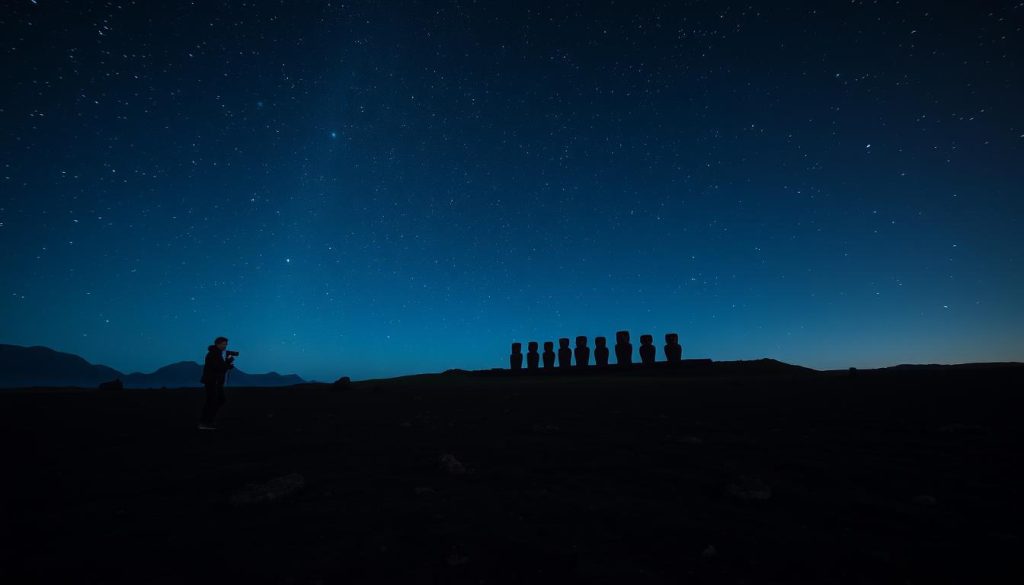
By following these tips and practicing, you’ll take amazing night sky photos. Whether you’re new or experienced, Easter Island’s sky will inspire you. It will leave you with unforgettable memories.
Planning Your Stargazing Trip to Easter Island
Planning a stargazing trip to Easter Island, also known as Rapa Nui, is exciting. The island is a remote Pacific outpost, 2,300 miles (3,700 km) west of Chile. It’s also 2,500 miles (4,000 km) southeast of Tahiti. A flight from Santiago, Chile, takes about 5 hours, and airfare can cost between $200 and $800.
After arriving, you’ll need to buy a Rapa Nui National Park pass for $80 USD per person. Rental cars cost between $75 to $100 per day. Meals at local restaurants are $25 to $50 per person. Hotel prices start at under $100 per night for budget options, while luxury stays can be over $500 per night.
Exploring the island with a local guide costs $100 to $200 per day per person. The best time for stargazing is from December to March, with warm temperatures. Shoulder seasons offer milder weather and fewer tourists. Winter months are cooler and wetter.