Ocean Giants: Best April Destinations for Whale Watching
Have you ever wanted to see ocean giants during their spring trip? April is the perfect time for whale watching. These majestic animals begin their amazing journeys then.
April whale watching tours are a chance to see the whale migration. From Alaska to Hawaii, each place offers a unique view of nature’s display.
Humpback, blue, and gray whales head to warmer waters in spring. Seeing these whales up close is an exciting journey. It’s also a way to learn about their role in the ocean’s ecosystem.
Are you keen on whale watching or just getting started? Plan your visit in April for an experience you won’t forget. So, what are the top spots to see these magnificent whales in April?
Whale Watching in Greenland
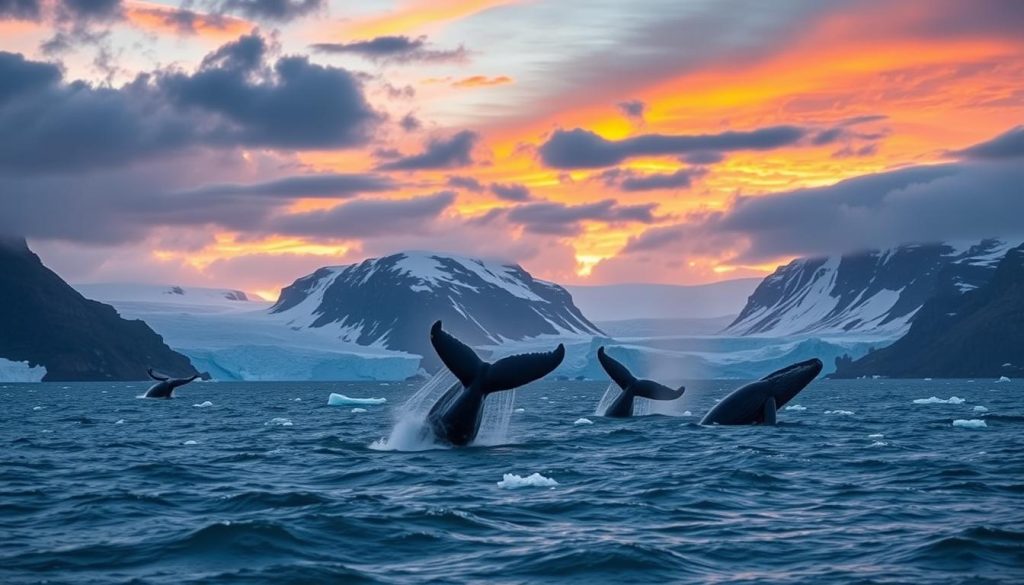
Greenland is a top spot for those who love whales. Its stunning fjords and icy waters make a great setting for spotting different whale species. These waters are home to up to 15 whale species. This makes for many chances to see them up close.
Popular Spots in Greenland
Disko Bay, Nuuk, and Sisimiut are among the best places for whale watching in Greenland. Disko Bay is known for its huge icebergs and various whales, like humpbacks, minke, and fin whales. Near the northern island, Qaanaaq is the place to see narwhals and bowhead whales by the ice edge.
Whales You Can See
Throughout the year, you can spot many whale species in Greenland. From July to September, humpback, fin, and minke whales are common. Spring brings narwhals, belugas, and bowhead whales near the ice. Places like Nuuk, Paamiut, and Aasiaat are great for seeing humpback whales.
- Humpback Whales
- Fin Whales
- Minke Whales
- Narwhals
- Belugas
- Bowhead Whales
Best Time for Whale Watching
The best time to see whales in Greenland is from April to September. Spring is great for narwhals and belugas. The Sarfaq Ittuk coastal ship provides a unique view from August to October. Make sure to book early for these popular tours.
Exploring Iceland for Whales
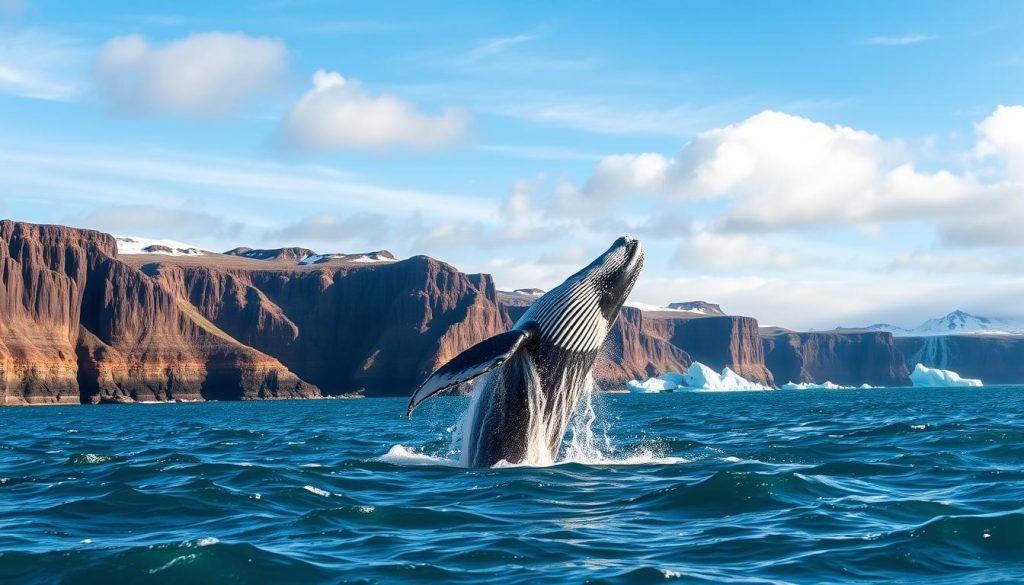
Plan your next trip to Iceland for an amazing whale watching adventure. This country is famous for its stunning scenery and rich sea life. It gives you a unique chance to see some of the biggest animals on the planet.
Top Whale-Watching Locations in Iceland
Some spots in Iceland are perfect for seeing whales. Husavik, called the whale-watching capital of Europe, is fantastic for sightings in Skjálfandi Bay. Another great place is Akureyri, in Eyjafjörður, known for seeing humpback whales often. Reykjavík, the capital city, also has tours that are easy to join from the harbor.
What Types of Whales to Expect
In April, look out for humpback whales, minke whales, and harbor porpoises. Humpbacks are famous for jumping and tail-slapping. Minke whales, seen often in Icelandic waters, might come close to boats. Sometimes, you might even see orcas and blue whales, but they’re rarer.
Ideal Months for Whale Watching
Whale watching in April is great, but May to August is the prime time. With longer days, you have a better chance to see whales. April is a good time to start your whale watching adventures in Iceland.
The Majestic Whales of Alaska
Alaska is known for its untouched wilderness and rich marine life. It’s a leading place to watch whales. Here, you can see many whale species on a whale watching tour. The best time to go is from May through September. This is when you’re most likely to see these huge sea creatures in their home.
Best Locations for April Whale Watching
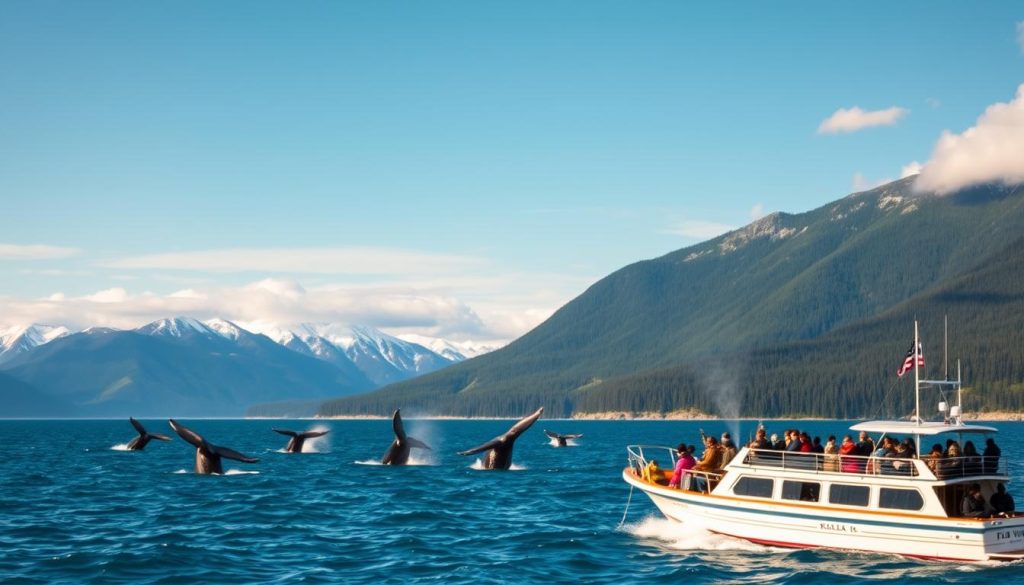
Whales start coming to Alaska in April. Top spots for watching them include Ketchikan, Sitka, Kodiak, Seward, and Kenai Fjords National Park. Each place is best for seeing certain kinds of whales. So, it’s smart to pick based on the whales you want to see. The Gulf of Alaska and the Southeast’s fjords also have amazing views and whales.
Species of Whales Found in Alaska
Many types of whales live in Alaska’s waters. You can find beluga, humpback, gray, orca, bowhead, blue, right, and minke whales. Humpbacks, famous for their songs, can be 60 feet long and weigh 40 tons. Blue whales are the biggest animals on Earth, reaching 100 feet and weighing up to 160 tons. Orcas, with their black and white bodies, can be seen all year.
Guided Tours and Tips
For the best whale watching, consider a guided tour. Experts on these tours know a lot about whales and their habits. The boats have special features, like hydrophones, so you can hear whales underwater. Leading companies, like Kenai Fjords Tours, follow safe marine practices. They care about both your experience and protecting nature.
Northern Shores of Norway for Whale Encounters
Norway has a long coastline rich in marine food, making it a top spot for whale watching in April. Particularly, Northern Norway is famous for its variety of whale species. This attracts visitors worldwide.
Where to See Whales in April
The Vesterålen coast is well-known as the best spot for whale sightings in Norway. Andenes in Vesterålen gets you near these amazing animals all year. April is especially good for whale watching here. Some tours even promise a 100% whale sighting guarantee. This means if you see no whales, you get to go again for free.
Diverse Whale Species in Norwegian Waters
Norwegian seas host many fascinating whale types. During winter, humpback whales, killer whales (orcas), and fin whales come for the herring. From January to April, you might see harbour porpoises. Sperm whales, pilot whales, white-beaked dolphins, and minke whales appear near Vesterålen Islands from May to November.
The Best Time to Spot Whales
The whale watching season in Norway is mainly from mid-January to October. This period is ideal for catching sight of various whale species. However, the best times can vary:
- Humpback whales: October to March
- Orcas: End of October to mid-January
- Porpoises: Summer months
Winter whale watching is best from mid-January to April. The summer season lasts from early May to November.
Norway’s northern coast offers top-notch whale watching. It’s perfect for both marine lovers and those new to the experience. An April whale watching trip will surely be unforgettable.
Top Whale Watching Destinations in Baja California
If you’re seeking unparalleled whale watching experiences, Baja California is a top choice. From January to April, this area teems with different whale species.
Best Locations for April Whale Watching
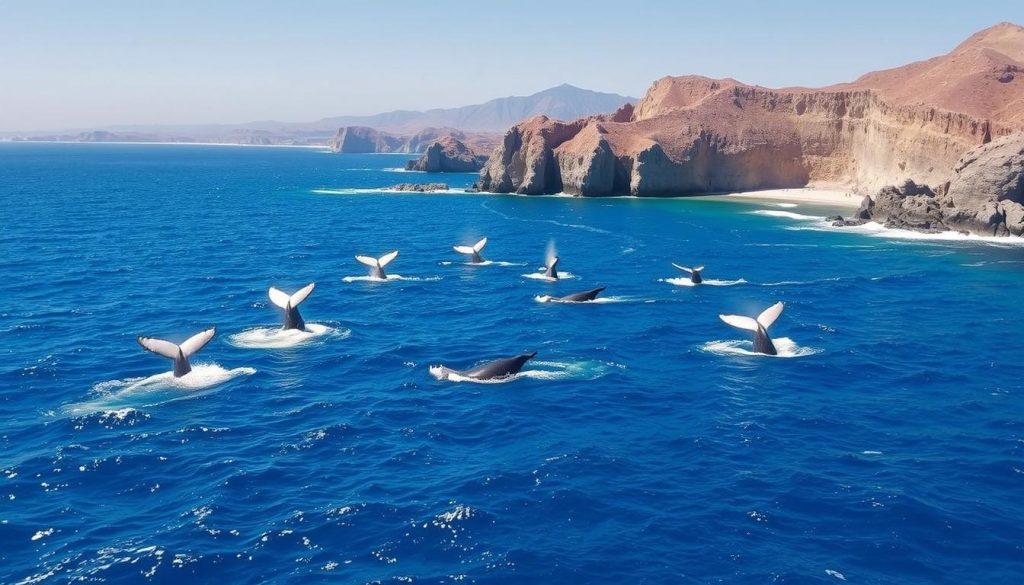
April is prime for whale watching in Baja California. Top spots include Magdalena Bay, San Ignacio Bay, and Ojo de Liebre. Here, you can get close to gray whales as they come to give birth and care for their young.
You might also see humpbacks, blue whales, orcas, and fin whales. They are found on the Pacific Coast and in the Sea of Cortez.
The Variety of Whale Species
Baja California is rich in whale diversity. It’s home to over 30 different whale and dolphin species. This includes grays, blues, humpbacks, fins, minkes, and sperms.
The gray whale’s journey is stunning. These giants travel about 12,000 miles from their Arctic homes near Alaska. Baja California offers chances to see various species, making it a top spot for whale watching.
Recommended Whale Watching Tours
Many reputable tours in Baja California offer unforgettable whale watching trips. Popular places for tours are Cabo San Lucas and Loreto. Loreto is famous for its blue whale sightings in February and March.
Tours often pair Sea of Cortez whale watching with Pacific Coast whale camps. These camps range from basic tents to small cabanas. They cater to all types of travelers.
Hawaii: A Paradise for Whale Watching
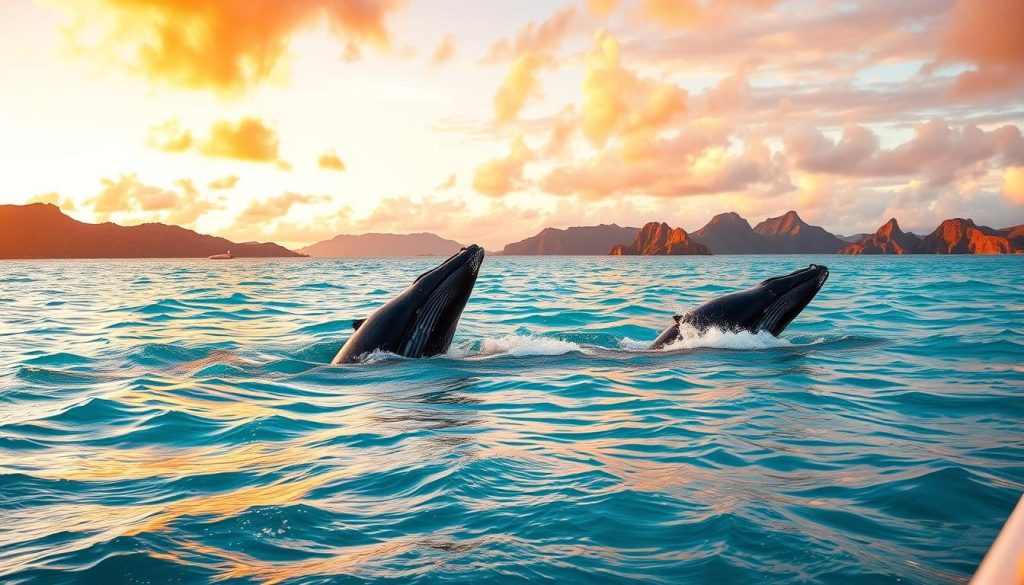
Hawaii’s waters are perfect for seeing majestic whales from November to April. This place is famous for its awesome marine life. Here, you can get really close to these huge, gentle creatures. It’s an experience you won’t forget.
Prime Whale-Watching Spots
Looking for the best spots for whale watching in Hawaii? There are several top places. You can go to Holoholokai Beach Park or Pu’ukohola Heiau National Historic Site. Lapakahi State Historical Park and Kapa’a Beach Park are also great. The Au’au Channel offers calm waters where many humpback whales gather.
Types of Whales Seen in Hawaii
Humpback whales are the main attraction in Hawaii’s whale watching season. Each year, these whales come to Hawaii to have their babies and keep them safe. The best time to see them is in January and February. You might also see dolphins and different fish, making the trip even better.
April Tours and Sightseeing Tips
April is still a great time for whale watching tours in Hawaii. Tours usually last 1.5 to 3 hours. There are many tour companies like Sunlight on Water and Oceanic Patrol. Body Glove and Adventure X Boat Tours also offer great choices. Captain Dan McSweeney’s Whale Watching Adventures is another option. See the table below for details:
| Company | Tour Duration | Price Range | Popular Features |
|---|---|---|---|
| Sunlight on Water | 2 – 3 hours | $100 – $150 | Hydrophones, whale cams |
| Oceanic Patrol | 1.5 – 2.5 hours | $110 – $140 | Snorkeling options |
| Body Glove | 2 – 4 hours | $120 – $145 | Comfort amenities, bar |
| Adventure X Boat Tours | 2 – 3 hours | $105 – $135 | Small group sizes, speed boats |
| Captain Dan McSweeney’s Whale Watching Adventures | 2.5 – 3 hours | $115 – $150 | Expert guides, educational talks |
For the best experience, pick large boats for comfort or small boats for a close-up view. Whether you love marine life or want a unique experience, Hawaii’s whale watching is unforgettable. It’s a chance to see the beauty of nature in a tropical paradise.
Whale Watching Experiences in April
April is a top time for whale watching, with many species to see in the wild. The coasts from southern California to Alaska’s icy seas each offer unique sights. Here, you can see many kinds of whales in their natural surroundings.
Popular Destinations
- Newport Beach, California: Witness the end of gray whales’ northward migration and the acrobatics of resident bottlenose and common dolphins.
- Alaska: Marvel at the large populations of humpback whales and the critically endangered beluga whale population in Cook Inlet.
- Hawaii: Spot humpback whales, which breed in Hawaiian waters before heading back to Alaska.
Types of Whales to Encounter
- Gray Whales: Spotted off Newport Beach, these giants weigh up to 30 tons and are as long as a school bus.
- Humpback Whales: Known for amazing breaches, they weigh up to 40 tons and reach 60 feet. Alaska is home to about 10,000 humpbacks.
- Fin Whales: Seen in Newport Beach during April, they are the second-largest whale species, known for their speed and grace.
- Minke Whales: Sometimes seen during April trips, they are less common.
- Beluga Whales: With just about 312 remaining, these endangered whales are seen near Anchorage in Cook Inlet.
- Dolphins: In Newport Beach, you can see bottlenose dolphins all year. Common dolphins appear in large groups.
Best Practices for Whale Watching
Watching whales responsibly means not disturbing them or their homes. It’s important to follow guidelines for a good whale watching experience. Choosing a guided tour can make your trip better. Guides know a lot about whales and how to see them without causing harm.
Such tours include experts who teach about whales’ roles in the ecosystem. This makes the experience more meaningful and respectful.
Discovering Whales in the Caribbean & Costa Rica
The Caribbean and Costa Rica’s warm waters are great for spotting whales. These areas let you see these amazing animals up close. Both offer unique experiences for those who love the ocean.
Ideal Whale-Watching Locations
Costa Rica’s Uvita, especially Marino Ballena National Park, is known for its whale watching. The season here is from August to April. In January, February, August, and September, humpback whales are seen a lot.
Other good places are the Gulf of Papagayo and the Osa Peninsula’s southern areas like Drake Bay and Golfo Dulce.
Whales You’ll Spot in April
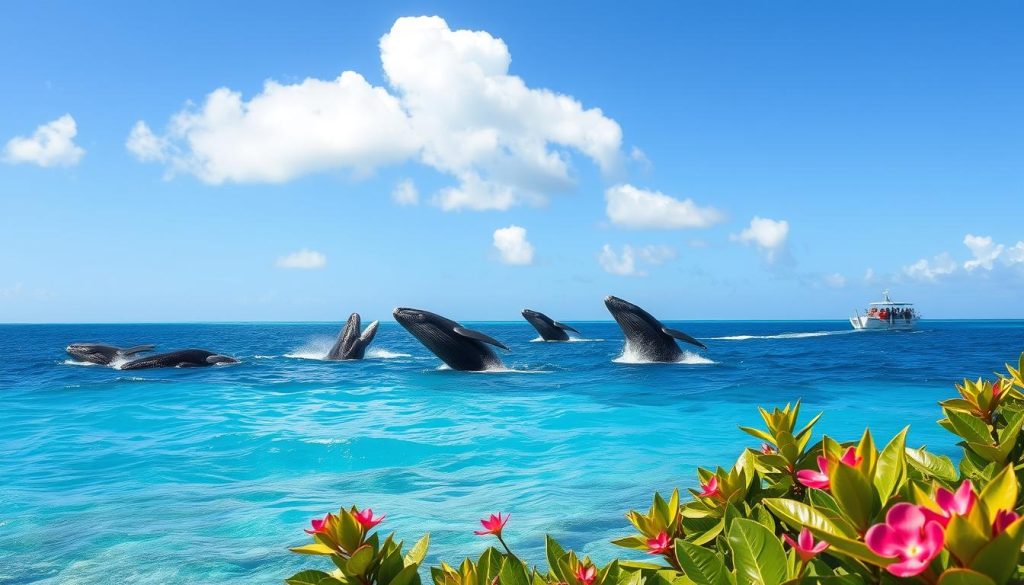
You’ll see different whales in Costa Rica. Migrating humpbacks, including ones from California and the North Atlantic, are common. Dolphins, like the bottlenose and spinner, are also spotted. This makes the trip even more exciting.
Guided Tours and Local Tips
Many tour groups make sure you’re safe and have a good time. In Costa Rica, companies like Dolphin Tours and Bahia Adventures offer great tours. Whale-watching tours usually cost $80-$100 and last about three hours.
If you visit Marino Ballena National Park, it’s $12 to get in. You can camp at certain spots for an extra cost.
It’s important to follow rules when watching whales. This means staying a safe distance away and following time limits. This keeps the whales safe. Enjoy your whale watching trips in a way that is good for the environment.
Whale Watching on the North American East Coast
The North American East Coast is prime for whale watching, especially in April. From Cape Cod’s rocky shores to the Gulf of Maine’s wide waters, whale watchers see many whale kinds. This region attracts these giant ocean creatures, offering a look into their mysterious lives.
Top Spots for Whale Watching
Cape Cod, Massachusetts, shines as a top spot for whale watching from April to October. The Stellwagen Bank National Marine Sanctuary is a prime location. Long Island, New York, is also famous. Here, you can see sperm, blue, finback, humpback, and right whales mainly from July to September.
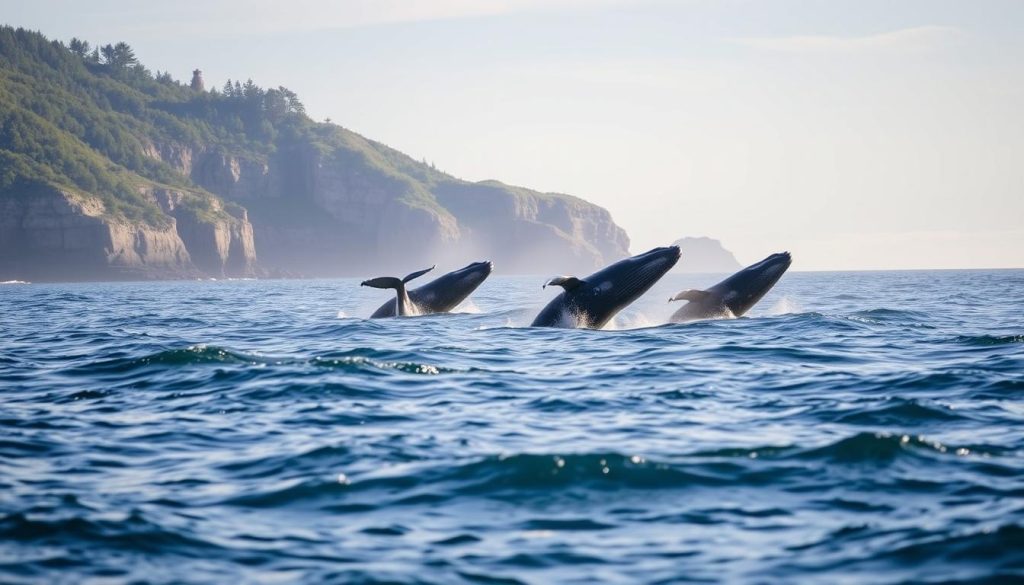
In Bar Harbor, Maine, the best viewing is from mid-April to October. Visitors can spot fin, minke, humpback, and sei whales.
Whales Found Along the East Coast
The East Coast is home to many whale species, delighting enthusiasts. Humpback whales are known for their high jumps and unique tail patterns. Minke whales, though smaller, are graceful swimmers.
The area is also critical for the endangered North Atlantic right whale. You can also see fast finbacks and rare sperm whales here. Cape Cod is especially good for spotting the less common sei whale.
April Whale Watching Tours
April whale watching tours on the East Coast are thrilling. Tour operators offer guided trips this month for the best whale sightings. In Bar Harbor, Maine, tours almost always see humpbacks and minkes.
Cape Cod’s tours take advantage of its rich marine life. These tours increase your chances to see whales and teach about the marine ecosystem.
If you are near Long Island, tours there are tailored to sperm and blue whales. These tours offer a comprehensive view of marine mammals’ lives.
Why Antarctica is a Prime Destination for Whale Watching
Antarctica is unique for those eager to see whales up close. It’s cold and remote, offering a special view of whales in their home. The continent’s seas are home to many whale types, making it perfect for watching them.
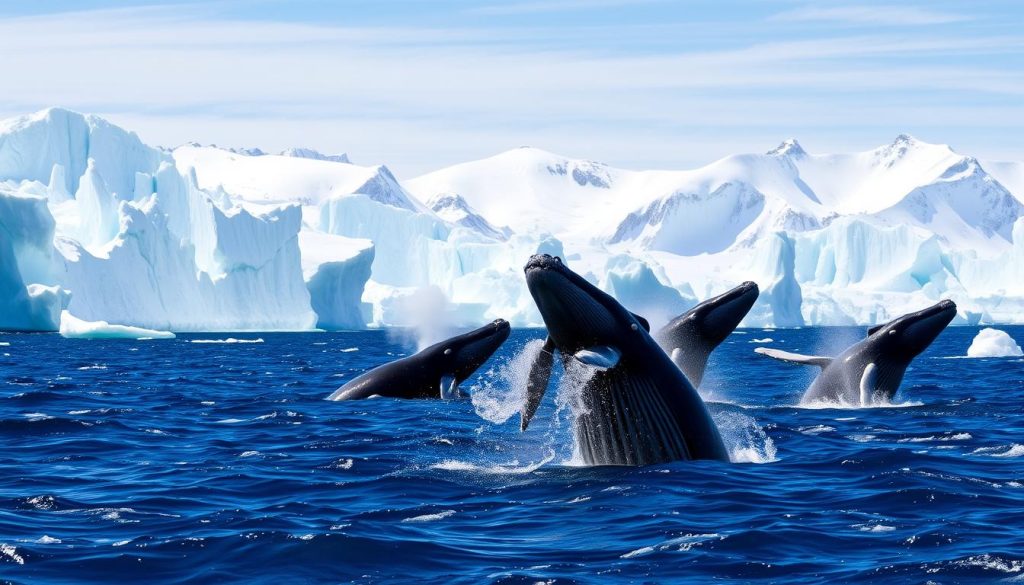
Whale Species in Antarctic Waters
In Antarctica, many whale species await. You can see blue whales, killer (orca) whales, and humpbacks among others. These ocean giants dine on krill in the area’s rich waters, allowing for amazing views.
For example, Antarctica’s blue whales eat up to 40 million krill daily. This showcases one of nature’s most incredible feeding scenes.
Best Practices for Whale Watching
It’s key to watch whales responsibly and with respect. Always follow the advice of experts to keep safe everyone, including the whales. Use binoculars and cameras with long lenses to keep a safe distance. This helps to avoid disturbing the whales.
Having a guide can boost your understanding of these massive animals. Following green practices helps keep their living spaces safe.
April Viewing Recommendations
February and March are prime for whale watching in Antarctica. This is when whales gather in areas full of krill. But, April also provides great whale watching. It’s when summer turns to autumn, and you might see humpback, minke, and killer (orca) whales.
April has unique wildlife activities, like penguins forming rookeries and seals giving birth. This adds to the Antarctic wildlife viewing experience.
| Whale Species | Viewable Months | Highlights |
|---|---|---|
| Blue Whale | February – March | Consumes up to 40 million krill per day |
| Humpback Whale | February – April | Aerial displays and feeding habits |
| Killer/Orca Whale | February – April | Active pods and hunting strategies |
Discover the untouched beauty and wild nature of whale watching in Antarctica. Keep in mind, the best time for whale watching can change. So, plan well for a memorable time with these sea giants.
Conclusion
Going whale watching in April is a unique chance to see whales migrate. You can go from Antarctica’s icy waters to the warm seas of Hawaii. Each place lets you see these huge animals in a special way. These trips will give you memories of seeing the beauty and grace of whales traveling around the world.
Watching whales migrate is more than just a great sight. It’s a journey into the lives of some of the biggest animals on Earth. In places like Greenland and Iceland, you can see humpback and fin whales. Alaska and Hawaii might give you a glimpse of orcas and blue whales. Every area offers a special look at different whales in their natural homes. This makes your trip rich in experiences and unforgettable.
If you’re thinking about where to watch whales, April is the best time. It’s perfect for seeing whales move to different places. Think about going to Baja California, Norway, or New Jersey. These spots are top choices for a reason. You’ll be amazed by the whales and learn a lot about where they live and how they travel.