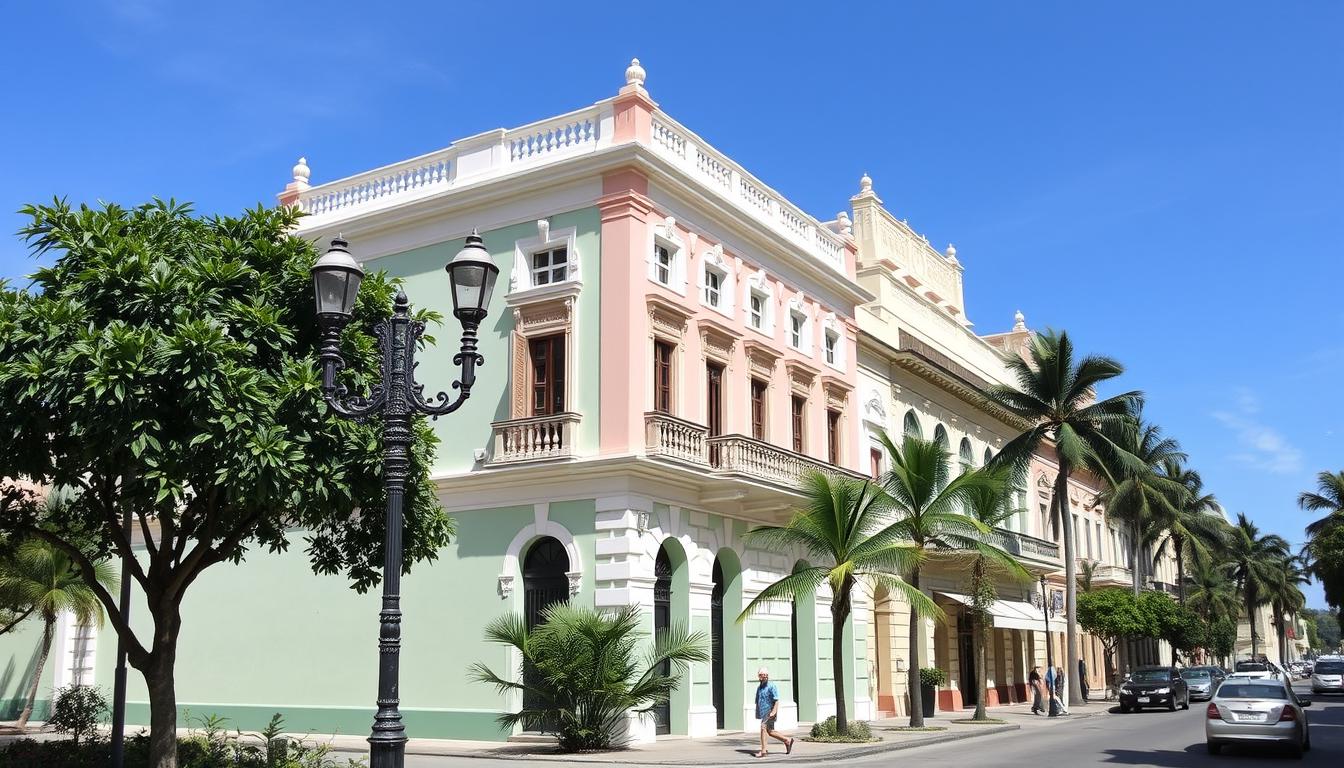
Explore the Colonial Charm of Cienfuegos, Cuba
What makes Cienfuegos, known as the “Pearl of the South,” special? Its elegant and well-preserved Cienfuegos colonial architecture shows its French and Cuban roots. This rich heritage makes it stand out.
Exploring Cienfuegos, you’ll find a mix of French and Spanish styles. This unique blend makes it a top spot for those who love history and architecture. It’s a city where Cienfuegos colonial architecture and Cuban heritage come alive.
Discover how Cienfuegos was founded in the early 19th century. Its architecture reflects a mix of Spanish and Caribbean styles. The vibrant colors and music add to its charm, making it a treasure of Cienfuegos colonial architecture and Cuban heritage.
Introduction to Cienfuegos: The Pearl of the South
Cienfuegos is a city on Cuba’s southern coast, known for its rich history and beautiful architecture. It was founded by French settlers in 1819. The city’s architecture shows a mix of French, Spanish, and Caribbean styles.
As you explore Cienfuegos, you’ll see historic buildings that highlight its Spanish colonial era structures. These buildings show the city’s cultural importance.
The city’s location has helped it grow and become important. The famous Paseo del Prado and the historic city center are key attractions. Cienfuegos is filled with historic buildings, like the Palacio de Valle and the Teatro Tomás Terry. These buildings show the city’s architectural heritage.
Historical Background of Cienfuegos
Cienfuegos was founded by French settlers in the early 19th century. Its development was influenced by Spanish colonial era structures, which are still seen in its buildings today. The city’s historic center is a showcase of its cultural heritage, blending French and Spanish influences.
Geographic Significance
Cienfuegos is on Cuba’s southern coast, making it a key port city. Its location has helped it grow, with the nearby bay and coastline offering beautiful views and water activities. The city’s historic buildings often have stunning views of the surrounding landscape.
Cultural Overview
Cienfuegos has a unique cultural identity, influenced by French, Spanish, and Caribbean traditions. The city is home to cultural attractions like the Teatro Tomás Terry and the Museo Provincial. These places showcase the city’s rich cultural heritage. Exploring Cienfuegos reveals a vibrant cultural scene, with many historic buildings reflecting its Spanish colonial era structures.
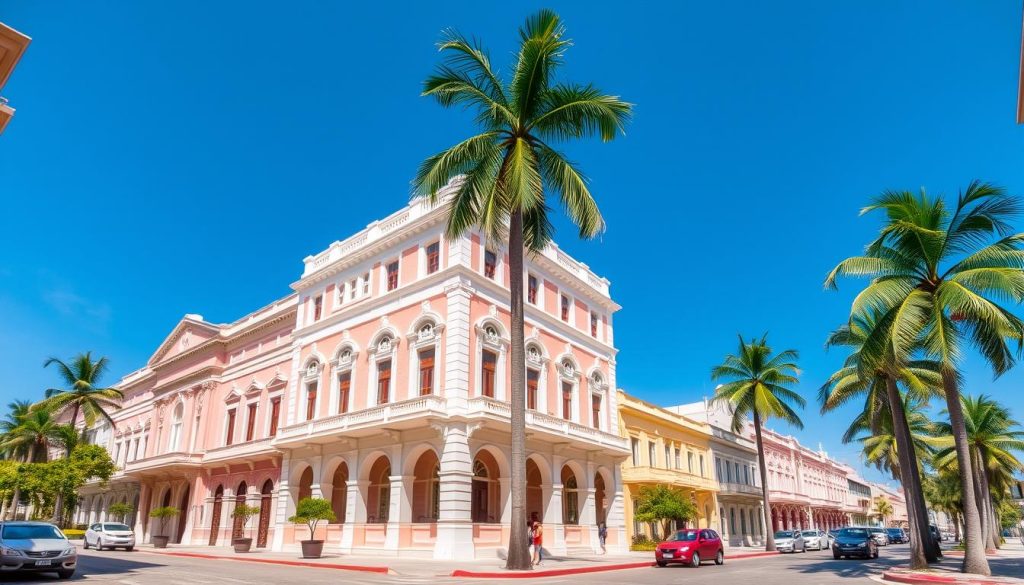
Cienfuegos is a city that combines history, culture, and natural beauty. It’s a must-see for anyone interested in historic buildings and Spanish colonial era structures.
The UNESCO World Heritage Status of Cienfuegos
Cienfuegos, a city in southern Cuba, is a UNESCO World Heritage Site. It’s known for its well-preserved 19th-century architecture. The historic center covers 70 hectares and is surrounded by a 105-hectare buffer zone. It shows a mix of Spanish and French architectural styles.
Exploring the city, you’ll see the preservation of colonial architecture Cuba is key. Buildings like the Holy Church Pure Concepción Cathedral and the Tomás Terry Theater highlight the city’s cultural heritage.
The UNESCO World Heritage status of Cienfuegos is crucial for preserving colonial architecture Cuba. The city’s historic center reflects its early 19th-century design. It has a grid plan inspired by the Spanish Enlightenment.
Some architectural features include:
- Neoclassical buildings, such as the Spanish Casino and the Provincial Museum
- Residential buildings with plain facades, typically one or two stories high
- Monumental buildings, like the Teatro Tomas Terry and the Catedral de la Purisima Concepcion Church
As a UNESCO World Heritage Site Cienfuegos, the city faces challenges. These include rapid urban growth and natural disasters like hurricanes. But, there are conservation efforts to protect its cultural heritage.
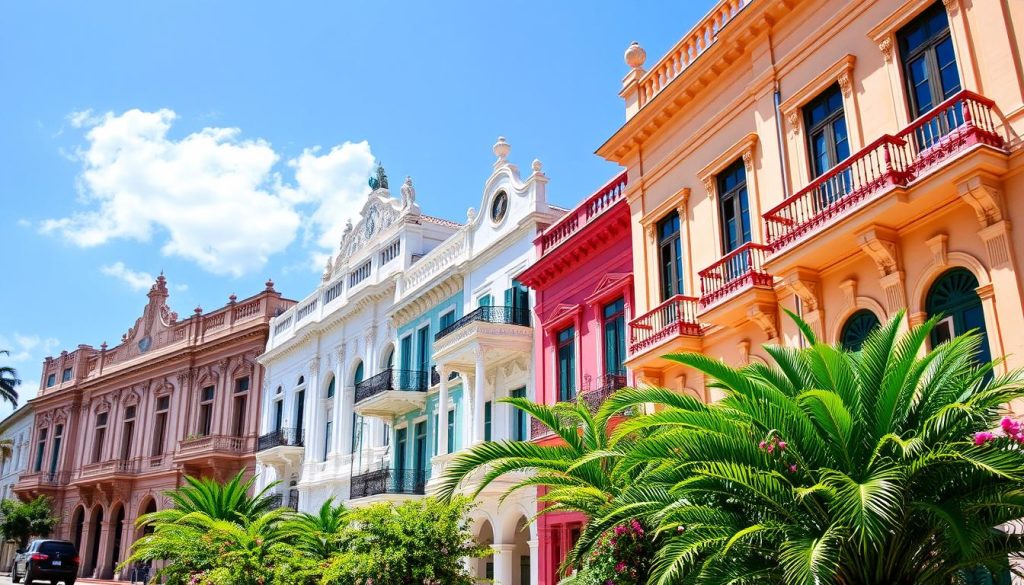
The city’s historic center is a testament to the preservation of colonial architecture Cuba. When you visit Cienfuegos, you’ll see the city’s rich cultural heritage. You’ll also appreciate the efforts to keep its historical integrity.
| Building | Year Built | Architectural Style |
|---|---|---|
| Teatro Tomas Terry | 1889 | Neoclassical |
| Catedral de la Purisima Concepcion Church | 1869 | Neoclassical |
| Palacio de Gobierno | 1917 | Neoclassical |
Understanding Cienfuegos Colonial Architecture
Cienfuegos is known for its mix of neoclassical and French colonial architecture. It also shows Spanish colonial styles. As you walk through the city, you’ll see how each style adds to its rich history and culture. The Baroque and neoclassical architecture Cienfuegos shows the city’s architectural variety.
On Cienfuegos architectural tours, you’ll see beautiful buildings. They have fancy ironwork, thick walls, and courtyards inside. The French touches, like the fancy villas from the 1920s, make the city look elegant. These tours also share the city’s history, including its Spanish roots.
Spanish Colonial Influences
The Spanish left their mark on Cienfuegos, seen in buildings like the Cathedral of the Immaculate Conception. Built from 1833 to 1869, it’s a stunning sight. Its architecture and stained-glass windows are breathtaking.
French Architectural Elements
The French influence in Cienfuegos adds elegance to the city. The villas and palaces from the 1920s show the city’s cultural wealth.
Neo-Classical Features
Many buildings in Cienfuegos show neo-classical features. These reflect the city’s founding and growth. The Baroque and neoclassical architecture Cienfuegos highlights the city’s diverse architecture and culture.
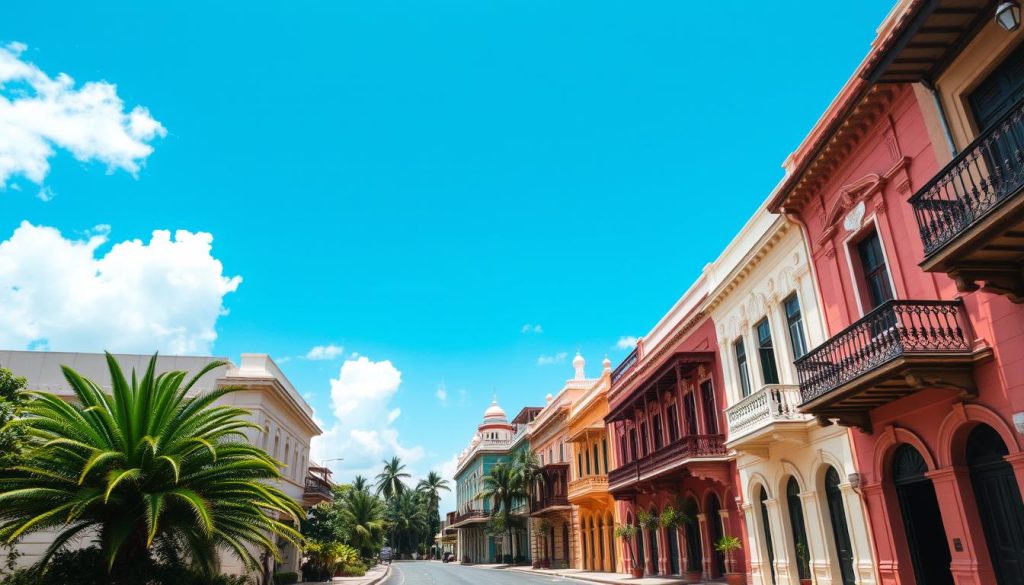
Exploring Cienfuegos lets you see its beautiful buildings and learn about its history and culture. The Cienfuegos architectural tours are a great way to see the city’s mix of styles.
| Architectural Style | Characteristics | Examples |
|---|---|---|
| Spanish Colonial | Thick walls, interior courtyards, ornate ironwork | Cathedral of the Immaculate Conception |
| French Architectural | Elegant villas and palaces, beautiful stained-glass windows | Palacio de Valle |
| Neo-Classical | Prevalent in many of the city’s buildings, reflecting the period of the city’s founding and subsequent growth | Teatro Tomás Terry |
José Martí Park: The Heart of Historic Cienfuegos
Walking through Cienfuegos, you’ll reach José Martí Park. It’s filled with Cienfuegos city landmarks and buildings that tell the city’s story. This square is where people meet, enjoy events, and admire the architecture.
The park honors José Martí, a Cuban hero, with a monument. It also has a triumphal arch for Cuba’s Republic founding. Nearby, the Catedral de la Purisima Concepción and Teatro Tomás Terry show the city’s cultural significance and charm.
Some key buildings and landmarks nearby are:
- Catedral de la Purisima Concepción, featuring French stained glass windows
- Teatro Tomás Terry, a historic theater that hosted world-famous performers
- Palacio Ferrer, a stunning building with a rich history and cultural significance
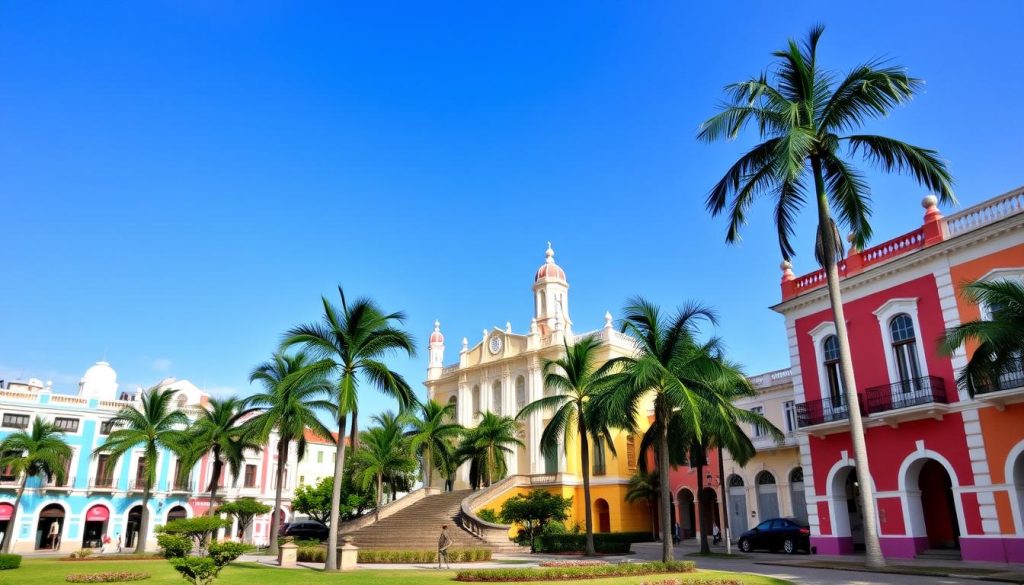
Exploring José Martí Park, you’ll see Spanish, French, and Cuban styles. The park’s greenery, monuments, and architecture are a sight to see. It’s a top spot for history, culture, and Cienfuegos city landmarks lovers.
Architectural Masterpieces Along Paseo del Prado
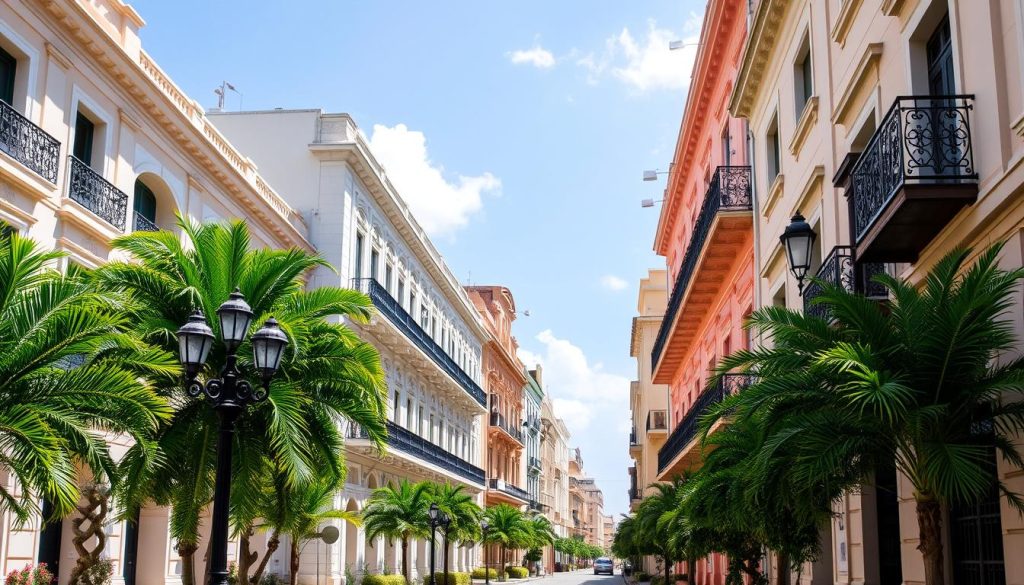
Walking along Paseo del Prado, you’ll see Cienfuegos’ vibrant colonial architecture. It shows the city’s rich history. The buildings mix French, Spanish, and European styles, showing the city’s cultural mix.
The Paseo del Prado is filled with grand mansions and cultural spots. Each building has its own story and style. You’ll see everything from neo-classical to art nouveau, showing the city’s growth over time.
Notable Buildings
Look out for the Ferrer Palace and the Palacio del Valle. The Ferrer Palace was designed by Donato Pablo Carbonell. The Palacio del Valle combines Spanish-Moorish, Gothic, Romanesque, Baroque, and Mudejar styles. These buildings are not just beautiful but also hold deep historical value.
Architectural Styles
Cienfuegos’ colonial architecture is known for columns, arches, and detailed designs. These features remind us of European styles. Many of these buildings are still standing, keeping their original charm.
Historical Significance
The Paseo del Prado is more than a pretty walkway. It shows the city’s history and culture. The buildings along the Paseo have shaped Cienfuegos’ identity and are still important today.
| Building | Architectural Style | Historical Significance |
|---|---|---|
| Ferrer Palace | Neo-classical | Reflects the social status of its original owner |
| Palacio del Valle | Spanish-Moorish, Gothic, Romanesque, Baroque, and Mudejar | Showcases the city’s cultural diversity |
The Magnificent Palacio de Valle
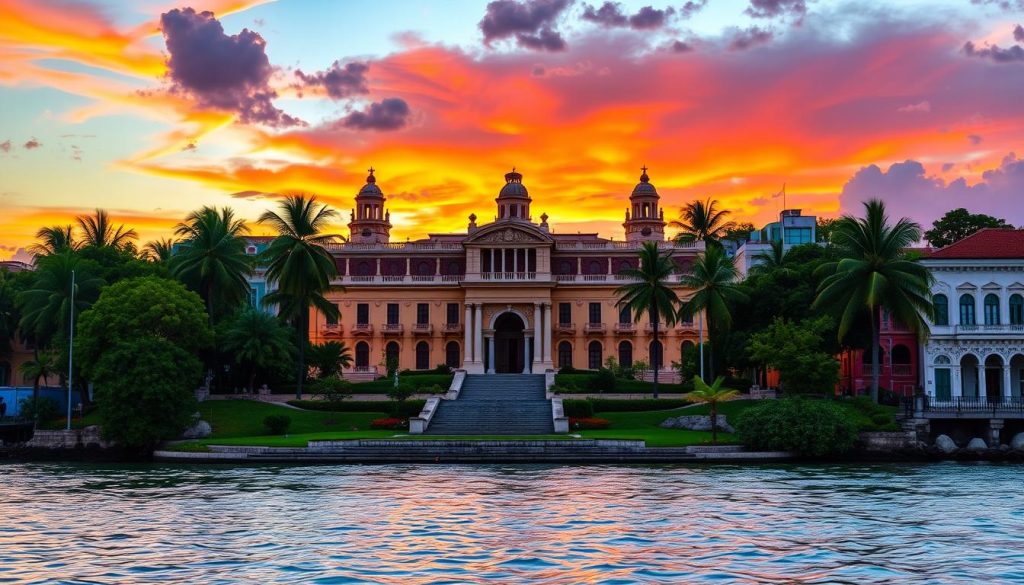
As you explore Cienfuegos city landmarks, the Palacio de Valle catches your eye. It’s a mix of Gothic, Romanesque, and Moorish styles. This shows the city’s rich history and architectural beauty.
The palace was built in 1917 by Acisclo del Valle. It’s made from materials like Carrara marble, Italian alabaster, and Venetian ceramics. These add to its grandeur. It has a dining room with Mudejar influence, a music room in Luis XV style, and 8 bedrooms on the second floor.
Some of the notable features of the Palacio de Valle include:
- Three towers at its top, symbolizing strength, love, and religion
- A mix of architectural styles, including Gothic, Romanesque, Baroque, Italianate, and Mudejar
- Materials imported from various regions, including Europe and Italy
Today, the Palacio de Valle is a top tourist spot. It gives visitors a peek into Cienfuegos’ history and architecture. With its unique styles and materials, it’s a must-see for anyone visiting Cienfuegos city landmarks and Spanish colonial era structures.
| Palacio de Valle Features | Description |
|---|---|
| Architectural Style | Mix of Gothic, Romanesque, Baroque, Italianate, and Mudejar |
| Materials | Carrara marble, Italian alabaster, Venetian ceramics, ironwork from Granada, and mahogany wood from Europe |
| Notable Rooms | Dining room of Mudejar influence, Luis XV style music and games room, 8 bedrooms on the second floor |
Teatro Tomás Terry: A Cultural Icon
The Teatro Tomás Terry is a key landmark in Cienfuegos. It has been the heart of performing arts since 1889. It hosts ballet, modern music, and more, showing Cienfuegos’ rich culture.
On architectural tours, the Teatro Tomás Terry is a must-see. Its neoclassical look and lavish inside, with marble statues and Cuban hardwood, show the city’s skill. It has seen famous artists and big cultural events, making it a key part of Cienfuegos’ life.
The Teatro Tomás Terry is very important today. It’s a top spot for tourists, showing off Cienfuegos’ culture. Its preservation shows the city’s dedication to keeping its cultural treasures alive for future generations.
| Theater | Year Built | Architectural Style |
|---|---|---|
| Teatro Tomás Terry | 1889 | Neoclassical |
The Cathedral of Our Lady of the Immaculate Conception
Exploring Cienfuegos colonial architecture leads you to the Cathedral of Our Lady of the Immaculate Conception. This landmark is a key part of the city’s historic heart. Since 1833, it has stood tall as one of Cuba’s 11 cathedrals.
The cathedral’s design blends neoclassical and colonial styles. It boasts twin bell towers and a grand dome. Inside, you’ll find treasures like clocks, bells, and stained glass, donated by wealthy families.
Some interesting facts about the cathedral include:
- It was originally opened in 1833 and recently refurbished in 2019.
- The cathedral houses an ancient marble font used for baptisms.
- The residents of Cienfuegos celebrate a procession in honor of the Virgin every December 8th.
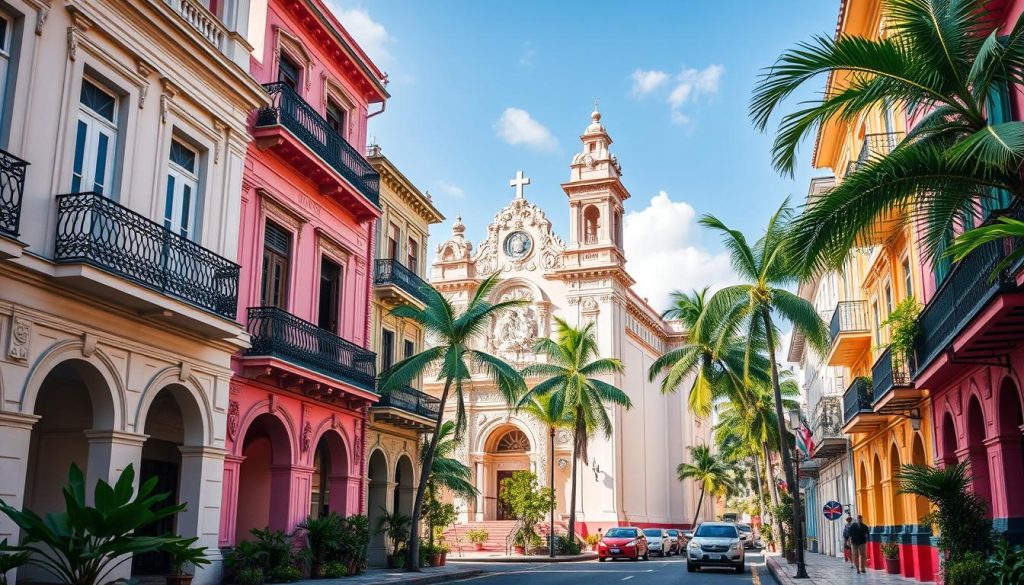
The Cathedral of Our Lady of the Immaculate Conception showcases Cienfuegos colonial architecture at its best. It’s a key attraction in the city’s historic center. With its rich history and stunning design, it’s a place of cultural significance and beauty.
| Cathedral Facts | Description |
|---|---|
| Inauguration Year | 1833 |
| Refurbishment Year | 2019 |
| Architectural Style | Neoclassical and Colonial |
Preservation Efforts and Restoration Projects
Cienfuegos, a UNESCO World Heritage Site, has seen major efforts to keep its history alive. The city focuses a lot on saving its colonial buildings. Already, 46% of the 70-hectare World Heritage zone in Cienfuegos has been restored. Also, 47% of the 90-hectare national monument area has been fixed up, with 1,480 homes and 146 workplaces improved.
The skilled trades school in Cienfuegos is training young people in heritage restoration. This is key for keeping Cienfuegos’ colonial architecture safe for the future. Thanks to its UNESCO status, Cienfuegos is working hard to preserve its history. Many groups are helping with this effort.
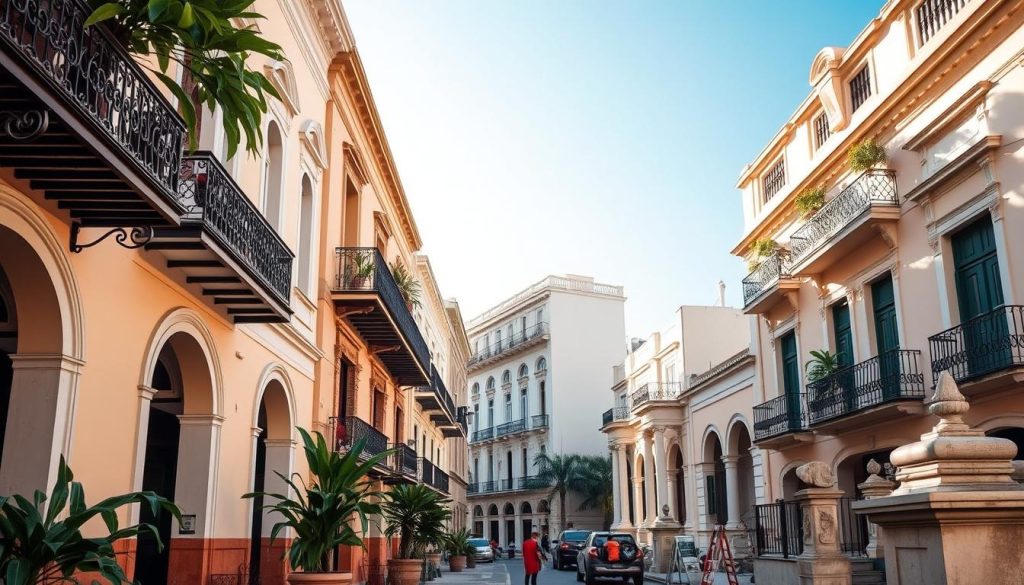
Some big wins in Cienfuegos include fixing 45 “cuarterías” (tenements) and restoring important buildings in the historic center. These projects show Cienfuegos’ dedication to its cultural heritage. They help keep the city’s UNESCO World Heritage Site status.
Best Times to Visit Cienfuegos Historic District
Cienfuegos is open all year, but the best time varies. If you like milder weather, November to April is perfect. It has nice temperatures and little rain.
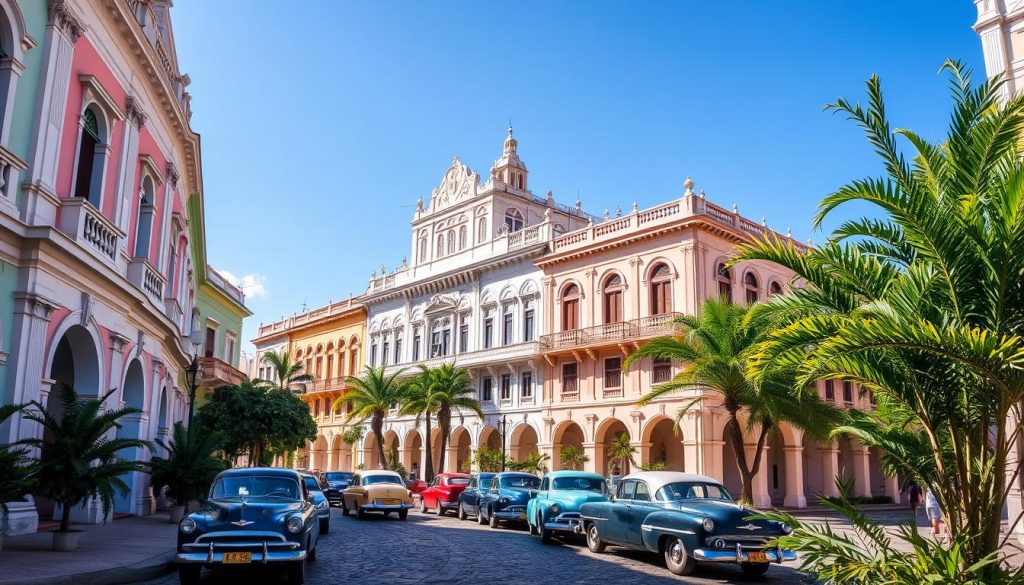
For fans of Cienfuegos architectural tours, the dry season is best. You can walk the Paseo del Prado, see the Teatro Tomás Terry, and enjoy the Cuban architectural heritage. All without the rain.
There are guided tours, like Cienfuegos architectural tours that dive deep into the city’s past. You can pick from:
- Walking tours of the historic district
- Bus tours of the city’s main spots
- Boat tours of the Cienfuegos Bay
Whether you like to explore on your own or with a guide, Cienfuegos has something for all. Its colonial buildings, natural beauty, and rich culture make for a memorable visit.
| Season | Weather | Tourist Season |
|---|---|---|
| November to April | Mild | Peak |
| May to October | Hot and humid | Low |
Photography Tips for Capturing Colonial Architecture
When you visit Cienfuegos, you’ll see amazing Cienfuegos colonial architecture. It’s a dream spot for photographers. Here are some tips to capture the city’s beauty:
First, shoot during the golden hour, just before sunset. The light is soft and warm, ideal for showing off Cienfuegos city landmarks. Use a wide-angle lens to show the buildings’ grandeur.
Here are more tips for taking photos of Cienfuegos’ colonial architecture:
- Use a tripod for steady shots in low light
- Try different angles and views to add depth
- Focus on the buildings’ colors and textures
Always respect local customs and privacy when you take photos. It’s a great chance to see Cienfuegos’ colonial architecture up close.
| Photography Tip | Description |
|---|---|
| Golden Hour | Take advantage of the soft, warm light just before sunset |
| Wide-Angle Lens | Capture the grandeur of buildings and streets |
| Respect Local Customs | Be mindful of privacy and local traditions when taking photos |
Conclusion: Preserving the Architectural Legacy of Cienfuegos
Exploring Cienfuegos, Cuba, reveals a city with a unique charm. Its architecture and culture stand out. The city shows Cuba’s past and present, blending Spanish, French, and Caribbean styles.
The city works hard to keep its UNESCO World Heritage status. It faces challenges in preserving history while growing. Yet, the community and authorities are committed to protecting Cienfuegos’ historic buildings.
Visiting Cienfuegos lets you dive into its colonial history. It also helps in preserving Cuban architecture. Seeing landmarks like the Palacio de Valle and Teatro Tomás Terry highlights the city’s value.
Cienfuegos welcomes about 250 tourists every day. Your interest in its history and architecture is crucial. It helps keep the city a special place for future visitors.