Explore Bhutan: Plan Your Tashichho Dzong Visit
Have you ever thought about a fortress being both a religious place and the heart of government? The Tashichho Dzong in Bhutan’s capital is a stunning example. It’s not just a cultural gem; it’s a window into centuries of history and spirituality.
Built in 1641 by Zhabdrung Ngawang Namgyal, this fortress has grown. It now houses Bhutan’s government and is a hub for Buddhism.
Getting ready for your visit to Tashichho Dzong? You’ll see its amazing architecture and the lively Thimphu Tshechu festival. You’ll also see the beauty that makes Bhutan special. Knowing its history and current role will make your visit even more meaningful.
Introduction to Tashichho Dzong
Tashichho Dzong is a key landmark in Thimphu, showing off Bhutan’s rich culture. It has been the government’s seat since 1952 and is also a major monastery. People come to see its history and beautiful architecture by the Wang Chhu River.
It was first built in 1216 A.D. by Lama Gyalwa Lhanangpa. But, it faced fires and earthquakes, leading to rebuilds. The current form was shaped in 1902. King Jigme Dorji Wangchuck renovated it, making it a top spot for tourists in Bhutan. Now, it has thirty temples, chapels, and shrines, offering a deep dive into Bhutan’s culture.
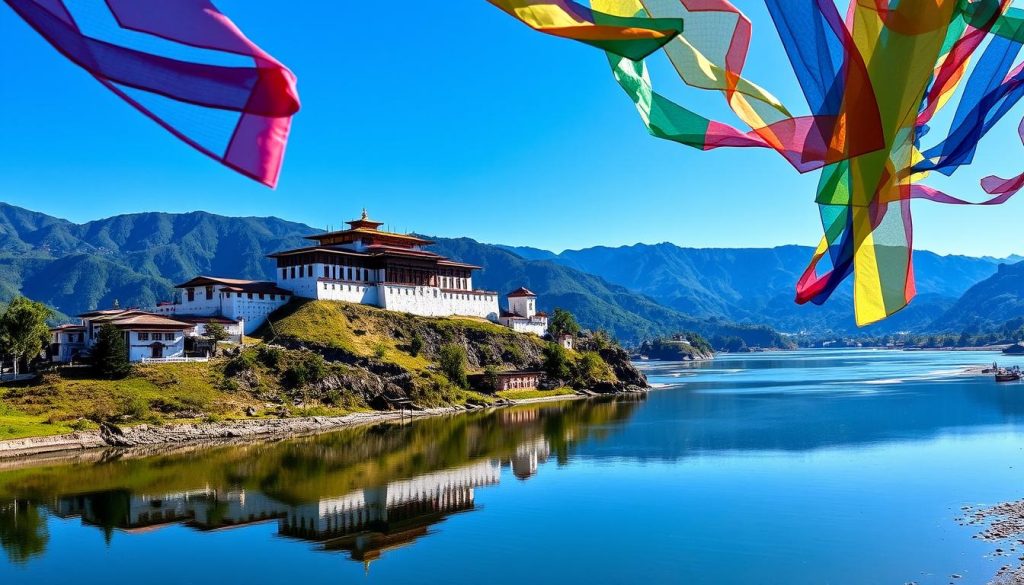
The dzong is not just a government center but also a place for Buddhist teachings. The Thimphu Tshechu festival, held here, draws thousands. Visiting Tashichho Dzong is like stepping into Bhutan’s spiritual and political heart, a must for anyone exploring this magical kingdom.
The History of Tashichho Dzong
The history of Tashichho Dzong goes back to the early 13th century. It is deeply connected to Bhutan’s culture and government. Knowing its history helps us understand its architecture and role in Bhutan’s government.
Origins and Early History
Tashichho Dzong started in 1216 as Do-Ngon Dzong, built with blue stones. It faced many challenges like fires and natural disasters, leading to rebuilds. The biggest change was in 1641 when Zhabdrung Ngawang Namgyal rebuilt it, showing Bhutan’s unity.
Role in Bhutan’s Governance
At Tashichho Dzong, governance and spirituality meet. Since 1952, it’s the heart of the Bhutanese government. It has the throne room and cabinet offices. The dzong is where the Je Khenpo, Bhutan’s chief abbot, lives during summer.
Today, Tashichho Dzong is key for civil and political activities. It shows the importance of culture in Bhutanese society.
Architectural Marvel: Design and Layout
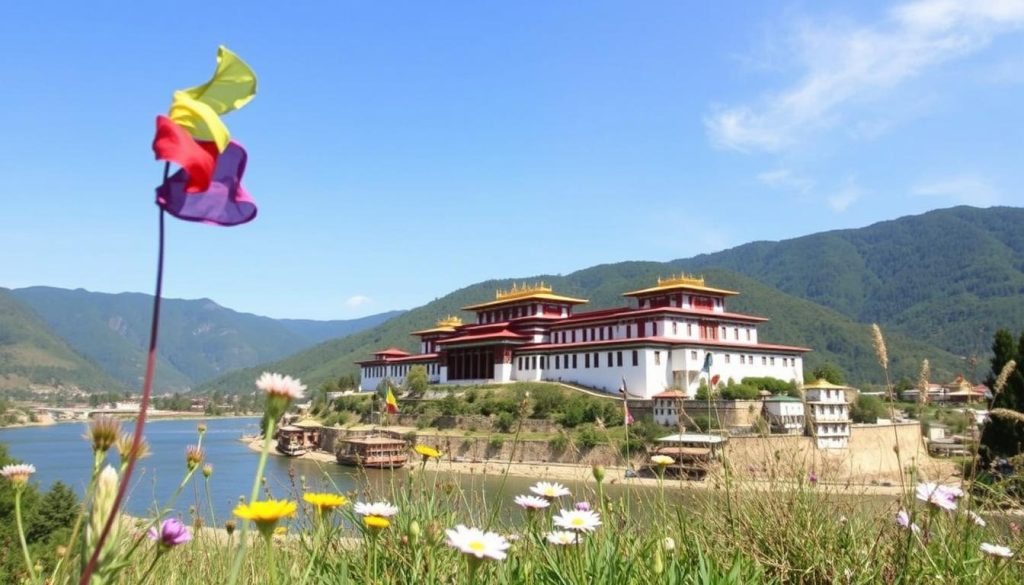
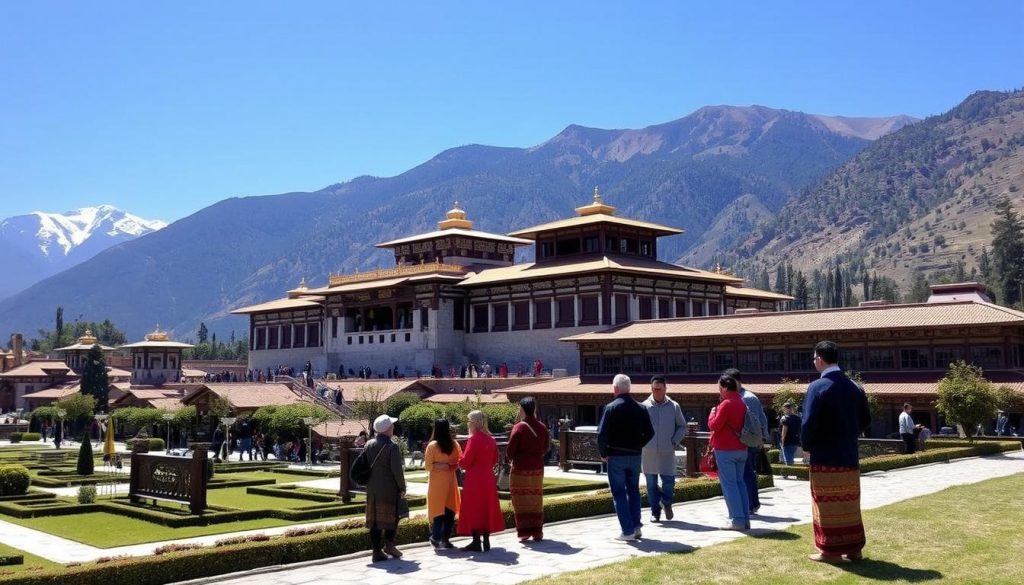
Tashichho Dzong is a landmark in Bhutan that shows the country’s love for traditional architecture. Built in the 17th century, it has massive white walls and red roofs. These features make it look like a fortress, blending defense with reverence.
Traditional Bhutanese Architecture
The dzong is divided into two parts: the government area and the monastery. This layout helps with governance and adds to the spiritual feel. The Utse tower stands tall, showing off Bhutan’s architectural grandeur.
Visitors see how the design is both useful and beautiful. It makes the dzong a lasting symbol of Bhutan’s heritage.
Artistic Elements Within the Dzong
Inside Tashichho Dzong, you find detailed artistic elements that deepen the religious experience. The murals in Tashichho Dzong tell stories of Buddhism and local history. They invite art enthusiasts to dive into these tales.
Woodwork, thangkas, and decorated altars add to the spiritual vibe. This makes the dzong a cultural gem for anyone interested in Bhutan.
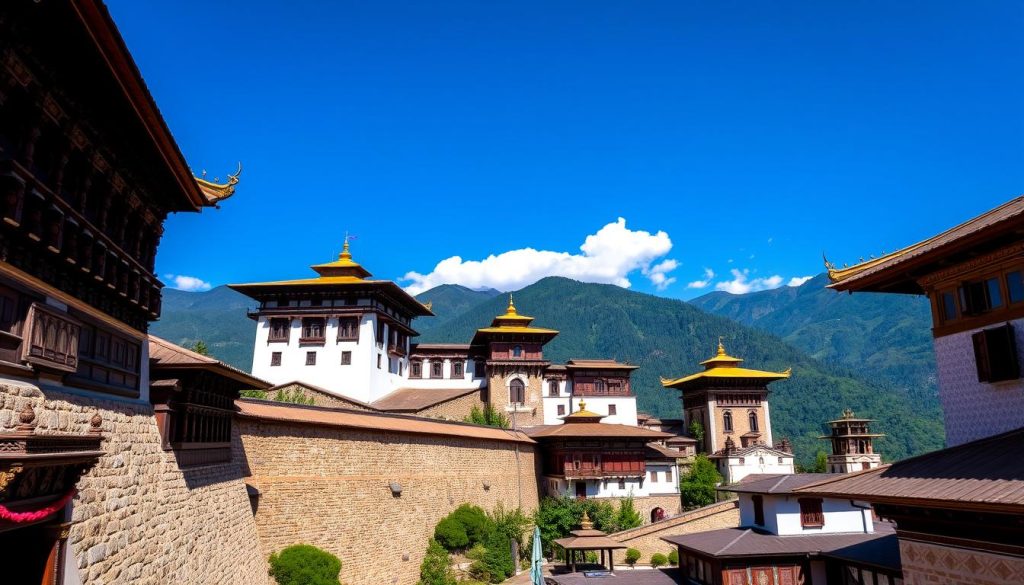
| Architectural Feature | Description |
|---|---|
| Massive White-Washed Walls | Symbol of strength and tradition in Bhutanese architecture. |
| Red-Topped Roofs | Representing the distinctive style of dzongs, these roofs provide protection against the elements. |
| Utse Tower | Dominant feature of the dzong, serving both as a lookout and spiritual hub. |
| Intricate Murals | Vivid depictions of Buddhist teachings and local legends that enrich the cultural experience. |
| Elaborate Woodwork | Detailed craftsmanship showcasing the skills passed down through generations. |
A Center of Buddhism
Tashichho Dzong is a key part of Buddhism in Bhutan. It’s a grand fortress-monastery that’s central to the country’s spiritual life. It’s home to over 600 monks, making it a bustling place of daily rituals.
These rituals fill the air with devotion and respect. Visitors can see these activities, showing off Bhutan’s cultural heritage.
The dzong’s chapels and temples are filled with detailed artwork and sculptures. They are the heart of religious activities. These spaces connect you to Bhutan’s long-standing spiritual traditions.
The ongoing ceremonies and practices refresh the community. They give a peek into the religious life that has lasted for centuries.
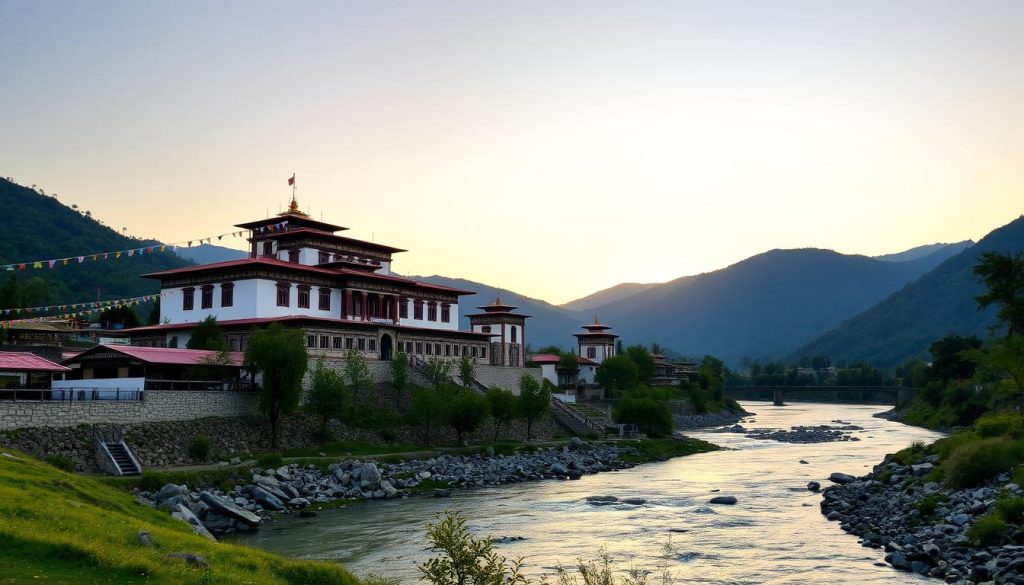
Tashichho Dzong is also a cultural gem, showing off Bhutanese architecture and art. Visitors can explore this sacred place, enjoying its calm. Being part of this community lets you see the dzong’s beauty and its deep meaning to locals.
Festivals and Rituals at Tashichho Dzong
The Thimphu Tshechu festival is a highlight in Bhutan’s cultural scene. It happens every fall and draws thousands to Tashichho Dzong. People come to see the colorful sights and learn about the traditions.
Thimphu Tshechu: A Must-See Event
The festival lasts for three days, from October 2nd to October 4th in 2025. It’s known for its mix of spiritual and cultural displays. You’ll see:
- Mask dances by monks, telling stories from Bhutan’s past.
- Traditional dances that show off Bhutan’s lively culture.
- A chance to meet locals in their beautiful traditional clothes.
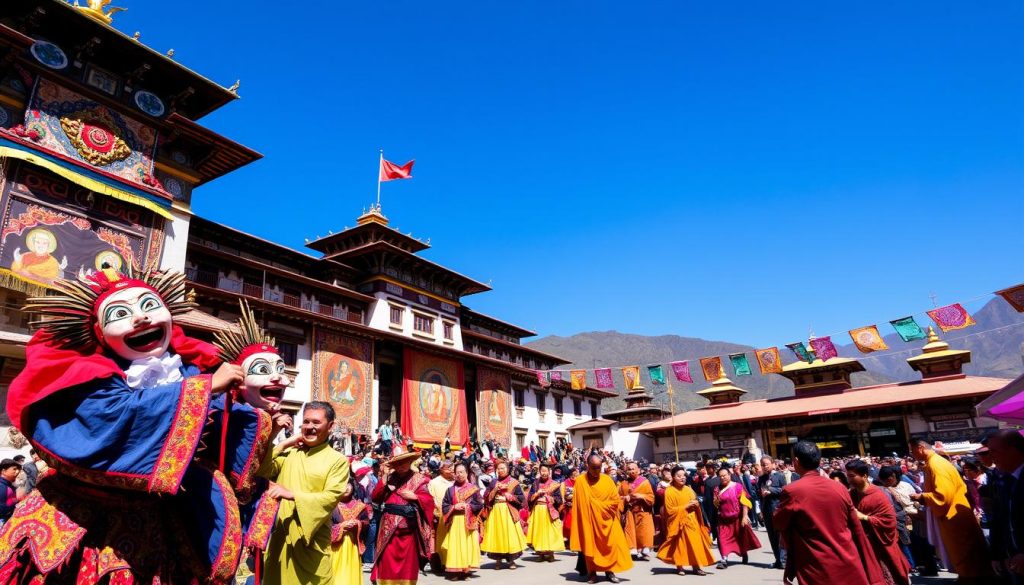
This event is a window into Bhutan’s artistic and spiritual world. You’ll see ceremonies led by important figures. It deepens your understanding of Bhutan’s stories.
Guided tours take you to sacred places like Paro, Thimphu, and Punakha. They show off the area’s beauty and history. Prices start at USD 1450.00 for groups and USD 2140.00 for solo travelers, including a USD 100 SDF fee.
The Thimphu Tshechu festival is a chance to explore Bhutan’s vibrant culture. It’s a memorable experience that shows the heart of Bhutan’s traditions.
Visitor Experience: Tips for Your Tashichho Dzong Visit
Planning your trip to Tashichho Dzong? Having the right travel tips can make your visit unforgettable. This place is not just a government building but also a cultural treasure. Knowing when to go can make your experience even better.
Best Time to Visit
The autumn months, from September to November, are the best time to see Tashichho Dzong. The skies are clear, and festivals are in full swing. Spring, from March to May, is also great, with beautiful flowers adding to the scenery. Catching the Thimphu Tshechu festival is a must, as it showcases Bhutan’s rich culture.
Guided Tours for Deeper Insights
Choosing a guided tour can open your eyes to the Dzong’s history and architecture. Local guides share fascinating stories about the Dzong’s past and its cultural treasures. They also know the best spots for photos, helping you capture the essence of your visit.
| Time of Year | Weather Conditions | Key Events |
|---|---|---|
| Spring (March – May) | Averages 19-22°C, blooms | Seasonal festivals |
| Autumn (September – November) | Clear skies, comfortable temperatures | Thimphu Tshechu |
With these travel tips, you can dive into the beauty and culture of Bhutan. Explore Tashichho Dzong and its surroundings with an open heart and mind.
Getting to Tashichho Dzong
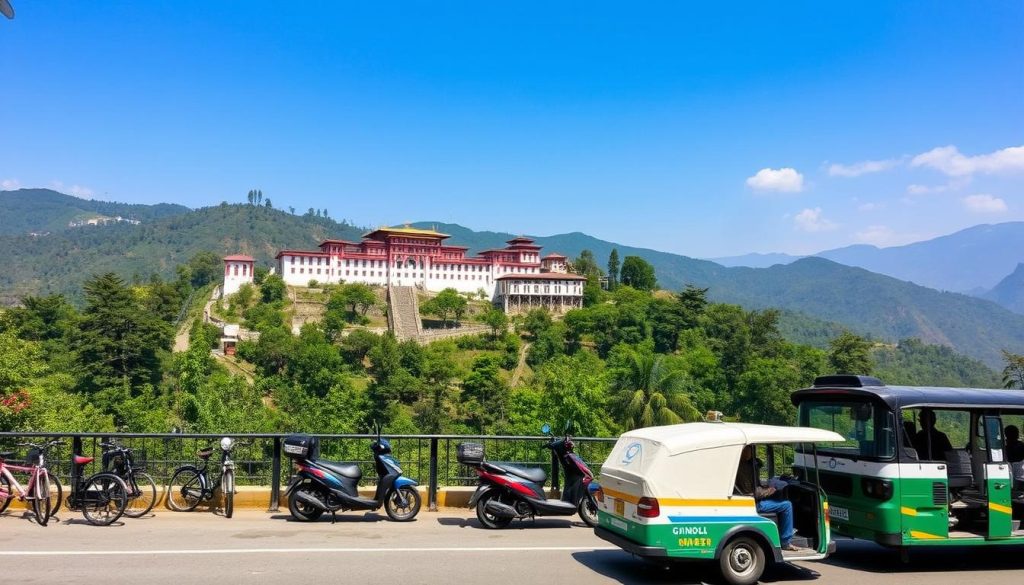
Tashichho Dzong is easy to reach, just 2 kilometers from Thimphu’s center. You can walk, take a taxi, or ride a local bus. Each option makes your visit better, letting you pick what’s best for you.
Transportation Options from Thimphu
There are many ways to get to Tashichho Dzong:
- Walking: A nice walk lets you see the area’s beauty and culture.
- Taxis: Taxis are everywhere in Thimphu, perfect for those in a hurry.
- Local Buses: Buses are cheap and let you see the local life, reaching the dzong too.
Accessibility for All Visitors
Tashichho Dzong is designed for everyone to enjoy. It has ramps and paths for wheelchairs. You can explore the grounds or see the Himalayas and Thimphu Valley. The area is set up to make your visit comfortable for all.
Nearby Attractions to Explore in Thimphu
When you visit Tashichho Dzong, you’ll find many attractions nearby. These spots offer a deep dive into Bhutan’s culture and history. They make your trip to Thimphu unforgettable.
- National Memorial Chorten: This landmark was built in 1974. It has striking whitewashed walls and golden roofs. Visitors come every day to see its beautiful mandalas and murals.
- Buddha Dordenma Statue: This statue is over 50 meters tall. It’s a must-see in Thimphu. It houses 125,000 smaller Buddha statues.
- Changlimithang Stadium: This stadium is famous for archery. Competitions are held here, where archers shoot over 140 meters. It shows Bhutan’s love for sports.
- Motithang Takin Preserve: This place used to be a zoo. Now, it’s where you can see Bhutan’s national animal, the Takin. It’s great for animal lovers and nature fans.
- Simply Bhutan: This living museum shows what life is like in Bhutan. It lets you dive deep into local culture.
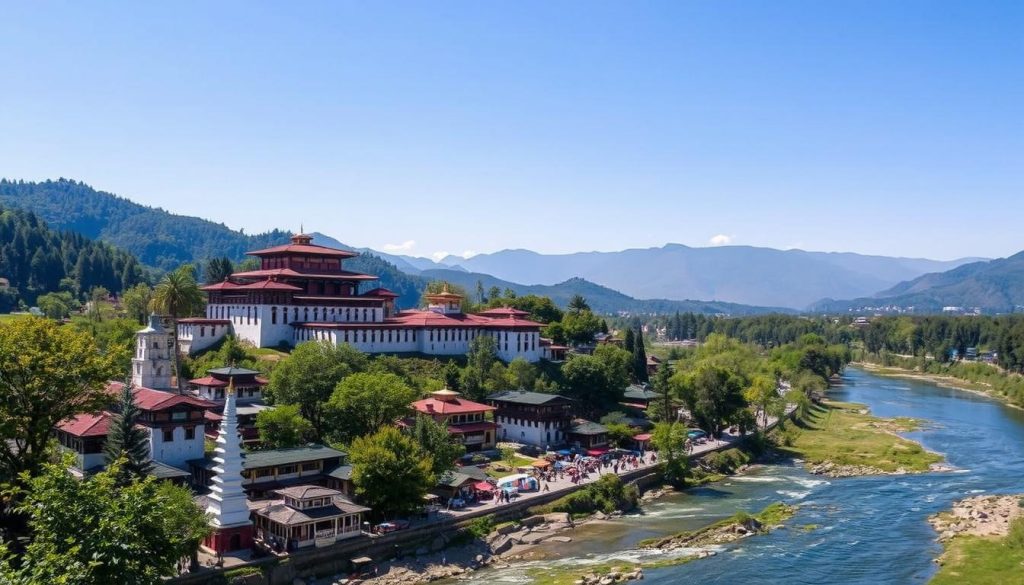
These sites are just a few of the 17 best places to visit in Thimphu. They make your visit to Tashichho Dzong even better. You’ll learn more about Bhutan’s rich heritage.
Practical Tips for Your Visit
Visiting Tashichho Dzong can be made better by following some tips. Knowing the dress code and etiquette is key for a respectful visit. Also, following photography rules helps you capture your visit without breaking local customs.
Dress Code and Etiquette
Tashichho Dzong is a sacred place, so dressing right is important. Wear modest clothes that show respect for the site. Good choices include:
- Long pants or skirts to cover the legs
- Covered shoulders and long sleeves
- Comfortable shoes that can be easily removed
When you enter temples, take off your shoes. This shows respect for the spiritual space. Keep quiet inside to help everyone enjoy the peace. These tips make your visit better and show respect for the culture.
Photography Guidelines
Photography at Tashichho Dzong is a great way to remember your trip. You can take photos in courtyards and outside. But, remember that inside temples and offices, photos are usually not allowed. Here’s what to do:
- Look for signs or ask your guide about photo restrictions
- Get permission before taking pictures of people, like monks or locals
- Be mindful of local customs when taking photos
By following these photography rules, you can take photos that respect the place. Staying in line with the dress code and visitor guidelines makes your visit more enjoyable.

| Recommended Attire | Etiquette Tips | Photography Areas |
|---|---|---|
| Long pants or skirts | Maintain silence inside temples | Courtyards and exterior areas |
| Covered shoulders and long sleeves | Respect local customs | Check for restrictions |
| Comfortable shoes | Remove shoes at entry | Ask guides about photography policies |
Conclusion
When you plan to visit Tashichho Dzong, remember it’s a key part of Bhutan’s culture and spirit. It’s in Thimphu and is more than just a building. It’s a place of government and spiritual practice.
Exploring Bhutan through Tashichho Dzong lets you dive into its heritage. The building’s design and history are stunning. It’s a place where you can see Bhutan’s traditions up close.
The site has seen many challenges but still stands strong. This shows Bhutan’s deep history and people’s love for their heritage.
Every part of Tashichho Dzong tells a story of Bhutan. Your visit will leave you with memories that last. It’s a chance to see Bhutan’s dedication to its culture and spirit.
So, start packing and get ready to see one of Bhutan’s most beloved sites. It’s an adventure you won’t forget.