

Explore Malé Historical Sites & Architecture
Have you ever wondered about Malé’s hidden history? This bustling city has a rich past waiting to be discovered. It’s not just a modern city but also a place filled with historical sites and architecture.
Malé is more than its beautiful beaches. It’s a city with a deep Islamic heritage and unique buildings. As you explore, you’ll find stories of kings and conquerors.
Join us on a journey through Malé’s history. We’ll explore the sites and buildings that make this city special. It’s a place that history lovers and architecture fans must see.
The Rich History of Malé
Malé’s history is long, over 2,500 years. It shows how different cultures have shaped the city. The change from Buddhism to Islam in the 12th century was key. It mixed religious beliefs with local traditions.
This change led to the building of important religious sites. These sites are key to Malé’s identity.
Maldivian culture is a mix of Indian, Arab, African, and European influences. This is seen in the city’s architecture, art, and traditions. Traditional music blends Islamic and African rhythms, showing the islands’ diverse heritage.
The locals’ colorful clothes reflect the tropical climate and lively lifestyle. This mix of cultures makes Malé unique.
The city’s architecture has changed over time. At first, it was coral stone and thatched roofs. Later, wooden houses became common, with low coral stone walls to handle the humidity.
By the late 19th century, building styles changed. More buildings were made of wood and thatch. This change altered the city’s look.
| Era | Architectural Features | Cultural Influences |
|---|---|---|
| 12th Century | Introduction of mosques | Islamic traditions |
| 14th Century | Wooden houses with coral stone | South Asian influence |
| 19th Century | Decline of coral stone buildings | European and local adaptations |
The Maldives National Museum was founded in 1952. It’s a key place for preserving the nation’s culture. It houses artifacts that tell the story of Maldivian history and culture.
Despite progress, threats like climate change, over-tourism, and rapid development are challenging the preservation of this heritage.
Significance of Malé Historical Sites and Architecture
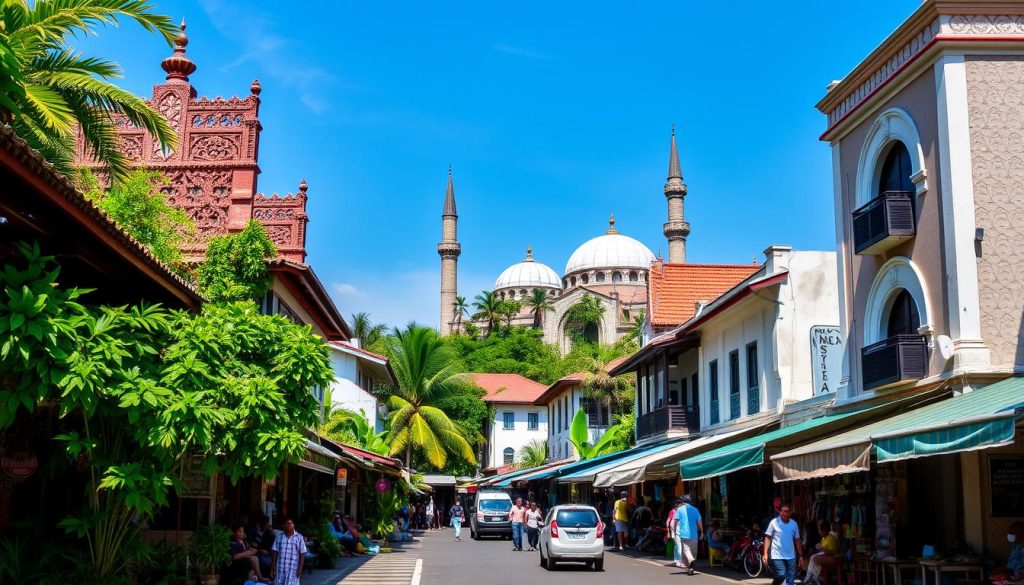
The historical sites and architecture of Malé are key to the Maldives’ culture. They are filled with stories of the past, showing the islands’ Islamic art and royal history. These Malé cultural sights attract visitors and help keep the heritage alive.
Places like mosques with coral carvings show the skill of old times. They tell stories of sultans and make locals proud of their traditions. The significance of architecture is more than looks; it shows the Maldivian values and how faith and community come together.
When you visit these landmarks, think about the importance of saving them. Each site shows how the Maldives has overcome challenges. Protecting these sites means future generations will see the mix of cultures that makes Malé special.
Top Malé Landmarks to Visit
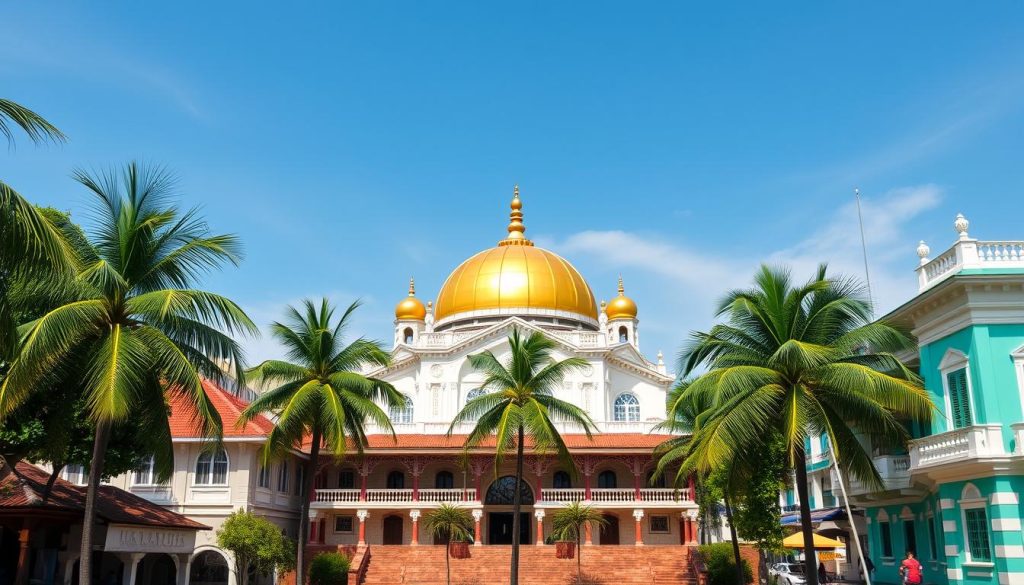
Exploring Malé reveals a treasure trove of historical and architectural wonders. The Grand Friday Mosque stands out as the largest mosque in the Maldives. Its white marble, wooden carvings, and golden dome are breathtaking. This mosque is not just a place of worship but a symbol of Maldives’ architectural excellence.
The Victory Monument is another key site in Malé. It honors the 1988 terrorist attack and the Maldivian people’s resilience. The monument’s presence is a reminder of the nation’s history.
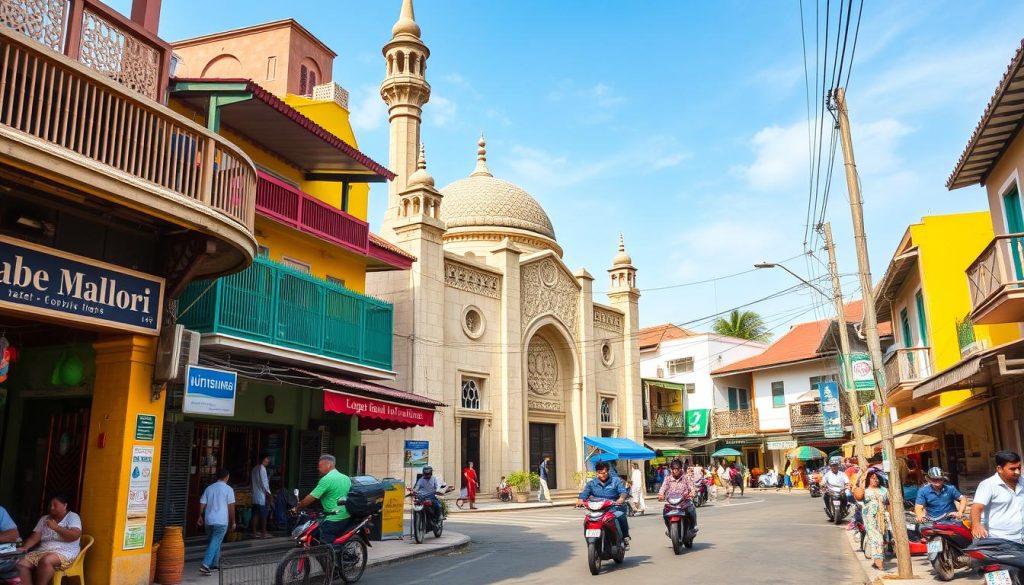
The Malé Friday Mosque, built in 1658, is the oldest surviving mosque in the Maldives. Its coral stone walls and intricate carvings are stunning. Since 2008, it’s been on the UNESCO tentative World Heritage Cultural List, highlighting its importance.
The Kongannu Cemetery is a 900-year-old burial site for the first Muslims of Addu Atoll. It adds to the Maldives’ rich heritage, enriching your Malé exploration.
The Medhu Ziyaaraiy shrine marks the introduction of Islam to the Maldives in 1153 AD. Each visit to these landmarks offers a glimpse into the nation’s history and architectural beauty.
| Landmark | Year Established | Architectural Features |
|---|---|---|
| Grand Friday Mosque | 1984 | White marble, wooden carvings, golden dome |
| Malé Friday Mosque | 1658 | Coral stone, intricate carvings |
| Victory Monument | 1988 | Modern memorial design |
| Kongannu Cemetery | Approximately 900 years old | Historical burial site |
| Medhu Ziyaaraiy | 1153 AD | Islamic shrine architecture |
These landmarks in Malé are not just beautiful but also offer deep insights into the Maldives’ history and culture. Visiting these sites helps us appreciate the islands’ architectural beauty and its stories from the past.
Malé Historical Sites and Architecture
Malé is filled with historical buildings that show its cultural growth. The Friday Mosque and Medhu Ziyaaraiy are key to its heritage. Exploring these sites gives insight into Maldivian architecture and history.
Exploring the Friday Mosque
The Friday Mosque, or Hukuru Miskiy, was built in 1658. It’s a top example of Malé’s historical gems. Made from coral stone, its design shows Maldivian artisans’ skill.
This mosque can hold hundreds for prayers. Non-Muslims can visit with permission. It’s a place of reverence and culture.
The Importance of Medhu Ziyaaraiy
Medhu Ziyaaraiy is a key historical site in Malé. It’s a shrine for a revered figure, important to the local community. It also shows pre-Islamic Maldivian history.
Its location near other historical sites lets visitors see Malé’s cultural richness.
The Architectural Heritage of the Maldives
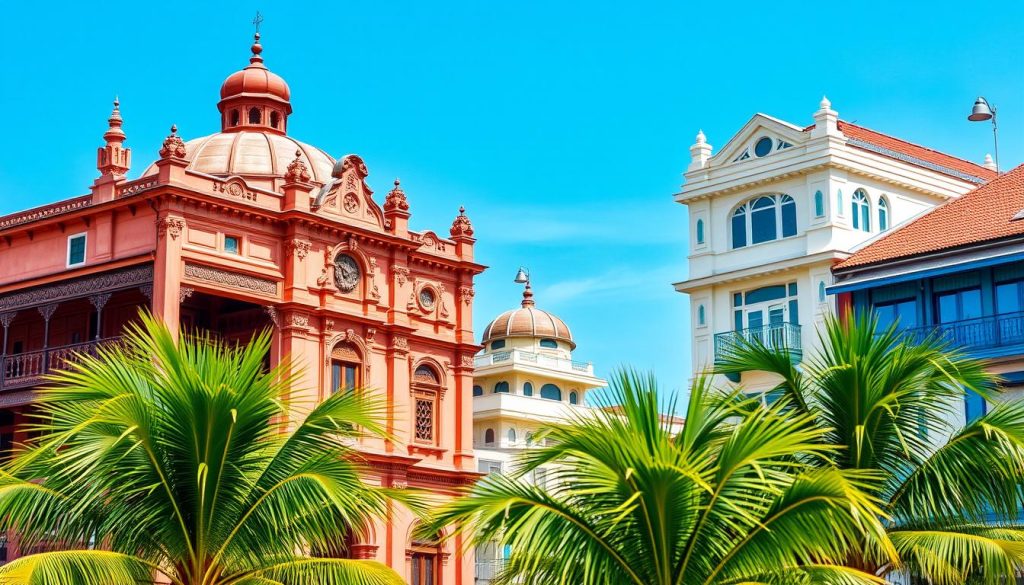
The Maldives’ architectural heritage is a key part of its identity. For centuries, coral stone buildings have been the main choice. This shows how local resources and skill have come together.
Before 1800, most buildings used coral stone and plant materials. This shows a balance between nature and human needs.
Over time, architectural styles in Malé have changed. This is due to cultural, environmental, and political factors. The unique geography of the islands has also played a role.
Architectural trends reflect both local traditions and outside influences. For example, North India and colonial powers have left their mark. This is seen in the many pre-Islamic sites across the islands.
Climate and environment have shaped building choices. Coral stone is weak and can wear down over time. By 1900, building styles had changed, with fewer raised floors.
The tourism industry, starting in 1972, has brought new life to traditional craftsmanship. Modern innovations have merged with old skills. This has led to famous resorts that blend with the islands’ beauty.
This mix of old and new shows a dedication to preserving history. It also meets today’s needs.
Religious Structures in Malé
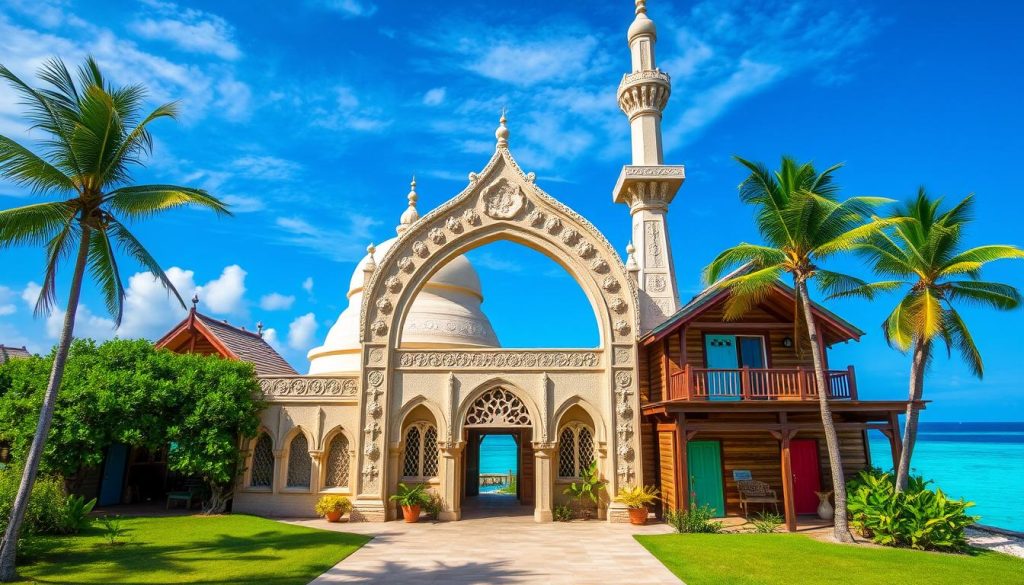
Malé is home to many religious structures that shape the city’s skyline and culture. The mosques here blend history, architecture, and spirituality beautifully. Each mosque has its own story and architectural style, making them unique.
Famous Mosques in Malé
Hukuru Miskiy, or the Old Friday Mosque, is a standout in Malé. It was built in 1154 A.D. by the first Islamic sultan. The mosque has been renovated several times, including in 1658 CE.
It’s not just a mosque; it’s a showcase of local craftsmanship. Made from coral stone, it features intricate carvings.
Hukuru Miskiy – Old Friday Mosque
Hukuru Miskiy is a prime example of Maldives’ mosque architecture. It can hold 300 people and has three beautiful entrances. The minaret is a major tourist attraction.
The mosque is covered in Quranic calligraphy. It also has a sundial and three coral stone wells. Its cemetery adds to its cultural significance, with coral stone tombstones and mausoleums.
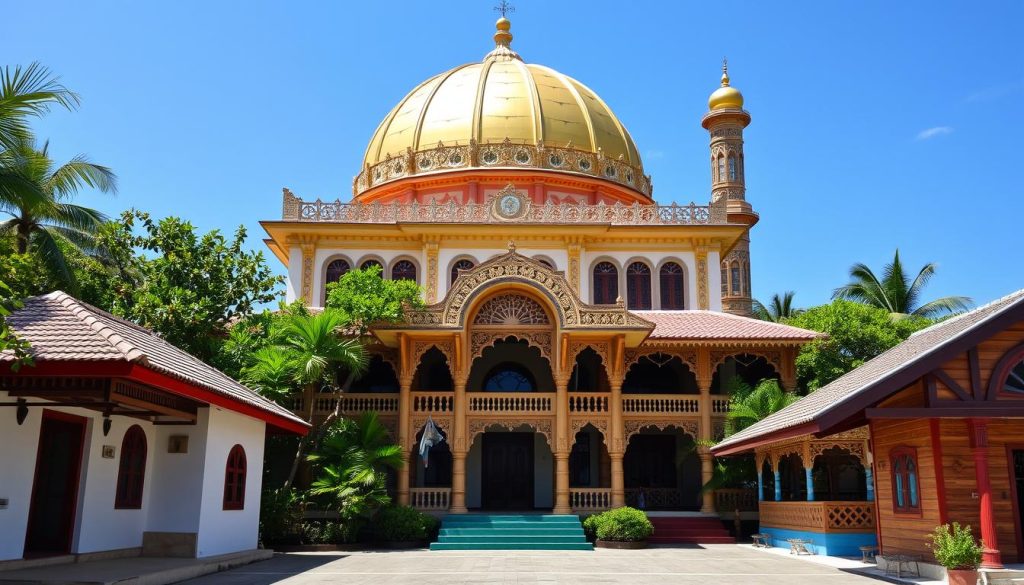
UNESCO and the Indian government restored Hukuru Miskiy in 1988. Its design is unique, with a dry joint system and glossy coatings. Visiting this mosque is a chance to see preserved art and history.
| Feature | Details |
|---|---|
| Construction Year | 1154 A.D. |
| Renovation Year | 1658 CE |
| Capacity | 300 Individuals |
| Main Materials | Coral Stone |
| Key Features | Minaret, Sundial, Coral Stone Wells |
| Cemetery | Coral Stone Tombstones and Mausoleums |
Conservation Efforts for Malé Heritage
The importance of conservation in Malé goes beyond looks. It’s key to keeping the Maldives’ culture and buildings safe. With over 80% of the land barely above sea level, sites are at risk from nature and new buildings.
Many groups work together to save Malé’s heritage. They have a plan to protect six important mosques, like the Malé Friday Mosque. These mosques mix styles from India, Swahili, Malayan, and Arab cultures, built from coral stone in the 1600s.
In 2019, the Maldivian government asked the World Monuments Fund for help. They want to list these mosques as a UNESCO World Heritage site. This shows how important these sites are worldwide.
But saving these sites is hard. There are challenges like updating old ways to fit today’s needs. Also, getting people to care about their history and working with others are big tasks. This shows Malé’s dedication to keeping its story alive for the future.
Experiencing Malé History Tours
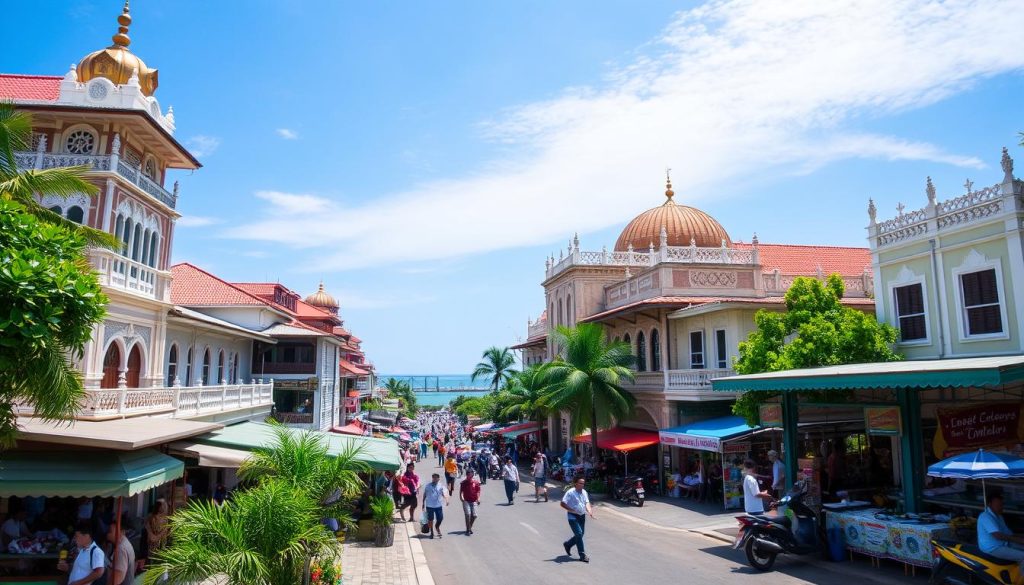
Exploring Malé’s history through tours is a unique chance to dive into the city’s past. You can pick from guided tours led by locals or go solo with pre-planned routes.* These tours get high marks, with a 5.0 rating from 8 reviews, thanks to their engaging stories and insights.
- Islamic Centre & Grand Friday Mosque – 30 minutes
- Sultan Park & National Museum – 30 minutes
- Old Friday Mosque – 30 minutes
- Muliaage (Presidential Palace) – 20 minutes
These tours don’t just visit landmarks. They also let you try local foods like mas huni and garudhiya. You’ll get to taste these dishes and enjoy local snacks.
These tours meet different needs, offering:
- Accessible paths for wheelchairs and strollers
- Easy access to public transport
- Private tours for a more personal experience
- Options for special diets
Malé Market’s lively vibe, filled with fresh goods and spices, makes your visit even more real. Visitors love the friendly people and trying new foods.
Here are some tips to make the most of your tour:
- Wear comfy shoes for walking.
- Drink water to stay hydrated.
- Begin early to avoid the heat.
- Talk to locals for a deeper cultural experience.
With many tours starting at Historic Republic Square, you’re sure to find amazing sights everywhere. This makes your trip to Malé even more memorable.
| Tour Feature | Details |
|---|---|
| Tour Duration | Varies from 2 to 4 hours |
| Suitable for | Families, seniors, and individuals |
| Culinary Experience | Tasting traditional Maldivian dishes |
| Overall Rating | 5.0 out of 5 based on reviews |
Malé Architectural Photography Opportunities
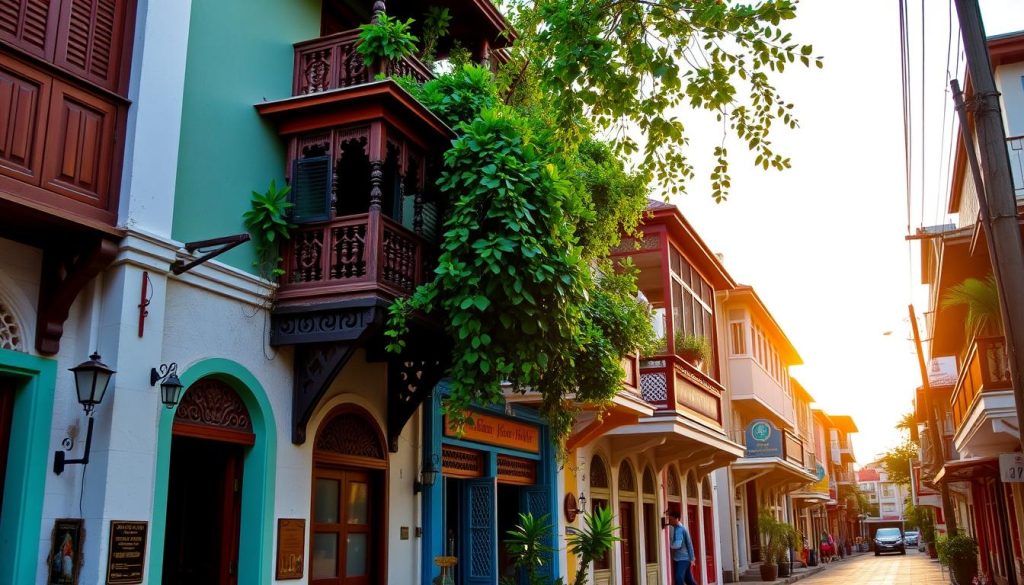
If you love taking amazing photos, Malé is a dream come true. The city is full of beautiful buildings, perfect for photographers. You’ll find many spots in Malé that show off incredible details and beauty.
The Friday Mosque is a must-see for its intricate designs and craftsmanship. Nearby, the royal palaces and government buildings offer stunning views.
Here are some tips for capturing Maldivian architecture:
- Golden Hour Shooting: Early morning or late afternoon is best for soft, flattering light.
- Use Leading Lines: Shapes in your shot can draw the eye and add depth.
- Present Human Elements: Including people adds context and scale to buildings.
- Explore Different Angles: Try various views to find creative shots that highlight design.
Remember to follow rules in religious or sensitive areas. Your trip to Malé can lead to incredible photos, telling a story of this lively city.
Conclusion
Your journey through Malé historical insights shows a world full of culture and amazing buildings. The Friday Mosque, built in 1658, is a key example. It’s not just a mosque but also a piece of Maldives’ history.
Exploring Malé landmarks, you see many different styles. You’ll find mosques made of coral stone and unique tombstones. Each one tells a story of Maldives’ identity.
Remember, keeping these landmarks safe is crucial for the future. Conservation efforts help keep Maldives’ heritage alive. This way, both locals and visitors can appreciate Malé’s rich history and culture.





