Eco-Friendly Scuba in Palawan: Dive Sustainably
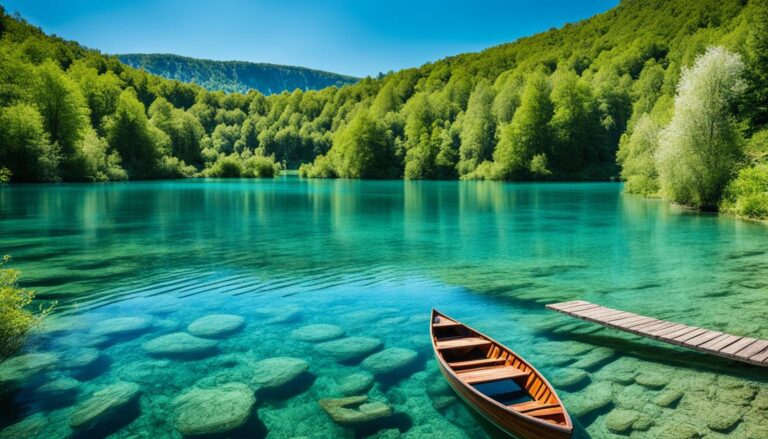
Ever thought about the impact of your dives on marine ecosystems? Palawan offers sustainable diving to protect its underwater beauty. This place, with its rich marine life and coral reefs, sets the stage for eco-conscious diving in the Philippines.
As divers, you have a big role in eco-friendly diving. Using sustainable practices, you not only enjoy Palawan’s seas but also save its fragile ecosystems. Whether diving in Tubbataha Reefs Natural Park or snorkeling in El Nido, your choices help keep these treasures safe for the future.
Understanding Eco-Friendly Scuba Diving
When you scuba dive in Palawan eco-friendly style, you explore the ocean while caring for marine life. Following sustainable dive practices protects coral reefs and diverse ecosystems. It’s important to respect marine homes, so don’t touch corals or sea creatures. Use eco-safe gear like biodegradable sunscreen and reusable equipment.
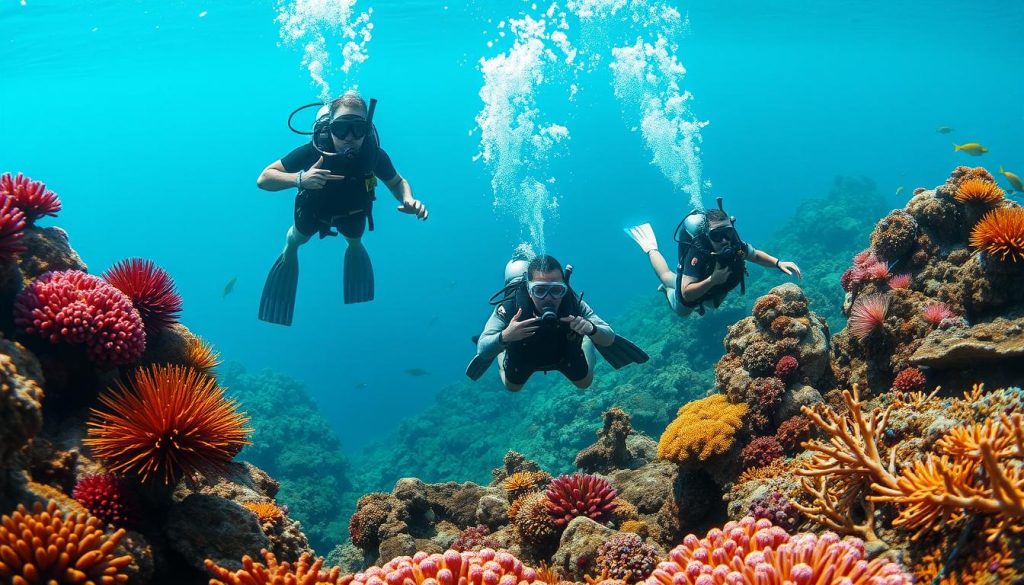
Responsible diving is about knowing how underwater ecosystems balance. Training with certified instructors teaches you safe and conservation-friendly techniques. You’ll learn about local sea life and the importance of dive sites. This way, you help protect marine life while making your dive better.
El Nido is known for world-class diving. Places like Helicopter Island Tunnel and South Miniloc Island offer depths of 5 to 30 meters. They are filled with sea creatures like clownfish and sea turtles. The coral is also stunning. This makes El Nido perfect for eco-friendly scuba diving.
The Importance of Sustainable Diving
Sustainable diving is crucial for protecting marine ecosystems in places like Palawan. Threats like overfishing, plastic waste, and climate change harm our oceans. So, eco-friendly diving practices are essential.
By choosing green dive operators, we support protecting marine ecosystems. Studies show many dive shops now follow sustainable methods. They manage waste well and avoid harming marine life. This helps local marine habitats and species flourish.
Getting involved in conservation efforts is also vital for the importance of sustainable diving. Divers often join local projects, such as fixing coral reefs and managing marine sanctuaries. This not only makes diving better but also builds a community focused on nature’s balance.
In Palawan, tourism growth is both a challenge and chance for being green. With more people visiting, it’s up to dive companies and divers to dive responsibly. Teaching about responsible diving can spread a culture of looking after marine life.
The following table shows important facts on conservation in Palawan. It highlights the joint efforts of local groups and organizations:
| Conservation Effort | Details |
|---|---|
| Marine Conservation Projects | 16 active initiatives |
| Marine Protected Areas | Diverse areas designated for biodiversity conservation |
| NGOs for Environmental Conservation | Palawan NGO Network, Inc. |
| Marine Sanctuaries Managed by Communities | TBD |
| Fishing Regulations in Tubbataha | TBD% |
| Plastic Pollution Reduction Initiatives | TBD |
| Coral Restoration Projects | TBD |
Best Times for Diving in Palawan
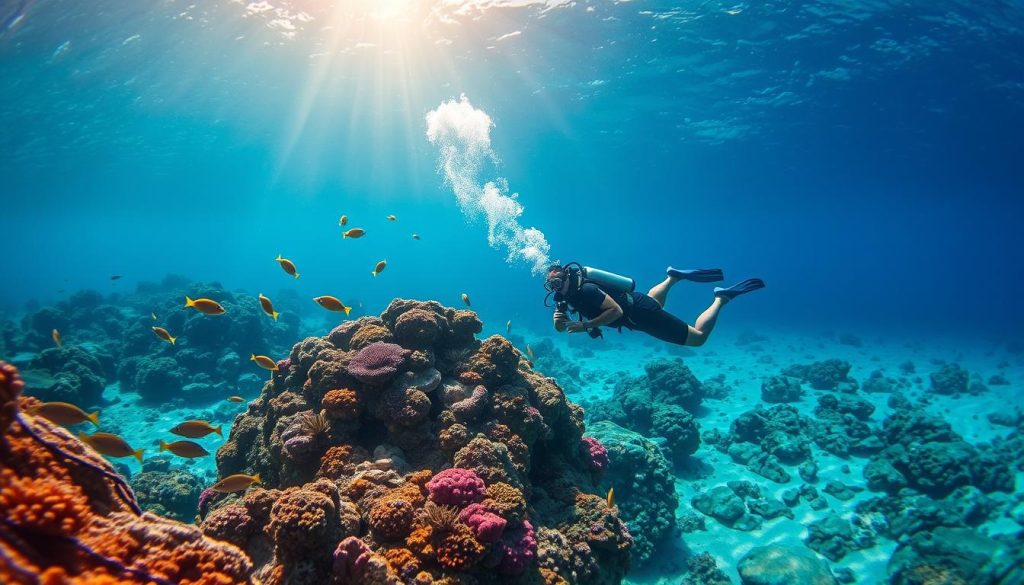
Knowing when to dive in Palawan is key. The dry season, from December to June, gives the best dive experience. This time ensures clear waters and rich marine life.
Seasonal Diving Insights
Different months bring different diving experiences. Some highlights include:
- January: Leyte is great for seeing hammerhead sharks and manta rays.
- February: Boracay’s seas are calm, perfect for spotting turtles and barracudas.
- March: Malapascua is known for thresher shark sightings.
- April: In Cebu, visibility is high, making it easy to see whale and hammerhead sharks.
- May: Palawan is the best place for whale shark sightings and visiting Tubbataha Reef.
- June: Bohol’s warm temperatures bring out vibrant marine life.
- July: Mindanao’s waters are calm, filled with diverse marine life.
- August: Siquijor has stunning coral gardens and unique formations.
- September: Dumaguete and Apo Island boast many species and clear waters.
- October: Anilao is a top spot for underwater photography, full of colorful sea animals.
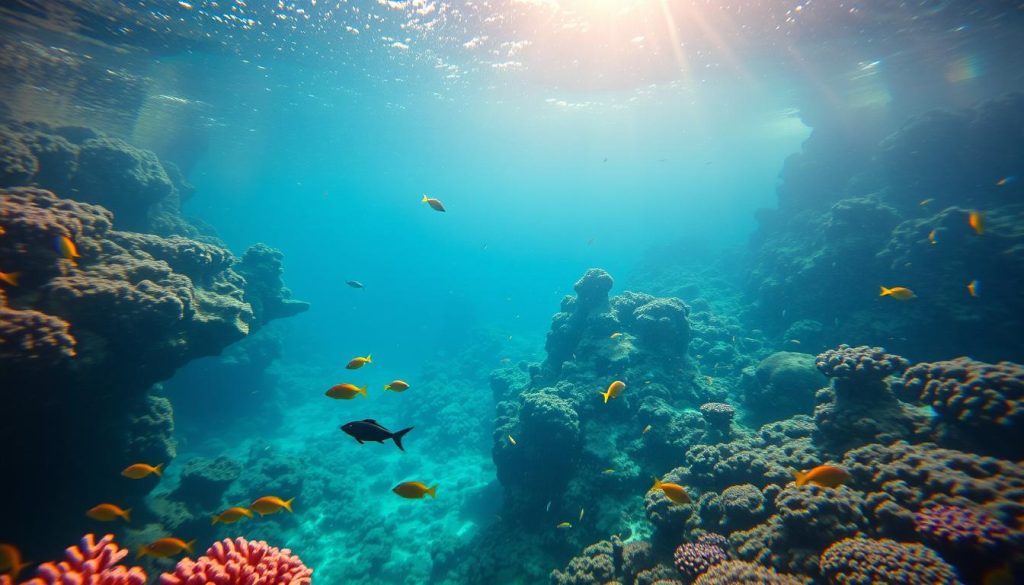
El Nido offers year-round diving but the best time is between December and May. With over 30 dive sites, it’s a paradise for marine life diversity. Plan your dive to capture Palawan’s underwater magic all year.
Sustainable Diving Experiences in Palawan
Palawan offers a special chance to explore underwater life sustainably. It has various ethical diving tours. These let you dive in a way that respects the surrounding nature. You’ll meet tour operators who care deeply about the ocean and support local people.
Where to Find Ethical Diving Tours
Pirates Diving Center is a trusted small company running since 1994. They offer personalized tours for small groups, focusing on your interests. Their commitment means your dive will support sustainability and help the community through social projects.
The Cauayan Diving Center is another great option. It’s by the beautiful Cauayan Island Resort. They offer PADI courses for all skill levels and focus on protecting the ocean. With over 30 amazing dive spots in Coron, you’ll love diving here.
Top Eco-Friendly Diving Resorts
Eco-friendly resorts in Palawan make your dive trips special and responsible. For example, El Nido Pangulasian Resort works with locals to help protect the sea and its creatures. These places offer a real connection with nature for those who love the environment.
When planning your dive holiday, consider the eco-friendly resorts in Palawan. They’re not just for relaxing. They also let you join in preserving the local environment. This way, your visit makes a positive impact.
Green Diving Practices in Palawan
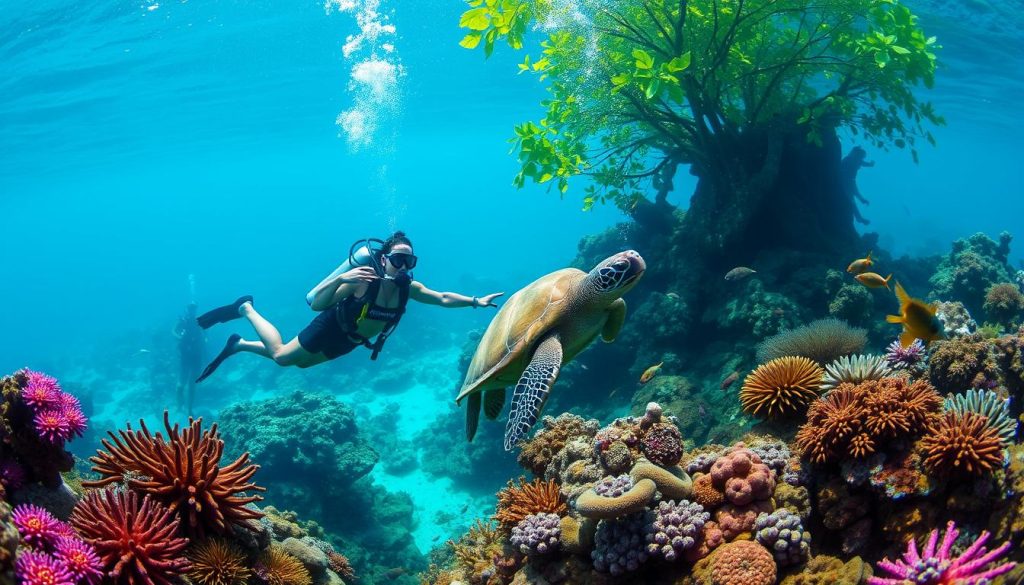
Green diving practices in Palawan make scuba diving better and protect the vibrant marine world. This place is in the Coral Triangle, known for its rich sea life. Diving responsibly helps protect this fragile environment.
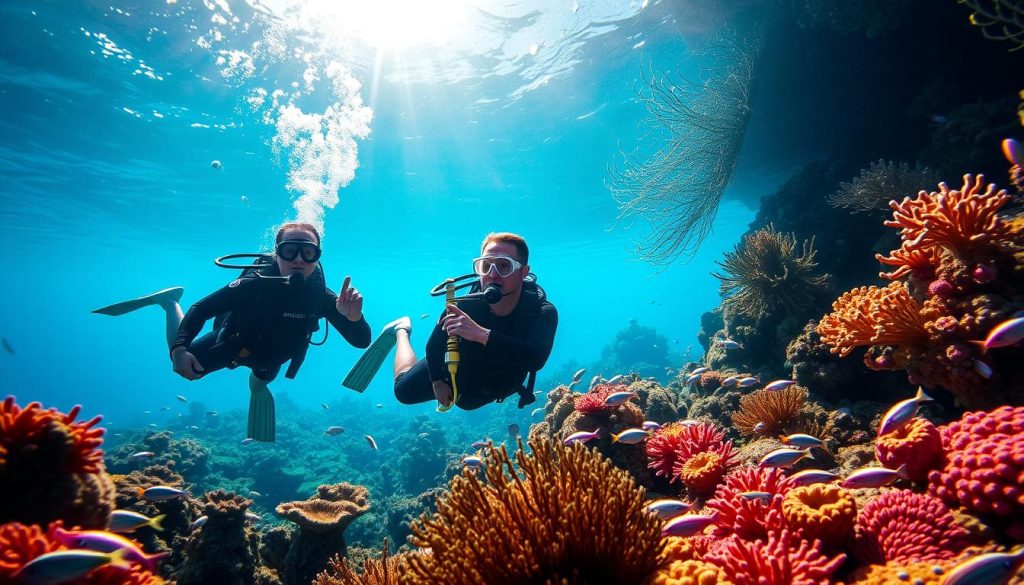
To support sustainable tourism in Palawan, try these key practices on your dives:
- Use reef-safe sunscreens: Regular sunscreens have bad chemicals for corals. Choose reef-safe products instead.
- Avoid single-use plastics: Use reusable bottles and bags to reduce waste on your trips.
- Adhere to ethical diving protocols: Keep away from corals and avoid touching or stepping on reefs to protect marine life.
Local operators like Tiki Tours and Green Gecko Expeditions focus on these practices. Tiki Tours has a 3-day dive trip to El Nido. It shows off stunning corals important for marine diversity.
Palawan’s corals shelter tons of sea creatures, from Gorgonian sea fans to staghorn corals. Diving responsibly supports local fishers and promotes eco-friendly tourism. It helps preserve the ocean for future generations.
| Green Diving Practices | Benefits |
|---|---|
| Use reef-safe sunscreen | Protects coral reefs from harmful chemicals |
| Avoid single-use plastics | Reduces ocean pollution and waste |
| Follow ethical diving protocols | Minimizes disturbance to marine life |
| Support eco-conscious tour operators | Encourages sustainable tourism initiatives |
By following these green diving tips in Palawan, you’re helping conserve its stunning area. Your love for diving will also benefit the ocean’s health.
Responsible Tourism in Palawan
When you engage in responsible tourism in Palawan, you help preserve the environment while enjoying its unique beauty. Local communities are key in community conservation efforts. They ensure tourism benefits both visitors and the preservation of cultural and natural heritage. Interacting with community members like women, farmers, and indigenous youths enriches your journey and encourages sustainable practices.
Community Involvement in Conservation
The PASYAR program by Palawan NGO Network, Inc. is a great example of local environmental efforts. It involves activities like mangrove reforestation and protecting marine sanctuaries. This promotes a united effort towards sustainability. The IDEAS program teaches about Indigenous health and agricultural practices, focusing on local vegetables’ nutritional values. Meanwhile, PCART boosts health initiatives, ensuring community wellbeing and ecological balance.
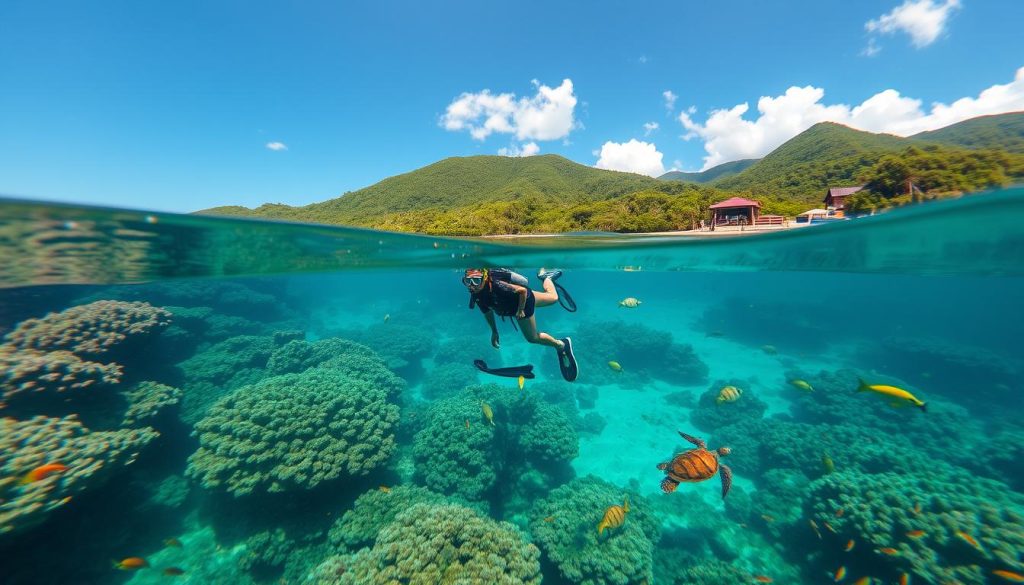
Responsible tourism enhances your experience and supports the local economy. Guided tours showcase Palawan’s vibrant ecosystems. Home to 400 butterfly species, endangered sea turtles, and various birds across 1,700 islands, it’s a must-see. These tours balance exploration and environmental care, especially in Puerto Princesa Subterranean River National Park where boat traffic is regulated to protect the ecosystem.
Challenges like logging and mining threaten Palawan. But responsible tourism opposes environmental harm by offering training and alternative income avenues. By participating, you support ethical travel principles. This ensures a sustainable connection that benefits everyone.
Marine Conservation Efforts
Palawan is a leader in marine conservation, working with different groups. This teamwork helps both the environment and diving experiences. Conservation involves everyone – organizations, the government, and local people.
Collaboration with Local Communities
Working with local communities is key in Palawan’s conservation work. Local fishers get jobs as Marine Protected Area (MPA) staff. This approach gives them a role in protecting the sea. The “Green Fins” code helps local divers learn about responsible diving. This makes tourism better for the environment.
- Over 30 IUCN-listed threatened species are being conserved through sustainable fishing practices.
- Community-based aquaculture facilities help combat the decline of overexploited species such as mangrove crabs.
- Blue Economy initiatives focus on restoring mangrove ecosystems critical for carbon sequestration.
- Training programs in swimming, dive certifications, and farming techniques aim to alleviate poverty.
- Microfinance grants support new business ventures within coastal communities.
The Sulubaaï Environmental Foundation is a great example of successful local work. They have planted 80,000 native plants since 2011 and fixed marine areas. A 45-hectare MPA around Pangatalan Island now has more and bigger fish.
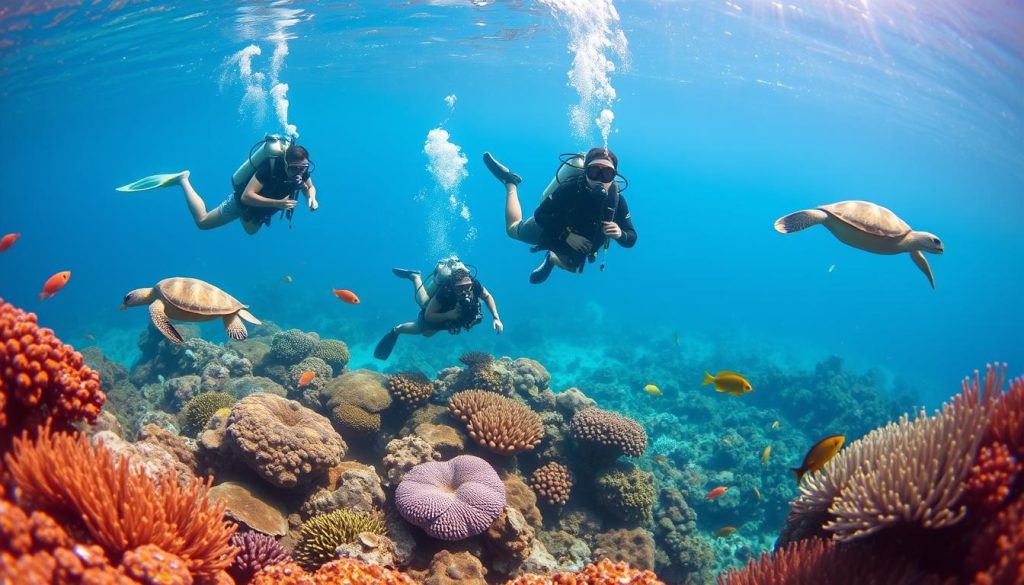
Education is also a big part of their work, reaching over 600 students. They teach why coral reefs and the environment are important. This full approach ensures Palawan’s unique nature will last for future generations.
Conclusion
Diving sustainably in Palawan brings you to amazing underwater sites and helps protect the ocean. When you dive places like South Entalula, with deep waters and clear views, it’s more than just fun. You’re supporting diving that cares for the ocean.
Choosing the right tour operators and joining conservation projects are key. These actions protect species like dugongs and keep Palawan’s waters vibrant. Everyone’s efforts keep these marine ecosystems healthy for the future.
Remember the importance of diving responsibly in Palawan. The choices you make affect both your journey and the ocean’s future. By working together, we ensure Palawan’s treasures stay beautiful for all to see.