Thimphu Festival Guide – Celebrate in Bhutan’s Capital
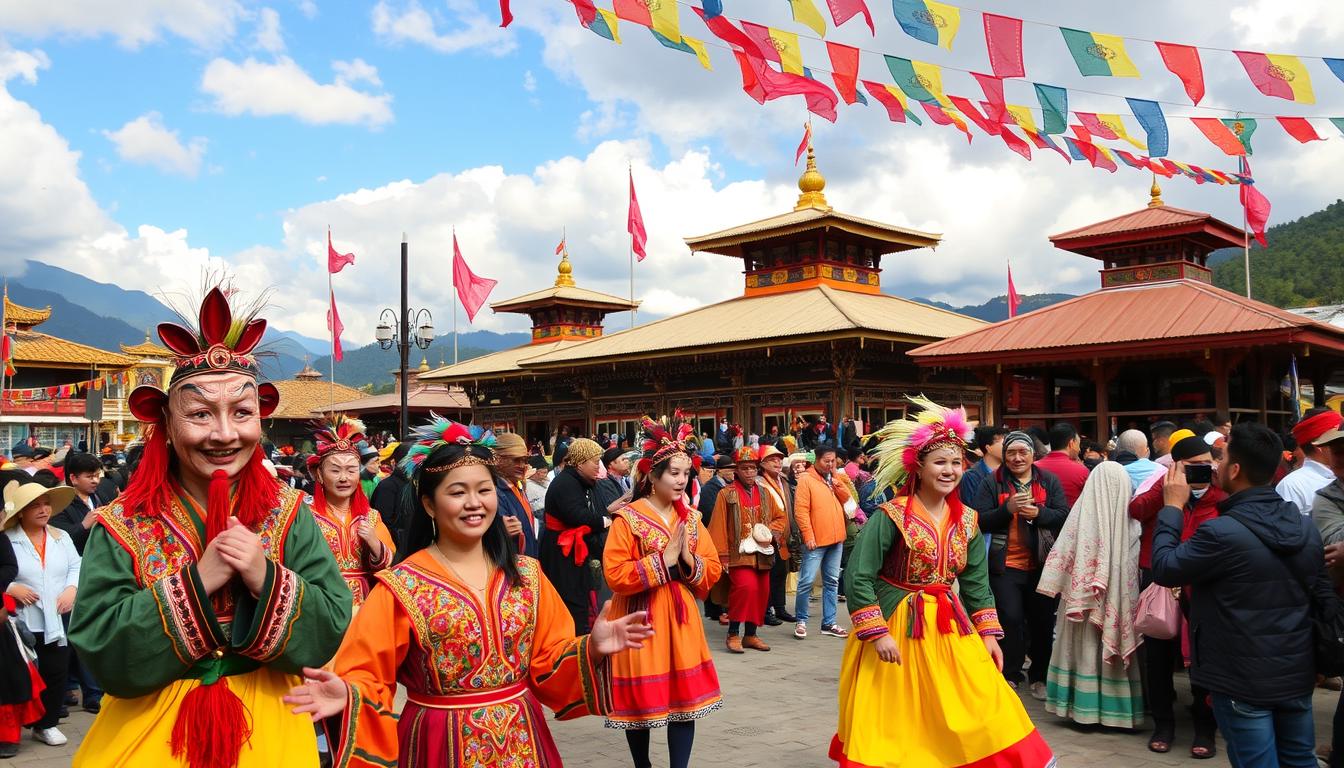
Ever wondered how one festival can show off Bhutan’s rich culture and traditions? The Thimphu festivals give a peek into Bhutan’s capital’s lively celebrations. This guide takes you through the Thimphu cultural celebrations. They honor history and are a space for spiritual and community bonding.
Let’s dive into the meaning, history, and special moments these festivals offer. Each one lets you see traditional dances, try local foods, and feel the essence of Bhutanese culture.
Introduction to Thimphu Festivals
Thimphu is a city filled with vibrant festivals that show off Bhutan’s rich culture. All year, different events mark the Thimphu festival calendar. These events mix old traditions with today’s life. They bring people together, letting locals and visitors dive into Bhutan’s culture.
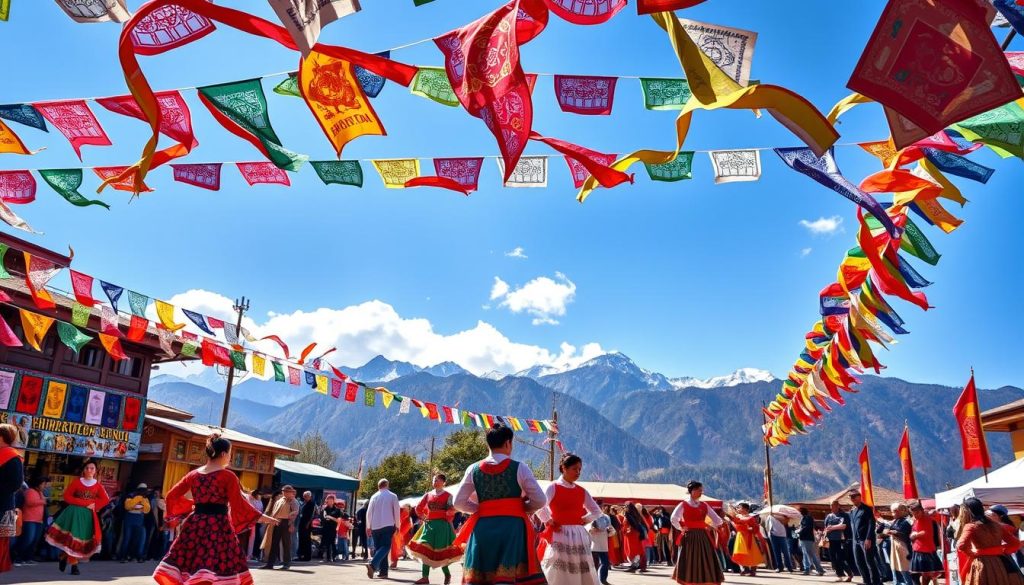
The Thimphu Tshechu and Thimphu Drubchen are top events. They feature sacred dances and rituals. The festivals in Thimphu dates change, giving everyone a chance to join in. Being part of these events lets you feel the Bhutanese warmth and community spirit.
The festivals show Bhutan’s dedication to keeping its culture alive. This part will give you a peek into these important events. It will guide you through the Thimphu festival calendar.
| Festival Name | Duration | Highlights | Location |
|---|---|---|---|
| Thimphu Tshechu | 4 Days | Masked dances, cultural performances | Thimphu |
| Thimphu Drubchen | 1 Day | Masked dance for protection | Thimphu Tashichho Dzong |
| Paro Tshechu | 4 Days | Masked dances, sacred Thanka unveiling | Paro |
| Jambay Lhakhang Drup | 4 Days | Midnight naked dance, sacred rituals | Bumthang |
Exploring Thimphu’s festivals makes your trip richer. It gives you a peek into Bhutan’s traditions and the bonds formed at these colorful events.
The Significance of Festivals in Thimphu
Thimphu festivals are key in Bhutan, showing off the country’s rich heritage. They connect the old and new, filled with spirituality. These events honor important historical moments and figures, like Guru Rinpoche.
These celebrations bring people together, building strong community bonds. They help keep Bhutan’s identity alive, showing off its traditions. Each festival, like the Thimphu Tshechu, offers a glimpse into Bhutan’s history and culture.
Visitors see the Bhutanese people’s deep commitment to their traditions. At festivals like the Thimphu Tshechu, you can enjoy cultural shows and receive blessings from lamas. It’s a chance to really feel part of Bhutan’s social life.
Are there any festivals in Thimphu?
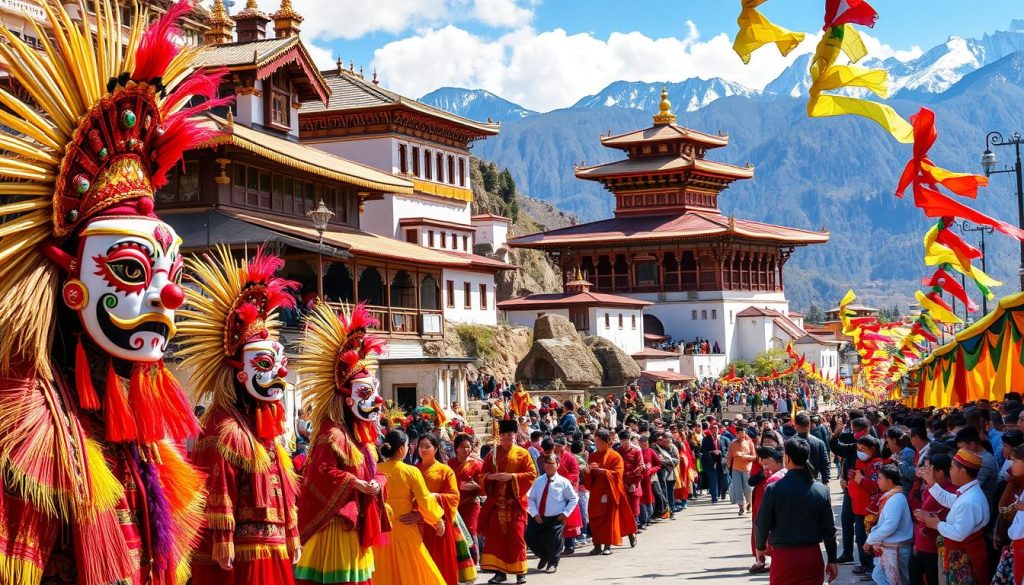
Thimphu, the capital of Bhutan, is filled with colorful celebrations all year. These local festivals, known as Thimphu Bhutan events, are key to the city’s culture. You can enjoy many festivities that honor Buddhist traditions, historical events, and Bhutan’s rich heritage. Let’s explore some major festivals and their impact on the community.
Overview of Major Festivals
Thimphu Tshechu is the biggest and most loved festival in Bhutan. It lasts for three days, featuring traditional dances, music, and rituals. The Jambay Lhakhang Drup, lasting four days, celebrates the victory of good over evil.
The Wangdue Phodrang Tshechu festival also lasts three days, filled with cultural dances and events. Paro Tshechu, another famous festival, usually lasts between three and four days. It attracts many visitors and locals.
- Thimphu Tshechu – 3 days
- Jambay Lhakhang Drup – 4 days
- Wangdue Phodrang Tshechu – 3 days
- Paro Tshechu – 3-4 days
- Haa Summer Festival – 2-3 days
- Matsutake Festival – August
- Jomolhari Mountain Festival – 2 days
- Nimalung Festival – daytime celebration
- Nomad Festival – late morning to late evening
- Sakteng Festival – 3 days in June
- Takin Festival – February
- Ura Yakchoe Festival – April
Cultural Importance of the Festivals
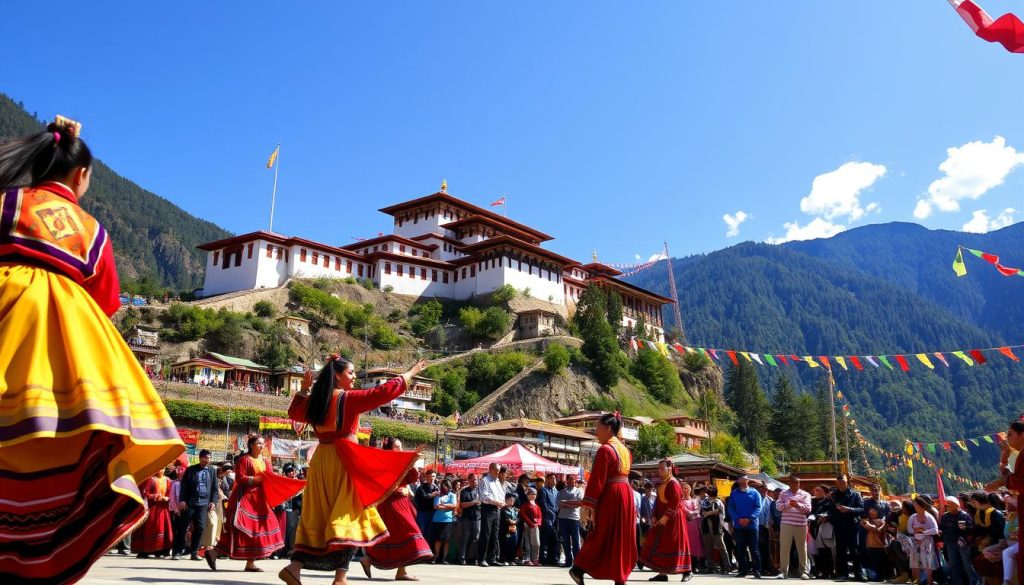
These festivals are more than just events; they are a vital part of Bhutanese culture. They show the nation’s values, beliefs, and community spirit. Festivals like the Thimphu Tshechu bring people together, drawing thousands of spectators.
The colorful attire, traditional dances, and offerings highlight Bhutan’s unique heritage. By participating in these events, you can deeply connect with the local culture. This makes your time in Thimphu unforgettable.
| Festival Name | Duration | Significance |
|---|---|---|
| Thimphu Tshechu | 3 days | Celebration of Buddhist teachings |
| Jambay Lhakhang Drup | 4 days | Victory of good over evil |
| Wangdue Phodrang Tshechu | 3 days | Cultural dance festival |
| Paro Tshechu | 3-4 days | Religious significance, attracts pilgrims |
| Haa Summer Festival | 2-3 days | Showcases local culture |
Thimphu Tshechu Festival: A Grand Celebration
The Thimphu Tshechu Festival is a highlight in Bhutan. It happens over three days, filled with energy and deep cultural meaning. You’ll see history, devotion, and tradition come alive, attracting both locals and visitors.
Historical Context of the Thimphu Tshechu
This festival honors Guru Rinpoche, key to Buddhism in Bhutan. It’s celebrated on the 10th day of the 8th lunar month. It’s a key part of Bhutanese identity, showing their religious and cultural heritage.
Festivities and Performances
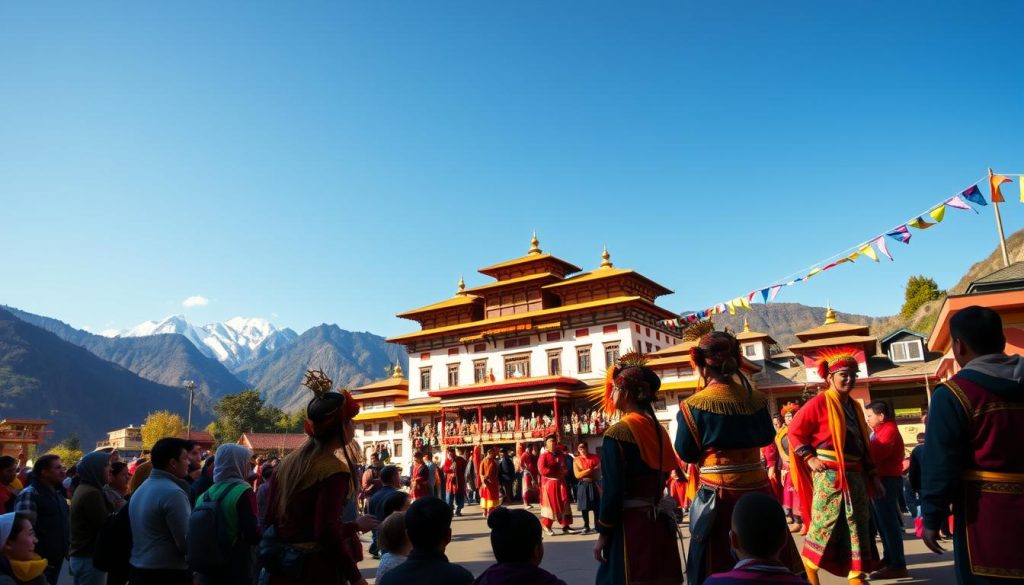
The Tashichhodzong courtyard turns into a lively stage during the festival. You’ll see masked dances, jester acts, and the unveiling of a sacred scroll painting. These performances entertain and teach about Bhutanese culture and stories.
Dates and Duration of the Festival
For 2024, the Thimphu Tshechu Festival will be from September 12 to September 14. Thousands will come from all over, making it a major event. It’s a chance to connect with others and appreciate Bhutan’s culture.
Other Notable Cultural Celebrations in Thimphu
Thimphu is full of cultural celebrations beyond the famous Tshechu festival. All year, you can find different Thimphu Bhutan events. These events show the traditions and community spirit of Bhutan. Each festival has its own history and amazing performances that show off Bhutan’s culture.
Paro Tshechu Festival
In March, the Paro Tshechu Festival is a big deal in Bhutan. It celebrates Guru Rinpoche’s birth with stunning masked dances and music. It attracts locals and tourists alike, eager to see Thimphu’s unique culture.
Jambay Lhakhang Drup
In October, the Jambay Lhakhang Drup at Bumthang’s famous temple is a must-see. It features fire rituals and a ‘Mewang’ ceremony to cleanse sins and bring luck. The festival’s masked dances take you deep into Bhutan’s spiritual stories.
Wangdue Phodrang Tshechu
The Wangdue Phodrang Tshechu happens every September or October. It’s filled with colorful traditions and historical acts. You can enjoy cultural dances and community celebrations that show the heart of Thimphu’s culture.
| Festival Name | Date | Highlights |
|---|---|---|
| Paro Tshechu | March | Masked dances, Guru Rinpoche’s birth commemoration |
| Jambay Lhakhang Drup | October | Fire rituals, ‘Mewang’ ceremony, masked dances |
| Wangdue Phodrang Tshechu | September/October | Cultural dances, historical re-enactments |
These festivals give you a real feel for Bhutanese culture. They help you understand the traditions that make this place special. Joining in these Thimphu Bhutan events will make your visit unforgettable and let you connect with the local community.
Experiencing Thimphu Festivals: What to Expect
Visiting the Thimphu festivals is a deep dive into Bhutan’s rich culture. You’ll see many colorful activities that highlight local traditions. It’s a chance to join in the fun and explore a unique atmosphere.
Traditional Dressing and Local Participation
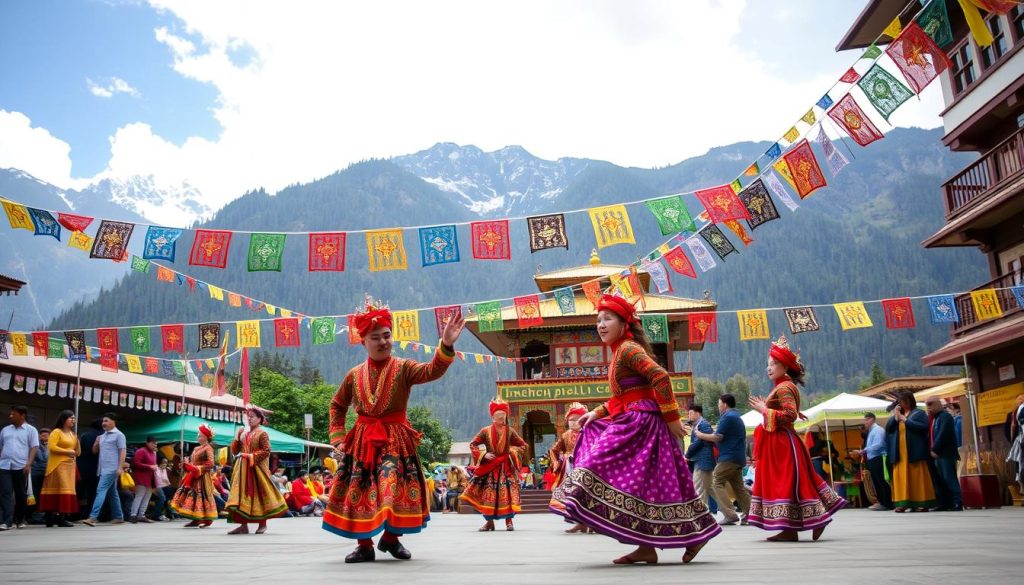
Seeing locals in traditional gho and kira is a highlight. These outfits add color to the festivals. Wearing them yourself connects you to the celebrations.
Cultural Performances and Entertainment
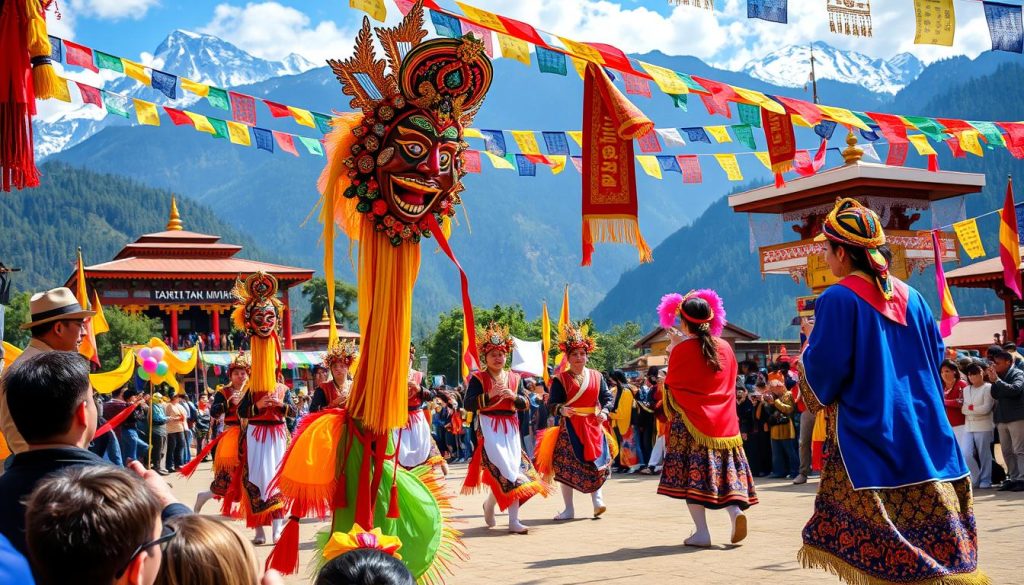
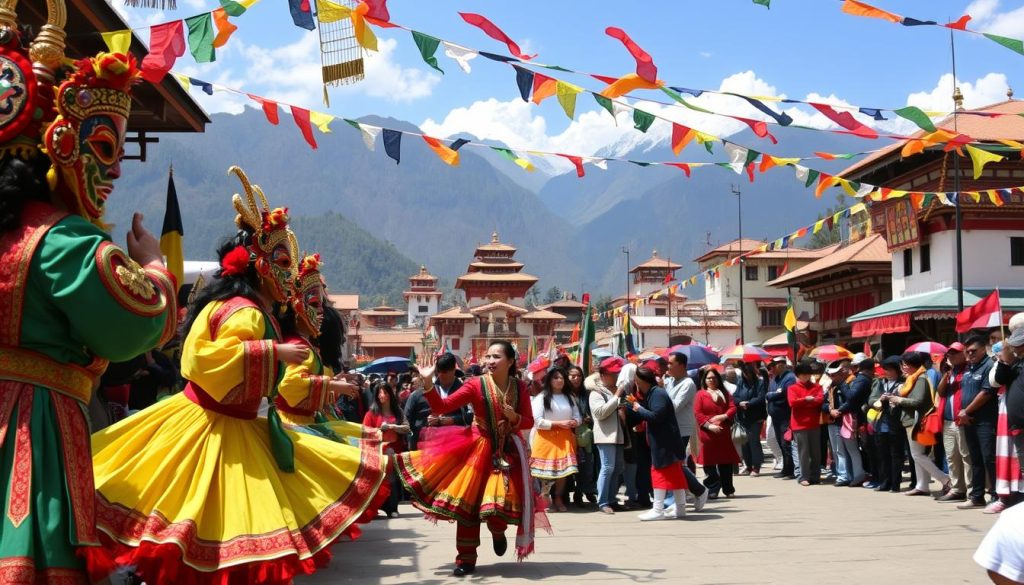
Cham dancers are a big part of the festivals. They dance with masks, telling stories. The music and dance together create a lively celebration.
Food and Local Delicacies
Trying local foods is a must. You’ll find Ema Datshi and other dishes. It’s a great way to experience Bhutan’s food and hospitality.
| Festival Name | Duration | Months Held |
|---|---|---|
| Thimphu Tshechu | 3 Days | September or October |
| Paro Tshechu | 4 Days | Spring |
| Punakha Drubchen | 5 Days | February or March |
| Ura Yakchoe | 3 Days | April |
| Wangdue Phodrang Tshechu | 4 Days | September or October |
| Jambay Lhakhang Drup | 5 Days | November |
Planning Your Visit to Thimphu Festivals
Planning your trip to Thimphu’s festivals can make your experience better. The Thimphu festival calendar lists many events throughout the year. It’s key to pick the right time for your visit. Knowing about local customs, weather, and festival details will enrich your trip.
Best Time to Visit Thimphu for Festivals
The best time to see Thimphu’s festivals is between September and October. This is when the Thimphu Tshechu happens. It’s a three-day festival that shows off Bhutan’s culture with mask dances and rituals.
In March, the Paro Tshechu offers another great festival experience. Always check the Thimphu festival calendar for exact dates. Festivals change every year.
Travel Tips for Festival Goers
Here are some tips for traveling to festivals:
- Secure your travel and accommodations early: Book at least eight weeks in advance to ensure availability, even during peak festival times.
- Respect local customs: Dressing modestly and participating respectfully in rituals will make your experience better.
- Travel from Paro: The drive from Paro to Thimphu is scenic and takes about 1 hour and 30 minutes, offering stunning views.
- Explore local attractions: While in Thimphu, hike to Kuensel Phodrang for amazing views or visit the National Library to see Bhutan’s ancient texts.
- Keep an eye on weather conditions: This will help ensure you are prepared for the local climate during the festivals.
How to Get to Thimphu for the Festivals
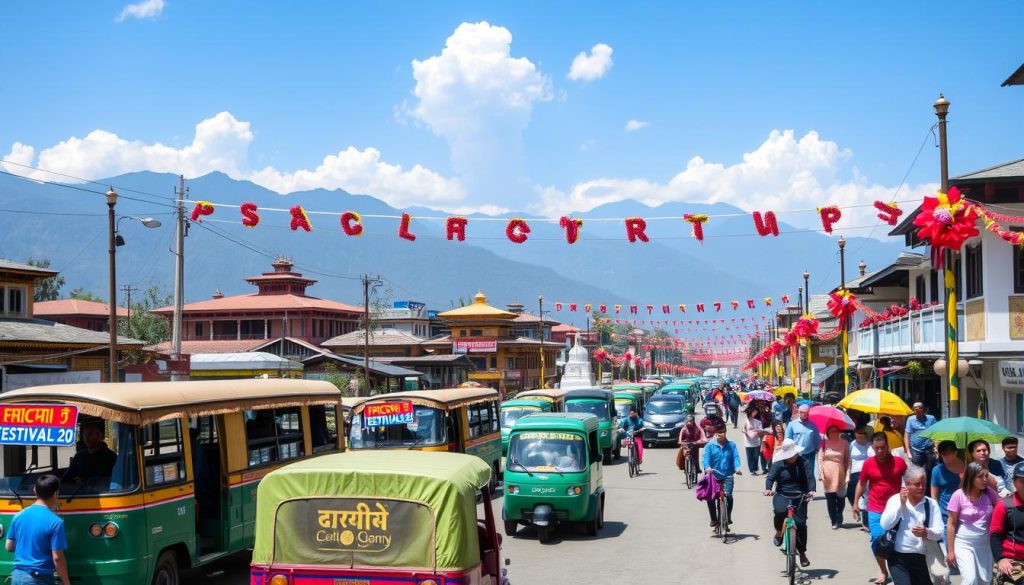
Planning your trip to Thimphu for the festivals is exciting. You’ll learn about travel options and logistics. Thimphu, the capital of Bhutan, is known for its vibrant festivals. It attracts many visitors each year.
Get to know the flight information and local transport. This will make your trip to Thimphu’s festivals better. It’s also important to follow Bhutan travel tips.
Flight Information
Most people fly into Paro International Airport, Bhutan’s only international airport. It connects to places like Bangkok, Delhi, and Kolkata. Booking flights early is a good idea.
The trip from the airport to Thimphu takes about an hour. It’s about 65 kilometers away.
Local Transportation Options
Once in Thimphu, you can use different ways to get around:
- Taxi Services: Taxis are easy to find at the airport and in the city. They’re a convenient way to get where you need to go.
- Bus Services: Local buses run often, connecting important areas in Thimphu.
- Rental Cars: If you want more freedom, you can rent a car. Make sure you have an international driving permit.
- Walking: Thimphu is small, making walking a great way to see the city. It’s even better during the festival season.
Cost Overview
| Travel Option | Approximate Cost (USD) | Distance from Thimphu | Travel Time |
|---|---|---|---|
| Taxi from Paro Airport | 30-50 | 65 km | 1 hour |
| Local Bus | 1-2 | Varies | 30 minutes |
| Rental Car | 30-100 (daily) | Varies | Varies |
By considering these points, your trip to Thimphu’s festivals will be smooth. It will be filled with cultural richness and celebration. With good planning, your visit will be memorable and enriching as you explore Bhutan’s traditions.
Preserving Bhutanese Culture Through Festivals
Festivals are key in keeping Bhutan’s culture alive. They are not just fun times but also teach young people about their heritage. The government works hard to keep these festivals going, making sure they fit into today’s world.
The Role of Government in Festival Promotion
The government helps by supporting local artists and cultural groups. They give money, help with logistics, and promote these events. This helps tourism and makes people proud of their traditions.
Community Involvement and Participation
People in the community are vital to the festivals’ success. They help plan, dance, and make beautiful costumes. This shows everyone’s part in keeping Bhutan’s culture alive.
When you join in these celebrations, you see more than just fun. You learn about the deep meaning behind each event. From Cham dances to group prayers, every moment shows the community’s commitment to their traditions.
Conclusion
The Thimphu Festival Guide shows the lively spirit and deep culture of Bhutan’s capital. It highlights the amazing celebrations all year. The Thimphu Tshechu, for example, is a colorful show of dances and songs.
These festivals are more than just fun. They show the strong traditions and spiritual values of Bhutan. By joining in, you feel part of the community and share in the joy.
Each dance and performance has its own story. It connects you to Bhutan’s history and customs. This guide helps you enjoy the festivals, try local foods, and feel a sense of belonging.
When you visit, you’ll see the festivals are about life, culture, and spirituality. They offer a chance to make lasting memories and appreciate Bhutan’s heritage. Whether watching performances or joining in, the festivals promise unforgettable moments.