Celebrate the Sun: Top Summer Solstice Festivals Around the World
The summer solstice isn’t just an astronomical event. It’s a global phenomenon that unites cultures through ancient traditions. Millions gather worldwide to celebrate the longest day of the year.
These festivals showcase a fascinating tapestry of human connection. From Iceland’s midnight sun to Times Square’s yoga event, Midsummer Events reveal diverse cultural practices.
Communities transform this celestial moment into extraordinary celebrations. The Santa Barbara Summer Solstice Celebration draws over 100,000 visitors. Canada’s Summer Solstice Aboriginal Arts Festival highlights cultural diversity.
The summer solstice offers a unique glimpse into humanity’s bond with the sun. It features spiritual ceremonies, music festivals, and community gatherings. Let’s explore remarkable Summer Solstice Festivals that brighten our global cultural landscape.
Understanding the Summer Solstice: An Ancient Celebration
The summer solstice is a special moment in Earth’s yearly journey. It’s when the sun is highest in the sky. This day is the longest of the year and has deep cultural meaning.
For thousands of years, people have been fascinated by this event. It has inspired many Pagan Rituals and celebrations throughout history.

What Makes the Summer Solstice Special
During the summer solstice, Earth’s axis points most directly at the sun. This creates unique light conditions. The result is some interesting effects:
- Longest daylight hours of the year
- Maximum solar radiation in the Northern Hemisphere
- Dramatic shifts in daylight duration
Historical Significance Across Cultures
Ancient customs show how people connected with the sky’s movements. Different cultures celebrated this day in creative ways:
| Culture | Solstice Celebration |
|---|---|
| Ancient Romans | Vestalia festival with temple offerings |
| Ancient Egyptians | Nile flood season marking agricultural cycles |
| Vikings | Community gatherings and legal discussions |
| Sioux Tribe | Sacred Sun Dance ceremonies |
Timing of Northern and Southern Hemisphere Celebrations
Summer Equinox Gatherings happen at different times depending on where you live. In the Northern Hemisphere, it’s usually between June 20-22. Southern Hemisphere communities celebrate around December 21st.
This difference shows how our planet’s seasons change. It’s a dance of astronomy that affects us all.
“The summer solstice is a moment of pure solar magic, connecting us to ancient rhythms of light and life.”
Stonehenge: The World’s Most Famous Solstice Gathering
Stonehenge, in Wiltshire, England, is a remarkable ancient monument. It draws thousands of visitors during the summer solstice. This prehistoric site connects modern observers with ancient astronomical traditions.

The stone circle, built over 5,000 years ago, showcases an amazing solar alignment. During the summer solstice, about 8,000 people gather to watch the sunrise. The sun aligns perfectly with the monument’s carefully positioned stones.
*”Stonehenge represents humanity’s profound connection to celestial rhythms and natural cycles.”*
- Location: 80 miles southwest of London
- Construction period: Around 3000 BC
- Unique feature: Bluestones transported from 150 miles away
The yearly event attracts history buffs and spiritual practitioners alike. Surprisingly, 154,000 people watched the solstice sunrise online. This shows the global interest in this ancient site.
Recent years have seen entry restrictions and parking fees. Yet, the event still inspires awe. It reminds us of our ancestors’ astronomical knowledge and spiritual connection to nature.
Swedish Midsommar: A Traditional Northern Festival
Sweden bursts with life during Midsummer, showcasing vibrant cultural celebrations and ancient traditions. This festival captures the essence of Swedish summer observances, ranking among the world’s most significant Midsummer events.

Swedish Midsommar is a profound connection to nature and seasonal rhythms. It’s celebrated between June 19th and 25th, marking the year’s longest day with extraordinary enthusiasm.
Maypole Dancing and Folk Traditions
Iconic traditions form the heart of Midsommar, surviving for centuries. The maypole dance stands out as a centerpiece, with participants creating intricate patterns through synchronized movements.
- Traditional folk costumes worn during celebrations
- Synchronized group dancing around the maypole
- Community gatherings in rural and urban settings
Traditional Midsummer Feast Elements
Swedish culinary traditions shine during Midsommar. The feast features regional specialties that reflect the country’s agricultural heritage.
| Dish | Description |
|---|---|
| Pickled Herring | A classic Swedish delicacy served in multiple flavors |
| New Potatoes | Boiled with fresh dill and sour cream |
| Swedish Strawberries | Known for exceptional sweetness due to cool spring temperatures |
Ancient Love Ritics and Customs
Midsommar carries deep romantic traditions, with ancient rituals to help young people find love. Folklore suggests that if a person picks seven different flowers and places them under their pillow, they will dream of their future spouse.
“Midsommar is when Sweden comes alive, celebrating the magic of summer and the connection between people and nature.” – Swedish Cultural Historian
Midsommar represents a unique blend of cultural heritage and community spirit. From Stockholm’s archipelago to Dalarna’s countryside, it captivates locals and visitors alike.
Summer Solstice Festivals Around the Globe
Summer solstice brings lively celebrations across continents. These events showcase diverse Indigenous Festivals and Solstice Traditions. Cultures worldwide mark this special day with unique rituals.

Travelers can explore amazing Summer Solstice Festivals worldwide. These events reveal how humans connect with the sun. Let’s look at some exciting celebrations:
- North America: The Ottawa Summer Solstice Indigenous Festival offers a spectacular three-day event from June 21 to June 23, featuring an exciting Pow Wow with $75,000 in prizes.
- Alaska: The Midnight Sun Festival in Fairbanks attracts thousands, celebrating 12 hours of continuous daylight with live music and local festivities.
- Europe: From Sweden’s Midsommar to Austria’s mountaintop bonfires, each region brings its unique flavor to solstice celebrations.
| Location | Festival Highlight | Date |
|---|---|---|
| Malta | Ħaġar Qim Sun Alignment | June 20-22 |
| Iceland | Arctic Open Golf Tournament | Midnight Sun Period |
| Norway | Slinningsbalet Bonfire | Summer Solstice |
“The summer solstice connects us to ancient rhythms, celebrating light and life across cultures.” – Cultural Anthropologist
The summer solstice offers a magical moment to enjoy global traditions. You can watch the sun align at Stonehenge or dance at a local festival.
These events celebrate the longest day of the year. They connect us to ancient customs and the natural world.
Fire and Light: Alpine Mountain Celebrations
The summer solstice turns the Alps into a canvas of flickering lights and ancient traditions. In Tyrol, Austria, Nature-Based Festivities light up the night sky. These mountain bonfires connect modern communities to centuries-old Pagan Rituals.
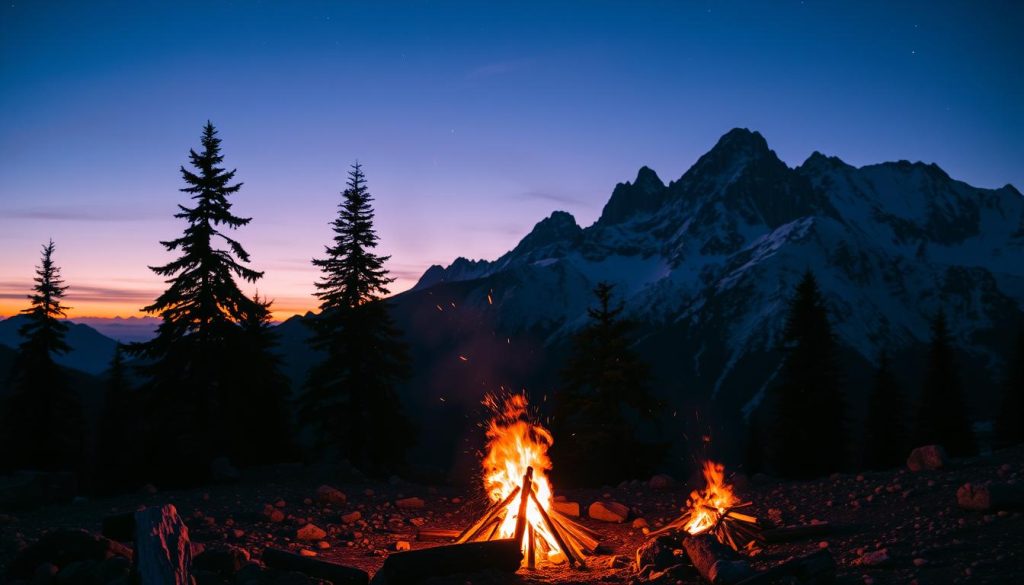
Tyrol’s mountain celebrations are a spectacular event drawing thousands each year. An amazing 8,000 individual fires are lit annually in the Tirolean Zugspitz Arena. This creates a mesmerizing display of light and tradition.
Mountain Bonfire Traditions
The solstice bonfire tradition dates back to the Middle Ages. Local groups carefully plan their mountain ascents. These fire gatherings involve detailed preparations.
- Carefully selecting mountain locations
- Carrying torches weighing up to 30 kilograms
- Creating symbolic fire formations like crosses and sacred hearts
Cultural Significance and Recognition
In 2010, UNESCO recognized the Tirolean summer solstice celebration as part of Austria’s cultural heritage. This event showcases remarkable commitment from local communities.
About 300 dedicated firestarters participate. They place up to 400 torches on alpine slopes. The celebrations run late into the night.
- Approximately 300 dedicated firestarters
- Up to 400 torches placed on alpine slopes
- Celebrations running late into the night
“Fire connects us to our ancestors and the rhythm of nature,” says a local Tyrolean tradition keeper.
As darkness falls, cable cars like the Nordketten and Hartkaiserbahn transport spectators. These run until midnight, ensuring everyone can enjoy the magical mountain fire show.
Barcelona’s Feast of Sant Joan
Barcelona bursts into life during the summer solstice. The Feast of Sant Joan lights up the city. This festival blends summer solstice traditions with cultural observances.
Locals and tourists alike are drawn to the vibrant celebrations. The city comes alive with light, fire, and community spirit.
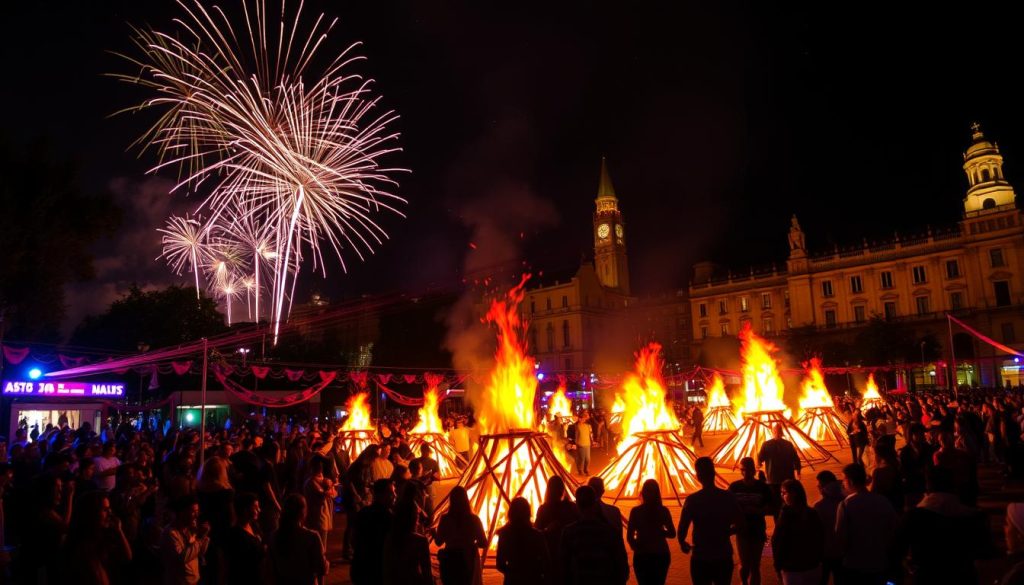
On June 23rd, the Canigó Flame kicks off the festival. This symbolic torch travels from the mountain to Sant Jaume Square. It represents Catalan unity and ignites celebrations across neighborhoods.
“Fire, water, and herbs are the magical symbols of Sant Joan night!” – Catalan Tradition
- Traditional bonfires light up city streets
- Fireworks paint the midnight sky
- Beach parties attract thousands of revelers
- Special coca de Sant Joan pastries are shared
Families flock to Barcelona’s beaches for the festivities. They enjoy spectacular fireworks displays. These symbolize light triumphing over darkness.
The celebration mixes ancient pagan rituals with Christian traditions. It marks Saint John the Baptist’s birthday on June 24th.
| Festival Element | Description | Significance |
|---|---|---|
| Canigó Flame | Ceremonial torch | Symbol of Catalan unity |
| Bonfires | Street and beach celebrations | Expelling evil spirits |
| Coca de Sant Joan | Traditional pastry | Community sharing |
As midnight nears, the city buzzes with excitement. Beach bars play lively music. Families enjoy traditional foods.
Fireworks create a magical atmosphere. Sant Joan captures the spirit of summer solstice perfectly. It’s an unforgettable cultural experience for all.
Midnight Sun Celebrations in Alaska
Alaska’s summer solstice brings unique nature-based festivities celebrating endless daylight. Alaskans turn extended daylight into a vibrant cultural observance. The sun refuses to set, sparking unparalleled enthusiasm for summer celebrations.

Fairbanks Festival Highlights
The Midnight Sun Festival is Alaska’s premier solstice event. This street fair attracts thousands of visitors. It features over 30 live music performances and hundreds of local exhibitors.
- Over 30 live music performances
- Hundreds of local exhibitors
- 12-hour continuous festivities
- Free admission for all attendees
Traditional Midnight Activities
Alaskans mark the solstice with unique traditions. These showcase their connection to the extreme northern environment. The Midnight Sun Baseball Game is a cherished cultural observance.
Teams play without artificial lighting from 10:30 PM past midnight. This legendary game symbolizes Alaska’s endless summer days.
| Event | Participation | Unique Feature |
|---|---|---|
| Midnight Sun Run | 3,500+ participants | Costume contest and live music |
| Mayor’s Marathon | Elite athletes nationwide | Multiple race categories |
| Anchorage Downtown Festival | Citywide participation | 12-6 PM street celebrations |
Community Gatherings and Events
Communities from Anchorage to Nome embrace the solstice with diverse activities. You’ll find gold panning at the Tanana Valley State Fair. Native dance performances also celebrate the remarkable midnight sun.
These events showcase Alaska’s summer spirit. They bring together locals and visitors to enjoy the unique natural phenomenon.
“In Alaska, the summer solstice isn’t just a day—it’s a celebration of light, life, and community spirit.” – Local Alaskan Saying
Ancient Monuments and Solar Alignments
Ancient civilizations built monuments aligned with solar movements, showcasing their astronomical expertise. These structures reveal intricate Pagan Rituals and Ancient Customs linked to celestial observations. They demonstrate the deep connection between early cultures and the cosmos.

Early cultures were remarkably skilled at tracking solar patterns. Several sites highlight their understanding of Solstice Traditions. These monuments reflect complex astronomical calculations and spiritual connections.
- Chichen Itza in Mexico features a pyramid that creates snake-like shadow effects during equinoxes
- Karnak Temple in Egypt illuminates its inner sanctum precisely during winter solstice
- Machu Picchu reflects Incan solar worship through strategic architectural design
| Monument | Location | Solar Alignment Feature |
|---|---|---|
| Stonehenge | England | Sunrise over Heel Stone during summer solstice |
| Jantar Mantar | India | 13 architectural instruments tracking solar movements |
| Newgrange | Ireland | Winter solstice sunrise illuminating passage tomb |
“The sun is a powerful symbol connecting humanity across time and culture”
These architectural wonders showcase our ancestors’ profound astronomical knowledge. They understood celestial rhythms long before modern technology existed. Their creations continue to inspire and amaze us today.
Conclusion: Embracing Global Solstice Traditions
Summer Solstice Festivals show a deep link between cultures and celestial patterns. These events honor the year’s longest day with unique yet similar customs. From Scandinavian maypoles to Native American sun rituals, they celebrate nature’s cycles.
These global festivities highlight renewal, community, and vitality. Ancient societies saw the solstice as crucial for agriculture and spirituality. Today, these festivals connect past and present, inviting us to join timeless rituals.
Summer Solstice Festivals remind us of our shared human experience. They offer a chance to embrace the sun’s cycle and welcome summer’s energy. You can witness the midnight sun in Alaska or dance around Swedish bonfires.
These cultural events inspire personal reflection and intention-setting. Consider joining a local solstice celebration or creating your own meaningful ritual. Solstice traditions are living expressions of human creativity and our bond with nature.