Affordable Global Dining: Staying on Budget While Abroad
Ever wondered how some travelers eat well abroad without spending a lot? Staying on budget while dining out abroad is about more than just saving money. It’s about enjoying great food and culture without overspending. By learning how to do this, your travels can be more rewarding with tasty and diverse meals.
Travel lets you dive into new cultures, and food is a big part of this. Yet, dining out often can get expensive. It’s a significant part of travel costs. Knowing how to eat out on a budget can make your trip better. It lets you deeply connect with local culture without emptying your wallet.
There are many smart ways to eat well for less while traveling. You can enjoy all-you-can-eat buffets or taste street food for just a dollar. Whether you’re exploring markets in Asia or small bistros in Europe, you can find affordable dining abroad.
Let’s look closer and find out how to enjoy delicious food without spending too much on your next trip.
Introduction to Budget-Friendly Dining Overseas
Traveling abroad doesn’t mean you have to spend a lot, especially on food. Knowing how to find budget-friendly meals can make your trip better without costing too much. We’ll show you how to enjoy food from around the world in a smart, affordable way.
For example, Tokyo is great for travelers watching their spending. Over 60% of places to eat, like ramen shops and sushi on conveyor belts, are affordable. While exploring, check out street food markets where you can find great eats for ¥100 to ¥500, fitting any budget.
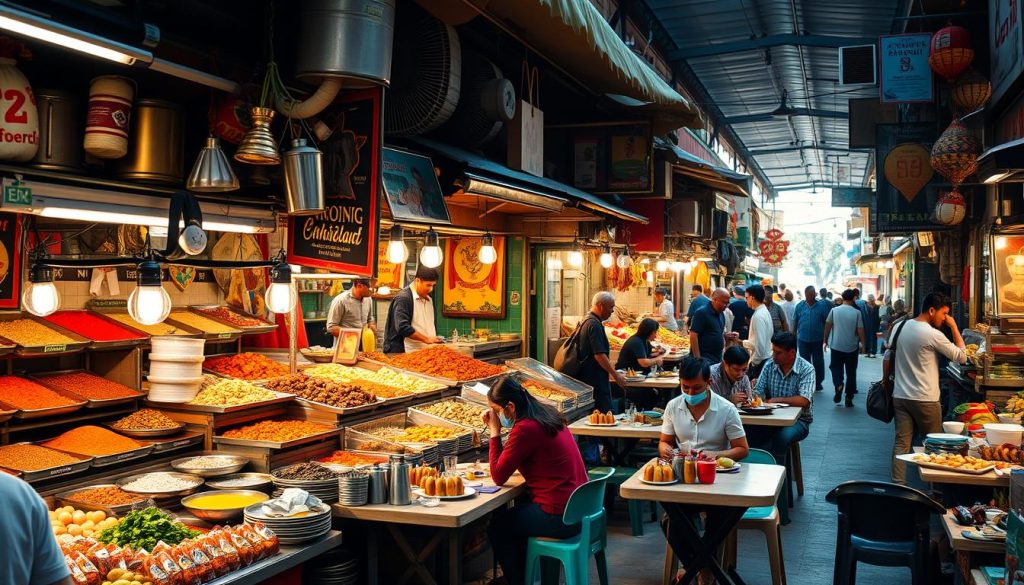
Lunch deals are also a way to save. In Tokyo, noodle and seafood spots offer lunch for ¥800 to ¥1,200. Izakayas, or casual pubs, have dishes for ¥300 to ¥800, letting you try different foods without paying too much.
Going to local grocery stores for fresh food is smart. It’s cheaper and shows you the local way of life. Tokyo’s convenience stores, for instance, have many vegetarian and vegan choices, about 20% more than regular restaurants.
To keep your spending in check, split your budget into four parts: stay, food, getting around, and fun. By planning, like booking flights early for deals and having a light lunch to save for dinner, you can stretch your budget further.
Eat at Buffets to Save Money
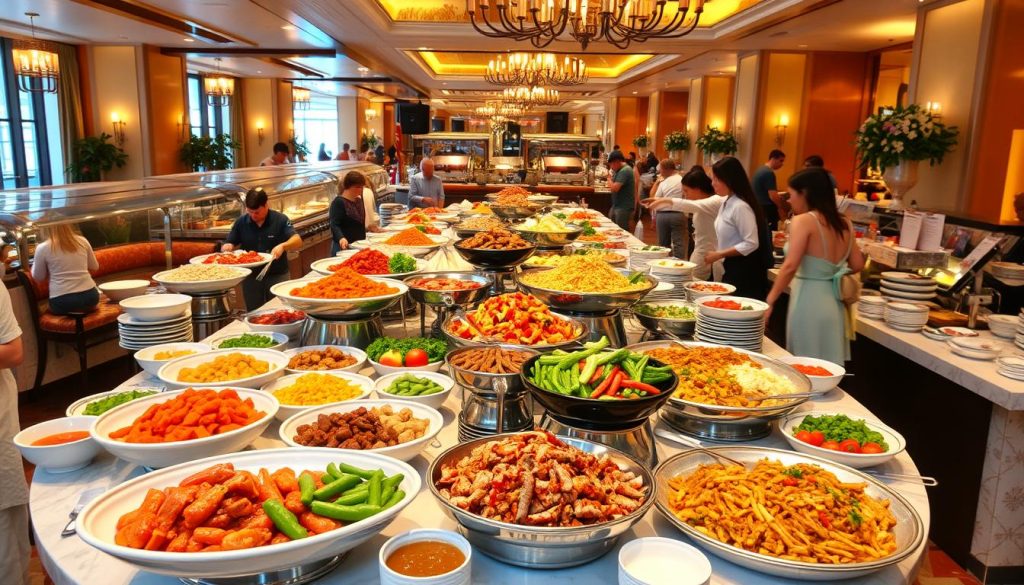
Eating at buffets is a smart move if you’re watching your budget. You can enjoy many dishes for one price. This approach is great in expensive dining countries. You get to feast on lots of food without breaking the bank.
Advantages of Buffets
Buffets are a win for those looking to save money. They offer all-you-can-eat for one price, so no overspending stress. Many buffets include a diverse range of dishes. This means you can taste different cuisines and get more for your money. Sometimes, you can eat your fill for less than 4 euros a day. That’s hard to beat.
Finding Good Buffets
To save the most, pick buffets that offer quality at a low cost. Food courts in malls often have budget-friendly buffets. Some eateries let you pay what you wish, which can save you lots. Also, try “kilo places” where food is priced by weight. Options like these keep your dining expenses in check.
Explore Local Street Food
Step into the world of local street food for authentic flavors at low costs. It’s a way to truly experience the local culture without spending much. Choosing street food can save 50-70% compared to eating at restaurants.
Why Street Food is a Great Choice
Street food is known for being affordable and genuine. For just $1-5, travelers can enjoy tasty meals that would cost $10-30 at restaurants. This makes street food ideal for those wanting to save money without missing out on good food.
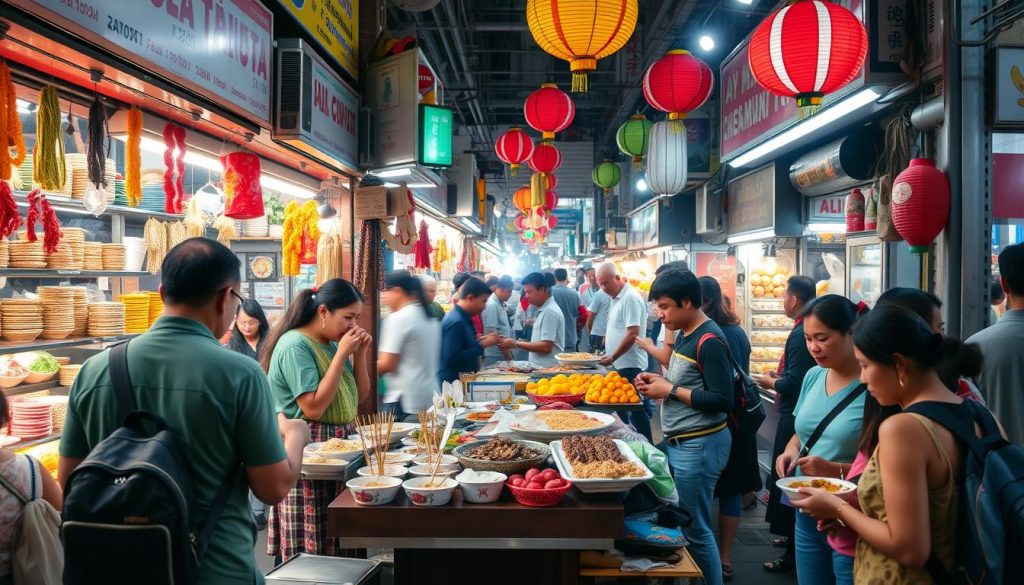
Street food also showcases local traditions. More than 80% of vendors cook with recipes handed down through generations. This offers an authentic taste you rarely find in restaurants. Plus, sharing dishes can cut costs by half, letting you try more local foods.
Tips for Finding Safe and Delicious Street Food
Here are some tips to enjoy street food safely and deliciously:
- Look for Crowds: Busy stalls are usually a sign of tasty, fresh food.
- Observe Hygiene Practices: Make sure vendors use clean utensils and handle food properly.
- Research Ahead: Check social media and travel forums for recommended street food spots.
- Engage with Locals: Talking to locals can lead you to great food not found in guidebooks.
By using these tips, you can have an amazing experience with street food. You’ll enjoy delicious, safe, and budget-friendly meals on your travels.
Embrace Grocery Shopping and Cooking
Grocery shopping and cooking your meals is a great way to save money abroad. It not only cuts costs, but lets you explore what locals eat. You can save around $20 to $30 per person each day. Plus, staying in places with kitchens helps save even more.
Shopping at Local Markets
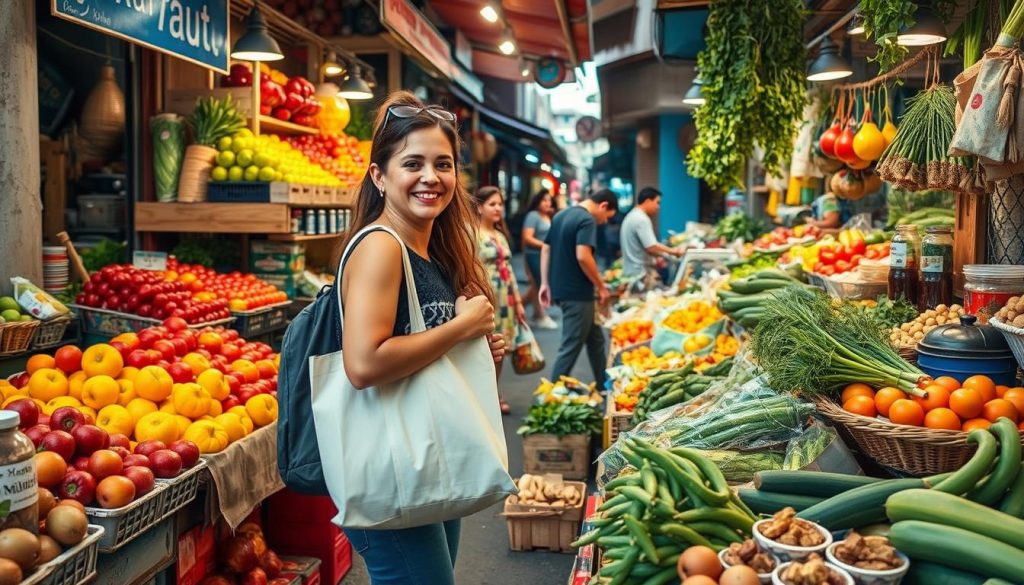
Local markets are perfect for finding fresh, cheap ingredients. Buying in bulk there could cut snack costs by up to 40%. And, choosing generic brands might save you another 20% to 30% on basics like tomato sauce. Shopping at these markets is fun and lets you see more of the local culture.
- Fresh produce is usually cheaper and more flavorful compared to grocery stores.
- Pre-packaged herbs cost about 100% more than fresh herbs—buying live plants can save money.
- Weekly budgets allow splurging on specialty items like local cheeses, ranging from 2 to 7 euros each.
Hostel Kitchens and Self-Catering
Hostels often have kitchens, which is great for cooking on your own. Cooking with others can make meals 60% cheaper as you share costs. Potluck dinners can also help reduce meal costs by up to 75%. This way, you can eat well and save money at the same time.
“Short-term rentals with kitchens can save travelers approximately $20 to $30 per person, per day, by allowing for self-cooked meals.”
Making your meals means you know what you’re eating, which is key for those with dietary needs. Plus, choosing simpler recipes can lower cooking costs by about 30%. Cooking for yourself is a smart way to save, especially when traveling.
Take Advantage of Lunch Specials
Are you traveling on a budget and looking for smart ways to eat? Lunch specials are a great choice. They are offered by many restaurants all over the world, especially in expensive European cities. You can enjoy delicious meals for much less than what you’d pay for dinner.
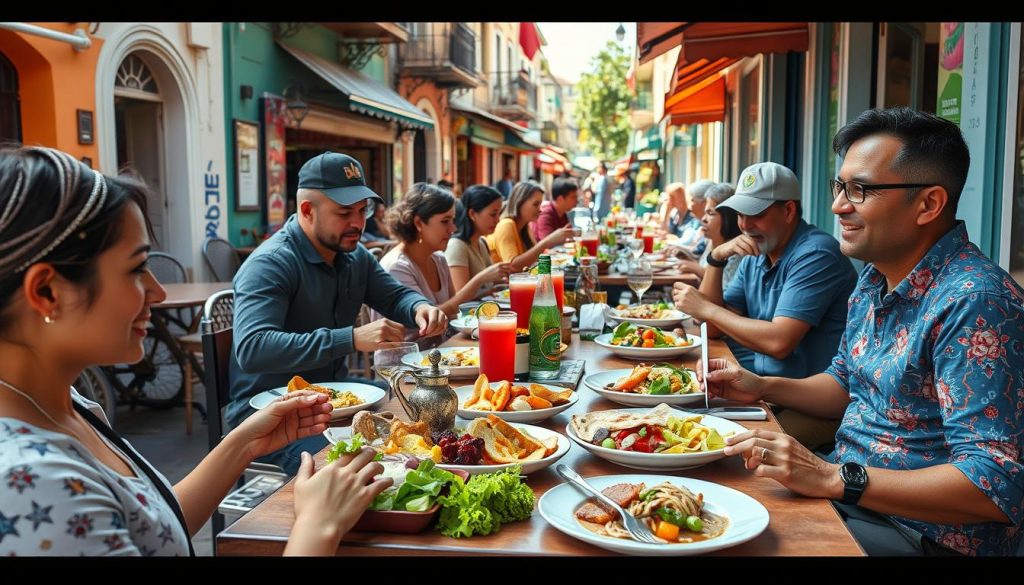
Lunch specials let you eat the same dishes from the evening menu but for less money. This is super helpful in places like Scandinavia, where eating out can cost a lot. Look for deals or fixed-price menus outside restaurants. You’ll get a lot of food for your money with these multi-course meal deals.
In hot places, it’s important to stay hydrated, and lunch specials may come with free water or soft drinks. This can help you save more money while traveling.
Many bakeries and cafes also have lunch deals to sell more items and reduce waste. This can be a cheap way to try local food. If you go during a slow time, you may get a meal for even less.
| City | Typical Lunch Special Cost | Regular Dinner Cost |
|---|---|---|
| Paris | €12-€15 | €20-€30 |
| Rome | €10-€13 | €18-€25 |
| Berlin | €8-€10 | €15-€20 |
Taking advantage of lunch specials is smart for your travel budget. It’s a fun way to try local food without spending too much. Use these tips to eat well and save money on your travels.
Use Tourism Cards for Discounts
Dining out on a budget in foreign places gets easier with tourism cards. These cards are found at local tourist offices. They offer discounts at attractions and local eateries.
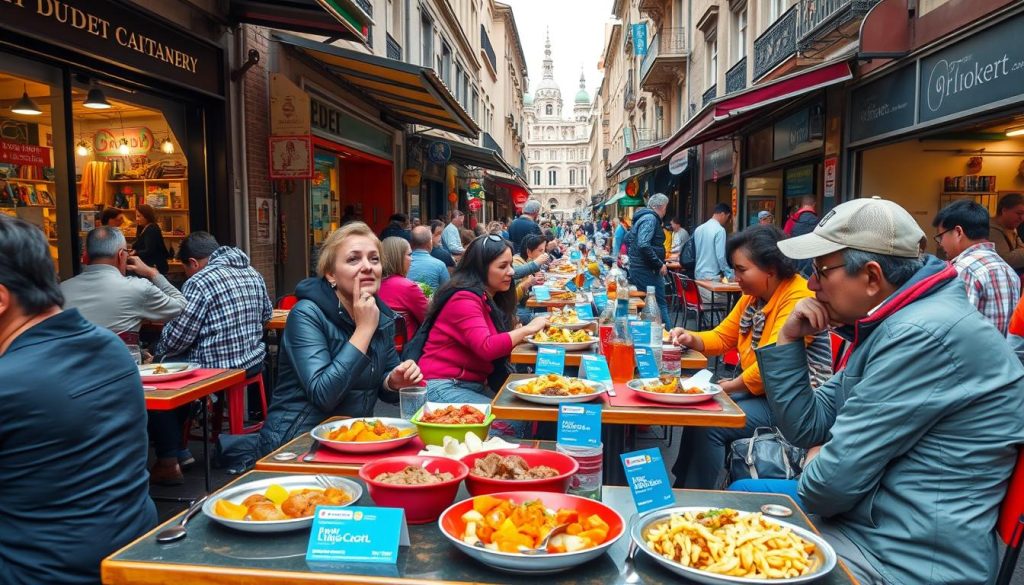
Many travelers don’t realize how these cards can help save on meals. They let you eat at local spots for less. This is great for stretching your travel budget further.
Tourism cards come with these benefits:
- Discounts at popular local restaurants.
- Special deals on meals and drinks.
- Exclusive offers for cardholders.
Some cards include public transit day passes for about $5. This is cheaper than the starting $20 taxi fare for short trips. It helps you save more for dining out.
Studies show that tourism cards help travelers save a lot on meals. Restaurants offer discounts from 10% to 50% during off-peak hours.
| Tourism Card Benefits | Average Savings |
|---|---|
| Discounted Restaurant Meals | 10-50% |
| Cheaper Public Transportation | Up to $15 per ride |
| Meal Specials at Partner Eateries | Varies, often substantial |
Museums and cultural sites may ask for less than $5 with these cards. Traveling off-peak can cut costs on flights and stays by 20-50% against peak times.
In summary, tourism cards make eating out abroad less costly. They also make your trip better by letting you do more with less.
Stay Hydrated with a Refillable Water Bottle
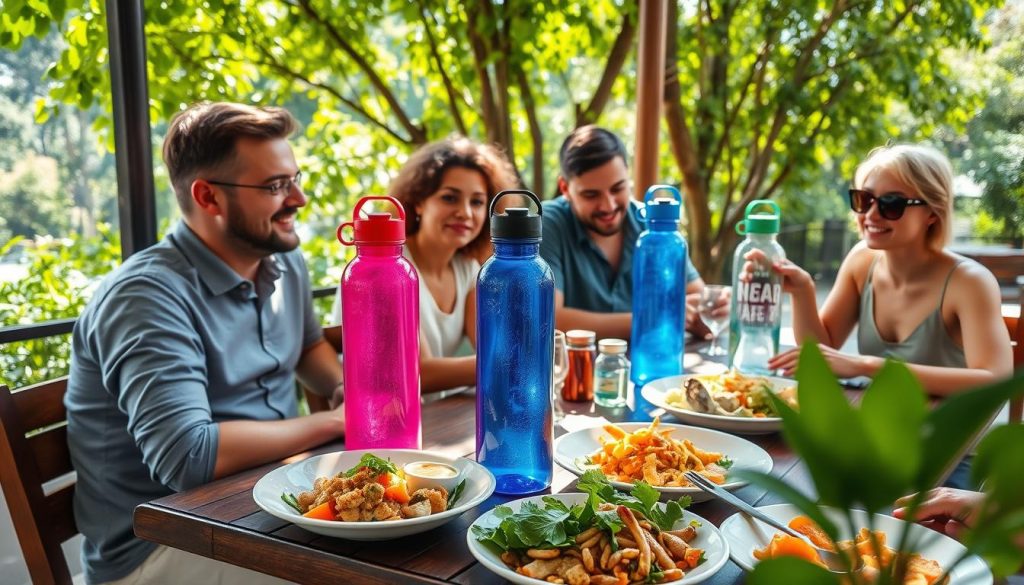
Traveling abroad? It’s key to drink lots of water. Not just for health but to keep your spending low. A refillable water bottle cuts costs on buying water every day. This way, you can save more for meals and fun activities while exploring.
Cost-Effective Hydration
A refillable water bottle saves you money when eating out abroad. Many places have safe tap water and free fountains to refill your bottle. This can keep your budget from inflating due to daily bottled water purchases.
| Expense | Daily Cost | Weekly Cost | Monthly Cost |
|---|---|---|---|
| Bottled Water (Purchased Daily) | $3.00 | $21.00 | $90.00 |
| Refillable Water Bottle | $0.00 | $0.00 | $0.00 |
Environmental Impact
A refillable bottle helps cut down on plastic waste. This is a big deal for travelers who care about the planet. Using less plastic supports global sustainability efforts. It’s a smart move for saving money and protecting the environment.
Refillable water bottles can save travelers a significant amount of money daily, as daily purchases of bottled water can accumulate quickly over time.
Using a refillable bottle is good for your budget and the earth. It makes travel more sustainable. A smart choice for both your wallet and our planet.
Skip the Soda to Reserve Budget for Meals
When you travel abroad, saving money on meals is a big deal. One simple trick is to not buy soda and other expensive drinks, especially where tourists go. Even though sodas seem cheap, their cost can quickly add up. This takes away money you could use to try local foods.
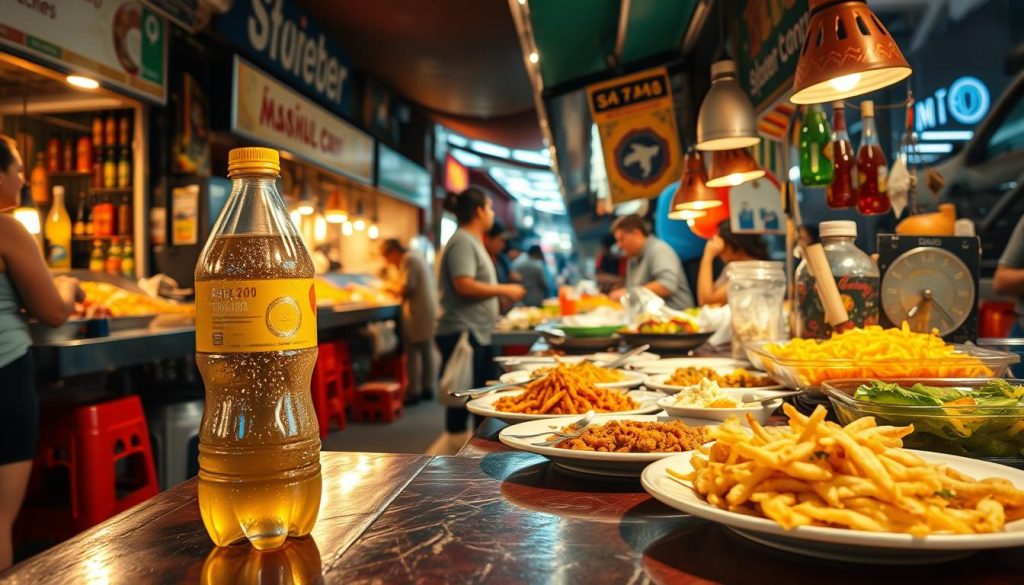
Eating places often mark up the prices of sodas and other drinks. For example, a convenience store snack might cost about 40 kroner, which is already a lot. When you add a soda, the price goes even higher. If you stick to water, you save money. Then, you can use that money to try varied and tasty local foods.
Many places offer free water stations so you can drink without buying bottles. This is a smart way to keep saving money when eating out. Plus, not drinking sugary sodas is better for your health. This means you have more energy to enjoy your trip.
Choosing water over soda saves you money and lets you taste the real local dishes. While trying a special local drink is nice once in a while, drinking water helps your money go further. This makes eating out while traveling more affordable and fun.
The difference in your budget shows when you see how prices go up in places full of tourists. For example, a water bottle might cost up to $10 at a convenience store. The money you save not buying these can go towards unique food experiences. These are what make your trip special.
In the end, avoiding sodas and costly drinks makes it easier to save money while eating out abroad. This careful choice lets you spend on what truly enhances your trip. This strategy makes your travel adventure both more affordable and enjoyable.
Tips for Staying on Budget While Dining Out Abroad
You don’t have to spend a lot when you eat out abroad. By researching and following local customs, affordable and tasty dining abroad is possible.
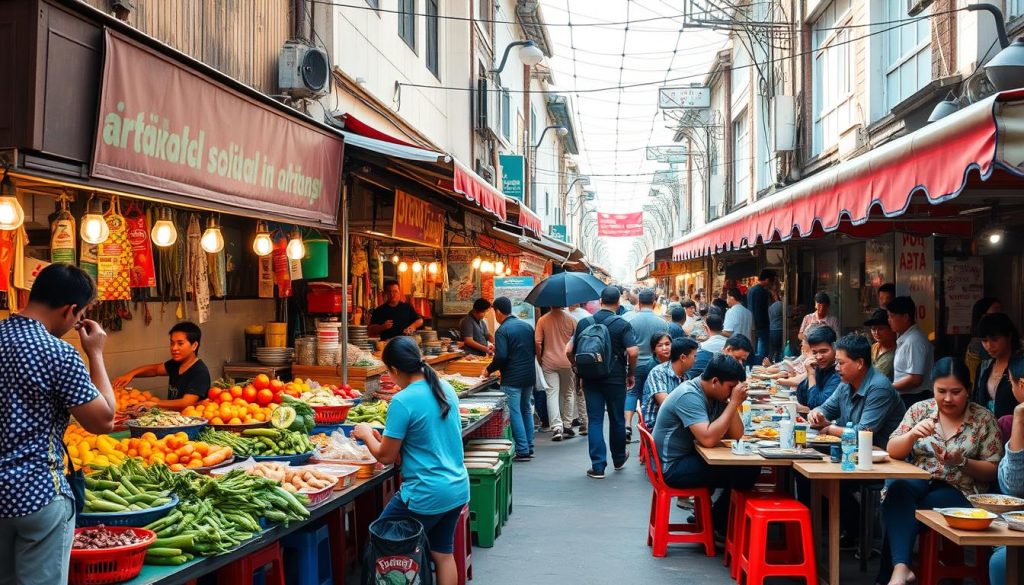
Research Before You Dine
Before eating out, research local places and prices. Use online resources, travel guides, and apps to find value-for-money restaurants. The price difference between places means research can save you money.
Also, look at reviews for quality meals. Local forums and social media can point you to affordable, delicious spots. This homework helps enjoy good food without spending too much.
For your research, consider:
- Online travel forums like TripAdvisor
- Restaurant review sites like Yelp
- Social media groups focused on budget travel
Eat Where the Locals Eat
Eating where locals eat is a great budget dining tip abroad. Local favorites are usually cheaper and more authentic. Following locals leads to better and cheaper dining experiences.
To find local dining spots:
- Look for busy places during meals
- Ask locals like hotel staff or shopkeepers for tips
- Explore areas away from tourist spots
Using these tips along with planning helps you enjoy affordable, authentic dining abroad. It makes your travel experience richer and memorable.
Adding homemade meals to your travel can save a lot. For example, spending about $200 on groceries in London the first week can make many meals. This lets you save more for dining out or local snacks.
Here’s how dining costs compare:
| Meal Type | Cost | Savings |
|---|---|---|
| Restaurant Meal | $30 | – |
| Grocery-prepared Meal | $10 | $20 |
| Local Street Food | $5 | $25 |
Utilize Farmer’s Markets for Fresh Produce
Farmer’s markets are a great way to find fresh, affordable meals on the go. They give you access to top-notch produce and help local farmers. Plus, they make your diet healthier.
Benefits of Farmer’s Markets
Farmer’s markets have many benefits, especially for affordable eating during travels. They offer local food which cuts down food miles. This means less carbon footprint from transporting food.
- Healthier Options: Fresh, seasonal produce meets your dietary needs naturally. Eating foods like watermelon or ginger in their season is good for your body.
- Economic Support: They bring big economic benefits too. For example, in 2012, farmer’s markets saw over $16 million in SNAP redemptions in the U.S.
- Community Connection: With over 8,000 markets, they connect rural and urban areas. This helps keep more money in local communities.
- Consumer Access: Accepting SNAP and WIC benefits at these markets means more people can buy fresh produce.
Plan Ahead
It’s key to know when the markets are open before visiting. This helps you plan your trip around getting the freshest ingredients. Local markets are also great for exploring traditional dishes that showcase a country’s culture. This adds a rich layer to your travel experience.
- Research Market Schedules: Find out when the markets are open to plan your visit.
- Prepare a Shopping List: List down what fruits, veggies, and other fresh goods you want.
- Budget Your Purchases: Plan your spending to enjoy a variety of fresh items without breaking the bank.
By smartly using farmer’s markets, you can enjoy fresh, affordable meals. This makes your travel adventures both exciting and budget-friendly.
| Benefits | Explanation |
|---|---|
| Healthier Options | Seasonal produce aligns with dietary needs according to climate |
| Economic Support | $16M in SNAP redemptions at markets in 2012 |
| Community Connection | Over 8,000 markets connecting rural and urban areas |
| Consumer Access | Increasing acceptance of SNAP and WIC benefits |
Conclusion
Finding your way through the world’s dining scenes without spending too much takes planning, local insight, and smart spending. You have learned about eating well on a budget across the globe in this article. From enjoying local street eats to using tourism cards for discounts, you have many ways to save money.
Eating out on a budget is more than saving money. It’s about experiencing local traditions and tastes. By shopping at local markets, using hostel kitchens, and choosing lunch deals, you can dive into local life affordably. Eating at local markets or trying street food offers unforgettable experiences for less money.
Managing your budget is not just about food. Picking places with free breakfast, avoiding expensive tourist spots, and having a budget for souvenirs helps balance your finances. Knowing the real cost of meals, like in Peru or Eastern Europe, shows the benefits of self-catering. These tips help you enjoy your travels more, keeping spending in check while still having great dining experiences.