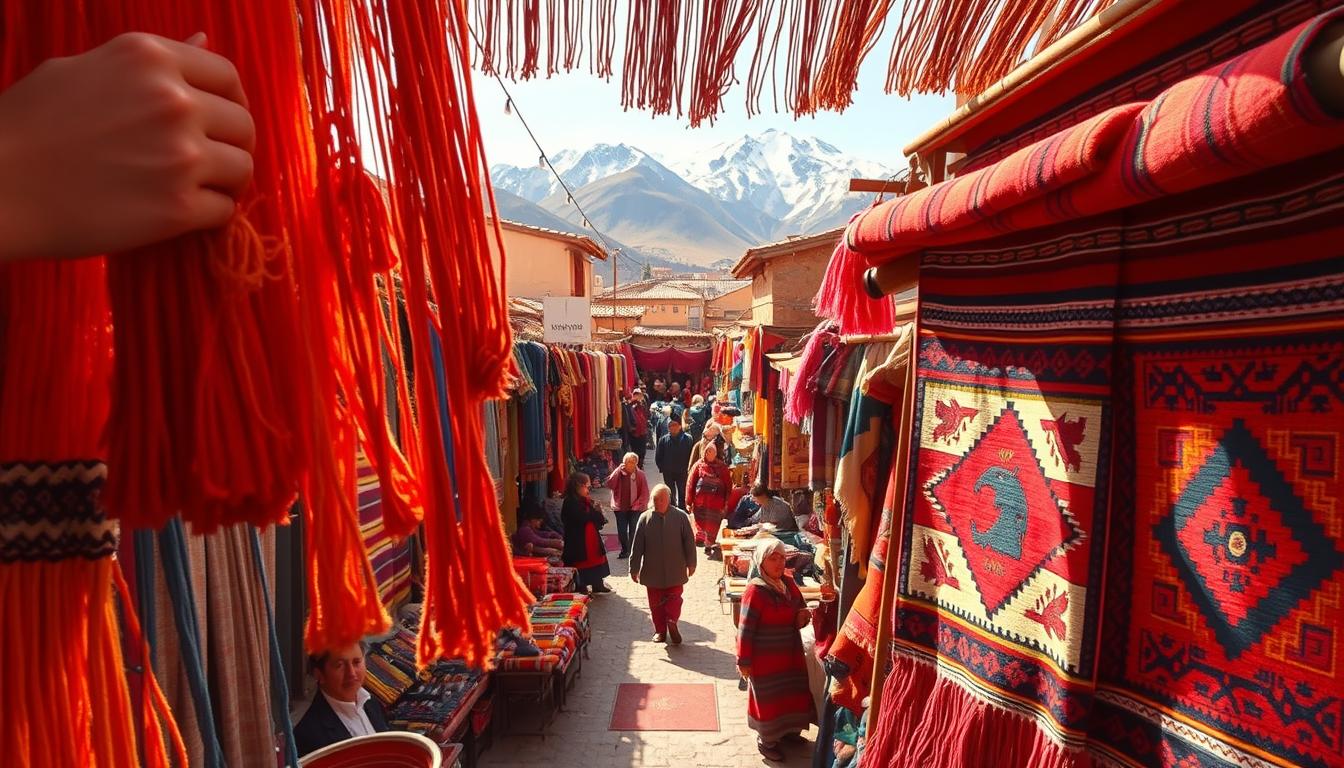
Explore the Vibrant Andean Textiles in Cusco, Peru
What makes Andean textiles from Cusco, Peru, so special? It’s their rich history and cultural value. These fabrics have been woven for centuries, starting with the Inca Empire. Over time, they’ve kept their cultural identity while adopting new materials and techniques.
Andean textiles in Cusco are known for their bright colors and detailed patterns. They show the daily life and traditions of the people who make them. Each textile has its own story, from the materials used to the natural dyes and symbols.
Learning about Peruvian textile art helps us see its importance. It shows us why we must keep traditional techniques alive. Supporting local communities is key to preserving these traditions.
The Rich Heritage of Andean Textiles Cusco
Exploring Andean textiles reveals a deep cultural heritage. These handwoven textiles showcase the Andean people’s ingenuity and skill. Each piece has its own story, rooted in the region’s history.
Natural fibers like alpaca and vicuña are key in Andean textiles. These fibers are strong and versatile, holding a special cultural value. The use of symbolic motifs and colors adds depth to each piece, making them unique and valuable.
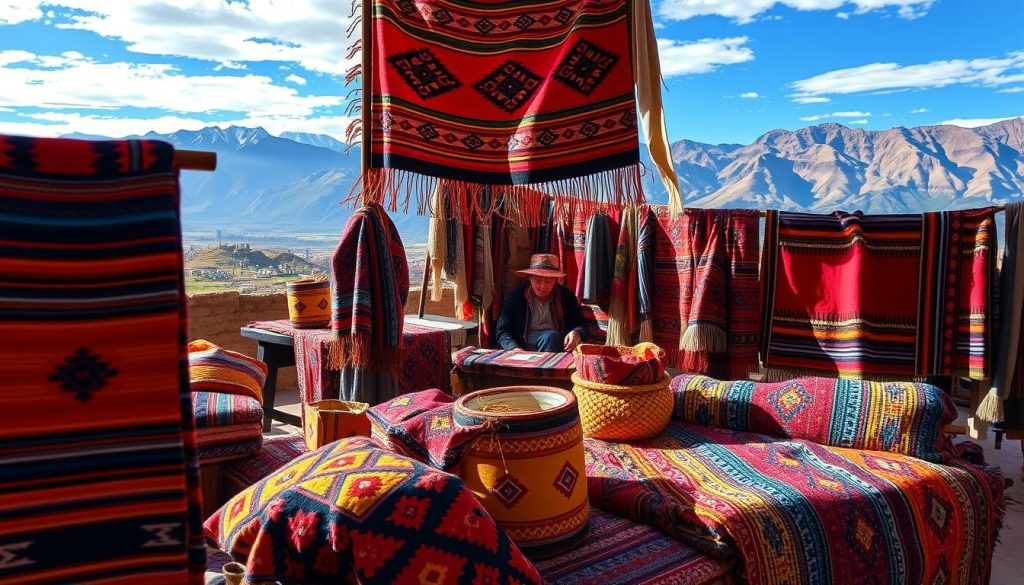
- Traditional weaving techniques, such as backstrap loom weaving
- The use of natural dyes, such as cochinilla and chincheros flower
- Symbols and motifs that reflect the cultural significance of Andean textiles
These elements combine to create textiles that are both beautiful and rich in tradition.
Learning about Andean textiles helps us understand their cultural importance. These traditional techniques are a treasure that needs our appreciation and protection. By supporting sustainable textile practices, we help preserve this rich heritage for the future.
Traditional Materials Used in Andean Weaving
Exploring Andean textiles reveals the importance of indigenous Andean fabrics and natural dyeing. These materials have been used for centuries. They create unique, colorful textiles that show the Andean people’s cultural heritage.
Harvesting and processing natural fibers like alpaca and vicuña is key. Natural dyeing methods are also vital. They give a range of colors and shades for intricate patterns and designs. Natural pigments like indigo, lichen, and cochineal are used.
Here are some key facts about traditional Andean textiles:
- Native fibers, such as alpaca, llama, and vicuña wool, have been staples in Andean textile production since pre-Incan times.
- The process of traditional dyeing utilizes a wide variety of natural pigments.
- The average thread count for Inca standard cloth (awaska) is approximately 120 threads per inch.

Understanding traditional materials and techniques helps us appreciate indigenous Andean fabrics. We also see the beauty of natural dyeing methods used to create them.
Understanding Traditional Weaving Techniques
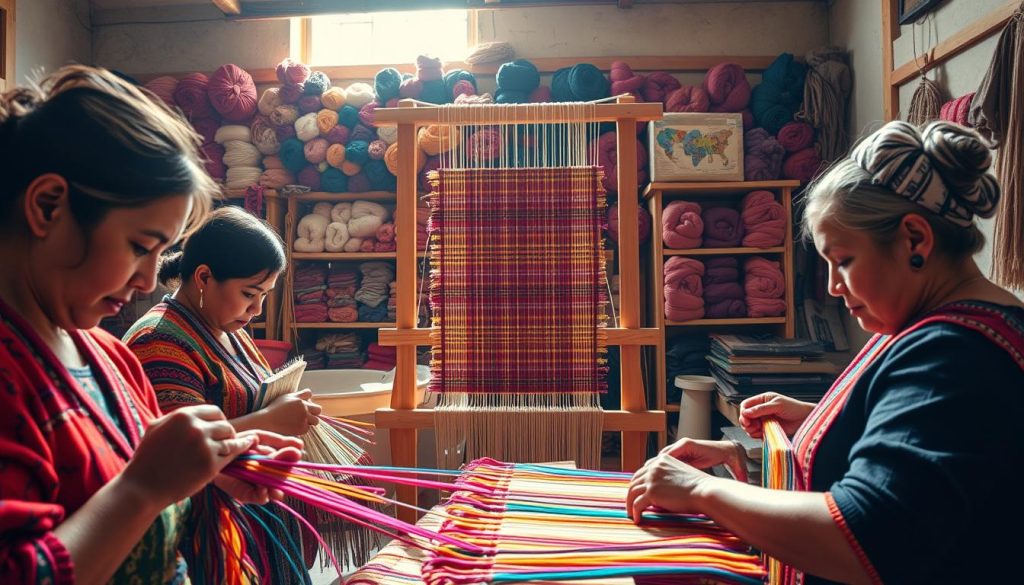
Exploring Andean textiles reveals the importance of traditional weaving. These methods, passed down through generations, keep cultural heritage alive. Techniques like backstrap loom weaving are key to making textiles that are both useful and beautiful.
Natural fibers like alpaca and sheep’s wool are central to Andean weaving. The process of washing and spinning these fibers into yarn is time-consuming but vital. The addition of symbolic motifs and patterns, often inspired by the landscape, gives these textiles deeper meaning.
- Use of natural dyes, such as plants and insects, to create a range of colors
- Employment of traditional tools, such as the backstrap loom, to weave textiles
- Incorporation of symbolic motifs and patterns, often reflecting the local culture and environment
These techniques are vital for preserving cultural heritage. They also support sustainable textile practices. This ensures that making handwoven textiles has little environmental impact.
Natural Dyeing Processes and Color Symbolism
Exploring Andean textiles reveals the importance of natural dyeing. These vibrant fabrics come from plants, minerals, and insects. For instance, cochineal, a scale insect, is used to create a range of colors from red to purple.
Natural dyeing is an art that connects us to nature and community. Materials like Chapi plant bark are used to make orange and coral shades. Even fermented urine is used to fix colors, showing the creativity in dyeing.
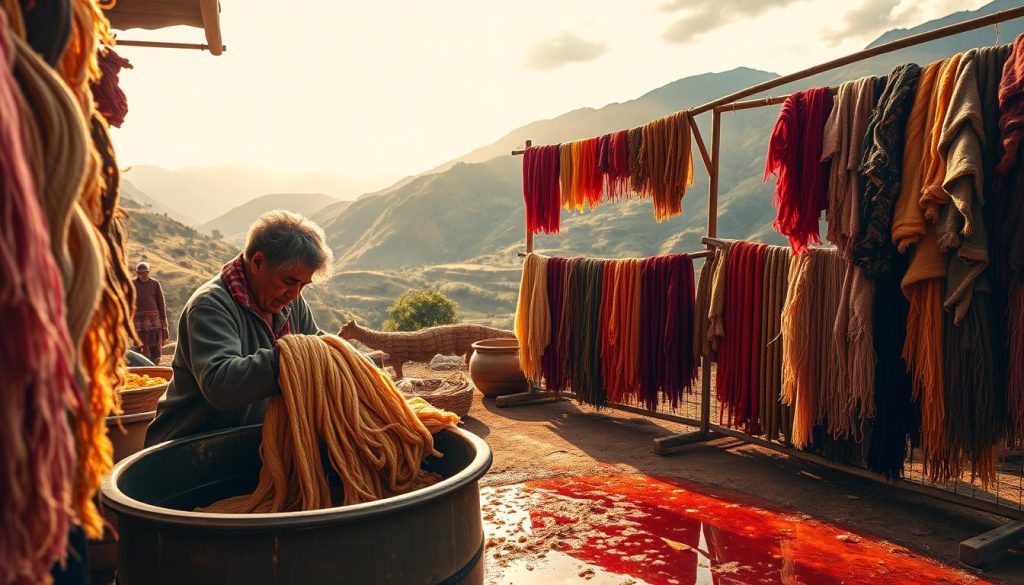
Plants like Ch’illca are used for green dye, boiled with collpa for an hour. The colors and patterns not only look good but also hold deep meanings. Natural dyes are good for the environment, unlike synthetic ones.
Symbolic Patterns and Their Meanings
Exploring Andean textiles reveals a world of symbolic patterns and meanings. These textiles hold deep cultural significance, passed down through generations. They are known for their intricate designs, vibrant colors, and traditional techniques.
Symbolic motifs in Andean textiles communicate important messages. For example, the Umasbamba weaving community uses diamond patterns. Red and white circles represent the footprints of bulls used for plowing.
Some common motifs include:
- Diamonds, representing the Umasbamba community
- Red and white circles, symbolizing bull footprints
- Yellow ‘S’ shapes, representing the chira, an agricultural tool
- Black figures, symbolizing birds that alert farmers to foxes
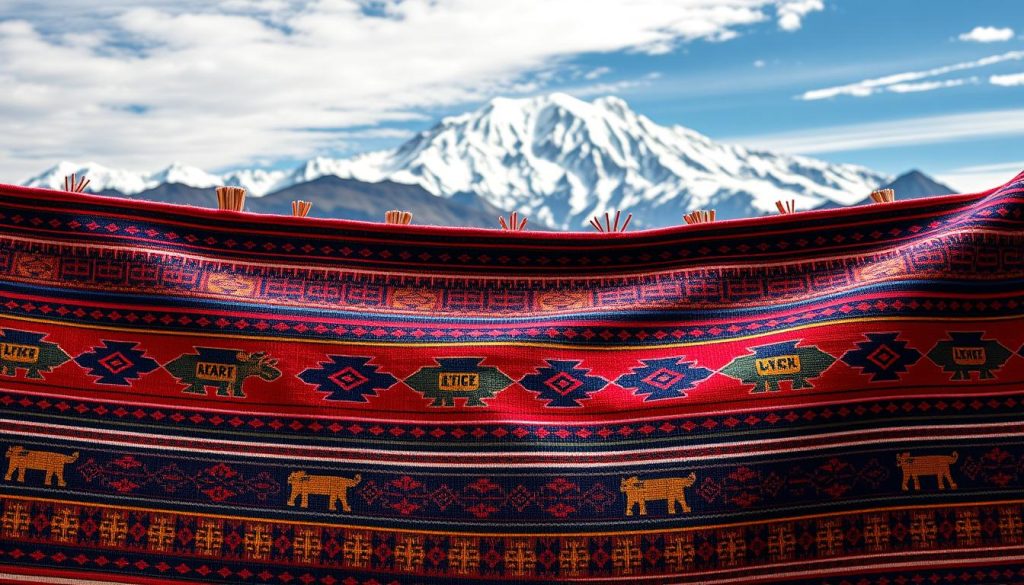
The use of these patterns shows the cultural importance of Andean textiles. It highlights the need to preserve traditional techniques and designs. Exploring Andean textiles deepens our appreciation for their craftsmanship, cultural heritage, and natural beauty.
Where to Find Authentic Andean Textiles in Cusco
As you explore Cusco, you’ll find authentic Andean textiles. These pieces show the region’s rich Andean textile craftsmanship. Visit the Cusco textile markets to see local artisans’ handwoven textiles.
The Centro de Textiles Tradicionales del Cusco (CTTC) is a great place to start. It works with ten weaving communities in Cusco. The CTTC supports indigenous weavers and their traditions, operating on fair-trade principles.
Here are some tips for buying Andean textiles:
- Choose handwoven textiles from natural fibers like alpaca or sheep wool.
- Look for natural dyes to see the vibrant colors and patterns of Andean textiles.
- Support local artisans and fair-trade organizations like the CTTC. This ensures your purchase helps preserve Andean textile traditions.
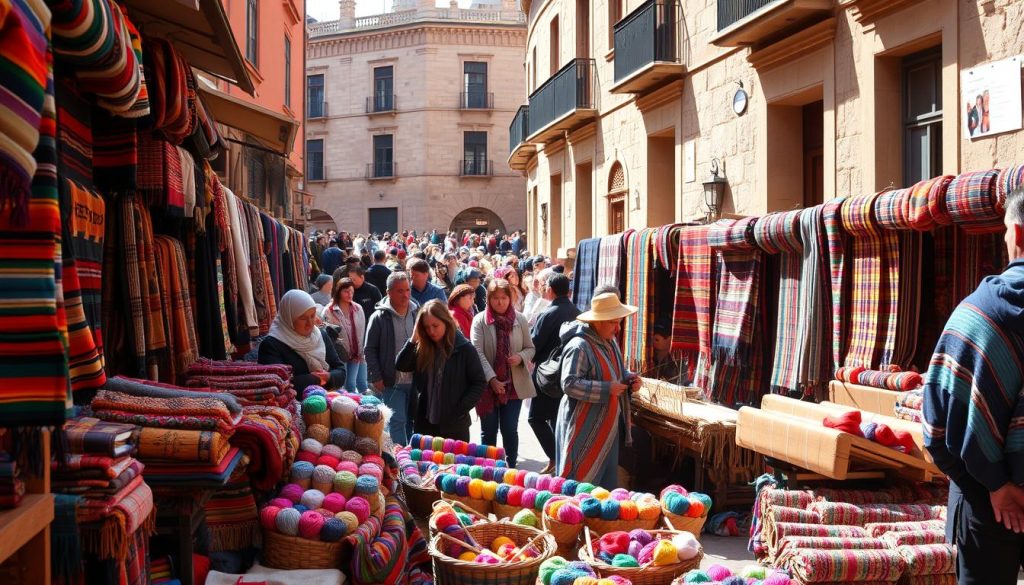
Buying authentic Andean textiles from Cusco textile markets or fair-trade groups is rewarding. You’ll get a unique piece of Andean textile craftsmanship. Plus, you’ll support local communities that have kept these traditions alive for centuries.
| Organization | Location | Focus |
|---|---|---|
| Centro de Textiles Tradicionales del Cusco (CTTC) | Cusco, Peru | Preserving traditional Andean textile craftsmanship and supporting local weavers |
| Threads of Peru | Cusco, Peru | Reinvesting profits into community projects and promoting fair trade practices |
The Art of Identifying Quality Textiles
Finding quality in Andean textiles from Cusco is an art. It needs careful attention and a deep understanding of sustainable practices. Look for handwoven items that use traditional methods and natural materials. High-quality Andean textiles often feature wool and cotton.
Quality textiles have weft counts from 250 to over 500 per inch. Some pieces even go beyond this. Natural dyes and traditional patterns are also key. Supporting sustainable practices helps keep cultural heritage alive and promotes green production.
- Traditional techniques, such as backstrap loom weaving
- Natural materials and dyes
- Symbolic motifs and patterns
- Thread count and weave quality
By focusing on these aspects, you can enjoy the beauty of handwoven textiles. You also support a greener approach to making textiles.
Supporting Sustainable Textile Practices
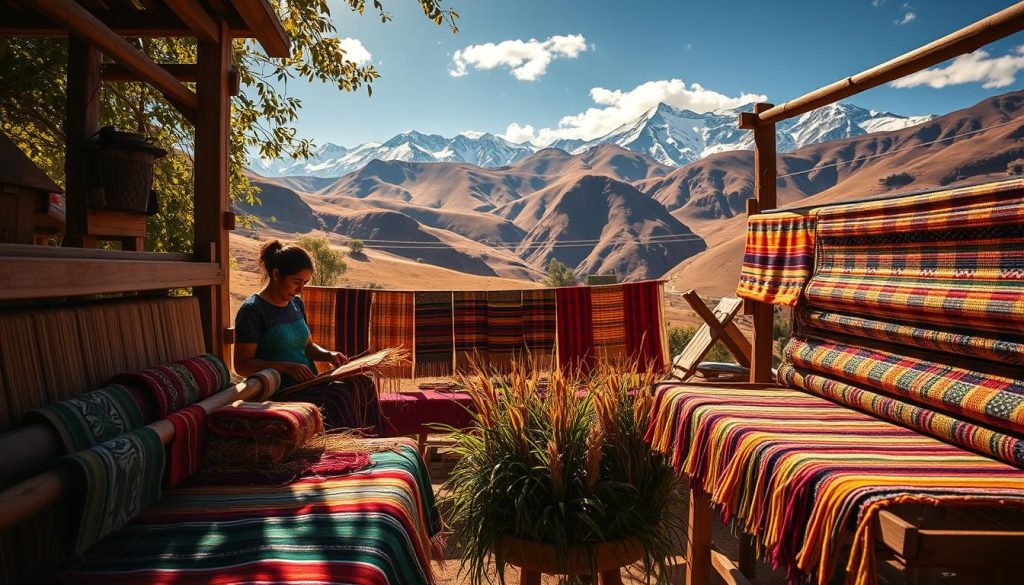
Exploring Andean textiles in Cusco opens up a world of culture and sustainability. It’s key to understand the cultural value of these textiles and the need for sustainable practices. This helps keep traditions alive and protects our planet.
Supporting sustainable textiles means helping local artisans and preserving their skills. Natural dyes and eco-friendly materials are at the heart of this effort. They make sure the making of textiles doesn’t harm the environment.
Fair Trade Initiatives
Fair trade is essential for sustainable textiles. It makes sure artisans get paid fairly for their work. This boosts local economies and supports communities.
Environmental Considerations
Thinking about the environment is crucial in sustainable textiles. Using natural materials like alpaca wool and adopting low-impact methods cuts down on pollution.
Community Impact
The impact on communities from sustainable textiles is huge. Supporting local artisans and fair trade helps keep traditions alive. It also helps communities financially.
Some main advantages of sustainable textiles are:
- Preserving cultural heritage
- Lowering environmental harm
- Boosting local economies and communities
- Supporting fair trade
Modern Applications of Traditional Techniques
Exploring Andean textiles reveals how old techniques meet new materials. This mix creates unique, sustainable products. It keeps traditional methods alive while embracing modern tech.
Natural fibers like alpaca and wool are making a comeback. They’re sustainable and add warmth and texture. Natural dyeing techniques bring out colors from earthy tones to bright hues. This method is good for the planet and supports local communities.
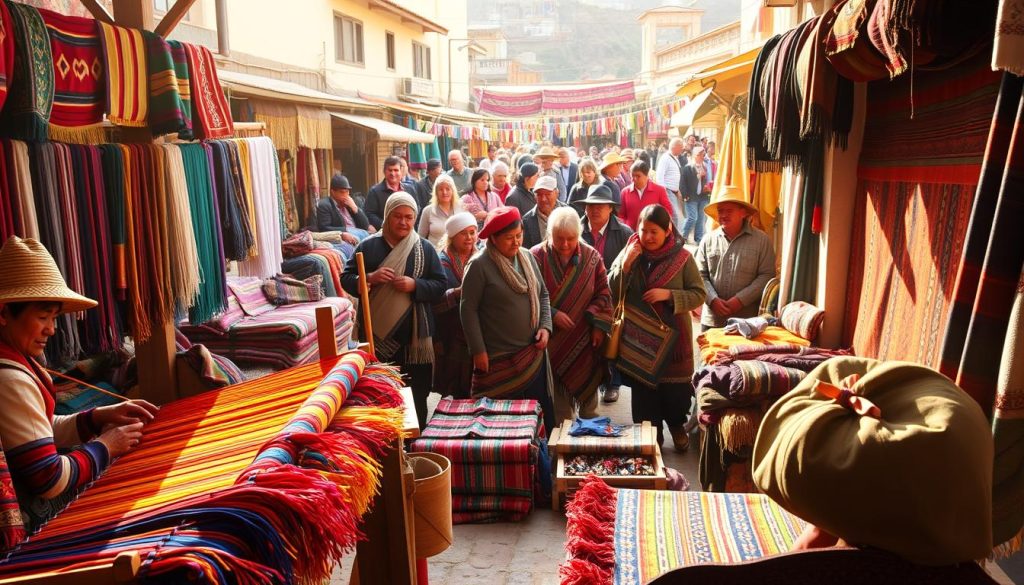
Artisans use old weaving methods, like the backstrap loom, for new textiles. The pallay design, inspired by nature, tells cultural stories. This blend of old and new makes innovative, eco-friendly products.
Discovering Andean textiles shows how tradition meets modernity. From handwoven items to natural dyes, the possibilities are endless. Supporting these practices helps preserve traditional knowledge and promotes green textile production.
Learning Opportunities for Visitors
Exploring Andean textiles in Cusco can be fascinating. You might want to learn about their cultural importance and the traditional fabrics. Joining a weaving workshop is a great way to do this. You’ll learn the old techniques and designs that have been passed down for ages.
Workshops let you see the cultural value of Andean textiles up close. You’ll also learn how to keep these traditions alive. Cultural exchange programs are another option. They let you meet local artisans and understand their lives and customs.
Some top learning spots for visitors include:
- Weaving workshops, where you can learn traditional techniques and designs
- Cultural exchange programs, which allow you to connect with local artisans and learn about their daily lives and traditions
- Museum collections, which showcase the rich history and cultural significance of Andean textiles Cusco
By taking part in these activities, you’ll understand the cultural value of Andean textiles better. You’ll also support sustainable tourism and help keep these traditions alive for the future.
Preserving Andean Textile Heritage
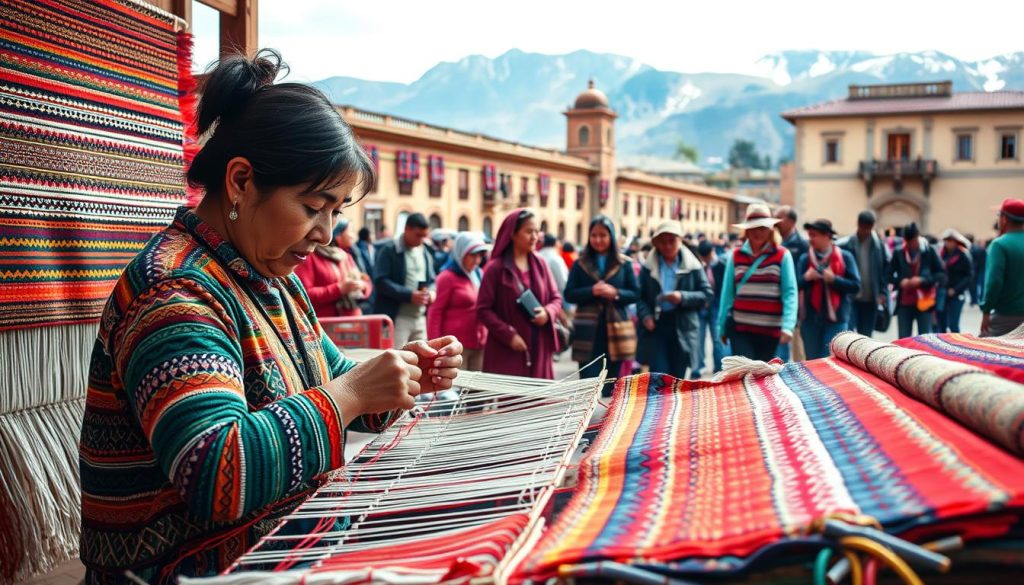
The cultural value of Andean textiles is clear, and keeping this heritage alive is key. Andean textile art is a big part of the area’s identity. It’s important to use sustainable methods to keep this tradition going. The Centro de Textiles Tradicionales del Cusco (CTTC) has been working on this since 1996.
By helping local weavers and teaching traditional methods, the CTTC ensures Andean textile art lives on. This effort not only keeps the cultural value of Andean textiles alive but also supports sustainable practices. Learning about preserving Andean textile heritage shows us the importance of traditional weaving techniques in keeping the region’s culture strong.
- Supporting local weaving communities through education and training
- Promoting traditional techniques and sustainable textile practices
- Encouraging cultural exchange and community involvement
These actions help keep the cultural importance of Andean textiles alive. They also make sure Andean textile craftsmanship continues.
Conclusion: Embracing the Living Art of Andean Textiles
The world of Andean textiles in Cusco, Peru, is alive with culture. It shows the deep history of Inca weaving and the new ways of using old designs. These handcrafted textiles amaze and inspire everyone who sees them.
Andean textiles are more than just pretty things. They tell stories, keep traditions alive, and help communities grow. By supporting the Andean textile artisans in Cusco, you help keep these traditions going. This connects the old with the new.
When you visit Cusco’s markets, workshops, and weaving centers, dive into the world of handwoven textiles. Look at the detailed patterns and the amazing skills used. Feel the stories and history in every thread. By loving the beauty and importance of Andean textiles, you help keep this part of Peruvian culture alive.