

Flying vs. Train for Long-Distance Travel: Which Is Better?
For trips under 300 miles, the train usually wins on total door-to-door time and often on cost. For distances above 500 miles, flying is almost always faster, though it comes with higher price variability and more pre-travel friction. The right answer depends on your route, flexibility, and how much you value your time at the station versus time in an airport security line.
When flying beats the train
Flying has a clear advantage on distance. A cross-country US flight from New York to Los Angeles takes about 5.5 hours in the air, while Amtrak’s Sunset Limited or California Zephyr routes cover the same journey in 65 to 80 hours over multiple days. For transatlantic and intercontinental travel, flying is the only practical option. Flying also opens up destinations with no rail access: most of the Caribbean, much of Southeast Asia, and hundreds of smaller US cities served by regional airports but no passenger rail.
Cost is more complicated. Domestic flights in the US can be bought for as little as $50-$150 one-way with low-cost carriers, which undercuts Amtrak on many routes. However, those fares rarely include checked baggage, and airline pricing is volatile. Booking 3 to 4 weeks out typically gives the best balance of availability and price for air travel.

When the train beats flying
On routes under 400 miles, especially in the US Northeast Corridor and in Europe, the train regularly beats flying on total door-to-door time. Consider New York to Washington DC: the Amtrak Acela covers it in about 2 hours and 45 minutes, departing from Manhattan’s Penn Station and arriving at Union Station in the heart of DC. A flight is only 1 hour and 15 minutes in the air, but factor in arriving at JFK or LaGuardia 90 minutes before departure, clearing security, waiting at the gate, landing at DCA, and reaching central DC, and the total trip runs 4 to 5 hours.
Cost also favors the train on short routes. An Amtrak Regional ticket on the NYC-to-DC corridor runs approximately $50 to $150 depending on advance booking, while last-minute flights on that route routinely exceed $200 to $300. Train tickets also include all luggage with no additional fees.
Comfort is another train advantage. Even standard coach class on Amtrak offers 34 to 38 inches of legroom, the ability to walk to a dining car, and power outlets at most seats. Economy seats on domestic US flights average 28 to 31 inches of legroom, with no ability to move during the flight.

Key US routes: train vs. plane comparison
The US Northeast Corridor and a handful of other Amtrak routes are where rail travel is genuinely competitive with flying.
New York to Boston: Amtrak takes roughly 3 hours and 30 minutes on the Acela, with fares from $50 one-way booked in advance. A flight is about 1 hour 20 minutes in the air, but when you include airport time, you’re looking at 3.5 to 4.5 hours door-to-door. Cost is similar. The train wins on convenience.
New York to Washington DC: Amtrak Acela runs 2 hours 45 minutes, Amtrak Regional about 3 hours 30 minutes. Fares start from $50 on Regional and $80 on Acela. Flying is 4 to 5 hours door-to-door and roughly $100 to $250 one-way. Train wins clearly on time and is competitive on price.
Chicago to St. Louis: Amtrak’s Lincoln Service covers the route in about 5 hours 30 minutes for $20 to $60. A flight takes 1 hour 15 minutes in the air but 3.5 to 4 hours door-to-door, with fares from $80 to $200. Train wins on price; flight wins on time.
Chicago to Minneapolis: Amtrak’s Empire Builder takes about 8 hours. Flights cover it in under 1.5 hours in the air (2.5 to 3.5 hours door-to-door) for $60 to $150. Flying wins on time; train still competitive on price and comfort.
European routes: where high-speed rail dominates
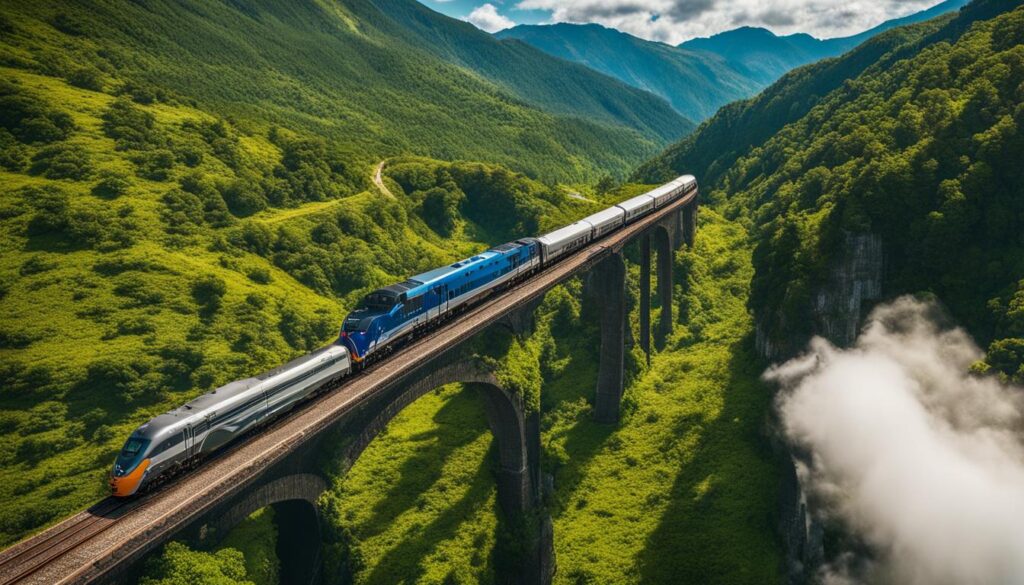
In Europe, high-speed rail is significantly more competitive than US Amtrak, making the train the default choice on many popular routes. Madrid to Barcelona is a clear example: the Renfe AVE covers the 620 km route in about 2 hours 30 minutes for roughly €40 to €100, while flying takes approximately 2 hours 45 minutes door-to-door and costs €80 to €220 once airport transfers are included. The train wins on both time and price.
Paris to London via Eurostar takes about 2 hours 15 minutes under the Channel, with fares from £39 one-way booked in advance. Flying between the two cities, including Charles de Gaulle and Heathrow transfers, typically runs 4 to 5 hours total. The Eurostar wins on time and is often cheaper. Paris to Lyon on TGV takes under 2 hours for €30 to €90; flying the same route makes no practical sense once airport overhead is factored in.
Cost and time comparison at a glance
| Route | Train time | Train cost (USD approx.) | Flying door-to-door | Flying cost (USD approx.) | Winner |
|---|---|---|---|---|---|
| NYC to Washington DC | 2h 45m (Acela) | $50 to $150 | 4 to 5 hours | $100 to $250 | Train |
| NYC to Boston | 3h 30m | $50 to $120 | 3.5 to 4.5 hours | $80 to $200 | Train |
| Chicago to St. Louis | 5h 30m | $20 to $60 | 3.5 to 4 hours | $80 to $200 | Tie/depends on priority |
| NYC to Los Angeles | 65+ hours | $100 to $500+ | 8 to 10 hours | $100 to $400 | Fly |
| Madrid to Barcelona | 2h 30m (AVE) | $45 to $110 | 2h 45m door-to-door | $90 to $240 | Train |
| Paris to London | 2h 15m (Eurostar) | $45 to $150 | 4 to 5 hours | $100 to $300 | Train |

Flexibility and booking
Train tickets in the US and Europe are generally easier to change than airline tickets. Amtrak allows free changes on most fares up to the day of departure (with some restrictions on sale fares), while airlines typically charge $75 to $200 for ticket changes. Walk-up pricing on trains is also more predictable than airline dynamic pricing, which can spike dramatically as the departure date approaches.
That said, trains have fixed routes and are not available everywhere. If your destination is not on a rail line, the train is not an option. Domestic US rail coverage is significantly thinner than Europe, covering major corridors but leaving most of the South and Mountain West without practical train service.
Environmental impact: brief overview
Train travel produces significantly less CO2 per passenger-kilometer than flying, primarily because trains run on electricity rather than jet fuel. Trains emit roughly 41 grams of CO2 per passenger-kilometer versus 130 to 285 grams for short and medium-haul flights. For a detailed breakdown of carbon emissions by route and transport mode, see the companion article on flying vs train for sustainability and the environment.
Where to stay at major US rail hubs
Most competitive train-vs-flight routes in the US operate through a handful of major Amtrak hubs, all of which have strong hotel options within walking distance of the station.
Near New York Penn Station, The New Yorker A Wyndham Hotel on Eighth Avenue is a well-known landmark option with rooms starting from approximately $130 to $250 per night as of 2026. Washington DC’s Union Station is surrounded by accommodation; the Phoenix Park Hotel on Massachusetts Avenue NE, about a 5-minute walk from the station, runs approximately $150 to $280 per night. In Chicago, the Renaissance Chicago Downtown Hotel on Wacker Drive is around 10 minutes on foot from Union Station with rates starting around $180 per night. In Los Angeles, the Millennium Biltmore Hotel near Union Station offers rooms from approximately $170 per night.
Frequently asked questions
Is taking the train cheaper than flying in the US?
On short to mid-range routes, the train is often cheaper than flying, especially when you factor in airline baggage fees and airport transport costs. On the Northeast Corridor, Amtrak Regional tickets from New York to DC start around $50, while comparable last-minute flights frequently run $150 to $250. On long-haul US routes, airlines are often cheaper because low-cost carriers have no rail competition on those distances.
At what distance does flying become faster than taking the train?
Door-to-door, flying typically becomes faster than train travel at distances above roughly 400 to 500 miles in the US, when airport overhead (2 to 3 hours before and after the flight) no longer offsets the flight time advantage. On high-speed rail routes in Europe, that crossover point extends to 600 to 800 km because trains are faster and city-center stations reduce transfer time.
Is Amtrak comfortable compared to flying economy?
Amtrak coach class offers more space than domestic US airline economy seats. Amtrak seats average 34 to 38 inches of legroom compared to 28 to 31 inches on most domestic airlines. Amtrak passengers can also walk to a dining or lounge car, which is not possible on a flight. Amtrak’s long-distance routes offer sleeping car options with private roomettes starting from around $150 to $300 per person per night.
Can you take the train instead of flying to Europe?
Within Europe, trains are a practical and often superior alternative to short-haul European flights. Routes like Paris to London (Eurostar), Madrid to Barcelona (Renfe AVE), and Paris to Lyon (TGV) are all faster or equally fast by train once airport transfers are included. For travel from North America to Europe or within very long European distances, flying remains the only practical option.
Is there an Amtrak rule about the 750-mile limit?
Amtrak’s informal guidance suggests trains are most competitive for distances under roughly 700 to 750 miles. Beyond that distance, the time advantage of flying typically outweighs the comfort and cost benefits of rail travel in the US context. This is not a hard rule but rather a practical threshold used by travel planners when evaluating mode choice.
Which is better for fear of flying: train or plane?
For travelers with a fear of flying, train travel is a practical alternative on any route where rail is available. Long-distance Amtrak routes like the Coast Starlight (Los Angeles to Seattle) and the Empire Builder (Chicago to Seattle) take 35 to 46 hours but are available for a fraction of air cost in coach class. Overnight sleeper tickets make the long travel time manageable.


