

Travel Tips: Is it Safe to Drink Tap Water While Traveling?
Are you planning a trip soon and wondering whether it’s safe to drink tap water while traveling? The answer is not always straightforward, as water safety standards vary across different countries and regions. But one thing is for sure: prioritizing safe drinking water is crucial for staying healthy and hydrated on your travels.
In this article, we will delve into the safety of drinking tap water while traveling, explore the risks associated with water contamination, and provide essential tips for ensuring safe and healthy hydration on the go. So let’s get started!
The Importance of Safe Drinking Water While Traveling
When traveling, it is vital to prioritize safe drinking water to avoid waterborne illnesses and dehydration. Drinking contaminated tap water can lead to severe health issues, including diarrhea, vomiting, and more. Therefore, it’s essential to assess the water quality of your destination before consuming tap water.
Tap water safety standards vary across different countries. While some regions have high-quality tap water, others may pose significant health risks to travelers. For example, in countries with poor tap water safety standards, it’s best to avoid drinking tap water altogether and opt for bottled or packaged drinking water.
Additionally, traveling can cause dehydration due to long flights, walking tours, or activities in hot climates. Therefore, it’s crucial to drink enough water to stay hydrated. By carrying a reusable water bottle and regularly seeking out safe drinking water sources, you can meet your body’s hydration needs and avoid dehydration.
Whether you’re traveling abroad or domestically, it’s essential to understand the potential risks associated with tap water and prioritize safe drinking water. In the following sections, we will delve deeper into understanding water contamination risks, evaluating tap water safety around the world, and practical precautions for drinking water safety while traveling.
Understanding Water Contamination Risks
When traveling, it’s essential to be aware of potential water contamination risks in different regions and countries. Whether you’re exploring rural areas or vibrant cities, contaminated water sources can cause serious illnesses. Therefore, it’s crucial to take necessary precautions and ensure that you have a reliable supply of safe drinking water.
The most common sources of water contamination include:
| Source | Contaminants |
|---|---|
| Rivers and Lakes | Bacteria, viruses, parasites, pesticides, industrial pollutants |
| Groundwater | Arsenic, lead, fluoride, nitrate, sewage, industrial waste |
| Public taps and fountains | Chemicals, bacteria, viruses |
| Swimming pools and hot tubs | Bacteria, viruses, parasites, chemicals |
To ensure safe drinking water while traveling, you have several options. One of the most effective ways is to use water purification methods such as boiling, chemical treatment, or filtration. Investing in reliable water filters, like a portable water bottle with a built-in filter, can protect you from waterborne diseases. Additionally, opting for bottled water or packaged drinking water from trusted sources is generally a safe option. When purchasing bottled water, always check the seal and expiration date to ensure it’s safe to drink.
Overall, being conscious of water contamination risks, taking necessary precautions, and exploring safe water options are essential steps to maintain good health and well-being while traveling.

Evaluating Tap Water Safety Around the World
Tap water safety standards can vary significantly among different countries, and it’s essential to evaluate the quality of local tap water before consuming it directly. Even in regions where tap water is considered safe, natural disasters and other unforeseen events can lead to changes in water quality. Here are some guidelines to help you assess tap water safety while traveling:
Research Tap Water Quality
Researching tap water quality in your destination before you arrive is essential. You can check government websites or consult a travel guide to get information on local water sources and potential water contamination risks. You can also seek advice from the hotel staff or locals to learn more about the quality of the tap water.
Use Water Testing Kits
You can use water testing kits to check the quality of tap water in your destination. Water testing kits are readily available online or at stores that sell camping gear. The kit will provide you with information about the amount of harmful bacteria, viruses, or contaminants present in the tap water.
Boil or Filter Tap Water
If you’re unsure about the quality of tap water in your destination, it’s best to boil the water before consuming it directly. If boiling is not an option, you can use portable water filters to purify tap water before drinking it. Portable water filters are available online or at camping gear stores.

Tip: If you plan on visiting a destination for an extended period, consider investing in a water filter or purifier to use throughout your stay.
Buy Bottled Water
Buying bottled water is a safe alternative to tap water if you’re unsure about its safety. When purchasing bottled water, look for reputable brands and check the packaging for signs of tampering or damage.
Seek Safe Water Sources
If you’re traveling to a remote area that doesn’t have access to safe drinking water, consider seeking natural water sources such as springs, rivers, or lakes. It’s essential to research and evaluate the quality of these sources before consumption.
By following these guidelines, you can ensure safe drinking water while traveling, protecting your health and well-being.
Precautions for Drinking Tap Water While Traveling
As tap water safety standards vary by country, it is crucial to take specific precautions while consuming tap water on your travels to avoid waterborne illnesses and potential health risks. Some practical steps to ensure safe drinking water include:
- Using water filters: Consider investing in a portable water filter to purify tap water on the go. Look for filters that remove bacteria, viruses, and protozoa, and follow the manufacturer’s instructions for use.
- Boiling water: Boiling water for at least one minute can kill most bacteria and viruses, making it a safe drinking option. Ensure that the water has been heated for the recommended time, and let it cool before consumption.
- Opting for bottled water: If possible, choose bottled water from a reputable brand to minimize health risks. Look for water that is labeled as purified, distilled, or spring water, and ensure the seal remains intact before opening the bottle.
By following these precautions, you can minimize your risk of waterborne illnesses and ensure safe hydration during your travels.
Tips for Staying Hydrated on Your Travels
When traveling, maintaining adequate hydration levels is crucial for your overall well-being. Follow these tips to keep yourself hydrated safely:
- Carry a reusable water bottle: Keeping a reusable water bottle with you can help you stay hydrated whenever you need it. Make sure to fill it up with safe drinking water before heading out.
- Seek safe water sources: When exploring new destinations, take the time to find safe water sources. Research safe drinking water options in the area, such as water fountains or filtered refill stations.
- Monitor your water intake: It’s essential to ensure you’re drinking enough water throughout the day, especially in hot and humid climates. Keep track of your water intake to avoid becoming dehydrated.
By following these simple tips, you can ensure you’re getting the safe drinking water you need to stay healthy and hydrated during your travels.

Local Water Sources and Alternatives
When traveling to new destinations, it’s tempting to try the local tap water as a way to experience the region’s unique flavors. However, tap water safety can vary significantly across different locations, and consuming contaminated water can lead to serious health consequences. To avoid waterborne illnesses while still enjoying safe and refreshing hydration, it’s essential to explore alternative water options.
One of the most readily available safe water options for travelers is packaged drinking water. Many grocery stores and convenience shops stock bottled water, making it easy to quench your thirst on the go. However, it’s important to check the sealing of the bottle before purchasing to ensure that it hasn’t been tampered with. Another safe drinking water option is purified water, which has undergone a filtration process to remove contaminants. Some destinations also offer boxed water, which is sustainable and eco-friendly, making it a great choice for responsible travelers.
When exploring new locations, it might also be worth researching local water purification methods. For example, some regions use ceramic filters or iodine tablets to purify water, which can offer an authentic experience while still ensuring water safety. However, it’s always important to verify the effectiveness of these methods and take necessary precautions, such as boiling water or using a water filter, to ensure complete purification.
To stay informed about the latest safe water options and purification methods when traveling, consider consulting with expert organizations such as the World Health Organization or the Centers for Disease Control and Prevention. These institutions can provide valuable insights into water quality in different countries and regions, ensuring you make informed decisions about your hydration choices.
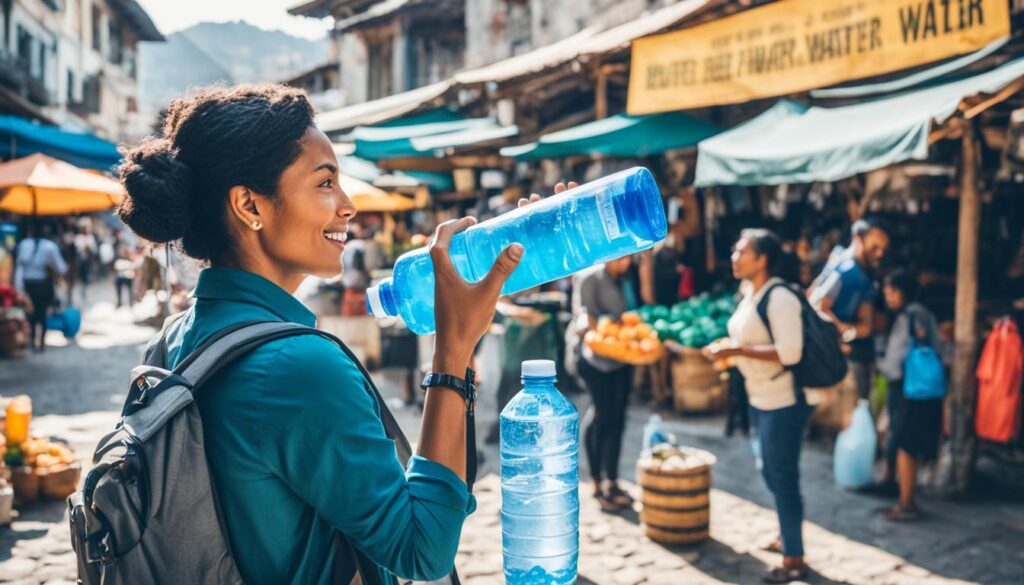
Hygiene Practices for Safe Drinking Water
Ensuring proper hygiene practices is imperative when it comes to maintaining safe drinking water while traveling. Here are some essential precautions you can take to minimize the risk of waterborne diseases and illnesses:
- Wash your hands: Always wash your hands with soap and clean, running water before handling water bottles, purification tablets, or any other water filtration devices.
- Keep your water storage containers clean: Make sure to clean your water bottles, purification devices, and any other storage containers regularly to avoid contamination.
- Use water filters: When using water filters, make sure to follow the manufacturer’s instructions closely and be mindful of the expiration dates of the filter.
- Avoid touching the mouth of the water bottle: Refrain from touching the mouth of your water bottle or other drinking containers to prevent contamination.
- Use boiled or treated water: Always boil or treat water before drinking it to ensure it is safe for consumption.
By following these crucial hygiene practices, you can minimize the risks associated with contaminated water and protect yourself from potentially harmful illnesses.
“Keeping your water containers clean is essential for maintaining safe drinking water while traveling.”
Cultural Considerations and Safe Drinking Water
When traveling to different destinations, cultural norms can affect the safety of tapped water. It’s essential to understand local customs and practices to ensure safe consumption. In some areas, drinking tap water may not be customary, or vendors may reuse water bottles, which can increase the risk of contamination.
One way to navigate cultural considerations regarding drinking water is to research beforehand and seek advice from locals or travel guides. In some countries, it may be necessary to carry a portable water filtration system or purification tablets as an extra precaution.
Another cultural aspect to consider is the availability of safe drinking water options. In some regions, bottled water may be the more reliable and safe choice, while in others, it may be limited or unavailable altogether. Alternatively, packaged drinking water or using water dispensers may be more common.
By understanding the cultural considerations and local customs surrounding drinking water, you can take necessary precautions and enjoy your travels safely and healthily.
Sustaining Safe Water Habits Upon Return
It is crucial to maintain safe drinking water habits even after returning from your trip. By doing so, you can continue to prioritize your health and well-being. Here are some tips on how to sustain safe water habits:
- Maintain water filters regularly to ensure they provide optimal protection against harmful contaminants.
- Clean reusable water bottles thoroughly and frequently to prevent the buildup of bacteria or other harmful microorganisms.
- Stay updated on water quality information in your area to be aware of any potential risks to your drinking water safety.
Remember, safe drinking water is essential no matter where you are – at home or on the go. Make it a habit to prioritize safe water consumption, and your body will thank you for it.
Conclusion
Traveling to new destinations can be exhilarating, but it can also expose you to potential health risks, including unsafe drinking water. By prioritizing safe drinking water, you can ensure a healthy and enjoyable journey. Remember to research the safety of tap water in your destination and take necessary precautions to minimize risks.
Explore alternative water sources, such as bottled water or packaged drinking water, and consider investing in portable water filters. Practice good hygiene when handling water, and monitor your water intake to avoid dehydration.
Keep in mind that safe drinking water habits should not end when you return from your trip. Continue to maintain your water filters, clean your reusable water bottles regularly, and stay informed about water quality information in your area.
Overall, by staying vigilant and prepared, you can prioritize drinking water safety and ensure a safe and hydrated journey. Stay safe, and happy travels!


