

Your Ultimate Guide to Travel Planning and Packing Tips
Embarking on a journey requires more than just the flutter of excitement in your heart—it demands careful preparation and a scrutinized travel checklist. Whether you’re a seasoned explorer or setting out for your first adventure, our guide will illuminate the path to an unforgettable excursion. In this segment, we delve into the essentials of how to pack for a trip, blending time-tested wisdom with savvy strategies to elevate your travel game.
Discover the finesse of weaving together a seamless itinerary, ensuring that every travel checklist item is a stepping stone toward crafting your personalized voyage. Packing can either be a bane or a boon, and with our Travel Planning and Packing Tips, it’s bound to become the latter, propelling you into the tales of wanderlust with ease and confidence.
Grab your passport, fasten your seat belt, and let’s journey through the pillars of travel planning and packing tips, unlocking the doors to experiences that await beyond the horizon.
Starting Your Travel Journey: Essential Travel Planning Tips
Commencing your travel adventure is always exhilarating, but the true art of traveling lies in meticulous planning. With valuable travel planning tips, we embark on guiding you through the initial, crucial steps to ensure your trip is as smooth as the tranquil seas.
Choosing Your Destination Wisely
Deciding where to travel forms the cornerstone of your trip’s success. Reflect on what you seek from your voyage—is it the serenity of beaches, the thrill of mountain trails, or the richness of cultural heritage? Factor in climate conditions, peering into whether you prefer basking in the sun or donning your snow boots. Heed travel advisories and seasonal fluctuations to avoid overcrowded or calamity-struck locales. Balance these with your own passions and interests to select a destination that resonates with your spirit.
Consult the table below to align your destination with ideal time frames and traveler interests:
| Interest | Climate Preferred | Peak Season | Suggested Destinations |
|---|---|---|---|
| Cultural Immersion | Moderate | Spring/Fall | Kyoto, Japan; Florence, Italy |
| Adventure & Activities | Varies by Activity | Summer/Winter | Queenstown, New Zealand; Whistler, Canada |
| Relaxation | Warm | Shoulder Seasons | Bali, Indonesia; Maldives |
Setting a Realistic Budget
Your travel budget is the compass that guides your itinerary. It’s vital to draft a realistic budget that encompasses all facets of your journey, from airfare to souvenirs. Start by outlining the major costs—transportation, accommodation, meals, sightseeing, and, most importantly, a contingency for those unexpected expenses. To help safeguard your finances, consider early bird deals and accommodation alternatives such as Airbnb. Always bear in mind currency exchange rates as they will impact your spending power abroad.
Remember, a prudent budget is your lifeline to a voyage free from monetary woes.
Researching Local Customs and Laws
The tapestry of world cultures is intricate and beautiful, but it can be a maze for an uninformed traveler. It is imperative to dig into the local customs and laws of your chosen destination. This can range from dress codes in the Middle East to tipping etiquette in the United States. Respect and adherence to such nuances can enhance your travel experience, making it richer and more authentic.
Understanding the local culture is not just about good manners; it’s the heart of immersive traveling.
Prepare a travel checklist of do’s and don’ts to keep handy. For example, chewing gum in Singapore or disparaging the monarchy in Thailand can land you in trouble. Equip yourself with knowledge about legal regulations, particularly in nations with stringent laws, to ensure your travel story isn’t marred by avoidable predicaments.
By blending these vital travel essentials into your early travel planning stages, you’re setting the stage for an epic narrative of exploration and self-discovery. Next, it’s time for the exciting phase of mapping out your adventures and curating an unforgettable itinerary. Stay tuned for the art of crafting the perfect travel agenda, your next step towards globetrotting success.
The Art of Crafting the Perfect Travel Itinerary
Creating the perfect travel itinerary is much like penning your own thrilling narrative; each day represents a unique chapter in your journey. To ensure you make the most of each experience, consider incorporating these travel planning tips into your own personalized travel story.
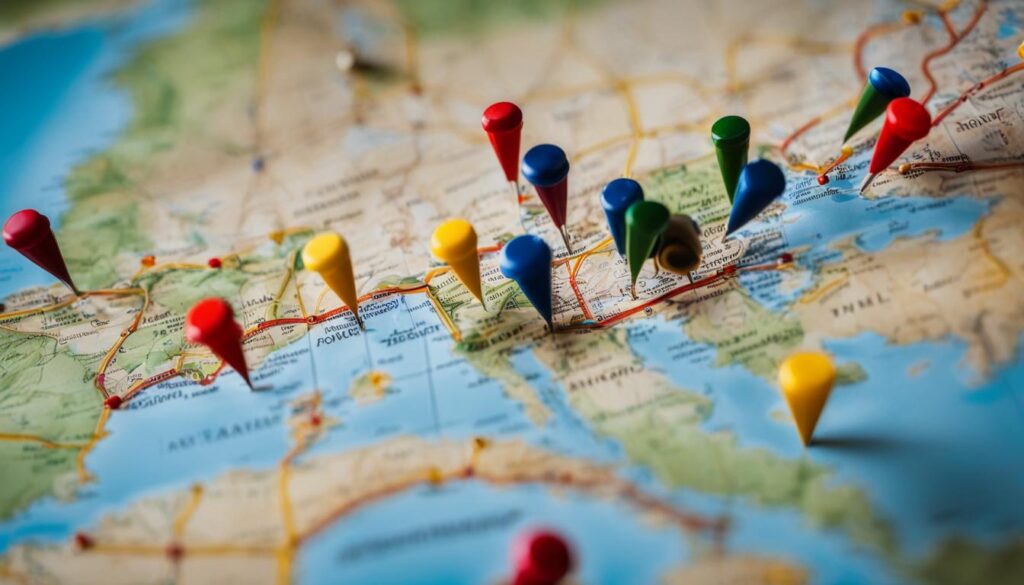
Begin by establishing the framework of your itinerary with must-see landmarks and attractions. These are the highlights that often define a destination. Yet, the true essence of travel lies in the discovery of hidden gems—those quaint cafés, serene parks, and local markets that aren’t always listed in guidebooks. Balancing these with ample opportunities for impromptu exploration will enrich your itinerary.
Flexibility is a cornerstone of any great travel itinerary. While your days should have structure, allow for spontaneous detours. These unexpected moments often lead to profound memories and experiences that weren’t outlined in your original plan. To guide you through building a travel itinerary that is both structured and flexible, follow this suggested itinerary outline:
- Day 1: Arrival and Acclimatization – Keep it light with activities close to your accommodation to recover from travel fatigue.
- Day 2: Major Attractions – Tackle the iconic spots early in your trip when energy levels are high.
- Day 3: Cultural Immersion – Dedicate a day to museums, historical sites, or a local cooking class.
- Day 4: Adventure and Activities – If you’re in a city known for adventure, pencil this in mid-trip.
- Day 5: Explore Like a Local – Take recommendations from locals and discover less touristy areas.
- Day 6: Leisure and Relaxation – Schedule a slow day; perhaps a wellness spa or a calm beach day.
- Day 7: Last Minute Must-Dos and Souvenir Shopping – Finish off your trip by checking off any final bucket-list items and shopping for mementos.
Consider distances between activities and the time you’ll spend at each location, ensuring realistic transit times are accounted for. To further aid in visualizing how your days may pan out, here’s a table to assist with balancing sightseeing and free time:
| Activity | Morning | Afternoon | Evening |
|---|---|---|---|
| Sightseeing | Visit major tourist attraction | Lunch at a recommended local spot followed by a walking tour | Leisurely evening exploring local markets and dining |
| Outdoor Adventure | Guided hike or cycling tour | Rest and grab a light meal | Quiet dinner or local performance |
| Cultural Experience | Morning museum visit | Explore historic district or attend a workshop | Try traditional cuisine at a highly-rated restaurant |
And remember, part of the beauty of travel is the unexpected. Give yourself the latitude to wander off the beaten path and embrace opportunities as they arise. Tailor your travel itinerary not just to the destination, but to what you love doing, ensuring every moment of your trip is a reflection of your desires.
Seamlessly blending anticipation with spontaneity, you have the makings of a truly legendary trip. Dare to depart from your itinerary when intrigue beckons—it’s these spontaneous decisions that often lead to the most enchanting travel tales.
Travel Documentation: What You Need to Prepare
When it comes to international travel, the tapestry of your preparation is incomplete without the essential fabric of travel documentation. Documentation not only grants you access to foreign lands but also assures peace of mind as you traverse the globe. Let’s ensure your travel checklist is comprehensive and current, detailing everything you would need to start your journey securely.
Passports, Visas, and Other Essential Documents
Your passport is your global key, and securing it is paramount. Be vigilant about its expiration date—many countries require that it remains valid for at least six months beyond the duration of your stay. Visa requirements, on the other hand, are your destination’s unique way of saying ‘Welcome’ or ‘Not yet’. They vary considerably, with some countries allowing visa-free entry and others requiring detailed applications.
Here’s a quick breakdown to guide you:
| Document Type | Description | Preparation Tip |
|---|---|---|
| Passports | Your official identification and travel document. | Check the expiry date and renew it if it’s within 6 months of travel. |
| Visas | Required permission for entering some countries. | Understand the entry requirements for your destination well in advance. |
| Other Permissions | e.g., Special area permits for restricted areas. | Research and apply for any additional documentation specific to your travel. |
Keeping Copies and Digital Backups
In an age where technology is king, digital backups of your vital documents are your knights in shining armor. These should effortlessly accompany your physical copies. Create digital scans of your passport, visa pages, driver’s license, and itinerary, then secure them in cloud storage or a USB drive—this way, you always have access to them.
Remember, the loss of documents can be a major travel disruption—backups are your contingency plan.
- Scan or take clear photos of all essential travel documents.
- Store them on reliable digital platforms accessible from anywhere.
- Keep a printed set separate from the originals in your luggage.
Vaccination Certificates and Health Insurance
Your health is your most valuable travel companion. Before you embark, ensure you have received any necessary vaccinations and hold the certificates to prove it—some countries are strict about entry without them. Additionally, not all countries will cater to your health needs free of charge, which is where health insurance comes into play. Opt for comprehensive international travel insurance to cover unexpected medical expenses.
Here’s a strategy to keep your health concerns in check:
| Type | Purpose | Action Plan |
|---|---|---|
| Vaccination Certificates | Proof of immunization. | Get vaccinated as per your destination’s requirements and obtain the certificate. |
| Health Insurance | Coverage for health issues abroad. | Purchase travel health insurance that provides comprehensive coverage. |
Planning is the cornerstone of a felicitous journey. With your travel documentation in hand including passports, visas, and health-related essentials like vaccination certificates and health insurance, you’re fortified against the typical travel impediments.
Good travel is the result of good planning—that means starting with a thorough travel checklist that includes everything from your pocket-sized passport to a digital backup in the cloud.
Choosing Suitable Luggage: Hardshell vs. Softshell
Selecting the right type of luggage is a fundamental decision in the travel planning process, serving as a key travel essential that can either make or break your journey’s convenience. In the debate of hardshell luggage versus softshell luggage, each offers distinct advantages and potential drawbacks, varying accordingly with your destination, trip duration, and personal travel style.
Hardshell luggage is renowned for its durability and protection. Fashioned from resilient materials such as polycarbonate or ABS plastic, these suitcases are typically water-resistant and can withstand rough handling—ideal for keeping your belongings secure during flights or in variable weather conditions. The rigid exterior of hardshell cases also aids in protecting fragile items, making them a preferred choice for those carrying electronics or breakable souvenirs.
On the other hand, softshell luggage is celebrated for its flexibility and light weight. Constructed from fabrics like nylon or polyester, softshell bags can absorb shock and are more forgiving when dealing with tight storage spaces. They often feature external pockets for easy access to travel documents or snacks, and can expand to accommodate extra items acquired during your travels.
When it comes to choosing your travel companion, consider your luggage as more than a container – it’s the safeguard of your personal belongings and a reflection of your travel ethos.

To further elucidate the choices between hardshell and softshell options, the following table juxtaposes their characteristics to help inform your decision:
| Feature | Hardshell Luggage | Softshell Luggage |
|---|---|---|
| Material Durability | Highly durable against impacts | Less prone to breaking but subject to tears |
| Weather-Resistance | Water-resistant and protective against elements | Can be water-repellent, but less protective overall |
| Weight | Often heavier, depending on material | Generally lighter, offering ease of mobility |
| Flexibility | Rigid structure with no expandability | Flexible, can often expand for extra space |
| Accessibility | Tends to lack external pockets | Usually features one or more external pockets for ease of access |
| Storage | Can protect contents from being squashed | Can be squeezed into tight spaces such as overhead compartments |
Emphasizing just one side of the hardshell versus softshell debate would be a disservice to the varied requirements of different travelers. Instead, acknowledge the nuances of each—the choice should be congruent not only with the kind of trip you are embarking upon but also with your own preferences for handling and comfort. Whether you lean towards the impenetrable fortress of a hardshell case or the adaptable convenience of a softshell, remember that both styles have their rightful place among travel essentials.
As you proceed to curate your luggage ensemble, weigh the pros and cons, consider your priorities, and choose a travel suitcase that will faithfully accompany you on your adventures, securing your possessions and bringing you peace of mind.
Packing Like a Pro: The Basics of Efficient Packing
Embarking on any trip calls for efficient packing to maximize the space and minimize the stress during your journey. Mastering packing tips unveils an organized world where every item has its rightful place, allowing for both urgency and the preservation of your belongings. Achieving such finesse with how to pack for a trip boils down to selecting versatile clothing, prioritizing items, and harnessing the art of strategic folding and placement.
Packing shouldn’t be a tedious afterthought—treat it as a prelude to an organized and remarkable travel experience.
To aid in maximizing your suitcase efficiency, consider the following table offering a strategic approach to the organization:
| Type of Clothing | Quantity | Packing Tip |
|---|---|---|
| Base Layers | 3-5 | Choose neutral colors that can be paired with multiple outfits. |
| Outerwear | 1-2 | Select one casual and one formal outer layer adaptable to weather changes. |
| Footwear | 2-3 | Wear the bulkiest pair and pack the rest using the inside space for storing smaller items. |
| Accessories | As needed | Roll belts inside collars to maintain shape, and thread necklaces through straws to prevent tangling. |
Beyond clothing, travel organization encompasses all the elements of your suitcase. Consider deploying packing cubes or bags for segregating items. Not only do they keep your belongings compartmentalized, but they also compress clothes to utilize every available inch of space.
- Layer from heaviest at the bottom to lightest on the top.
- Roll softer garments and fold stiffer ones.
- Utilize every nook and cranny, stuffing socks and undergarments into shoes and corners.
- Keep the most frequently used items within easy reach.
Remember, packing is a strategy; it’s the stealthy battle against the bulge of overpacking and the nightmare of an unorganized suitcase. With these tips in mind, you’ll be well on your way to becoming a packing connoisseur.
- Think versatility in your wardrobe—items that can be mixed and matched.
- If your trip exceeds a week, plan to launder clothing instead of packing extra.
- Travel-size containers are your allies—fill them with your skin-care essentials.
- Adopt a minimalist approach—ask yourself if each item is necessary.
Armed with the fundamentals of how to pack for a trip, your travel endeavors will become a source of joy rather than frustration. So, go ahead and arrange your suitcase with confidence, knowing that your meticulous planning will pay off in a seamless and organized adventure.
The Ultimate Packing List: Travel Essentials You Can’t Forget
As you stand on the brink of your next journey, it’s imperative to arm yourself with an exhaustive travel checklist of essentials. A thoughtfully packed suitcase ensures you can face eclectic climates, varied terrains, and unexpected adventures with ease and style. Start with these critical packing list items to carry confidence alongside your travel essentials.
Clothing and Footwear for Every Occasion
Your destination’s climate and cultural environment dictate your wardrobe choices. Mitigate any packing predicaments by curating a selection of apparel that is as functional as it is fashionable, ensuring you are aptly dressed for every occasion.
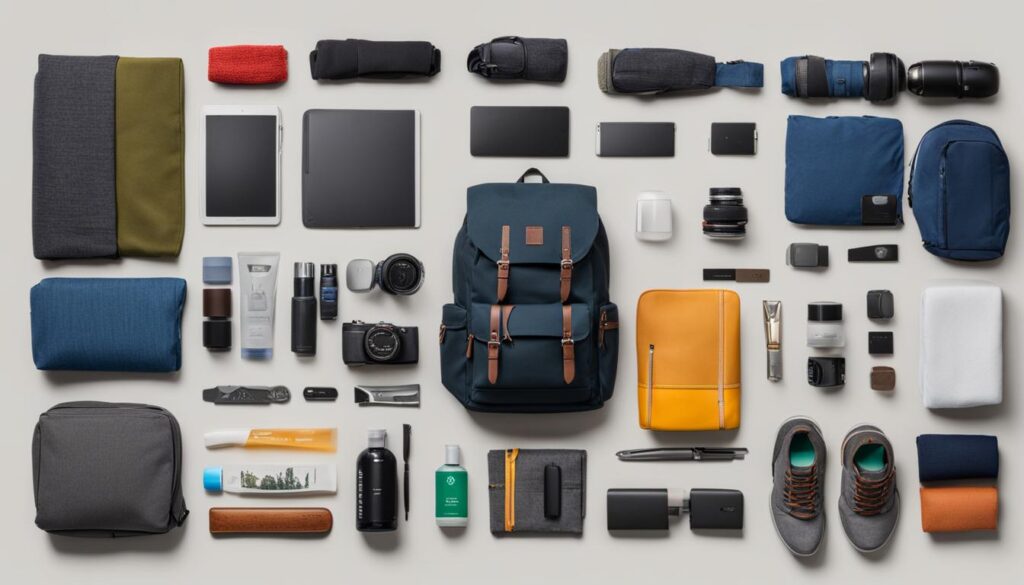
When it comes to footwear, the holy trinity of comfort, versatility, and style reigns supreme. Here is a basic guide for packing footwear to walk you through any escapade:
| Shoe Type | Activity | Packing Tips |
|---|---|---|
| Walking Shoes | Sightseeing, Urban Exploration | Opt for cushioned, breathable options to keep your feet happy. |
| Dress Shoes | Evening Events, Fine Dining | Select a pair that pairs well with multiple outfits. |
| Adventure Sandals/Shoes | Outdoor Excursions, Beach Days | Ensure they’re water-friendly and offer good grip. |
Must-Have Gadgets and Electronics
A tangle of technology is the last thing you need when traversing new territories. Keeping organized with your must-have gadgets and electronics will save you time and frustration. Remember that the right tools can enhance your travel experience, capturing memories, and ensuring connectivity.
An essential electronics packing list might include:
- Smartphone with a long-lasting battery.
- Digital camera or action cam for high-quality images.
- Portable power bank to stay charged on the go.
- Travel adapter for seamless device charging anywhere.
Charge your excitement as much as your devices to document every monumental moment on your travels.
Toiletries, Medications, and Personal Items
The personal items on your packing list are the silent workhorses of travel essentials. They maintain your health, hygiene, and comfort as you traverse different time zones and geographies. Approach this sector of your packing with a mix of precision and precautionary planning.
When organizing these necessities, use clear, sealable bags to corral liquids and gels, conforming to airport regulations. Here’s a swift rundown:
- Toiletries like toothpaste, shampoo, sunscreen, and deodorant.
- Essential medications, both prescription and over-the-counter remedies for common ailments.
- Travel-sized first aid kit for minor scrapes or injuries.
- Hygiene products that support your daily routines.
Pro Tip: Always check the latest TSA guidelines on medication and toiletry sizes to prevent potential hiccups at security.
With your suitcase smartly stocked with these clothing choices, footwear options, must-have gadgets, and personal items, you’re all set for an expedition marked by ease and excellence. Your adventures await, and your impeccable packing list is your passport to a world of discovery and delight.
Maximizing Space: Packing Hacks and Tips
Whether preparing for a weekend getaway or a month-long retreat, efficient use of luggage space is a must. The key to mastering travel organization lies in utilizing every available inch with smart packing hacks. In this section, we reveal the most ingenious packing tips to help maximize your suitcase real estate.
Every traveler yearns for that extra bit of space—a cleverly packed suitcase turns that into reality.
Rolling your clothes is a quintessential packing hack that not only saves space but also minimizes wrinkles. Pair this with the strategic use of compression bags and suddenly, that compact carry-on accommodates a gratifying heap of garments.
- Roll tees, pants, and casual wear to compress and stack.
- Use compression bags for bulkier items like jackets and sweaters.
- Lay formal attire flat at the top to prevent creasing.
Another cornerstone of travel organization is prioritizing. Weigh the versatility and necessity of each item as you pack—it’s not about fitting your entire wardrobe; it’s about packing the right elements.
Ensure those go-to items are readily accessible. For example, keep your toiletry bag at the top or in an easy-to-reach pocket, so you’re not rummaging through piles of clothes on arrival.
Ready to transform into a packing dynamo? Here’s a table to help you organize and prioritize like a pro:
| Item Category | Importance | Packing Tips |
|---|---|---|
| Clothing | High | Roll and use packing cubes for efficient space usage. |
| Footwear | High | Place in the bottom, fill shoes with small items or socks. |
| Toiletries | Medium | Adhere to TSA liquid rules and place in an easy-access pouch. |
| Electronics | High | Protect with padded sleeves and organize cables with Velcro ties. |
| Accessories | Low | Select versatile pieces that match multiple outfits. |
Don’t overlook the role of empty spaces. The insides of shoes are perfect hiding spots for socks, while the curves of your rolled garments can snugly fit smaller items like underwear or a belt.
- Stuff shoes with socks and small items to utilize dead space.
- Nest smaller rolls of clothing inside larger ones to create a compact bundle.
- Place heavier items at the bottom of your suitcase to keep it stable.
Lastly, remember the art of packing is as much about what you leave out as what you take. Embrace the minimalist approach; your back will thank you for lighter luggage and you’ll cherish the simplicity of choices during your travels. With these packing tips and packing hacks, you’re ready to tackle even the most stringent of airline requirements with finesse and grace.
Packing Tips for Air Travel: Navigating TSA Regulations
Traveling by air requires compliance with specific guidelines set by the Transportation Security Administration (TSA). Being familiar with TSA regulations is essential to ensure your preparation aligns with the rules, facilitating a smoother passage through airport security. In this guide, we offer practical packing tips for air travel, focused on adhering to TSA standards to help you create an efficient travel checklist.

Carry-On Luggage: The cornerstone of packing for air travel is understanding what is permissible in your carry-on bag. TSA regulations stipulate the 3-1-1 liquids rule—any gels, aerosols, creams, and pastes must be 3.4 ounces (100 milliliters) or less per container, all of which should fit in one quart-sized, resealable bag. This rule helps ensure security while allowing you to carry essential items such as toiletries.
Remember, exceptions to the 3-1-1 rule include medications and infant and child nourishments. Declare these items at the checkpoint for separate screening.
Checked Baggage: For items not needed during your flight, checked baggage is the way to go. While you may pack larger quantities of liquids, the weight of your suitcase should comply with your airline’s limits to avoid extra fees. For electronics and valuables, TSA advises keeping them in your carry-on instead.
To streamline your experience further, here’s a handy table summarizing TSA-approved packing practices:
| Item | Carry-On | Checked Bag | TSA Packing Tip |
|---|---|---|---|
| Liquids (shampoo, lotion, etc.) | Up to 3.4 oz / 100 ml per container | Permitted in larger quantities | Use travel-sized containers for carry-ons; larger bottles for checked luggage |
| Electronics (laptops, tablets) | Yes | Safer in carry-on | Place electronics in a separate bin when passing through security |
| Medications | Yes, with exceptions for larger quantities | Yes | Keep medications in original packaging and readily accessible |
| Batteries | Spare batteries in carry-on only | Installed batteries in devices only | Prevent short-circuit by covering terminals |
| Sharp objects (scissors, knives) | Scissors | Yes | Pack in checked bags to prevent confiscation |
- Refrain from packing prohibited items such as flammable liquids or explosive materials.
- Keep travel-sized essentials in an easily accessible segment of your carry-on for a stress-free security checkpoint experience.
- Label your luggage with your contact details in case of misplacement.
- Check TSA’s official website before you travel for updates on regulations that may affect your packing strategy.
With the right preparation and attention to TSA regulations, your travel checklist will ensure a hassle-free start to your air travel. Packing tips for air travel are not just about managing space in your bags—they’re about navigating the rules to secure a pleasant journey from beginning to end.
Be savvy with your travel checklist, refining your packing strategy to align with TSA guidelines and pave the way for a journey filled with peace of mind.
Travel Organization: Keeping Your Belongings Tidy and Accessible
As you prepare for your next adventure, efficient travel organization is key to a smooth and enjoyable journey. By employing the right techniques and tools, such as packing cubes and various organizers, you can maintain a tidy suitcase, ensuring all your travel essentials are neatly arranged and easily accessible.
Utilizing Packing Cubes and Organizers
One of the finest additions to the arsenal of packing tools has been the packing cube. These handy compartments come in different sizes and allow for categorization, making organizing a cinch. Consequently, these containers significantly reduce the effort required to unpack and repack your suitcase, as your clothes remain folded and wrinkle-free.
| Packing Cube Size | Recommended Usage |
|---|---|
| Small | Undergarments, socks, and accessories |
| Medium | T-shirts, tank tops, and shorts |
| Large | Sweaters, pants, and dresses |
By assigning a specific type of clothing or items to each cube, you not only manage space but also save time when searching for a particular garment. The transparency some packing cubes offer further enhances convenience, as you can see the contents without unzipping them.
Strategic Layering and Division of Items
Another crucial aspect of travel organization involves the strategic layering of items within your luggage. By dividing your items purposefully, you ensure that essentials like toiletries and electronics are easy to reach during security checks or in case of immediate need.
Strategic layering transforms your luggage into a treasure chest, with every item smartly placed for ease and efficiency.
- Place heavy items at the bottom to prevent shifting and wrinkling of clothes.
- Use medium cubes for the bulk of your clothing in the center layer.
- Top the suitcase with a layer of organizers containing frequently used items.
Employing this systematic approach to packing not only helps in efficient space utilization but also safeguards your belongings from the strains of travel.
Electronics and Cables Management
The tangled web of chargers and cables is an often-overlooked aspect of packing. Taking the time to manage your electronics and their accessories can prevent damage and frustration during your travels. Cable organizers, velcro strips, or even simple ziplock bags can play pivotal roles in keeping your electronics management neat and damage-free.
Regarding the protection of your gadgets, consider investing in dedicated cases or sleeves, which offer padding and secure storage. Additionally, take the following steps for extra organization:
- Use color-coded cable ties to quickly identify your cords.
- Dedicate a small organizer or pouch for earphones, adapters, and USB drives.
- Opt for multi-charger cables to reduce the number of cords needed.
Remember, electronics management is not just about organized packing; it’s ensuring your tech-savvy lifestyle continues seamlessly across the globe.
By harmonizing the management of garments with electronic needs, your packing efficiency ascends to new heights, readying you for a journey void of clutter and confusion.
In essence, travel organization is the silent guardian of your journey. It brings order to chaos, paving the way for a trip that is both memorable and manageable. As you embrace packing cubes, savvy layering, and meticulous electronics management, you prepare yourself not just for departure, but for the artful dance of travel.
Conclusion: Embrace Your Journey with the Essentials in Hand
As your travel horizon beckons, fortify your excitement with a thorough sweep through your travel checklist and packing list. This final glance is not just a redundancy, but a vital part of your travel planning tips. It confirms that passports, tickets, and itineraries are at your fingertips, and that each carefully chosen item in your suitcase is primed for your venture. Ensure that nothing essential has been overlooked, and trust that the groundwork you’ve laid with these packing tips and strategic lists will pave the way for a fulfilling escapade.
Yet, even the most precise preparation must be coupled with embracing flexibility. It’s this balance that transforms a journey from mere travel to a voyage of discovery. The unexpected is not just a possibility but an invitation to adventure. When you meet the surprises that travel invariably serves with an adaptable mindset, every detour and impromptu decision becomes a part of your narrative, enriching your experience beyond the confines of any itinerary.
Consider your travel and packing education as an ongoing chapter in your life’s story, where each trip adds depth to your knowledge and understanding. Embrace each opportunity to refine your system, and stay attuned to new methods, resources, and insights that can enhance your future endeavors. This commitment to learning and adapting will render you not just a traveler, but a true connoisseur of the art of journeying. As you set off, do so with the assurance that you are as ready as you can be, with the wisdom to welcome the unknown with open arms.


