Best Way to Freshen Up After a Long-Haul Flight
Ever landed from a long flight and felt like a dried fruit? This happens because the air in the cabin is very dry. Also wearing the same outfit for more than 12 hours is uncomfortable. And let’s not forget about the tiredness that hits 70% of flyers. So, how can you feel fresh and alive after such a journey?
Next, we’ll cover the best travel tips and ways to beat jet lag. We’ll talk about changing your sleep pattern, bringing must-have care items, and drinking lots of water. Our goal is for you to arrive feeling full of life and ready to enjoy your trip.
Preparing Before Your Long-Haul Flight
Getting ready can really help make your flight more comfortable and help you recover faster. Try to adjust your sleep schedule before you go. This will help you deal with jet lag better. Don’t forget to pack important self-care things like moisturizers and water bottles to keep your skin moist and your body hydrated. Also, wearing comfy clothes is key to staying comfortable during those long hours sitting down.
Adjust Your Sleep Schedule
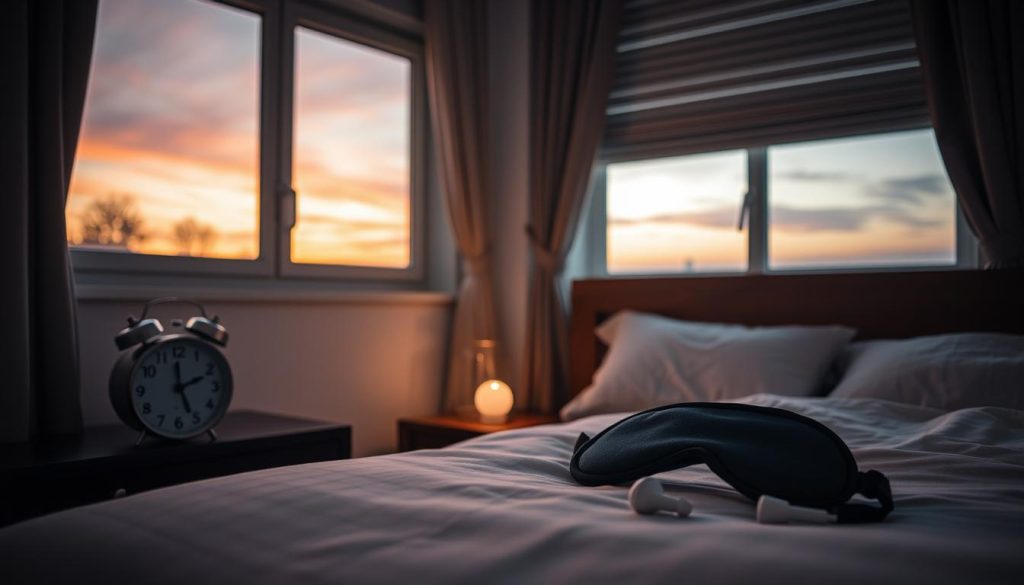
Long flights can take a lot of time, from 7 hours to nearly 19 hours. Changing your sleep schedule a bit before your trip can fight off jet lag. Try to sleep like you’re already in your destination’s time zone a few days before.
Experts say you shouldn’t stay up for 24 hours before flying. Getting a good night’s sleep before you leave can help you handle the long travel better.
Pack Essential Self-Care Items
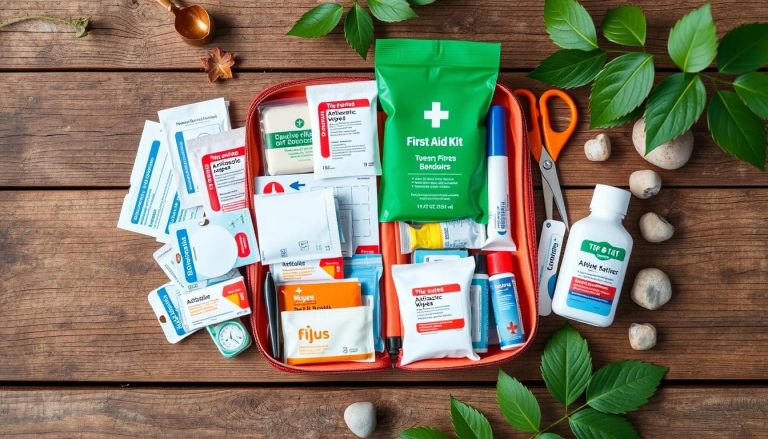
Packing only what you really need is key to avoid bringing too much. Make sure to bring moisturizer, a reusable water bottle, and necessary hygiene products. These will keep you feeling fresh during the flight.
Also, pack some healthy snacks like granola bars or fruit. Airline food might not always be enough.
Dress Comfortably
Wearing clothes that are comfy and allow you to move is important for those long hours seated. Pick clothes made from fabrics that breathe. Wearing compression socks is a good idea too. They can help keep swelling down and prevent blood clots.
Bringing a travel pillow can also make it easier to rest by giving your neck better support.
| Travel Preparation | Recommendations |
|---|---|
| Adjusting Sleep Schedule | Match sleep to destination’s time zone early; avoid staying awake for 24 hours prior |
| Packing Essential Self-Care Items | Moisturizer, reusable water bottle, basic hygiene items, nutritious snacks |
| Comfortable Travel Attire | Breathable clothing, compression socks, travel pillow |
Importance of Staying Hydrated
Staying hydrated on a plane is crucial because of the low air moisture and high altitude. The air can be as dry as the Sahara Desert, with humidity around 10%. This is much lower than the 30% to 65% we’re used to indoors. So, it’s key for travelers to drink plenty of water to stay hydrated, avoid getting tired, and keep healthy.
Bring a Reusable Water Bottle
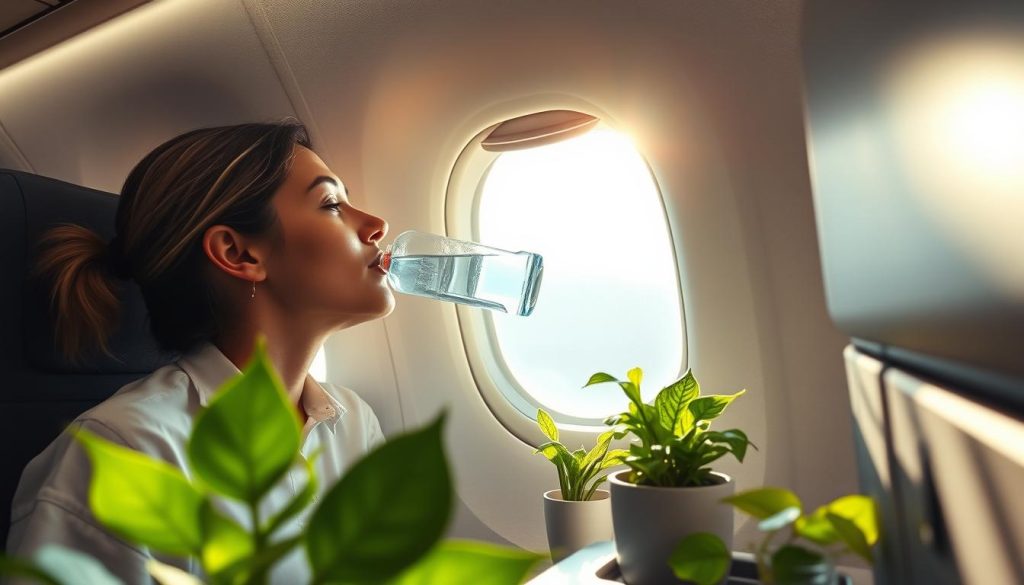
Bringing your own water bottle on a flight is a smart move. You’ll find water fountains at many airports and refill stations on some longer flights. With your own bottle, you can drink water anytime you need to. This is good for staying hydrated and cuts down on plastic waste, helping the environment.
Avoid Alcohol and Caffeine
Skipping drinks with alcohol and caffeine can help you stay hydrated. Both make you use the bathroom more, leading to dehydration. They also make it harder for your body to stay at the right temperature, which is tough in dry airplane air. Drinking water or other hydrating drinks is better for keeping your skin from getting dry and avoiding headaches.
Monitor Your Water Intake
It’s important to keep track of how much water you drink on a flight. The WHO suggests about 250 ml of water for each hour you’re in the air. This helps fight the dry air, makes jet lag less of an issue, and keeps you from feeling too tired or getting constipated. You might also think about using hydration supplements to help with energy and balance your body’s pH levels.
Skincare Tips for In-Flight and Post-Flight
Keeping your skin hydrated and healthy during and after a flight is hard. The air in airplane cabins is very dry. Here are some essential tips for in-flight skincare to keep your skin glowing.
Moisturize Regularly
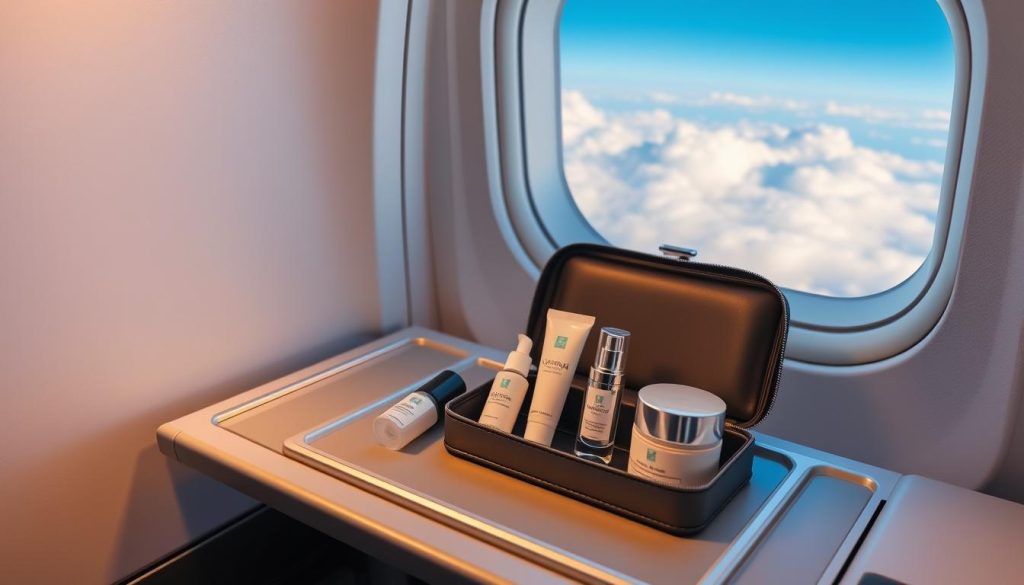
The cabin air on a plane can dry out your skin. Moisturizing often helps fight this dryness. Use products with hyaluronic acid for best hydration. This ingredient can hold a lot of water, making it great for your skin.
Drinking lots of water is also key. Try to drink eight ounces every hour, as the Aerospace Medical Association suggests. This keeps your skin hydrated from the inside.
Use Hydrating Face Masks
Hydrating face masks are great for flying. Overnight masks are especially good. They give your skin extra moisture and leave it feeling fresh. Remember to use these masks a few times during the flight for the best effect.
Look for masks with hyaluronic acid, glycerin, and ceramides. These ingredients help lock in moisture and keep your skin elastic.
Skip Heavy Makeup
When flying, wear less makeup. Heavy makeup can block your pores and make your skin drier. Letting your skin breathe helps prevent pimples and keeps it fresh.
Start with a good moisturizer, then use a tinted moisturizer or BB cream. This keeps your skin hydrated and evens out your tone. You can also use facial mists to refresh your skin without messing up your makeup.
- Drink 2-3 liters of water daily before the flight.
- Avoid heavy makeup products.
- Use hydrating toners and serums before boarding.
- Apply broad spectrum sunscreen of at least SPF 30.
- Utilize airplane bathroom breaks for in-seat stretches and walks.
| Skincare Product | Description | Price Range |
|---|---|---|
| Mila Moursi Rejuvenating Serum | Intensive moisturizing serum with hyaluronic acid | $365 |
| Tower 28 SOS Daily Rescue Facial Spray | Soothing and hydrating facial mist | $12 |
| SPF 30 Sunscreen | Broad spectrum UV protection | $25 – $40 |
What’s the Best Way to Freshen Up After a Long-Haul Flight?
Travelers often look for ways to freshen up post-flight. Staying hydrated is key because flying dries you out. Carry two Smart Water bottles and skip alcohol to stay hydrated. For your skin, choose thick moisturizers over sheet masks to fight dry air effects.
The air in cabins can clog pores. A simple routine of cleansing, toning, and moisturizing helps. Face mists with collagen and green tea add extra hydration. An AG1 travel pack can keep you nourished.
Doing light exercises before flying reduces stiffness. Try a quick workout or a Peloton ride. Taking magnesium helps relax muscles, easing recovery.
Getting good sleep is crucial. A sleeping eye mask and noise-canceling headphones can improve sleep by 30%. Bringing a Kindle and a neck pillow boosts travel comfort, helping you adjust to new time zones.
To quickly freshen up post-flight, pack light makeup, like brow pencil and mascara. A braid or wrapped hairstyle keeps hair neat.
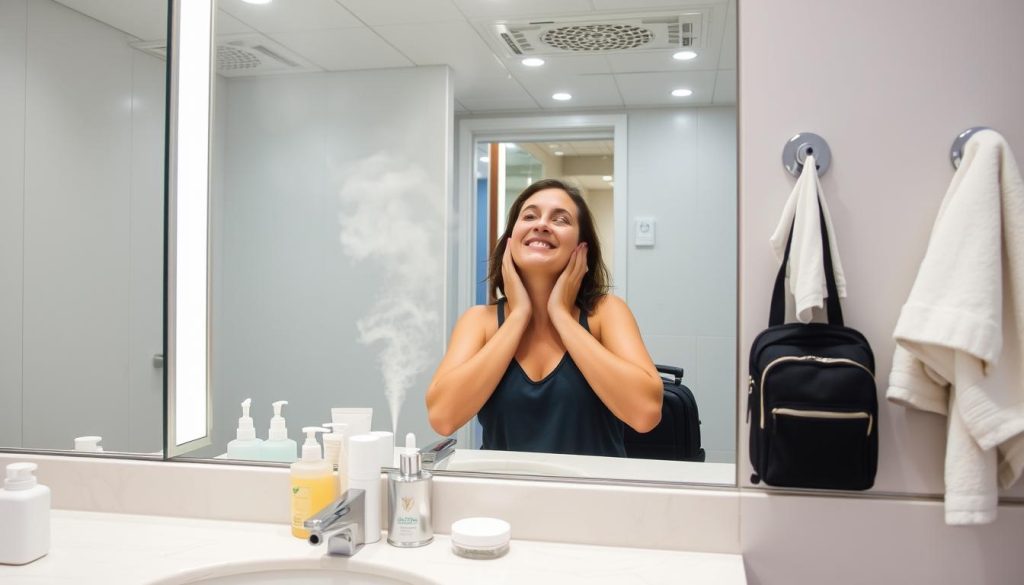
Keep hygiene in check with essentials like face wipes and hand sanitizers. They’re key in shared spaces. Freshening up 30 to 60 minutes before landing makes you feel revived. A Longchamp bag is great for carrying what you need.
| Tips for Freshening Up Post-Flight | Advantages |
|---|---|
| Drink Water Every Hour | Helps Maintain Hydration Levels |
| Use a Thick Moisturizer | Prevents Dry Skin from Cabin Air |
| Pack Face Wipes and Hand Sanitizers | Ensures Hygiene and Freshness |
| Perform Light Pre-Flight Exercises | Reduces Stiffness and Tension |
| Utilize Eye Masks and Noise-Canceling Headphones | Improves Sleep Quality During Flight |
These recovery after flight tips make travel less stressful and more refreshing. By focusing on hydration, skincare, and rest, you’ll arrive ready for your adventure.
The Role of Proper Hydration
Staying hydrated is key, especially during long flights. The air in the cabin is dry, like the Sahara Desert. Drinking enough water helps your body function properly and cuts down jet lag. Knowing how crucial it is to drink water will help you feel good when you land.

Benefits of Drinking Water
Water does a lot for our bodies. Since about 70% of us is water, staying hydrated is a must. It keeps our heart, brain, and muscles working right.
Being well-hydrated helps control your body’s temperature and keeps your blood volume okay. This stops your blood pressure from dropping too low. It also keeps your skin moist, very important since you can lose a lot of water on flights.
Avoiding Dehydration
It’s important to not get dehydrated on a flight. Not having enough water can make you feel tired, grumpy, and sluggish. Drink water little and often instead of all at once. Stay away from drinks like tea, coffee, and alcohol that can make dehydration worse. Things like O.R.S. tablets can be a big help too.
Water is also vital for making mucus in the stomach, lowering ulcer risks. Also, the dry cabin air affects your skin, especially around sensitive areas like your eyes.
| Hydration Benefits | Impacts of Dehydration |
|---|---|
| Better Core Temperature Regulation | Difficulty Regulating Core Temperature |
| Maintains Blood Volume & Pressure | Low Blood Pressure |
| Prevents Skin Dryness | Skin Loses Up to Half Liter of Water |
| Reduces Jet Lag Symptoms | Tiredness, Crankiness, Lethargy |
| Supports Mucus Production to Prevent Ulcers | Increased Risk of Stomach Ulcers |
The Importance of Getting Some Sleep
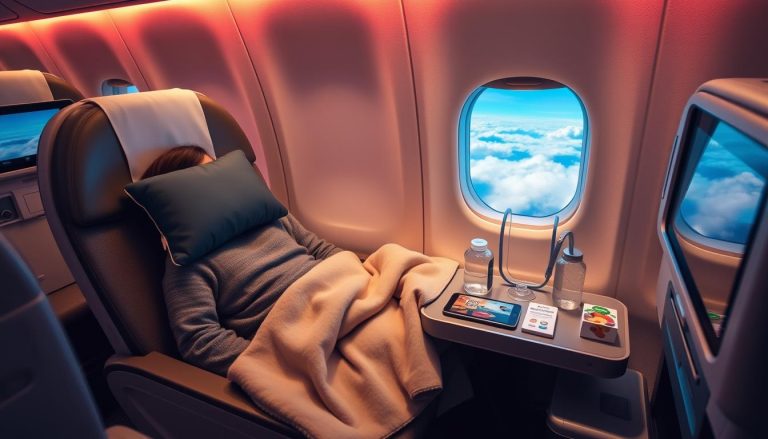
Getting enough sleep on long flights keeps you healthy and well. If you’re flying for 5 to 14 hours, planning to sleep well is key. This can help you beat jet lag and rest better while traveling.
Experienced travelers suggest sleeping instead of eating during the flight. This is especially true for overnight flights across time zones. In-flight meals can eat into your sleeping time by 2 hours. Sleeping well helps adjust to the time at your destination faster. For instance, on a New York to London flight, 5 to 6 hours of sleep can really refresh you.
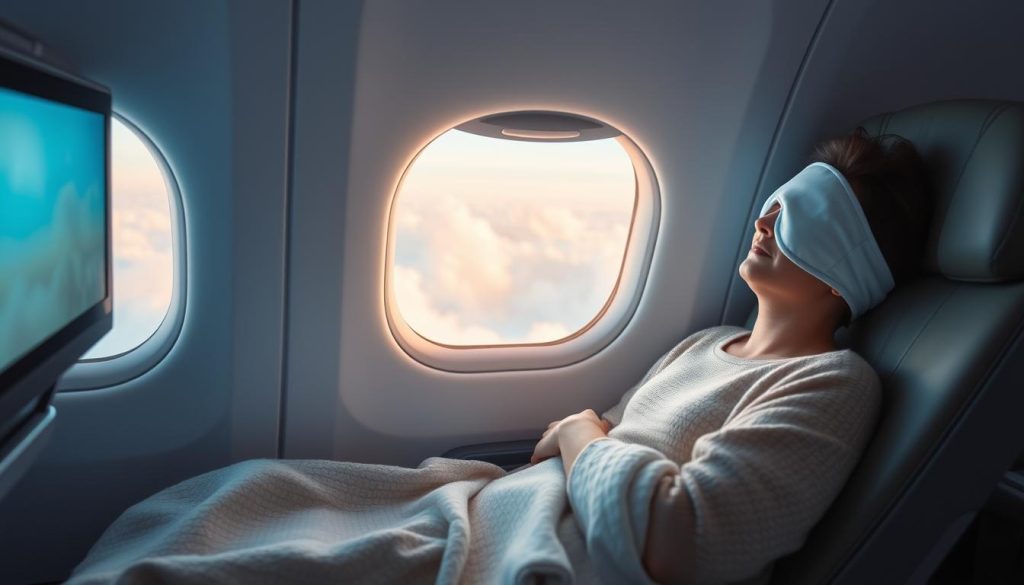
While airlines usually offer pillows, they might run out. Bringing a travel pillow and an eye mask might help. Booking seats with more legroom, like emergency exit rows, can improve comfort. These seats might cost more but are worth it for better sleep.
Flight attendants on long flights get breaks for rest. They usually get at least 90 minutes to sleep, completing a full sleep cycle. This is crucial for their safety and decision-making. It’s also a good practice for passengers who want to rest well.
“The need for at least one full sleep cycle is emphasized for optimal operational safety and decision-making abilities.”
Moving around in your seat is good for blood flow and reduces stress from sitting too long. Flight attendants often take their shoes off to help with circulation. This could also make you more comfortable.
Very long flights, like Newark to Singapore, stress your body with lots of sitting and dry air. The dryness can make skin conditions worse. Drinking water often helps with this and fights jet lag too.
- Prioritize sleep over meal service when flying overnight.
- Bring personal comfort items like travel pillows and eye masks.
- Consider extra legroom seats for better sleep quality.
- Follow routines that promote blood circulation, like removing shoes periodically.
- Stay hydrated by drinking water throughout the flight.
| Flight Duration | Potential Sleep Time | Rest Practices |
|---|---|---|
| New York to London | 5-6 hours | Prioritize sleep, use provided pillows |
| Newark to Singapore | 18+ hours | Bring own comfort items, stay hydrated |
| Dallas-Fort Worth to Melbourne | 17+ hours | Extra legroom seats, frequent movement |
Freshening Up During the Flight
Keeping clean on a plane makes the journey more comfortable, especially high up where the air is dry. Here are a few tips for feeling fresher mid-flight:
- Use Face Wipes: It’s important to keep your skin clean. Face wipes help get rid of dirt and oil, keeping your skin healthy.
- Brushing Teeth: A small toothbrush can make a big difference. Brushing your teeth makes you feel instantly clean and refreshed.
- Change into Fresh Clothes: If you can, wearing a new set of clothes during the flight really helps with feeling fresh.
Circulation improvement is key during a flight. Walking around or stretching every couple of hours can help avoid DVT and boost your health.
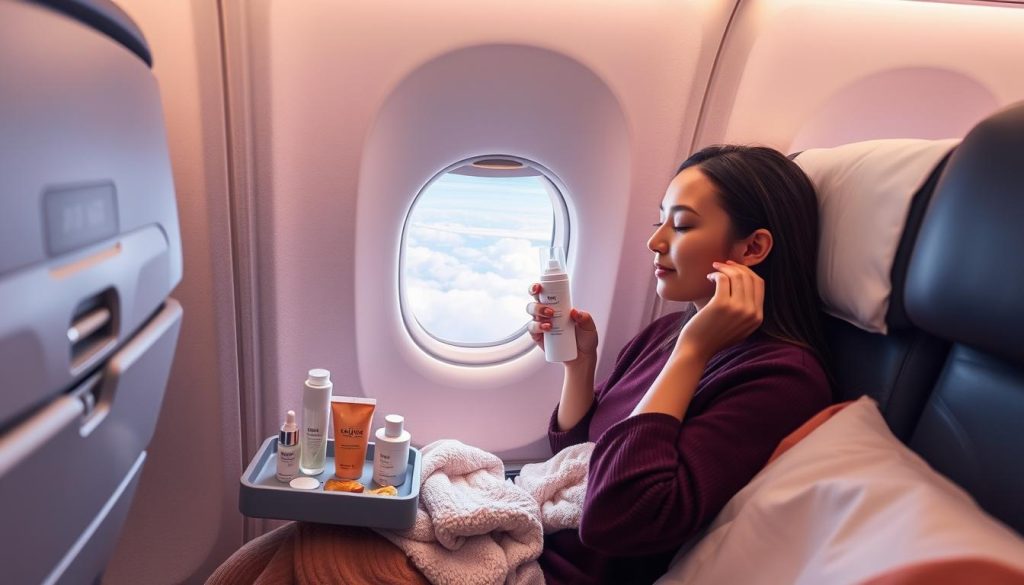
Moisturizing is very important because the air in the cabin is dry. Look for products with Hyaluronic Acid, as they can make your skin more hydrated. Don’t forget to use hand cream and lip balm regularly to stop your skin from drying out.
Staying hydrated is crucial on a plane. Try to drink 2-3 liters of water to fight off dehydration and keep energy up. Stay away from drinks with caffeine or alcohol to keep hydration levels high.
| Trick | Benefit |
|---|---|
| Face Wipes | Removes dirt and oil, maintaining clean skin |
| Brushing Teeth | Instantly freshens breath and mouth |
| Change Clothes | Enhances comfort and freshness |
| Hydration | Prevents dehydration and reduces fatigue |
| Moisturizers | Boosts skin hydration by up to 200% |
Essential In-Flight Items to Keep Handy

Packing the right items for a long-haul flight boosts comfort and hygiene. It’s key to have them in your carry-on for easy reach throughout your trip.
Basic Toiletries
Don’t forget travel-size toothbrush, toothpaste, deodorant, and moisturizer. The air in planes is drier than a desert. This makes your skin dry out faster.
A good moisturizer becomes a must-have. While some airlines give out amenity kits, your own items might be better.
Face and Hand Wipes
Face and hand wipes keep you feeling clean on long flights. They’re great for clearing off sweat and dirt. Plus, they help you stay refreshed without water.
Breath Fresheners
After eating on a plane, breath fresheners are a must. Products like Wisps are great for a quick refresh. They’re key for keeping your mouth fresh without water.
Rejuvenating After You Land
Arriving after a long flight often leaves you tired and needing to refresh. Here are some quick ways to feel better fast.
Take a Quick Shower or Wash Up
The first step to revive after landing is to clean up. The low humidity in planes can make your skin feel dry and tight. A fast shower or washing your face can really help you feel more awake and comfortable. It’s an easy but powerful way to clean off dirt and prevent skin problems.

Change into Fresh Clothes
Putting on new clothes after washing up can greatly lift your spirits. This simple act can instantly make you feel fresh and new. It’s a key but often missed step in feeling good after a flight, helping you recover both in mind and body.
Do Some Light Stretching or Exercise
Light stretching or exercise can help energize your body. The stale, dry air on the plane and sitting too long can slow your blood flow. Stretching or a short walk can improve circulation, helping you adjust to new time zones quicker. Besides making you less tense, it also lowers the chance of skin problems by boosting blood flow.
Conclusion
Facing a long-haul flight might seem hard, but it can get easier with some travel tips. Get ready for your flight by adjusting when you sleep and packing important self-care items. Staying hydrated and picking the right foods can also help you feel better during and after your trip.
Once you’re on the plane, small steps like using face and hand wipes can make a big difference. Doing some light stretches or exercises in your seat can help keep you comfortable. It’s also key in preventing problems like Deep Vein Thrombosis. To fight off the dry air on the plane, keep your skin moisturized and skip the heavy makeup.
After you land, taking a quick shower and putting on clean clothes can refresh you quickly. By following these tips, from fixing your sleep schedule to keeping hydrated and having self-care items ready, you’ll reach your destination feeling refreshed and excited to explore.