Sustainable Travel Guide: Ecotourism in the Sundarbans
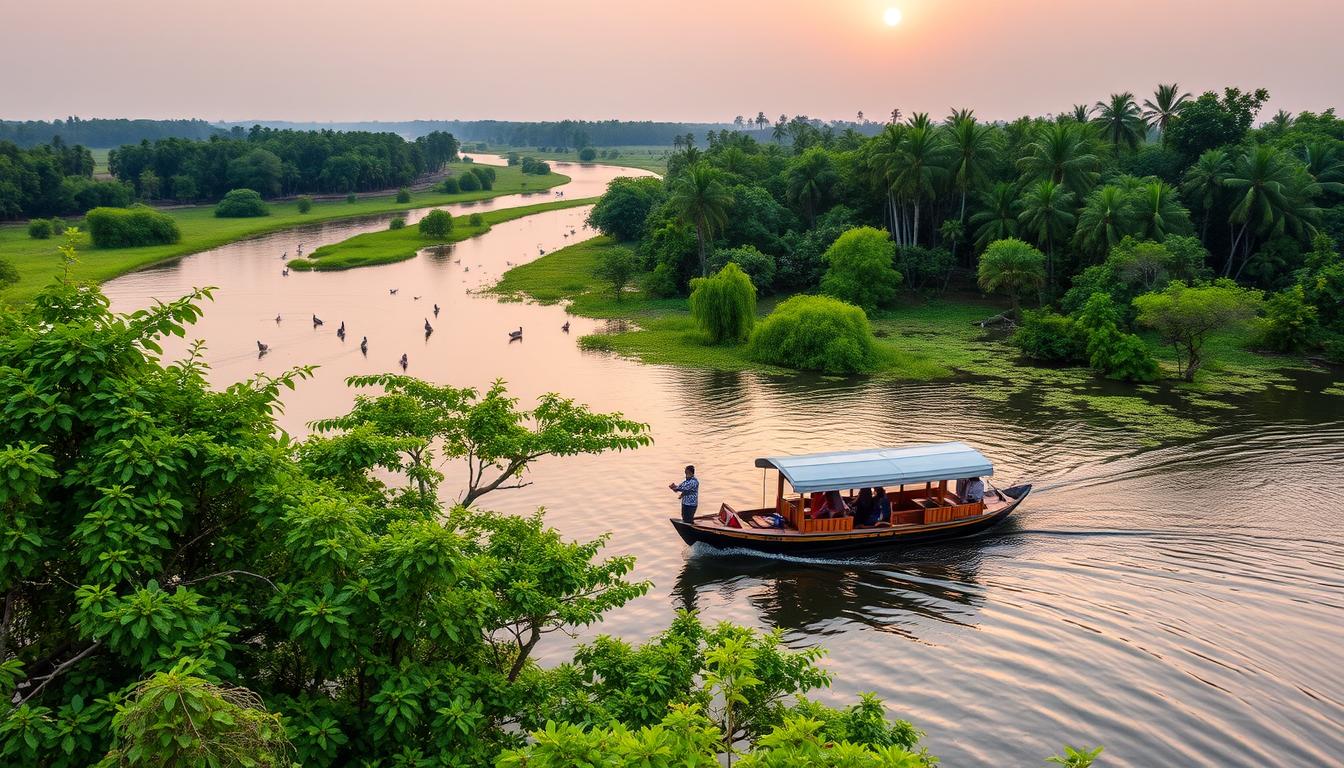
Ever thought about how your travel choices affect the world’s most delicate ecosystems? The Sundarbans, the largest mangrove forest, offers a chance to see stunning landscapes and diverse wildlife. Your visit can help protect this UNESCO World Heritage Site and support local people and animals.
This guide will show you the beauty of sustainable travel in the Sundarbans. You’ll learn about the amazing plants and animals here. You’ll also see how to connect with the lively communities that live here. By doing so, you help keep this special place safe for the future.
Introduction to Ecotourism
Ecotourism is a special kind of travel that helps protect nature and supports local people. It lets visitors explore the world in a way that keeps ecosystems healthy. This way, they learn more about local cultures and help preserve biodiversity.
In places like the Sundarbans, the biggest mangrove forest, ecotourism is key. It helps protect the environment while also helping the local economy. Many people now work in ecotourism, moving from jobs that didn’t pay well to ones that do.
When you travel responsibly, you help protect nature and keep cultures alive. Most locals say that working together with tourists makes ecotourism even more valuable. They believe that seeing how people live and the area’s wildlife is a big part of this value.
Being part of ecotourism can bring many benefits. It can improve access to clean water, make the environment more stable, and lead to better land use. It also helps local communities, including women, by giving them economic opportunities. This shows how tourism can change lives while keeping the planet safe.
Understanding the Sundarbans Mangrove Forest
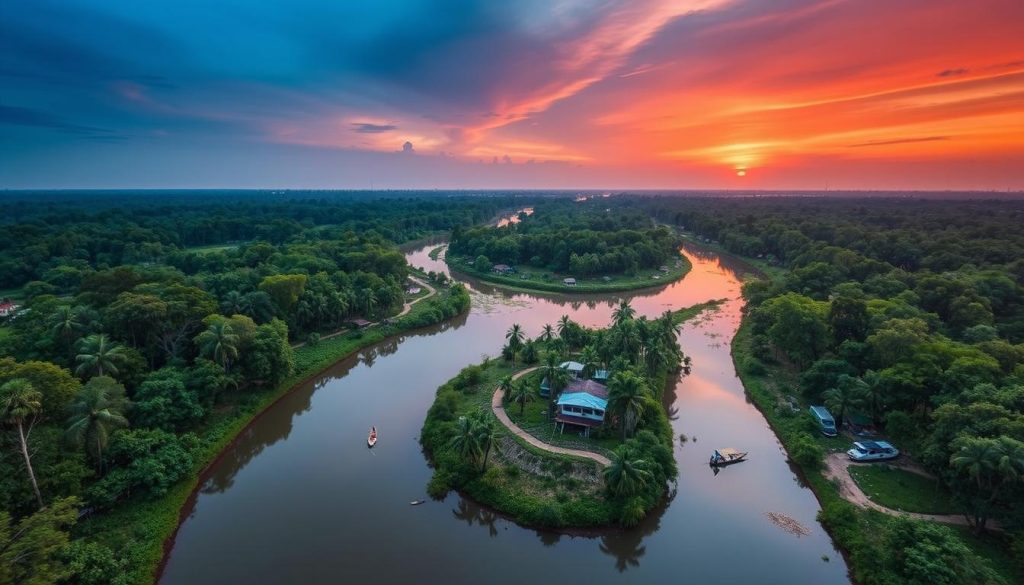
The Sundarbans mangrove forest covers an area of 10,000 km². It’s one of the biggest mangrove ecosystems in the world. This place is not just amazing to see but also very important for biodiversity.
It’s home to many species, like the Royal Bengal Tiger and rare estuarine crocodiles. The forest is a safe place for these animals.
The Sundarbans is more than just a home for animals. It protects the coast by stopping soil erosion. It also helps many marine species grow.
The health of this ecosystem affects local marine life and farming. It also keeps the environment stable.
Local people rely on the Sundarbans for their living. They fish, collect honey, and do other traditional jobs. These activities are important for their culture and income.

Ecotourism is also important in the Sundarbans. It helps the economy and protects the biodiversity. It supports local businesses and helps women start eco-friendly projects.
When you visit the Sundarbans, you learn about its importance. You help in keeping this special place safe for the future.
Ecotourism in the Sundarbans: Definition and Importance
Ecotourism is key in the Sundarbans, offering a green way to see this special place. It helps protect wildlife and helps local people. This method also brings attention to the area’s rich life and encourages visitors to help protect it.
Benefits for Wildlife Conservation
Ecotourism helps a lot with wildlife protection in the Sundarbans. Money from eco-tourism goes back to help the environment. This money is vital for keeping the area’s many species safe.
Places like the Sundarban National Park show how ecotourism works. It helps visitors and wildlife work together for a better future.
Impact on Local Economies
Ecotourism boosts local economies in the Sundarbans. About 45,000 tourists visit each year, bringing in new money. This money helps people find jobs and live better lives.
Jobs in ecotourism, like guiding tours, create new opportunities. Local artists also benefit, showing off their work and helping the community financially. This shows how important sustainable tourism is for the area’s economy.
| Aspect | Details |
|---|---|
| Annual Tourists | 45,000 |
| Job Opportunities | Multi-billion dollar industry |
| Protected Area Coverage | 40% of Sundarban National Park |
| Mangrove Coverage | 55% land vegetation, 45% water body/inter-tidal zone |
| Plant Species | 64 species in the Indian Sundarbans |
Choosing Eco-Friendly Tours
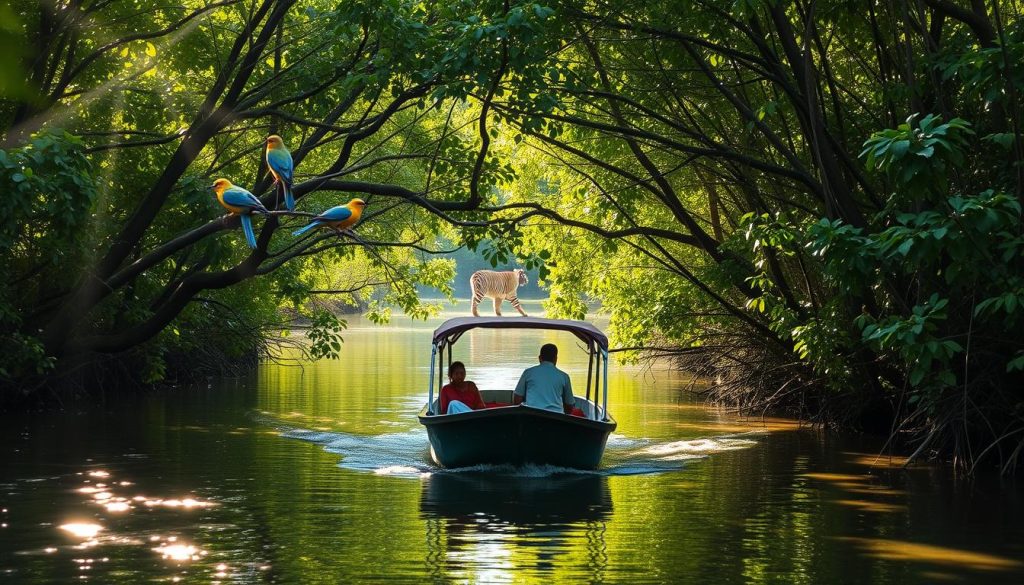
When planning your journey through the Sundarbans, picking eco-friendly tours is key. These tours help protect the environment and support local communities. They make your trip both enjoyable and sustainable.
Look for Green Certifications
It’s important to choose tour operators with green certifications. These certifications mean they follow sustainable practices. This includes using energy-efficient lights, managing waste, and saving water.
Staying in eco-friendly resorts also helps. These places focus on protecting the environment while supporting local businesses. This way, you can enjoy the Sundarbans’ beauty without harming it.
Support Community-Based Tourism
Supporting community-based tourism lets you connect with local cultures. Staying in places owned by locals offers real experiences and lessens your impact on the environment.
Joining local conservation efforts, like planting trees or monitoring wildlife, is also beneficial. It helps keep the environment healthy and supports the local community. Your visit to the Sundarbans can make a positive difference in their lives.
| Eco-Friendly Practices | Benefits |
|---|---|
| Green certifications in accommodations | Assures sustainable operational practices |
| Locally sourced amenities | Supports local economies and reduces transportation impacts |
| Volunteer opportunities with local organizations | Engages travelers in meaningful conservation efforts |
| Electric and hybrid vehicle transportation | Reduces carbon footprint during travel |
| Following Leave No Trace principles | Preserves natural habitats and local wildlife |
Wildlife and Nature Exploration
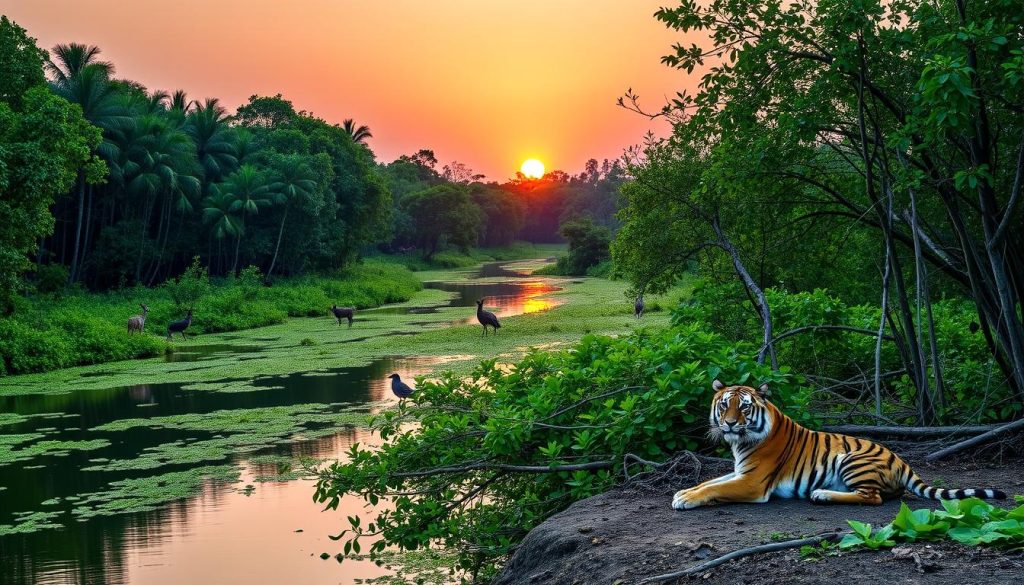
The Sundarbans is a top spot for wildlife lovers. It’s the world’s biggest mangrove forest, full of beauty and endangered animals like the Bengal Tiger. With over 693 species, it’s a dream for nature fans and those who care about the planet.
Unique Flora and Fauna
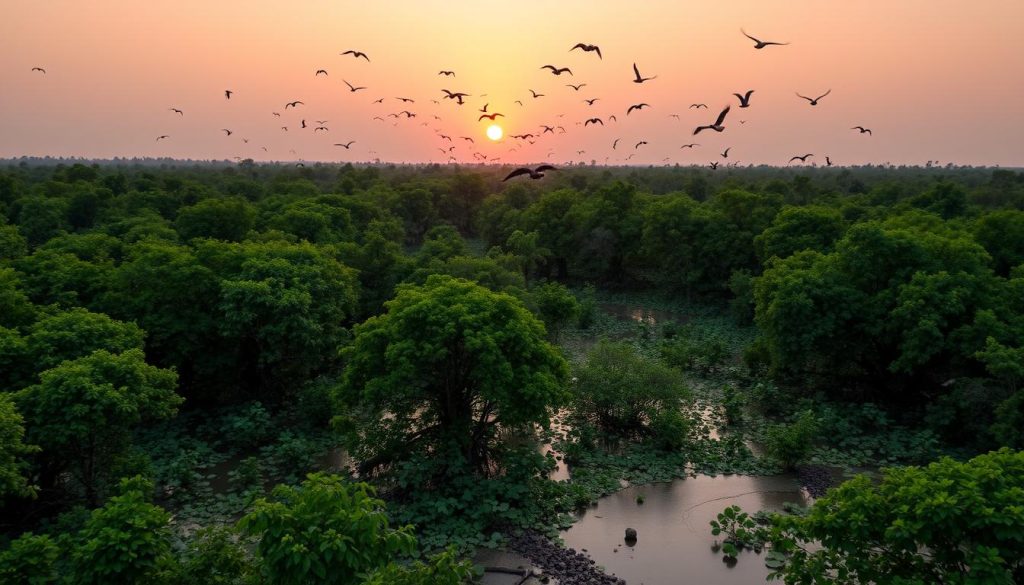
The Sundarbans is home to 334 plant types, 49 mammals, and 260 birds. Some, like the Royal Bengal Tiger, are rare worldwide. The area’s mix of wetlands and mangroves makes it rich in life. Visitors can see many species and learn about their importance.
Best Practices for Responsible Wildlife Viewing
It’s key to watch wildlife without harming the environment. Here are some tips:
- Maintain a Safe Distance: Keep away from animals to not stress them or change their behavior.
- Use Binoculars: Binoculars let you see wildlife up close without disturbing them.
- Avoid Flash Photography: Flash can scare animals; use natural light instead.
- Stay on Designated Paths: Walking on trails helps protect the habitat.
- Respect Local Regulations: Follow rules to help preserve the Sundarbans.
By watching wildlife responsibly, you help protect the Sundarbans. This way, future visitors can also enjoy its wonders.
Community Benefits of Ecotourism
Ecotourism in the Sundarbans brings many benefits to the community. It focuses on protecting the environment and empowering locals. This helps both the economy and culture of local areas.
Economic Empowerment and Job Creation
Ecotourism helps local communities financially. It creates jobs that last, giving people a steady income. In Munshiganj at Shymnagar, 96.3% of people want to work in ecotourism.
Locals, including women, can find jobs in tourism. This boosts their household income and helps them financially.
A look at income shows how valuable this sector is:
| Location | Average Annual Income (BDT) | Benefit-Cost Ratio |
|---|---|---|
| Sitakunda | 11,855,223.9 | Beneficial |
| Mirsharai | 12,180,952.4 | Beneficial |
In places like Sillary Gaon, ecotourism is key to sustainable growth. It’s a big part of international travel spending. This shows a chance to grow local economies while protecting nature.
Cultural Preservation Initiatives
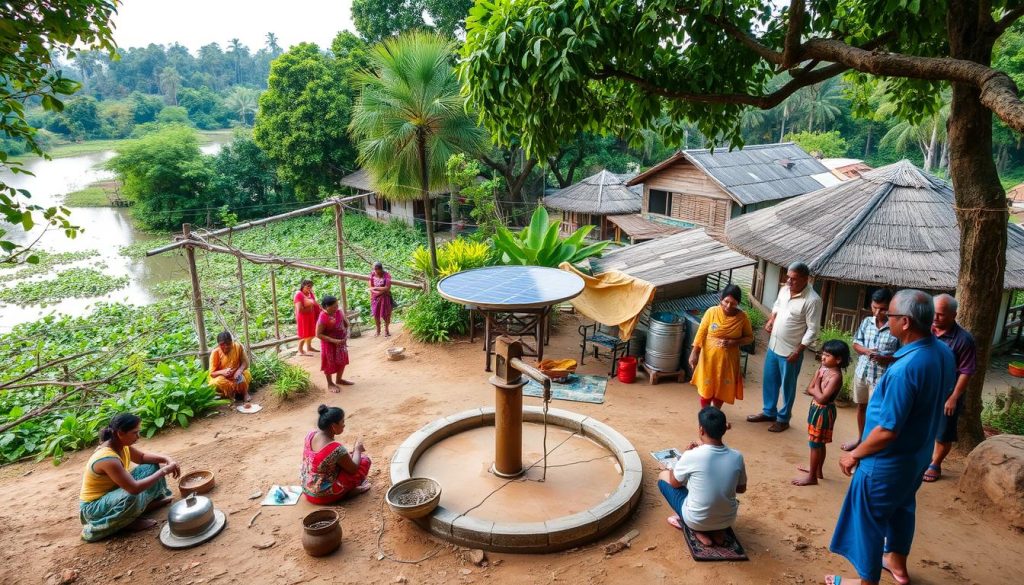
Ecotourism helps keep local traditions alive. The Sundarbans Eco Village lets visitors try traditional crafts and food. This keeps cultural heritage alive through tourism.
It also promotes local involvement in protecting the environment. This includes reducing waste and saving rainwater. It brings people together and improves life by giving better access to resources.
Challenges of Sustainable Travel in the Sundarbans
The Sundarbans is famous for its biodiversity and is a key home for the Bengal tiger. It faces big challenges from growing tourism. Keeping a balance between tourism and conservation is key to protect nature and help local people.
Balancing Tourism and Conservation
Too many visitors can harm the Sundarbans’ fragile ecosystem. Sustainable tourism needs careful planning to reduce harm. Eco-friendly tours and cultural experiences are good ways to help.
Authorities are setting limits on visitors and improving waste management. This helps keep wildlife habitats safe.
Ensuring Fair Resource Distribution
Sharing resources fairly is important for local peace. Making sure tourism benefits everyone can stop unfairness. Training for tour guides and eco-lodge operators helps.
This approach supports sustainable travel and encourages protecting nature. It makes people feel responsible for their environment.

How to Plan Your Visit to the Sundarbans
Planning your visit to the Sundarbans means picking the right place to stay and how to get there. Look for places that are good for the environment. This way, you help the local wildlife and culture.
Choosing Sustainable Accommodation
When picking where to stay, choose places that are green. You can find fancy resorts, simple lodges, or budget-friendly guesthouses. Many tour operators have packages that include everything you need. This helps the local economy and makes your stay comfortable.
| Type of Accommodation | Features | Estimated Cost per Night |
|---|---|---|
| Luxury Resorts | High-end amenities, spa services, guided tours | $150 – $300 |
| Eco-Lodges | Environmentally friendly, local materials, community involvement | $80 – $150 |
| Budget Guesthouses | Basic services, local charm, opportunities to interact with locals | $20 – $80 |
Transport Options That Minimize Environmental Impact
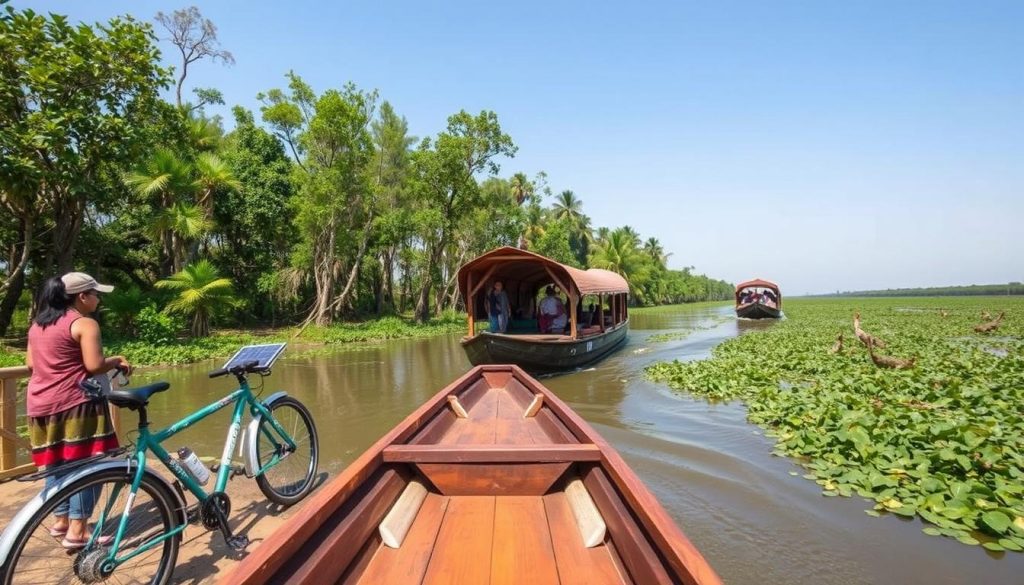
For a green trip, use public transport or private cars that are eco-friendly. Getting to the Sundarbans from Kolkata usually starts with a train to Canning. Then, you take a road trip to Godhkhali Jetty. Many tour companies offer special Sundarban tours that include direct transport from Kolkata.
Choosing green places to stay and travel helps the Sundarbans. This area is full of life, and your choices help protect it.
Conclusion
Exploring the Sundarbans through ecotourism is a unique chance. It lets you see one of the world’s most amazing ecosystems. At the same time, it helps protect the environment and supports local communities.
Your travel choices can make a big difference. They help keep this important area in balance. This balance is key for taking care of it well.
Understanding sustainable tourism gives you power. You can help local economies that depend on tourism. Studies show eco-tourism helps countries like India and Bangladesh by creating jobs and improving infrastructure.
Every choice you make has an impact. It helps the economy grow while keeping culture and nature alive. This is a win-win for everyone.
Thinking about your trip to the Sundarbans? Remember, it’s more than just a place to visit. It’s a chance for change.
By choosing responsible tourism, you help keep this amazing place alive. You ensure it stays beautiful for those who come after you. Your trip can leave a lasting mark on the environment and local communities.