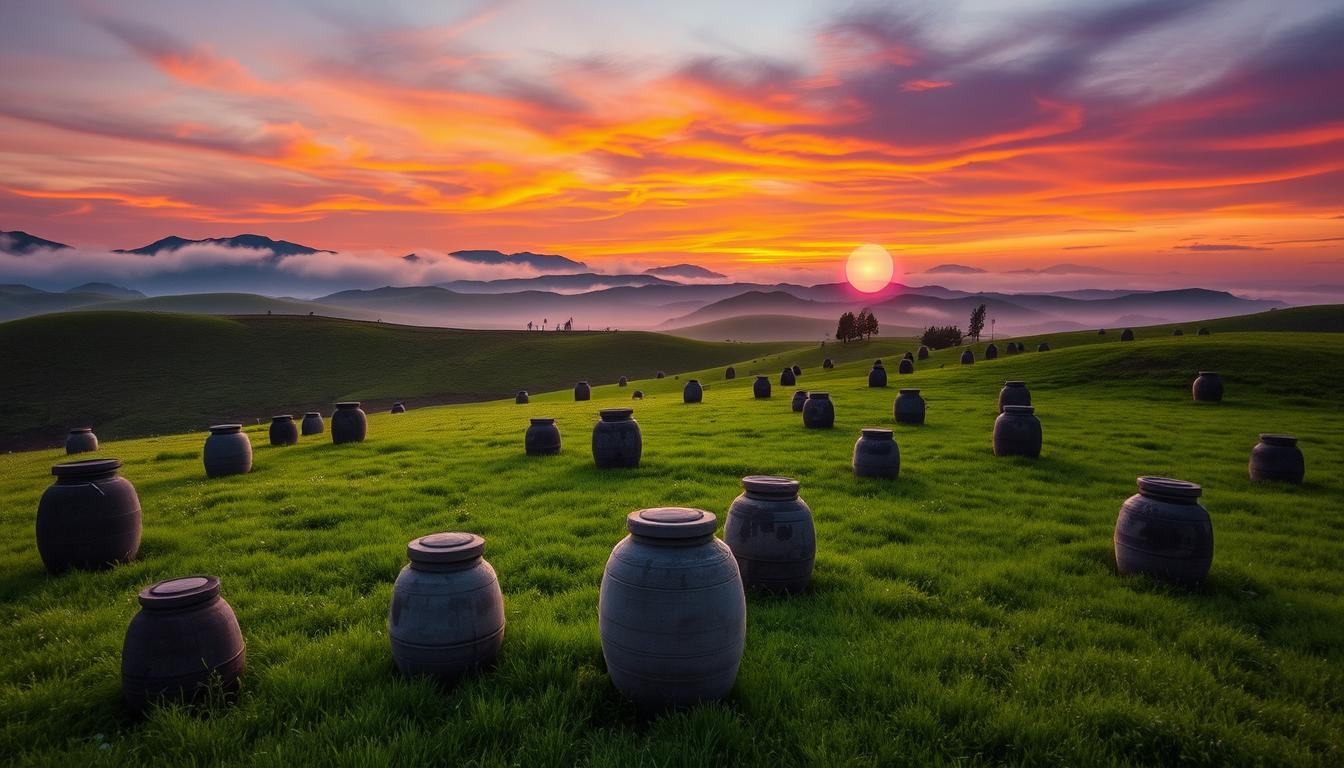
Unveiling the Myths: Plain of Jars Legends Revealed
Ever thought about the stone jars in Laos and their possible secrets? The Plain of Jars is a site filled with thousands of ancient jars. It’s a place where local legends and history meet.
These jars date back to the late Iron Age. They vary in size and weight, with some jars reaching up to ten feet tall and weighing tons. Exploring the Plain of Jars legends reveals connections to ancient burial practices and Southeast Asia’s cultural heritage.
Introduction to the Plain of Jars
The Plain of Jars is a fascinating site in Laos’s Xiangkhoang Plateau. It’s filled with thousands of ancient megalithic jars. This place is a hidden treasure in Laos tourism, waiting to be explored.
There are over 90 jar sites in Xiangkhouang Province. Each site has jars, some as tall as three meters. These jars show us what life was like in ancient times.
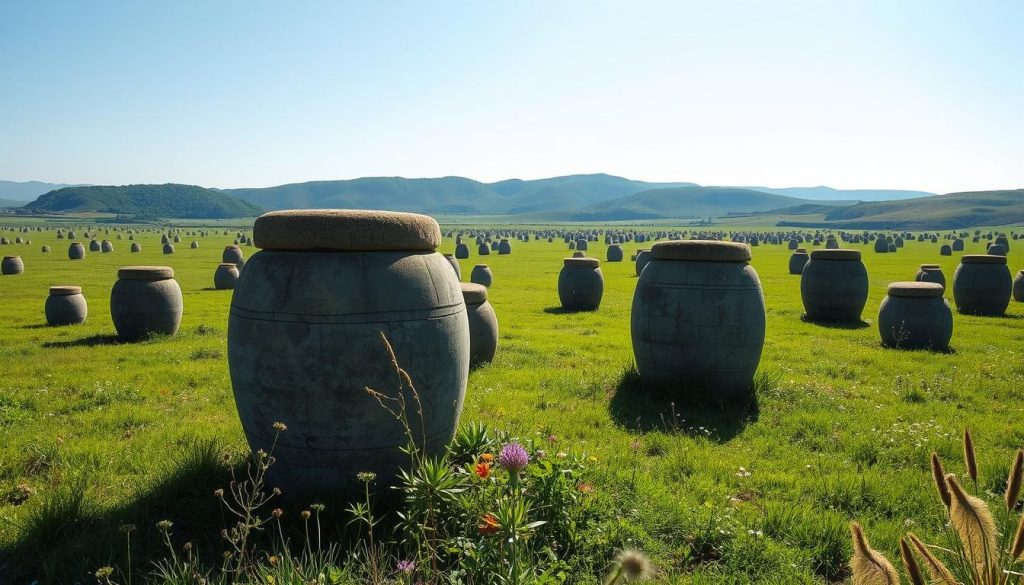
The jars are made of sandstone, granite, and limestone. They show the skill of ancient stoneworkers. Excavations have found human remains and artifacts, showing the site’s importance.
For history buffs, archaeology fans, or adventure seekers, the Plain of Jars is a must-see. It offers a mix of ancient mystery and natural beauty. Visitors can dive into this historic landscape.
Historical Context of the Plain of Jars
The Plain of Jars has a rich history that goes back to 500 B.C. and lasts until A.D. 800. This time saw the rise of ancient civilizations in Southeast Asia, known for their unique burial ways. Today, over 2,000 jars are found across more than 60 sites, mainly in Xieng Khouang Province.
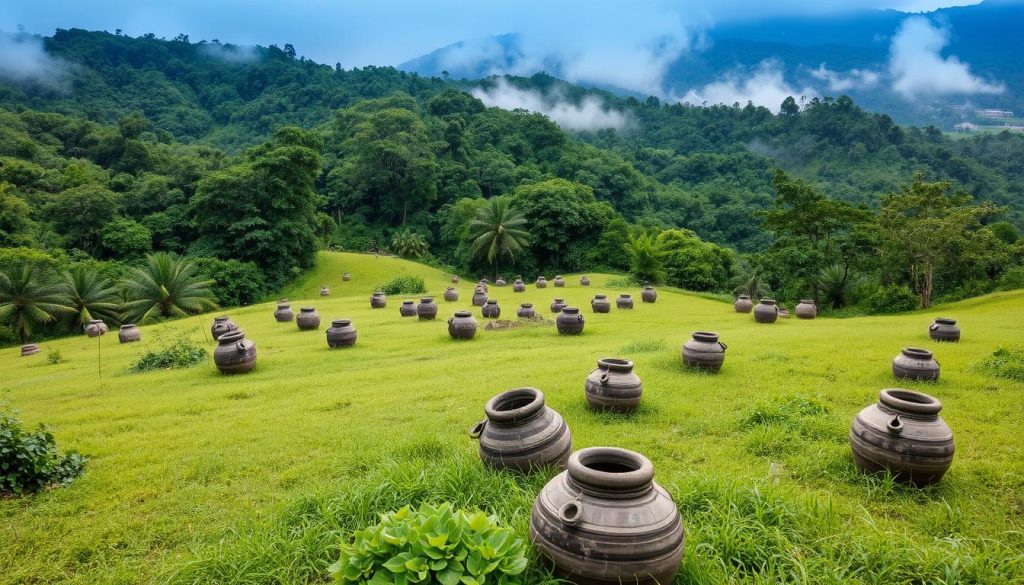
These jars come in different sizes and ages. The tallest jar is nine feet tall and weighs up to 14 tons. Madeleine Colani’s work in the 1930s showed that these jars might have been used for burials. They held the ashes of women and children, showing a deep cultural tradition.
- Historical estimates place construction of the jars around 2,000 years ago.
- The stones used in their creation include five types, such as coral limestone and granite.
- A quarry located about 100 kilometers away likely supplied the rock, indicating the complexity of transportation methods.
The jars’ layout shows they were connected to ancient trade routes in the Mekong region. Their spread tells us about the social life and trade of the time. Learning about this helps us see the Plain of Jars’ cultural and historical value, showing the complexity of ancient societies in this area.
Ancient Artifacts and Their Importance
The Plain of Jars is a window into the past. It shows the creativity and traditions of ancient people. The site is filled with massive stone jars, connecting us to history.
Learning about these jars and their materials helps us understand their role. This knowledge sheds light on the site’s historical value.
Stone Jars: Construction and Size
The jars at the Plain of Jars are huge. Some are 3 meters tall and weigh up to 14 tons. They have a unique shape with a lip rim for lids, though many lids are gone.
Studies show there are at least 3,000 jars here, dating back to the Iron Age. Their size and design show they were very important in ancient times.
Materials Used to Create the Jars
The jars are made from sandstone, granite, and limestone. These materials come from the area, showing the skill of ancient craftsmen.
Findings of burial goods and human remains near the jars highlight their role in ancient funerals. This adds depth to their significance.
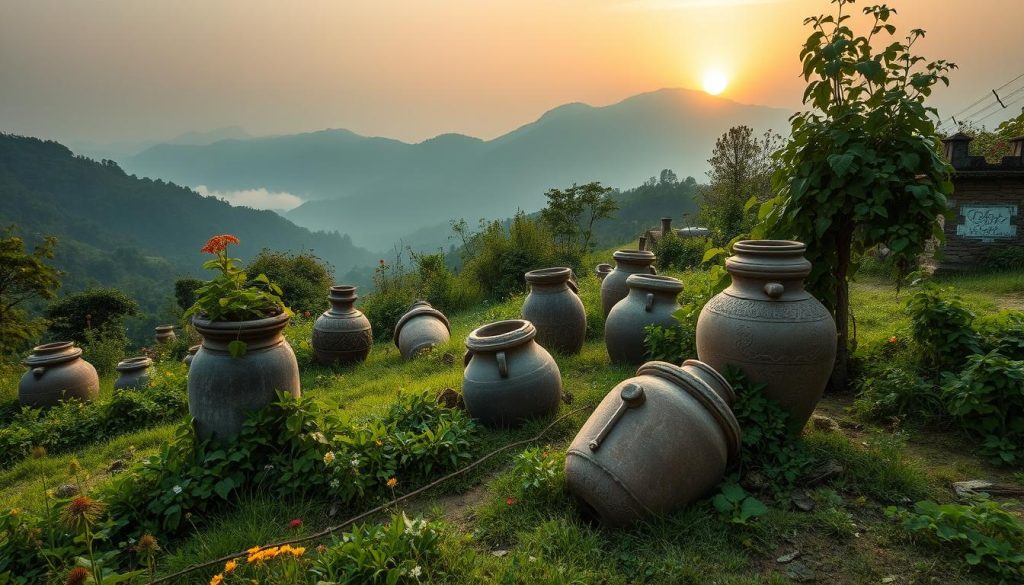
Plain of Jars Legends and Local Lore
The Plain of Jars legends tell stories deeply connected to the area’s culture. They speak of giants making huge stone jars to celebrate their wins. People believe these jars were used for special ceremonies, like making rice wine.
These stories link cultural identity with ancient artifacts. The giants in these tales represent strength and the land’s spirit. They make the site more fascinating and show the local beliefs over time.
There are over 90 sites with about 2,500 jars and fragments. These jars, from the Iron Age, are around 2,000 years old. They spark curiosity and make visitors think about the stories they tell.
| Legend Aspect | Description |
|---|---|
| Number of Jar Sites | More than 90 locations |
| Quantity of Jars | Around 2,500 jars and fragments |
| Construction Period | 500 BC – 200 AD, possibly older |
| Size of Jars | Height: 1 to 3 meters, diameter variations |
| Notable Site | Thong Hai Hin with over 300 jars |
| Entrance Fee | 10,000 Kip (US$ 1.30) per person |
These legends and stories make the Plain of Jars even more special. They connect the past with today as you explore this amazing place.
Archaeological Discoveries at the Site
The Plain of Jars is a fascinating place filled with ancient secrets. Explorers find clues about old civilizations here. They learn about burial practices and what these jars might have been used for.
Burial Practices and Human Remains
Studies show that some jars were used for burials. Excavations have found human remains and burial items. These finds suggest the jars played a big role in ancient funerals.
Artifacts like iron tools and ceramics have also been discovered. They show the complex beliefs of the past about death and the afterlife.
Theories on Jar Functionality
Many theories exist about what the jars were for. Some think they were used for burials, while others believe they collected rainwater. This helped travelers on old trade routes.
Other ideas include their use in ceremonies or for watching the stars. These different views show how complex and meaningful these jars are.
| Jars Functionality | Evidence Collected |
|---|---|
| Burial Vessels | Human remains, ceramics, iron tools |
| Rainwater Collection | Strategic location near ancient trade routes |
| Ceremonial Use | Artifacts suggesting ritualistic practices |
Tourism in Laos: The Plain of Jars as an Attraction
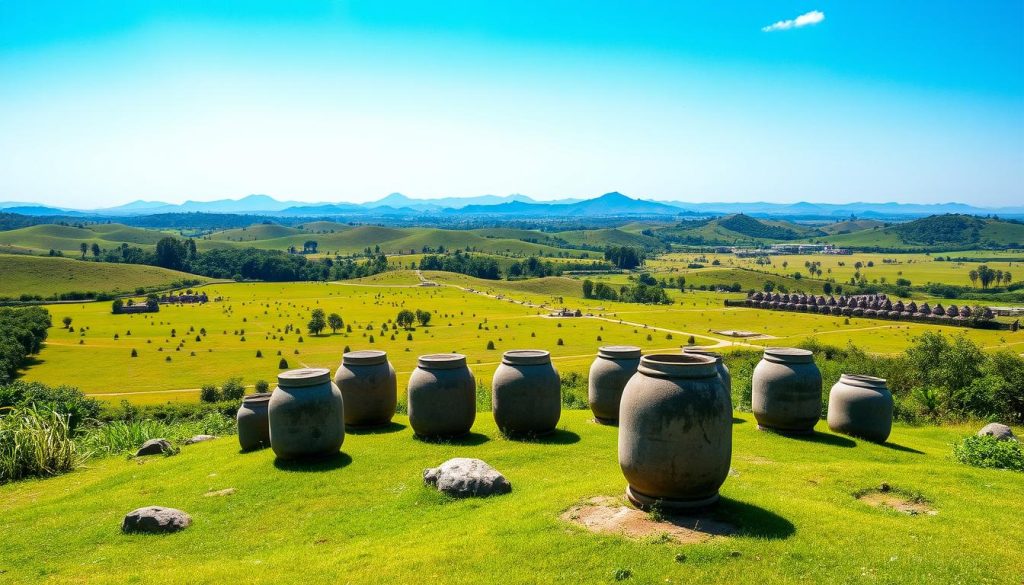
The Plain of Jars is a top spot in Laos tourism. It draws visitors with its ancient art and mystery. The site has about 2,000 stone jars from the Iron Age, making it a key destination for history and culture lovers.
In Xieng Khuang province, the Plain of Jars has seven sites open to tourists. Site 1 is the most visited. The jars are huge, with some over 2 meters tall and weighing up to 10 tons. They are thought to be ancient funerary urns, with human remains found nearby.
Getting to the Plain of Jars is easy. Daily buses run from Phonsovan to Vientiane and Luang Prabang. Flights from Vientiane to Xiang Khouang Airport also make it accessible. Tourism has grown since it was named a UNESCO World Heritage Site in 2019.
Here’s a quick overview of this amazing site:
| Site | Tickets (LAK) | Main Features | Visitor Activity |
|---|---|---|---|
| Site 1 | 15,000 | Tallest jar over 2m | Most visited |
| Site 2 | 10,000 | Picturesque views with hills | Popular |
| Site 3 | 10,000 | Start of the tour | Consistently visited |
| Site 52 | N/A | Largest known site with 392 jars | Rarely visited, foot access only |
The Plain of Jars is becoming more popular for those looking for real travel experiences. Efforts to protect it are underway. This will help keep its history alive and offer visitors a chance to explore its mysterious past.
UNESCO World Heritage Significance
The Plain of Jars was named a UNESCO World Heritage Site in 2019. This honor shows its cultural and historical value. The area has over 90 jar sites, covering hundreds of square kilometers.
These sites hold around 2,500 jars and fragments. Each jar is a piece of ancient burial practices. The jars, up to three meters tall, show the skill of the Iron Age people, dating back 500 BC to 200 AD.
But, the Plain of Jars faces big threats. There’s still a lot of unexploded ordnance, posing danger to everyone. UNESCO’s help is crucial to protect this site. It’s important to keep the jars safe for future visitors.
This recognition helps us learn more about ancient civilizations in Southeast Asia. It also makes us feel responsible for preserving it. UNESCO’s work can inspire people to help save this important site.
| Feature | Details |
|---|---|
| Number of Jar Sites | Over 90 |
| Total Jars | Around 2,500 |
| Height of Jars | 1 to 3 meters |
| Jars Weight | Up to 20 tons |
| Historical Period | Iron Age (500 BC to 200 AD) |
| Years of Bombing | 1964 to 1973 |
| Unexploded Bombs | Approximately 80 million |
| UNESCO Recognition Date | May 14, 2019 |
The Cultural Significance of the Plain of Jars
The Plain of Jars is more than just ancient artifacts. It holds deep cultural value for the area. The stone jars give us a peek into the lives of ancient people. They show us the complex societies of Southeast Asia’s past.
Impact on Southeast Asian History
The jars, with over 2,100 found across ninety sites, are key to understanding Southeast Asia’s history. They date back to the Iron Age, from 500 BCE to 500 CE. They were likely used as burial urns, showing a deep understanding of life and death.
Connection to Prehistoric Civilizations
The jars connect us to ancient civilizations in the region. Human remains and artifacts found with the jars give us clues about their beliefs and practices. Excavations have uncovered pottery and tools, shedding light on their daily lives and rituals. Ongoing research may uncover more sites, enriching our knowledge of their history.

Conclusion
Your journey into the Plain of Jars legends reveals a rich mix of history and mystery. This site in Xieng Khouang Province is full of historical enigmas. It invites you to think about its past and connect with its cultural heritage.
As you explore, you’ll see thousands of stone jars spread over 15,000 square kilometers. They were made from different materials. Their importance goes beyond being old relics.
Archaeologists like Madeleine Colani have worked hard to uncover the stories behind these jars. Her book, “The Megaliths of Upper Laos,” suggests they were used for funerals. They held personal items for the afterlife.
This knowledge adds depth to our understanding of the region’s history and its people. The Plain of Jars is key to Lao identity and Southeast Asian heritage.
The Plain of Jars is a testament to ancient civilizations’ ingenuity and culture. Each jar is a piece of history, linking us to those who came before. This ongoing discovery keeps the Plain of Jars fascinating, drawing both curiosity and respect.