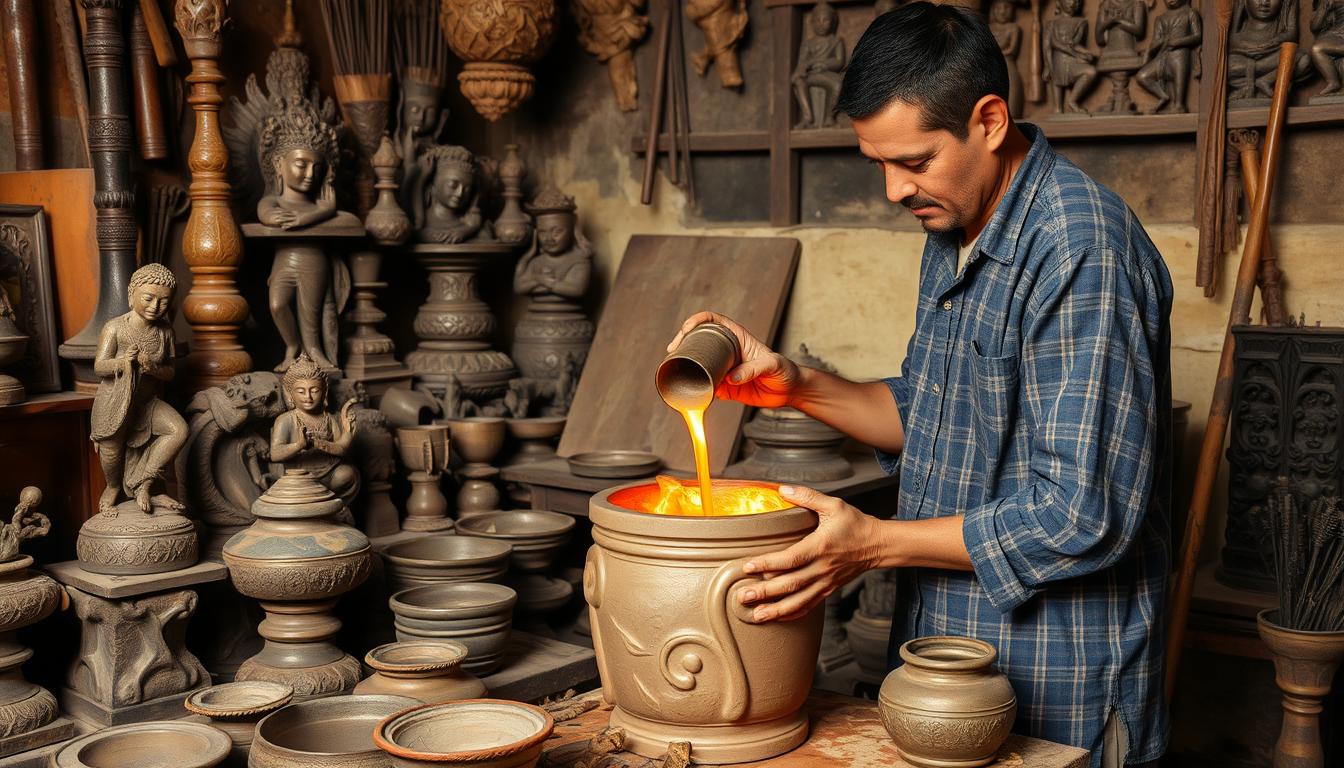
Discover the Art of Mandalay Bronze Casting
What secrets lie behind the shimmering surfaces of ancient bronze art? As you explore Mandalay bronze casting, you’ll find a craft that has lasted for thousands of years. It comes from Myanmar and is known for its detailed sculptures, like the revered Buddha statues.
The process shows the skill and dedication of artisans. They use the lost-wax method, passed down through centuries. Each bronze Buddha statue is a story of creativity and tradition. Some are antiques, hundreds of years old.
The Ngu Xa bronze casting guild is famous. It includes craftsmen from five villages. They show their talent through detailed methods, like shaping, melting, and controlling temperature.
As you read this article, get ready to see things differently. Mandalay has a special place in the world of bronze casting.
Introduction to Bronze Casting
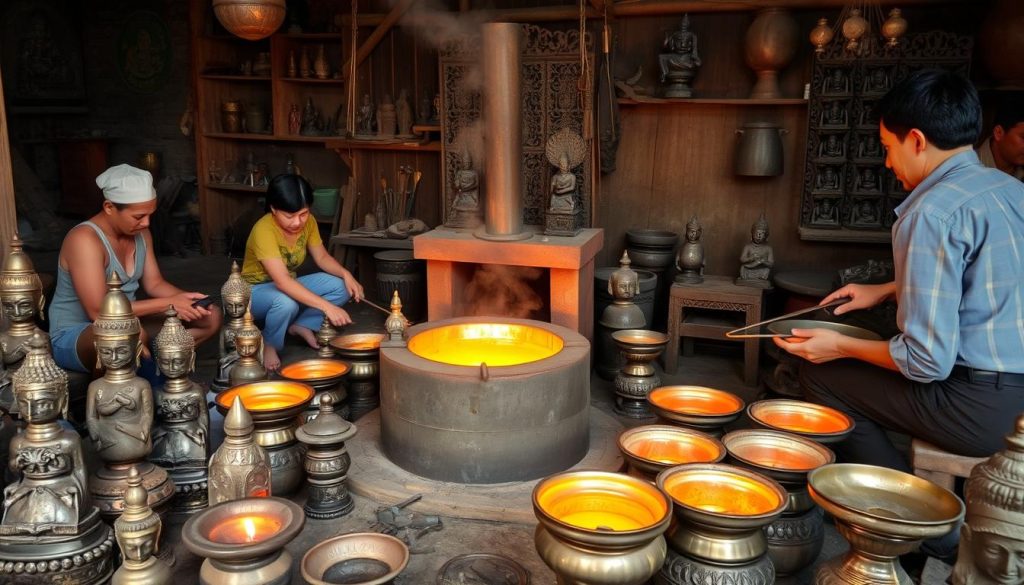
Bronze casting is an ancient art that combines metalwork with creativity. It turns molten bronze into detailed sculptures and objects. A bronze casting company is skilled in both old and new methods. Bronze is loved for its lasting quality and beauty, making it perfect for many uses.
Traditional bronze casting has a long history. It uses the lost-wax method, an old technique. This method starts with a wax model, then melts it away to pour in bronze. It takes both skill and creativity to master.
For centuries, bronze has been used to make important items, like in Mandalay. It’s used for ceremonial and decorative pieces that show culture. Keeping these old ways alive is important for the future.
| Aspect | Description |
|---|---|
| Materials Used | Copper, Tin, Zinc |
| Key Technique | Lost-Wax Method |
| Durability | Highly durable, resistant to corrosion |
| Common Uses | Sculptures, Relics, Religious Artifacts |
| Cultural Importance | Significant in rituals and heritage |
This ancient craft is a mix of science and art. Learning about bronze casting shows us the value of cultural artifacts. It also highlights the hard work and talent of bronze artists.
The Historical Significance of Mandalay Bronze Casting
Exploring Mandalay bronze casting shows us the deep cultural roots of Myanmar. This ancient art form is linked to the country’s beliefs and traditions. For centuries, artists have crafted beautiful bronze pieces, like Buddha statues, using the lost-wax method.
The making of these statues is both detailed and hard work. Each piece is made by hand, making every statue unique. This care shows in the special features of each work. Many statues have lasted for centuries, showing the importance of Mandalay bronze casting.
Mandalay, with a population of about half a million, is Myanmar’s second-largest city. It was founded in 1857 as the capital of a kingdom. Its layout, with squares and rectangles, shows its royal history, including the old royal moat.
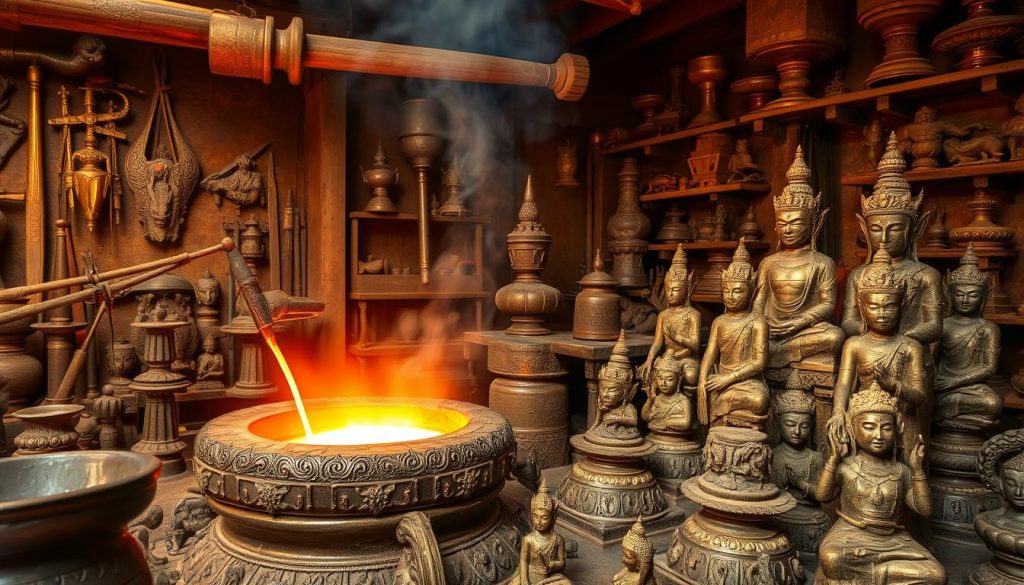
The bronze statues need a lot of polishing, which can take days or weeks. This process reveals the fine details of the art. It shows the talent of the artists and the lasting impact of ancient bronze art. Mandalay bronze casting is a key part of Myanmar’s culture.
Mandalay Bronze Casting: A Traditional Craft
Mandalay bronze casting is a mix of art and tradition. It’s a craft that has been around for a long time. It shows the beauty of traditional bronze casting and the skills of many generations.
Artisans in Mandalay spend their lives learning these complex techniques. They make both useful items and beautiful decorations. Their work enriches the culture of Myanmar.
Looking at Mandalay bronze casting, you’ll see the care in every sculpture. The respect for old ways makes each piece special. This art form keeps growing as artisans work hard to keep their heritage alive.
The Lost Wax Casting Process
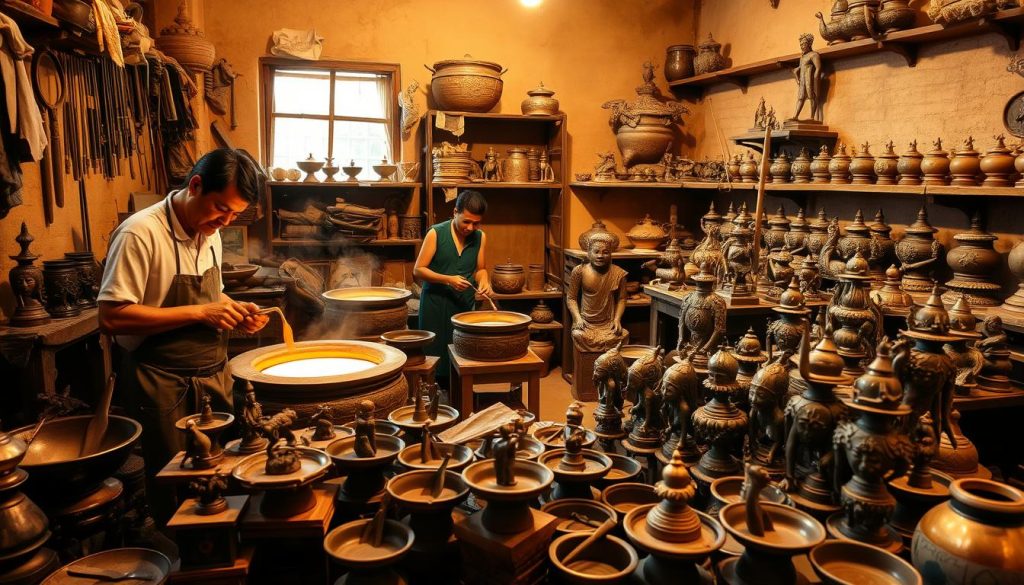
The lost wax casting process is an ancient technique used to make beautiful bronze sculptures. It involves several important steps to achieve the desired look. Each step shows the skill and dedication of the artists, making each sculpture unique.
Creating the Core
The process starts with making a core from clay and rice. This core is the sculpture’s base, supporting its details. Artisans carefully make the core, as it’s the foundation for the sculpture’s design.
Wax Layer Application
After the core is made, a thin wax layer is applied. This layer captures the sculpture’s details and textures. The wax layer is crucial for the sculpture’s unique look.
Clay Coating
Next, a clay coating is applied over the wax. This thicker clay layer creates a strong mold for the next step. It prepares the structure for the heating process where the wax will melt away.
Heating and Pouring Bronze
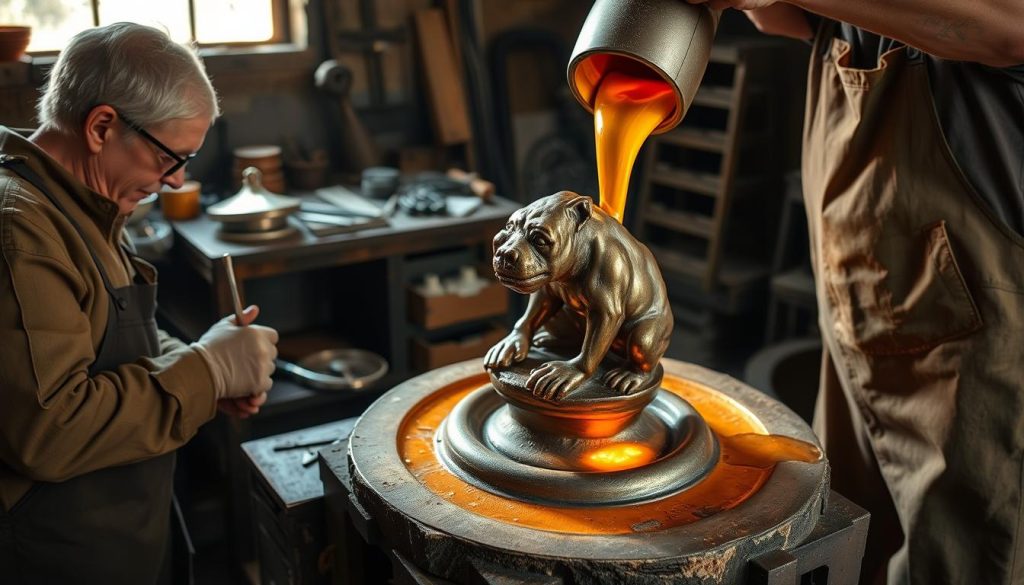
The mold is then heated, melting the wax and leaving a hollow shell. Molten bronze is then poured into this shell. This fills every detail, setting the sculpture’s form.
Polishing and Finishing
After cooling, the mold is removed, revealing the sculpture. The polishing stage is very detailed and can take days. It brings out the sculpture’s unique features. The final polish enhances the details, showing the craftsmanship in the process.
| Process Stage | Description |
|---|---|
| Core Creation | Crafting the foundational core using clay and rice. |
| Wax Application | Applying a thin wax layer for detail capture. |
| Clay Coating | Covering with a clay layer to form a durable mold. |
| Heating | Melting the wax to create a hollow shape. |
| Pouring Bronze | Filling the mold with molten bronze. |
| Polishing | Extensive polishing to achieve the final appearance. |
Exploring Burmese Bronze Craft
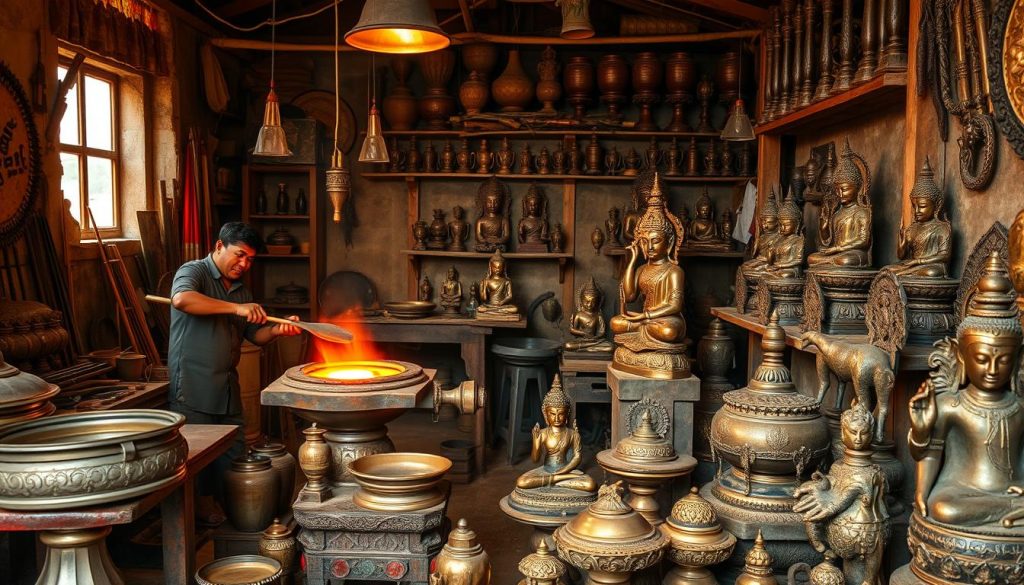
The world of burmese bronze craft is full of color and tradition from Myanmar. It includes beautiful sculptures and religious items. These pieces are not just useful but also carry deep cultural meaning. Artisans use old techniques to keep this craft alive.
Creating ceremonial items like bells and gongs is a detailed process. Each item shows the hard work and skill of local bronze casting companies. The quality of each piece is clear, showing the care in materials and craftsmanship. Exploring Burmese bronze craft reveals stories behind each item.
This craft is more than just beauty. It captures the heart of Burmese culture and beliefs. It’s made in specific areas, showing different traditions. Learning about burmese bronze craft offers a peek into Myanmar’s artistic world.
| Item | Significance | Common Uses |
|---|---|---|
| Bronze Bells | Ceremonial importance | Worship and celebrations |
| Sculptures | Artistic expression | Decorative displays |
| Gongs | Ritualistic functions | Festivals and rituals |
Getting involved with burmese bronze craft lets you see its beauty and connect with Myanmar’s culture. It’s a chance to see the skill and tradition that have lasted for centuries.
Custom Bronze Sculptures in Mandalay
In Mandalay, custom bronze sculptures are a big part of the local art scene. Skilled artisans use old methods to make these unique pieces. Each sculpture shows the detailed art of ancient bronze.
When you order a custom bronze sculpture, the artist works with you. They help bring out your ideas and themes. This way, you get a sculpture that’s truly yours.
The lost wax casting method is key in making these sculptures. It lets artists add fine details and designs. People love the personal touch in these sculptures, whether they’re for personal collections or public display.
Many sculptures in Mandalay have Buddhist themes. This makes them even more meaningful to those who buy them.

In Mandalay’s market, you can find bronze sculptures for about €1,950. These sculptures are not just beautiful; they also blend cultural heritage with modern art. A recent example is a 10.5 kg sculpture that’s 42.5 cm tall. It shows typical features and some historical flaws, like dents.
The history behind these sculptures adds to their charm. Some come from famous collections, like an old Austrian estate. These stories make the sculptures even more special.
If you’re looking to buy a custom bronze sculpture, check out what local artists offer. Mandalay’s rich traditions mean each sculpture has a story. It’s a way to connect with both local craftsmanship and global heritage.
| Aspect | Details |
|---|---|
| Weight | 10.5 kg |
| Height | 42.5 cm |
| Price | €1,950 (including Buyer’s Premium) |
| Provenance | Formerly in an old Austrian private estate |
| Condition | Very good with expected old wear and minor imperfections |
| Inscription | Two merchant labels dated around 1980-1990 |
Bronze Foundry Services in Myanmar
Myanmar has a long history of bronze foundry services. These services are rooted in traditional bronze casting. They create beautiful bronze items, from decorative pieces to functional art.
Local foundries offer great services to improve your experience. They provide design consultations to help bring your ideas to life. This way, they turn your concepts into real bronze art, using traditional methods.
To understand prices in Myanmar, look at the current exchange rate and daily costs:
| Item | Price in USD | Price in Myanmar Kyats |
|---|---|---|
| Bottle of Myanmar rum | 1 | 1,289 |
| Small package of gold leaf (8 pieces) | 6 | 7,734 |
| Room service meal at Yuan Sheng Hotel | 3 | 3,867 |
| 20-day holiday package | 1,475 | 1,903,475 |
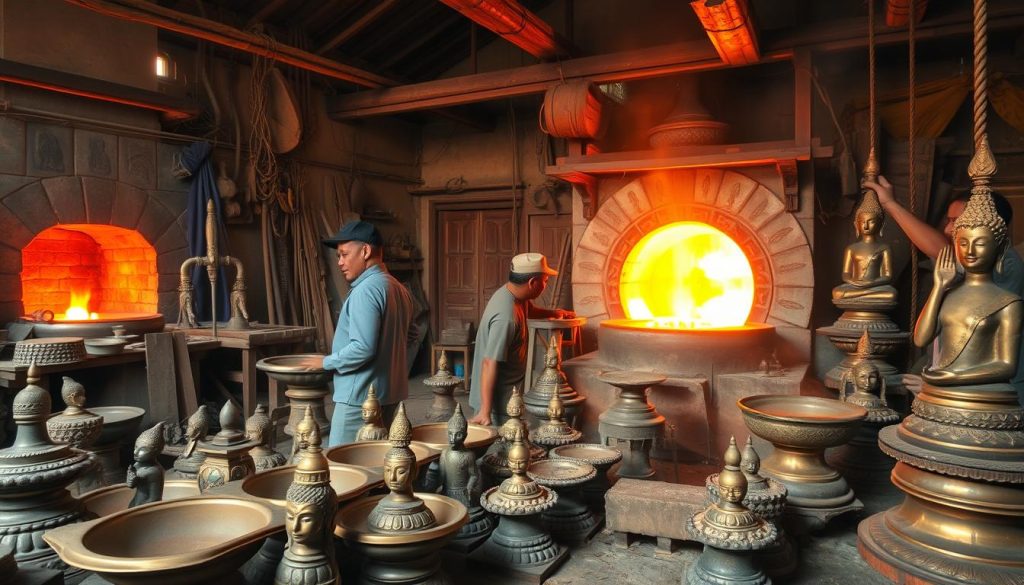
Working with bronze foundry services in Myanmar lets you see the craft of bronze casting up close. By supporting local artisans, you get unique art pieces. You also help keep an old tradition alive that has shaped the region’s culture.
Tourist Experience in Amarapura
Amarapura is a charming town in Mandalay that shows off the area’s vibrant culture. It’s known for mandalay bronze casting and traditional techniques passed down through generations. Visitors can see local artisans at work, creating beautiful bronze sculptures.
Guided tours in Amarapura are a great way to dive into its rich culture. Prices range from $35 to $194, with an average of $81. This makes it affordable for many. The most common tour lasts a full day, giving you time to see important sites.
- Mahamuni Pagoda, home to a stunning 12 ft high seated bronze Buddha.
- Shwe Kyaung (Golden Palace Monastery), noted for its exquisite teak carvings.
- Kuthodaw Pagoda, which houses the world’s largest book.
- Mandalay Hill, offering breathtaking views and a spiritual atmosphere.
There are 39 different tour experiences to choose from. You can explore ancient temples and the famous U Bein Bridge. Keywords like “Amarapura,” “Sagaing,” and “Mandalay” show the area’s cultural and historical ties.
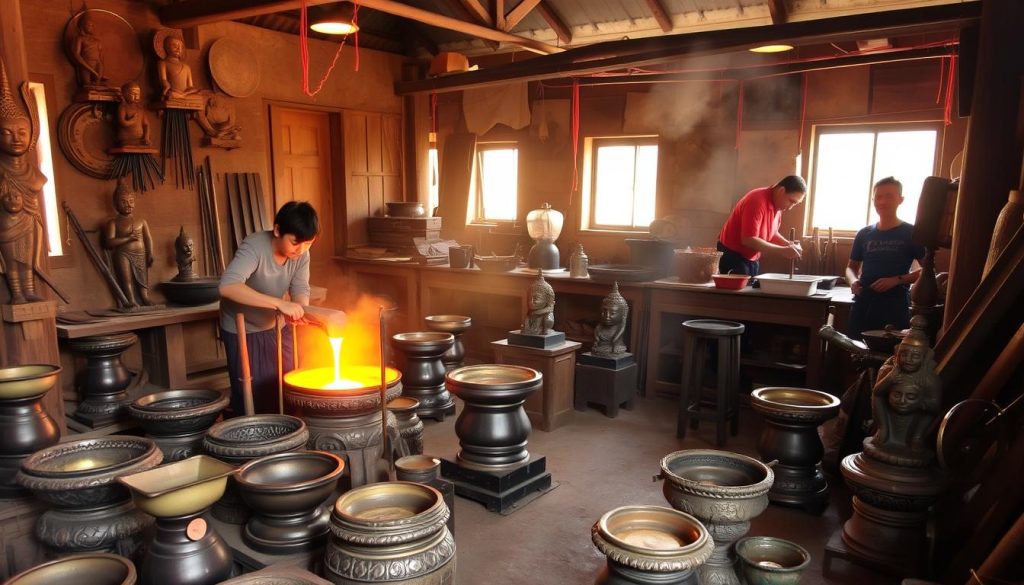
The artisan workshops in Amarapura are a treasure trove of traditional bronze casting. They blend art and heritage, keeping Myanmar’s traditions alive. Amarapura invites you to see this tradition and connect with the stories behind each piece.
The Artisans Behind Mandalay Bronze Casting
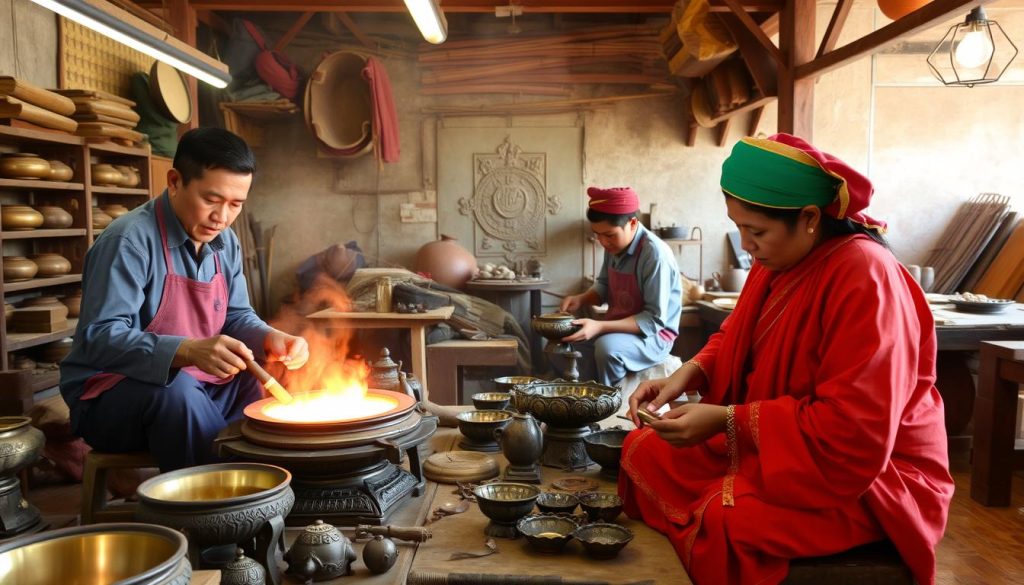
The artisans in Mandalay are the heart of traditional bronze casting. Their skills go beyond just making things; they are deeply rooted in the local culture. Each craftsman carries on a tradition that spans centuries, making them keepers of the burmese bronze craft.
Many families have been doing this for generations. They keep the techniques and knowledge alive. This ensures that the craft stays vibrant.
These craftsmen understand the old ways of making bronze. They put their heart and soul into their work. For them, making bronze is more than a job; it’s a way to keep their culture alive.
Their work shows their skill and the traditions of Mandalay. The designs and techniques they use are a testament to their artistry.
When you visit Mandalay, you’ll see how these artisans turn raw materials into beautiful art. From start to finish, their dedication to traditional bronze casting is clear. It’s recognized both at home and abroad.
Conclusion
Mandalay bronze casting is a mix of art and culture that has lasted since 1857. It shows the hard work of artisans who use old techniques to make beautiful pieces. These pieces tell the stories of Burma’s past.
In Mandalay, you’ll see how bronze casting has grown. It attracts both tourists and art lovers. Places like U Win Maung Bronze Casting and the Mahamuni Buddha Image show the skill and passion of the artists.
Exploring Mandalay lets you see the beauty of Burmese bronze craft. You learn about the blend of art, culture, and history in each bronze piece. These pieces are more than just art; they are a window into Myanmar’s traditions.