Unveiling Gold Leaf Beating in Mandalay Craftmanship
Ever wondered how gold turns into thin leaves for temples and art? Gold leaf beating in Mandalay is a tradition rich in culture. It shows the amazing skills of local artisans. This craft is key to Myanmar’s history and spirituality.
Exploring traditional gold leaf making, you’ll see the detailed work of Mandalay’s artisans. It’s a blend of history and art, showing the city’s vibrant culture.
Introduction to Gold Leaf Beating in Mandalay
Gold leaf beating in Mandalay is a special tradition. It shows the art of gold leaf making and its deep cultural meaning in Myanmar. This craft turns raw gold into beautiful sheets with careful techniques.
At places like the King Galon Gold Leaf Workshop, skilled people use heavy hammers. They pound gold into thin, almost transparent sheets.
Mandalay is famous for its many pagodas, over 700 of them. Each one is covered in gold leaf, showing devotion and art. The Mahamuni Temple, for example, is covered in gold leaf, making it incredibly beautiful.
Gold leaf is not just for temples. It’s also used in buildings like the Shwenandaw Monastery and Kuthodaw Paya. These places show the beauty of gold leaf and Mandalay’s culture.
People from all over come to see this art. They want to see the special techniques and beauty of gold leaf beating in Mandalay.
The Historical Significance of Gold Leaf in Myanmar
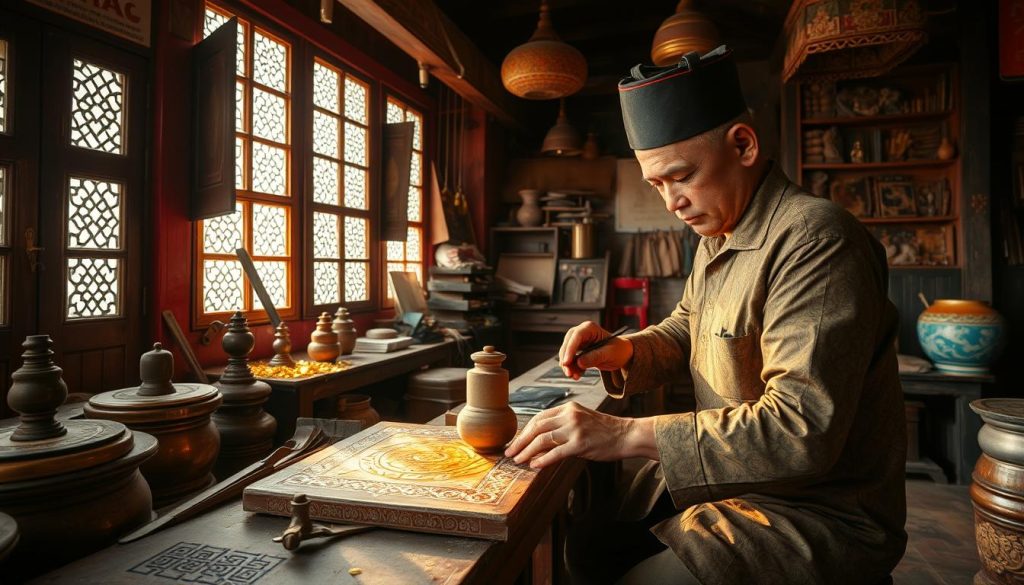
Gold leaf is deeply rooted in Myanmar’s culture, blending history and religion. It’s prized for its beauty and spiritual value. The Burmese gold leaf process has a long history, showing the evolution of this art.
Cultural Significance of Gold Leaf
In Myanmar, gold leaf is key in religious rituals. People spend a lot on it to give to temples, showing their devotion. This tradition comes from Buddhism, where gold leaf on sacred items shows respect.
Offering gold leaf is seen as a way to gain merit and please the Buddha. It’s both a charitable act and a spiritual practice.
Historical Context of Gold Leaf Craftsmanship
The art of gold leaf making in Myanmar has a rich history. It was supported by kings and religious places. The kingdom of Pagan, from the 11th to 13th centuries, was a golden age for temples.
Many temples were gilded with gold leaf. Over time, artisans perfected the Burmese gold leaf process. Today, their work, often done after nine months, shows their skill and dedication.
Even with challenges like COVID-19, the traditional methods continue. They keep the cultural heritage alive.
Gold Leaf Beating Mandalay
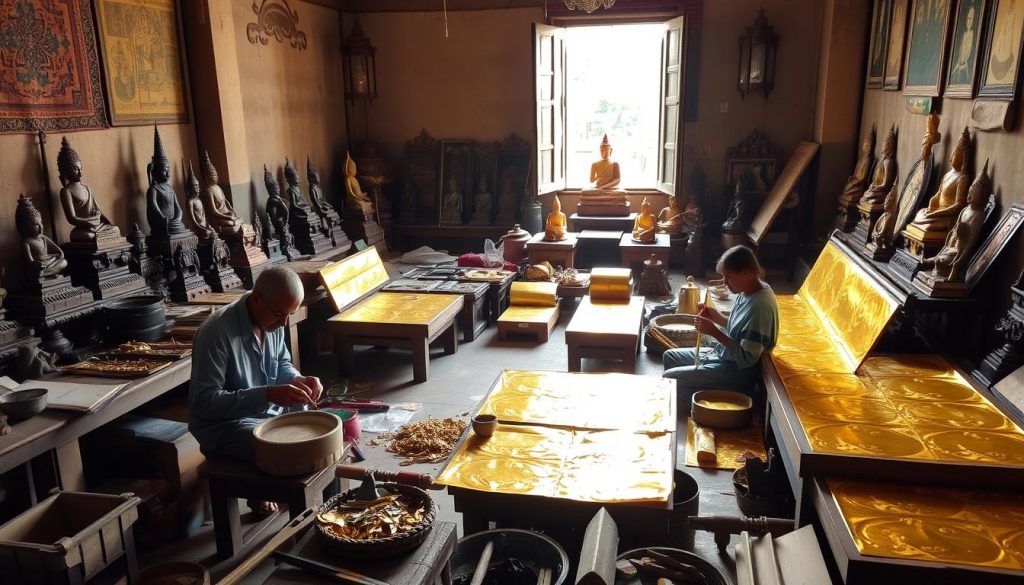
The art of gold leaf beating in Mandalay is a mix of creativity and precision. It turns 12 grams of 24 karat gold into thin sheets. First, the gold is heated into a ribbon, then cut into 200 small pieces.
Each piece is very thin and used in Myanmar’s culture and religion. The process is hard, with teams of beaters working in shifts. They use a 3 kg hammer for four to five hours to make the gold thin.
Artisans use bamboo and straw paper to help the gold. Buffalo horn and talcum powder are used for branding. They learn to beat the gold by listening to the sounds it makes.
It takes at least nine months to master this skill. The demand for gold leaf in Mandalay keeps growing. This is because of its cultural value and the tradition of offering gold at temples.

The Art of Gold Leaf Making
The craft of gold leaf making is a tradition that spans generations. It involves beating gold into thin sheets using special tools. This process shows the beauty and skill of this ancient art.
Traditional Techniques Employed in Gold Leaf Production
Gold leaf making starts with heating pure gold to over 1100°C. The gold is then rolled and hammered into a long ribbon. This ribbon is cut into squares and pounded until they are very thin.
Artisans package the gold leaf for different uses. Some is used in sacred rituals, while others are sold as souvenirs. In Burma, people believe gold can be good for their health, so they eat it too.
Tools Used in Gold Leaf Beating
The tools for beating gold leaf are crucial. High-quality hammers and strong anvils are needed. These tools help create the thin, delicate sheets of gold.
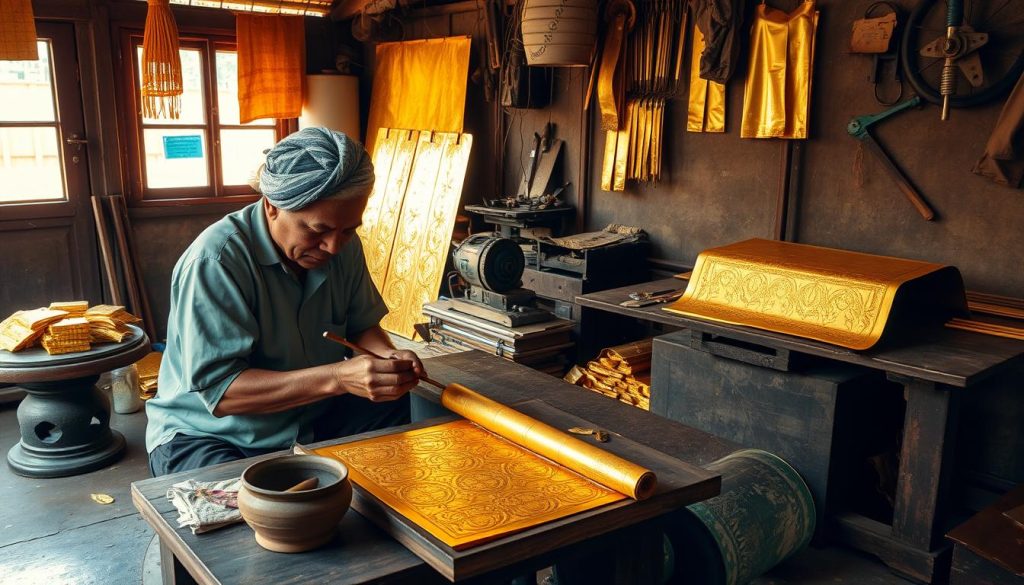
Senior artisans have spent over twenty years perfecting this craft. Their skill keeps the tradition alive, even as it changes. The art of gold leaf making is a blend of history, culture, and artistry.
The Role of Mandalay Gold Leaf Artisans
Mandalay gold leaf artisans are key to keeping the tradition of gold leaf beating alive. Their work not only keeps the art alive but also boosts the local economy. Workshops are lively places, with women cutting paper while men beat the gold.
Profiles of Renowned Artisans
In Mandalay, some artisans are known for their commitment to gold leaf craftsmanship. They teach apprentices, ensuring the tradition lives on. Their work is so fine, it’s just 1/200,000 of an inch thick.
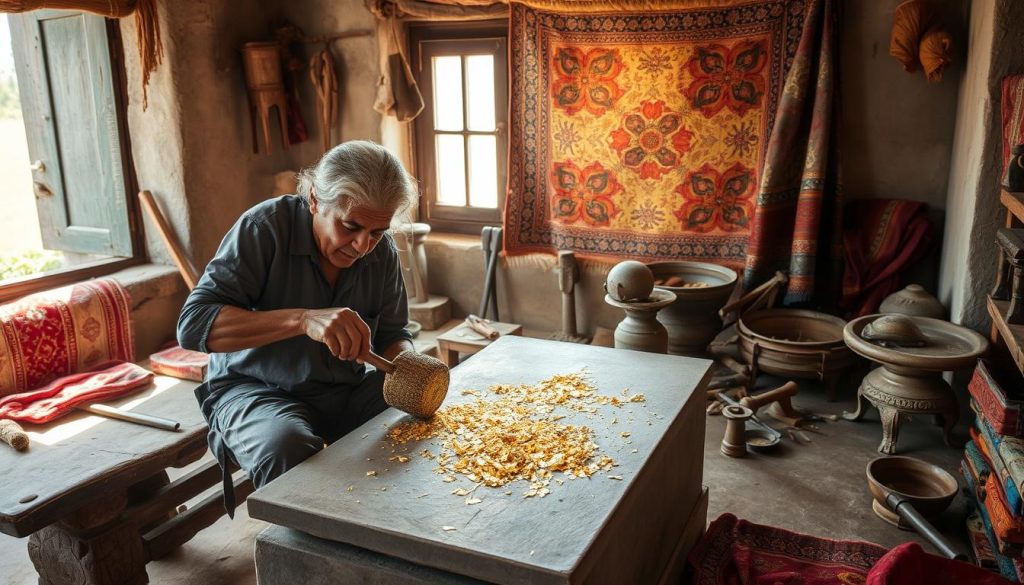
Making gold leaves is hard work. They use heavy mallets to pound the gold until it’s just right.
Community and Craftsmen Involvement
The community in Mandalay loves its gold leaf craftsmanship. Local markets are filled with gold leaf, used to decorate Buddha statues and stupas. This tradition helps artisans get support and money from their community.
The Burmese Gold Leaf Process
The Burmese gold leaf process is a tradition in Myanmar’s culture. It shows the skill of local artisans in making beautiful gold leaf products. This process is a detailed look at how traditional gold leaf is made.
Step-by-Step Overview of the Gold Leaf Production
Gold leaf making in Myanmar has many steps. Here’s how it works:
- Sourcing Raw Gold: First, they get pure gold from local places. This is the start of making real gold leaf.
- Initial Hammering: Then, they hammer the gold into thin sheets. This is a key step to make the gold even.
- Beating the Gold: After that, the gold is beaten a lot. Artisans hammer it three times. The last time can take up to five hours, with three people working together.
- Water Application: While beating, water is added to make the gold leaf softer. The team beats the gold in a rhythm of 120 strokes every three minutes.
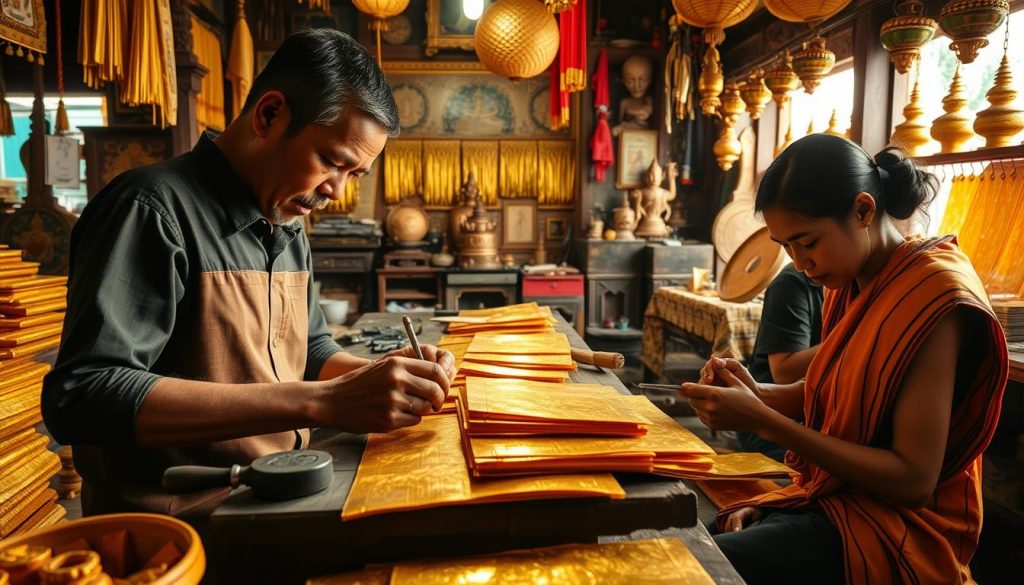
- Cutting the Gold Leaf: After beating, the gold sheets are cut into standard sizes. These are usually 2 square inches, 1.75 square inches, or 1.5 square inches.
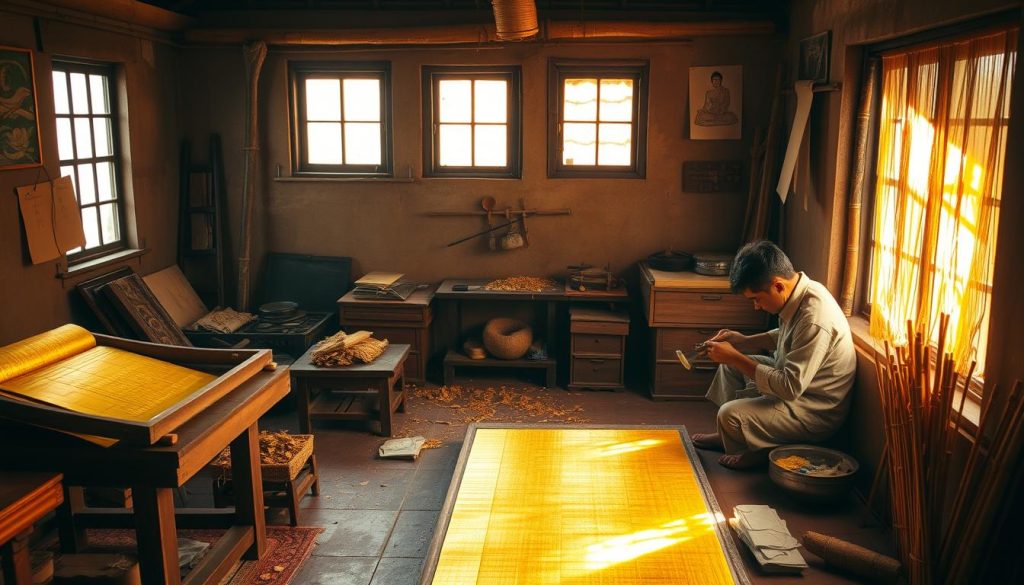
- Final Touches: Women then handle the gold leaf carefully. They use white powder on their fingers to manage the sticky gold during cutting.
Gold leaf is priced by weight. Five one-inch squares might cost about 2,000 kyat (around £1). It’s used in religious art and architecture, showing its cultural importance.
Modern Applications of Gold Leaf
Gold leaf’s timeless charm shines in today’s world. It adds depth to religious art, making sacred places more awe-inspiring. Also, it brings a touch of tradition to modern art, blending old skills with new ideas.
Use in Religious Art and Architecture
Gold leaf is key in religious art worldwide. It makes sculptures, altars, and texts more stunning. In Buddhism, it covers statues and stupas, showing purity and enlightenment.
Christian artists use it in icons and church murals. They believe gold’s shine represents divine light. Gold leaf in these works shows deep respect and faith.
Incorporation in Contemporary Art
Today, artists mix gold leaf with modern styles. This mix attracts more viewers and sparks creativity. Gold leaf’s ability to reflect light and add texture is unique.
It’s used in various art forms, pushing the limits of what’s possible. This makes gold leaf a vital part of today’s art scene.
The Challenges Facing the Myanmar Gold Leaf Industry
The Myanmar gold leaf industry is facing big challenges. Modern changes are making it hard for artisans to keep their skills alive. They must adapt to new ways while keeping their traditional crafts special.
Impact of Modernization on Traditional Crafts
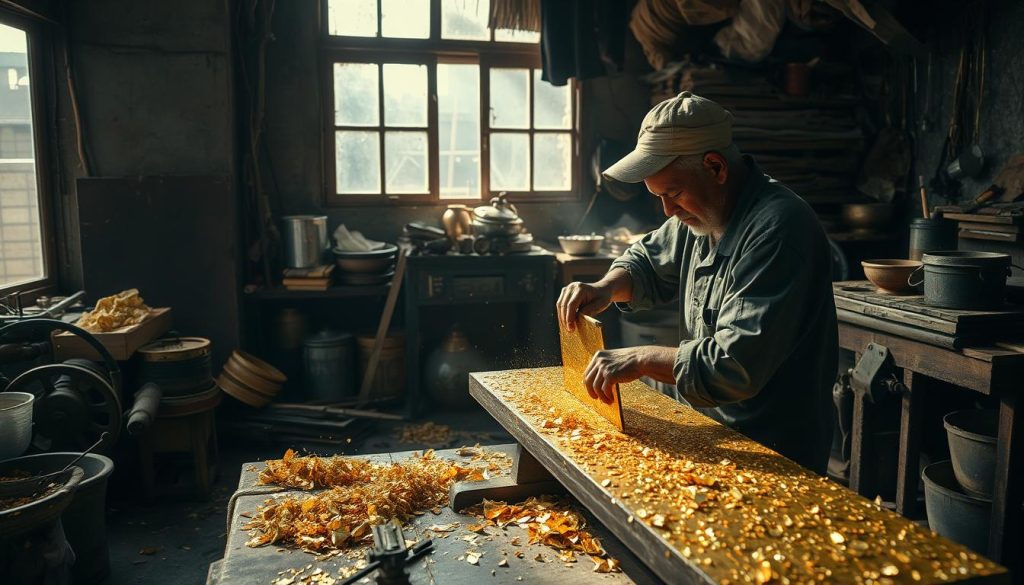
Modern changes have changed the gold leaf world a lot. Artisans face tough competition from cheaper, mass-made products. These products are more affordable and easy to find, making it hard for traditional crafts to stay popular.
Also, fast economic changes are a big risk for traditional practices. Higher taxes on gold leaf making make things harder for artisans. They might have to use new methods that don’t keep their ancient skills alive.
Artisans try to show how special handmade gold leaf is. But, many people still prefer cheaper, mass-made options. It’s important to protect artisan skills and teach people about the value of handmade gold leaf.
| Challenges Faced | Details |
|---|---|
| Market Competition | Mass-produced materials overshadow traditional gold leaf, threatening sales. |
| Financial Strain | Increased taxes on gold leaf production impact artisans’ bottom lines. |
| Shifting Consumer Preferences | Modern consumers favor affordability over the quality of traditional crafts. |
| Preservation of Techniques | Modernization pressures threaten the survival of ancestral craftsmanship. |
It’s important to know about these challenges to appreciate Myanmar’s gold leaf craftsmanship. As you learn about gold leaf, understanding how modern changes affect this tradition is key.
Exploring the Cultural Heart of Mandalay
The cultural heart of Mandalay is a treasure trove of gold leaf craftsmanship. It’s a place where history meets art, drawing tourists who love traditional crafts. As you wander Mandalay, you’ll find key spots for gold leaf work, like workshops and temples.
Significant Sites Related to Gold Leaf Craftsmanship
Many places in Mandalay show its love for gold leaf craftsmanship. Here are some must-see spots:
- Temples of Mandalay: The temples here are stunning, with gold leaf details that tell stories of tradition and culture.
- Gold Leaf Workshops: In these workshops, you can see artisans create gold leaf sheets, as thin as seven millionths of an inch.
- U Bein Bridge: This bridge is famous for its sunset views. It also shows Mandalay’s rich culture and craft heritage.
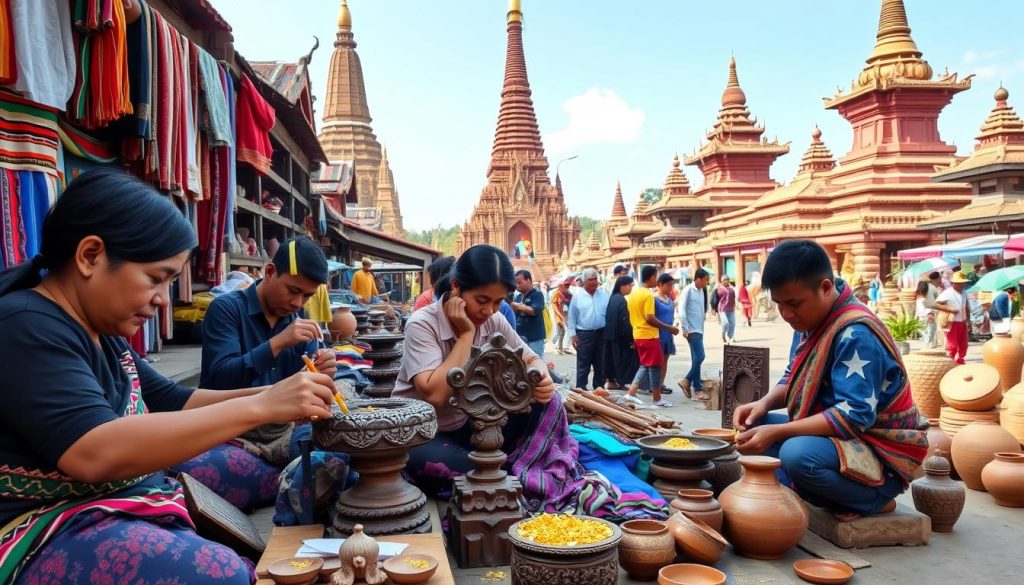
Mandalay tourism is all about the stories of these craftsmen and their passion. The city’s mix of old traditions and new art makes it a special place for visitors. These sites highlight Mandalay’s importance in gold leaf craftsmanship and its role as a cultural hub in Myanmar.
Preserving Traditional Gold Leaf Craftsmanship
The art of gold leaf in Mandalay is more than just a skill. It’s a cultural treasure. Many initiatives for artisan skills are working to keep this craft alive. They aim to preserve gold leaf craftsmanship for generations to come.
Initiatives to Safeguard Artisan Skills
Many groups and programs are helping to keep gold leaf skills alive. Workshops led by experts teach new artists the old ways. The government also plays a big role, supporting these efforts with workshops and programs for young people.
- Community workshops that engage local youth in hands-on training.
- Scholarships for students pursuing traditional arts programs.
- Collaborations with art institutions to enhance learning opportunities.
These programs aim to make people appreciate gold leaf craftsmanship again. They want to keep it a key part of Mandalay’s culture. As the world evolves, these efforts help ensure gold leaf remains a vital part of Mandalay’s heritage.
Visiting Mandalay: A Journey into Gold Leaf Craftsmanship
When you visit Mandalay, you get to explore the amazing world of gold leaf craftsmanship. The city is full of life, and you can join local craft workshops. Here, you’ll learn about gold leaf, marionettes, silk weaving, and more. These workshops are a great way to see the city’s rich culture.
Mandalay is where artisans turn metal into beautiful gold leaf. You can watch them work. A must-see is the Mahamuni Buddhist Temple. Here, men and boys add gold leaf to a giant Buddha, showing the city’s cultural heritage.
It’s best to take a guided tour to see Mandalay’s crafts, temples, and monasteries. Many people choose to hire a car and driver. This makes it easy to visit places like the Golden Pagoda and Ava (Inwa).
Make sure to see the monks at Mahar Gandar Yone Monastery and the views from U Bein Bridge at dusk. Mandalay’s busy streets meet the skill of its people. Your visit becomes a deep dive into Myanmar’s culture.
Conclusion
The art of gold leaf beating in Mandalay is more than just a craft. It’s a key part of Myanmar’s cultural heritage, showing centuries of tradition and skill. Every piece of gold leaf made by artisans adds to a rich cultural tapestry that echoes across the region.
When you see gold leaf beating in Mandalay, you see the hard work and talent that brings this art to life. This art form has been around for ages, and it’s still going strong.
Supporting local artisans makes your travels more meaningful and helps keep these skills alive for the future. The challenges faced by Myanmar’s craftsmanship industry highlight the need to value and protect these ancient methods. By doing so, you help ensure that the art of gold leaf beating continues to thrive.
Visiting places like the Mahamuni Paya or watching artisans at work at the King Galon Gold Leaf Workshop is a special experience. It lets you dive into the deep history and beauty of gold leaf beating in Mandalay. Your support helps keep this magical part of Myanmar’s culture alive.