Discover the Art of Mandalay Silk Weaving
Have you ever wondered how a single thread can create more than just fabric? It can tell stories, share cultures, and preserve traditions. Mandalay silk weaving is a traditional Burmese textile art that does just that. It combines history and skill to make beautiful handmade silk products.
In this article, you’ll explore the world of Mandalay silk weaving. You’ll learn about its rich heritage, unique techniques, and deep cultural meaning.
Introduction to Mandalay Silk Weaving
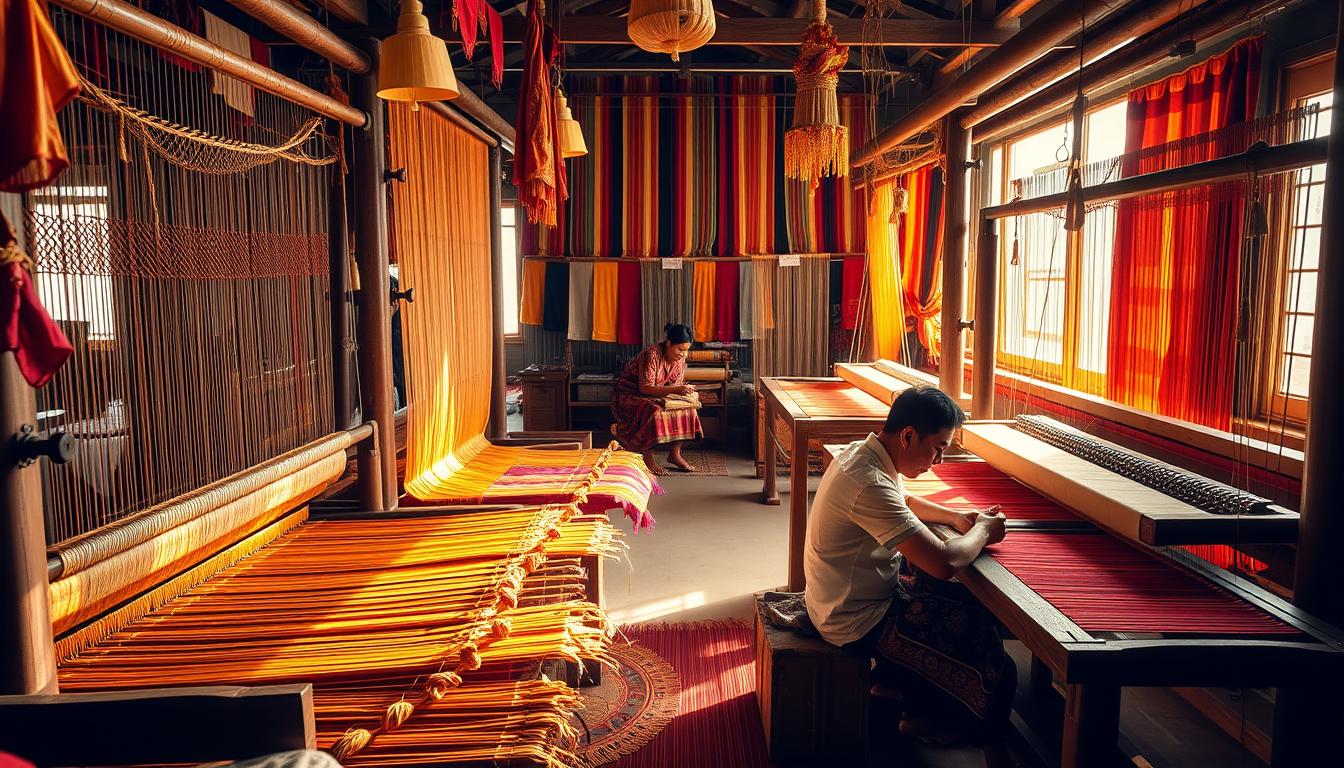
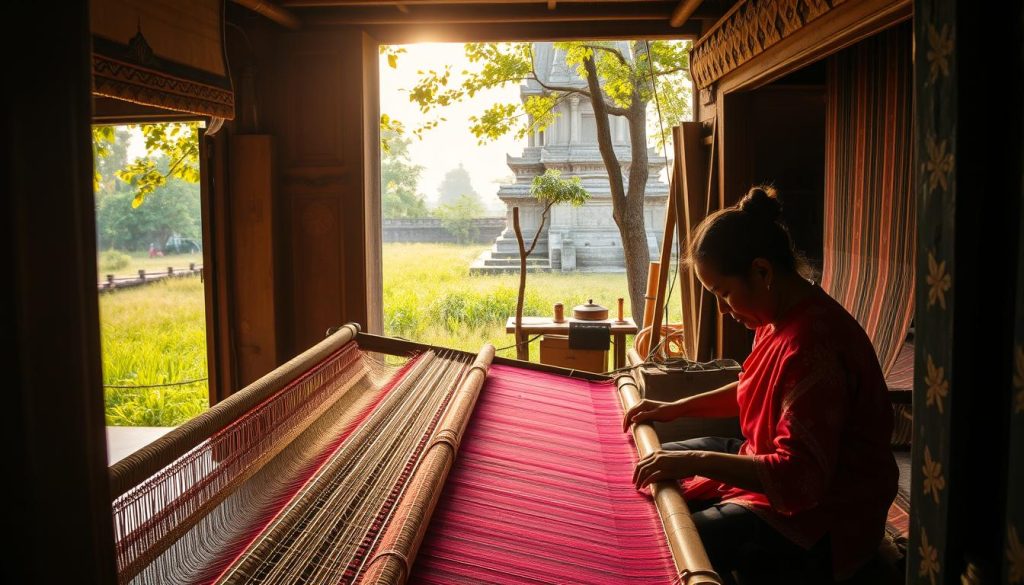
Mandalay silk weaving is a beautiful craft that shows Myanmar’s rich culture. It’s not just about making stunning silk fabrics. It’s also a way to share the area’s history. At the famous Tein Nyo Loon Yar Kyaw factory in Amarapura, skilled artisans use big looms called yakan.
This traditional weaving shows the art and cultural value of textiles.
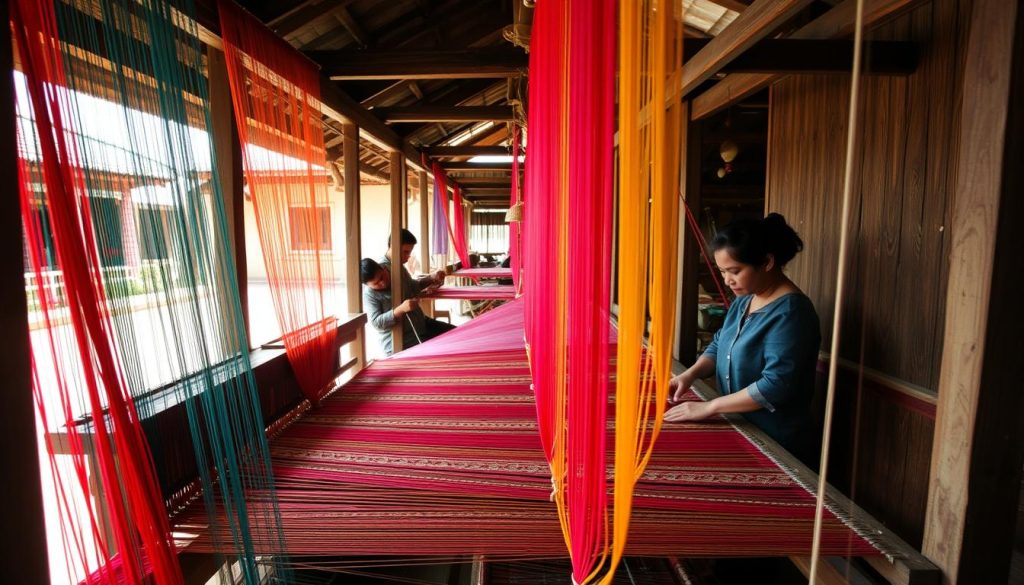
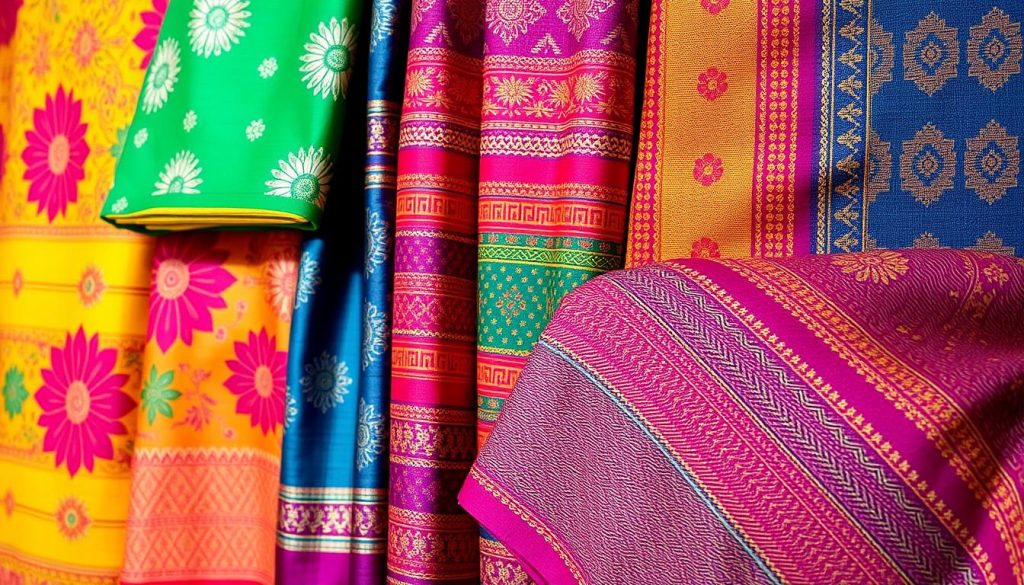
The factory uses a special weaving method called lun-taya, or “one hundred shuttles.” This method requires great skill. Artisans weave patterns by crossing silk threads over and under the warp. Techniques like tie-dyeing and two-tone twisted silk threads make these fabrics even more beautiful.
These luxurious textiles are used for special events like weddings. They are often worn with matching jackets or blouses. The hard work of mostly young women keeps this tradition alive and valued.
| Technique | Description |
|---|---|
| Si (Tie-dyeing) | Creates vibrant patterns through a dyeing process before weaving. |
| Supplementary Weft Technique | Adds complex patterns by incorporating extra weft threads. |
| Two-tone Twisted Silk Threads | Generates a lustrous sheen by twisting two different silk threads. |
| Weft Acheik Patterns | A specific method that intertwines silk in distinctive designs. |
The mix of handwork and machine help makes production smooth in Mandalay’s textile industry. Mandalay is a top tourist spot in Myanmar. Its silk weaving tradition is a big part of its cultural scene.
The History of Silk Weaving in Myanmar
The history of silk weaving in Myanmar is rich and complex. It started in the first millennium A.D. As cities grew, weaving became more important.
Rural homes used handlooms to make cloth for themselves. Over time, weaving became a big part of the community’s life.
In the old days, silk weaving was very important, even for royalty. Kings had special weavers make clothes for nobles. They also changed fabrics from other places.
This led to new words for different types of cloth. For example, phyin was coarse cloth in the Bagan Period. And pu-chi was a weaver.
| Historical Period | Key Developments |
|---|---|
| Bagan Period | Formation of textile terms; rise in handwoven goods. |
| Inwa Period | Promotion of cotton as a major crop in Central Myanmar. |
| Taungoo Period | Development of unique Myanmar weaving techniques influenced by Siamese weavers. |
| Konbaung Period | Peak of the weaving industry; increased cotton cultivation and trade. |
Manipuri weavers came to Myanmar in the Konbaung Period. They settled in Amarapura. They brought new techniques and ways to breed silk worms.
This changed Myanmar’s weaving industry a lot. More people worked in silk, dyeing, and embroidery. There were different jobs, like achok-gaung and achok-taik-so.
Today, Myanmar is one of the few places that still makes silk. But it doesn’t make as much as China or India. The special techniques and designs in Mandalay show the country’s proud weaving history.
Cultural Significance of Traditional Burmese Textile Art
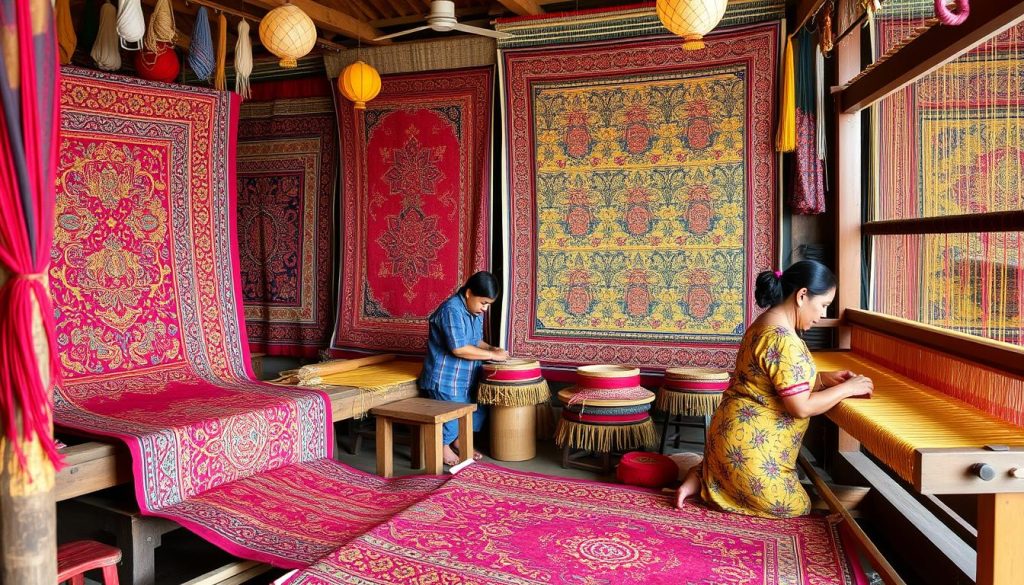
Traditional Burmese textile art is very important in Mandalay. It connects the past with today. Textiles tell stories, show rituals, and share family histories. They are worn at big events like weddings and festivals.
In Myanmar, women mostly weave textiles. This work helps them earn money. In Chin villages, women use small looms to weave and spin cotton. They make colorful textiles that show their culture. These artisans sell their work to tourists, helping their families.
Myanmar is full of special crafts. In Inle Lake, women weave silk on big looms. This keeps old ways alive while meeting new needs. Near Mrauk U, families make palm leaf fans, showing the area’s unique traditions.
Using these textiles in daily life keeps cultural bonds strong. But, fewer workshops in places like Mudon and Dawei mean we must act fast. We need to save these traditional arts. They show our history and how our culture is changing.
| Region | Primary Materials | Predominant Techniques | Artisans’ Role |
|---|---|---|---|
| Mandalay | Silk | Treadle Loom Weaving | Major craft center, women-led initiatives |
| Chin Villages | Cotton, Kapok | Hand Weaving, Hand Spinning | Source of income, preservation of culture |
| Inle Lake | Silk | Piecework on Treadle Looms | Women and girls engaged in crafting |
| Mrauk U | Various (Wood, Stone) | Sculpture, Carving | Significant but lesser-known crafts |
Exploring the Techniques of Mandalay Silk Weaving
The art of Mandalay silk weaving is rich in tradition and detail. It uses Myanmar weaving techniques passed down through generations. These methods help create stunning silk fabrics that show the area’s cultural heritage.
Traditional Techniques Used in Weaving
In Mandalay, artisans use old techniques with hand-operated looms to make beautiful silk fabrics. They start by spinning silk into thread, needing patience and precision. Then, they dye the threads in colors that look great together in the final design.
Weaving is not just about skill but also knowing the materials well. This knowledge helps in creating the final product.
- Hand-operated looms allow for control over each thread.
- Color choices depend on cultural importance and beauty.
- Knotting methods add to the complexity of patterns.
Comparison of Different Weaving Methods in Myanmar
Myanmar has different weaving methods in various regions, adding to its textile heritage. Mandalay focuses on silk, while other places like Chin villages use cotton and different looms. Each method shows unique patterns and materials, all showing a dedication to craftsmanship.
| Region | Material | Weaving Technique | Typical Patterns |
|---|---|---|---|
| Mandalay | Silk | Hand-operated looms | Intricate floral designs |
| Chin Villages | Cotton | Backstrap loom | Geometric figures |
| Shan State | Silk and cotton | Frame loom | Bold stripes and motifs |
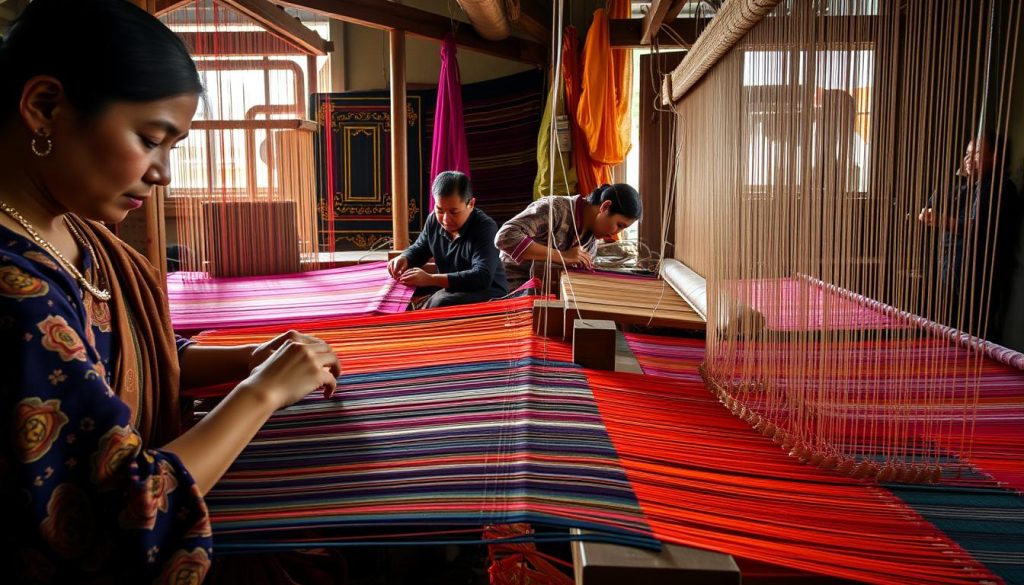
The variety in Myanmar’s weaving techniques shows the country’s rich cultural identity. Each area adds to this heritage, making weaving a key part of Myanmar’s art.
Mandalay Silk Weaving: A Craft Passed Down Generations
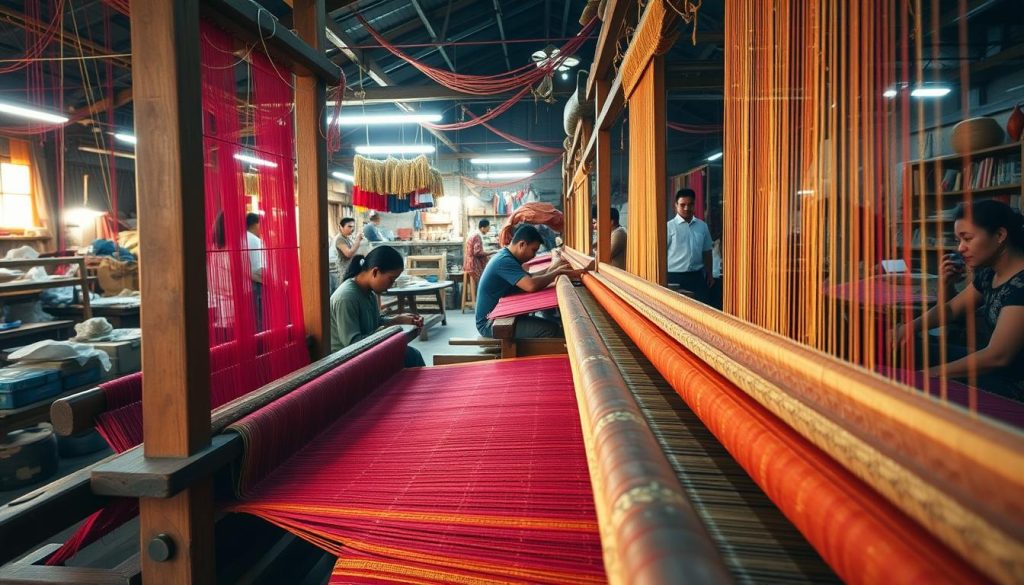
Mandalay silk weaving is more than just making clothes. It’s a tradition that has been passed down for generations. Young weavers learn from their elders, mastering skills that have been perfected over time.
This art is a big part of Myanmar’s cultural heritage. The designs tell stories of the community’s history and customs. This keeps the tradition alive, connecting weavers to their heritage.
Even with modern challenges, the love for this craft remains strong. Artisans work hard to create silk pieces that tell stories of history and culture. Mandalay silk weaving shows how a tradition can evolve while staying true to its roots.
| Generation | Key Practices | Traditional Techniques |
|---|---|---|
| 1st Generation | Creation of foundational patterns | Basic loom setup and silk handling |
| 2nd Generation | Enhancement of color dyeing methods | Introduction of complex stitches |
| 3rd Generation | Adaptation to contemporary designs | Mixing traditional with modern aesthetics |
Materials Used in Handwoven Silk Fabrics
In the world of handwoven silk fabrics, the choice of materials is key. High-quality silk threads are the base, offering a luxurious feel and bright colors. Local cotton adds durability and versatility to the designs.
Artisans in some areas have innovated by using lotus fibers. This material comes from lotus plant stems and is extracted with great care. It creates a unique texture that highlights the creativity of local artisans.
Knowing about the materials used in silk weaving can deepen your appreciation for these fabrics. Each material adds to the fabric’s look, feel, and durability. This makes every piece a special work of art. Here’s a table summarizing the main materials used in these beautiful textiles:
| Material | Characteristics | Impact on Final Product |
|---|---|---|
| Silk Threads | Soft, lustrous, and vibrant | Lends luxury and richness to fabrics |
| Cotton | Durable and versatile | Provides structure and wear-resistance |
| Lotus Fibers | Unique texture, labor-intensive | Adds an innovative and sustainable touch |
Artisanal Silk Weaving: The Role of the Artisan
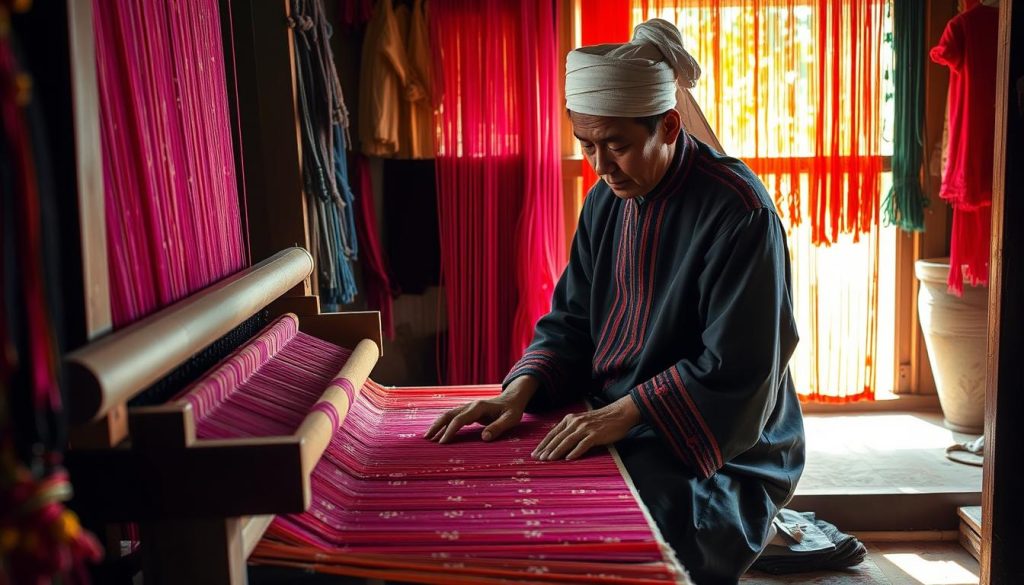
The art of artisanal silk weaving is a true testament to hard work and skill. It shows the dedication of individual artisans to making beautiful handmade silk products. Weavers spend long hours in hot, humid conditions every day.
They have learned their craft over generations. They use traditional looms and techniques passed down in their families.
The Daily Life of a Silk Weaver
A silk weaver’s day is filled with detailed tasks. They start early, setting up their workspaces and materials. The sound of looms fills the air as they work, turning threads into stunning designs.
This craft demands physical strength and an artistic eye. Weavers create patterns that show their heritage and personal style.
Artisan Communities and Their Contributions
Artisan communities are key to keeping silk weaving alive. These groups offer a sense of belonging and shared goals. Weavers work together, sharing techniques and supporting each other.
Together, they help their villages economically. The handmade silk products they make tell stories and preserve culture. They connect the past with today.
Details on the Mandalay Silk Industry
The Mandalay silk industry is a key part of the local economy. It has many workshops making beautiful handmade silk products. This industry shows the area’s rich culture and helps local people by supporting their work.
Even though big production and fast fashion are tough, the love for making things by hand keeps growing. This attracts both locals and tourists who want something special.
In the market for silk textiles, you’ll find amazing handmade items. Each piece shows the talent and creativity of Mandalay’s artisans. From fancy silk scarves to colorful traditional clothes, every item tells a story of hard work and pride.
The love for these handmade products is important. It helps keep old ways of making things alive while also supporting fair practices in the industry.
Mandalay, being the second-largest city in Myanmar, is very important in the silk market. Here, old traditions meet new ways of doing things. As you learn more about the Mandalay silk industry, you see a living art form. It keeps history alive and helps shape the future of textiles in Myanmar.