Punakha Dzong Visiting Hours Guide | Bhutan Travel
Ever thought about the best time to see Bhutan’s stunning Punakha Dzong? Built in 1637, it showcases Bhutan’s rich culture and history. It’s the second largest dzong and key to Bhutan’s governance and spirituality. Knowing the visiting hours is key to enjoying its beauty.
This guide helps you plan your visit to Punakha Dzong. You’ll see its golden dome and more during the right times. It’s a place of beauty and history.
Introduction to Punakha Dzong
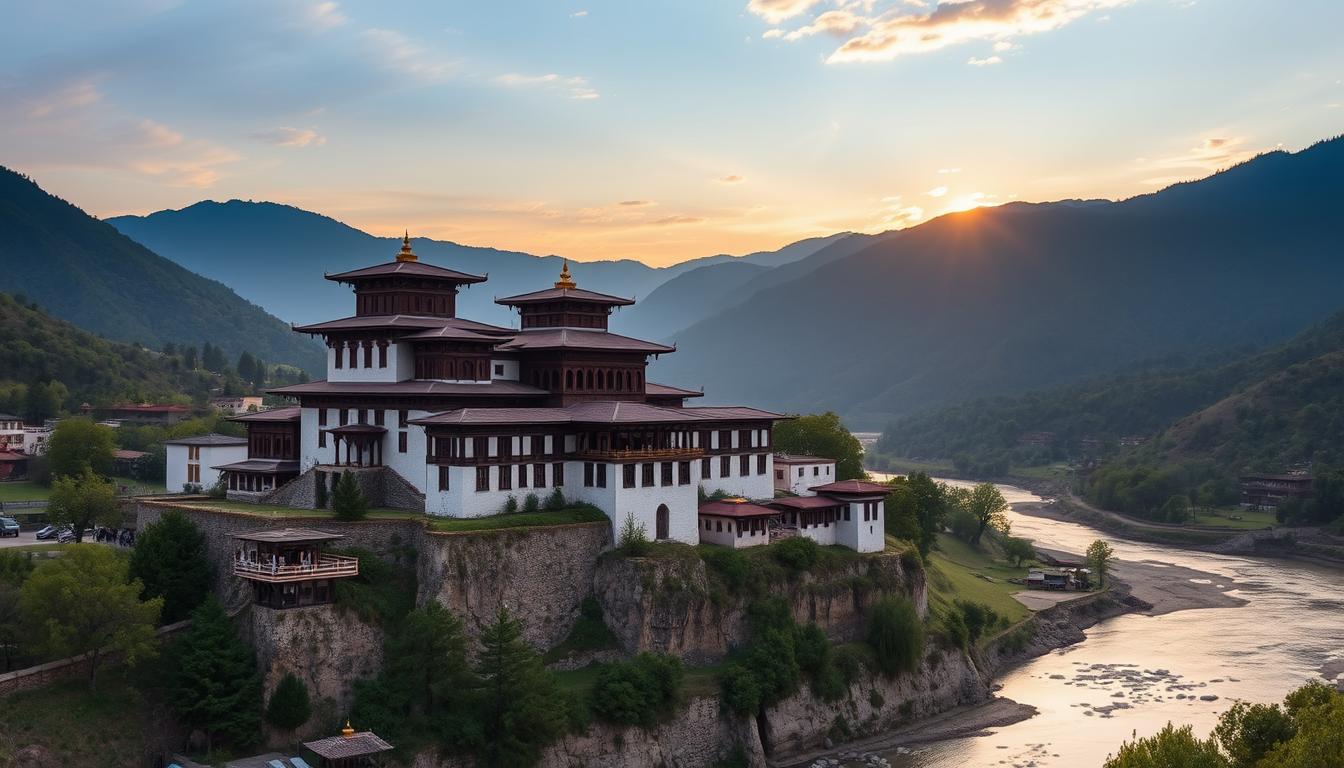
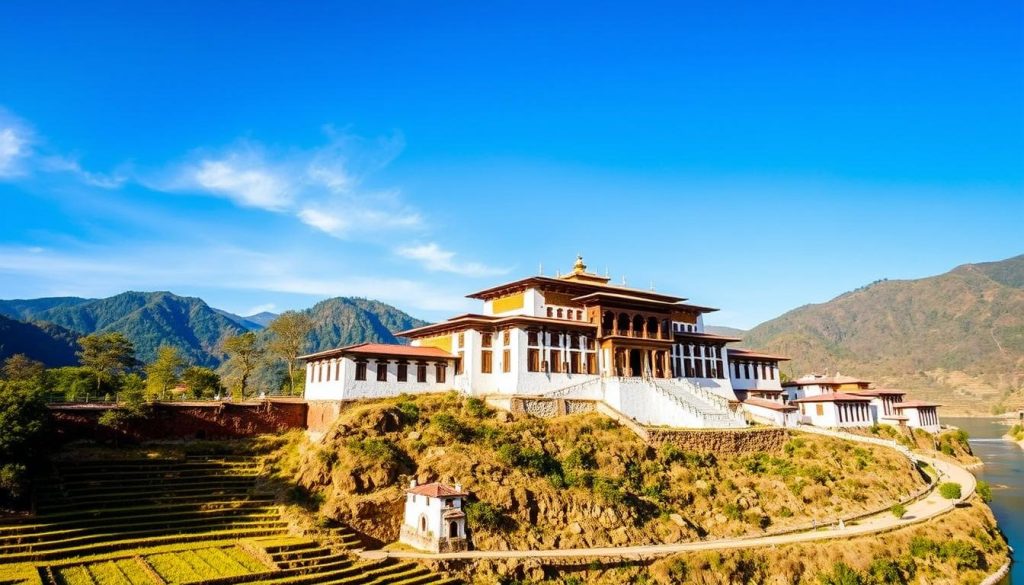
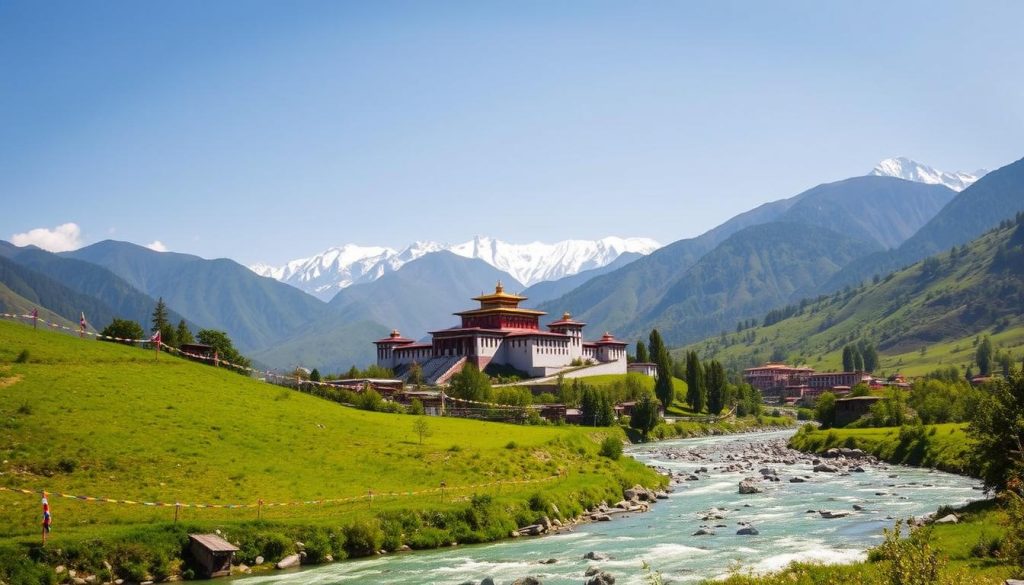
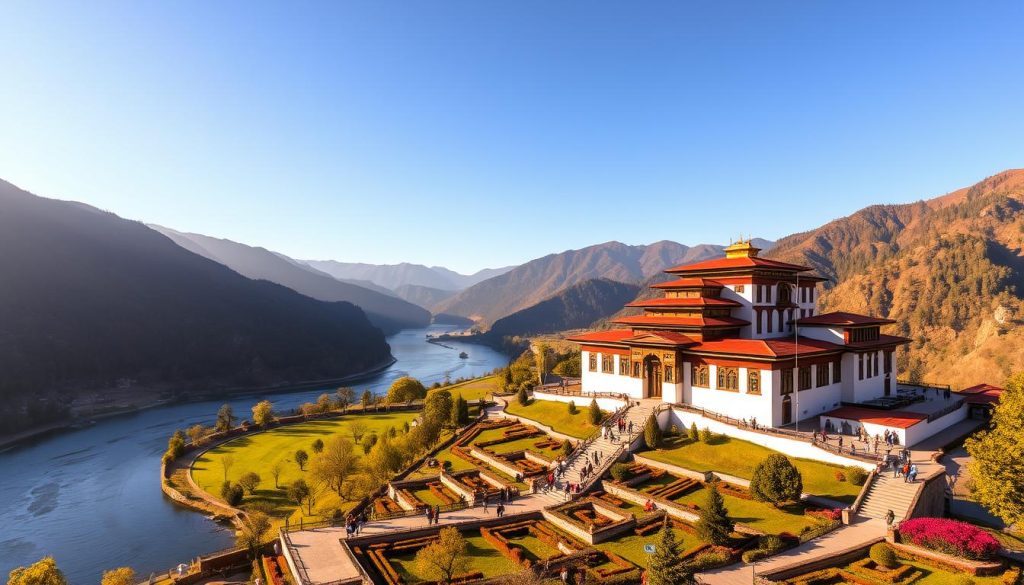
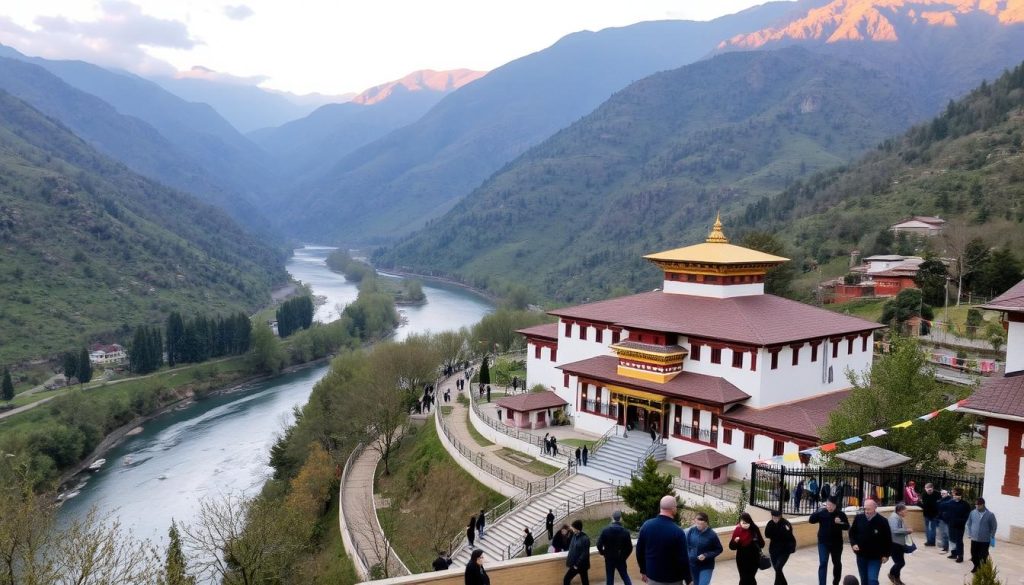
Punakha Dzong, also called Pungtang Dewa Chhenbi Phodrang, is a key part of Bhutan’s history. Built from 1637 to 1638, it’s the second oldest and second largest dzong. It sits where the Po Chu and Mo Chu rivers meet, showing off detailed designs.
This place is more than a building. It’s a fortress, a monastery, and a place for government. Its beautiful setting makes it a must-see for anyone interested in Bhutan’s culture.
The dzong has been important for many events, like the coronation of kings. It holds sacred items from the southern Drukpa Lineage of Tibetan Buddhism. Punakha Dzong is a symbol of spirituality and leadership in Bhutan.
The Punakha festival, held every year, draws many people. It shows off Bhutan’s traditional culture. Punakha Dzong is not just a building; it’s a window into Bhutan’s rich culture and history.
Overview of Punakha Dzong’s Significance
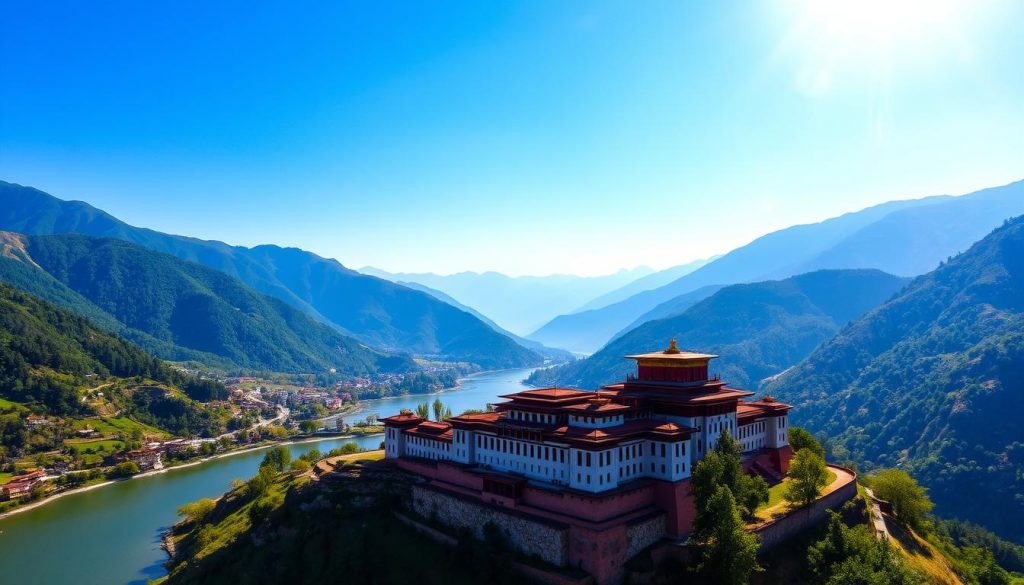
Punakha Dzong was built in 1637-38 by Zhabdrung Ngawang Namgyal. It is a key part of Bhutan’s cultural heritage. Until the mid-1950s, it was the country’s spiritual and administrative center.
The first King of Bhutan, Ugyen Wangchuck, was crowned here in 1907. This event was a major turning point in Bhutan’s history.
The dzong’s design is impressive, with detailed woodwork and colorful frescoes. These show the skill of Bhutanese craftsmen. Inside, visitors can see important relics, like the statue of Avalokitesvara.
Every year, the Domche festival is held here. It brings together people from nearby villages. They celebrate with traditional practices, connecting today’s culture to the past.
The beauty of Punakha Dzong’s architecture and its cultural importance make it a memorable place. It attracts both history lovers and those seeking spiritual experiences.
Punakha Dzong Visiting Hours
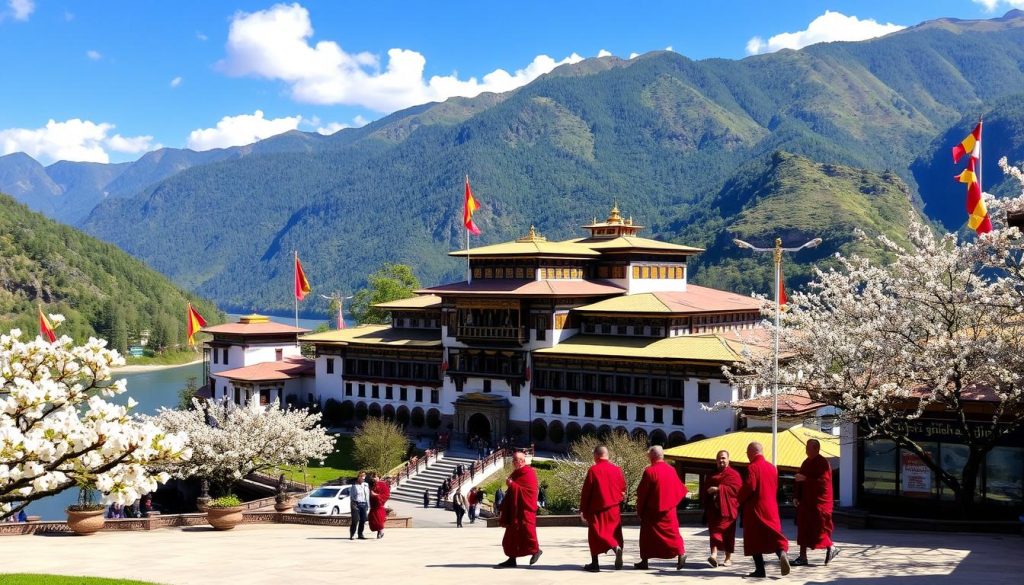
Punakha Dzong is one of Bhutan’s oldest and most important sites. It has specific visiting hours that change with the seasons. Knowing these hours helps you plan your visit better. This architectural wonder invites you to explore at different times, offering unique experiences.
Summer Visiting Hours
In the summer, from June to mid-November, you can visit from 9 AM to 5 PM. This time lets you see the dzong’s beauty in the lush green surroundings. Enjoy the lively atmosphere and take your time to explore.
Winter Visiting Hours
From mid-November to mid-May, the hours change. You can visit from 11 AM to 1 PM and again from 3 PM to 5 PM. This schedule lets you see the dzong’s charm at different times, with beautiful winter shadows.
| Season | Punakha Dzong Visiting Hours |
|---|---|
| Summer (June to Mid-November) | 9 AM – 5 PM |
| Winter (Mid-November to Mid-May) | 11 AM – 1 PM, 3 PM – 5 PM |
Best Time to Visit Punakha Dzong
Planning your visit to Punakha Dzong can make a big difference. Knowing when to go is key. Spring and autumn are the best times, with nice weather and beautiful views.
Spring and Autumn Seasons
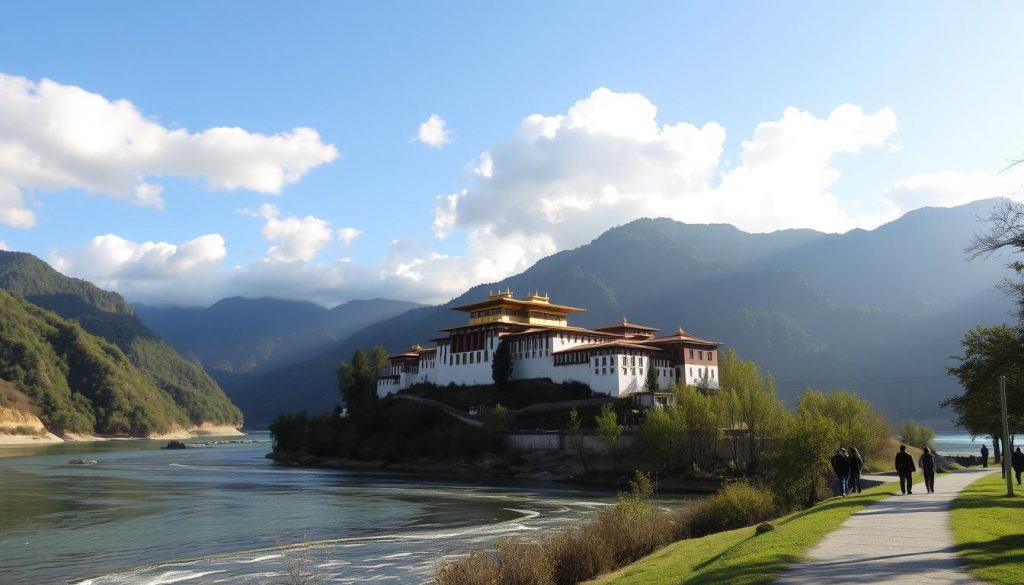
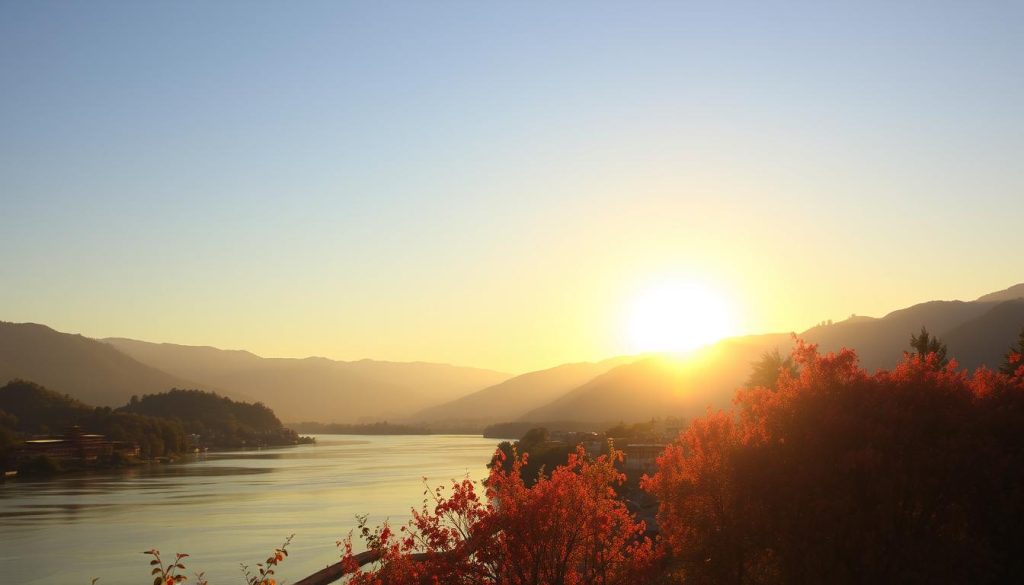
Spring (February to April) and autumn (October to December) are great. The weather is mild, and the scenery is stunning. You’ll see jacaranda trees in bloom and enjoy the colorful foliage.
Visiting in March lets you experience the Punakha Tshechu festival. It’s a chance to see the local culture and traditions up close. These seasons are the best for exploring the dzong.
Considerations for Winter and Summer
Winter (December to February) can be cold. Summer (June to August) brings heavy rain. These can affect your visit.
For a better trip, plan for spring or autumn. These times offer the best weather and views. Remember, these are the best times to visit Punakha Dzong.
| Season | Month | Weather | Highlights |
|---|---|---|---|
| Spring | February – April | Mild, blooming flora | Punakha Tshechu festival |
| Summer | June – August | Heavy rain, humid | Be cautious of travel disruptions |
| Autumn | October – December | Cool, colorful foliage | Ideal for sightseeing |
| Winter | December – February | Cold, possibly harsh | Quiet, fewer tourists |
How to Reach Punakha Dzong
There are several ways to get to Punakha Dzong. You can choose from scenic walks or local transport. Each option has its own charm.
Walking from the Main Town
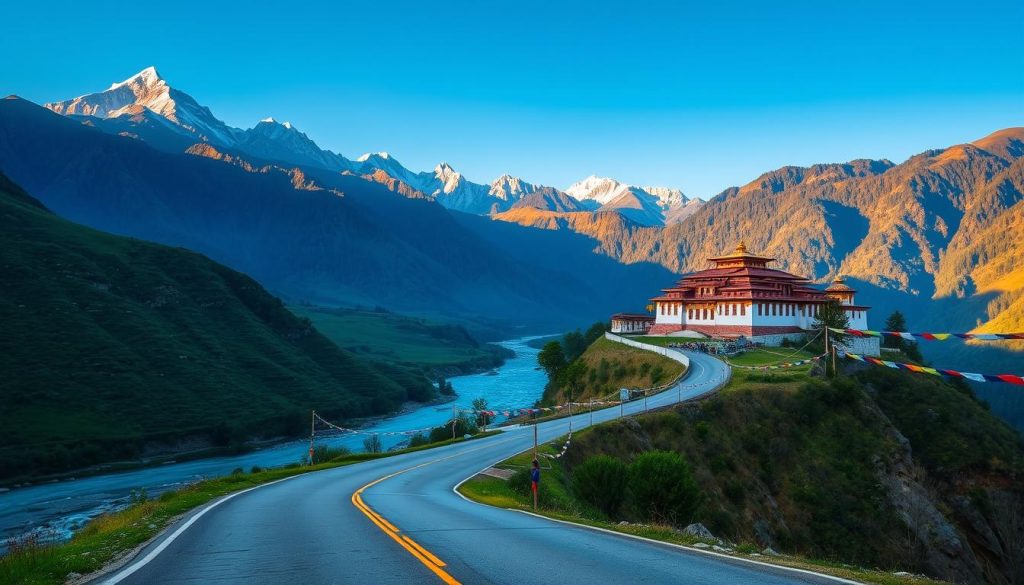
Walking from Punakha’s main town is a beautiful way to get to the Dzong. The path is about 3 km long and takes 30 minutes. Along the way, you’ll see jacaranda flowers and wooden bridges.
This walk lets you enjoy the scenery. You’ll get excited for your visit to the Dzong.
Local Transportation Options
If you’d rather not walk, there are other ways to get there. Taxis are quick and easy to find. Local buses are cheaper but might take longer.
For a special experience, book a private car with a licensed tour operator. It makes your trip smoother and more enjoyable.
| Transportation Method | Duration | Notes |
|---|---|---|
| Walking | 30 minutes | Enjoy scenic views and tranquility. |
| Taxi | 5-10 minutes | Convenient, but more costly. |
| Local Bus | Varies | Cost-effective but may have longer waiting times. |
What to Expect During Your Visit
Visiting Punakha Dzong is a special experience. You’ll see the amazing architecture and cultural relics that show its rich history. Known as the “Palace of Great Happiness,” it has stunning woodwork, grand buildings, and beautiful views.
Architecture and Sacred Relics
The architecture of Punakha Dzong is truly impressive. It combines traditional Bhutanese design with great craftsmanship. The dzong has many stories told through its painted wooden beams and carvings.
Inside, you’ll find sacred relics from the southern Drukpa school. The memorial chapel is a highlight, with pieces of Tibetan military artillery. These artifacts add depth to the dzong’s history.
Photography Guidelines
Photography is allowed in many parts of the dzong, like courtyards and exteriors. But, there are rules to follow. Flash photography is not allowed inside prayer halls to keep the peace and respect for rituals.
By taking photos outside, you can capture the dzong’s beauty. This way, you’ll remember your visit forever.
Do’s and Don’ts While Visiting Punakha Dzong
Visiting Punakha Dzong is a special experience. Knowing the local customs makes it even better. It’s important to show respect for this sacred place. Here are some tips to help you have a respectful and fun visit.
Dress Code and Behavior
There are certain rules to follow at Punakha Dzong. You should wear clothes that cover your legs and body. This shows respect for the site’s religious importance. Also, try to keep quiet and avoid loud talking or making noise.
These actions help keep the atmosphere peaceful. They let everyone enjoy the spiritual feel of the place.
Photography Restrictions
It’s tempting to take pictures, but there are rules about photography. You can’t take photos or selfies in prayer halls or sacred areas. But outside, you can take pictures of the beautiful architecture and views.
Just remember to be mindful of others around you. This way, you can respect both the place and the people there.
| Do’s | Don’ts |
|---|---|
| Dress modestly | Wear revealing clothing |
| Maintain quietness | Make loud noises |
| Follow photography guidelines | Take photos inside sacred areas |
| Respect local customs | Disrupt religious practices |
By following these simple guidelines, you’ll have a great time at Punakha Dzong. Enjoy the visit and learn about the rich culture and history of this amazing place.
Things to See Nearby Punakha Dzong
Exploring attractions near Punakha Dzong makes your trip even better. The Punakha Valley is full of culture and stunning views. Chimi Lhakhang and the suspension bridge are must-sees for unforgettable Bhutan sightseeing.
Chimi Lhakhang Temple
Chimi Lhakhang, or the Temple of Fertility, is a top spot for many. It’s about 7.5 km from Punakha Dzong. This temple is famous for its fertility symbols and is open from 9 AM to 5 PM every day.
Suspension Bridge
The longest suspension bridge in Bhutan is nearby. It offers amazing views of the landscape. Walking on this bridge, you’ll see the Mo Chhu river and its beauty.
| Attraction | Distance from Punakha Dzong | Opening Hours |
|---|---|---|
| Chimi Lhakhang | 7.5 km | 9 AM – 5 PM |
| Suspension Bridge | Approx. 15 km | Open All Hours |
Visiting these spots is a great way to enhance your Punakha Dzong trip. They offer a deeper look into Bhutan’s culture and nature.
Conclusion
Discover the beauty of Punakha Dzong, a 1637 marvel in Bhutan. It’s a must-see, standing tall as the country’s crown jewel. This dzong, with its 180 meters length and 72 meters width, offers an enchanting experience in Bhutan. It’s a place where history and culture come alive, making it a key stop for travelers.
Getting to Punakha Dzong from central Punakha is easy, just 36.1 kilometers away. You can use local transport or enjoy a scenic walk. Remember, it’s open from 8 AM to 5 PM. The best time to visit is from March to May, when the weather is perfect.
Punakha Dzong is famous for its architecture and history. It hosted the first National Assembly in 1953 and the royal wedding in 2011. Its three Docheys make it a unique spot for visitors.
Looking back on your summary of Punakha Dzong visit, it’s a place where culture and peace meet. Don’t miss the Domche festival, a celebration of local traditions. Whether you love history or seek tranquility, Punakha Dzong is a treasure in Bhutan.
| Attribute | Details |
|---|---|
| Year Built | 1637 |
| Dimensions | 180m x 72m |
| Elevation | 1,200 meters |
| Distance from Punakha | 36.1 km |
| Opening Hours | 8 AM – 5 PM |
| Best Time to Visit | March to May |
| Significant Events | First National Assembly in 1953; Royal wedding in 2011 |
| Unique Feature | Three Docheys |
| Central Tower Height | Six stories |
Additional Tips for Visiting Punakha Dzong
Getting ready for your trip means paying attention to many details. Before you go, make sure you have the right visa and travel permits. These steps are key to a smooth visit.
Book your place to stay early, as spots can get taken fast, more so during busy times. Also, using Punakha Dzong travel tips can make your trip better. A licensed tour guide can help you learn more about the site’s history and culture.
It’s important to know about safety. Bhutan is a safe place, but it’s good to be careful. If you plan to trek or hike, watch out for Acute Mountain Sickness (AMS) at high altitudes.
Learn about local customs and manners. Following best practices will help you understand Bhutan’s culture better. Be respectful when taking photos, mainly in sacred areas. These simple rules will make your visit to Punakha Dzong unforgettable.
Traveler Experiences and Testimonials
Visitors to Punakha Dzong often say their experiences are awe-inspiring and uplifting. The stunning architecture, with its three courtyards and golden Buddha statues, leaves you in wonder. The location, where two rivers meet, adds to the serene atmosphere.
People talk about the special moments with the monks. They honor their parents by chanting in the main temple. This touching tradition makes your visit even more meaningful. The monks’ stories and daily routines add depth to your understanding of Punakha.
Reading stories from other visitors can give you great ideas for your trip. You might enjoy walking through rice paddies or exploring the area’s history and nature. These stories will help make your visit to Punakha Dzong unforgettable.