Your Guide to the Top Moroccan Crafts in Rabat
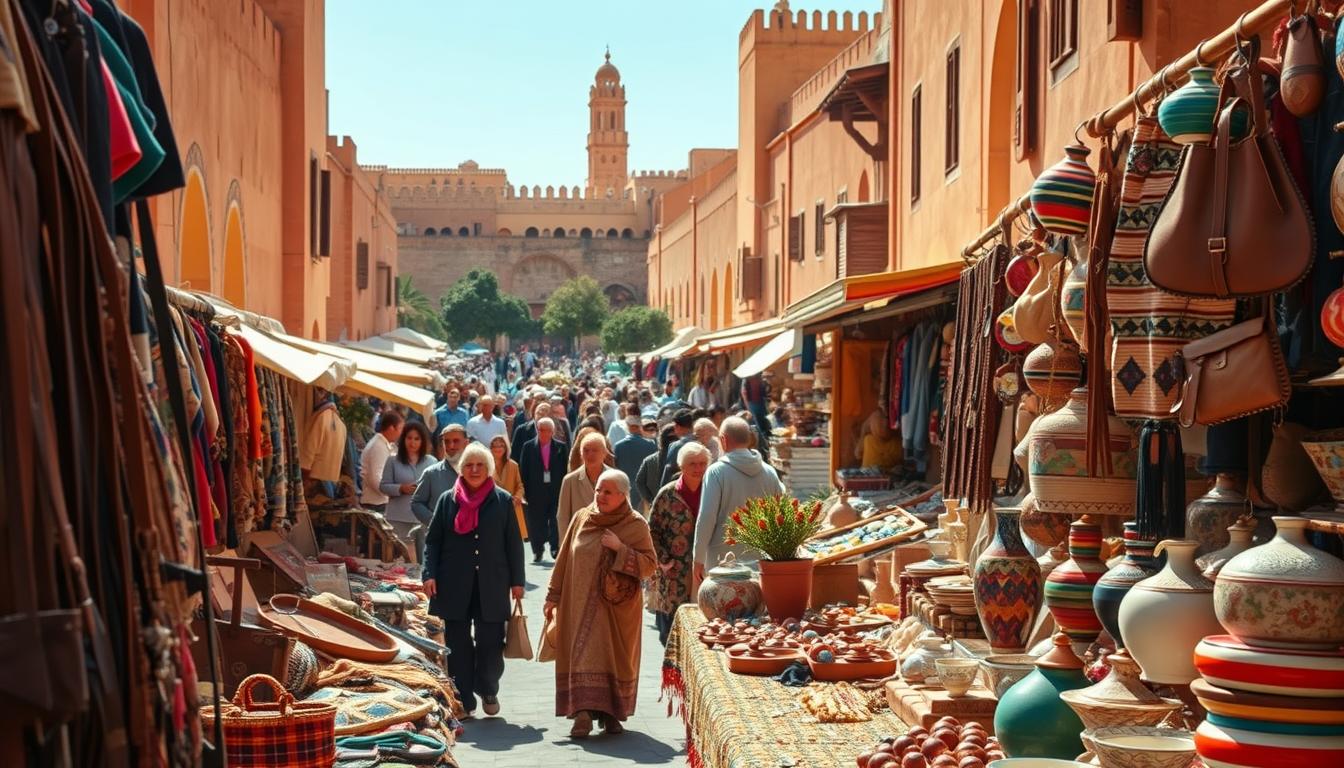
Are you ready to explore Rabat’s rich cultural heritage through its beautiful handmade products? The city is filled with unique handicrafts that show its history and traditions.
You can find a variety of traditional crafts in Rabat. There are intricately designed rugs and carpets, and many other handmade items. Cities like Rabat, Fez, and Tetouan have a wide range of these goods, each with its own special character.
Exploring Rabat’s crafts will show you how important these handmade products are to the city. You’ll be amazed by the beauty and skill that make this city so vibrant.
The Rich Artisanal Heritage of Rabat
Exploring Rabat reveals a world of traditional crafts passed down through generations. The city’s artisanal heritage is a vibrant mix of Arab, Berber, Jewish, and Andalusian traditions.
The Historical Significance of Craftsmanship in Morocco’s Capital
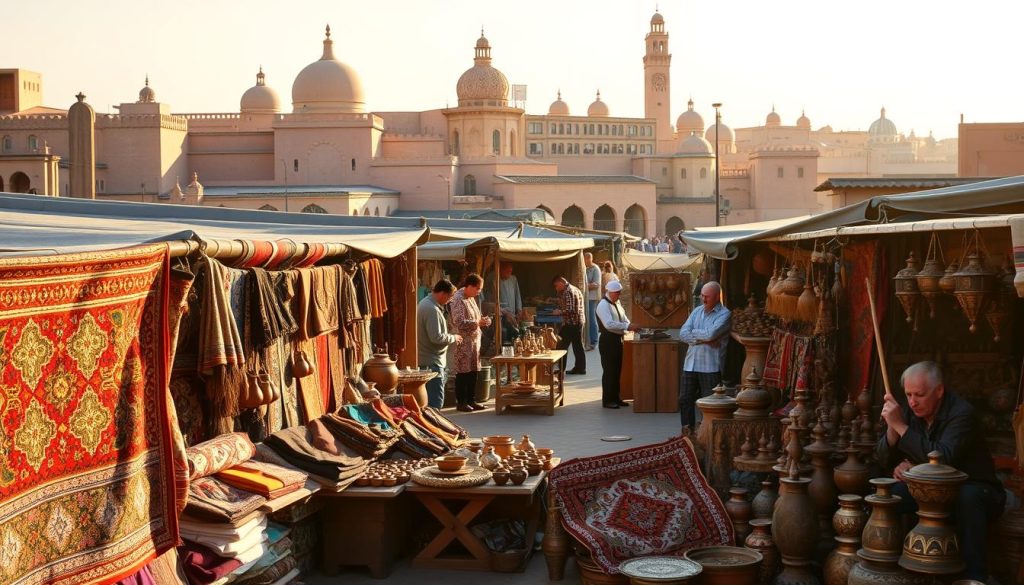
Rabat’s craftsmanship has deep historical roots. The city has been a center for artisans for centuries. Local artisans in Rabat keep traditional techniques alive while adding new ones. This makes the city’s crafts truly unique.
The historical importance of craftsmanship in Rabat is clear in its artisanal markets. Here, visitors can find a wide variety of traditional products.
How Rabat’s Craft Scene Differs from Other Moroccan Cities
Rabat’s craft scene is special because of its unique cultural mix. Unlike other cities, Rabat’s artisans have been shaped by its role as a crossroads of trade and culture. This has given the city a distinct artisanal identity, seen in its traditional crafts, from intricate woodwork to beautiful textiles.
Visitors to Rabat can dive into the city’s artisanal heritage by exploring its artisanal markets and supporting local artisans. This helps preserve traditional crafts and supports the local economy.
Exploring Moroccan Crafts in Rabat: What Makes Them Special
When you explore Moroccan crafts in Rabat, you see a mix of old techniques and cultural touches. These crafts are more than just decorations. They open a window into Morocco’s rich history and diverse culture.

Traditional Techniques Preserved Through Generations
The artisans in Rabat are proud of keeping old techniques alive. They make everything from detailed woodwork to fine pottery. Each piece shows the skill and patience of Moroccan artisans.
For example, zellij tile work is a traditional method. It involves cutting and arranging small tiles into beautiful patterns. This hard work creates unique pieces that decorate homes and public areas in Rabat.
| Craft | Traditional Technique | Cultural Significance |
|---|---|---|
| Zellij Tile Work | Cutting and assembling small tiles into intricate patterns | Adorns homes and public spaces, symbolizing hospitality and community |
| Woodwork | Intricate carving and inlaying with various materials | Reflects the artisan’s skill and creativity, often used in traditional furniture |
| Pottery | Shaping and glazing clay to create functional and decorative items | Used in daily life, representing the connection between the artisan and the natural world |
The Blend of Berber, Arab, and Andalusian Influences
The crafts in Rabat show a mix of Berber, Arab, and Andalusian styles. This mix is seen in the patterns, motifs, and techniques used in crafts like textiles and metalwork.
This blend is not just about looks. It also shows the history and society behind these crafts. For instance, certain patterns and colors in textiles might mean fertility, prosperity, or protection. This highlights the deep cultural meaning of these crafts.
By looking into the unique crafts Rabat offers, you learn more about the craftwork Rabat that goes into making these stunning pieces. Each one tells a story of Moroccan art Rabat that still fascinates and inspires.
Textiles and Carpets: Rabat’s Woven Treasures
The art of making textiles in Rabat is very old. It mixes history and culture together. You’ll find a world of colors, patterns, and techniques passed down through generations.
The Famous Rabat Carpet: Patterns and Symbolism
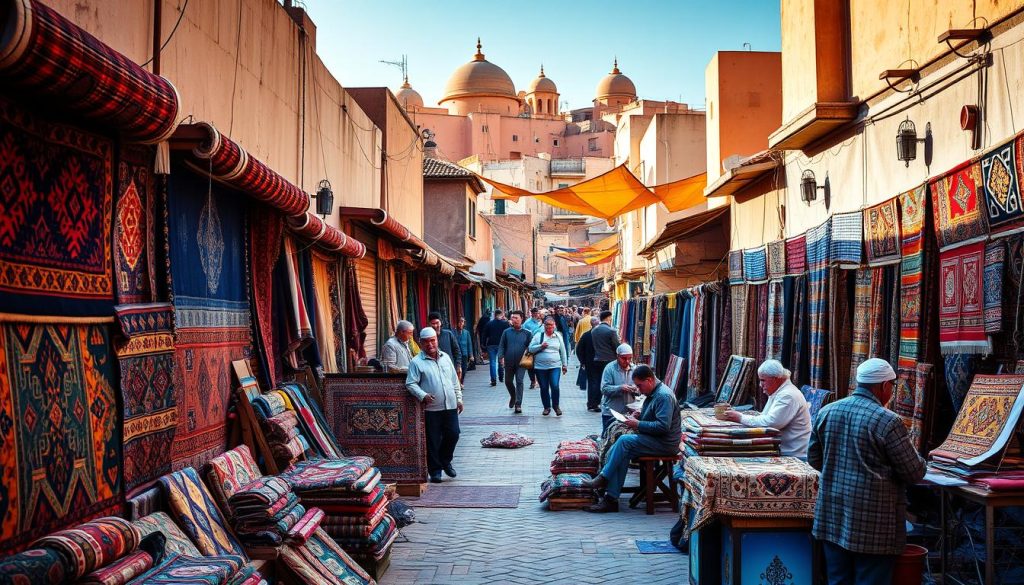
The Rabat carpet shows the skill of Berber craftsmen. These carpets are not just beautiful; they carry deep meanings. The patterns and colors often show Berber culture and life, like fertility and community.
Every carpet is unique, showing the artisan’s touch and the region’s rich culture. Buying a Rabat carpet means you support local artisans and keep a tradition alive.
Embroidery and Traditional Textiles
Rabat is also famous for its embroidery and traditional textiles. These are made with techniques passed down through generations. They have intricate designs that are both beautiful and meaningful.
From embroidered clothes to home decor textiles, these items are true Moroccan souvenirs. They can be treasured for many years.
| Type of Textile | Description | Symbolism |
|---|---|---|
| Rabat Carpets | Handwoven carpets with intricate patterns and bold colors | Represent Berber culture, fertility, protection, and community |
| Embroidery | Intricately embroidered clothing and decorative textiles | Reflects the artisan’s skill and cultural heritage |
| Traditional Textiles | Textiles used in home decor and clothing | Symbolizes tradition and cultural continuity |
Where to Find the Best Textile Artisans
The medina in Rabat is full of authentic textile products. The souks are where artisans sell their work, from carpets to embroidered clothes. For a special experience, visit artisanal cooperatives and fair-trade shops that help local craftsmen.
When looking for textiles in Rabat, take your time in the souks. Talk to the artisans. This way, you get quality products and learn about the craftsmanship and cultural value of each piece.
Pottery and Ceramics: Clay Artistry of Rabat
In Rabat, you’ll find a world of clay artistry that shows the city’s history and culture. Pottery and ceramics are treasured Moroccan crafts here. They highlight the skill and creativity of local artisans.
Traditional Pottery Techniques and Designs
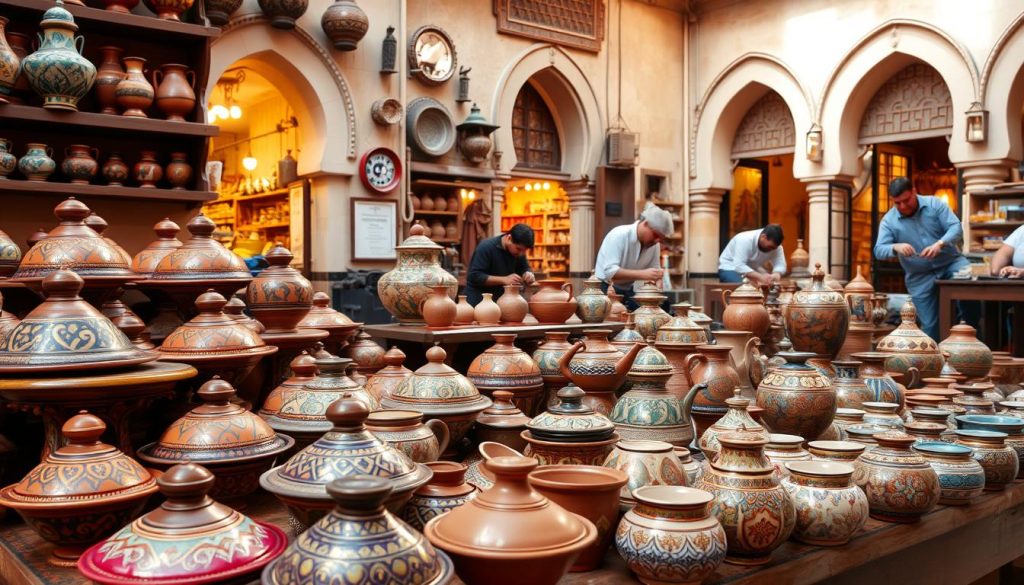
Moroccan pottery is famous for its bold colors and geometric patterns. In Rabat, artisans keep old techniques alive. They make pieces that are both useful and beautiful.
They shape clay on a wheel and then paint and glaze it by hand. This process is passed down through generations.
“The art of pottery is a reflection of our heritage, and we take pride in preserving these traditional techniques,” says a local artisan.
The designs mix Berber, Arab, and Andalusian styles, making each piece special. You’ll see floral patterns, geometric shapes, and calligraphic designs.
| Technique | Description | Characteristic |
|---|---|---|
| Hand-painting | Intricate designs painted by hand | Unique, colorful patterns |
| Glazing | Application of glaze for durability and shine | Variety of colors and finishes |
| Pottery Wheel | Shaping clay into symmetrical forms | Precision and symmetry |
Contemporary Ceramic Artists in Rabat
Rabat also has modern ceramic artists who innovate. They try new forms, colors, and techniques. This appeals to people all over the world.
These artists have studied at local art schools. They’ve been influenced by international trends. They mix traditional methods with modern creativity in their work.
Best Ceramic Workshops to Visit
There are many workshops in Rabat for pottery and ceramics enthusiasts. These workshops show the creative process, from clay to glazing.
- Visit local artisan cooperatives to see traditional techniques in action.
- Explore modern ceramic studios to discover contemporary designs.
- Participate in workshops to learn the basics of pottery and ceramics.
By exploring Rabat’s pottery and ceramics, you’ll appreciate Moroccan crafts more. You’ll also understand the city’s rich artisanal heritage.
Leather Goods: From Traditional to Modern Designs
In Rabat, you’ll find a mix of traditional and modern leather goods. The city’s leather industry is known for its quality, showing Morocco’s rich culture. You can see a variety of handmade leather items, from classic to modern designs, made by local artisans.

The Art of Moroccan Leather Tanning
Moroccan leather tanning is an old craft that’s been kept alive for generations. In Rabat, artisans still use old methods like natural dyeing and hand-stitching. This process makes leather strong yet soft.
The natural dyes and traditional methods make Moroccan leather unique. You can see artisans at work in the tanneries, where they carefully make each piece of leather.
Popular Leather Products to Purchase
Rabat has many leather products that are great as souvenirs or gifts. Some popular items include:
- Handbags and wallets
- Belts and pouches
- Traditional Moroccan saddlebags
- Leather footwear
These products show the skill of Moroccan leather craftsmanship. They are both useful and stylish.
| Product | Description | Price Range |
|---|---|---|
| Handbags | Stylish and functional, made from high-quality leather | $50-$200 |
| Belts | Crafted with precision, featuring traditional Moroccan designs | $20-$100 |
| Saddlebags | Authentic Moroccan style, perfect for decorative purposes | $100-$300 |
Sustainable Leather Practices in Rabat
Recently, Rabat’s leather industry has focused more on being green. Many artisans now use eco-friendly methods, like vegetable-based dyes and less waste. This helps the environment and makes the leather better.
By supporting local artisans who use green leather practices, you help keep traditional skills alive. You also help Rabat become more eco-friendly.
Metalwork and Jewelry: Rabat’s Glittering Treasures
Exploring Rabat reveals a world of metalwork and jewelry. The city’s artisanal heritage shines through in these pieces. The designs and craftsmanship are truly remarkable.

Silver Filigree and Traditional Jewelry Designs
Rabat is famous for its silver filigree jewelry. These pieces are made with traditional techniques. They are not just beautiful but also carry stories of Moroccan culture and history.
Traditional jewelry designs often have geometric patterns, floral motifs, and Arabic calligraphy. These add cultural significance to each piece.
Brass and Copper Work: Lamps, Trays, and Decorative Items
Moroccan metalwork, like brass and copper, adds charm to any space. Artisans make intricate lanterns, tea sets, and trays. These items are both functional and beautiful, perfect for your home.
| Item | Description | Typical Use |
|---|---|---|
| Brass Lanterns | Intricately designed with geometric patterns | Decoration, Lighting |
| Copper Trays | Engraved with floral motifs and Arabic calligraphy | Serving, Decoration |
| Silver Filigree Jewelry | Delicate, intricate designs featuring traditional motifs | Adornments, Gifts |
Contemporary Jewelry Designers in Rabat
Rabat also has contemporary jewelry designers. They mix modern styles with traditional techniques. This creates unique pieces for different tastes.
Visiting local workshops and boutiques is a great way to find these designers. You can learn about their creative processes.
Where to Shop for Authentic Moroccan Crafts Rabat Has to Offer
As you explore Rabat, you’ll find a wealth of authentic Moroccan crafts. The city has everything from bustling medinas to modern boutiques. Here, you can discover unique souvenirs and gifts.
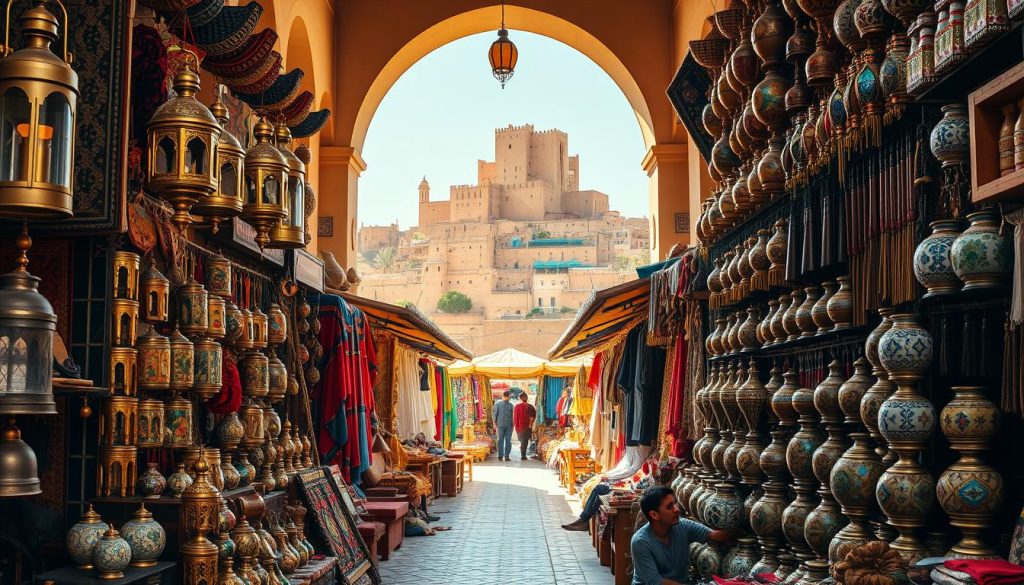
Navigating the Medina and Traditional Markets
The medina of Rabat is a top spot for authentic crafts. Its narrow streets are filled with shops and stalls. You can find handmade textiles and intricate metalwork here.
To make the most of your visit, start early to avoid the crowds. Be ready to haggle. Don’t miss the Souk al Ghzl for wool and textiles, and the Souk Sebbat for traditional crafts.
Artisanal Cooperatives and Fair-Trade Shops
Rabat also has places that support local artisans and fair-trade practices. These shops work directly with craftsmen, ensuring they get fair pay. The Rabat Artisanal Cooperative is a great example, showcasing Moroccan crafts like pottery and jewelry.
Shopping here not only gets you authentic souvenirs but also helps the local economy.
Modern Boutiques Featuring Local Artisans
Rabat also has modern boutiques that highlight local artisans. These boutiques mix traditional crafts with modern designs. They offer unique, high-quality pieces that show Morocco’s rich culture.
Some of the best boutiques are in the Ville Nouvelle. They have a carefully chosen selection of artisanal goods.
In Rabat, you can find authentic Moroccan crafts in the medina, cooperatives, and boutiques. Knowing where to shop ensures your souvenirs are beautiful and truly represent the local culture.
Hands-On Craft Experiences for Visitors
Visiting Rabat’s craft workshops and events lets you see the value of old techniques. The city’s traditional crafts, like textiles and metalwork, show off its rich culture. You’ll learn from skilled artisans.

Workshops Where You Can Learn Traditional Crafting Techniques
Rabat has many workshops for traditional Moroccan crafts. You can try your hand at pottery, embroidery, and woodworking. Experienced artisans will guide you.
Workshops on Moroccan pottery and traditional textile weaving are popular. You’ll learn practical skills and about the cultural importance of these crafts.
Craft Demonstrations and Cultural Events
Rabat also has craft demonstrations and cultural events. These show off the city’s artisanal talents. You’ll see artisans at work and hear their stories.
Don’t miss the cultural festivals and craft fairs. They celebrate Rabat’s heritage. You’ll find a lively atmosphere to see handmade products.
Connecting with Master Artisans for Private Lessons
For a special experience, take private lessons with master artisans. It’s a chance to learn deeply and connect with the local craft community.
Learning from these artisans will improve your skills. You’ll also understand Rabat’s cultural heritage better.
Conclusion: Bringing Home a Piece of Rabat’s Artistic Soul
Exploring Rabat, you find yourself surrounded by Moroccan crafts’ rich heritage. The city’s textiles and ceramics show the artisans’ skill and dedication. Each piece is a window into the city’s artistic soul.
Looking for authentic souvenirs in Rabat? Think about the city’s unique crafts. A piece of jewelry, a leather bag, or pottery can remind you of Rabat’s beauty. These souvenirs capture the city’s artistic essence.
Choosing a craft from Rabat means more than just a souvenir. It supports local artisans and brings a piece of Moroccan culture into your home. Moroccan crafts in Rabat are a true reflection of the city’s heritage. They add depth and beauty to any space.