Your Guide to the Remarkable Hassan Tower
Have you ever wondered what makes the Hassan Tower a must-visit destination in Morocco?
This 12th-century marvel was built by the Almohad dynasty. It stands as a testament to Rabat’s rich cultural heritage. As a significant landmark, it offers a glimpse into the city’s storied past.
The Hassan Tower historical site is not just an architectural wonder. It’s also a symbol of the city’s enduring legacy. Its grandeur and beauty continue to captivate visitors from around the world.
The Story Behind Hassan Tower
Did you know the Hassan Tower was part of a grand mosque plan by Sultan Yacoub El Mansour in 1195? This ambitious project aimed to be one of the biggest mosques in the Islamic world.
Origins and Construction Timeline
The Hassan Tower’s construction started under Sultan Yacoub El Mansour, a key figure of the Almohad dynasty. It was part of a bigger plan to make Rabat a major cultural and religious hub.
The 1195 Beginning
In 1195, the foundation stone was laid, starting a new era in architecture. The minaret was the main focus of the mosque complex.
The Sudden Halt in Construction
But, the construction stopped suddenly with Sultan Yacoub El Mansour’s death. The project was left unfinished, showing the transience of human endeavors. As one historian said,
“The unfinished tower stands as a reminder of the ambitions of the Almohad rulers.”
The Hassan Tower’s story is a mix of architectural dreams, political drive, and unexpected events. Knowing this history helps us appreciate the landmark more today.
Architectural Marvel: Design and Structure
As you get close to the Hassan Tower, you notice its unique design. This famous tower started in the late 12th century. It shows the Almohad dynasty’s architectural skill.
The tower looks great and tells us about its past and culture.
Distinctive Architectural Features
The Hassan Tower has special features that make it stand out. It has detailed sandstone latticework and a ramp instead of stairs.
The Intricate Sandstone Latticework
The tower has intricate sandstone latticework. This shows the skill of the artisans. It makes the tower look elegant and light.
The Ramp System Instead of Stairs
The tower has a ramp system instead of stairs. This was smart because it let the muezzin ride a horse to the top. It shows the tower’s design was practical.
Hassan Tower is not just beautiful. It’s also important historically and culturally. It shows the Almohad dynasty’s power and still fascinates visitors today.
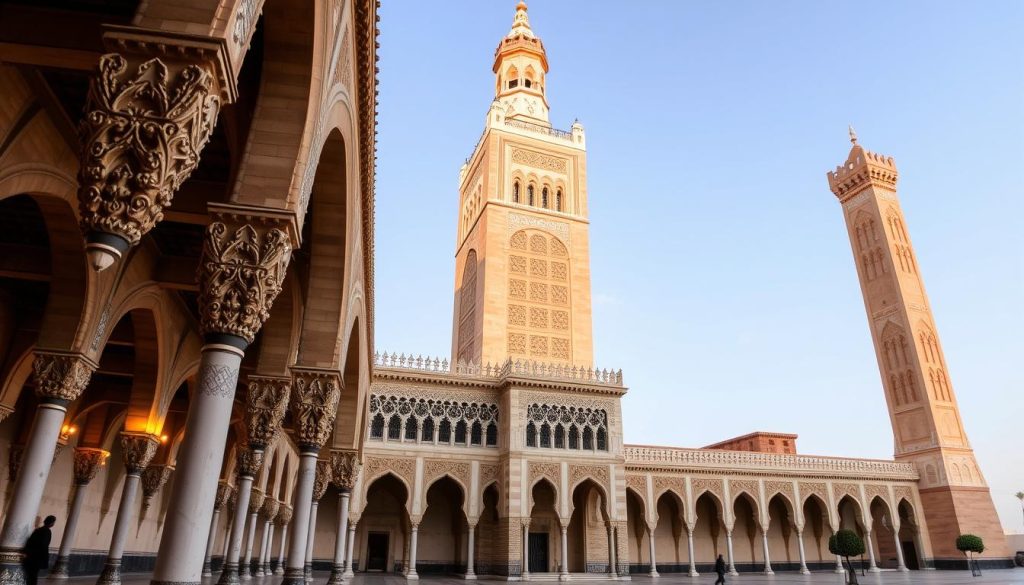
- The tower’s design reflects the architectural prowess of the Almohad era.
- Intricate sandstone latticework adds to its aesthetic appeal.
- The ramp system is a unique feature that facilitated the call to prayer.
The Hassan Tower Historical Site: What You’ll See Today
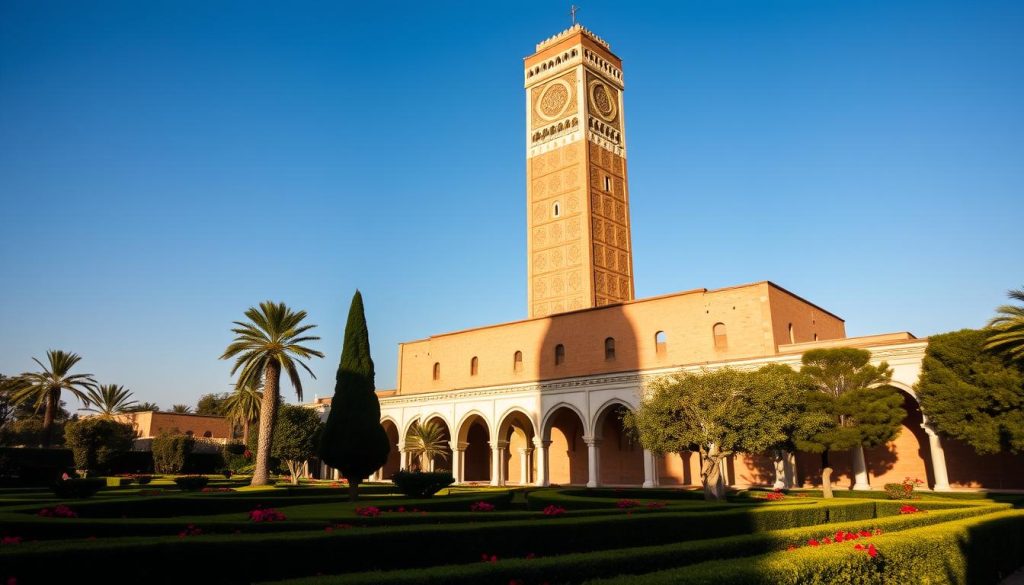
Visiting Hassan Tower is like stepping back in time. You’ll see history and amazing architecture. The site shows the big dreams of Almohad caliph Abu Yusuf Ya’qub al-Mansur. He wanted it to be one of the biggest mosques in the world.
The Incomplete Minaret
The most eye-catching part is the unfinished minaret. It was meant to be the tallest in the Islamic world. Even though it’s not done, it’s still a wonder of medieval engineering.
Current Height and Dimensions
The minaret is 44 meters tall. It’s impressive, even though it’s not complete. You can see how big the mosque was meant to be.

The Mosque Ruins
The mosque ruins are another big draw. They show what the mosque looked like when it was new.
The 360 Columns
The ruins have 360 columns that once held up the roof. These columns, made from red sandstone, show the skill of the Almohad builders.
Exploring Hassan Tower, you’ll see history and beauty. It’s not just ruins. It’s a peek into the past, showing us the culture, religion, and architecture of that time.
Cultural and Religious Significance
At Hassan Tower, you can feel Morocco’s culture and Islamic traditions. It’s a key site that shows the country’s rich heritage. Hassan Tower stands as a symbol of Morocco’s history and spiritual identity.
Role in Islamic Heritage
Hassan Tower is crucial in Morocco’s Islamic heritage. It shows the Almohad dynasty’s architectural and religious success. The tower’s design and the mosque’s ruins display the Islamic architectural style, with its detailed and grand features.
Religious Symbolism
The tower’s minaret is a symbol of Islamic faith. It reminds Moroccans of the importance of prayer and Islam in their lives. The symbolism of the tower is deeply tied to Islamic traditions.
Importance to Moroccan Identity
Hassan Tower is a big part of Moroccan identity. It reflects the country’s history, culture, and values. The tower’s image on Morocco’s currency shows its importance as a national symbol.
Representation on National Currency
The image of Hassan Tower on Morocco’s currency shows its cultural and historical value. This recognition makes the tower an iconic symbol of Morocco. It shows its lasting legacy.

Historical Context: Morocco During the Almohad Dynasty
Exploring Hassan Tower’s history means diving into Morocco’s past under the Almohad dynasty. This era, from the 12th to the 13th century, was filled with cultural, artistic, and architectural wonders.
Political Climate of 12th Century Morocco
In the 12th century, Morocco was unified under the Almohad dynasty. They expanded their rule through military campaigns. This brought together various tribes and regions under one leadership.
Expansion and Conquest
The Almohads expanded their territory in North Africa and Spain. They conquered key cities, making Marrakech their capital.
Artistic and Cultural Achievements
The Almohad era was a time of great artistic and cultural growth. A unique architectural style emerged, mixing Islamic, Arabic, and local elements.
Architectural Renaissance
This architectural renaissance is seen in the Hassan Tower. It shows the Almohads’ skill in engineering and design.
| Aspect | Description | Impact |
|---|---|---|
| Political Unification | Unification of tribes and regions | Stable governance |
| Artistic Advancements | Blend of Islamic, Arabic, and local influences | Unique cultural identity |
| Architectural Renaissance | Construction of monuments like Hassan Tower | Lasting architectural legacy |
Visiting Hassan Tower: Practical Information
Before you visit Hassan Tower, knowing some key details can make your trip better. Located in Rabat, Morocco, this site is a must-see for history buffs and curious travelers.
Location and Accessibility
Hassan Tower is right in Rabat’s center, making it easy to get to. You can use local taxis or public buses to get there from anywhere in the city.
Transportation Options from Rabat and Casablanca
Traveling from Casablanca? Take a train to Rabat’s station. It’s just a short taxi ride to Hassan Tower. Inside Rabat, buses and taxis make getting around simple.
Opening Hours and Entrance Fees
Knowing when to go and how much it costs is important. Hassan Tower is open from 9:00 AM to 5:00 PM. Adults pay about 70 MAD to enter.
Special Access Considerations
People with mobility issues should note the walking and uneven paths. But, the site is mostly accessible. Staff are ready to help if you need it.
With this information, you can enjoy Hassan Tower’s rich history and culture without worry.
Best Times to Visit Hassan Tower
To enjoy your visit to Hassan Tower, knowing the best times is key. The tower shines brightest in certain seasons and at specific times of day.
Seasonal Considerations
Spring and autumn are the best times to see Hassan Tower. The weather is mild, perfect for exploring.
Weather Patterns and Tourist Seasons
In spring, the weather is nice, with temperatures between 15°C and 25°C. Autumn is similar, making both seasons great for Hassan Tower attractions. Summer is hot, and winter is cool and less busy.
| Season | Weather | Tourist Season |
|---|---|---|
| Spring | Mild (15°C – 25°C) | Moderate |
| Summer | Hot | Peak |
| Autumn | Mild (15°C – 25°C) | Moderate |
| Winter | Cool | Low |
Daily Timing for Optimal Experience
For the best visit, go early morning or late afternoon. These times are cool and light up the tower beautifully for Hassan Tower photos.
Sunrise and Sunset Viewing Opportunities
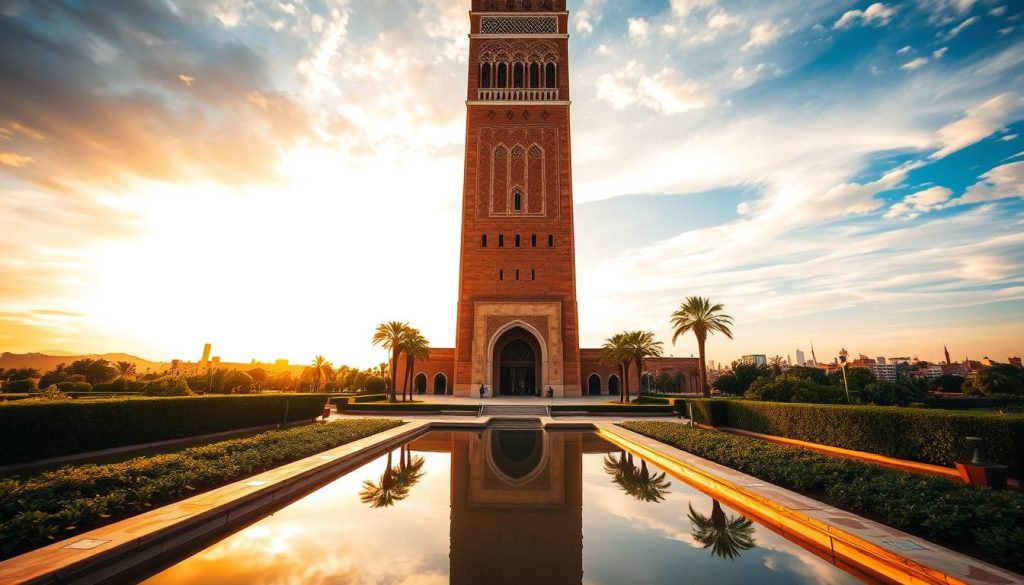
Seeing Hassan Tower at sunrise or sunset is special. The golden light makes it stunning and perfect for photos. The calm atmosphere adds to the experience.
Photography Tips for Capturing Hassan Tower
Photography at Hassan Tower is a chance to mix history and architecture. Here are some tips to help you get the best shots.
Best Angles and Viewpoints
Choosing the right angle is key to capturing Hassan Tower’s essence. Try different viewpoints to add variety to your photos.
Panoramic Opportunities
The area around Hassan Tower offers great panoramic views. Step back and include the landscape to show the tower’s size and its setting.
Lighting Considerations
Lighting greatly affects your photos’ quality. Knowing the best times to take photos can improve your shots.
Golden Hour Photography
The golden hour, just before sunset, is perfect for Hassan Tower. The soft, warm light brings out the tower’s details and adds beauty to your photos.
- Use a tripod for stability, even in low light.
- Try different angles and compositions for creativity.
- Think about the background and how it matches the tower.
By following these tips, you can take amazing photos of Hassan Tower. Your visit will be even more special.
Nearby Attractions to Explore
After seeing the Hassan Tower, explore other historical sites nearby. The area is full of landmarks that show Morocco’s rich history and culture.
Mausoleum of Mohammed V
The Mausoleum of Mohammed V is a key attraction near Hassan Tower. It’s a modern Moroccan marvel and the final resting place of King Mohammed V. He was key in Morocco’s fight for freedom.
Historical Significance and Architecture
The mausoleum mixes traditional Moroccan and modern styles. It’s known for its detailed tile work and carved wood. It also holds the tombs of Mohammed V’s sons, including King Hassan II and Prince Moulay Abdallah.
Kasbah of the Udayas
The Kasbah of the Udayas is another must-see near Hassan Tower. This 12th-century fortified neighborhood is famous for its narrow streets and whitewashed houses. It’s also a hub of culture.
Walking Distance and Highlights
The Kasbah of the Udayas is close to Hassan Tower, perfect for exploring Rabat’s history. You can see the Bou Regreg estuary, wander its streets, and dive into local culture.
The Mausoleum of Mohammed V and the Kasbah of the Udayas are key stops on your Hassan Tower journey. They offer a unique look into Morocco’s past and culture.
- Explore the Mausoleum of Mohammed V for its architectural beauty and historical significance.
- Visit the Kasbah of the Udayas for its charming atmosphere and stunning views.
Preservation and Restoration Efforts
The Hassan Tower has seen many preservation and restoration projects. These efforts aim to keep its historical and cultural value. The tower’s importance is known worldwide, leading to efforts to save it for the future.
UNESCO World Heritage Status
The Hassan Tower is a UNESCO World Heritage site. This honor shows its cultural and historical worth. It highlights the tower’s role in Moroccan heritage and Islamic architecture.
Criteria for Inclusion
The tower was added to the UNESCO list for its architectural achievements. It also represents the Almohad dynasty’s history in Morocco.
Year of Recognition
1981 was when UNESCO recognized the Hassan Tower. This was a big step in its preservation.
Current Conservation Projects
Today, there are ongoing projects to protect the tower. These involve local and international groups working together. They aim to keep the tower safe from damage.
Challenges in Preservation
Despite efforts, challenges remain. Managing tourists and protecting against environmental damage are big issues. Continuous monitoring and adaptive management strategies help tackle these problems.
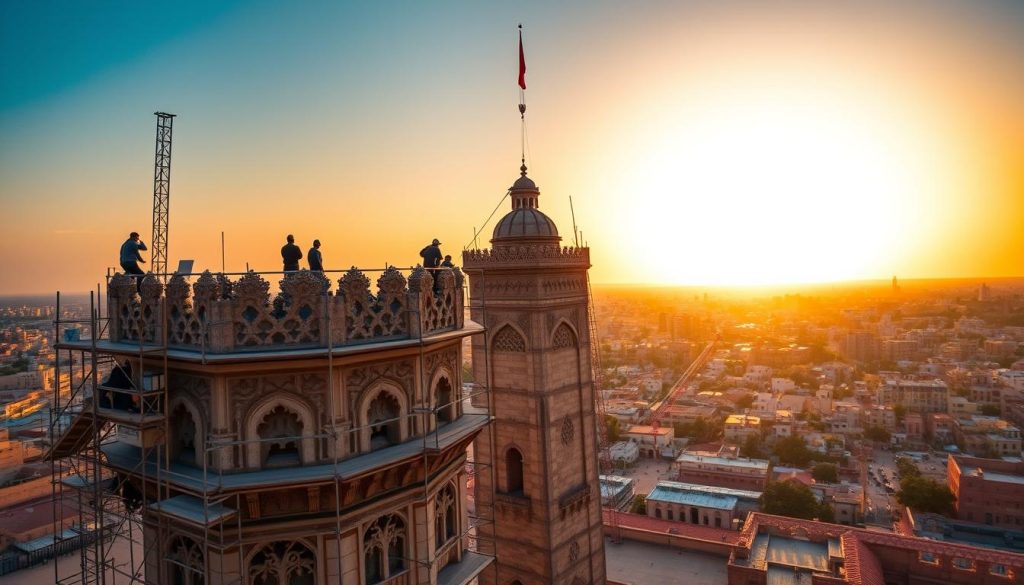
The efforts to preserve the Hassan Tower show its importance. These projects help the tower remain a symbol of Morocco’s history and architecture. It will continue to stand as a testament to Morocco’s rich heritage.
Visitor Experiences and Testimonials
People from all over the world love Hassan Tower for its beauty and history. They share their visits online, giving others a sneak peek into this amazing place.
What Tourists Say About Hassan Tower
Visitors talk about the tower’s stunning design and its rich past. They often highlight the unfinished minaret and the old mosque ruins as the best parts.
Most Memorable Aspects
Many remember the peaceful vibe around Hassan Tower. They also enjoy seeing the nearby historical spots. The tower gives a great look into Morocco’s Almohad dynasty.
Cultural Etiquette for Visitors
When you visit Hassan Tower, remember to respect local customs. It’s important to dress modestly to honor the site’s religious importance.
Dress Code Recommendations
For Hassan Tower visitor information, wear clothes that cover your shoulders and knees. This shows respect for the area’s culture and makes your visit more enjoyable.
Following these tips will make your visit better for you and others. It helps everyone appreciate this historic site more.
Conclusion: The Enduring Legacy of Hassan Tower
Exploring the Hassan Tower historical site is a journey through Moroccan history and culture. This iconic landmark shows the country’s rich heritage. It reflects the artistic and architectural achievements of the Almohad dynasty.
The Hassan Tower’s beauty is not just in its architecture. It also stands as a symbol of Moroccan identity. Visiting this site, you step into the footsteps of generations. You experience the cultural and spiritual heritage that shapes Morocco today.
Visitors like you are part of a long tradition. The Hassan Tower is a must-see for history, architecture, and culture lovers. It offers a unique look into Morocco’s past and its ongoing importance today.