Your Guide to Exploring the Borj El Kebir Fortress and Museum
Ever wondered what secrets Tunisia’s ancient fortresses hold? When planning your trip to this amazing country, make sure to visit the Borj El Kebir Fortress and Museum in Mahdia.
This historic fortress is more than just a glimpse into the past. It also offers stunning views of the coast. Explore its impressive structures and exhibits to learn about its Ottoman history.
Visiting the Borj El Kebir Fortress and Museum is a unique experience. It combines history, culture, and natural beauty. It’s a must-see for any traveler.
The Rich History of Borj El Kebir
When you enter the Borj El Kebir Fortress, you’re going back in time. You’re diving into the deep history of Tunisia. This fortress, a key cultural heritage site in Mahdia, Tunisia, has seen many civilizations come and go. Each left its mark on its walls.
Origins and Construction in Mahdia
The Ottomans built the Borj El Kebir Fortress in the 16th century. They used local materials and labor. Its location in Mahdia made it a vital defense against invaders.
The fortress’s design shows the military architecture of its time. It has thick walls and towers for strong defense. The builders used local limestone and adapted existing structures, showing their skill and resilience.
Historical Significance Through the Centuries
Borj El Kebir has been crucial in Tunisia’s defense history. It has seen battles against European invaders and served as an Ottoman military outpost. Today, it’s a North African landmark, showing the rich Tunisian history and culture. Visitors can see its towers and ramparts, learning about its historical importance.
Where to Find Borj El Kebir and How to Get There
To explore Borj El Kebir’s rich history, you need to know its location and how to get there. It’s in Mahdia, Tunisia, a city famous for its history and stunning coast. Knowing how to get there is key for a great visit.
Location in Mahdia, Tunisia
Borj El Kebir is in Mahdia’s old city, close to the sea. You can find it at Rue de la République, Mahdia 5111, Tunisia. Just follow the signs or ask locals for help. Travelers say Mahdia mixes history with today’s life beautifully.
Transportation Options from Major Tunisian Cities
Getting to Borj El Kebir is easy. From Tunis, take a train or bus to Mahdia. The trip takes 3-4 hours by car or bus, depending on traffic.
Or, fly into Monastir Habib Bourguiba International Airport, 60 km from Mahdia. Then, take a taxi or bus to Mahdia. Travelers love the scenic drive from Monastir to Mahdia, showing off Tunisia’s beauty.
Architectural Marvel: The Design of the Fortress
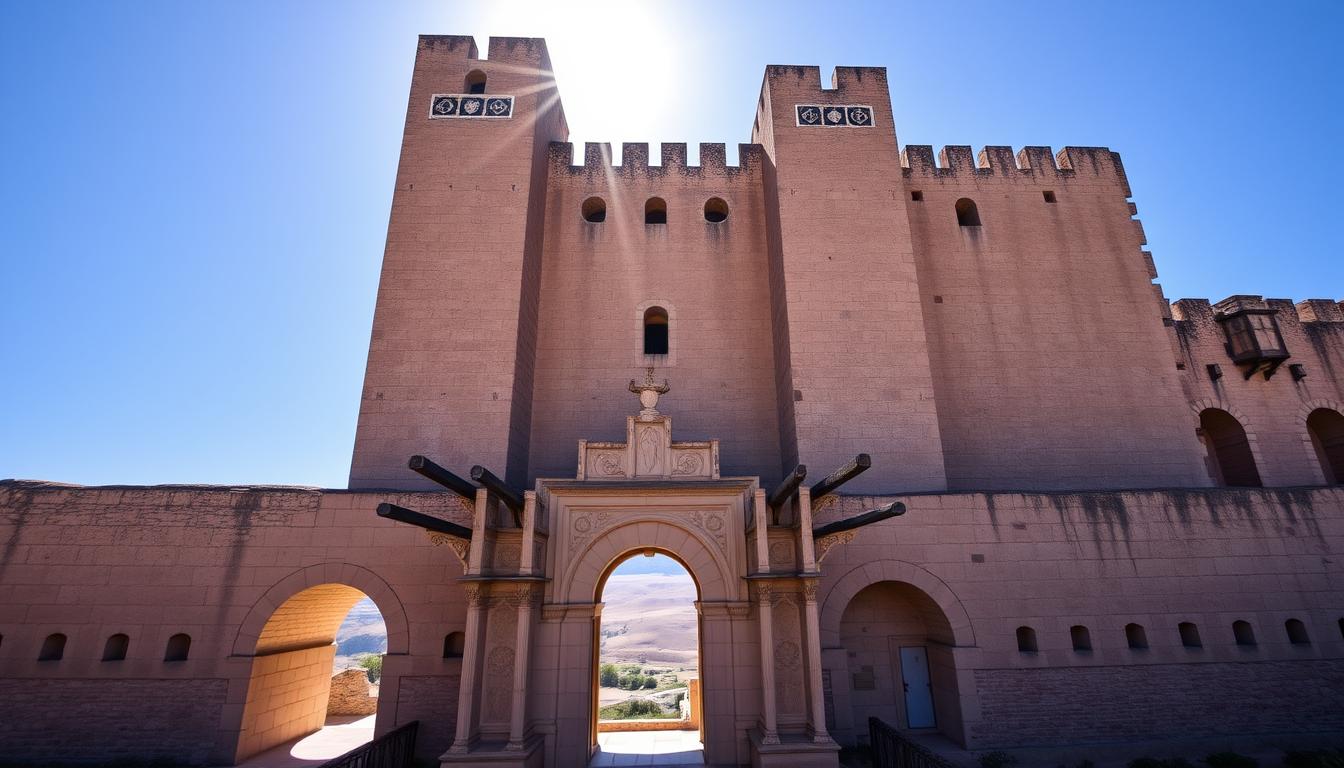
Exploring the Borj El Kebir Fortress reveals a defensive architecture masterpiece. Its design shows the builders’ genius in blending function with beauty.
Defensive Features and Military Architecture
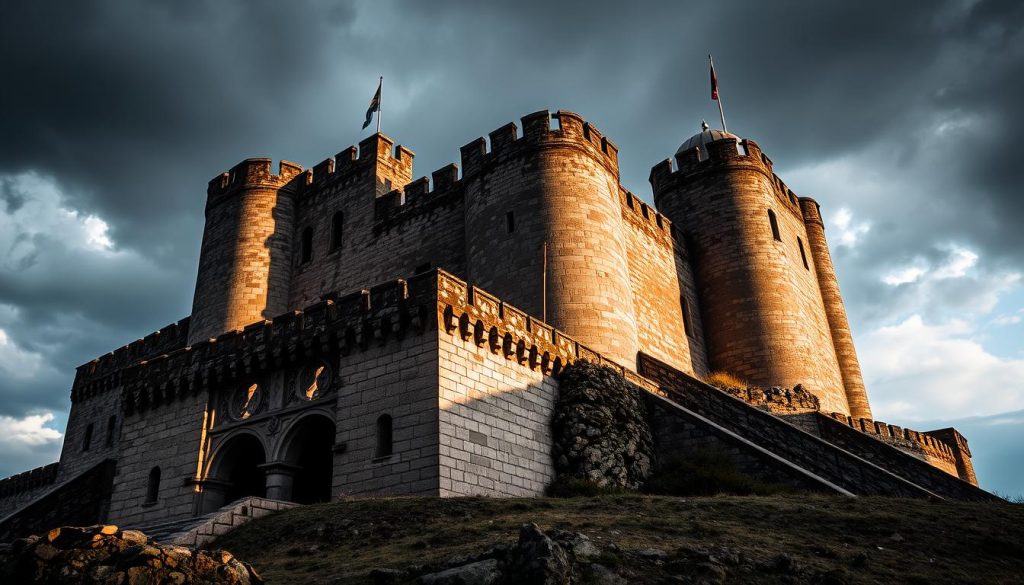
The Borj El Kebir Fortress has impressive defenses like thick walls and towers. These features were key in its military design. They helped it stand strong against invaders. The fortress’s design highlights its role as a North African landmark and a vital defense piece.
Influences and Unique Structural Elements
The fortress’s architecture is a mix of different cultures. It features strong stone walls and detailed gates. As a cultural heritage site, Borj El Kebir is a standout historic fortress. It offers a peek into the region’s history and architectural growth.
Visitors are captivated by Borj El Kebir’s history and design. Exploring it, you’ll appreciate the skill and strategy in its creation.
Explore the Borj El Kebir Fortress and Museum: A Walking Tour
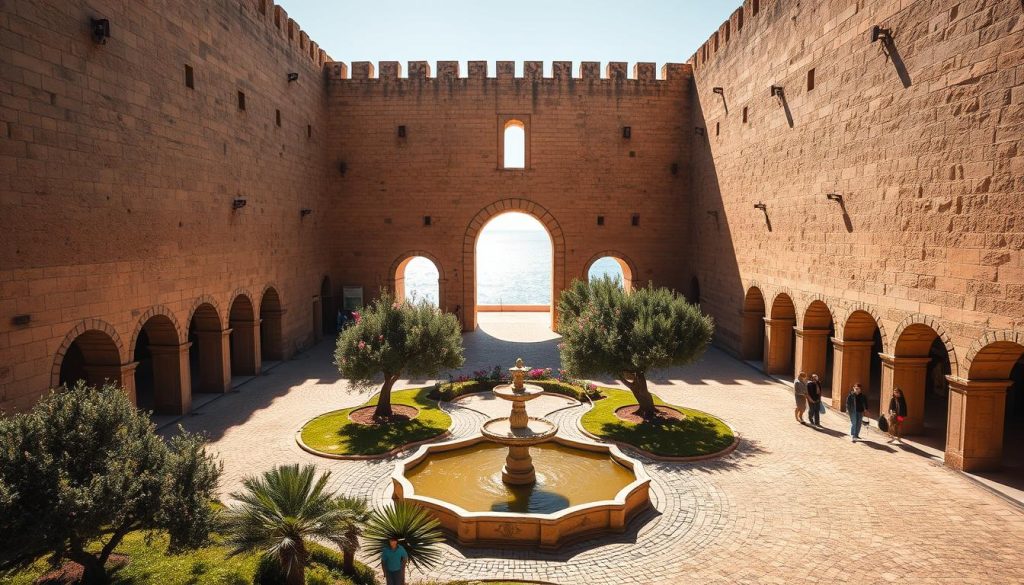
Walking through the Borj El Kebir Fortress and Museum is like stepping into a history book. Every step uncovers a new tale. The main courtyard, as you enter, is the heart of the complex.
Main Courtyard and Entrance
The main courtyard is a vast space filled with centuries of history. The fortress’s entrance is striking, showing off its strong architecture. Walking through, you’ll see strategic design elements that helped defend the fortress.
The Towers and Ramparts
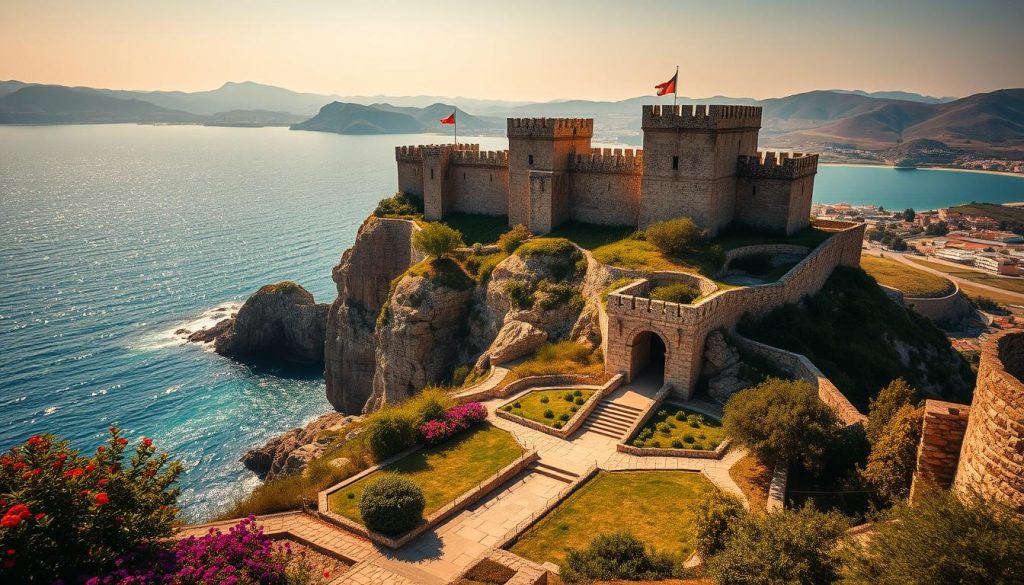
As you move on, the towers and ramparts of the Borj El Kebir Fortress appear. These structures were not just for defense but also for watching over the area. The towers offer panoramic views of the landscape, showing the fortress’s strategic role.
- The towers show off the advanced military architecture of the time.
- The ramparts, built to last, showcase the builders’ engineering skills.
Interior Chambers and Halls
Inside, the interior chambers and halls show what life was like and how the fortress was run. These spaces, with their unique designs, shed light on the historical significance of the fortress. Visitors can see each room’s story.
Some key features to look for include:
- Intricate stonework and decorations.
- Historical artifacts on display in the chambers.
The Museum Collection: Artifacts and Exhibits
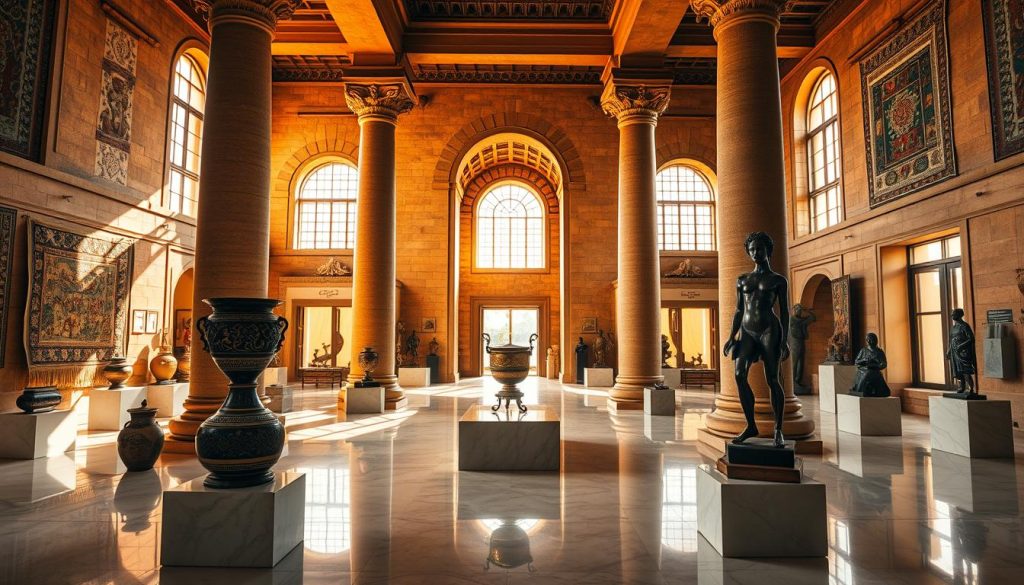
The Borj El Kebir museum showcases a wide range of artifacts. These pieces highlight the historical importance of the area. As you wander through, you’ll find exhibits that shed light on Tunisian history and the local culture.
Archaeological Treasures
The museum boasts an impressive collection of archaeological treasures. These items come from digs in and around Mahdia. They give us a peek into the lives of ancient city dwellers, revealing Tunisia’s rich cultural heritage.
From pottery and coins to jewelry and relics, each piece has its own story. They all contribute to our understanding of the region’s past.
Historical Documents and Displays
The museum also displays historical documents and displays. These items include maps, letters, and other records. They help us understand key events and periods in Tunisian history.
Interactive Exhibits
The museum offers interactive exhibits to enhance your visit. These interactive elements might include touchscreens or virtual tours. They make the history of Borj El Kebir and Mahdia come alive.
Exploring the museum’s collection deepens your understanding of the cultural heritage site of Borj El Kebir. Your visit will be both memorable and enriching.
Practical Information for American Visitors
Traveling to Mahdia, Tunisia, and visiting Borj El Kebir? Knowing the right info can make your trip better. Understanding the practical details will improve your visit to this historic site.
Opening Hours and Admission Fees
Before you go to Borj El Kebir, check the opening hours and admission fees. The fortress is open from 8:00 AM to 6:00 PM, but hours can change. This includes holidays or special events. The entry fee is affordable, with lower prices for students and seniors.
| Category | Admission Fee |
|---|---|
| Adults | 10 TND |
| Students/Seniors | 5 TND |
| Children under 6 | Free |
Guided Tours and Language Considerations
Guided tours at Borj El Kebir provide deep insights into its history and design. Tours are mainly in Arabic or French, but some guides speak English, mainly for big groups. It’s a good idea to ask about English options when booking your tour.
Accessibility and Safety Information
The fortress is easy to get around, with ramps and paths for those with mobility issues. But, some spots are off-limits for preservation reasons. Wear comfy shoes and stay alert, mainly in busy spots or when walking the ramparts.
With this info, your visit to Borj El Kebir will be more rewarding. You’ll get to see the rich history and stunning architecture of this Tunisian gem.
Best Times to Visit Borj El Kebir
Borj El Kebir is a treasure in North Africa. It shines brightest when you visit at the right time. As a top spot in Tunis, knowing when to go makes your trip better.
Seasonal Considerations and Weather
For a peaceful visit, go to Borj El Kebir in the early morning or late afternoon. This way, you’ll miss the crowds and enjoy cooler air. Summer can get very hot, with temperatures over 30°C (86°F).
Spring and autumn are perfect because the weather is mild. Winters are mild too but might be rainy. Always check the weather forecast before you go.
| Season | Weather | Recommendation |
|---|---|---|
| Spring | Mild | Ideal |
| Summer | Hot | Visit early morning or late afternoon |
| Autumn | Mild | Ideal |
| Winter | Mild/Rainy | Check forecast before visiting |
Special Events and Cultural Festivals
Borj El Kebir is alive with cultural events and festivals all year. You can enjoy Tunisian music, dance, and art. It’s a great time to see the site’s vibrant side.
Make sure to check the local events calendar. Catching one of these festivals can make your visit unforgettable.
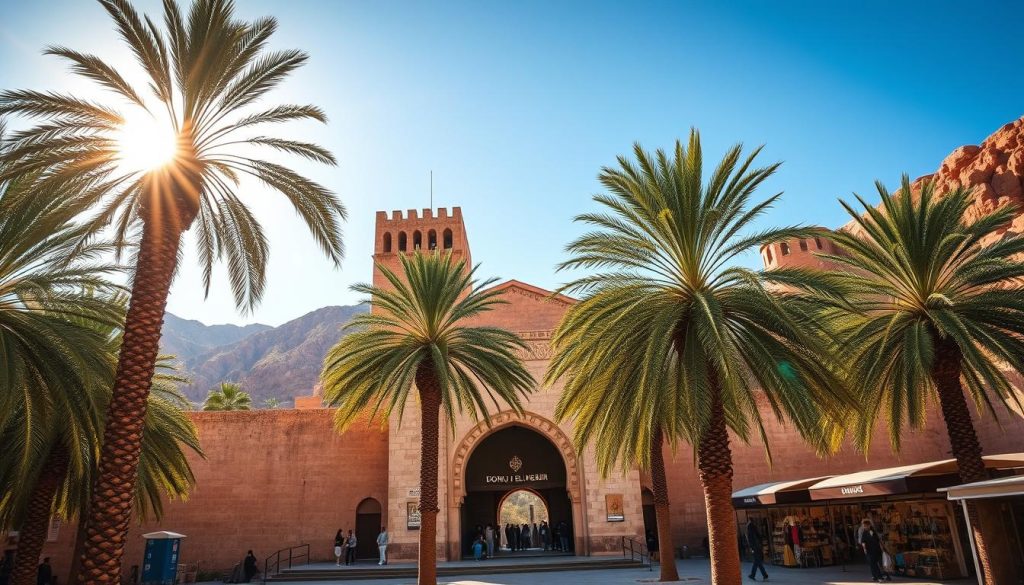
Photography Tips for Capturing Borj El Kebir
The Borj El Kebir Fortress is a treasure trove for photographers. It’s a cultural gem with stunning architecture and views of the coast. As you wander through, you’ll find many photo opportunities.
Best Vantage Points and Angles
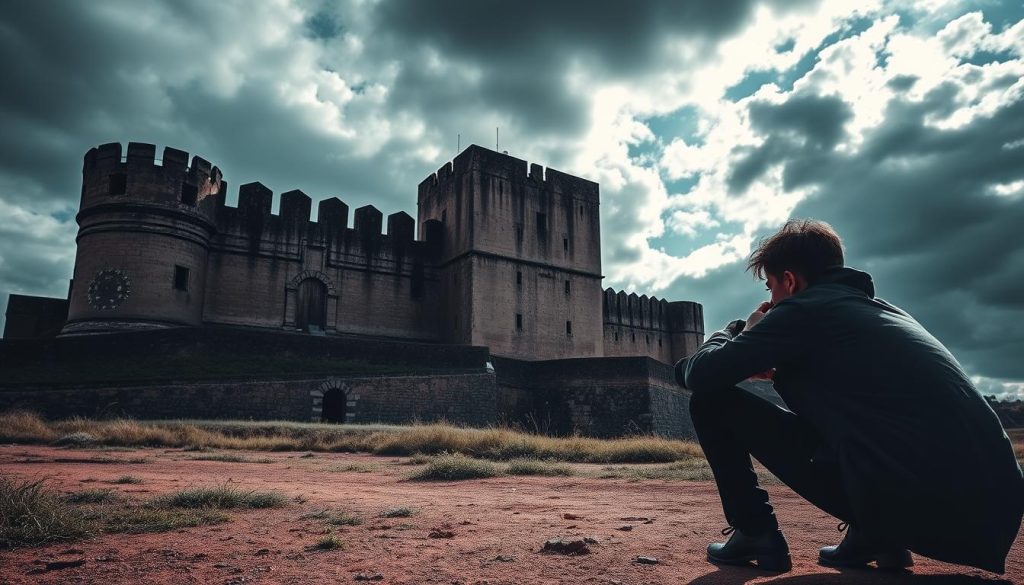
For the best shots, head to the fortress’s highest spots like towers and ramparts. These offer panoramic views of Mahdia. Try different angles, like looking up at the walls or focusing on the architecture’s details.
Lighting Considerations Throughout the Day
The golden hour, just before sunset, is the best time for photos. The light then adds a warm glow to the fortress. Try to avoid the harsh light of midday, as it can create unwanted shadows and highlights.
Equipment Recommendations for Travelers
Bring a camera with a good zoom lens to capture the fortress from afar. A tripod is also handy for keeping your camera steady in low light.
| Equipment | Usefulness |
|---|---|
| Camera with good zoom lens | High |
| Tripod | Medium |
| Filters | Low |
Preservation Efforts and Restoration Projects
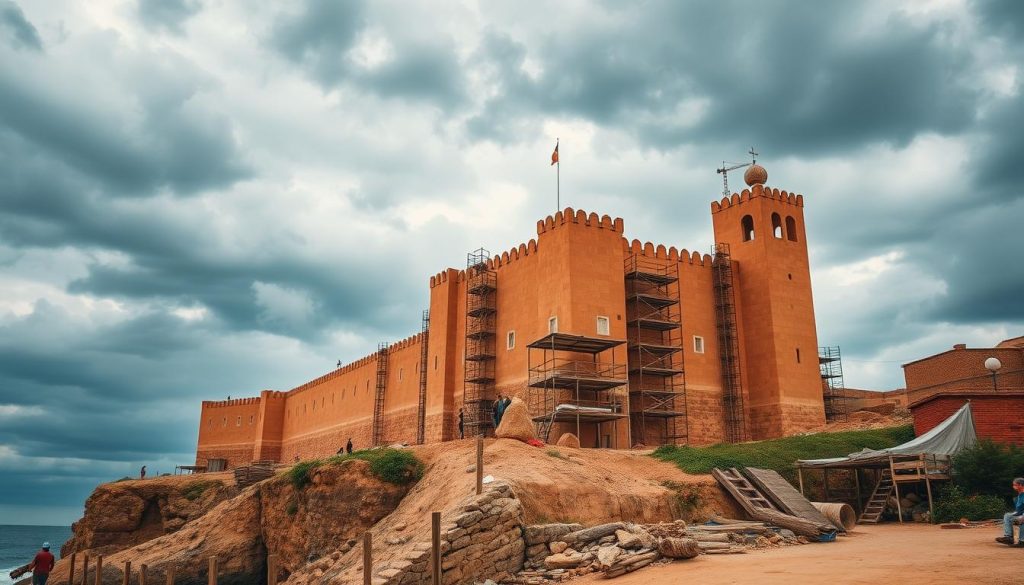
The Borj El Kebir Fortress in Mahdia, Tunisia, is a key cultural heritage site. It’s facing many challenges to keep its history alive. As a major part of Tunisian history, it needs careful attention and action.
Historical Conservation Challenges
The fortress has seen many problems, like environmental damage and structural issues. Tourism also plays a role. These problems could harm this North African landmark. The main issues are:
- Weather damage to the original structures
- Damage from human activities, like tourism
- Not enough money for conservation
Current and Future Restoration Work
Many restoration projects are underway to tackle these problems. These include:
- Fixing the fortress walls and towers
- Keeping historical artifacts safe in the museum
- Creating green tourism to lessen the site’s impact
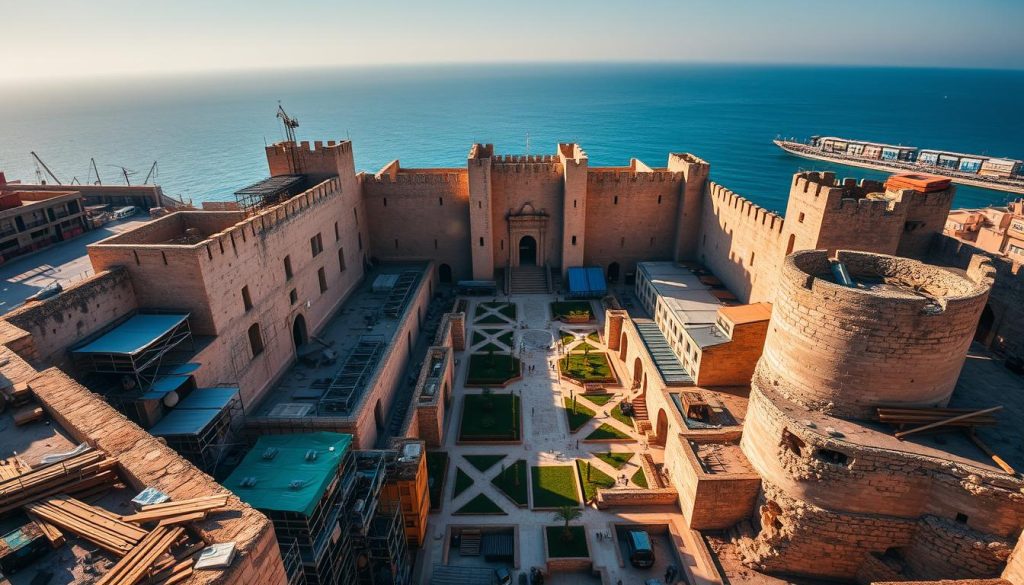
These projects aim to keep the Borj El Kebir Fortress for the next generations. They want to make sure it stays a crucial part of Tunisian history and a major North African landmark.
Exploring Beyond the Fortress: Mahdia’s Attractions
Borj El Kebir is a must-see, but Mahdia has much more to offer. As you explore, you’ll find a mix of history, culture, and food. This makes travel to Tunisia truly special.
Historical Sites Within Walking Distance
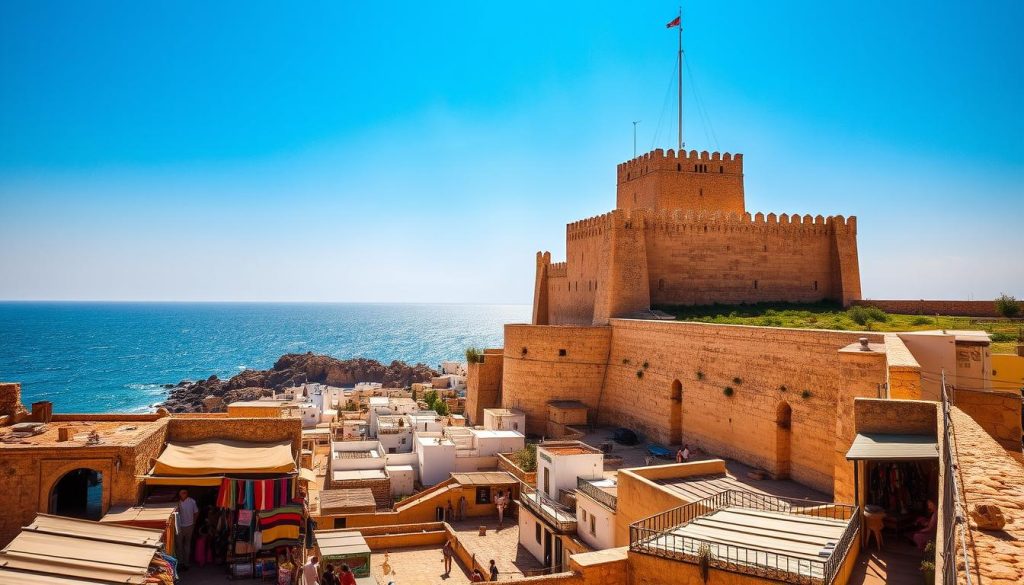
Mahdia has many historical sites close to Borj El Kebir. The Medina of Mahdia and Skifa El Kahla are just a short walk away. The Medina’s narrow streets and shops give a peek into the past. Skifa El Kahla, an ancient gate, shows Mahdia’s importance.
Don’t miss the Mahdia Museum. It has artifacts that tell the city’s story.
Local Cuisine and Authentic Dining Experiences
Trying Mahdia’s food is essential. It’s a mix of Mediterranean and Tunisian flavors. Local restaurants serve dishes like couscous and harissa. Don’t forget to try the fresh seafood.
Exploring Mahdia, you’ll see it’s more than just a historic fortress. It’s a place full of culture and delicious food. It’s a key part of your Tunisian journey.
Conclusion: Why Borj El Kebir Should Be on Your Tunisia Itinerary
When planning your trip to Tunisia, don’t miss out on Borj El Kebir. This site is a window into the country’s past. It shows the beauty and importance of the Ottoman era.
Visiting Borj El Kebir lets you see the mix of defense, architecture, and history. You can explore the towers, walls, and rooms. It’s a chance to learn about Tunisia’s history up close.
Borj El Kebir is a key spot for history lovers. Its stunning design and deep cultural value make it a must-see. Exploring here will help you understand Tunisia’s heritage and its journey through time.