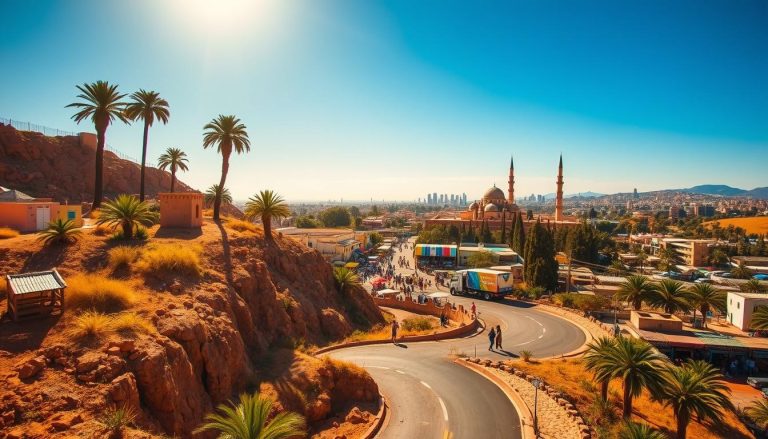
Your Guide to Durban’s Grey Street History
Ever wondered how a street in Durban, South Africa, became a hub of Indian culture? Dr. Yusaf Dadoo Street, once Grey Street, tells the story of Indian indentured laborers from the 19th century.
This landmark is a must-see, offering a peek into the history and cultural practices of the community. Exploring Grey Street, you’ll see its key role in Durban’s culture and identity.
Learning about the history of this iconic street will help you understand the Indian diaspora’s impact on Durban and its landmarks.
The Birth of a Cultural Landmark
The story of Grey Street starts in the early 19th century. This period set the stage for one of Durban’s most important cultural spots. You’re about to learn about the history that made this street what it is today.
Grey Street’s story began in the 1800s. Its growth shows Durban’s deep cultural roots.
Early 19th Century Foundations
In the early 19th century, Durban was changing fast. It was becoming a major commercial center. Grey Street became a key area, thanks to the city’s need for infrastructure and public spaces.
The street’s design and buildings were influenced by colonial urban planning. As Durban grew, Grey Street became a center for business. Shops, markets, and other businesses started to pop up.
This early growth set the stage for Grey Street’s future as a cultural and economic center. The arrival of indentured laborers and traders from India also played a big role in shaping the street’s identity.
Sir George Grey’s Influence on Durban
Sir George Grey, the Governor of the Cape Colony from 1854 to 1861, had a big impact on Durban. His vision for the city included better infrastructure, public buildings, and spaces for the growing population.
His legacy is seen in Durban’s historical sites, including Grey Street, named after him. His contributions to Durban’s growth have left a lasting mark. As you walk Grey Street, you’ll see architectural styles and cultural influences that show the city’s complex history.
Understanding Durban’s Grey Street History
To truly appreciate Durban’s Grey Street, you need to look into its past. Here, history, culture, and identity are all mixed together. Walking through Grey Street is like walking through Durban’s history.
Pivotal Moments: 1870s to Present
The history of Grey Street began in the 1870s with the arrival of Indian indentured laborers. They soon became a thriving merchant class. This led to the creation of Durban’s Indian Quarter, a cultural and economic center.
Grey Street became a place where different cultures came together. It’s at the heart of this cultural melting pot.
- The arrival of Indian indentured laborers in the 1860s
- The growth of a merchant class among the Indian community
- The development of cultural and religious institutions
These moments have made Grey Street a unique cultural landmark in Durban. The street has seen Durban grow from a colonial outpost to a lively city. 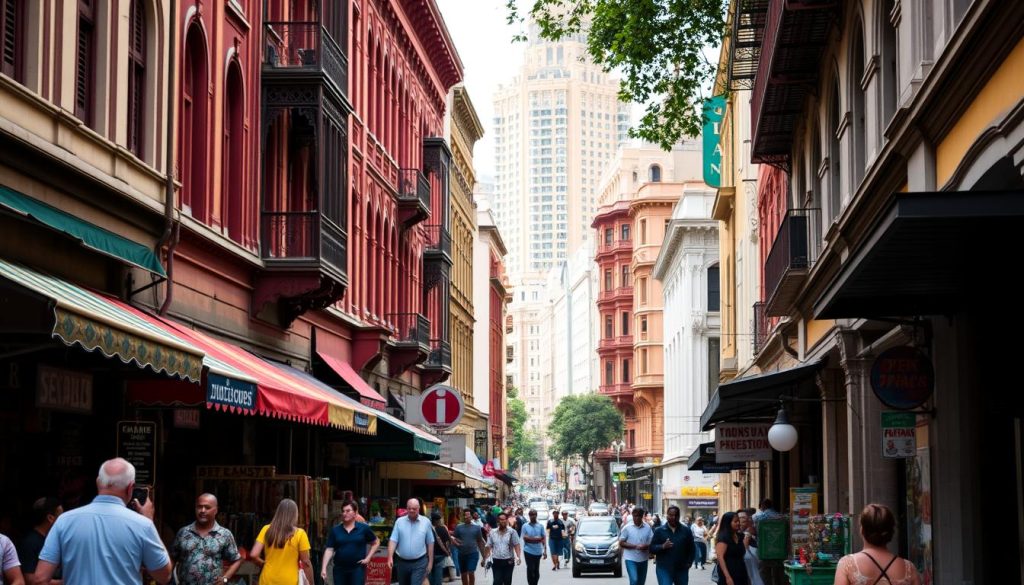
Visionaries Who Shaped the District
Many visionaries have shaped Grey Street and the Indian Quarter. Mahatma Gandhi, who lived and worked there, left a lasting impact. His work has made Grey Street a symbol of Durban city heritage.
- Mahatma Gandhi’s influence on the Indian community
- Other community leaders who contributed to the district’s development
- The role of cultural and religious institutions in shaping the area
These people, along with many others, have made Grey Street what it is today. It’s a place where history, culture, and identity meet. Exploring Grey Street is like experiencing Durban’s cultural heritage firsthand.
The Indian Quarter Emerges
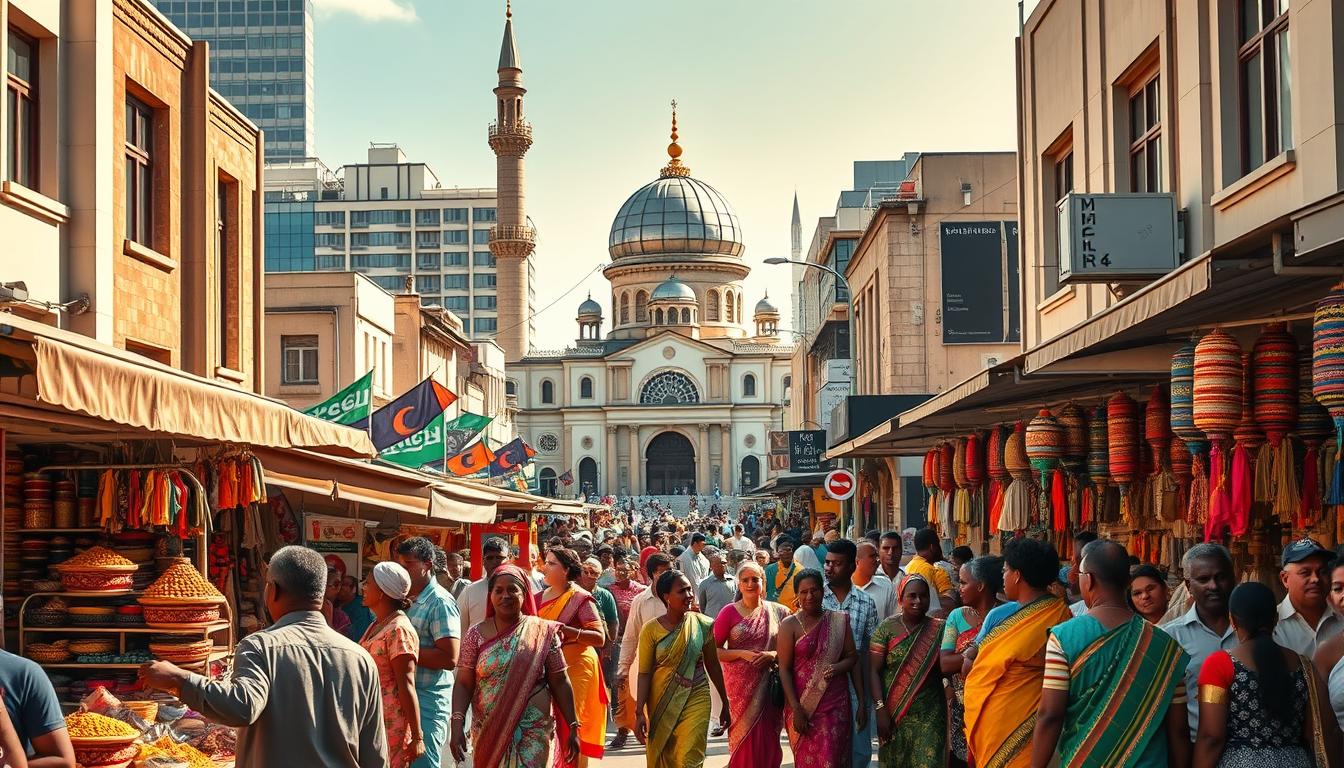
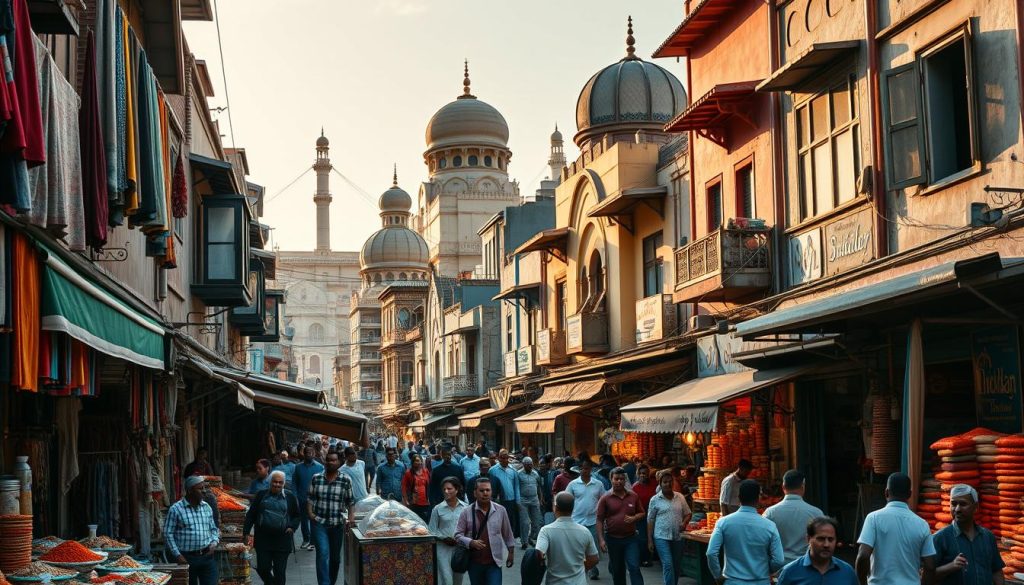
Durban’s Grey Street is where the Indian Quarter shines. It’s a cultural gem that grew from the efforts of Indian indentured laborers and merchants. Exploring this area reveals how it shaped Durban’s identity.
Indentured Laborers to Merchant Class
Indian workers arrived in Durban in the 19th century. They worked hard and soon became a successful merchant class. Their businesses added to the area’s lively culture.
Creating “Little India” in South Africa
The Indian Quarter is known as “Little India.” It’s filled with Indian food, shops, and culture. This place is more than buildings; it’s a community that feels like home.
Temples, Mosques, and Cultural Centers
At the heart of the Indian Quarter are temples, mosques, and cultural centers. They meet the community’s spiritual needs and host cultural events. The Juma Masjid, a large mosque, showcases the area’s beauty and heritage.
| Cultural Institution | Description |
|---|---|
| Juma Masjid | One of the largest mosques in the Southern Hemisphere, known for its stunning architecture. |
| Emmanuel Cathedral | A historic cathedral that represents the area’s diverse religious heritage. |
| 1860 Heritage Centre | A cultural center that commemorates the history of Indian indentured laborers. |
Architectural Treasures of Grey Street
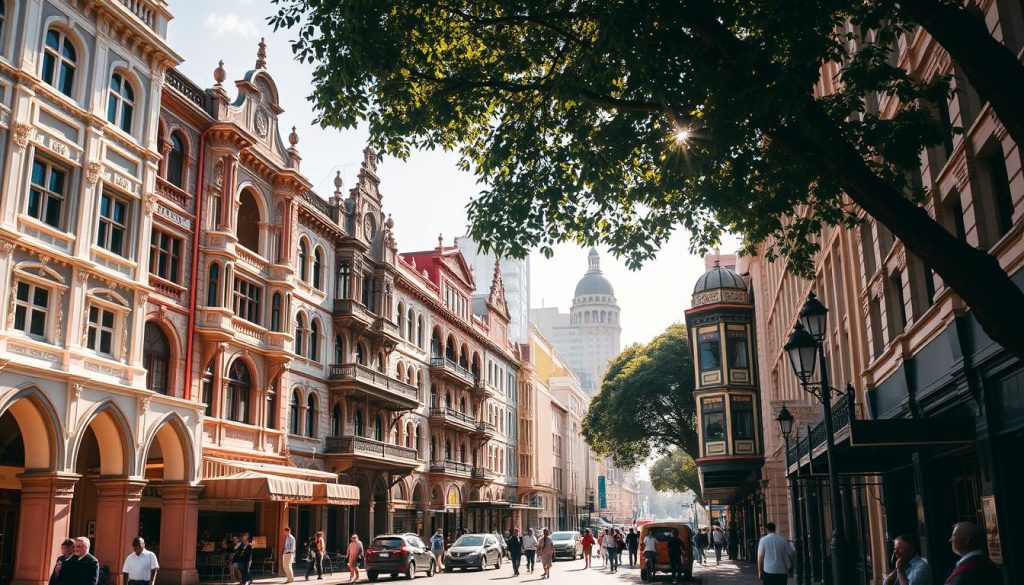
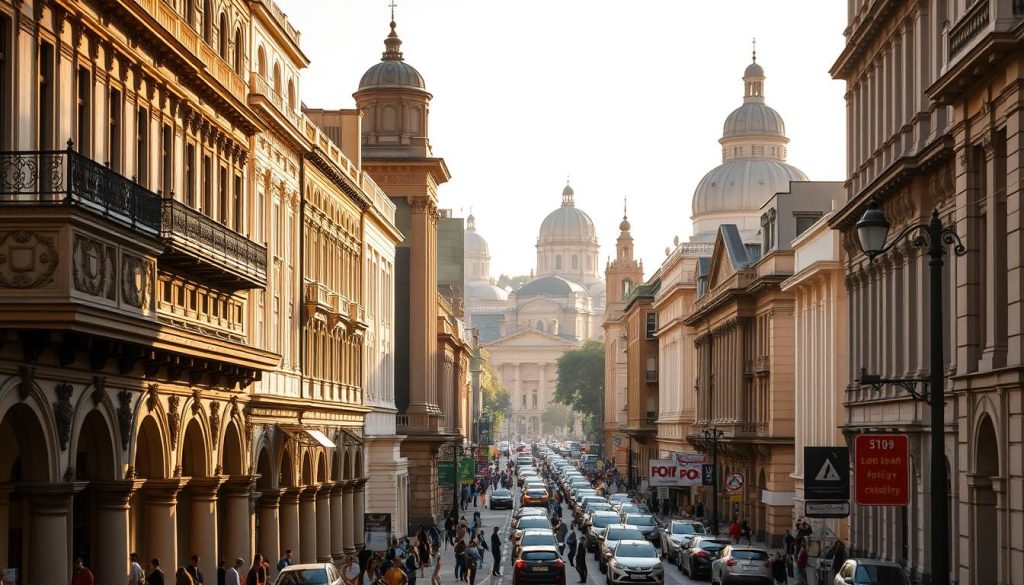
Walking down Grey Street in Durban, you’ll see many architectural styles. These styles show the area’s rich cultural heritage. The street is like a living museum, blending history and culture.
Victorian and Edwardian Influences
The first buildings on Grey Street were inspired by Victorian and Edwardian styles. They have ornate facades, detailed woodwork, and large sizes. These buildings show the era’s love for grandeur and detail.
Indo-Saracenic and Art Deco Styles
The Indian community brought Indo-Saracenic architecture to Durban. It mixed Indian, Islamic, and Western styles. Later, Art Deco added a modern twist with geometric patterns and metallic materials.
Conservation Challenges and Triumphs
Keeping Grey Street’s architecture alive is tough. Urban decay and modern needs are big challenges. But, there are successes in saving these buildings. Key steps include:
- Community-led conservation initiatives
- Collaboration between local government and heritage organizations
- Adaptive reuse of historical buildings
These efforts help keep Grey Street’s architectural wonders alive for the future.
Must-Visit Historical Sites
Exploring Durban’s Grey Street reveals a rich history and culture. This iconic street is filled with historical sites that show the city’s diverse heritage.
Juma Masjid: Southern Hemisphere’s Largest Mosque
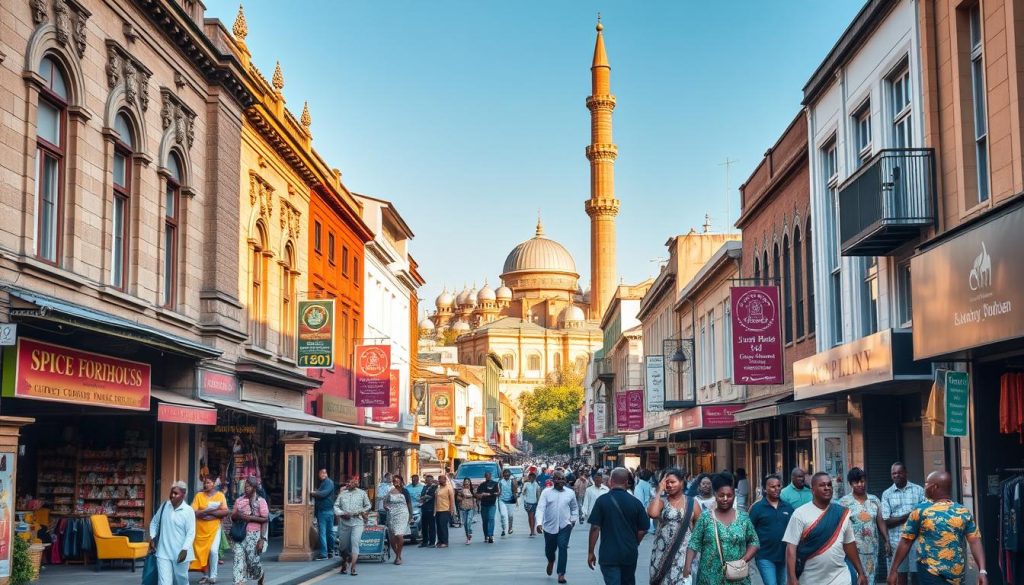
The Juma Masjid stands out on Grey Street as the largest mosque in the Southern Hemisphere. It’s not just a place of worship. It also shows the Indian influence on Durban’s architecture and culture.
Victoria Street Market: Spices and Treasures
The Victoria Street Market is a feast for the senses. It offers exotic spices and traditional crafts. It’s a great spot to try local food and find unique souvenirs.
Emmanuel Cathedral and the 1860 Heritage Centre
The Emmanuel Cathedral showcases Durban’s religious heritage. The 1860 Heritage Centre tells the story of Indian indentured laborers in South Africa. Together, they are key parts of Grey Street’s history.
Hidden Gems and Forgotten Corners
Grey Street also has many hidden gems and forgotten corners. You can find quaint alleyways and historic buildings. There’s always something new to find.
Some of the key historical sites to visit on Grey Street include:
- Juma Masjid
- Victoria Street Market
- Emmanuel Cathedral
- 1860 Heritage Centre
These sites show the historical importance of Grey Street. They also highlight Durban’s rich and diverse culture.
Visiting these sites helps you understand Durban’s history and the value of cultural heritage. Whether you love history, culture, or just exploring, Grey Street has something for everyone.
Grey Street Under Apartheid’s Shadow
The apartheid era had a lasting impact on Grey Street, changing its culture forever. Exploring this area’s history reveals its role as a key battleground against apartheid’s oppression.
The Group Areas Act and Forced Removals
The Group Areas Act, passed in 1950, aimed to segregate racial groups. Grey Street, mainly inhabited by Indians, was hit hard by this law. Families and businesses were forced to leave, breaking the community’s social bonds.
This law led to the loss of vibrant neighborhoods and the displacement of many. The community’s cultural identity was at risk. Yet, Grey Street’s people showed great resilience, adapting to their new reality.
Centers of Resistance and Political Activism
Grey Street was more than a cultural hub; it was a center of resistance against apartheid. Since the early 20th century, it was a key location for political activism. Organizations and individuals worked tirelessly to fight apartheid, using the area for protests and spreading anti-apartheid messages.
Grey Street was the site of many crucial events that helped end apartheid. Mosques, temples, and community centers were secret meeting spots for activists. Walking through the streets today, you can still sense the spirit of resistance.

Grey Street’s history under apartheid is complex, filled with both hardship and strength. Reflecting on this time, it’s clear that Grey Street was a vital part of South Africa’s fight against apartheid.
From Colonial Past to Democratic Present
Grey Street, now known as Dr. Yusaf Dadoo Street, shows Durban’s complex history and its move towards inclusivity. This change marks Durban’s shift from a colonial past to a democratic present.
The Renaming Debate and Cultural Identity
The renaming of Grey Street to Dr. Yusaf Dadoo Street was a big moment in Durban’s history. It showed the community’s effort to reclaim and redefine their cultural identity. This change was more than just a name change. It was about moving away from colonial legacy and embracing inclusivity.
The debate on renaming brought up the complex issues of cultural identity in post-apartheid South Africa. It showed the struggle between keeping historical heritage and adopting a new, democratic identity.
Grey Street’s Role in Modern Durban
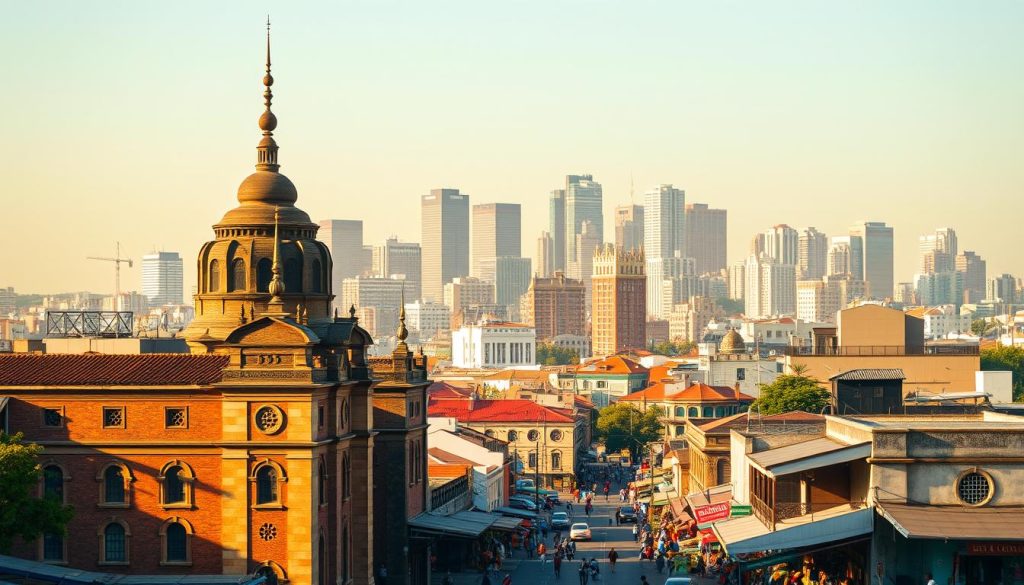
Today, Grey Street, or Dr. Yusaf Dadoo Street, is key to Durban’s culture and economy. It’s a lively area with markets, historic temples, and mosques. People from all over come to see it.
Grey Street’s modern importance is in its mix of heritage and current relevance. It stands out as a unique cultural spot in Durban.
Your Grey Street Experience: Practical Guide
Grey Street is a vibrant spot in Durban, filled with history, markets, and tasty food. It’s a great place to dive into Durban’s diverse culture. Here are some tips to help you enjoy your visit.
Planning Your Visit: Timing and Transportation
Visit Grey Street early in the morning or late in the afternoon to avoid the crowds. It’s easy to get there by car, with many parking spots nearby. You can also take public transport like buses and minibus taxis, which are common in the city.
Authentic Cuisine and Traditional Markets
Grey Street is famous for its Indian food. You’ll find many restaurants and street food stalls with tasty dishes. Don’t miss out on trying bunny chow or samosas. The Victoria Street Market is also a highlight, with stalls selling spices, textiles, and more.

Cultural Immersion Opportunities
To really get to know Grey Street, visit local temples, mosques, or cultural centers. The Juma Masjid, one of the biggest mosques in the Southern Hemisphere, is a must-see. The Emmanuel Cathedral and the 1860 Heritage Centre also offer a glimpse into the area’s history and culture.
| Attraction | Location | Best Time to Visit |
|---|---|---|
| Juma Masjid | Grey Street, Durban | Early morning or late afternoon |
| Victoria Street Market | Victoria Street, Durban | Anytime, but be prepared for crowds |
| Emmanuel Cathedral | Grey Street, Durban | During the day, when open |
Conclusion
Exploring Durban’s Grey Street history shows it’s more than old buildings and cultural spots. It’s a lively showcase of the city’s deep heritage and people’s strength. Grey Street’s history is deeply linked to Durban’s, telling stories of cultural exchange, colonialism, and resistance.
The landmarks like the Juma Masjid and Emmanuel Cathedral are more than just buildings. They represent the community’s identity and faith. Walking through, you feel the area’s vibrant culture, with its sights, sounds, and smells. The street’s history is alive, shaping Durban today and tomorrow.
Learning about Durban’s Grey Street history gives you a deeper look into South Africa’s past. It shows how history still impacts our world today. Whether you love history, culture, or just exploring, Grey Street is a key place to see in Durban.