Wildlife in Winter: Top Destinations for January Wildlife Viewing
Do you know why avid wildlife fans think winter is the top time to watch wildlife? It’s because animals don’t just hide away during the cold months. January, in fact, shows off nature’s beauty in unique ways. The world turns into a quiet winter wonderland, making some animals easier to see and watch.
Think about the amazing sight of Yellowstone’s gray wolves. Or the caribou migrating in Alaska’s Chena River State Recreation Area. Watching wildlife in winter can fill you with awe. You might see one of the rare snowy owls or watch elephant seals play on California’s shores.
Let’s explore the best places in America for winter wildlife viewing. These spots offer you a chance to dive into nature’s magic and witness incredible sights in January.
Introduction to Winter Wildlife Viewing
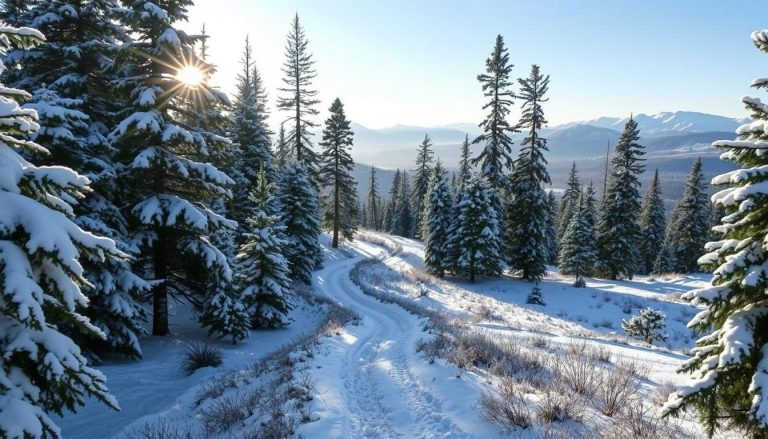
Winter is an amazing time to explore the wild and see nature’s quiet beauty. The best places for seeing wildlife in winter have fewer people. This gives you a chance to watch animals in their homes, easier to spot on snow.
Knowing why winter is great for watching wildlife and getting good tips for it makes your adventure better and safer.
Why Winter is Ideal for Wildlife Watching
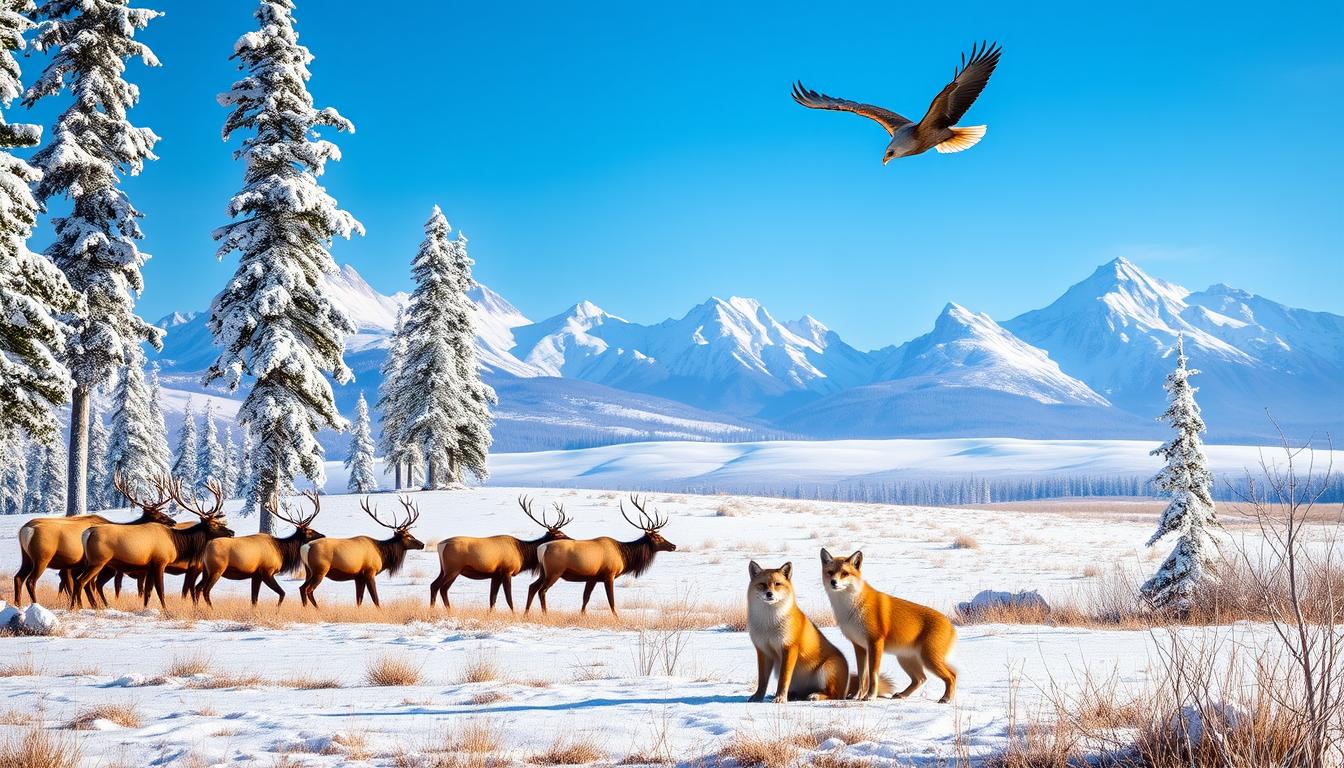
Winter creates special chances for those who love wildlife. With less greenery, spotting animals as they look for food and warmth is easier. Take Yellowstone National Park, the first national park in the world. It’s in Wyoming, Montana, and Idaho, and home to elk, bison, pronghorn, gray wolves, among others.
Snow makes it easier to see where animals have walked, showing how they live and interact. For example, Rocky Mountain National Park in Colorado lets you see elk, mule deer, and maybe bighorn sheep, clearer in winter.
General Tips for Winter Wildlife Adventures
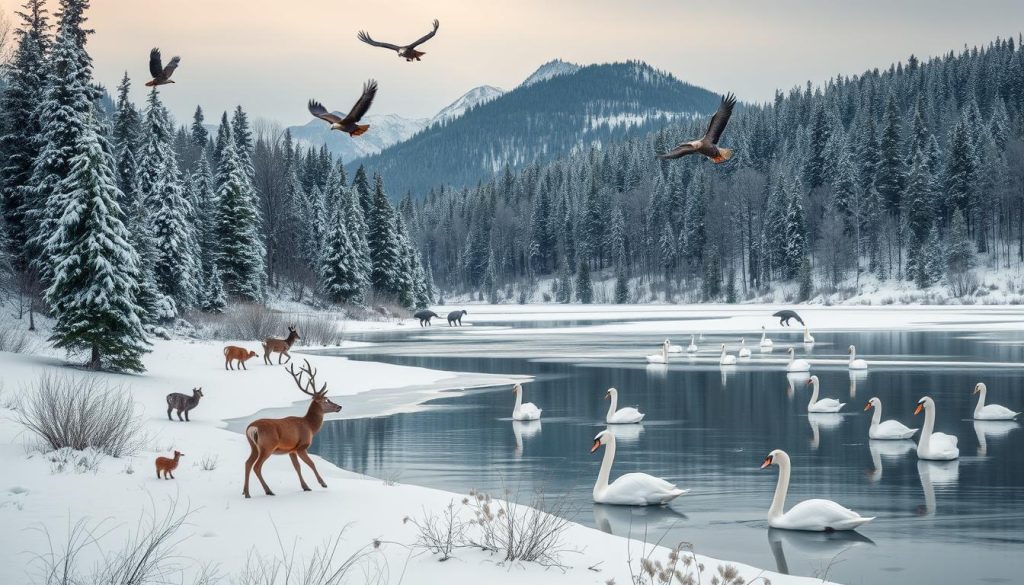
Being prepared is key for enjoying and staying safe when watching winter wildlife. Keep these winter wildlife watching tips in mind:
- Dress Appropriately: Wear layers and insulated boots to stay warm.
- Use Proper Gear: Binoculars or a telephoto lens let you see wildlife without getting too close.
- Understand Tracking Techniques: Learning to read animal tracks, like those of the Canada lynx or Cascade fox, is helpful.
- Respect Wildlife Distances: Keep a good distance to not disturb wildlife, such as moose, deer, cougars, and wolves.
- Join Guided Tours: Guided tours in places like Mount Rainier or Olympic National Parks offer expert insights and safe experiences.
California: San Simeon and its Elephant Seals
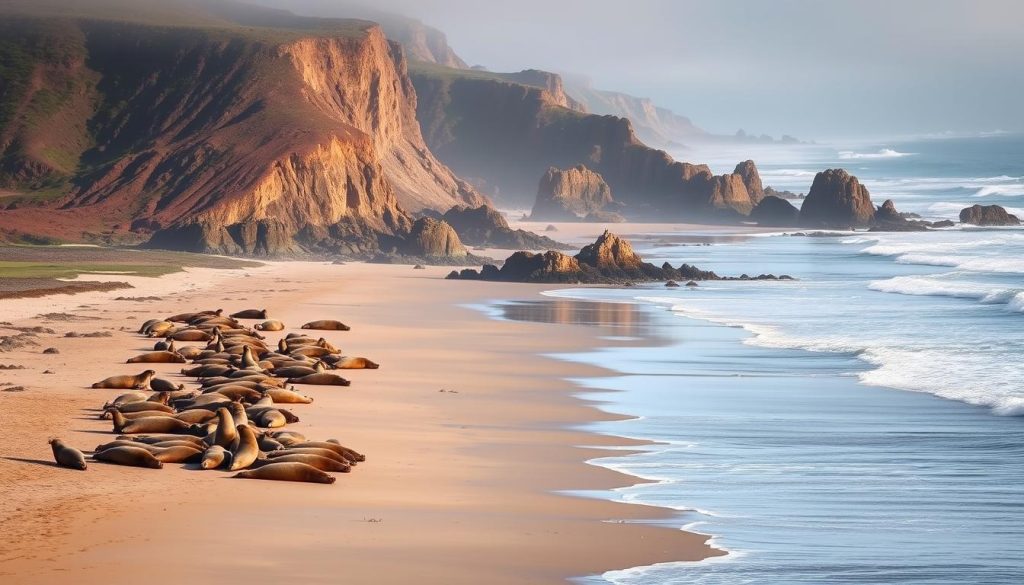
San Simeon is well-known for its winter wildlife spectacles, especially during the elephant seal pupping season. This event draws people from everywhere. They come to see the mighty elephant seals up close.
Best Times for Seal Viewing
The peak months to see the elephant seals in San Simeon are January, April, and October. In November, the adult males arrive to claim territory for mating. Between December and March, females come to give birth.
The Piedras Blancas Rookery buzzes with activity, hosting up to 17,000 seals. Newborn pups weigh about 60 pounds but quickly grow. By the time they wean, they can weigh 300 pounds. For a vibrant scene, visit from December to March. This is the pupping season. April to June is molting season for females and juveniles, offering another fascinating view.
Other Attractions in San Simeon
San Simeon’s charm isn’t just in its elephant seals. Hearst Castle showcases California’s luxurious architecture. The grounds are also home to zebras, adding to the wildlife spectacle. Plus, the coastal views and hiking trails make this a full ecotourist journey.
A visit to San Simeon can be rich and memorable. Whether it’s the seal pupping season or the historic architecture and wildlife, it connects you deeply with nature.
Pinnacles National Park: The Home of the California Condor
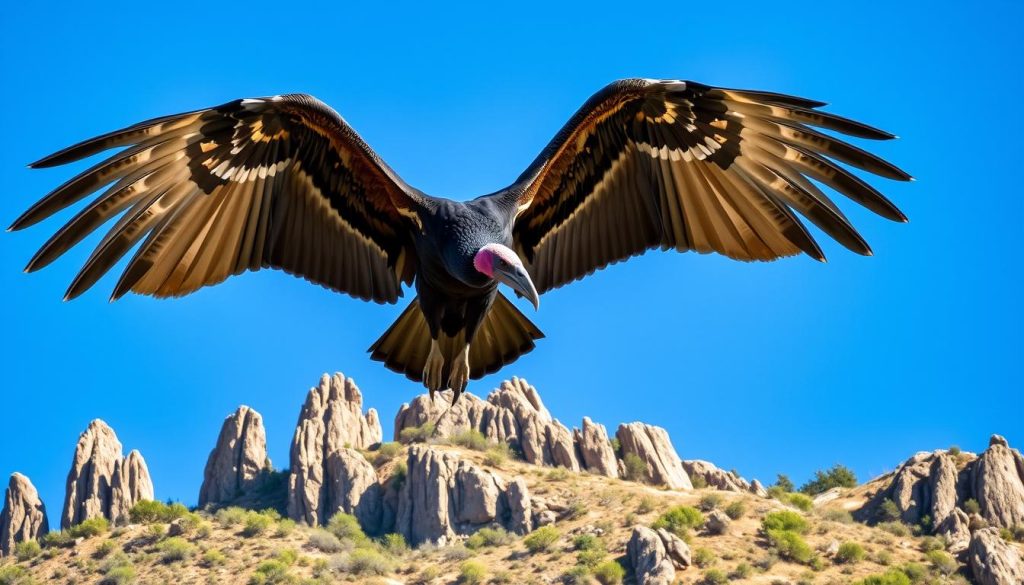
Nestled in Central California, Pinnacles National Park is known for its volcanic scenery and diverse animals. This park houses over fifty types of mammals, including the endangered California condor. The winter is a great time to watch and possibly photograph these magnificent birds.
Spotting the Endangered Condor
If you want to see the endangered California condor, Pinnacles is the place. These birds stay in the park all year long. For the best chance to see them, visit the High Peaks at dawn or dusk. You can spot condors by their huge wings and the white triangle under their wings.
Other Wildlife You Might Encounter
Besides the endangered California condor, there are many other animals at Pinnacles National Park. Look out for coyotes, bobcats, and even mountain lions. For great photos, come early in the morning or later in the evening when the animals are most active. The park is also a shelter for over 200 bird species, making it a great place for birdwatching.
| Feature | Details |
|---|---|
| Condor Wingspan | 9.5 feet |
| Popular Viewing Spot | High Peaks Trail |
| Best Viewing Times | Early Morning, Late Evening |
| Photography Tips | Use telephoto lens, shoot in morning/evening lighting |
Visiting Pinnacles National Park in the winter is special. Whether you’re there to photograph the iconic condors or explore the wildlife, you’re in for a treat. Use the photography tips for better shots of your adventures.
Monterey’s Coastal Wildlife
Monterey’s coast is alive with wildlife, on shore and in the ocean. This makes it a top spot for nature lovers. From whale watching to exploring the famous Monterey Bay Aquarium, adventures abound for those keen to explore Monterey’s winter wildlife.
Whale Watching in Winter
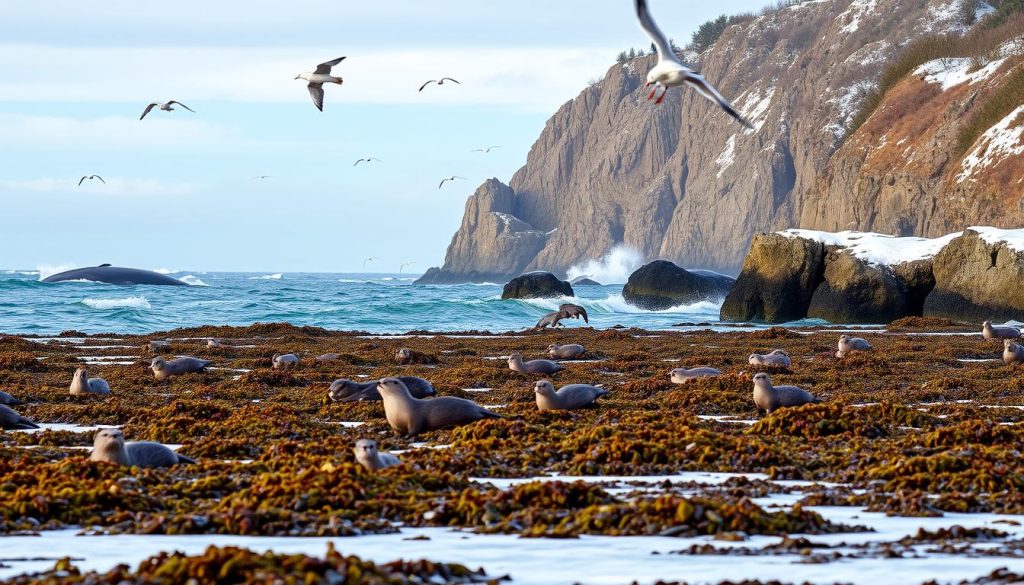
Monterey’s winter brings prime whale watching. Sail Monterey offers trips perfect for spotting sea otters, seals, and migrating gray whales. These adventures welcome anyone 8 and older. You might see seabirds, harbor seals, California sea lions, humpback whales, killer whales, and six dolphin species.
Most whale watching tours go for about three hours. Some can be six hours for deeper exploration. Tours leave from Breakwater Cove Marina on vessels like the “Ranger”. Its open design is great for spotting wildlife and taking photos. Monterey’s winter weather is cool but sunny. Yet, the sea can be rough, so it’s good to be ready for motion sickness.
Monterey Bay Aquarium
For those who prefer staying on land, the Monterey Bay Aquarium is a must. It displays over 500 species of marine life, making rainy days exciting. It’s full of exhibits from the deep seas to shoreline zones. This offers a fun and educational dive into marine life.
At the aquarium, you can see lively sea otters, magical moon jellies, and huge Pacific octopuses. The aquarium promotes understanding and conservation of ocean life. It’s a great addition to whale watching, showing the marine ecosystem’s wonders, in tanks and the ocean.
| Activity | Details |
|---|---|
| Whale Watching Tours | 3 to 6 hours, starting at Breakwater Cove Marina |
| Species You’ll See | Sea Otters, Seals, Gray Whales, Humpback Whales, Killer Whales |
| Aquarium Highlights | Over 500 species; educational exhibits; conservation focus |
| Weather | Sunny, brisk, temperatures above freezing; rougher seas |
Lower Klamath National Wildlife Refuge: A Birding Haven
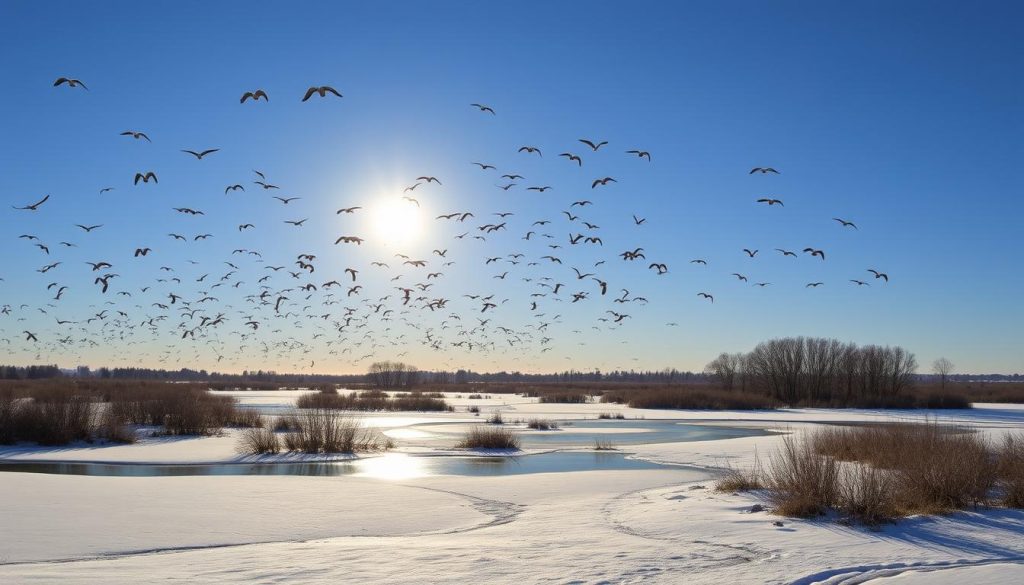
The Lower Klamath National Wildlife Refuge is a top spot for winter bird watching within the vast Klamath Basin. It stretches over 50,000 acres and is a vital sanctuary for migrating birds. These birds find food and shelter here during the cold winter months.
Winter Bird Species to Look For
In winter, the Lower Klamath National Wildlife Refuge bursts with a variety of bird species. It has the most bald eagles in the lower 48 states from December to March. Visitors might also see northern shovelers, gadwalls, and rough-legged hawks. The refuge is home to over 275 bird species, attracting bird lovers from everywhere.
Best Spots within the Refuge
To fully enjoy the Lower Klamath National Wildlife Refuge, check out its different habitats. There’s an 11-mile auto tour with informative panels about the birds you’ll see. Be sure to visit the bald eagle roosting sites. Drive carefully on the snowy gravel roads. The Applegate Trail remnants along State Line Road are also worth a look. They add excitement to your bird watching trip.
| Bird Species | Frequency | Best Viewing Spot |
|---|---|---|
| Bald Eagles | High | Winter roosting sites |
| Northern Shovelers | Medium | Wetlands and marshes |
| Rough-legged Hawks | Medium | Open fields |
| Tundra Swans | High | Lake areas |
Point Reyes National Seashore: Birdwatcher’s Paradise
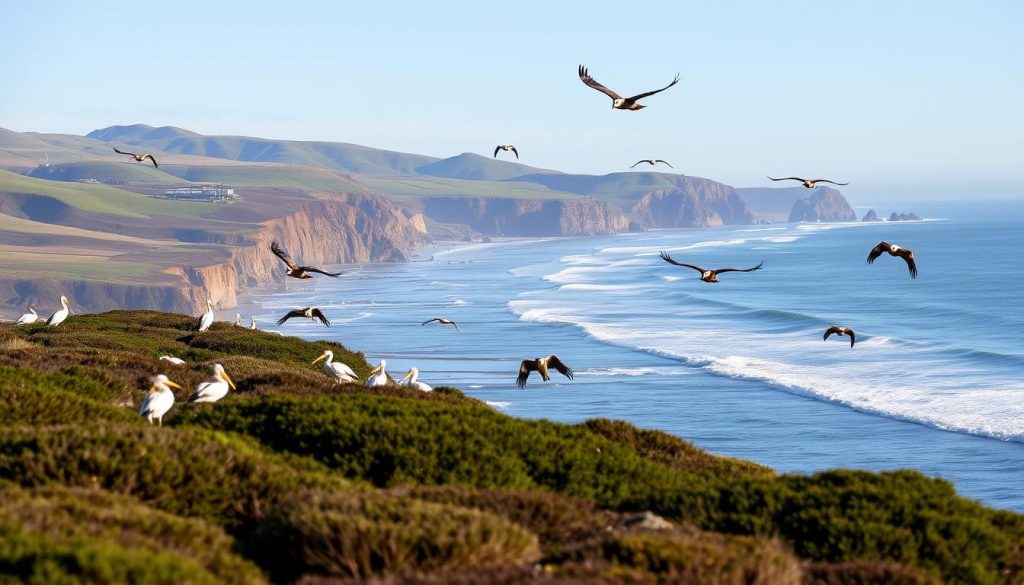
Point Reyes National Seashore is a haven for bird lovers. It hosts about 490 bird species in winter. The quiet and few people make it perfect for watching the area’s birds. Visitors can also see marine animals like elephant seals and gray whales. This place is known for its diverse wildlife and beautiful nature.
Top Birds to Spot in Winter
Winter is a great time for birdwatching at Point Reyes. You can see species such as the hooded merganser and great-horned owl. These months provide a unique chance to watch these amazing birds. Point Reyes is also home to many other bird species worth seeing.
Best Viewing Locations
To enjoy birdwatching at Point Reyes, visit the best spots. Here are the top ones:
- Tomales Point Trail: A 9.4-mile trail with stunning views and many birds.
- Drakes Estero: It’s full of waterfowl and shorebirds, with great spots to watch them.
- Limantour Beach: You can see coastal birds and sometimes marine mammals.
- Chimney Rock: Offers breathtaking views and is a good place to see elephant seals and birds.
Remember to bring what you need when you visit. The weather can change, so it’s smart to have hiking boots, water bottles, sunscreen, and the right clothes. Bring a map, camera, and binoculars to make your birdwatching better at Point Reyes National Seashore.
| Bird Species | Season | Location |
|---|---|---|
| Hooded Merganser | Winter | Tomales Point Trail |
| Great-Horned Owl | Winter | Drakes Estero |
| Elephant Seal | Winter | Chimney Rock |
| Gray Whale | Winter and Spring | Point Reyes Shore |
Keeping Point Reyes’s habitats clean is part of conservation in winter. By respecting nature and following guidelines, your visit can be meaningful and fun. This helps ensure the beauty of Point Reyes for future visitors.
Yellowstone National Park: A Winter Wonderland
Every year, Yellowstone becomes a magical place in winter. It’s perfect for those who love winter wildlife. The snow makes it a beautiful place to see animals.
Wildlife You Can See in Winter
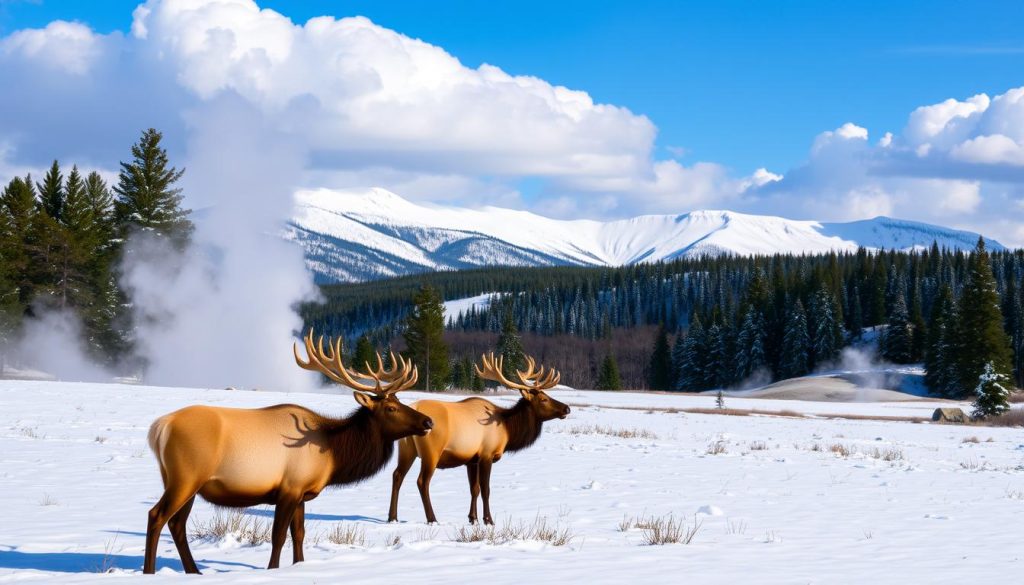
In winter, Yellowstone is great for seeing wildlife. You might see bison, elk, deer, and moose. The park has many owls and about 99 wolves living in 10 packs. Wolves are more visible now, especially in Lamar Valley.
Winter makes animals come down to lower areas. This means you have more chances to see them. Near Old Faithful and the rivers, look for birds, bison, elk, and maybe bobcats. Yellowstone Lake area is full of wildlife like otters and bighorn sheep.
Best Access Points for Winter Wildlife Viewing
To see winter wildlife, you need to plan. Only one road is open for cars in winter. It goes from Gardiner, MT, to near Silver Gate/Cooke City, MT. This road is good for seeing animals.
Best places for wildlife viewing include:
- Lamar Valley: Good for wolves, bison, deer, and coyotes, who come down to find food.
- Old Faithful Area: Bison stay near warm spots, so they’re easier to see here.
- Yellowstone Lake: You’ll find lots of different animals here, like otters and antelope.
Snowy conditions mean you might need a snowcoach to see more of the park. Old Faithful Snow Lodge and Mammoth Hot Springs Hotel are open. They’re cozy places to stay after spending the day outside.
| Area | Species | Unique Features |
|---|---|---|
| Lamar Valley | Wolves, Bison, Mule Deer, Coyotes | High Density of Predators |
| Old Faithful | Bison, Elk, Birds, Bobcats | Thermal Features Attract Wildlife |
| Yellowstone Lake | Otters, Pronghorn Antelope, Bighorn Sheep, Coyotes | Diverse Ecosystem Year-Round |
Seeing Yellowstone’s wildlife in winter is an adventure you won’t forget. Make a checklist for winter wildlife watching to fully experience this amazing scenery and animals.
Rocky Mountain National Park: The Majesty of Colorado
Experience the wonder of Rocky Mountain National Park in winter. The park, covered in snow, offers unique chances to see wildlife. Over three million people visit each year to witness its diverse animals.
Winter brings a special magic for those who love nature. Even though bears are asleep, pikas can be spotted above 11,000 feet, busy collecting food. Be on the lookout for wild turkeys, hawks, falcons, woodpeckers, and pygmy owls, easier to see now.
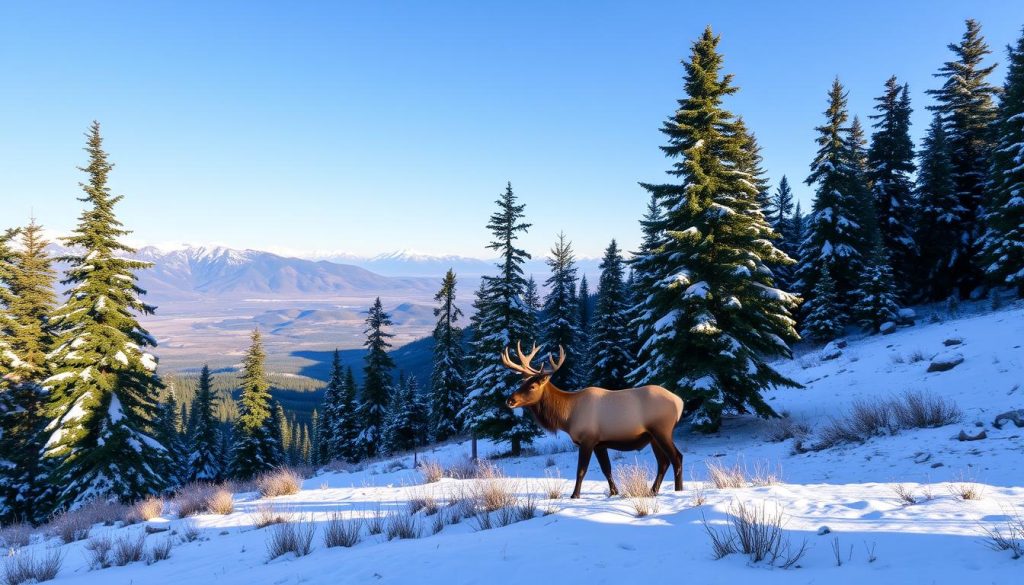
Elk and mule deer, with their winter herds, often move to lower places. You might see them in Moraine Park, Bear Lake Road, and near the Fall River entrance. Moose, including males and females, may also be seen, though it’s rare.
Try to visit at dawn or dusk for the best chances to see wildlife. Keep at least 75 feet away from the animals, or 120 feet for bigger ones. It’s important not to feed them, for their safety and independence.
Estes Park and Grand Lake are great starting points for your journey. They offer a gateway to the spectacular Rocky Mountain winter wildlife. Discover the beauty of Colorado wildlife in winter by exploring these famous areas.
| Key Wildlife | Optimal Viewing Spots |
|---|---|
| Elk | Moraine Park, Bear Lake Road, Fall River |
| Mule Deer | Moraine Park, Bear Lake Road, Fall River |
| Wild Turkeys | Throughout the park |
| Pikas | Above 11,000 feet |
| Moose | Various locations, sightings rare |
Everglades National Park: Explore the Subtropical Wilderness
The Everglades National Park was established on December 6, 1947. This vast subtropical wilderness covers 1,542,526 acres. About 1 million visitors come each year to enjoy Everglades winter wildlife tours and watch subtropical wildlife. You can visit four centers: Ernest F. Coe near Miami, Guy Bradley in Flamingo, Gulf Coast in Everglades City, and Shark Valley off the Tamiami Trail.
Entering the park costs $35 for vehicles and $20 for walkers or bikers. This makes for an affordable adventure. The Shark Valley Observation Tower gives you views up to 20 miles wide. Trails like the Anhinga and Shark Valley let you easily see wildlife, including alligators, birds, and manatees.
Top Animals to Spot in Winter
The dry season from December to March is the best time for wildlife tours. Water scarcity brings animals to specific spots, making wildlife watching great. You can see over 350 bird species, alligators, otters, and manatees. Places to go include the Anhinga Trail, Flamingo village, and Big Cypress Bend Boardwalk.
Popular Winter Trails and Viewing Spots
Many trails in the park are perfect for winter. The Anhinga Trail is great for seeing birds and alligators. The Shark Valley Trail offers amazing views. Trails like Gumbo Limbo and Long Pine Key let you see more of the park’s animals and plants. You can also join tram tours, boat tours, or paddle on the Wilderness Waterway.
Park accommodations include hotels and houseboats at Flamingo Marina and campgrounds like Long Pine Key. There are winter glamping tents in Flamingo too. Families can bike, boat, and join the Junior Ranger programs. While you can’t swim or snorkel, fishing is allowed if you have a state license.
The Everglades provides a unique winter wildlife adventure. Whether you’re on scenic trails or joining guided tours, you’ll love the park’s subtropical beauty.
Algonquin Provincial Park: Winter Explorations of the Boreal Frontier
Algonquin Provincial Park in Ontario is nearly 3,000 square miles of rugged northern landscape. It becomes a haven for winter wildlife when covered in snow. You can see moose, wolves, martens, and other animals adapting to the cold.
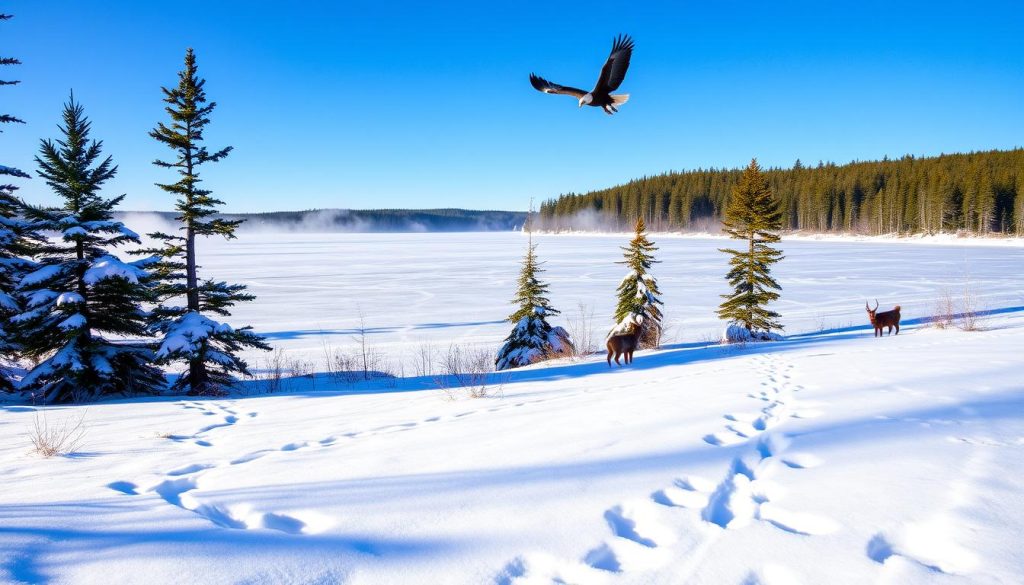
The park has lots of ski trails and shelters for cross-country skiing. Gliding over the snow, you might see wildlife in the quiet surroundings. Explorers can learn wildlife tracking, recognizing and understanding animals’ footprints in the snow.
Home to over a dozen wolf packs, Algonquin Park is a great place to experience the wilderness. You might hear the wolves’ howls at night. The park also has fishers and American martens, which do well in the winter.
Snowshoeing is a good way to see animals without making much noise. This makes it easier to see wildlife in their natural setting. You can go places where skis can’t, letting you explore more of the park.
Seeing Algonquin Park in winter shows how tough boreal species are. It captures the wild beauty of the north.
- Moose are big and have huge antlers. Seeing them search for food in the snow is amazing.
- With many wolf packs, you can listen to and maybe see wolves in the park.
- American Martens stay active in winter, using the snowy landscape to hunt.
Exploring Algonquin Park in winter lets you see the beauty of its ecosystem. You learn about the animals’ strength. Whether you’re skiing, snowshoeing, or tracking, you’ll find new things and make lasting memories.
| Activity | Highlights |
|---|---|
| Cross-Country Skiing | Enhanced chances of wildlife spotting; extensive trail network |
| Snowshoeing | Quieter movement; access to deeper, uneven areas |
| Wildlife Tracking | Educational experience; deeper insight into animal behavior |
Winter Wildlife Watching in Yosemite National Park
Yosemite becomes a peaceful winter home for many animals. In the early morning, you can often see mule deer in El Capitan Valley. They are considered very friendly. Coyotes are also common, hunting quietly to stay away from humans. Bird lovers will find the area near the Merced River a great spot. It’s perfect for seeing eagles, owls, stellar jays, woodpeckers, and ravens.
The park’s efforts to protect animals ensure a safe environment for them. They make sure no trash or food is left outside. This helps protect about 300-500 black bears and the Sierra Nevada Bighorn Sheep. The sheep were brought back to the park’s Cathedral Range in 2015.
Seeing a Sierra Nevada Red Fox in Yosemite is very rare since the last sighting was in 1916. However, the snowshoe hare, though a Species of Special Concern in California, can be seen in winter. They hop through the snow, a delightful sight.
For those into wildlife photography, using good equipment is key. A telephoto lens, especially a 2.8 one, is great for taking clear pictures in dim light. It’s also important to use the right shutter speed. At least 1/1000th of a second will capture animals in motion clearly. These tips will help you get amazing photos of the animals in winter.
Many animals in Yosemite Valley are most active in winter mornings. Visiting early can improve your chances of seeing them. You might catch a glimpse of a mountain lion; at least 50 live in the park. Or enjoy watching birds by the river. Yosemite in winter is a magical time for wildlife watching.
Winter Wildlife Tours and Experiences
Winter is a magical time for wildlife tours. Nature comes alive in the snow. You can pick a tour with a guide or go on your own adventure. Both options promise exciting experiences.
Popular Guided Tours
Guided tours bring the winter wilderness to life. Experts with deep knowledge lead these tours. They know places like Yellowstone inside out. These tours last 6-8 hours. You’ll see animals in the valleys and grasslands. The cost depends on how many people join.
These tours start at places like Sage Lodge or Chico Hot Springs. There might be an extra $150.00 fee. Guides follow animal tracks every day. This helps find animals like elk, bison, and even wolves. You’ll learn about animals, their predators, and their world.
Self-Guided Winter Wildlife Adventures
If you like to do things your way, try a self-guided adventure. You set the pace. You decide where to go. It’s a great way to see animals in places like Jackson Hole.
Animals move to lower places in winter. Some travel up to 150 miles. You can take amazing photos. Try snowshoeing in Grand Teton National Park for close-up views. Self-guided trips let you find the best spots on your own.
Conclusion
Enjoying winter’s beauty by watching wildlife is a special way to feel close to nature. This article showed us exciting places like Yellowstone, Monterey, and Everglades National Park. Each spot offers a unique view of animals in winter, like the humpback whales near Cornwall and the rare California condor at Pinnacles National Park.
Seeing animals in winter highlights the need to protect them. It takes us into quiet landscapes filled with amazing creatures. It reminds us of our duty to keep these ecosystems safe. Watching birds at Lower Klamath or walking through Everglades, every animal we see makes us love nature more.
Your adventures help spread the word on protecting wildlife homes during the cold months. By following green practices and backing conservation, you help save these wonders for future kids. Planning your next trip means promising to care for our planet. Remember, each visit is a step towards helping our natural world.