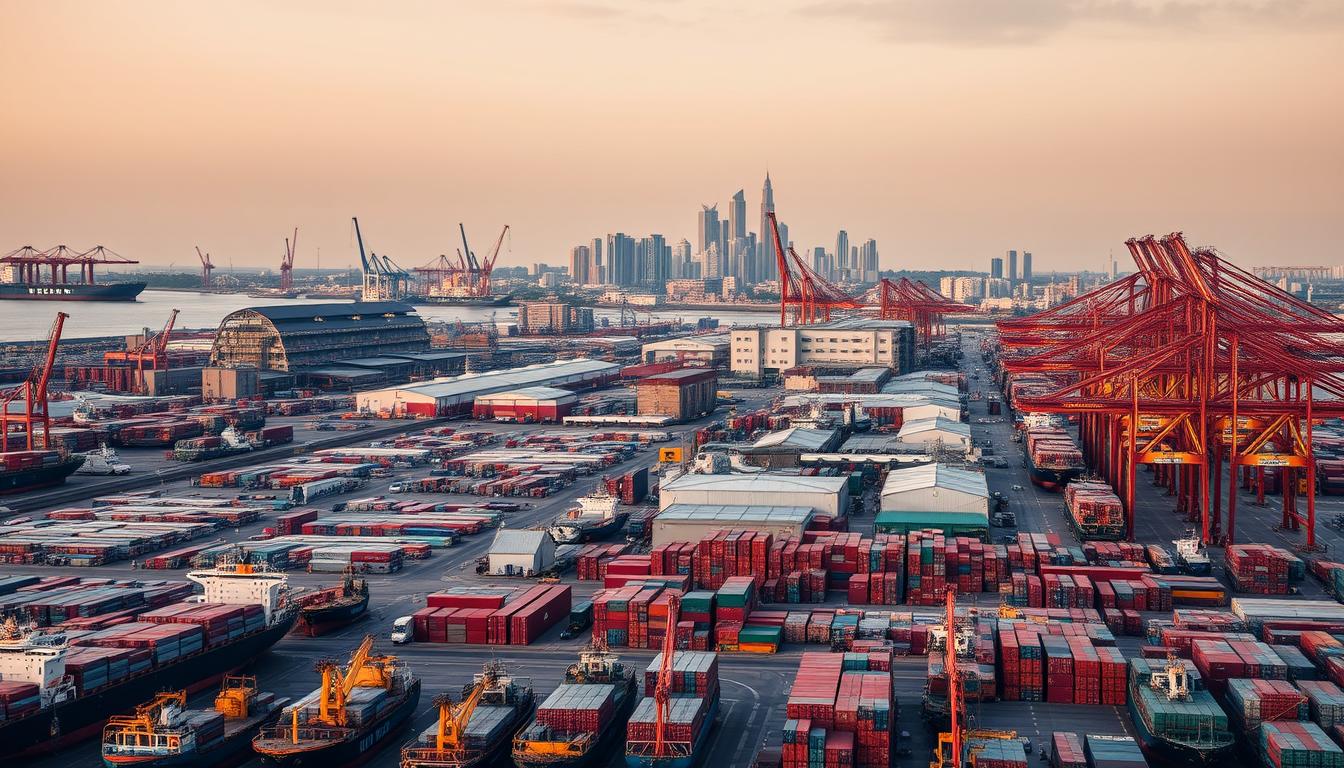
Why Durban is South Africa’s Busiest Port
Ever wondered why Durban is a key shipping center in sub-Saharan Africa? It’s the biggest and busiest port in the area. The Port of Durban moves an impressive 31.4 million tons of cargo every year.
Durban’s port is more than just cargo volume. It’s a big player in the local economy. Learning about this port can show you its place among South Africa’s ports and its role in global trade.
Knowing about the South Africa port ranking and Durban’s role is key. It helps us understand the country’s economic setup and its role in international trade.
The Strategic Location of Durban Harbor
What makes Durban Harbor so key to South Africa’s maritime scene? Its strategic spot is a big reason. The Port of Durban’s location brings many benefits, making it a bustling place.
Natural Deep-Water Advantages
The harbor has natural deep-water advantages. This lets big ships dock safely. It’s essential for handling today’s cargo ships and tankers.
Sheltered Bay Configuration
The sheltered bay configuration of Durban Harbor keeps ships safe. It shields them from bad weather and rough seas.
Favorable Ocean Currents
Also, the harbor has favorable ocean currents. These currents help ships navigate better and lower the chance of accidents.
Position on Major Shipping Routes
Durban Harbor sits on major shipping paths, making it a vital spot for global trade. Its location brings many perks, including:
- Being close to key markets
- Having efficient transport routes
- More trade chances
Proximity to Asian Markets
The harbor’s closeness to Asian markets is a big plus. It makes trading with some of the biggest economies easier.
Gateway to Southern Africa
Plus, Durban Harbor is a gateway to Southern Africa. It gives access to landlocked areas and countries.
Historical Development of Durban Port
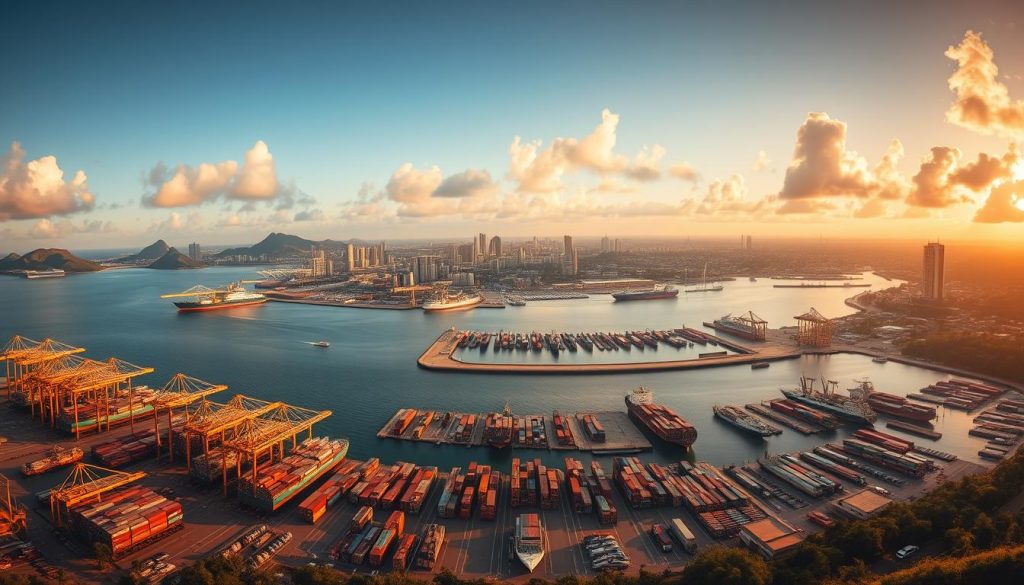
The history of Durban Port starts with its colonial roots. It began as a small harbor for the growing city of Durban. Over time, it has changed a lot, influenced by historical events and economic needs.
Colonial Era Beginnings
The Port of Durban started in the mid-19th century, during colonial times. It was built to meet the growing trade needs of the area. The port’s early growth was helped by its natural deep-water advantages. This made it a great spot for maritime trade.
20th Century Expansion
In the 20th century, Durban Port grew and modernized a lot. New container terminals and bulk handling facilities were built. These changes made Durban a key player in regional maritime trade. It could handle more cargo and complex logistics.
Post-Apartheid Growth and Integration
After apartheid ended, Durban Port kept growing and joined the global economy. It worked to be more efficient and increase trade. This made it a better choice for international shipping lines. The port’s ability to adapt to changing global trade is highlighted by its statistics and records.
- Expansion of container terminals to meet growing demand
- Investment in technology to enhance operational efficiency
- Increased focus on environmental sustainability and safety
Why is Durban Considered the Busiest Port in South Africa?
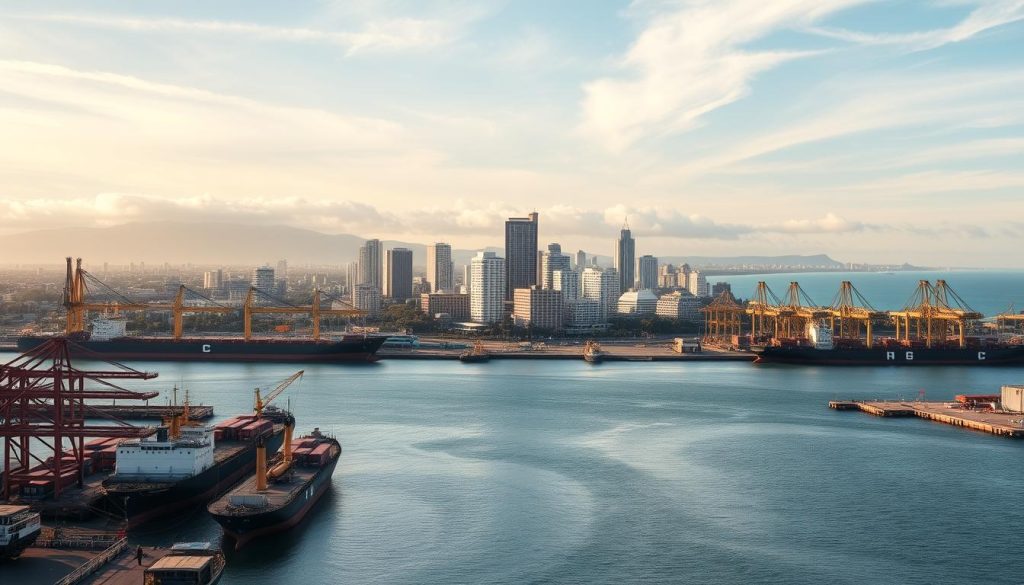
Many wonder why Durban is the busiest port in South Africa. It’s because of its huge trade volumes and key role in maritime operations. Durban is a major hub for international trade, handling a big part of the country’s imports and exports.
Trade Volume Statistics and Records
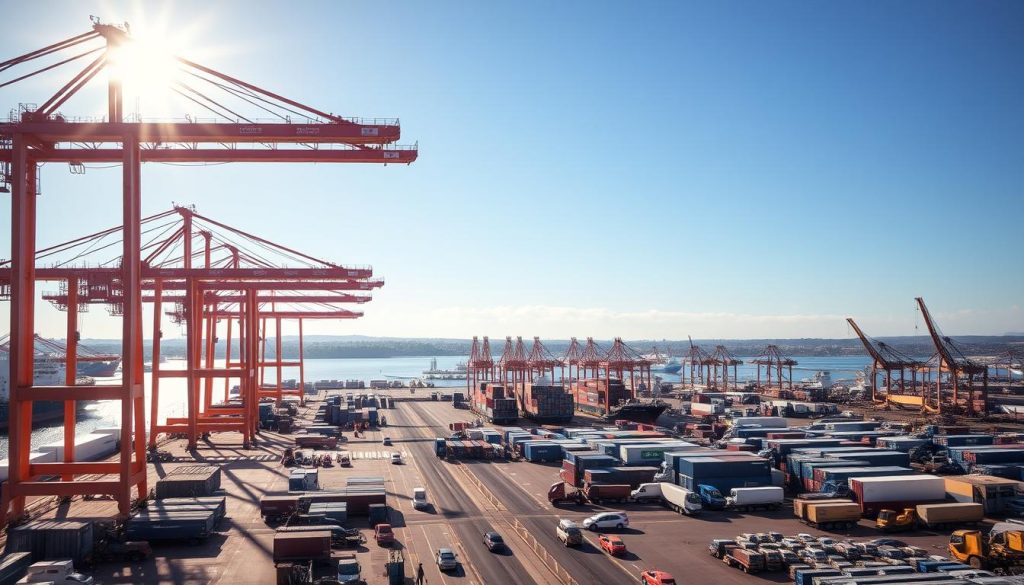
The Port of Durban’s trade volume stats show it’s the busiest port. It has high container throughput and cargo tonnage every year.
Container Throughput Figures
Durban’s container throughput is among the highest in the area. Recently, the port has moved over 4 million containers. This shows its ability to handle big volumes well.
“Durban’s container terminal is one of the most advanced in Africa, enabling the port to handle the latest generation of container ships.”
Annual Cargo Tonnage
Durban’s annual cargo tonnage is huge, with millions of tons of cargo each year. It handles a wide range of goods, from food to machinery.
Vessel Traffic Analysis
Vessel traffic analysis gives more insight into Durban’s busy maritime scene. The port welcomes many types of vessels, from container ships to bulk carriers.
Types of Vessels Served
Durban’s flexibility is seen in the vessels it serves. It welcomes container ships, tankers, bulk carriers, and general cargo vessels. This meets different trade needs.
Port Call Frequency
Durban sees a lot of port calls, with many vessels coming daily. This high traffic shows Durban’s key role as a maritime hub.
Durban’s status as South Africa’s busiest port is clear from its trade stats and vessel traffic. It can handle lots of cargo and various vessels. This makes it vital to the country’s economy.
Infrastructure and Facilities at Durban Port
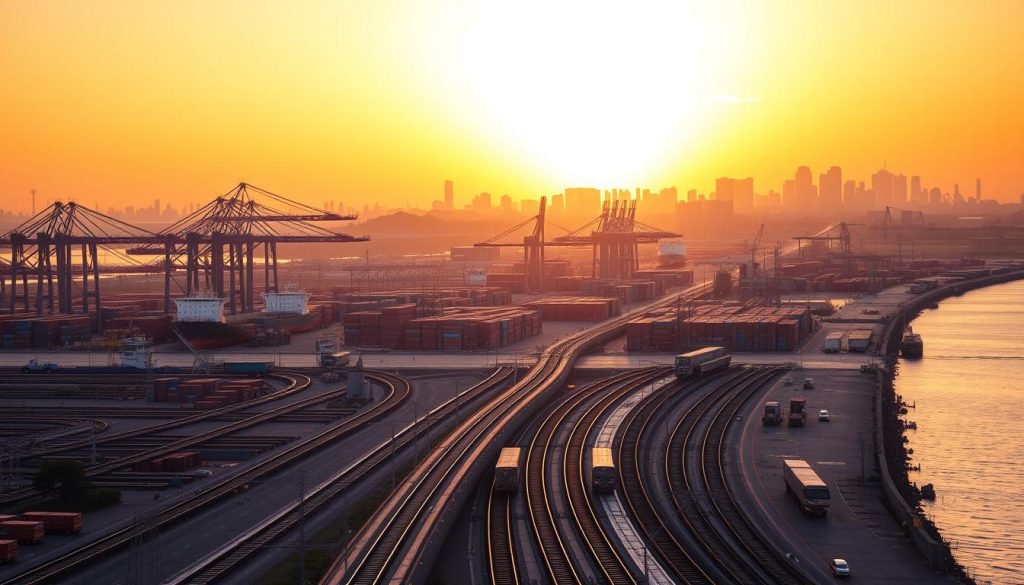
Durban Port has a lot of infrastructure and modern facilities. It’s the busiest port in South Africa. Its capabilities are key for the country’s maritime trade.
Container Terminals and Capacity
The container terminals at Durban Port are very important. They handle a lot of cargo. With a capacity to handle over 2.5 million containers annually, they have modern cranes and state-of-the-art equipment.
The terminals work all day, every day. This helps keep the port competitive in global trade.
Bulk Handling Capabilities
Durban Port also has advanced bulk handling facilities. They handle minerals, grains, and other bulk cargo. These facilities are designed for quick and safe loading and unloading.
The bulk handling equipment includes specialized machinery for different cargo types. This makes the port versatile and able to serve many industries.
Technological Advancements and Automation
The Port of Durban uses technology to improve its operations. It has automated systems for managing the port. From digital documentation to automated cranes, technology boosts efficiency and cuts costs.
These tech advancements speed up cargo handling and make the work environment safer. They reduce the need for manual tasks in risky situations.
Economic Impact of Durban Port
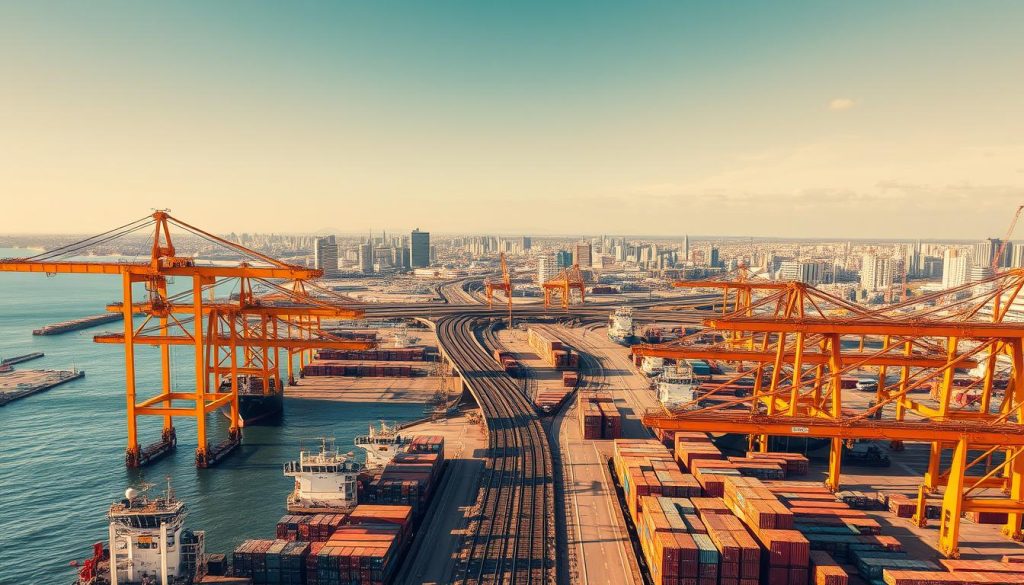
Durban Port is key to South Africa’s economy, adding a lot to the national wealth. It’s a major hub for trade, both within the country and abroad.
Contribution to South Africa’s GDP
The Port of Durban boosts South Africa’s GDP a lot. It makes money through cargo handling, shipping, and logistics. The port’s impact goes beyond direct activities, helping industries like manufacturing and tourism.
Some important stats show the port’s role:
- A big part of South Africa’s trade goes through Durban Port.
- The port helps many industries, like cars and farming, with its services.
- It adds to the GDP by creating jobs directly and indirectly.
Employment Generation and Labor Force
Durban Port is a big job creator in the area. It offers jobs in logistics, management, and more. These jobs range from skilled to unskilled.
Key employment stats are:
- Thousands work directly for the port.
- It also supports many jobs in other areas like making things and moving goods.
Regional Economic Development
Durban Port drives growth in the area, thanks to its infrastructure and investments. It has led to the creation of economic zones and industrial parks. This boosts economic activity in the region.
The port’s impact is clear in:
- More investment in infrastructure and industries near the port.
- More businesses and services for the port’s needs.
- More jobs and skills for local people.
Logistics and Supply Chain Network
Exploring Durban’s port reveals its strong logistics setup, vital for South Africa’s economy. The Port of Durban links with many transport modes. This makes it a major part of the regional supply chain.
Intermodal Transportation Connections
The Port of Durban has a wide network of intermodal transport links. This network helps move goods smoothly.
Rail Network Integration
The port connects well to the rail network. This allows for quick and cost-effective transport of containers and bulk cargo. This integration is crucial for reducing transit times and costs.
Highway Access and Trucking
The port also has great highway access, ideal for trucking companies. This ensures goods can reach different parts of the country and beyond.
Warehousing and Distribution Centers
The Port of Durban has many warehousing and distribution centers. These offer services like storage and value-added logistics. They use modern technology to handle all kinds of cargo efficiently.
| Logistics Feature | Description | Benefit |
|---|---|---|
| Rail Network | Direct rail links to the hinterland | Reduced transit times and costs |
| Highway Access | Efficient trucking routes | Flexible distribution options |
| Warehousing | Modern storage facilities | Secure and efficient storage |
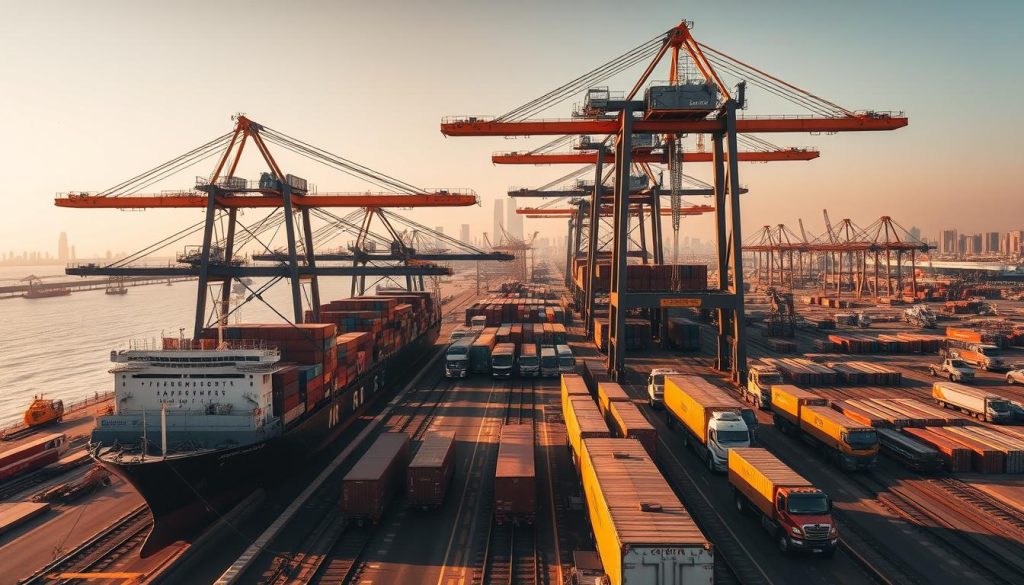
The Port of Durban stands out with its intermodal transport and advanced warehousing. It’s a pivotal logistics hub in the region. As it grows, it will keep being a key part of South Africa’s logistics and supply chain.
Comparison with Other South African Ports
South Africa’s ports are diverse, each with unique strengths. Cape Town, Port Elizabeth, Ngqura, and Richards Bay play vital roles in trade and economy. They each contribute differently to the nation’s maritime landscape.
Cape Town Port
Cape Town Port is a major hub for containers and vehicles. It handles a lot of containers and vehicles every year. Its close location to the city and good infrastructure make it popular with shipping lines.
Port Elizabeth and Ngqura
Port Elizabeth and Ngqura are also important in maritime trade. Ngqura stands out for its deep-water capabilities, ideal for large vessels and cargo. Its location allows for efficient handling of imports and exports, serving various industries.
Richards Bay Specialized Facilities
Richards Bay is known for its bulk handling, mainly coal and dry bulk commodities. It has specialized facilities, making it one of the largest and most efficient in the Southern Hemisphere. Its close location to coal mines and resources is key for energy exports.
When comparing these ports to Durban, each has its own strengths. Durban is unique because of its versatile handling and strategic location. Knowing each port’s strengths is essential for businesses to improve their supply chain and logistics in South Africa.
Major Trade Partnerships and Commodities
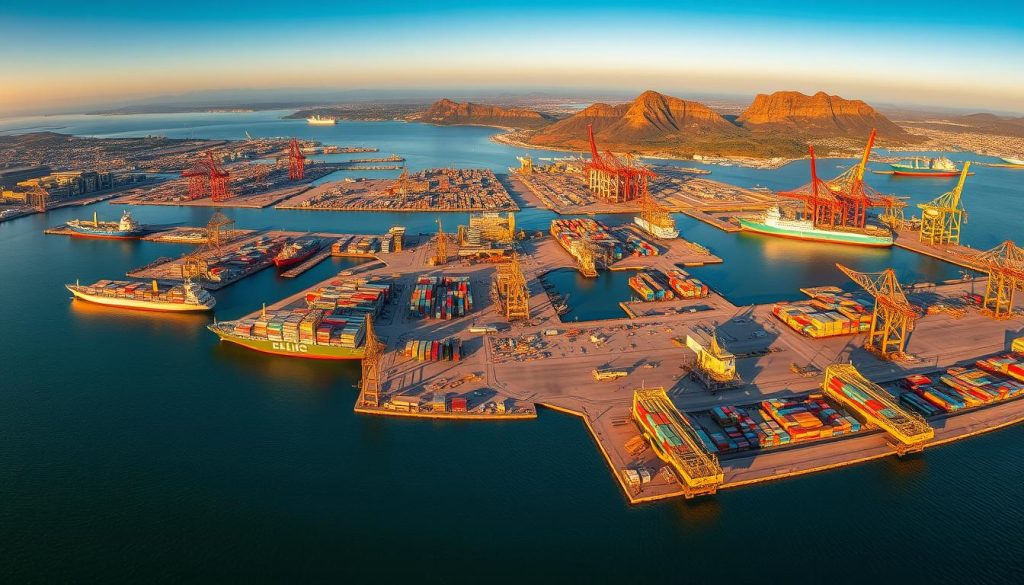
The Port of Durban is a key player in global trade. It connects South Africa to the world. It trades with many countries and handles different goods.
Key International Trading Partners
The Port of Durban trades a lot with several countries. Its location and modern setup make it a great place for trade.
Asian Markets
Durban trades a lot with Asian countries like China, India, and Japan. They buy South African minerals and food.
European and American Connections
Durban also trades a lot with Europe and the Americas. It exports minerals, food, and made goods to these places.
Primary Import and Export Commodities
The Port of Durban deals with many goods. This includes food, made items, and minerals.
Agricultural Products
Food is a big part of Durban’s trade. It exports sugar, maize, and fruits.
Manufacturing Goods
Made goods are also important. Durban exports car parts, machines, and clothes.
Mineral Resources
Minerals like coal, iron ore, and chrome are big too. They go to Asia and Europe.
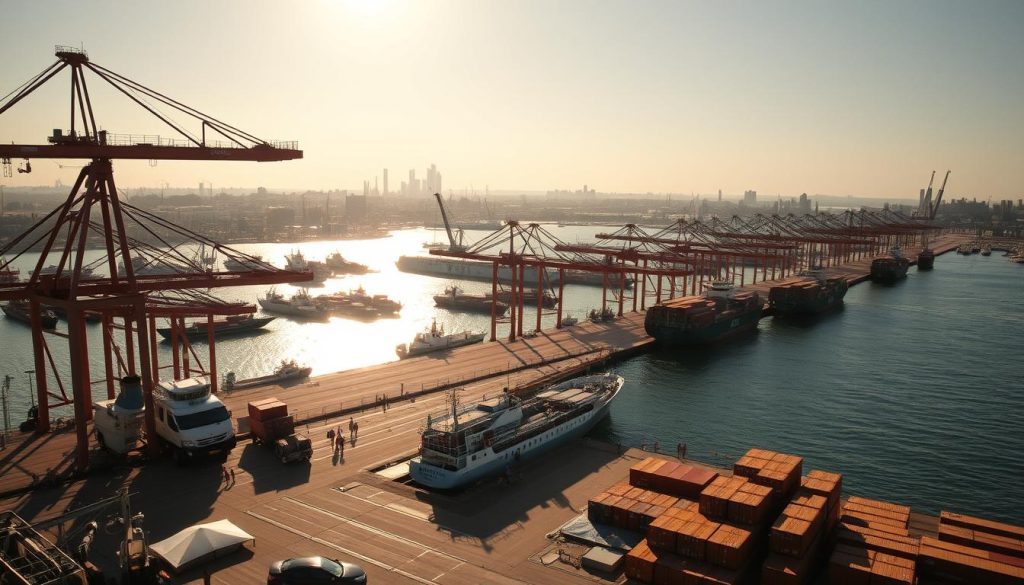
In short, the Port of Durban is crucial for South Africa’s trade. It has big partnerships and trades many goods.
Challenges and Future Developments
Durban Port is at a critical juncture, balancing between current operational challenges and future development plans. As the busiest port in South Africa, it plays a vital role in the country’s economy.
Current Operational Challenges
The Port of Durban faces several operational challenges that impact its efficiency. These include:
Congestion Issues
Congestion is a significant challenge, leading to delays in vessel turnaround times and increased costs for shipping lines.
Environmental Concerns
The port is also grappling with environmental concerns, including pollution and the need for sustainable practices.
Competition from Regional Ports
Further, the Port of Durban faces stiff competition from regional ports, which are also expanding their capacities.
Expansion Plans and Modernization
To address these challenges, the Port of Durban is undergoing significant expansion and modernization efforts.
Durban Dig-Out Port Project
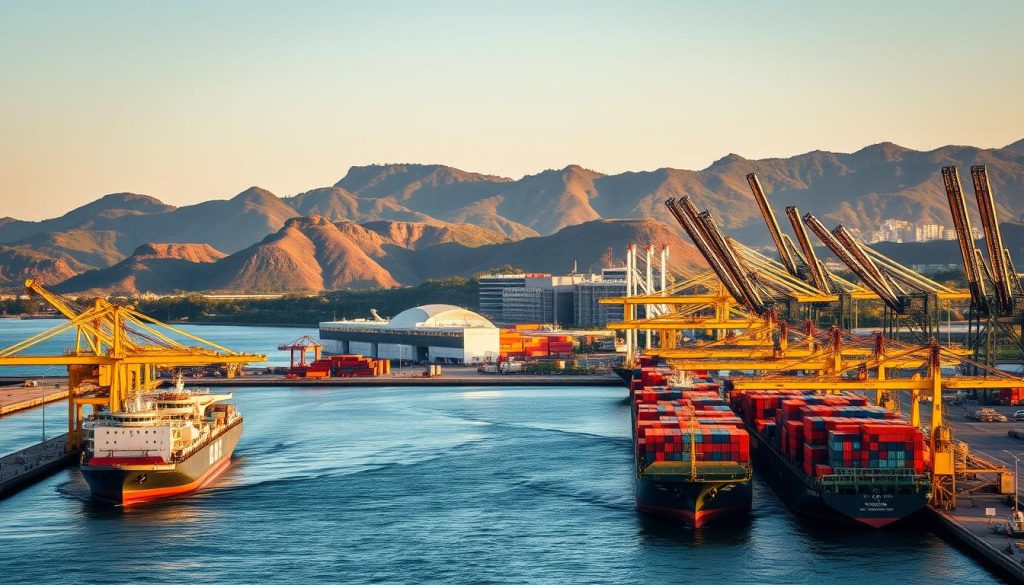
One of the key projects is the Durban Dig-Out Port, aimed at increasing the port’s capacity and efficiency.
Smart Port Initiatives
The port is also adopting smart port initiatives, leveraging technology to enhance operational efficiency and reduce environmental impact.
| Initiative | Description | Expected Outcome |
|---|---|---|
| Durban Dig-Out Port | Expansion project to increase capacity | Enhanced efficiency and capacity |
| Smart Port Initiatives | Adoption of technology for operational efficiency | Reduced environmental impact and improved operations |
Conclusion: Durban’s Continued Maritime Dominance
The Port of Durban is a key player in South Africa’s maritime world. Its location and ongoing improvements make it a standout. It’s the busiest port in South Africa, with a bright future ahead.
The Durban shipping industry is set to boost the country’s economy. Plans to expand and modernize the port will make it even more competitive globally.
Durban’s future in port business looks good. Its deep water and key shipping routes make it a top choice for international trade. As the maritime industry in South Africa grows, Durban is ready to stay on top.