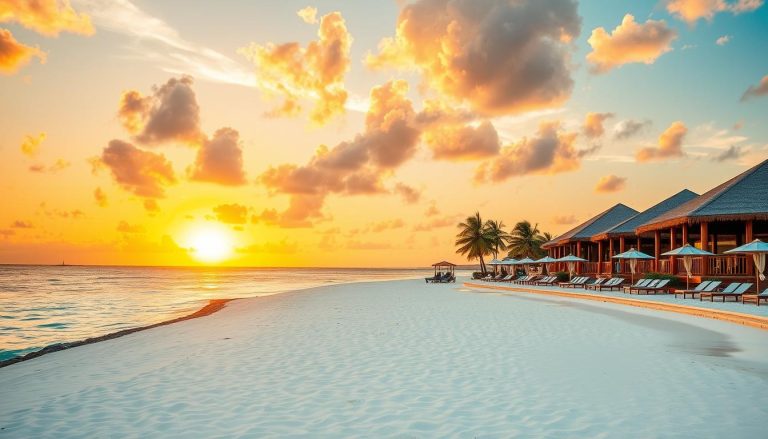
Get Involved in Ari Atoll Conservation Activities
Ever thought your vacation could make a difference? Visiting a paradise like Ari Atoll can help preserve its stunning ecosystems. You can enjoy its beauty and help protect it by joining conservation projects.
Ari Atoll, with its vibrant marine life, is ideal for conservation efforts. You can help in marine research or coral restoration. So, are there ways to participate in conservation at Ari Atoll? Yes, and your efforts will help protect its biodiversity and future.
Understanding Ari Atoll’s Unique Ecosystem
The Ari Atoll is a special marine area with coral reefs, lagoons, and seagrass beds. It’s home to many marine creatures, like whale sharks and manta rays. South Ari Atoll is famous for its whale sharks, which come here all year.
Groups like the Maldives Whale Shark Research Programme work to protect this area. They help create the biggest Marine Protected Area in the Maldives. This effort is key to keeping the marine life safe.
Learning about Ari Atoll’s ecosystem helps us protect it better. We focus on sustainable fishing and teach locals why marine habitats are important. This way, we can keep these waters healthy.
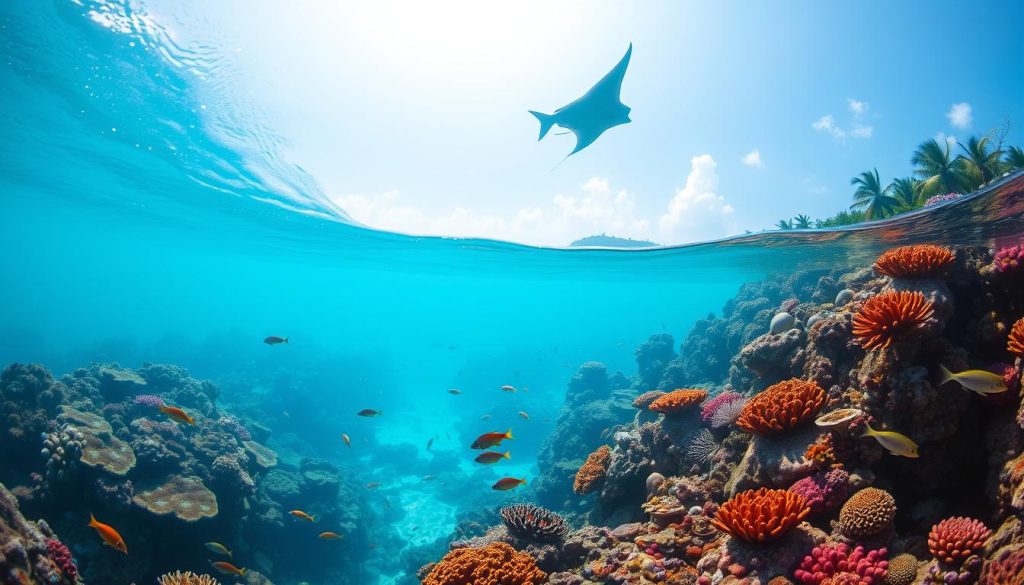
Protecting Ari Atoll helps both wildlife and people who live there. Fishing and eco-tourism are big parts of their economy. By saving these resources, we help the area stay beautiful for future generations.
| Species | Description | Conservation Status |
|---|---|---|
| Whale Shark | The largest fish species, known for their gentle nature. | Vulnerable |
| Manta Ray | Characterized by large wingspans and playful swimming behavior. | Near Threatened |
| Coral Reefs | Home to over 1.4 million species worldwide, these ecosystems are vibrant but threatened. | Endangered |
The Importance of Conservation in Ari Atoll
Conservation in Ari Atoll is vital due to threats from climate change, overfishing, and tourism. This area is rich in marine life, and protecting it is key for their survival. Saving these ecosystems helps endangered species and keeps the environment balanced.
Environmental efforts in Ari Atoll are key for sustainable tourism. This tourism boosts the local economy. Activities like snorkeling and diving draw visitors to see the area’s diverse marine life. This not only brings in money but also highlights the need for marine conservation in the Maldives.
By promoting conservation, Ari Atoll can keep its beauty for the future. It also becomes a top eco-tourism spot. The work of organizations, local communities, and visitors is crucial for protecting these marine ecosystems.
| Marine Species | Characteristics | Importance |
|---|---|---|
| Whale Shark | Largest non-mammalian fish; year-round sightings in South Ari | Cultural significance; attracts eco-tourism |
| Humphead Wrasse | Up to six feet long; lifespan over 30 years | Critical role in the ecosystem; feeds on predatory species |
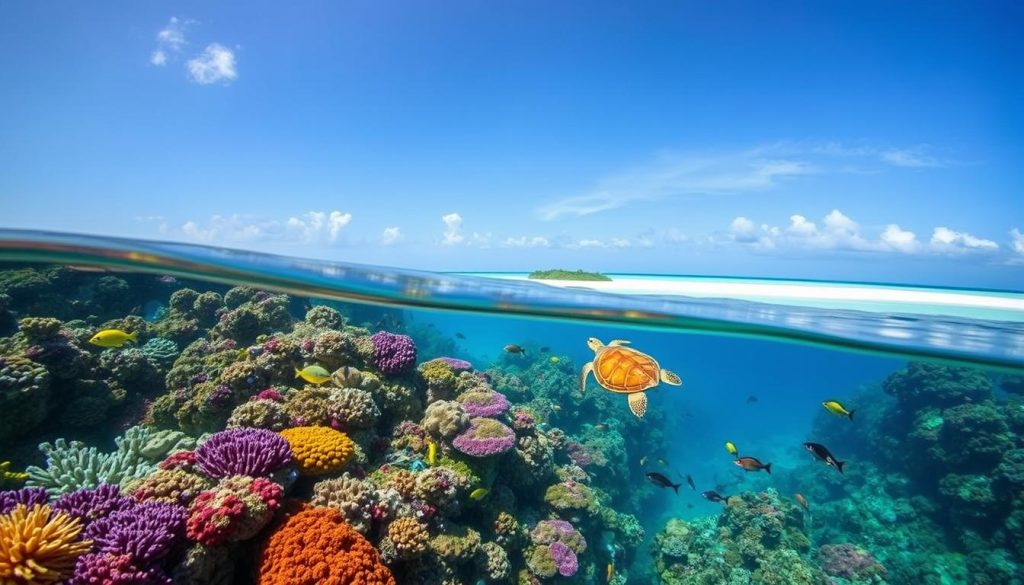
| Hawksbill Turtle | Sharp curving beak; feeds on anemones | Indicator of healthy reef ecosystems |
| Clownfish | Symbiotic relationship with anemones | Key species in marine biodiversity |
Are there any conservation activities I can participate in at Ari Atoll?
Yes, you can join many conservation activities at Ari Atoll. The beautiful marine environment offers volunteer opportunities in marine research and coral restoration. These activities protect the ecosystem and give you practical experience.
Volunteer Opportunities with Marine Research Programs
Working with marine research programs like the Maldives Whale Shark Research Programme (MWSRP) is a great choice. This program offers volunteer opportunities for important conservation work. As a volunteer, you help with:
- Data collection for marine species research
- Monitoring whale sharks to track their numbers
- Checking the health of marine habitats
By joining, you learn about marine biology and help protect endangered species.
Participating in Coral Restoration Initiatives
Joining coral restoration initiatives in Ari Atoll is also exciting. These efforts help fix damaged coral reefs. Coral reefs are key for marine life and protecting coastlines. By participating, you can:
- Help plant coral
- Support efforts to restore habitats
- Learn about coral ecosystems and their role in the sea
These programs mix learning with doing, helping you understand marine conservation. You also play a key role in protecting these important resources.
| Program | Focus Area | Volunteer Activities |
|---|---|---|
| Maldives Whale Shark Research Programme | Whale Shark Conservation | Data collection, monitoring |
| Coral Restoration Initiatives | Coral Rehabilitation | Coral planting, habitat restoration |
Ari Atoll Marine Conservation Programs
The Ari Atoll marine conservation programs are key to protecting the area’s marine life. They focus on saving vulnerable species and their homes. This ensures the beauty of Ari Atoll stays for generations to come.
People taking part can help monitor whale sharks, which can be up to 18 meters long. They also check on coral health, which is vital for the area’s biodiversity.
The Marine Shark Conservation Program offers an 8-day cruise in the Maldives. It’s for a small group of six to twelve people on a Turkish-style sailing boat. For $2050 per person, you get seven nights, meals, and unlimited water. A local crew helps, and you can buy drinks extra.
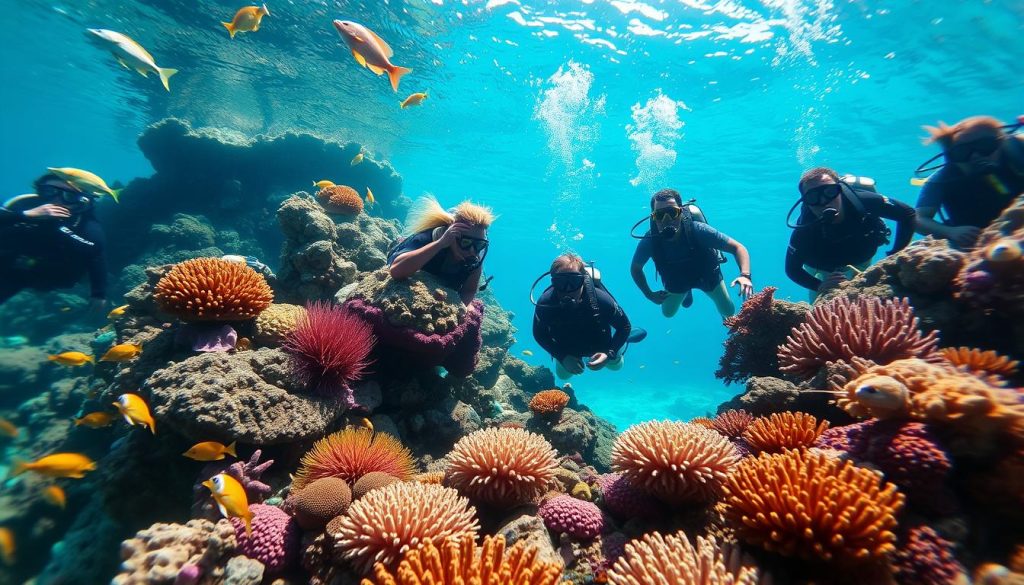
Volunteering here means a commitment of eleven days, starting at €2,800. You’ll learn from experts and gain skills in marine biology. The research vessel MV Felicity has seven cabins, with two volunteers per cabin.
Every day, you’ll go on dives to study whale sharks. The Maldives Whale Shark Research Program also works with local kids. They teach them about protecting the sea through education and hands-on activities.
Getting to Know Whale Sharks in South Ari Atoll
South Ari Atoll is known for its rich marine life, including the majestic whale sharks. These gentle giants are found in the area’s nutrient-rich waters. The Maldives Whale Shark Research Program (MWSRP) is key in studying them.
They collect data that helps in making conservation plans. This research helps us understand where whale sharks migrate and how many there are. It also shows how they use their habitats.
Whale Shark Research and Monitoring
Joining whale shark research lets you see these amazing creatures up close. The MWSRP has tracked over 388 whale sharks. This helps us learn more about them.
Research tasks include tracking whale sharks, studying their growth, and helping with education. Every time you see a whale shark, you help gather important data. This data is crucial for protecting these animals.
How You Can Contribute to Whale Shark Conservation
You can make a big difference in whale shark conservation. By joining research efforts, you help protect these incredible creatures. You can help in many ways, like entering data or working on research boats.
You can also join cruises focused on whale sharks. Or help with beach cleanups and coral nurseries. Learning how to dive responsibly is another way to help.
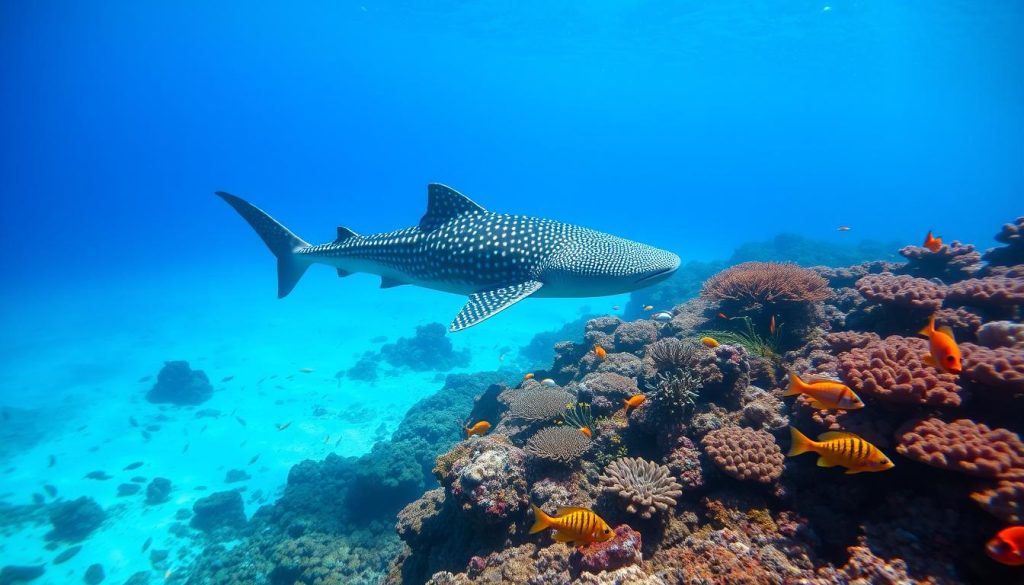
Your work in whale shark research is essential for their survival. By helping with their conservation, you support their populations and promote eco-friendly tourism. This experience deepens your respect for the ocean and its creatures.
Eco-Tourism Initiatives in Ari Atoll
Eco-tourism in Ari Atoll boosts sustainable tourism in the Maldives. Local resorts and businesses aim to reduce environmental harm. For example, LUX* South Ari Atoll uses a floating solar system for 33% of its power. This effort saves over 260,000 liters of diesel each year.
The island’s water plant has cut down on plastic waste. Since starting in December 2011, it has saved about 810,000 plastic bottles. This shows a big commitment to keeping the environment clean.
Visitors can enjoy eco-friendly activities. There are guided nature walks and diving tours focused on marine conservation. Cultural exchanges with locals also support conservation efforts. These activities help visitors connect with the area and support local communities.
LUX* South Ari Atoll has won awards for sustainability. It’s the first ‘Vegan-Friendly Hotel’ in the Maldives. Their Herb Garden provides fresh produce for vegan dishes, showing a full commitment to sustainability.
The Maldives has policies for sustainable tourism, but there are still challenges. Economic and infrastructure issues are big hurdles. Yet, eco-tourism efforts show promise. They highlight the positive changes possible with these initiatives.
| Initiative | Description | Impact |
|---|---|---|
| Floating Solar System | Supplies 33% of resort’s electricity needs. | Saves over 260,000 liters of diesel per year. |
| Water Plant | Eliminates plastic bottle usage. | Saved about 810,000 plastic bottles. |
| Herb Garden | Provides fresh herbs and vegetables. | Supports plant-based restaurant offerings. |
| Recognition | Awarded as Most Sustainable Wedding Resort. | Boosts eco-tourism appeal. |
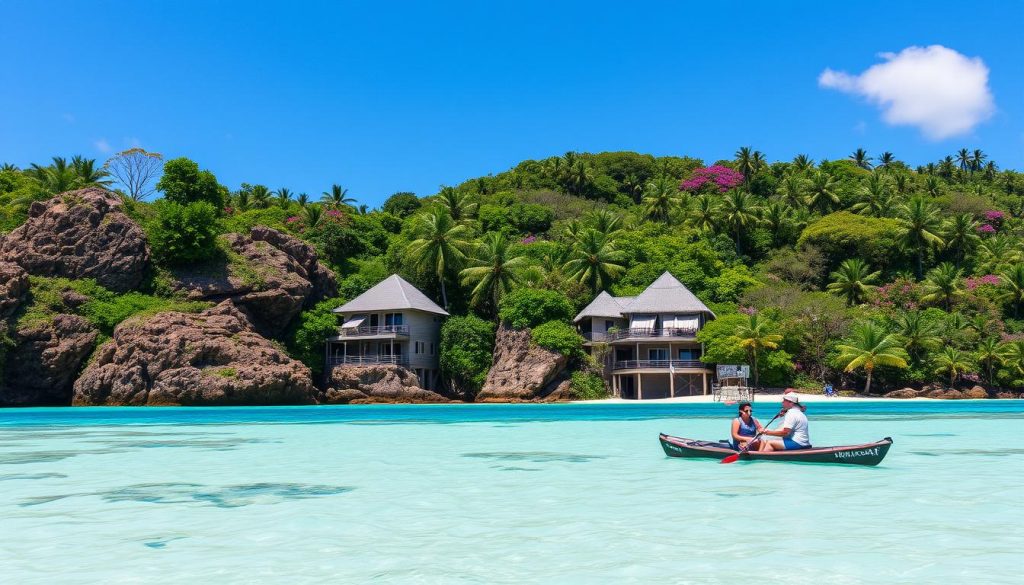
Engaging with Local Communities in Conservation Efforts
Working with local communities is key to saving Ari Atoll. It makes conservation efforts last longer and strengthens bonds between locals and visitors. It also helps people understand the environment and respect their culture.
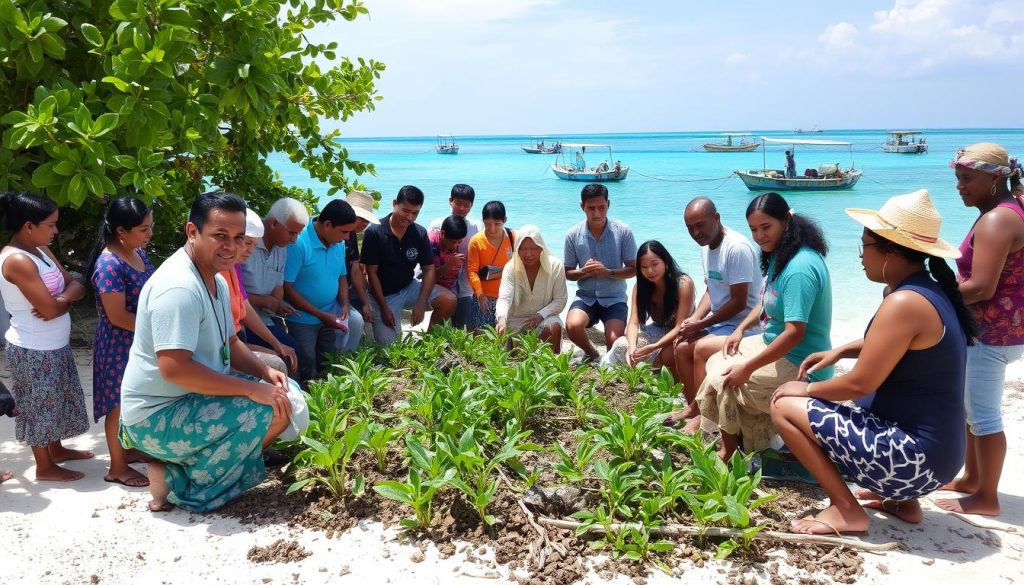
The Maldivian Manta Ray Project has found over 5,000 reef manta rays. This shows how important it is to involve the community in research. Local people’s knowledge helps create plans that keep the environment healthy for a long time.
- Helping with sustainable fishing helps fishermen and protects the sea.
- Surveys in North Ari Atoll showed many adults want to change their ways and follow rules.
- The Maldives Whale Shark Research Programme has encouraged people to support marine protected areas.
Also, tourists can join local conservation projects. This lets you connect with the area more deeply. You can help protect Ari Atoll’s ecosystems and have a richer travel experience.
Sustainable Activities You Can Enjoy While Supporting Conservation
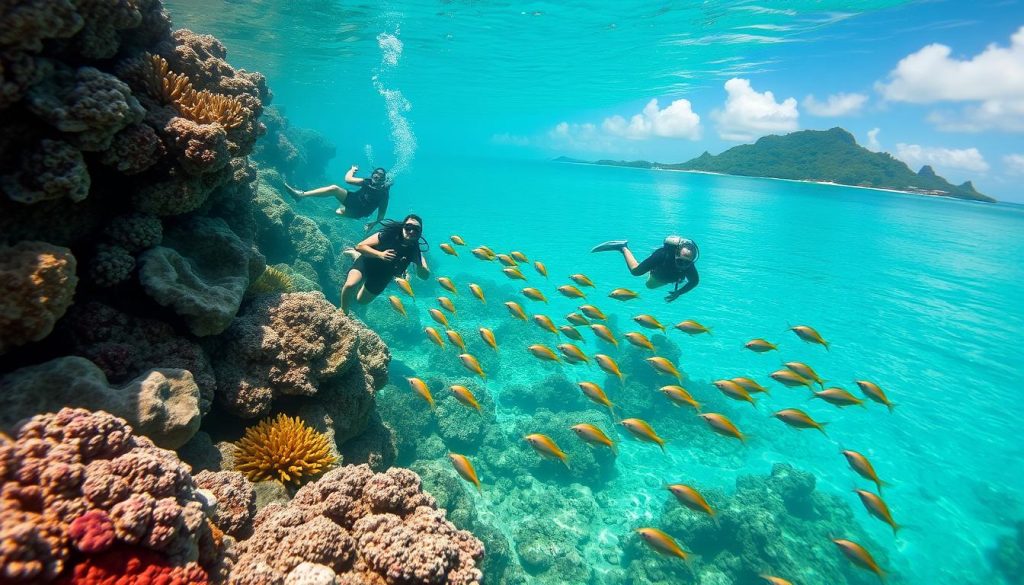
Visiting Ari Atoll is a chance to enjoy activities that help the environment. You can snorkel and dive responsibly, which helps protect marine life. By exploring these areas, you see the beauty of nature and help conservation efforts.
Snorkeling and Diving in Marine Protected Areas
Marine protected areas are vital for our oceans’ health. Snorkeling and diving here lets you see the underwater world up close. You do it in a way that’s good for the planet, thanks to certified guides.
These activities are for all skill levels. Here’s what you can look forward to:
- Seeing colorful coral reefs and many marine species, including some found only here.
- Learning about marine life and how to protect it before you go.
- Following rules that keep the environment safe.
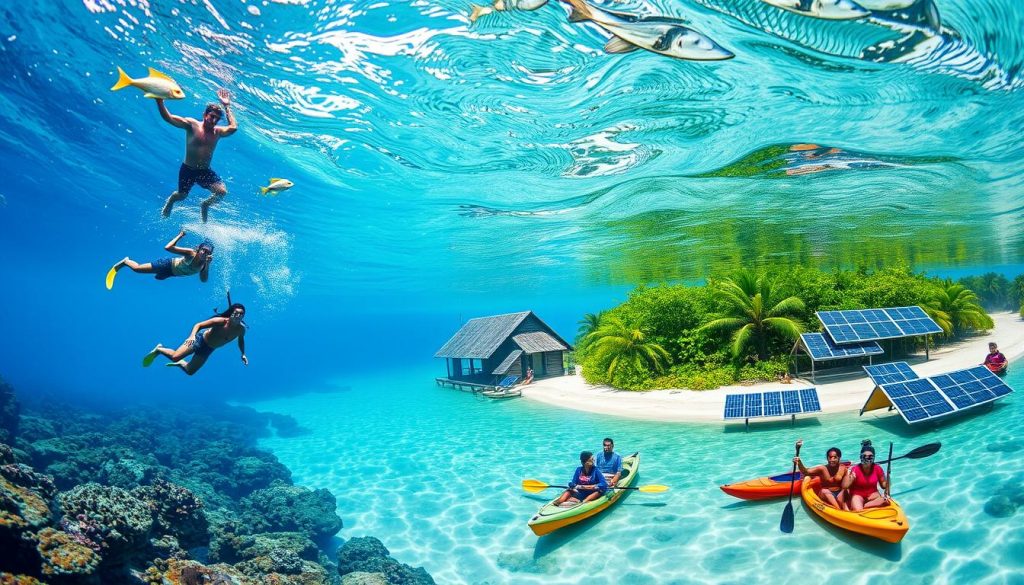
By joining in these activities, you help a big mission to save our oceans. It’s not just fun; it’s also important for the planet. Your choice to snorkel and dive responsibly makes a big difference for Ari Atoll’s marine life.
Conclusion
Ari Atoll offers many chances to help with conservation. You can join volunteer projects, support eco-tourism, and work with local communities. This helps protect the marine life in Ari Atoll.
There are many ways to help, like studying whale sharks or fixing coral reefs. Your efforts are crucial for keeping this ecosystem healthy.
Helping out doesn’t just make you appreciate Ari Atoll’s beauty more. It also helps make sustainable practices last. Every little bit you do adds up to make a big difference.
By joining in, you help the local environment and make your trip even more special. Let’s work together to keep Ari Atoll’s marine wonders safe for the future.