When to Visit Nakuru for the Best Birdwatching
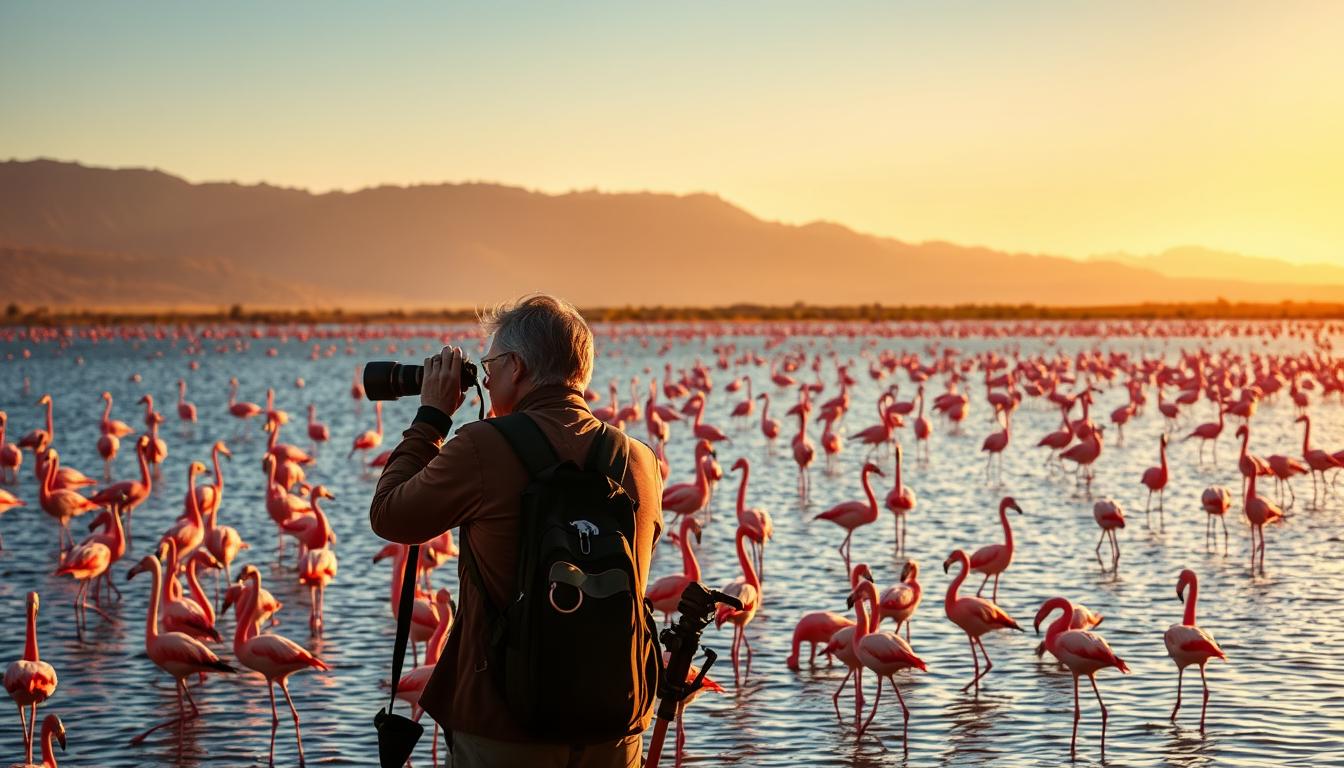
Imagine being surrounded by over 400 species of birds in a park known for its rich birdlife. Lake Nakuru National Park, with its diverse habitats, including the lake, woodlands, and grasslands, is a haven for bird enthusiasts.
As you plan your trip to Nakuru for unforgettable birdwatching, understanding the seasonal patterns and their impact on bird populations is crucial. The park’s unique location in the Rift Valley makes it a critical stopover for migratory birds, offering a dynamic birdwatching experience.
So, when is the best time to visit Nakuru to witness this avian spectacle? The answer lies in understanding the park’s birdwatching season, which is influenced by the migratory patterns of various bird species.
Understanding Nakuru’s Birdwatching Appeal
Nakuru is a paradise for bird lovers. Its rich ecosystems and varied landscapes attract many bird species. This makes it perfect for birdwatching.
The Significance of Lake Nakuru National Park
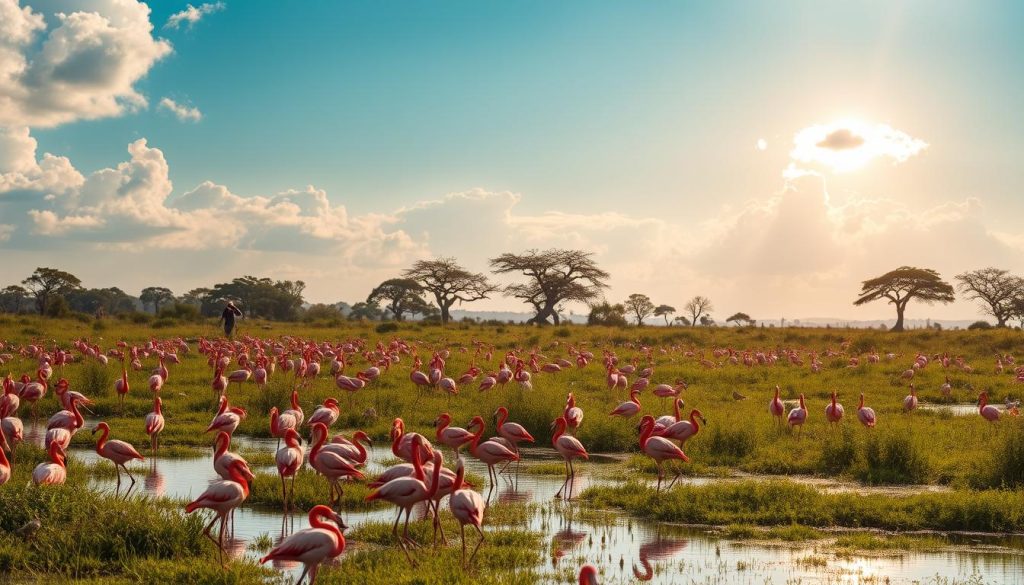
Lake Nakuru National Park is a key spot for birdwatching. It’s known for its unique features and conservation efforts. The park was first a bird sanctuary, showing its importance for birds.
UNESCO World Heritage Status
The park is a UNESCO World Heritage Site. This honor highlights its cultural and natural value. It shows why we must protect its ecosystem for its birdlife.
“The recognition of Lake Nakuru National Park as a UNESCO World Heritage Site is a testament to its outstanding universal value, which includes its rich biodiversity and unique natural features.”
Ecological Importance
Lake Nakuru National Park is very important ecologically. It has different habitats like the lake, woodlands, and grasslands. These support over 400 bird species.
| Habitat | Bird Species Supported |
|---|---|
| Lake | Waterbirds, Flamingos |
| Woodlands | Raptors, Forest Birds |
| Grasslands | Grassland Birds, Raptors |
Nakuru’s Diverse Bird Population
Nakuru is famous for its wide variety of birds. Over 400 species live in the national park. This variety comes from the park’s different habitats.
Species Diversity Statistics
The park has a big share of Kenya’s bird species. The exact number changes, but it’s always high. Both local and migratory birds are found here.
- Over 400 bird species recorded
- Significant populations of Lesser and Greater Flamingos
- A variety of raptors and forest birds
Notable Endemic Species
Nakuru is also known for its unique birds found nowhere else. These birds attract birdwatchers. They come to see these special birds.
For those planning to visit Nakuru for birdwatching, knowing the park’s importance and bird diversity is key. This knowledge helps visitors enjoy their trip more.
When is the Best Time of Year to Visit Nakuru for Birdwatching?
Planning a birdwatching trip to Nakuru? Knowing the best time to go is key. Different seasons offer unique chances to see various bird species.
Peak Season: November to April
The peak season for birdwatching in Nakuru is from November to April. The park is full of migratory birds during this time. It’s a lively and exciting place for birdwatching.
Migratory Bird Influx
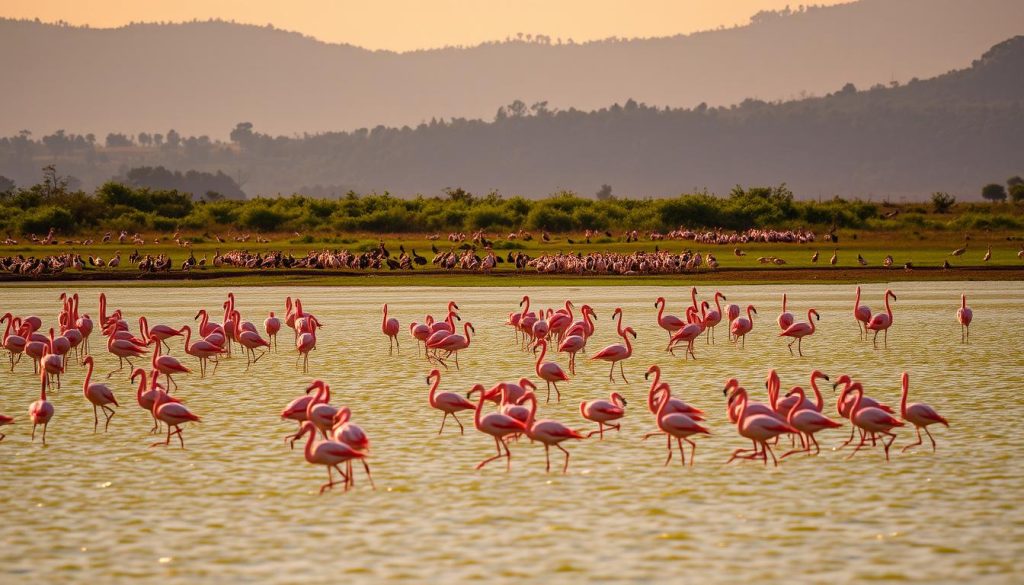
From November to April, Nakuru National Park sees a lot of migratory birds. You can see birds like the Eurasian Curlew and the Greater Flamingo during these months. This adds to the park’s bird diversity.
Optimal Viewing Conditions
The weather in the peak season is great for birdwatching. It’s clear and not too hot. This makes it easier to spot birds and enjoy the trip.
Off-Peak Season: May to October
The off-peak season from May to October also has its perks. There are fewer tourists, making it quieter and more intimate for birdwatching.
Unique Birdwatching Opportunities
In the off-peak season, you’ll see more resident birds. The changing plants also offer new places to watch birds. It’s a good time to see birds without the crowds.
Benefits of Fewer Tourists
The off-peak season is quieter. You can enjoy the park’s peace and focus on birdwatching without distractions.
| Season | Months | Key Features |
|---|---|---|
| Peak Season | November to April | Migratory bird influx, optimal viewing conditions |
| Off-Peak Season | May to October | Unique birdwatching opportunities, fewer tourists |
Knowing the best time to see birds in Nakuru and following the Nakuru birdwatching calendar can make your trip better. Whether you go in the peak or off-peak season, Nakuru National Park is sure to be unforgettable.
Seasonal Bird Migration Patterns in Nakuru
Knowing when birds migrate in Nakuru can make your birdwatching better. Nakuru is a key stop for many birds, offering a variety all year.
Migratory Species and Their Arrival Times
Nakuru is great for watching both migratory and local birds. Its different habitats attract many species, perfect for birdwatching.
Palearctic Migrants (European and Asian)
Palearctic migrants from Europe and Asia pass through Nakuru. Birds like the Montagu’s Harrier and Pallid Harrier come in October and November. They stay until March or April.
Intra-African Migrants
Intra-African migrants travel within Africa and also visit Nakuru. Birds like the Pink-backed Pelican and White-winged Tern are seen here. They look for food and places to breed.
Resident Bird Species Year-Round
Nakuru also has birds that stay all year. Its varied habitats support many bird species.
Water Birds
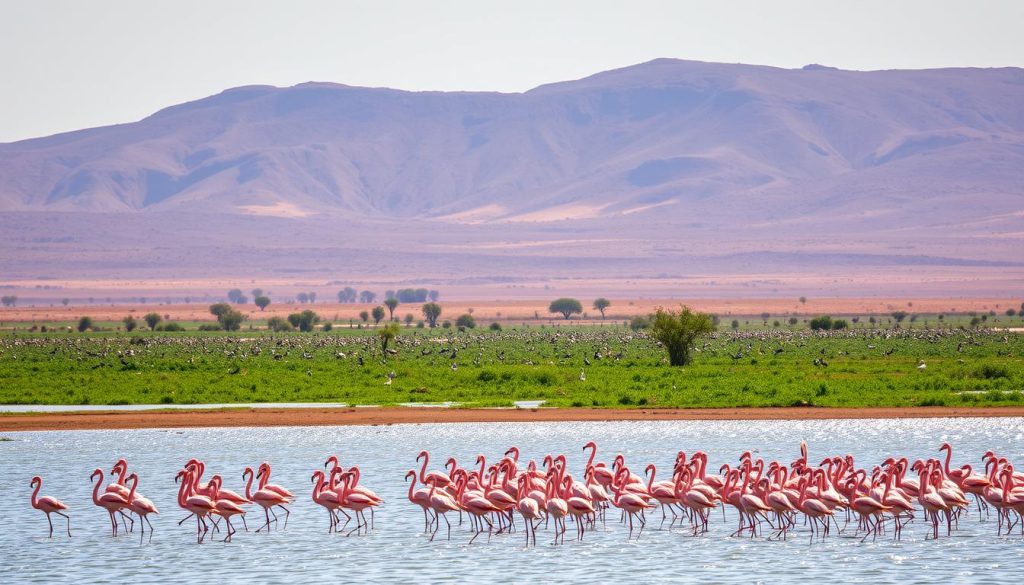
Nakuru’s lakes and wetlands are full of water birds. You’ll see flamingos, pelicans, and herons. The Greater Flamingo and Lesser Flamingo are famous here.
Woodland and Savanna Species
The woodlands and savannas around the lakes are home to many birds. Look out for raptors, kingfishers, and passerines. Birds like the African Fish Eagle and Lilac-breasted Roller are common.
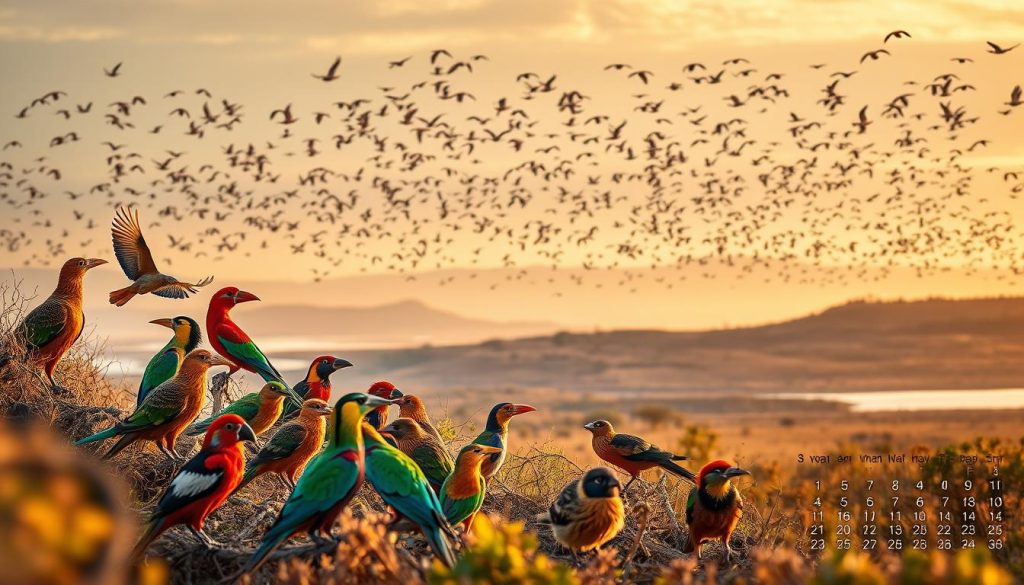
By knowing when and where birds migrate, you can plan a great birdwatching trip to Nakuru. It will surely be a memorable experience.
Weather Conditions and Their Impact on Birdwatching
Nakuru’s climate greatly affects birdwatching, with dry and wet seasons offering unique chances. Knowing these weather patterns is crucial for a great birdwatching trip in Lake Nakuru National Park.
Dry Season Birdwatching
The dry seasons, from January to February and June to September, have dry landscapes and clear skies. These conditions are great for birdwatchers.
Visibility and Photography Conditions
During the dry seasons, the lack of dense vegetation and clear skies improve visibility. This makes it easier to spot birds. The clear light also enhances photo quality, allowing for stunning bird photos against the dry landscape.
Bird Concentration Around Water Sources
In the dry seasons, birds gather around water sources like Lake Nakuru. This makes it easier to see many species in one area. Look out for both common and rare species as they gather.
Wet Season Birdwatching
The wet seasons, from March to May and October to December, bring lush landscapes and more bird breeding. While rain can be a challenge, it also offers unique birdwatching chances.
Lush Landscapes and Breeding Activity
The wet seasons turn the landscape into a vibrant, lush environment. Many bird species are more active due to breeding. The foliage can make birds harder to spot, but it also provides more resources and habitats.
Navigating Rainy Conditions
The rain can make some areas harder to reach, but it also creates temporary water bodies. These attract birds that might not be seen in the dry seasons. Be prepared for changing weather and use the right gear to protect your equipment and clothes.
By understanding and adapting to Nakuru’s weather, you can greatly improve your birdwatching experience. Whether you like the dry seasons for clarity and bird concentration or the wet seasons for lush landscapes and breeding, Nakuru offers a diverse and rewarding birdwatching experience all year round.
Prime Birdwatching Locations in Nakuru
Nakuru is a paradise for bird lovers. It has many spots where you can see a lot of birds. These places are full of different bird species.
Lake Nakuru Shoreline
The Lake Nakuru shoreline is a top spot for birdwatching. It offers stunning views and many bird species. Birds from all over come here.
Best Viewing Points
There are special spots along the shoreline for birdwatching. These places have everything you need for a great birdwatching trip.
- Main Gate Viewing Point: Offers a panoramic view of the lake and surrounding areas.
- Western Escarpment: Provides a vantage point to observe birds in their natural habitat.
Accessible Facilities
The shoreline has picnic areas and guided tours. These make it easy for visitors to enjoy birdwatching.
| Facility | Description | Location |
|---|---|---|
| Picnic Areas | Designated areas for relaxation and refreshment. | Main Gate and Western Escarpment |
| Guided Tours | Expert-led tours to enhance the birdwatching experience. | Available at the Main Gate |
Acacia Woodlands
The Acacia woodlands in Lake Nakuru National Park are great for birdwatching. They are home to many forest bird species.
Forest Bird Specialties
The woodlands have birds that are only found here. You can see many different types of birds, from raptors to songbirds.
The woodlands’ dense canopy provides a sheltered environment for birds, making it an ideal location for spotting a range of species.
Recommended Trails
There are trails in the Acacia woodlands for visitors. These trails are safe and fun to explore.
- Acacia Trail: A moderate trail that takes you through the heart of the woodlands.
- Woodland Loop: A shorter trail suitable for families and those looking for a leisurely walk.
Baboon Cliff and Out-of-Park Locations
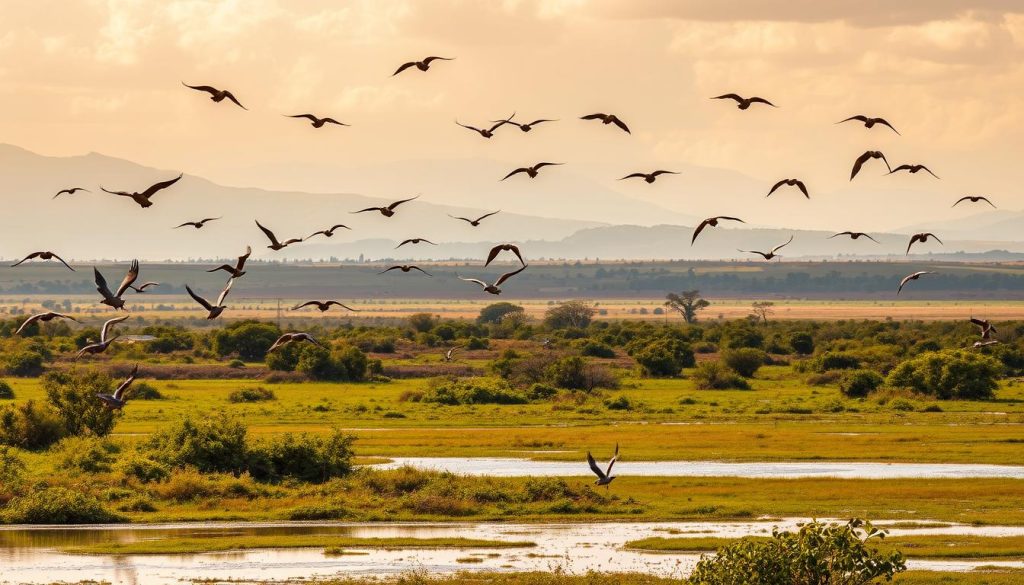
Baboon Cliff and other out-of-park locations offer great views. They are less crowded, making for a peaceful birdwatching experience.
Panoramic Viewing Advantages
The high points at Baboon Cliff and other locations give you a wide view. This makes it easier to see birds.
Lesser-Known Birdwatching Spots
Exploring out-of-park locations can lead to hidden birdwatching spots. These areas are perfect for those who want to explore off the beaten path.
Notable Bird Species to Spot Throughout the Year
Nakuru National Park is a paradise for bird lovers. It’s home to a wide variety of birds all year round. The park’s different landscapes and habitats make it perfect for Nakuru birdwatching tours. Whether you’re new to birdwatching or a seasoned enthusiast, Nakuru has something for everyone.
Flamingos and Water Birds
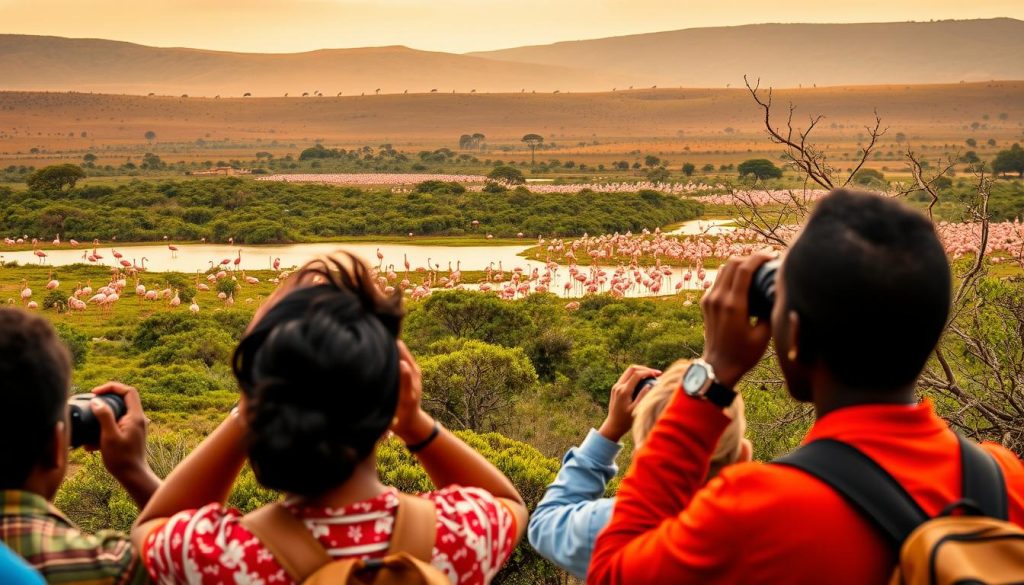
The park is famous for its large flamingo populations. You can see both Lesser and Greater Flamingos here. Their numbers change throughout the year.
Lesser and Greater Flamingo Populations
The Lesser Flamingo is more common, with huge gatherings at certain times. Greater Flamingos are less common but just as stunning with their bright pink feathers.
Pelicans, Storks, and Herons
Nakuru is also home to many other water birds. You can see pelicans, storks, and herons wading in the shallows or roosting in trees.
Raptors and Forest Birds
Nakuru’s diverse habitats support many raptors and forest birds. From eagles and vultures to woodpeckers and songbirds, the park is a treasure trove of birdlife.
Eagles and Vultures
The park is home to several species of eagles and vultures. You can see the majestic African Fish Eagle soaring overhead or perched in trees.
Woodpeckers and Songbirds
Nakuru’s forests are filled with the sounds of woodpeckers and songbirds. Look out for the Nubian Woodpecker and the Black-backed Puffback among many others.
Rare and Endangered Species
Nakuru is also home to several rare and endangered bird species. Conservation efforts are in place to protect these birds and their habitats.
Conservation Status
Some rare species in Nakuru include the endangered Grey Crowned Crane. Protecting these birds and their habitats is crucial.
Spotting Techniques
To spot rare species, be patient and know their habitats and behaviors. Joining a guided Nakuru birdwatching tour can greatly enhance your experience.
| Bird Species | Habitat | Conservation Status |
|---|---|---|
| Lesser Flamingo | Lake Nakuru | Near Threatened |
| African Fish Eagle | Rivers and Lakes | Least Concern |
| Grey Crowned Crane | Grasslands and Wetlands | Endangered |
Essential Birdwatching Equipment and Photography Tips
The right equipment is key for a great Nakuru birdwatching trip. It makes your experience better and helps you see more birds.
Optical Equipment Recommendations
Optical gear is vital for birdwatching. It lets you see birds up close without scaring them away.
Optical Equipment Recommendations
Binoculars are a must-have for any birdwatcher. Look for a pair that is waterproof and has good magnification (7x or 8x) for clear viewing. A spotting scope can also be useful for observing birds at a distance.
- Choose binoculars with a wide field of view for easier tracking.
- A tripod can stabilize your spotting scope for clearer images.
Field Guides and Apps
A good field guide or birding app can help you identify species and learn about their habits. Look for guides that cover the region’s avifauna comprehensively.
“A field guide is not just a book; it’s your gateway to understanding the diverse birdlife in Nakuru.” – Expert Birdwatcher
Clothing and Accessories for Various Seasons
Nakuru’s climate changes, and so should your clothes. Wearing the right clothes makes birdwatching more comfortable.
Wet Season Gear
During the wet season, waterproof clothing and sturdy boots are essential. They keep you dry and comfortable while trekking through muddy terrains.
Dry Season Essentials
In the dry season, lightweight, breathable clothing and a hat protect you from the sun. Don’t forget sunscreen and sunglasses for extra protection.
Bird Photography in Nakuru
Photographing Nakuru’s birds can be rewarding. Knowing your equipment and the environment helps you take amazing photos.
Camera Settings for Different Conditions
Adjusting your camera settings for the lighting is key. For example, a faster shutter speed is good for capturing birds in flight.
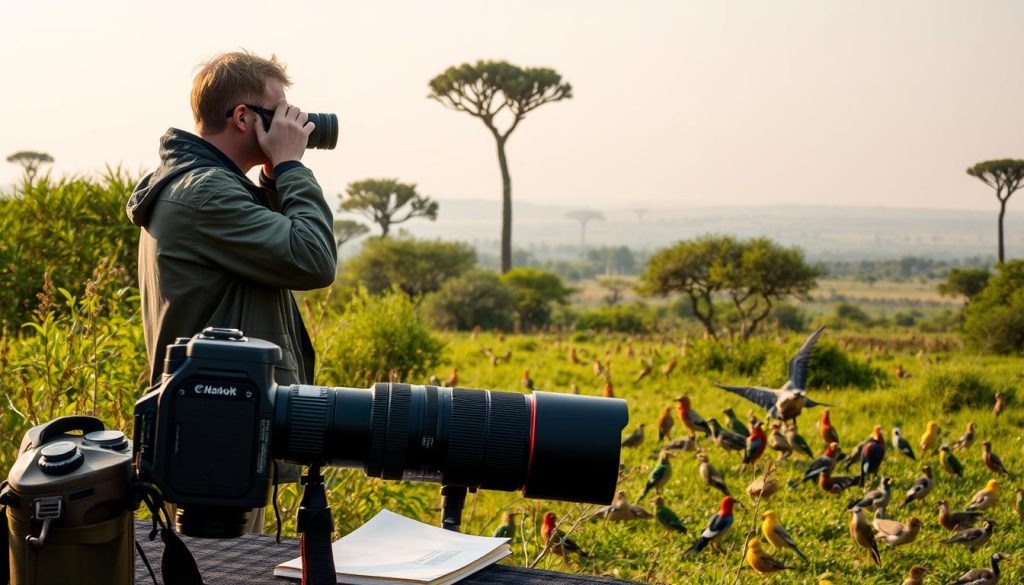
Practicing ethical wildlife photography is crucial. Keep a safe distance, avoid flash, and never bait or disturb birds for a shot.
- Respect the birds’ natural habitat.
- Be patient and prepared for the perfect shot.
Planning Your Nakuru Birdwatching Trip
To enjoy your birdwatching trip to Nakuru, plan ahead. Think about where to stay, how to get around, and what tours to take. A good plan lets you focus on the amazing birds of Lake Nakuru National Park.
Accommodation Options Near Prime Birdwatching Areas
Nakuru has many places to stay, for all budgets and tastes. You can choose to stay inside the park or in Nakuru town.
In-Park Lodging
Staying in the park means you’re close to the best birdwatching spots. You can pick from:
- Lake Nakuru Sopa Lodge
- Mawingo Safari Lodge
- Lake Nakuru Lodge
These lodges offer cozy rooms and sometimes guided tours.
Nakuru Town Accommodations
For a more affordable stay, Nakuru town has many hotels and lodges. Some top picks are:
- The Barn Hotel
- Meridian Court Hotel
Staying in town is cheaper and still close to the park.
Transportation and Access to Birdwatching Sites
Getting to Lake Nakuru National Park is easy. You have several ways to travel.
Park Entry and Fees
Before you enter the park, you’ll need to pay the entrance fees. The cost depends on your nationality and how you enter.
Getting Around Within the Park
Inside the park, you can drive yourself, hire a safari vehicle, or join a guided tour. The park’s roads are good, making it easy to get around.
| Transportation Method | Cost | Advantages |
|---|---|---|
| Private Vehicle | Fuel costs | Flexibility, ability to create your own itinerary |
| Safari Vehicle Hire | Varies by provider | Local knowledge, guided experience |
| Guided Tours | Varies by tour operator | Expert guides, comprehensive experience |
Guided Tours vs. Self-Guided Experiences
Choosing between a guided tour and going on your own depends on what you like and what you want to see.
Recommended Tour Operators
Some top tour operators in Nakuru are:
- Safari Guides Kenya
- Nakuru Wildlife Safaris
They offer skilled guides and well-organized tours.
Self-Guided Birdwatching Tips
If you like to explore by yourself, here are some tips:
- Bring a detailed field guide to Kenyan birds.
- Use binoculars and a spotting scope for better views.
- Be quiet and patient to avoid scaring birds.
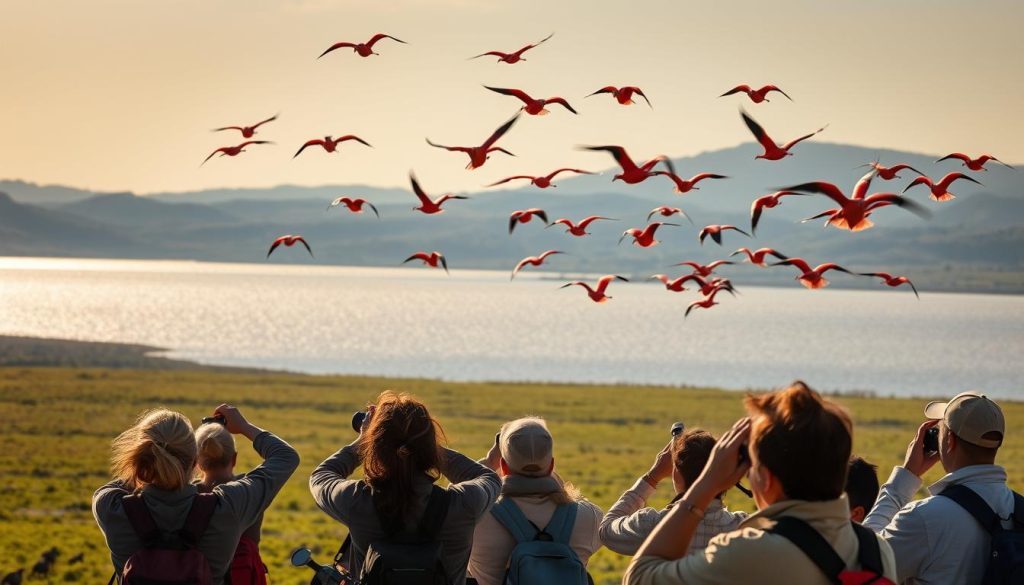
Conservation Efforts and Ethical Birdwatching in Nakuru
Conservation is key to keeping Nakuru a top spot for birdwatching. The area’s unique ecosystem is home to many bird species. Ongoing conservation efforts are vital to protect this biodiversity.
Current Conservation Challenges
Nakuru faces challenges that affect its bird population. Two big issues are water level changes and protecting habitats.
Water Level Fluctuations
The water levels in Lake Nakuru impact bird habitats. Fluctuations in water levels change food and nesting sites for birds like flamingos.
Habitat Preservation Efforts
There are efforts to keep natural habitats around Lake Nakuru National Park safe. These include protecting acacia woodlands and other key habitats for birds.
| Conservation Challenge | Impact on Birdlife | Preservation Efforts |
|---|---|---|
| Water Level Fluctuations | Affects food availability and nesting sites | Monitoring and management of water levels |
| Habitat Destruction | Reduces biodiversity and species habitats | Reforestation and habitat restoration programs |
How Visitors Can Contribute to Bird Conservation
Visitors to Nakuru can help with bird conservation. They can do this by practicing responsible tourism and joining citizen science projects.
Responsible Tourism Practices
Choosing eco-friendly accommodations and guided tours helps. These practices reduce environmental impact. Visitors should stay on paths, not disturb birds, and support local conservation.
Citizen Science Opportunities
Visitors can help by joining citizen science projects. These projects let people report bird sightings and help with bird counts. This helps researchers protect bird populations.
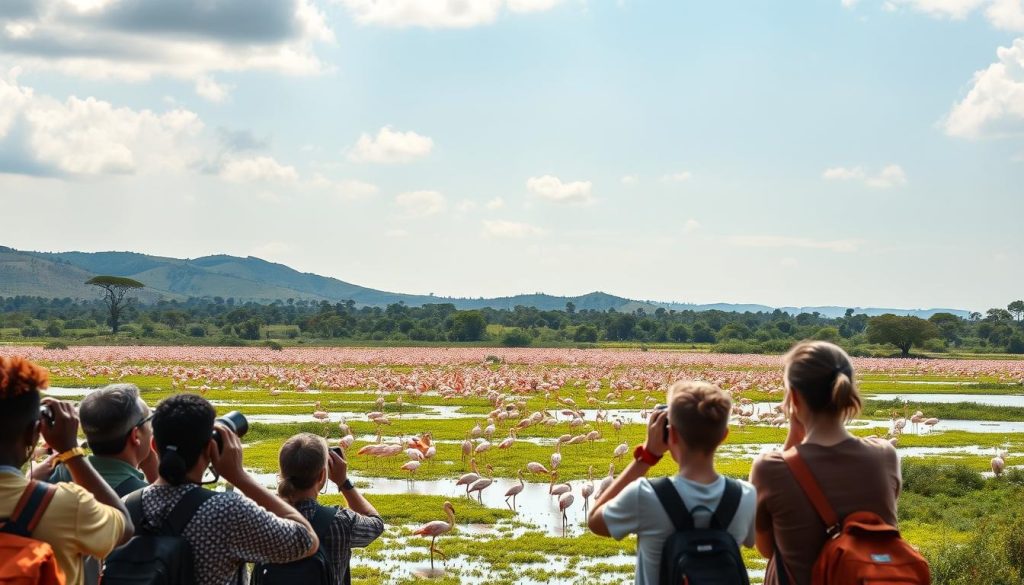
By practicing responsible tourism and joining citizen science, you help protect Nakuru’s birdlife. This ensures the area remains a birdwatcher’s paradise.
Conclusion
Nakuru is a top spot for birdwatching, offering a unique and rewarding experience. Knowing the Nakuru birdwatching season helps you plan better. This way, you can see a wide variety of birds.
Whether you go during the busy season or the quiet times, Nakuru’s birds are amazing. So, when’s the best time to see them? It really depends on what you want to see. Nakuru’s different habitats and conservation make it a paradise for bird lovers.
When you plan your trip, use the tips from this article. They’ll help you enjoy your When to Visit Nakuru for the Best Birdwatching adventure. With good planning and knowledge, you’ll make memories that last a lifetime in Nakuru.