Top Must-See Attractions in Thimphu, Bhutan
Imagine a place where old traditions meet modern life, creating a unique and lively scene. Welcome to Thimphu, the capital of Bhutan. It’s famous for its must-see attractions in Thimphu like stunning monasteries and bustling markets. This city, nestled in the Himalayas at about 7,000 feet, became the capital in 1961. It offers a mix of history, spirituality, and natural beauty.
In this article, we’ll show you the best of Bhutan’s attractions. We’ll focus on the key sights of Thimphu sightseeing and the amazing experiences you can have. You’ll learn about the historical value of Bhutan travel spots like Tashichho Dzong. You’ll also see the lively markets and the peaceful monasteries.
Introduction to Thimphu
Thimphu is the heart of Bhutan, blending history and charm. It started as a farming valley in the 13th century. In 1961, it became the capital under King Jigme Dorji Wangchuck. Today, it attracts tourists with its mix of old and new.
Exploring Thimphu, you’ll see history and lively local scenes. Highlights include the Buddha Dordenma statue and the National Folk Heritage Museum. These spots show Bhutan’s past and present.
Thimphu sits at about 2,320 meters above sea level. It’s a memorable place to visit. People often fly in or drive from Phuentsholing, a six-hour trip. The city’s unique buildings and no traffic lights make it an exciting place to explore.
What are the must-see attractions in Thimphu, Bhutan?
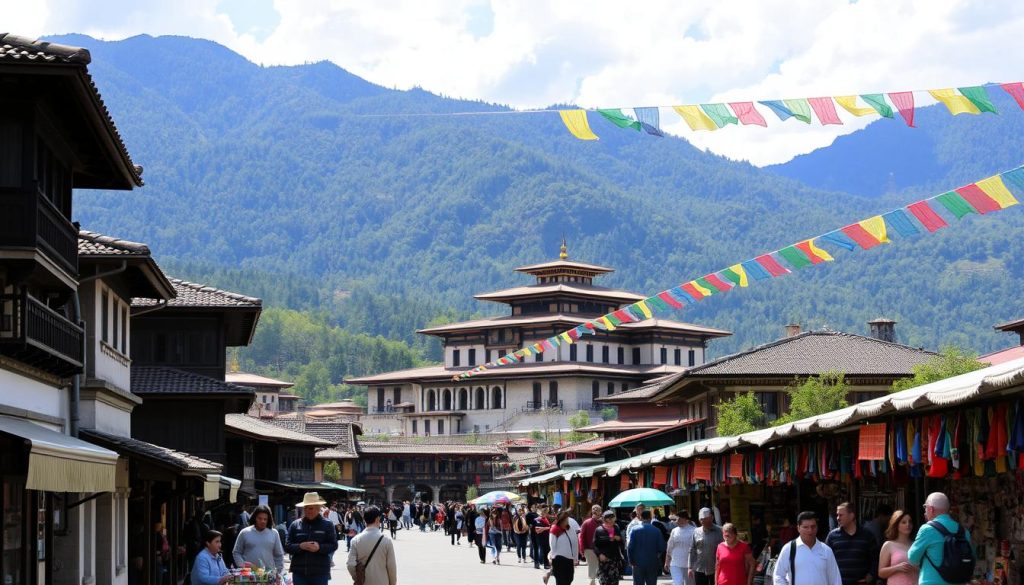
Thimphu is a city full of attractions that show off Bhutan’s culture and beauty. You’ll find many Thimphu attractions that highlight the country’s rich heritage and modern charm. The Tashichho Dzong is a key landmark. It’s a religious center and the king’s office.
The National Memorial Chorten is a symbol of peace and reflection. It attracts both locals and tourists. The Centenary Farmers’ Market, or Weekend Market, offers a real look at Thimphu’s daily life. You can find fresh produce and handcrafted goods there.
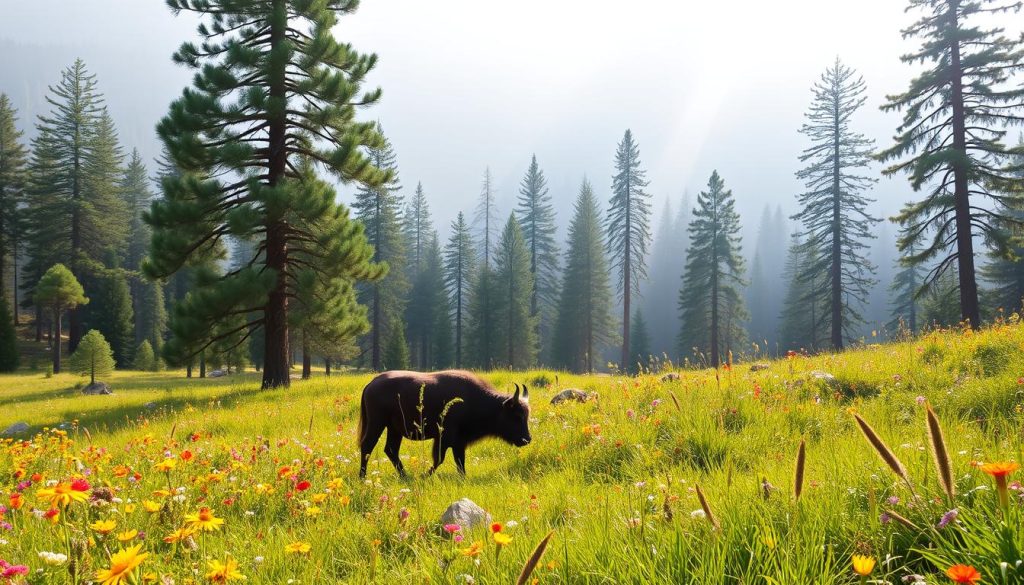
Nature enthusiasts should visit the Motithang Takin Preserve. It’s home to Bhutan’s national animal and supports local conservation. Whether you’re interested in culture or stunning views, Thimphu has something for everyone.
| Attraction | Description | Location |
|---|---|---|
| Tashichho Dzong | Administrative center and religious site of Bhutan. | Thimphu |
| National Memorial Chorten | A prominent Chorten built in memory of the third king of Bhutan. | Thimphu |
| Centenary Farmers’ Market | A vibrant weekend market showcasing local products and crafts. | Thimphu |
| Motithang Takin Preserve | Home to the national animal and various conservation efforts. | Thimphu |
| Buddha Dordenma | One of the largest Buddha statues in the world. | Thimphu |
Tashichho Dzong: The Fortress of Glorious Religion
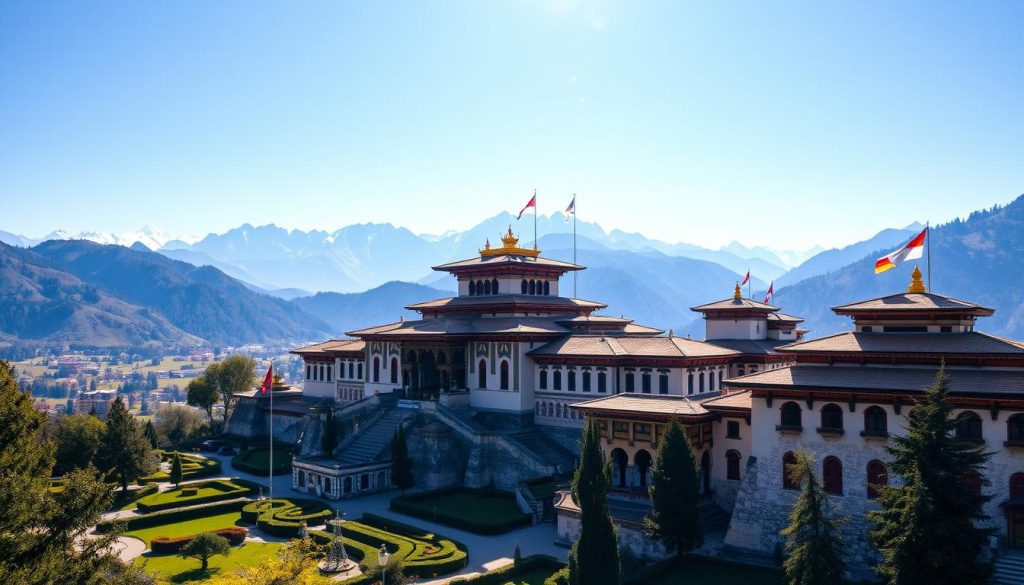
Tashichho Dzong is a key landmark in Thimphu, showing off Bhutan’s rich history and culture. It was first built in 1216 and has seen many changes, thanks to Shabdrung Ngawang Namgyal in 1641. Today, it’s both a spiritual center and the government’s seat since 1968, sitting on Thimphu’s northern edge.
Historical Significance of Tashichho Dzong
Tashichho Dzong has been crucial in Bhutan’s history, helping unite and govern the country. It has faced many challenges, like fires and earthquakes, but still stands strong. It’s a place of leadership and spiritual guidance, surrounded by nature’s beauty.
Architectural Marvels and Features
This architectural wonder has thirty temples, chapels, and shrines, with amazing designs and craftsmanship. Its whitewashed walls and three-storey towers are eye-catching. Visitors can explore different parts of the fort, entering through two gateways.
The courtyard buzzes with life during the Thimphu Tshechu festival. It’s a colorful celebration filled with tradition.
National Memorial Chorten: A Symbol of Peace
The National Memorial Chorten is a key landmark in Thimphu. It shows Bhutan’s rich culture and spiritual beliefs. Built in 1974, it honors the third King of Bhutan, Jigme Dorji Wangchuck.
Many people visit this site. The elderly are very active here, practicing their faith. This creates a peaceful and devoted atmosphere.
Importance of the Memorial Chorten in Bhutanese Culture
The National Memorial Chorten is more than a building. It stands for peace and spirituality in Bhutan. Thousands come here every week, many of them elderly women in traditional clothes.
They do spiritual activities like circumnambulating the chorten and spinning prayer wheels. This deepens the cultural experience for everyone. The joy of sharing photos with these people brings visitors and locals closer together.
What to Expect During Your Visit
Visiting the National Memorial Chorten is a mix of spiritual growth and cultural learning. The place is lively, with flowers blooming in spring and clear skies in autumn.
Respect local traditions by spinning prayer wheels clockwise and lighting butter lamps. The chorten is surrounded by beautiful gardens and prayer flags. This makes it a peaceful place for reflection.
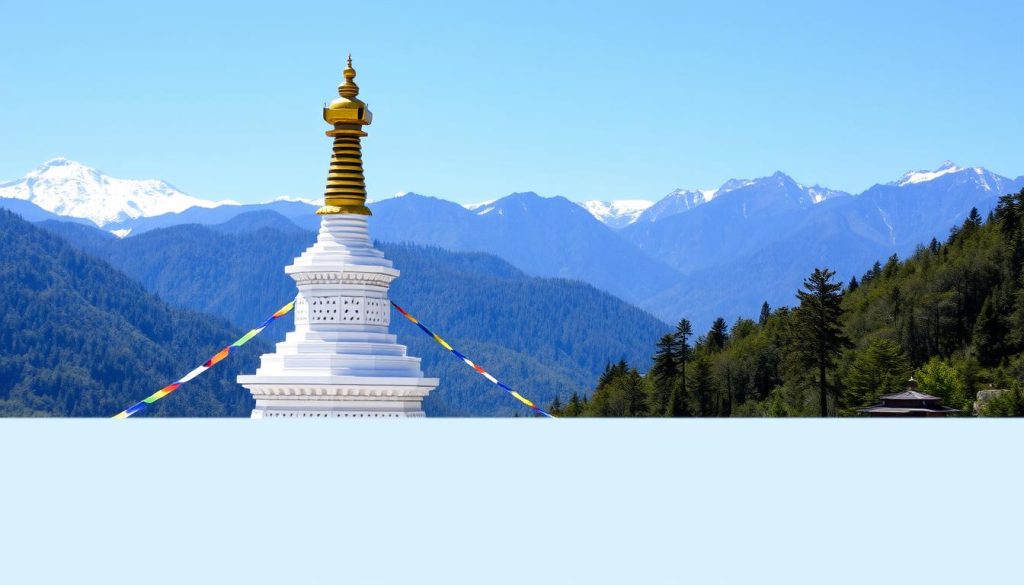
There are many attractions near the chorten. You can visit Tashichho Dzong, the Craft Bazaar, or the Bhutan Textile Museum.
Guided tours, meditation sessions, and art workshops are available. These activities make your visit to the National Memorial Chorten unforgettable.
Buddha Dordenma: A Majestic Icon
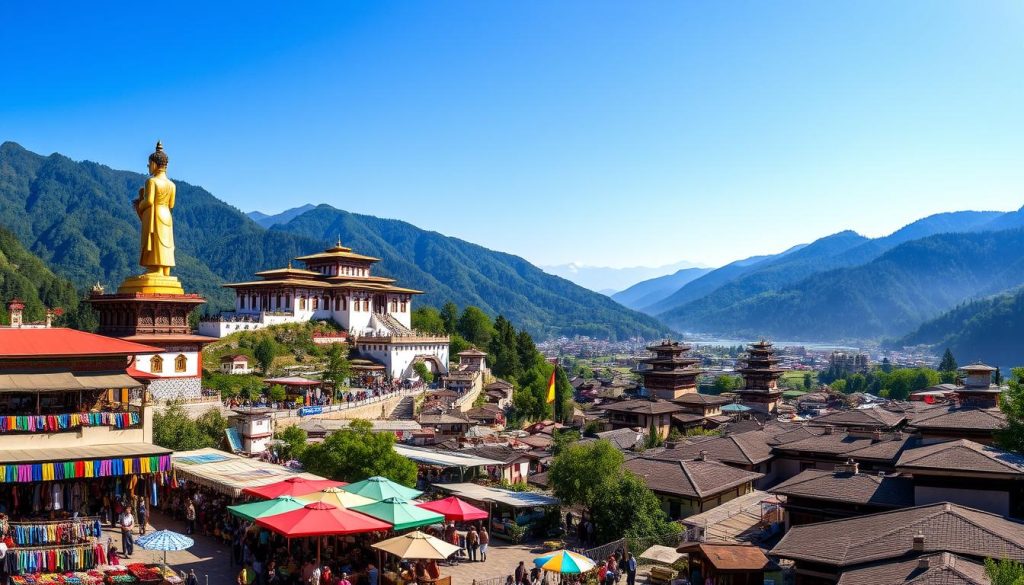
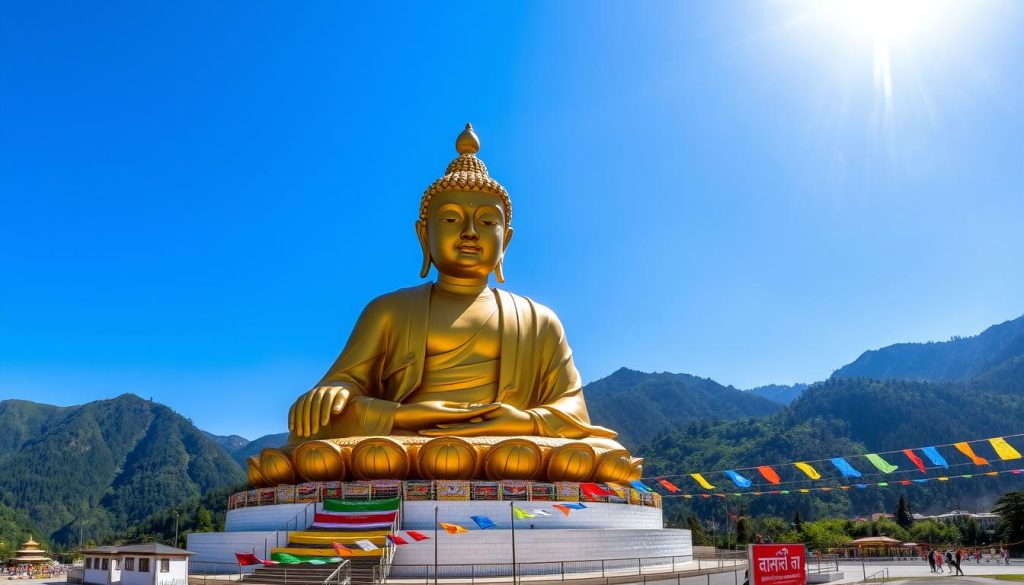
The Buddha Dordenma statue is a must-see in Thimphu, Bhutan. It’s the tallest sitting Buddha statue in the world, standing at 54 meters. It took nine years to build, from 2006 to 2015.
It’s made from over 125,000 bronze Buddha statues, all gilded in gold. This statue is a sight to behold for anyone visiting Thimphu or exploring Bhutan.
The Construction and Size of Buddha Dordenma
The construction of the Buddha Dordenma started in 2006. It was built on a 943-acre Nature Park. It was finished in 2015, showcasing incredible craftsmanship.
It’s meant to fulfill ancient prophecies linked to Guru Rinpoche. Below the statue, there’s a large meditation hall. It’s a peaceful place for reflection and spiritual practice.
Spiritual and Cultural Significance
The Buddha Dordenma is more than just a statue. It represents peace and safety for Bhutan. The smaller statues inside bring blessings of peace, prosperity, and harmony.
It’s located at Buddha Point, offering amazing views of Thimphu. It’s a favorite spot for tourists looking for spiritual experiences and beautiful landscapes.
Visiting the National Textile Museum
The National Textile Museum is a must-see for anyone interested in Bhutan. It showcases the country’s vibrant weaving traditions. Queen Mother Ashi Sangay Choden Wangchuk founded it in 2001. The museum protects Bhutanese craftsmanship.
Visitors can see a wide range of textiles, from ancient to modern. These pieces highlight the artistry in traditional clothing. You’ll learn about the weaving techniques passed down through generations.
As you explore, you’ll see the Royal Family’s attire and the wedding clothes of the 4th Dragon King. These artifacts offer insights into Bhutan’s royal history.
Your visit can be complemented by a few key details:
- Hours of operation: Open from 9 am to 5 pm, Monday to Saturday, and from 10 am to 3 pm on Sundays.
- Entry fee: 250 Nu.
- Nearby attractions: National Folk Heritage Museum, Jigme Dorji National Park, and Choki Traditional Art School.
Visiting the National Textile Museum deepens your understanding of Thimphu’s culture. It connects you with Bhutan’s vibrant cultural tapestry. This experience is key to appreciating textiles in Bhutanese culture.
For a more immersive journey, consider tour packages. They often include visits to other notable sites. This ensures a thorough exploration of Bhutan’s rich heritage.

Changangkha Lhakhang: A Pillar of Tradition
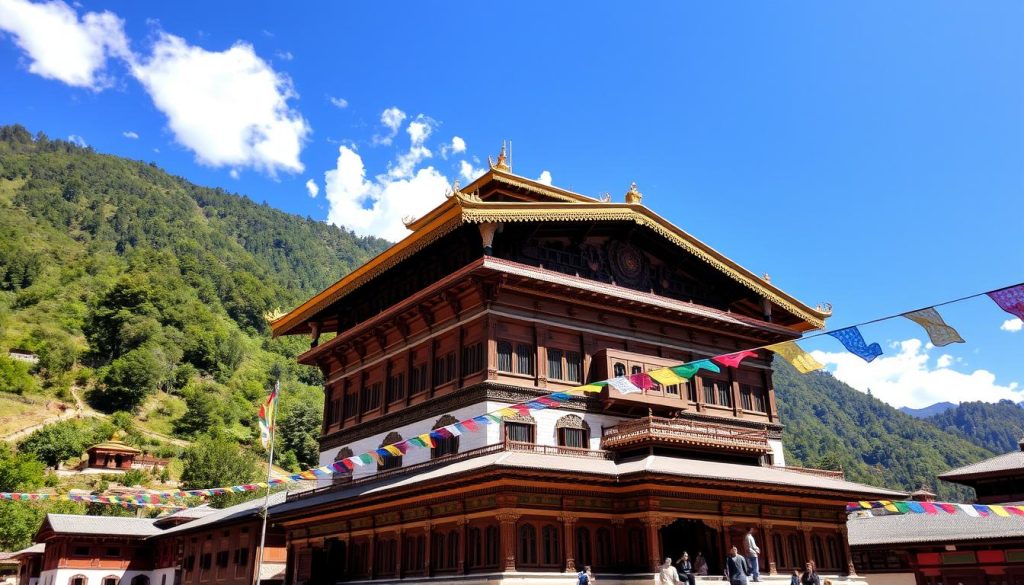
Changangkha Lhakhang is a key part of Bhutan’s tradition. It’s a 12th-century temple in Thimphu, offering a peaceful space filled with history and beauty. It’s a place where locals and tourists alike can experience the local customs and spiritual practices.
Exploring the 12th-Century Temple
The temple’s architecture is a marvel, showing off the skill of Bhutanese craftsmen. Inside, you’ll see prayer wheels, wood carvings, and sacred relics. These elements give a peek into Bhutan’s artistic heritage and the temple’s spiritual value.
Experiences for Pilgrims and Tourists
Visitors to Changangkha Lhakhang can enjoy unique experiences. Watching monks perform rituals helps you understand Tibetan Buddhism in Bhutan. The annual festival is a highlight, with cultural dances and colorful costumes. It’s a time when locals and visitors come together, celebrating their shared traditions.
| Feature | Description |
|---|---|
| Location | Perched on a ridge above Thimphu |
| Established | 12th Century |
| Architectural Style | Traditional Bhutanese |
| Main Attractions | Prayer wheels, Buddhist relics |
| Cultural Events | Annual festival with traditional dances |
Weekend Market: A Local Experience
The Weekend Market in Thimphu gives you a real look at local life and culture. It’s open from Thursday to Sunday. Here, you’ll find stalls with fresh produce, spices, dried meats, and traditional crafts.
It’s a lively place where you can meet friendly vendors and other travelers. This makes it a must-see for anyone visiting Bhutan.
Some of the best things to see at the Weekend Market are:
- Thimphu local foods: Try momos (dumplings) and ema datshi (chili cheese) for a taste of Bhutan.
- Handcrafted goods: Find unique crafts like colorful textiles and intricate woodwork. They make great souvenirs.
- Spice selection: Explore a wide range of spices that add flavor to your cooking.
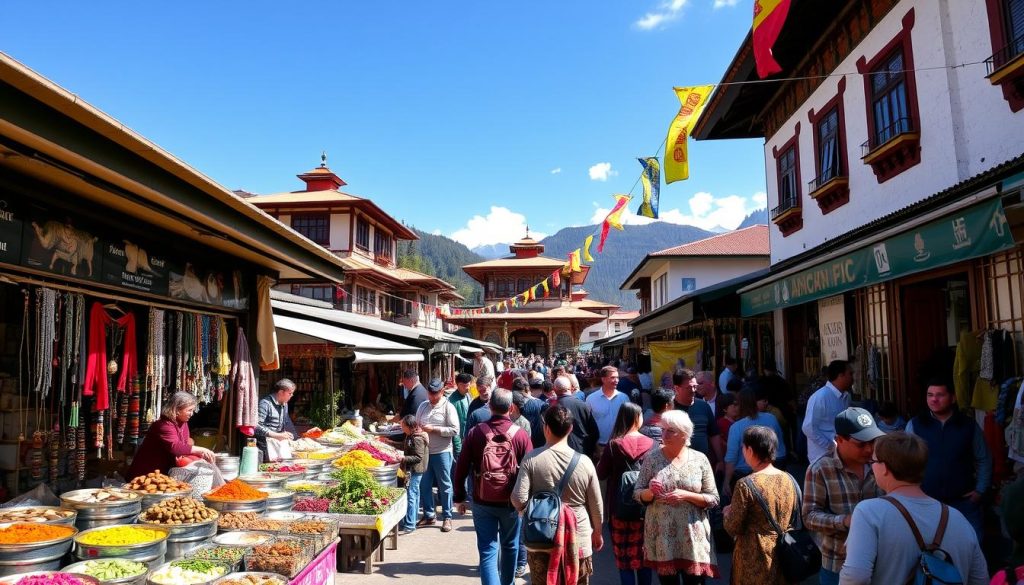
The Weekend Market is the heart of Thimphu. Walking through the stalls, you see locals bargaining and sharing. It’s more than a place to shop; it’s a way to experience Bhutan’s culture.
You’ll leave with more than just items. You’ll have memories of friendship and adventure.
Discovering Motithang Takin Preserve
The Motithang Takin Preserve is a special place dedicated to Bhutan’s national animal, the Takin. It’s located in the Motithang district of Thimphu. This area is not just a home for these unique creatures but also a place for visitors to learn. The preserve covers 8.4 acres and plays a big role in protecting Bhutan’s wildlife.
The National Animal of Bhutan: Takin
The Takin is a mix of a goat and a cow, showing Bhutan’s rich history and myths. This species is found in Bhutan, India, and China. It faces threats like inbreeding and losing its habitat. Efforts are being made to keep the Takin population safe, including introducing new genetic diversity.
Conservation Efforts and Visitor Information
The Motithang Takin Preserve is open Tuesday through Sunday from 9:00 AM to 4:00 PM. It’s a great place to visit for those interested in Thimphu attractions. The entry fee is about BTN 100 for foreigners and BTN 30 for locals. The best time to visit is late May to late June for the best experience.
| Item | Details |
|---|---|
| Entry Fee | BTN 100 (foreigners), BTN 30 (locals) |
| Operating Days | Tuesday – Sunday |
| Best Visiting Time | Late May to Late June |
| Distance from Paro International Airport | Approximately 50.9 Km |
| Accommodations Nearby |
|
| Activities Available | Birdwatching, hiking, wildlife viewing |
The Motithang Takin Preserve is a key part of Thimphu’s attractions. It combines natural beauty with important conservation work. Visitors can enjoy a peaceful experience while helping to protect Bhutan’s unique wildlife.
Conclusion
Your trip to Thimphu, the capital of Bhutan, will be filled with amazing sights. This city shows off Bhutan’s rich culture and traditions. It’s a key place to visit in your Thimphu travel guide.
Places like the Tashichho Dzong and the National Memorial Chorten offer deep insights. They show the country’s spiritual and historical sides.
Exploring the Buddha Dordenma and Motithang Takin Preserve will deepen your love for Bhutan tourism. With about two lakh visitors each year, Thimphu is a favorite for real experiences. The locals’ warmth and the stunning views make your trip unforgettable.
Every corner of Thimphu reveals the beauty of Bhutan’s heritage. It’s a city that inspires and changes your view of life.