Unveiling Petra’s Hidden Wonders: Explore Secrets
Ever wondered about the secrets of a famous archaeological site? As you get ready to explore Petra, you’ll find a world of history and genius. This ancient city, carved into Jordan’s cliffs, is full of hidden wonders.
These wonders tell the story of the Nabataeans, who made this desert land thrive. You’ll see amazing engineering that turned a tough landscape into a bustling civilization.
Explore Petra’s secrets, like its water systems and new discoveries of tombs and treasures. The Nabataeans built over 50 underground water tanks in Sela. This shows how they adapted to their environment.
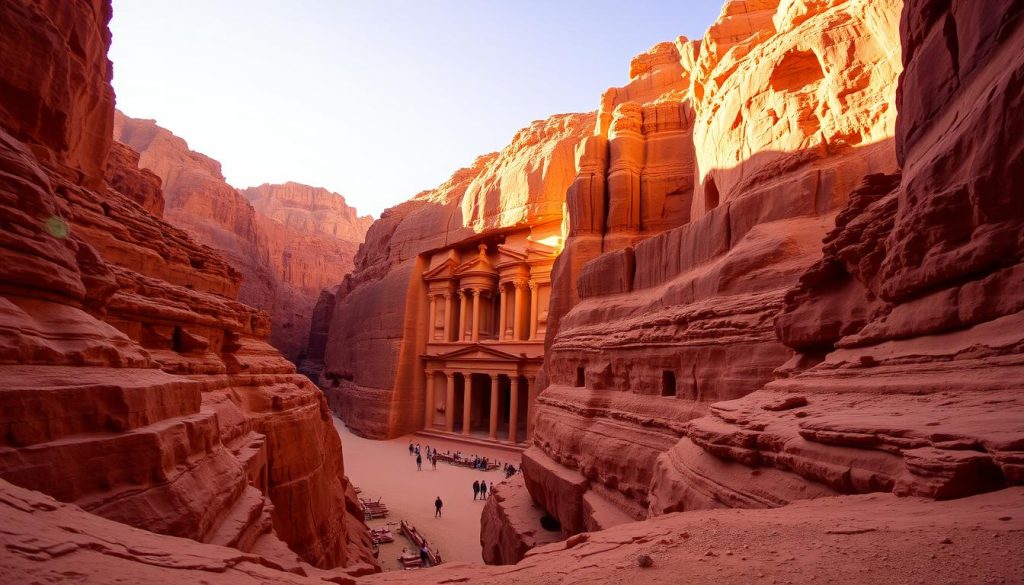
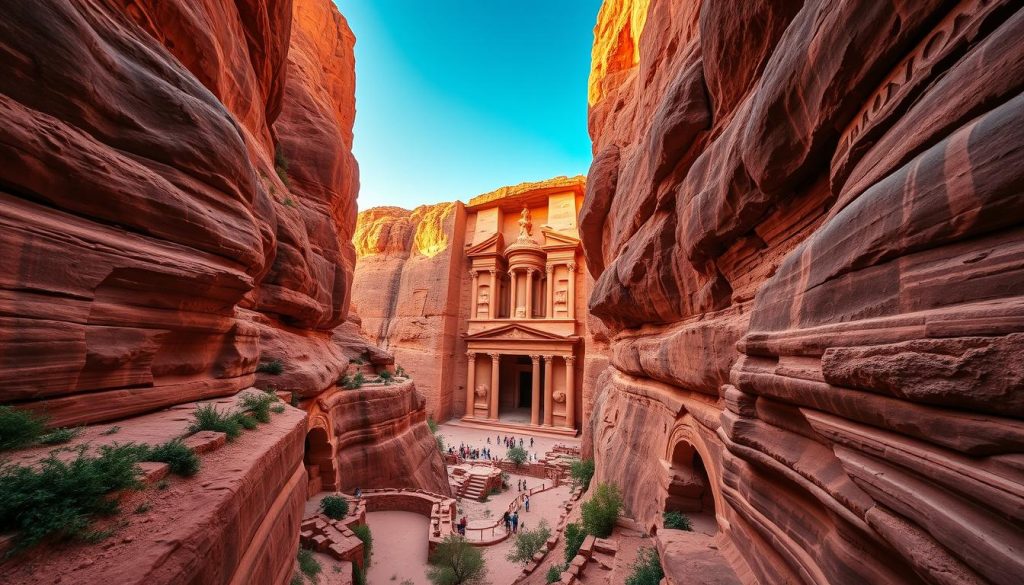
See the famous Al Khazneh, a treasure house full of legends. It’s a key part of Petra’s cultural story.
Introduction to Petra’s Enchanting History
Petra’s story began in the 4th century BC with the Nabataeans. They made it a key spot for trade, linking Arabia, Egypt, and the Mediterranean. Back then, Petra was bustling with life, home to about 20,000 people.
Over time, Petra was ruled by the Romans and Byzantines. This shows how Petra changed and grew. But, a series of earthquakes in the 4th century AD led to its decline. It was forgotten until Swiss explorer Johann Ludwig Burckhardt found it again in 1812.
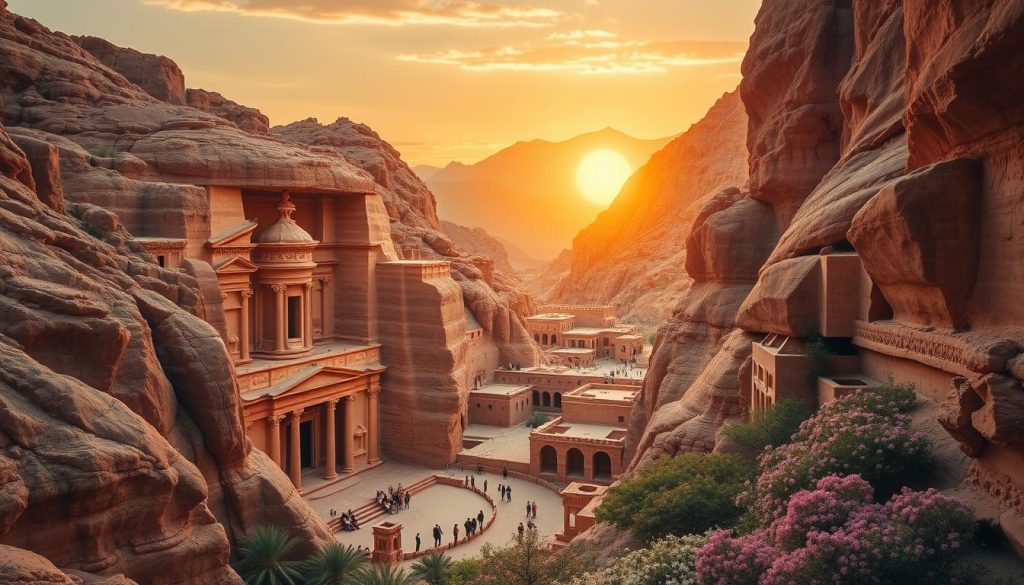
Visiting Petra, you see its stunning architecture and smart water systems. These show the Nabataeans’ cleverness. Petra’s history makes your visit even more special, showing the site’s rich past. For those into Jordan tourism, Petra is a must-see, a window into a lost world.
The Grandeur of Petra’s Architecture
The architecture of Petra is a mix of artistic styles from the Nabataean civilization. Petra was the capital of the Nabatean Empire over 2300 years ago. It has structures carved into rose-red cliffs, like the famous Khaznah (Treasury) and the Monastery (Al-Deir).
The rock-cut structures show the skill of stonework. The sandstone’s colors, shaped by time, make the site visually stunning. Walking through Petra, you see how architecture meets the landscape, blending beauty and function.
The architecture of Petra shows influences from Greek, Roman, and Egyptian styles. This shows how different cultures came together. Each building, from the Street of Facades to the Royal Tombs, tells a story of the Nabataeans’ art and society.
The Nabateans also had a smart water system with cisterns and channels. This allowed gardens to grow in the desert. Their architecture and engineering show their ability to thrive in harsh conditions.
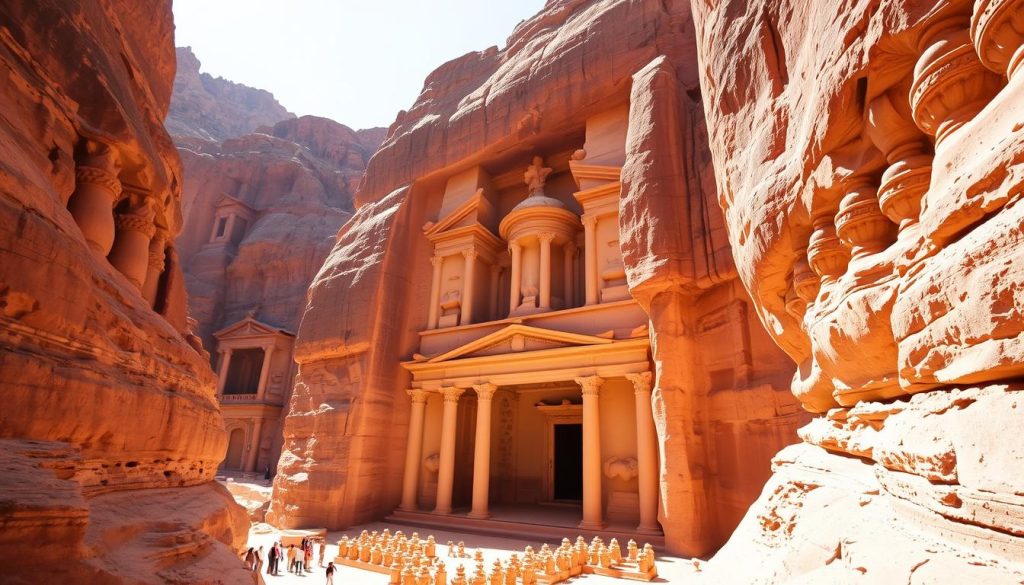
Visiting Petra, a UNESCO World Heritage Site, is awe-inspiring. Every part of Petra holds secrets in stone. It invites you to explore its rich history.
Petra Hidden Wonders: Discovering the Secrets Beneath
Petra’s history is full of surprises, with new finds revealing its hidden treasures. Recent discoveries have given us a peek into the Nabataean civilization. We now know more about their burial practices and cultural importance.
Recent Archaeological Discoveries
Excavations at Petra have made some amazing discoveries. The Khaznah, or Treasury, was thought to be a mausoleum. But, researchers found a hidden tomb with 12 complete skeletons and artifacts, like a ceramic vessel that looks like the Holy Grail.
This tomb was found using advanced tools like remote sensing scans and radar. It gives us a glimpse into the Nabataeans’ customs and daily life.
The Significance of the Khaznah (Treasury)
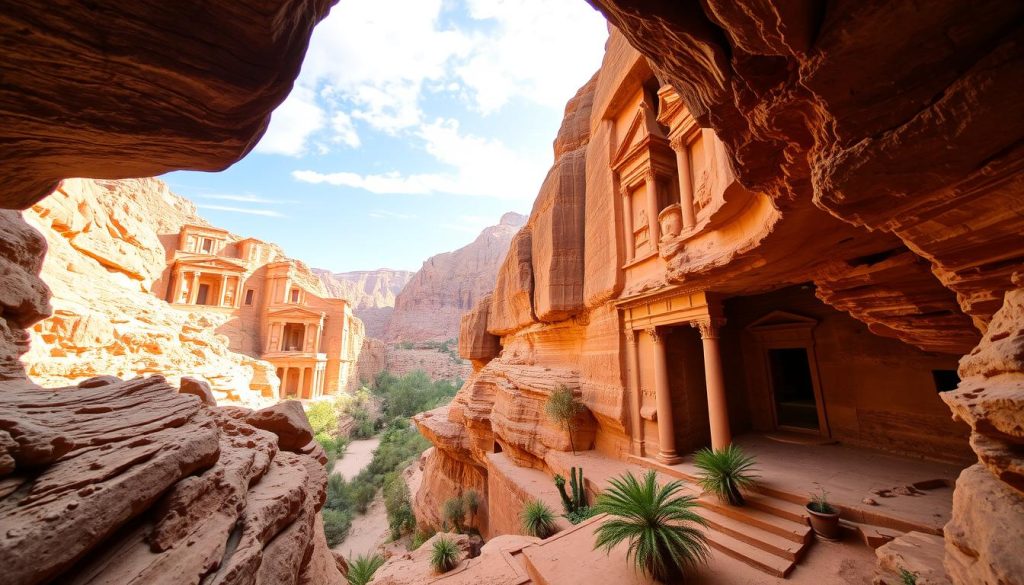
The Khaznah’s true purpose is a topic of debate among scholars. It was once believed to be a mausoleum. But, recent finds suggest it had a more complex role, showing the high status of those buried there.
The Khaznah is more than just beautiful. It’s a symbol of the Nabataean culture that flourished in Petra. It attracts visitors from all over the world.
| Discovery Year | Findings | Significance |
|---|---|---|
| 2003 | Partial skeletons discovered in hidden tombs | Indicated presence of additional burial sites |
| 2023 | 12 complete skeletons and artifacts found | Revealed insights into burial practices and Nabataean life |
| 2023 | Ceramic vessel resembling Holy Grail | Added intrigue and connection to popular culture |
As we keep exploring Petra, we learn more about this ancient city and its people. It’s why Petra is considered one of the New Seven Wonders of the World.
The Nabataeans: Masters of Water and Survival
The Nabataeans were amazing engineers who built a complex water system in Petra’s dry land. Their water management was key to keeping Petra alive and full of life. They used the land’s natural features to make sure everyone had enough water.
Innovative Water Management Techniques
To survive in the desert, the Nabataeans came up with smart ways to handle water. They used:
- Construction of dams and reservoirs: These helped catch and keep rainwater for farming and everyday use.
- Underground cisterns: They built hidden cisterns to store water, reducing loss to evaporation.
- Utilization of aqueducts: They built a system of channels and aqueducts to bring water from far away, showing off their skill.
These clever water management methods helped Petra grow into a bustling trade center. The Nabataeans’ ability to control water flow was a big reason for Petra’s success. It allowed the city to support a population of about 30,000 at its peak.
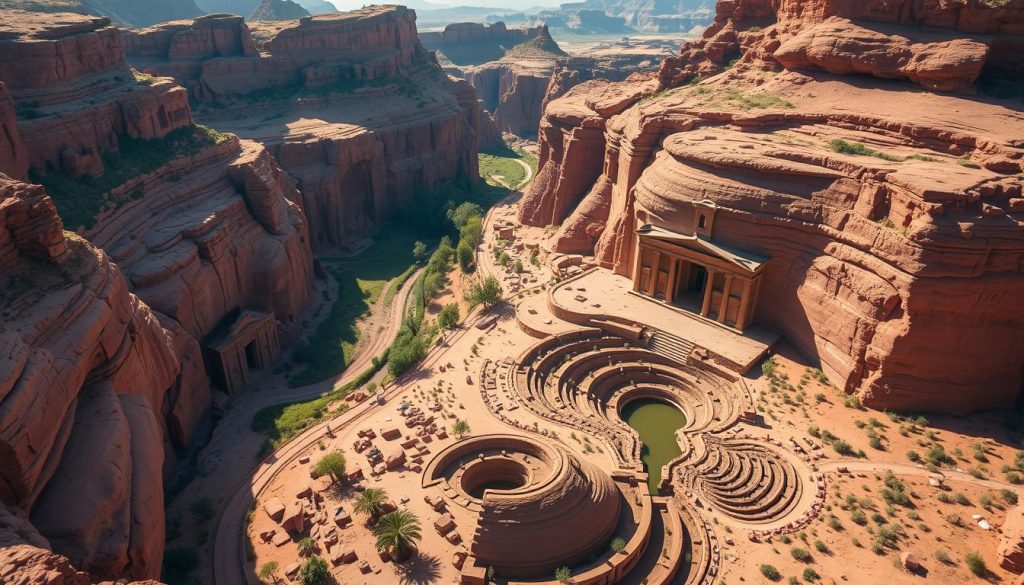
Exploring Petra’s Main Trail
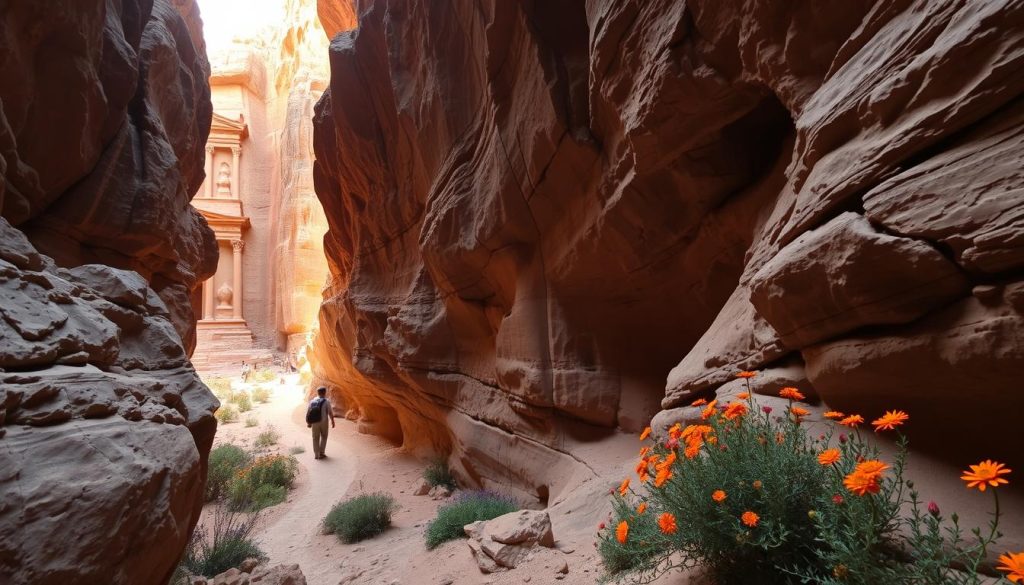
As you start exploring Petra, the Petra main trail takes you on an exciting journey. Begin at the famous Siq, a narrow gorge that opens up to a dramatic entrance. This moment alone fills visitors with wonder, as they look forward to what’s next.
The Siq leads to the Treasury, one of Petra’s most famous sights. Many pause here to see its stunning façade before continuing their journey.
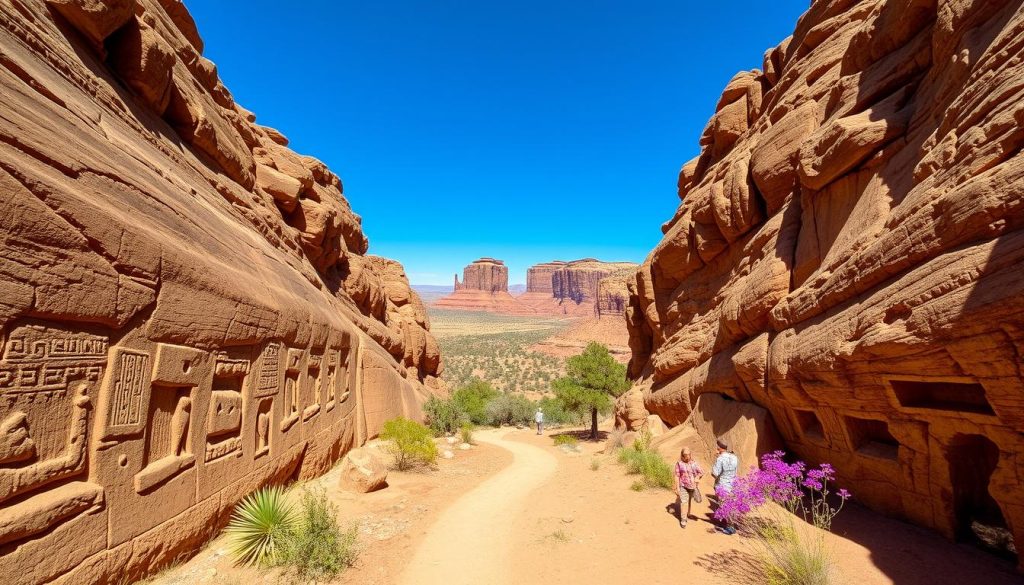
Along the way, you’ll see the Roman Theater and royal tombs. Each one tells a story of history and art. Many visitors walk these paths, showing the cultural heritage that draws people from all over.
Guided tours add to the experience, helping visitors understand the stories in the stones. These tours offer a deeper connection to Petra’s history.
One highlight is the chance to join guided tours on horseback. In the evenings, don’t miss Petra by Candlelight. The Treasury glows warmly under thousands of candles, creating a magical atmosphere.
Many visitors return to Petra, drawn by its beauty and history. The combination of stunning views, historical sites, and guided tours makes this journey unforgettable. Each visit to Petra is a chance to uncover its ancient charm and timeless stories.
Off the Beaten Path: Secret Trails of Petra
Exploring Petra’s secret trails is an adventure like no other. These paths reveal the area’s stunning beauty and rich history. You’ll see breathtaking views and marvel at the natural and architectural wonders without the crowds.
The Monastery journey is a highlight for any adventurer. It’s a must-see.
The Journey to the Monastery
The Monastery stands tall, 47 meters wide and 48 meters high. It’s one of Petra’s largest monuments. To get there, you’ll take a challenging but rewarding hike.
The hike from the main gate is about 6-7 hours long. It covers around 10.5 kilometers. Be ready for a moderate hike with steep and uneven terrain.
Along the way, you can stop to catch your breath. The views are spectacular. The hike includes a 290-meter elevation gain, perfect for watching the sunrise or sunset.
Finding Little Petra: An Intimate Experience
After seeing the Monastery, explore Little Petra. It’s a hidden gem that offers a personal experience. You’ll see the Nabataean artistry up close, away from the crowds.
The free shuttle from the Museum to Little Petra runs every 30 minutes. It makes getting there easy.
Little Petra is perfect for those who want to dive deep into Petra’s history and architecture. It’s a quieter place to explore at your own pace. You’ll gain a deeper understanding of the ancient civilization that once thrived here.
The Cultural Significance of Petra
The cultural significance of Petra goes beyond its stunning views and ancient buildings. It was a key spot for trade between Arabia, Egypt, and Syria-Phoenicia. This location mixed different cultures, influencing art, trade, and social life for centuries.
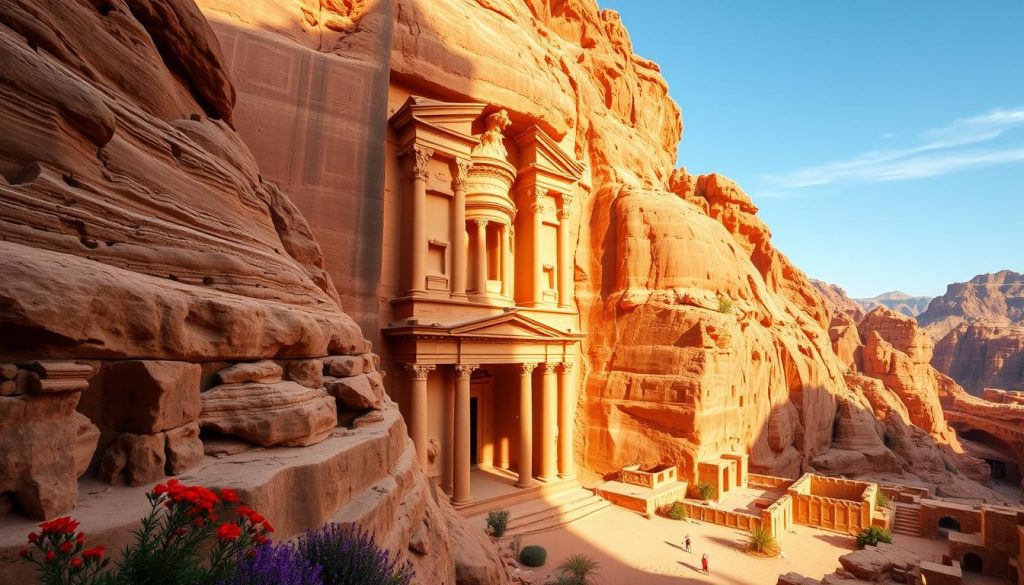
Petra’s architecture is a mix of styles. It shows the city’s role as a meeting place for cultures. The rock-cut tombs and temples show the creativity and skill of its people. The Nabataeans also built a smart water system, helping them live in the desert.
- Petra’s layout shows a complex society during the Nabataean, Roman, and Byzantine times.
- Remnants of temples, churches, and buildings connect us to the city’s diverse cultures.
- Discoveries like copper mines show Petra’s economic importance.
As a UNESCO World Heritage site, Petra draws visitors from all over. But it faces problems from nature and too many tourists. Efforts to protect it are vital to keep its history and cultural mix alive for future generations.
Petra: A UNESCO World Heritage Site
Petra, carved from pink sandstone, is a UNESCO World Heritage Site. It has been recognized for its outstanding universal value and cultural heritage importance. This highlights the need for Petra preservation.
Petra covers 26,171 hectares and is both an archaeological site and a living community. About 100 families, mostly Bedouins, live in the tombs and caves. This shows the importance of responsible tourism and preservation.
Visiting Petra requires time to fully appreciate its history and architecture. A two-day visit is recommended. This allows for a detailed exploration, including a night visit. Guided tours are great, but more time reveals Petra’s deeper stories.
Petra’s UNESCO status raises awareness about threats to its heritage. Archaeologists have only explored a small part of it. Conservation efforts are vital to protect Petra for the future.
Jordan Tourism: Petra as a Must-Visit Destination
Petra is a top spot in Jordan tourism. It’s a key site for those wanting to learn about history and culture. Every year, almost a million people visit to see its amazing architecture and heritage.
Exploring Petra is better with local help. About 75.9% of visitors feel welcome. This makes the trip safer and more memorable.
Knowing when to visit Petra is important. The Anbat Midtown Hotel is often full, showing its popularity. Getting local advice can make your trip better, with 100% of people helped.
Petra has many places to stay, from fancy hotels to cheap options. You can also try local food or international dishes nearby.
Wearing the right shoes is key because of the rough terrain. The main path is about five miles long. It takes you through beautiful views and ancient sites. There are trails for all skill levels.
Don’t miss Petra By Night. The Siq and Treasury light up with candles. It’s a magical experience that makes your visit special.
Planning your Petra trip? Remember, it’s full of history and amazing experiences. Your journey will create lasting memories and a deep respect for Jordan’s culture and history.
Experiencing Petra: Travel Tips and Guide
Planning your trip to Petra is more than just excitement; it’s about being ready. Use these Petra travel tips for a great visit. Pack light hiking shoes and comfy clothes for different terrains.
Drinking water is key when exploring Petra. Bring a water bottle, as it gets hot. Petra opens at 6 am. Arriving early helps avoid crowds and harsh sun.
Plan to spend enough time here. Most visitors stay 10-12 hours. Petra has lots to see, so you might not see it all in one day. Guided tours offer history and insights.
Getting to Petra is easy from nearby towns like Wadi Musa. A bus from Amman takes 3 hours. A taxi costs about 90 JOD (120 euros). Inside Petra, locals offer donkey rides and tours.
Nighttime visits, or Petra by Night, are magical. Candles light up the Siq, making it special. Tickets cost around 17 Jordanian dinars ($22).
Every view in Petra is stunning. From the Monastery to the Colonnaded Street, it’s all grand. Enjoy the unique geology and history that draws 500,000 visitors annually.
| Activity | Cost (Jordanian Dinars) | Duration |
|---|---|---|
| Taxi from Amman to Petra | 90 JOD | 3 hours |
| Petra by Night | 17 JOD | 1.5 hours |
| Donkey Ride to the Monastery | 5 JOD | Variable |
| One-Day Tour from Amman | Varies | 12 hours |
Follow these tips for an amazing visit to Petra. It’s a journey through stunning landscapes and rich history.
The Mysteries of Petra’s Burial Practices
Exploring Petra’s burial practices gives us a peek into the Nabataeans’ customs. Recent archaeological findings have uncovered their beliefs about death and the afterlife. The discovery of twelve skeletons under the Khaznah monument is a major breakthrough.
These skeletons were found in their original spots, which is rare in Petra. Most tombs here have only bits of remains because of travelers. This tomb, about 18 feet by 18 feet, has artifacts over 2,000 years old. It includes vessels and a skeleton holding a chalice like the ‘Holy Grail.’
The presence of these artifacts with the skeletons shows a deep respect for the dead. Archaeologists, led by Dr. Pearce Paul Creasman, aim to study DNA from the skeletons. They hope to learn about family ties and social bonds in Nabataean society.
As you dive into Petra’s history, these burial practices spark curiosity. They show us a civilization that lived over two millennia ago. Their grand tombs and artifacts tell us about their views on life, death, and legacy.
Conclusion
Exploring Petra uncovers a rich history and culture. It shows the hidden wonders that make this ancient city a must-see. From its advanced water systems to its grand architecture, every part of Petra has a story to tell.
Walking through Petra, you see the Nabataeans’ genius. Their homes and tombs carved into cliffs tell their tale. It’s a journey that shows human resilience and adaptability over nearly a thousand years.
Landmarks like the Great Temple and the Khaznah keep scholars and travelers curious. Leaving Petra, you carry memories and become part of its history. Your visit connects you to those who came before.
Your trip to Petra also reminds us of the importance of preserving history. Efforts to protect its ruins show a commitment to future generations. Your visit helps keep Petra’s wonders alive for all to see.