Experience Sur Turtle Watching Adventures
Ever wondered what it’s like to see baby turtles start their ocean journey? Picture being at a place where endangered sea turtles leave their nests and head to the sea. The Ras Al Jinz Turtle Reserve is where this magic happens.
Here, you can watch this amazing event and help protect marine life. You’ll join eco-friendly tours that show the beauty of Oman and teach about responsible travel. Whether you love nature or just want an adventure, Sur turtle watching is unforgettable.
Introduction to Sur Turtle Watching
Sur turtle watching lets you see amazing marine creatures in their home. Oman’s beautiful coast is where thousands of turtles come every year. These include endangered green and loggerhead turtles. It’s a chance to see these animals up close and help protect them.
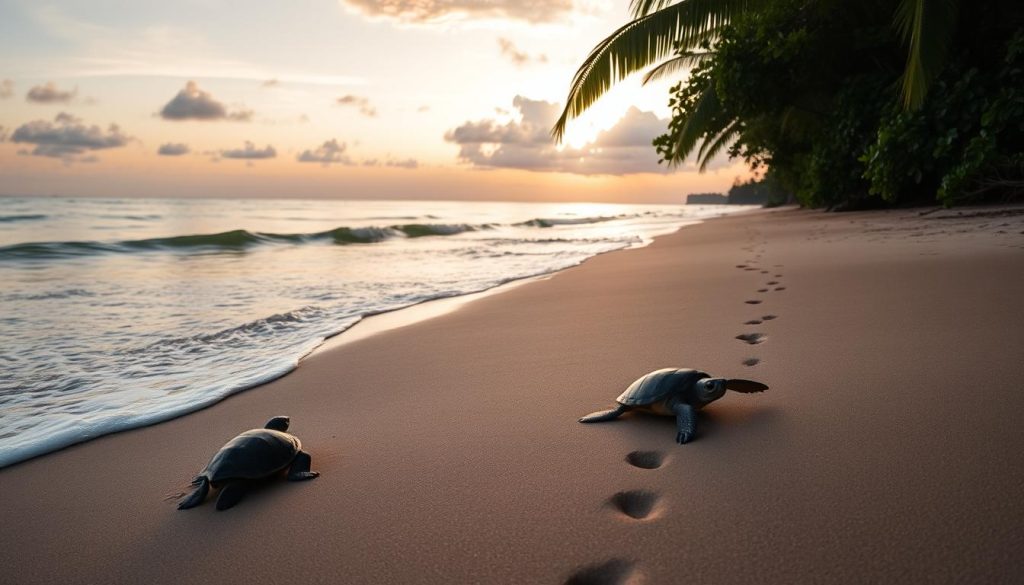
When you visit, you’ll learn about different turtles and how to help protect them. The Ras Al Jinz Turtle Reserve is a key place for turtle safety. Helping out here means you’re supporting these animals and having a great time.
Visitors are asked to join in on learning activities about marine life. This helps you understand the big issues turtles face, like losing their homes and dealing with environmental changes. Sur turtle watching is not just fun. It also teaches you a lot about keeping our oceans healthy.
Explore the Ras Al Jinz Turtle Reserve
The Ras Al Jinz Turtle Reserve is a key turtle sanctuary in Oman. It’s the only place where you can legally see turtles on land with guided tours. This reserve is home to many sea turtles, like the Green turtle. It protects 45 km of coastline, which is vital for these endangered creatures.
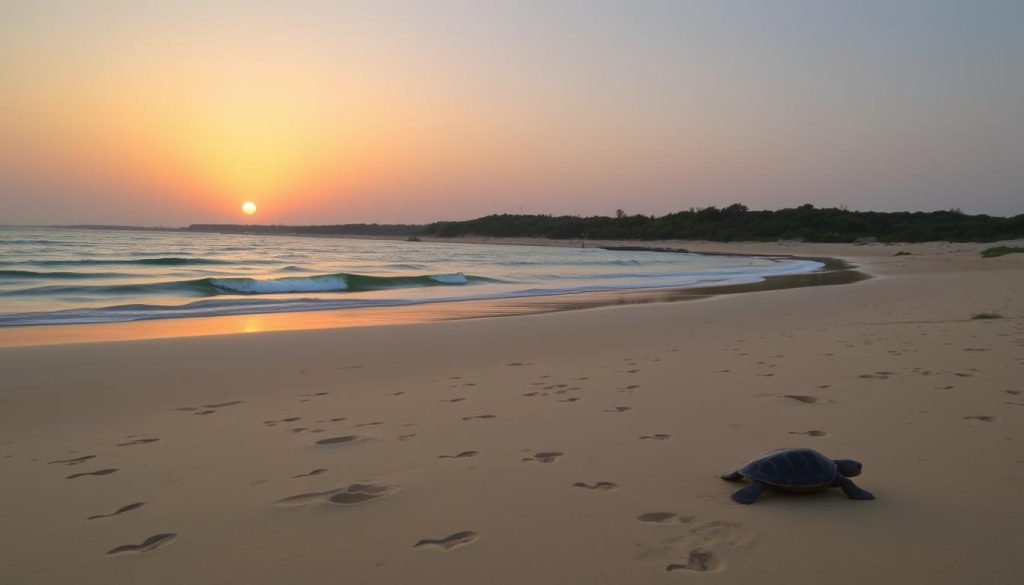
Guided tours are available from May to September. But, you can see turtles all year. Even in November, visitors can see baby turtles and their mothers returning to the sea. Seeing these amazing animals shows how important the reserve is.
- Access to the beach costs 2 OMR per person (approximately USD $5.20).
- Evening excursions are available, allowing you to observe nesting activities.
- Early morning turtle watching often yields sightings around 5 am at other local beaches.
The reserve has a museum that teaches about turtle life, migration, and threats like pollution. These programs help raise awareness and support conservation. Ras Al Jinz Turtle Reserve is a top spot for eco-tourists.
| Details | Information |
|---|---|
| Location | 14 miles from Sur, 107 miles from Muscat |
| Peak Season | May to September |
| Beach Access Fee | 2 OMR (USD $5.20) |
| Accommodation Options | Lodge (19 rooms) and Eco-tents (12 eco-tents) |
| Turtle Species in Oman | Green, Loggerhead, Hawksbill, Olive Ridley, Leatherback |
The reserve closes its beach at 4:30 pm. This ensures the best times for viewing. For those visiting Oman, the Ras Al Jinz Turtle Reserve is a must-see. It showcases marine life conservation and offers a unique wildlife experience.
Why Sur is Famous for Turtle Nesting
Sur is a famous spot along Oman’s beautiful coast. It’s known for its wildlife, like endangered green turtles. Every year, over 20,000 turtles come to nest here, making it a key spot in the Indian Ocean.
The Ras al Had Turtle Reserve, created in 1996, covers 120 square kilometers. It’s a safe place for turtles and supports a variety of life, including mangrove bushes and coral reefs. These areas are crucial for both turtles and other sea creatures, adding to the area’s biodiversity.
Efforts to protect these turtles are ongoing. The reserve has 14 rangers from local communities. They help manage visitors, issue permits, and keep the area safe. This work helps about 60,000 turtle eggs hatch each year on Oman’s beaches.
But Sur is more than just turtles. The Ras al Jinz area also has ancient sites. These show human life there goes back to the Early Holocene Period. This adds to the experience for those who love both wildlife and history.
Best Time to Experience Sur Turtle Watching
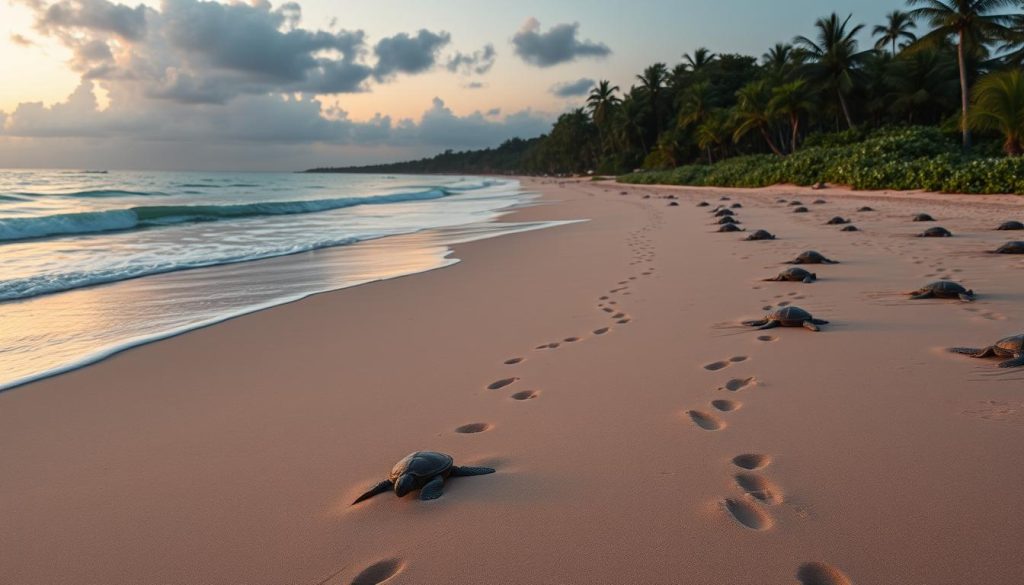
For those who love watching turtles, the best time to visit Sur is from May to September. During these months, around 20,000 turtles come to Oman’s beaches. This happens mainly from April to August.
In July and August, the turtles lay their eggs. This results in 50,000 to 60,000 eggs on the beaches. It’s a truly amazing sight.
Knowing when turtles nest is key to planning your trip. Summer is the best time to see them. But, visiting in the off-season can be special too. You might see baby turtles in the early morning.
The sun sets around 7 pm during nesting season. This makes it great for watching turtles in the evening. They come ashore when it’s cooler.
Remember, the summer heat is strong. So, it’s best to watch turtles in the early morning or late evening. This way, you have a better chance of seeing them.
Guided Turtle Viewing Tours in Sur
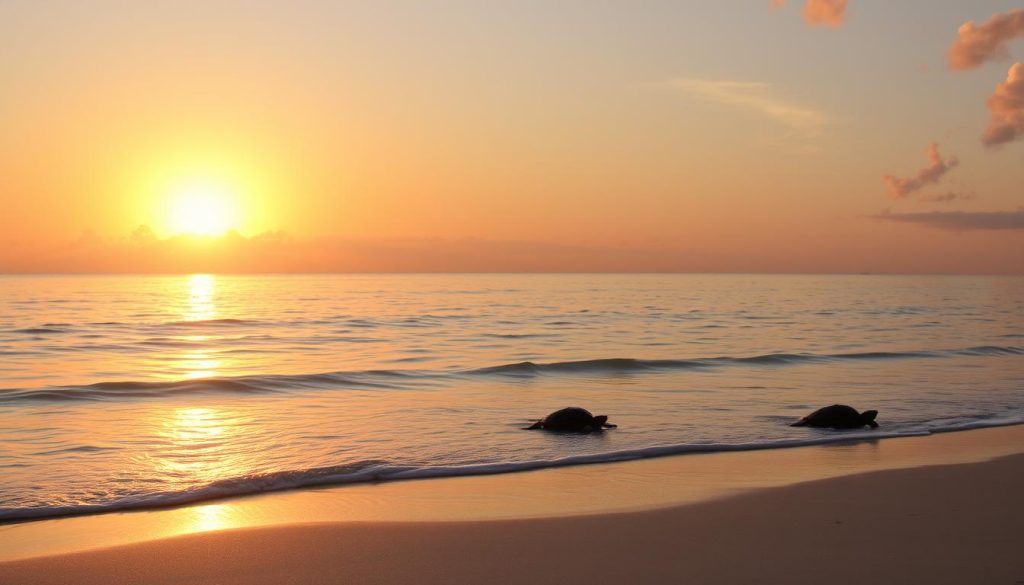
Ras Al Jinz offers amazing guided turtle viewing tours. You can see the fascinating world of sea turtles up close. There are evening and morning tours, each with its own special moments to see these incredible creatures.
Evening Guided Tours
Evening tours start at 7:00 pm and go until 11:30 pm or 12:00 am. You’ll see adult turtles coming ashore to lay eggs. The best time to see this is from May to September, with July to September being the peak.
It’s not uncommon to see over 100 turtles nesting on the beach. This makes the experience truly unforgettable.
Morning Guided Tours
Morning tours are perfect for early wildlife sightings. You’ll see baby turtles on their first journey to the sea. These tours happen at dawn and teach you about the turtles’ nesting habits and challenges.
To book, contact WhatsApp at +96894573331 or email [email protected]. Knowledgeable guides will make sure you have a great time while respecting the turtles.
Eco-Friendly Turtle Tours and Their Importance
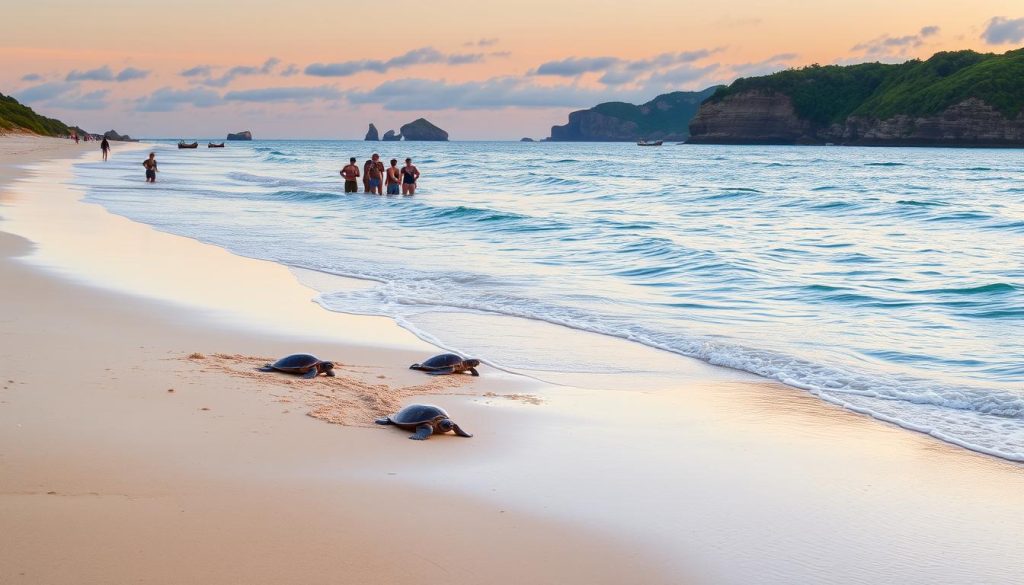
Going on eco-friendly turtle tours is a great way to enjoy nature while helping marine conservation. It’s all about finding a balance between our curiosity and the turtles’ well-being. By choosing sustainable tours, we help protect these amazing creatures and their homes.
Learning about responsible wildlife tourism helps us make better choices. This knowledge is key to preserving turtle populations for the future.
Sustainable Turtle Watching Practices
Practicing sustainable turtle watching is crucial for a peaceful coexistence with nature. Here are some important steps:
- Keep a safe distance from nesting turtles to respect their natural behavior.
- Don’t use artificial lights that can confuse hatchlings and disrupt their journey.
- Choose guided tours that follow local rules and protect the environment.
By following these guidelines, we can enjoy watching turtles without harming their home. It’s a win-win for both us and the turtles.
Responsible Wildlife Tourism
Responsible wildlife tourism boosts local economies and supports conservation. By picking eco-friendly turtle tours, you support:
- Research to better understand and protect turtles.
- Community programs that teach about marine life’s importance.
- Efforts to keep nesting sites and habitats safe from harm.
Your choices help protect sea turtles for future generations. It’s a small step that makes a big difference.
Marine Life Conservation Efforts in Sur
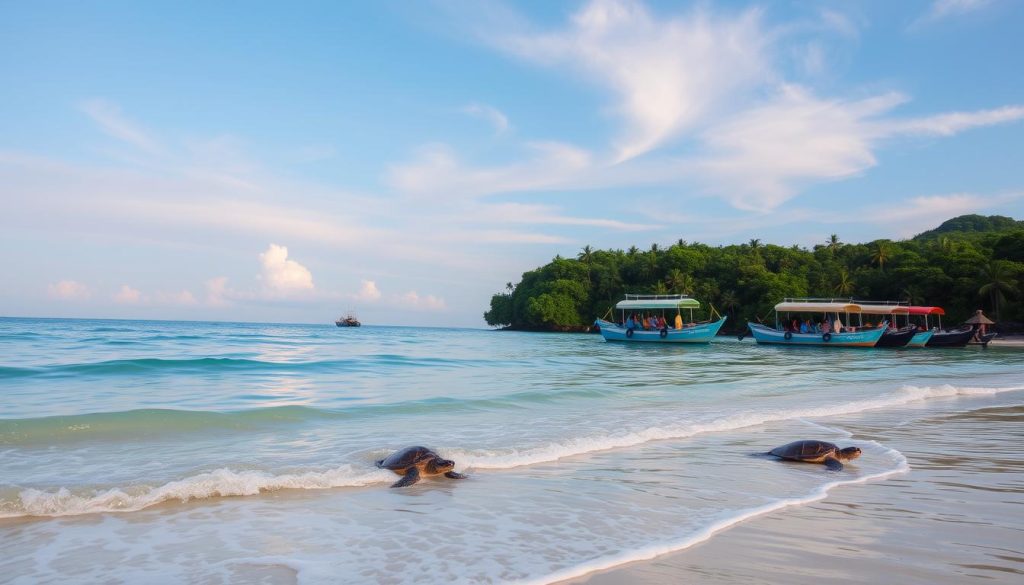
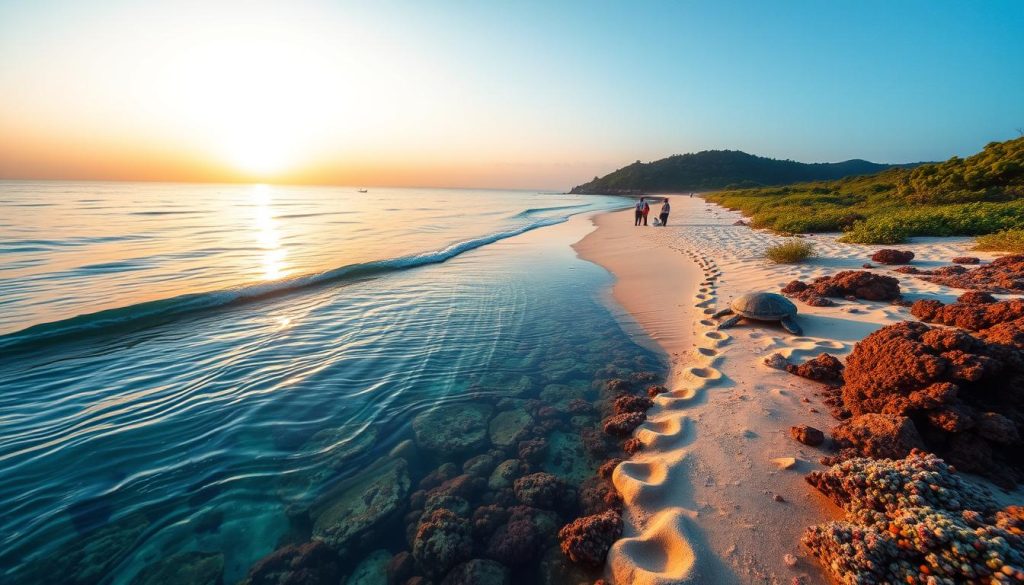
In Sur, marine life conservation is a team effort. It aims to protect vital ecosystems and the species living there. Turtle protection programs are key, working to save sea turtles. Local communities, tourism, and environmental groups work together to keep the ocean healthy.
Turtle programs help not just nesting sites but also where turtles forage. They tackle pollution and illegal fishing to help marine life. In Sur, locals join big conservation projects. They help spread the word and teach sustainable living to everyone.
Here’s a quick look at some important marine life conservation efforts in Sur:
| Conservation Program | Focus Area | Funding Source | Project Activities |
|---|---|---|---|
| Marine Turtle Conservation Fund | Turtle nesting and protection | U.S. Fish and Wildlife Service | Patrols, community training, education |
| Sulu-Sulawesi Seascape Initiative | Biodiversity protection | Conservation International | Poverty alleviation, sustainable fishing, tourism |
| Leatherback Turtle Conservation | Monitoring and protection | U.S. Fish and Wildlife Service | Nest monitoring, community engagement |
| Kemp’s Ridley Recovery Program | Nesting site protection | Various international grants | Surveys, education, habitat restoration |
Sur leads the way in marine life conservation. It tackles big challenges to protect vital species. The work brings together many groups, showing the power of teamwork.
Understanding Turtle Habitat Preservation
Keeping turtle habitats safe is key to their survival. Things like coastal development and pollution hurt their homes. This harm affects the variety of life in our oceans.
Places like Sur are crucial for turtles to lay eggs and raise their young. These areas face many dangers, from the moment the hatchlings emerge.
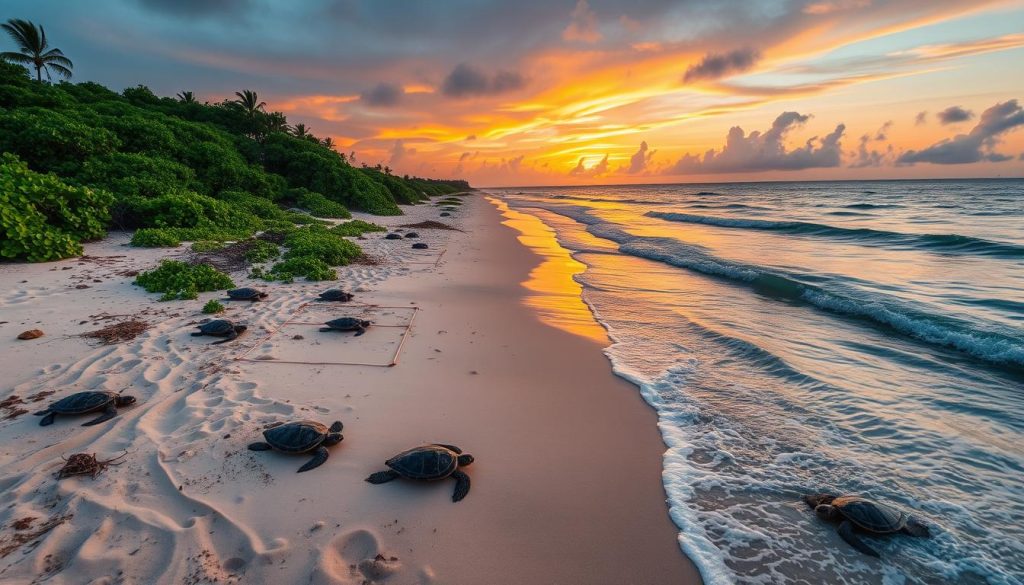
Humans have made turtles’ lives harder. Getting caught in fishing nets can be deadly. Plastic in the sea is another big problem, with 100% of hatchlings found to have eaten it.
Working to protect our environment is crucial. We need better rules and support for green practices to help.
- Support for laws that limit coastal building.
- Beach clean-ups and spreading the word about turtles.
- Using lights that don’t confuse turtles during nesting.
We must work together to save turtle habitats. Community efforts, like watching over nesting sites, are very important. By taking action, we can help our oceans thrive and protect these amazing animals for the future.
Accommodation Options Near Ras Al Jinz
Planning your visit to Ras Al Jinz Turtle Reserve? You have many places to stay. These options offer comfort and easy access to turtle watching.
On-Site Hotel and Eco-Tents
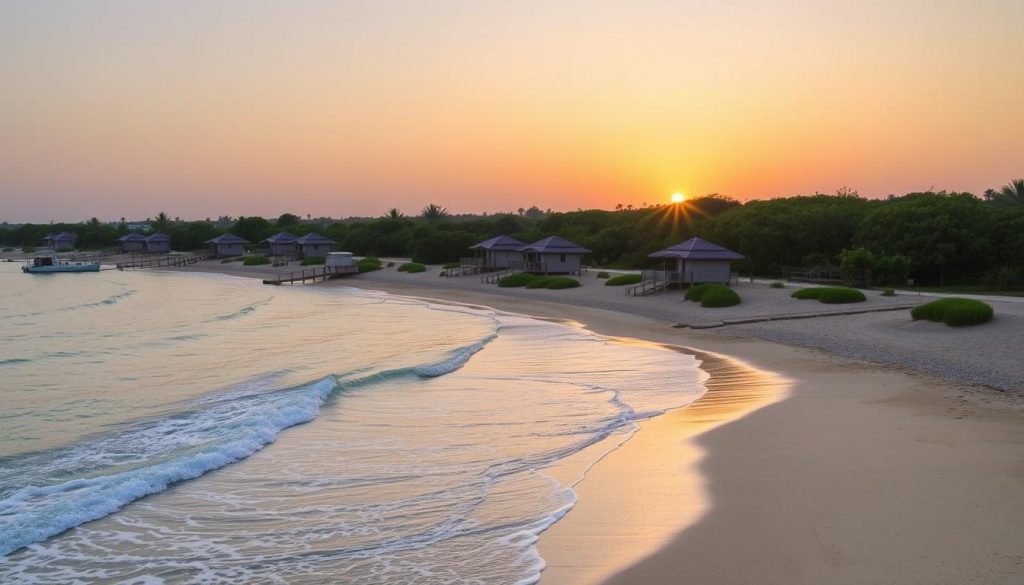
The reserve has 12 luxury eco-tents. They come with modern comforts like toilets, refrigerators, and TVs. Staying here lets you connect with nature.
The eco-tents are built to reduce light pollution. This helps turtles navigate better. Each tent has air conditioning and a private bathroom for comfort.
The main lodge also offers 19 rooms. These rooms have TVs and air conditioning. They’re perfect for those who like traditional rooms.
Both the eco-tents and lodge rooms are close to the beach. Guided tours are available at dawn. It’s best to stay at least one night to fully enjoy the experience.
Local Guesthouses
For a real Omani experience, try local guesthouses. They offer a cozy atmosphere and personalized service. While they may lack some amenities, they provide a unique hospitality experience.
Choose from eco-tents or local guesthouses for a memorable turtle-watching trip. Ras Al Jinz has something for every traveler.
| Type of Accommodation | Amenities | Accessibility | Recommended Duration |
|---|---|---|---|
| Luxury Eco-Tents | Air conditioning, en-suite bathroom, mini refrigerator, tea-coffee maker, LCD TV | Easy access to nesting area, designed to reduce light pollution | Minimum 1 night |
| Main Lodge Rooms | Flat-screen TV, air conditioning | Close to eco-tents and beach | Minimum 1 night |
| Local Guesthouses | Traditional Omani hospitality, personalized service | Varies by location | Flexible |
Conclusion
Ending your journey at the Ras Al Jinz Turtle Reserve gives you a special view of sea turtles’ life cycle. These Sur turtle watching experiences are not just for seeing; they help marine conservation travel. By joining eco-tourism in Oman, you help save these endangered species and enjoy nature’s beauty.
Visiting here makes you part of a big effort to show the value of wildlife tourism. It’s important to balance tourism and protecting nature so future generations can see sea turtles too. Activities like guided tours and volunteering teach us to care for turtles and their homes.
As you leave, think about what you learned and the memories you made. Your support helps marine conservation grow, leading to a better world for humans and animals. Enjoy Sur turtle watching and know every little bit helps protect our planet.