Take a Cooking Class in Sousse and Learn Local Dishes
Imagine diving into Sousse’s lively culture by exploring its local market. You’ll uncover the secrets of its famous dishes.
Our Tunisian cooking classes let you learn to make traditional Sousse dishes. You’ll use fresh ingredients and real spices.
Our classes are a special chance to shop for fresh ingredients. You’ll learn about Tunisian cuisine’s art. You’ll get to taste local flavors and make tasty meals that show off Sousse’s rich food history.
The Rich Culinary Heritage of Sousse, Tunisia
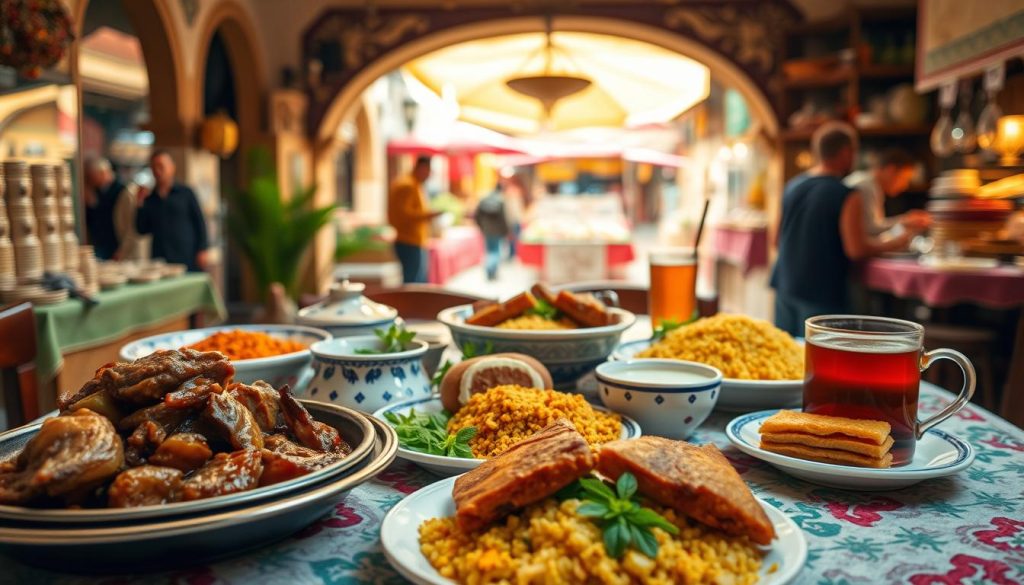
Tunisian cuisine in Sousse is a mix of flavors from centuries of cultural exchange. The city’s food scene is a blend of Mediterranean, African, and Arab tastes.
Historical Influences on Tunisian Cuisine
Tunisian food has been shaped by its location and the cultures that have influenced it. The historical influences include:
- The Mediterranean diet, with its olive oil, garlic, and fresh produce.
- African flavors, introducing spices like cumin and coriander.
- Arab culinary traditions, using rose water and orange blossom water.
This mix of influences makes Tunisian cuisine unique and diverse.
Regional Specialties of Sousse
Sousse, by the sea, offers a variety of regional specialties. These dishes highlight the Mediterranean’s freshness. Some local favorites include:
- Fresh seafood dishes, often grilled or in a tajine.
- Traditional Tunisian salads, like the mechouia salad, with grilled veggies.
- Local pastries and desserts, flavored with orange blossom water or rose water.
These dishes show Sousse’s culinary diversity and its ability to mix traditional flavors with local ingredients.
Why Take a Cooking Class and Learn Local Sousse Dishes
Immerse yourself in Tunisian cuisine by taking a cooking class in Sousse. People who take these classes say it’s a deep dive into culture. They make lasting memories and learn practical cooking skills.
Cultural Immersion Through Food
A cooking class in Sousse is more than just learning recipes. It opens a window into the local culture. As you chop, sauté, and simmer, you learn about Tunisian cuisine’s history and ingredients. “Food is a universal language,” and cooking lets you connect with locals deeply.
Creating Lasting Travel Memories
The hands-on cooking experience in a class makes unforgettable memories. You’ll remember the smells, tastes, and fun of cooking with local chefs. These classes often stand out as a trip highlight, offering a special look at Sousse’s food heritage.
Bringing Home Practical Skills
One big plus of a cooking class is the skills you gain. You’ll learn to make traditional Tunisian dishes like couscous and tajines. Using local ingredients and methods, you can bring Sousse’s flavors home. This lets you share your travel stories with loved ones.
Types of Cooking Classes Available in Sousse
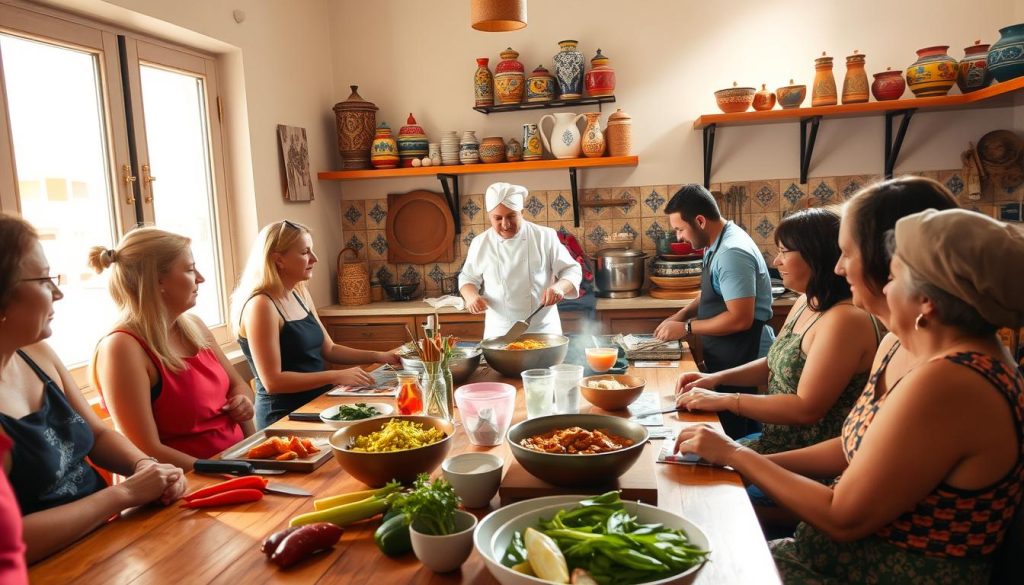
In Sousse, you can find many cooking classes to improve your cooking skills. These classes offer a chance to learn about Tunisian cuisine. Whether you’re new to cooking or have experience, there’s a class for you.
Hotel-Based Culinary Workshops
Hotels in Sousse offer cooking workshops for guests. These classes provide a structured learning space. You’ll learn about Tunisian cooking through demonstrations and hands-on cooking.
You’ll also get to enjoy the meal you’ve made in a nice setting. This is a great way to learn and enjoy Tunisian dishes.
Private Home Cooking Experiences
Private home cooking classes offer a unique experience. You’ll cook in a local home, learning to make traditional Tunisian dishes. This setting is perfect for an immersive cultural experience.
By cooking with locals, you’ll hear their stories and gain insights into the cuisine. It’s a chance to connect with the culture through food.
Market-to-Table Programs
Market-to-table programs start at local markets. You’ll pick fresh ingredients and then learn to cook a meal with them. This class teaches you about Tunisian cuisine from start to finish.
It’s a hands-on way to learn about the food you eat. You’ll understand where your ingredients come from and how to prepare them.
| Type of Cooking Class | Key Features | Benefits |
|---|---|---|
| Hotel-Based Culinary Workshops | Structured learning, demonstrations, hands-on cooking | Learn in a professional environment, enjoy the meal you’ve prepared |
| Private Home Cooking Experiences | Personalized instruction, local recipes, cultural immersion | Intimate setting, learn from locals, cultural insights |
| Market-to-Table Programs | Market visit, fresh ingredient selection, meal preparation | Understand the sourcing of ingredients, comprehensive culinary experience |
Popular Tunisian Dishes You’ll Learn to Make
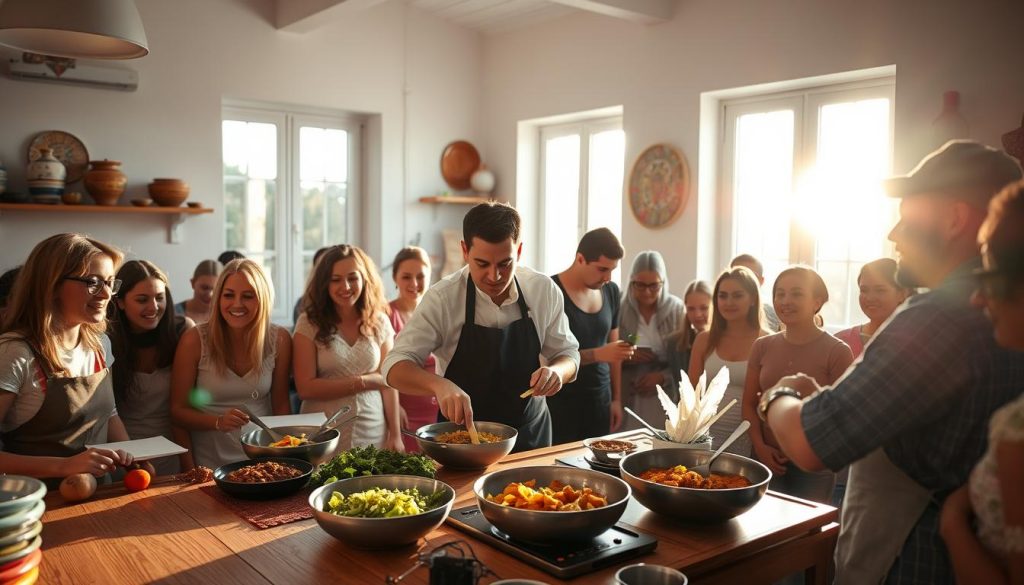
In a Tunisian cooking class, you’ll learn to make many traditional dishes. These dishes show off the country’s rich food culture. Tunisian food combines Mediterranean, Arab, and African tastes, making it both tasty and aromatic.
Couscous Variations
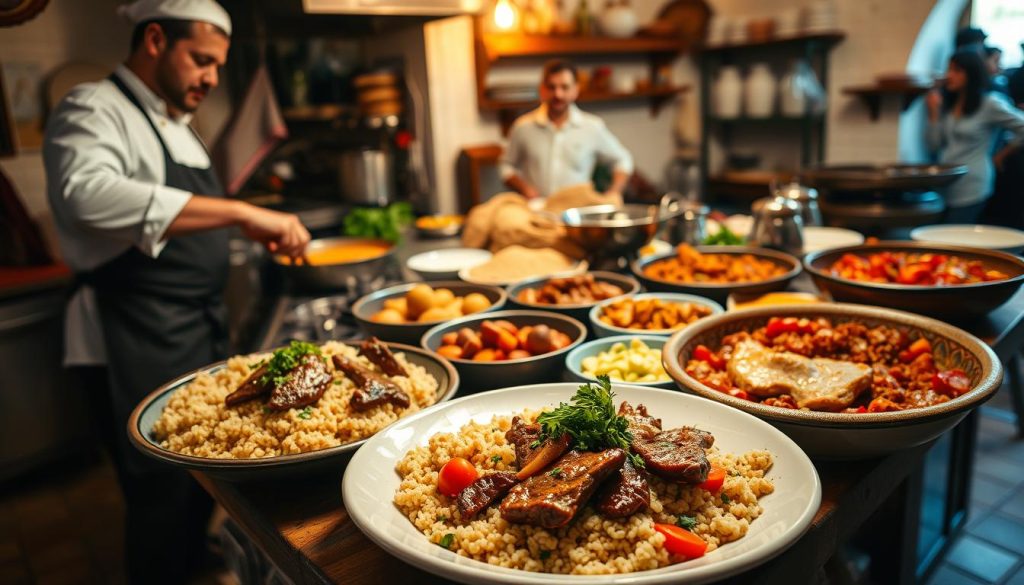
Couscous is a big deal in Tunisian food. You’ll learn to make seafood and vegetable couscous. It’s made from semolina flour and served with veggies, meats, and sauces.
Tajine and Stews
Tunisian tajines are slow-cooked stews cooked in clay pots. You’ll learn to make them with local meats and veggies, and spices.
Brik and Other Appetizers
Brik is a favorite Tunisian snack. It’s a thin pastry filled with tuna, capers, and eggs. You’ll also make other tasty appetizers with fresh local ingredients.
Traditional Desserts and Sweets
Tunisian sweets are sweet and complex. They often have honey, almonds, and orange blossom water. You’ll make makroud, a date and almond pastry, and baklava, a honey and nut pastry.
| Dish | Description | Main Ingredients |
|---|---|---|
| Couscous | Traditional North African dish made from semolina flour | Semolina flour, vegetables, meats |
| Tajine | Slow-cooked stew named after the earthenware pot | Lamb, chicken, or vegetables, aromatic spices |
| Brik | Thin pastry wrapper filled with tuna, capers, and eggs | Tuna, capers, hard-boiled eggs, pastry |
| Makroud | Date and almond pastry | Dates, almonds, pastry |
Essential Ingredients in Tunisian Cooking
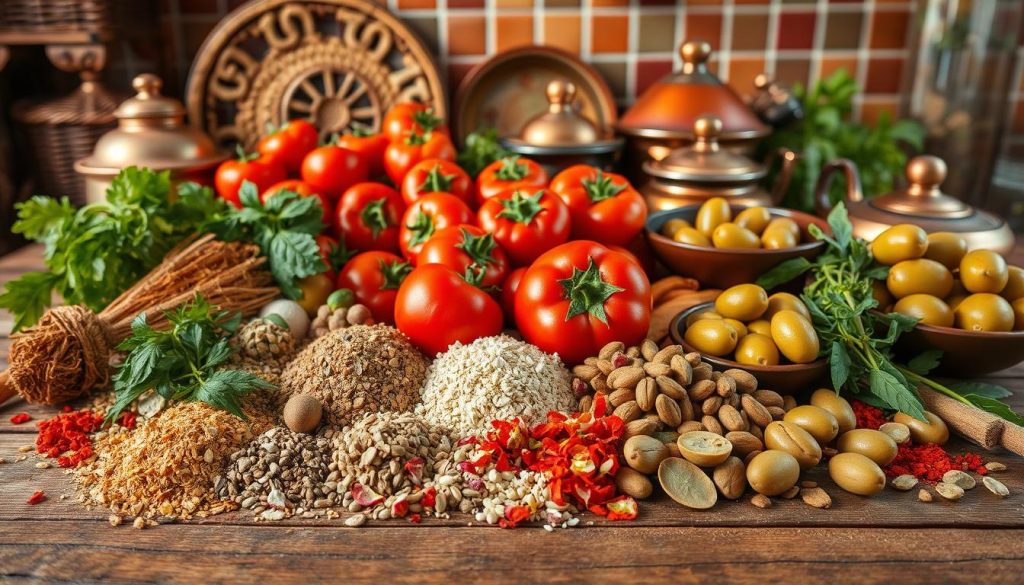
To get a feel for Tunisian cuisine, it’s key to know its main ingredients. Tunisian cooking is all about aromatic spices, fresh local produce, and top-notch olive oil. These elements mix to create the rich tastes that Tunisia is known for.
Spices and Harissa
Spices are crucial in Tunisian cooking, with harissa being a standout. This chili pepper paste gives dishes a spicy flavor. Other spices like cumin, coriander, and caraway add depth and warmth to many recipes.
- Cumin: Adds warmth to stews and soups
- Coriander: Used in spice blends for meat and vegetable dishes
- Caraway: Often used in bread and certain desserts
Olive Oil and Mediterranean Staples
Olive oil is a must in Tunisian cooking, used freely in cooking and salad dressings. Mediterranean staples like olives, capers, and preserved lemons add salty, tangy tastes. These ingredients are key to Tunisian cooking’s balanced flavors.
Local Produce and Seafood
Sousse’s coastal location makes fresh seafood a big part of Tunisian cuisine. Local produce like tomatoes, peppers, and eggplants are also used a lot. These ingredients, mixed with spices and olive oil, make dishes hearty and flavorful.
- Fresh fish and seafood are grilled or used in stews
- Vegetables are used in a variety of salads and cooked dishes
- Local fruits are enjoyed as desserts or used in sweet pastries
By knowing and using these key ingredients, you can make dishes that taste like Tunisia. This brings a piece of your Sousse cooking class experience into your home kitchen.
What to Expect in a Typical Sousse Cooking Class
Signing up for a cooking class in Sousse means you’re in for a special treat. It’s a mix of culinary skills and cultural immersion. You’ll get a full culinary experience in a typical class.
Class Structure and Duration
Cooking classes in Sousse last from 3 to 5 hours. This gives you plenty of time to learn and practice Tunisian dishes. You’ll start with an introduction to Tunisian cuisine, then get hands-on, and finish by enjoying the meal you made.
Hands-on Learning Opportunities
In a Sousse cooking class, you’ll get to do hands-on cooking. You’ll make a variety of traditional Tunisian dishes. This hands-on experience lets you learn cooking techniques and understand local ingredients.

Language Considerations
Many cooking schools in Sousse welcome international visitors, but there might be a language barrier. Yet, many instructors speak some English. Some schools even have classes led by English-speaking chefs, making sure language won’t stop your culinary experience.
Dining and Social Experience
The social dining experience is a big part of Sousse cooking classes. After cooking, you’ll enjoy the meal you made with your classmates and the instructor. This shared dining time is a great way to immerse yourself in the culture and make lasting memories.
Overall, a cooking class in Sousse is a unique mix of learning and cultural experience. It offers a rich and engaging time for everyone.
Top Cooking Schools and Venues in Sousse
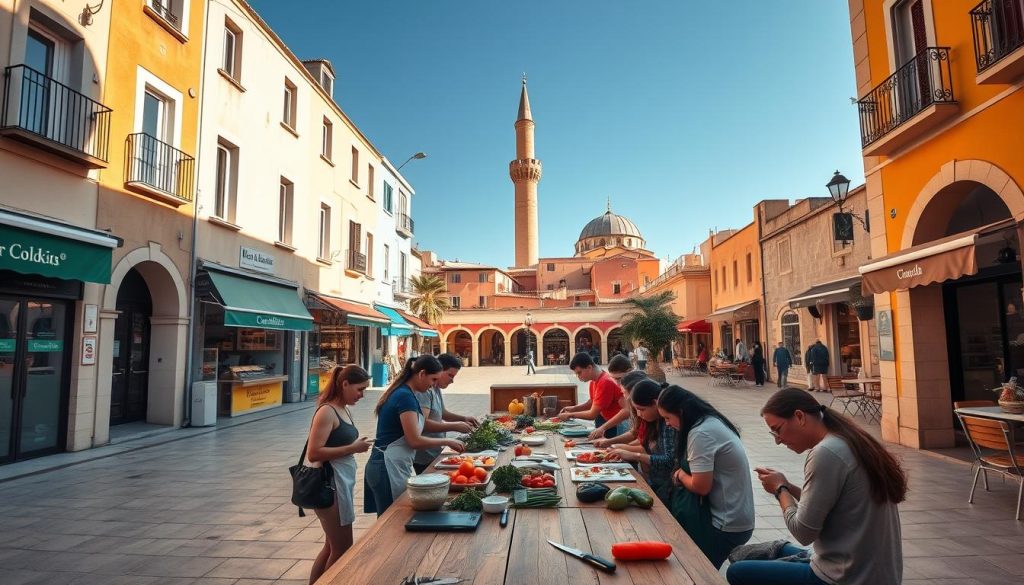
Sousse is a great place for cooking classes. It has many schools, each offering a unique experience. You can find something that fits your taste and preferences.
Established Culinary Institutes
In Sousse, you’ll find several top culinary institutes. They have modern kitchens and experienced chefs. These places are perfect for learning about Tunisian cooking in depth.
Family-Run Cooking Schools
Family-run schools in Sousse offer a cozy learning experience. They are run by local families who teach their traditional recipes. It’s a great way to learn about local culture and food in a friendly setting.
Chef-Led Experiences
For a special cooking class, try a chef-led experience in Sousse. These classes are led by famous chefs. They teach you how to make complex Tunisian dishes and even take you to the market to pick out ingredients.
| Type of Cooking School | Features | Benefits |
|---|---|---|
| Established Culinary Institutes | Modern facilities, experienced chefs | Comprehensive learning, structured environment |
| Family-Run Cooking Schools | Personalized experience, traditional recipes | Cultural immersion, relaxed atmosphere |
| Chef-Led Experiences | Renowned chefs, market visits | Exclusive experience, insights into complex dishes |
No matter what you’re looking for, Sousse has it. Whether you want a structured class or a personal touch, you’ll find it here. Choosing the right school can make your cooking experience even better and help you love Tunisian cuisine more.
How to Choose the Right Cooking Class for Your Needs
Choosing the right cooking class in Sousse is important. You need to think about a few key things to have a great time. These factors will help you pick the perfect class for you.
Skill Level Considerations
First, think about your cooking skills. Some classes are for beginners, while others are for more experienced cooks. Make sure the class fits your skill level for the best experience.
Dietary Restrictions and Preferences
Also, consider your dietary needs. If you’re vegetarian, gluten-free, or halal, find a class that can accommodate these. Many classes are flexible and can adjust recipes for different diets.
Budget and Time Constraints
Don’t forget about your budget and how much time you have. Classes in Sousse vary in price and length. Some are a few hours, while others are all day or even longer. Pick a class that works with your budget and schedule.
| Factor to Consider | Description | Tips for Choosing |
|---|---|---|
| Skill Level | Consider whether you’re a beginner or experienced cook. | Look for classes labeled as beginner-friendly or advanced. |
| Dietary Needs | Think about any dietary restrictions or preferences you have. | Inform the cooking school about your needs in advance. |
| Budget & Time | Consider how much you’re willing to spend and the time you have. | Compare prices and class durations to find the best fit. |
Preparing for Your Sousse Cooking Experience
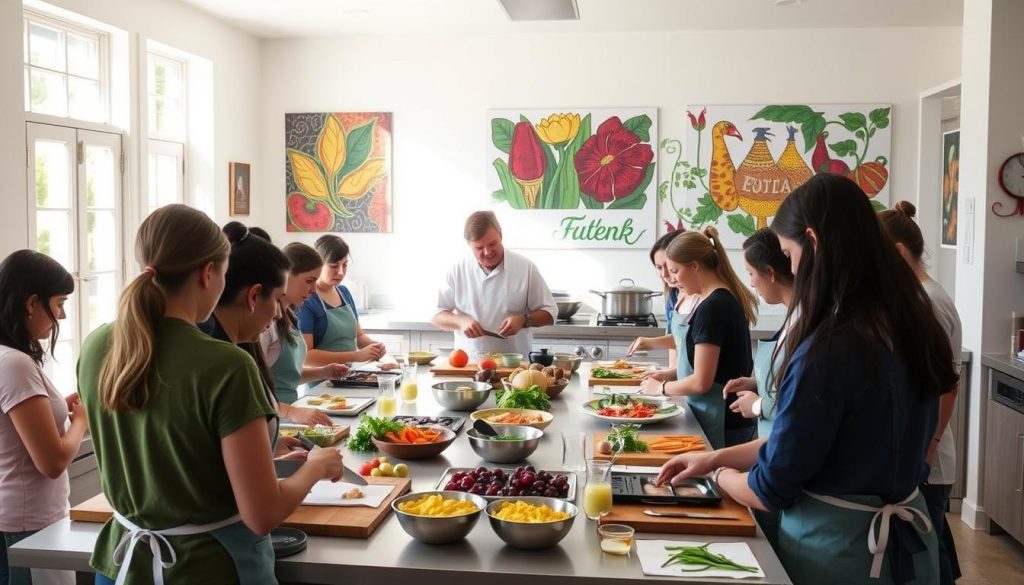
To make your cooking experience in Sousse unforgettable, preparation is crucial. As you prepare to dive into the local culinary culture, consider a few things.
What to Wear and Bring
Wear comfortable clothes and a hat for your cooking class. You’ll be active in the kitchen. Also, bring a notebook and pen to write down recipes and tips from your instructor.
Basic Phrases in Tunisian Arabic
Learning basic Tunisian Arabic phrases can enrich your experience. Say “As-salamu alaykum” (peace be upon you) and “Shukraan” (thank you) to show appreciation. These simple greetings can make your interactions more meaningful.
Photography and Recipe Documentation Tips
Bring a camera or smartphone to capture your culinary journey. Also, keep a recipe journal. Record the ingredients, techniques, and variations of the dishes you learn.
| Preparation Tip | Description |
|---|---|
| Comfortable Clothing | Wear loose, comfortable clothing suitable for kitchen work. |
| Notebook and Pen | Bring a notebook to jot down recipes and cooking tips. |
| Camera or Smartphone | Document your culinary creations and cooking process. |
Continuing Your Tunisian Culinary Journey at Home
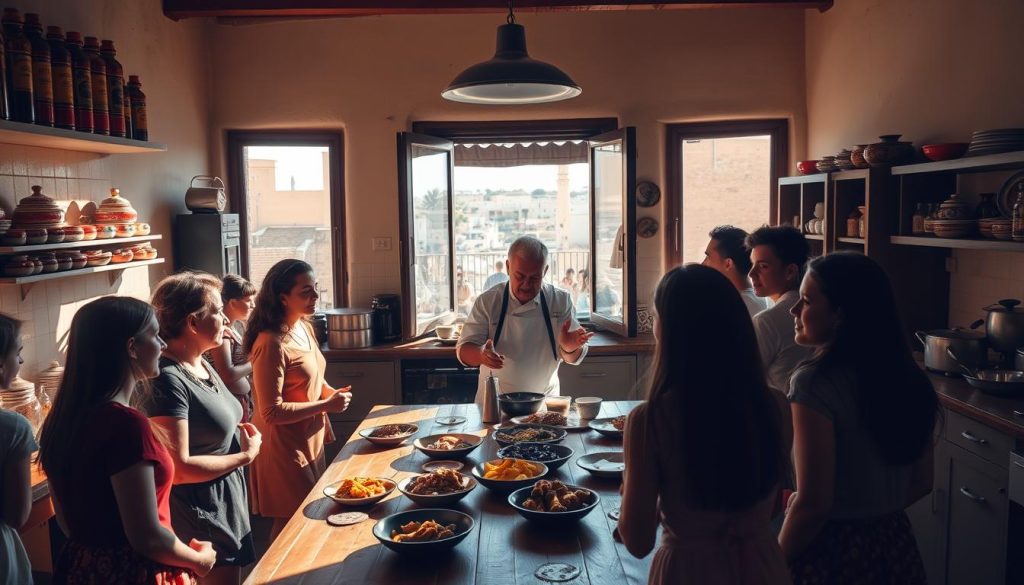
Your Tunisian cooking adventure doesn’t have to stop when you leave Sousse. You can keep exploring Tunisian flavors and traditions in your kitchen. With the skills and knowledge from your cooking class, you’re ready to bring Tunisia’s tastes home.
Finding Authentic Ingredients in the US
To make real Tunisian dishes, you need the right ingredients. Many stores and online shops now carry international and Middle Eastern products. Look for stores that import goods from North Africa or the Mediterranean. You can also find Tunisian staples like harissa and preserved lemons online.
Adapting Recipes for American Kitchens
Traditional Tunisian cooking is simple, but you might need to make some changes for American kitchens. You might have to swap out ingredients or adjust cooking times. Feel free to try new things and make recipes your own, keeping the Tunisian spirit alive.
Online Resources and Cookbooks
To learn more about Tunisian cuisine, check out online resources and cookbooks. Websites and blogs share Tunisian recipes and cooking tips. Cookbooks offer deep dives into the history and culture of various dishes. Look for cookbooks by Tunisian chefs and food bloggers who focus on North African cuisine.
| Resource Type | Description | Examples |
|---|---|---|
| Cookbooks | In-depth guides to Tunisian cuisine, often including cultural context and history. | “Tunisian Cooking” by various authors, “North African Cuisine” cookbooks |
| Online Blogs and Websites | Platforms sharing Tunisian recipes, cooking tips, and cultural insights. | Tunisian food blogs, culinary websites specializing in Mediterranean cuisine |
| Specialty Food Stores | Stores carrying international and Middle Eastern ingredients essential for Tunisian cooking. | International grocery stores, Middle Eastern markets |
Conclusion: Savoring the Flavors of Sousse Beyond Your Trip
By taking a cooking class in Sousse, you can enjoy the region’s flavors even after you leave. You’ll learn to make traditional Tunisian dishes. This lets you share your cultural experience with loved ones.
At home, your Tunisian culinary adventure will continue. The skills and recipes from Sousse will remind you of your trip. Your cooking class connects Sousse’s flavors to your kitchen, bringing back memories.
With what you’ve learned, you can try new ingredients and recipes. This deepens your understanding of Tunisian cuisine. Your cooking will keep inspiring you, letting you share Sousse’s essence with others.