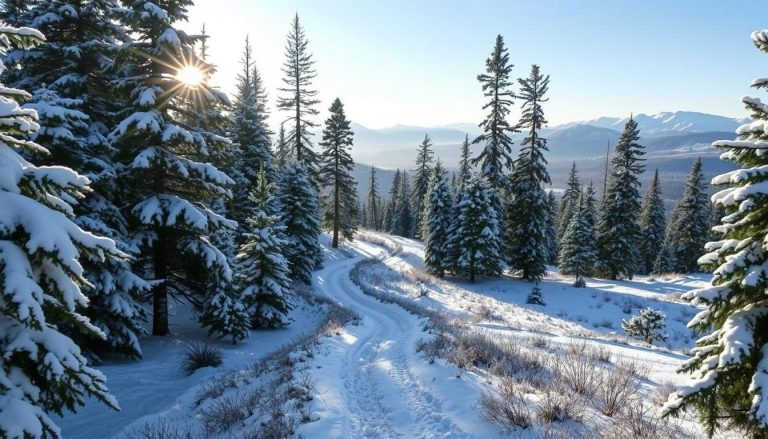
Svaneti’s Sky-High Villages: A Medieval Mountain Escape
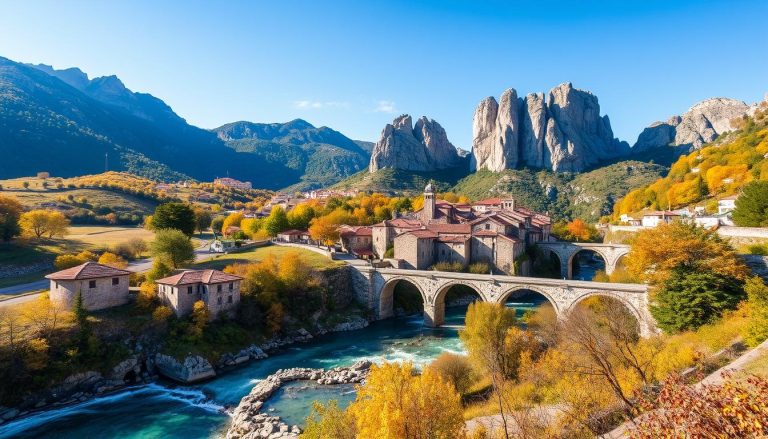
Have you ever wanted to travel back in time? Imagine exploring ancient villages in the high mountains. Svaneti, in Georgia, offers such an adventure. It’s a place where stunning beauty meets history.
This area has some of the tallest villages in Europe. One, Ushguli, reaches up to 2,200 meters high. You’ll find stone towers there. They were built long ago to keep people safe from invaders and natural dangers.
Are you drawn to towering mountains? Then Svaneti is perfect for you. It’s home to Mount Ushba and Mount Shkhara, Georgia’s tallest peak. This region boasts about 175 ancient towers. It also has a unique culture, language, and traditions. This makes Svaneti a symbol of enduring spirit and tradition.
The Historical Charm of Svaneti’s Villages
Explore the historical charm of Svaneti’s villages and travel back in time. This remote Georgian region is known for its beautiful landscapes and unique culture. It feels like stepping into an ancient world.
Exploration of Mestia
Mestia is the heart of Upper Svaneti, full of history and traditional buildings. You can get there by an 8-hour ride from Tbilisi or a quicker hour flight from Natakhtari Airfield. The area has seen growth thanks to ski resorts like Hatsvali and Tetnuldi.
This town mixes old-world charm with new comforts. Places like Cafe Laila and Hotel Lahili offer a peek into Georgian culture. Don’t miss the Svaneti Museum of History & Ethnography, with its ancient treasures.
The Enigmatic Towers of Ushguli
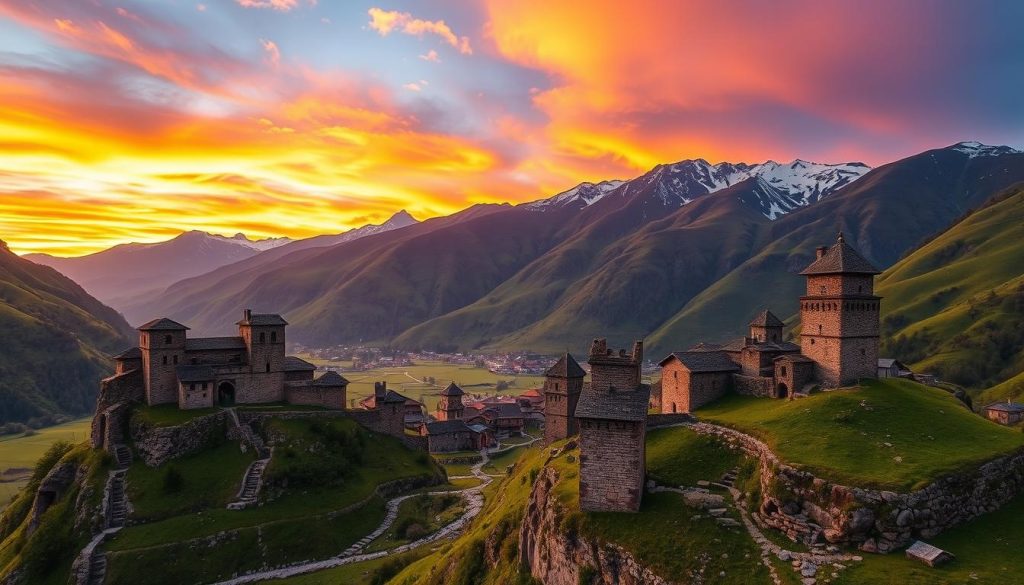
Ushguli stands out as one of Europe’s highest inhabited places, showcasing Svaneti’s mystery. Reaching it involves a 3-hour drive from Mestia or a five-hour hike. It consists of five villages known for their defensive stone towers.
About 200 stone towers, built in the 9th century, watch over the landscape. They tell stories of Georgian history and were used to protect against invaders. Their survival is a sign of Svaneti’s enduring spirit.
In Ushguli, history is alive and untouched by modern changes. Visiting offers a deep look into Georgian culture and architecture. This makes Svaneti a cherished UNESCO World Heritage Site.
Adventure Activities in the Caucasus Mountains
Svaneti is an adventurer’s paradise set in the Greater Caucasus Mountains. It has everything from thrilling trekking paths to exciting backcountry skiing. This place welcomes adventurers of all skill levels.
Hiking Trails and Routes
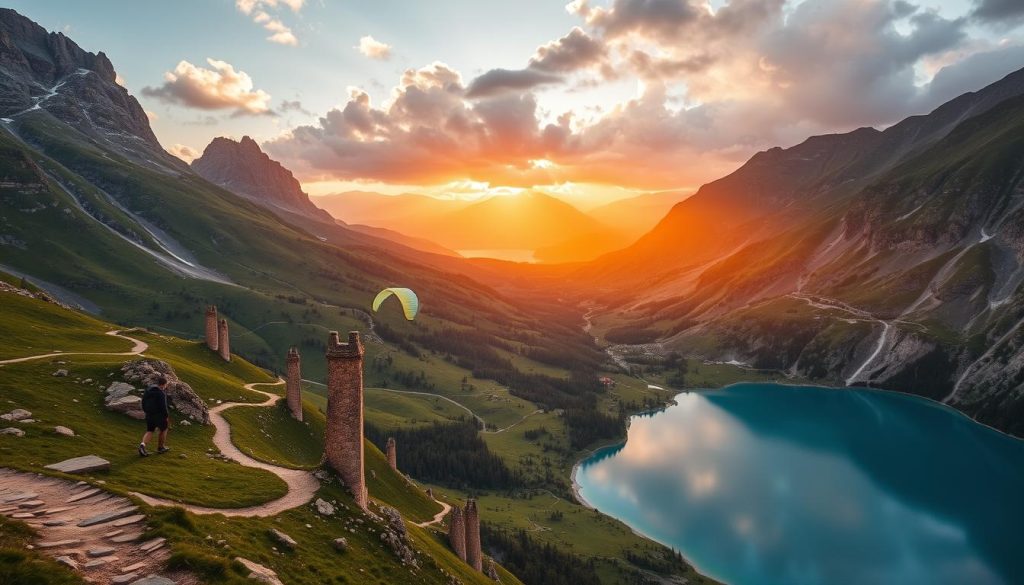
Hiking in Svaneti is unforgettable, with beautiful trails leading through valleys up to high peaks. The journey from Mestia to Ushguli is a must-do. It’s a four-day trek over about 57 km, offering breathtaking views and a visit to Chalaadi Glacier just three hours from Mestia.
There’s also a hike to Koruldi Lakes that takes about four hours from Mestia. If you’re into history, the village of Lakhiri, 11 km from Mestia, has 18 ancient Svan towers.
Skiing in Georgia: A Winter Wonderland
Winter brings unmatched backcountry skiing in the Caucasus Mountains. Peaks like Ushba and Tetnuldi are perfect for skiing. The Hatsvali cable car makes the hills easily accessible, going from 1898m to 2348m high.
Georgia’s skiing scene attracts many with facilities for both newbies and experts. Svaneti is a unique Caucasus Mountains adventure, perfect for skiing or just enjoying the snowy views.
| Activity | Duration | Price Range (USD) | Highlights |
|---|---|---|---|
| Svaneti Hiking Paradise 5-day Tour | 5 Days | $300 – $500 | Scenic vistas, ancient towers, Chalaadi Glacier |
| 4-Day Svaneti Tour | 4 Days | $250 – $450 | Mestia to Ushguli trek, Koruldi Lakes |
| Backcountry Skiing | Varies | $75 – $300 | Tetnuldi, Ushba, Hatsvali cable car |
Discover more in the Caucasus with options for every adventurer. Svaneti offers hikes and skiing for an epic outdoor journey!
Winter Sports in Svaneti
Svaneti is tucked in the tall peaks of the Great Caucasus Range. It’s a top spot for lovers of winter sports. Here, you can enjoy skiing in Georgia and snowboarding in stunning scenery.
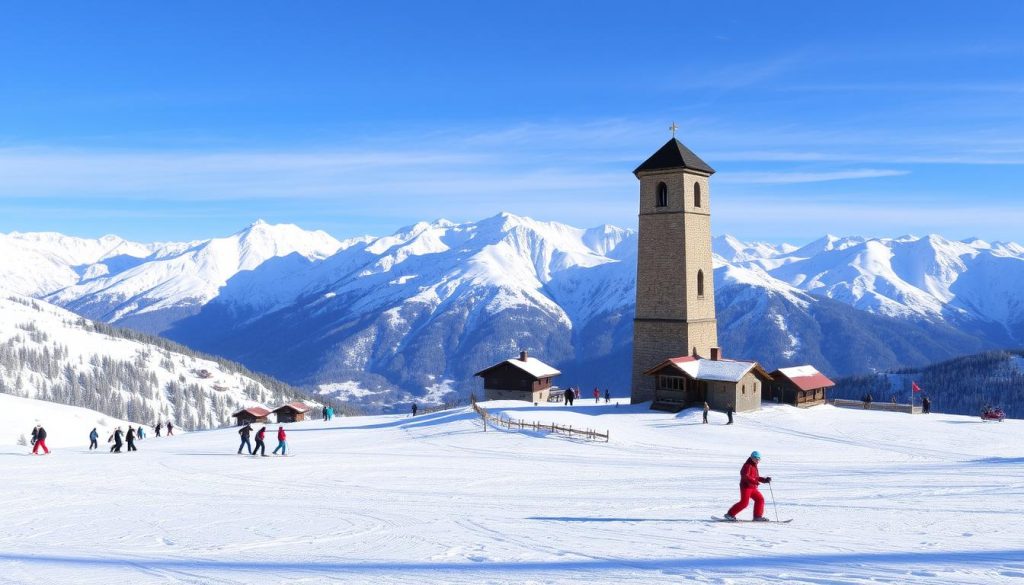
Mestia is at 1500 meters and is the heart of winter fun. The trip from Tbilisi to Mestia is an adventure, especially when it snows. The journey can be tricky with avalanches, so come prepared. It takes about three hours from Zugdidi, but the snowy views are worth it.
In Svaneti, you’ll find top ski spots like Hatsvali Resort and Tetnuldi Resort. They are close to Mestia and packed with fresh slopes and cool features. Whether you’re new or a pro, there’s something for you.
For those who seek a challenge, join a Svaneti expedition in 2025. It runs from February 11 to 21 and is for skilled skiers and snowboarders. You must have at least a year of touring experience. The adventure includes seven days of intense riding over 11 days.
After skiing, check out local culture and history. The Svaneti Museum of History and Ethnography is a must-visit. Mestia’s old towns and cozy guest houses will surely charm you. They add a special touch to your winter holiday.
To sum up, Svaneti is a dream for winter sports fans. With its awesome Svaneti winter sports and the beauty of the Caucasus Mountains, it’s a top pick. Whether you aim to hit the slopes or soak up local charm, Svaneti should be on your list.
Svaneti, Georgia: A UNESCO World Heritage Site
In the heart of the Georgian mountains lies Svaneti, a UNESCO World Heritage Site. It’s a place where Svaneti culture and history are well preserved. The region’s breathtaking landscapes and old villages show a slice of the past.
Chazhashi village in Ushguli, Upper Svaneti, is a mix of culture and history. It has over 200 medieval towers, churches, and castles. These towers were homes and defense against attacks.
The upper Inguri River Basin is home to charming villages. They’re surrounded by gorges, alpine valleys, and snowy mountains. This setting highlights the area’s cultural and natural importance worldwide.
Svaneti’s architecture includes ancient tower houses with three to five floors. Their tapering shape makes them stand out. Also, the area’s mural paintings are examples of Georgia’s Renaissance art.
Local efforts and traditional systems help keep this heritage alive. ICOMOS Georgia leads in researching and conserving Chazhashi. They’ve made a Conservation Plan and work on preservation projects.
Upper Svaneti, one of Europe’s most secluded World Heritage Sites, can be reached from Zugdidi to Mestia in 2.5 hours. Then, it’s about 2 hours from Mestia to Ushguli valley. Its isolation has helped preserve medieval architecture and arts, making it a genuine medieval snapshot.
Svaneti’s UNESCO status protects not just buildings but also old settlements and farming ways. So, it’s more than an award; it’s key to safeguarding Svaneti’s culture and history for the future.
Visiting Mestia and Its Surroundings
Mestia sits in Svaneti’s heart, blending ancient Georgian culture with modern comforts. This town is great for mountain tourism. It has many attractions, from old landmarks to new amenities for a comfy stay. Mestia is perfect for exploring local customs or going on adventures.
The Cultural Heritage of Mestia
Mestia has a rich culture showcasing Georgian traditions. The Svaneti Museum is a must-see, with over 4,000 artifacts. Also, check out the Svan Towers from the 9th to 12th centuries. For a 10 GEL fee, the Mikheil Khergiani Museum offers a glimpse into a Georgian climber’s life.
Modern Amenities in a Rustic Setting
Mestia may look rustic, but it has modern facilities. You can find comfy accommodations, whether on a budget or not. Local restaurants serve delicious Georgian dishes. There’s internet and ATMs for your needs too.

Traveling in Mestia is easy with marshrutkas and shared taxis. A marshrutka ride from Zugdidi to Mestia costs about 40 GEL and takes 4 hours. Shared taxis charge 45-50 GEL per seat. Queen Tamar Airport in Kutaisi offers flights to Mestia.
Mestia and Svaneti beckon with unique heritage and mountain excursions. Spend 3-4 days here to fully enjoy its wonders.
The Architectural Marvels of Svan Towers
The Svan Towers are an amazing blend of defense and housing designs typical of Svaneti. These strong buildings, some as tall as 25 meters with walls up to 1.5 meters thick, were built to last against attacks and natural disasters. They show us the deep history and building skills found in Georgian and Svan culture.

The History and Construction of the Towers
The Svan Towers date back to the 9th century, marking an important part of Svaneti’s architectural style. They were built as fortified homes to keep local people safe from enemies and bad weather. Upper Svaneti holds many of these medieval towers, showing the skill of ancient builders in such a mountainous area.
Each tower was made from local stones, carefully placed to make walls strong against both attacks and natural events. The towers were tall, up to 25 meters, with several floors used for different purposes, like storage and living spaces. Their design, with strong walls and counterweights, is why they’ve stood through earthquakes and invasions over time.
Importance of Towers in Svan Culture
The Svan Towers mean a lot more than just old buildings to the Svan people. They’re a key part of Svaneti architecture and Georgian history, standing for the Svans’ strength and creativity. These towers were crucial in conflicts, providing shelter for families and places to watch for danger.
But they’re also full of cultural importance. Linked to local myths and historical stories, they’re more than just homes. These towers are symbols of Svan culture, representing a common heritage. Visiting them gives deep insights into the lives and history of those who’ve lived in this tough, stunning area for hundreds of years.
- The highest peak in Georgia is Mt Shkhara at 5,193 meters.
- Ushguli, located at 2200 meters, is the highest permanent settlement in Europe.
Exploring the Village of Ushguli
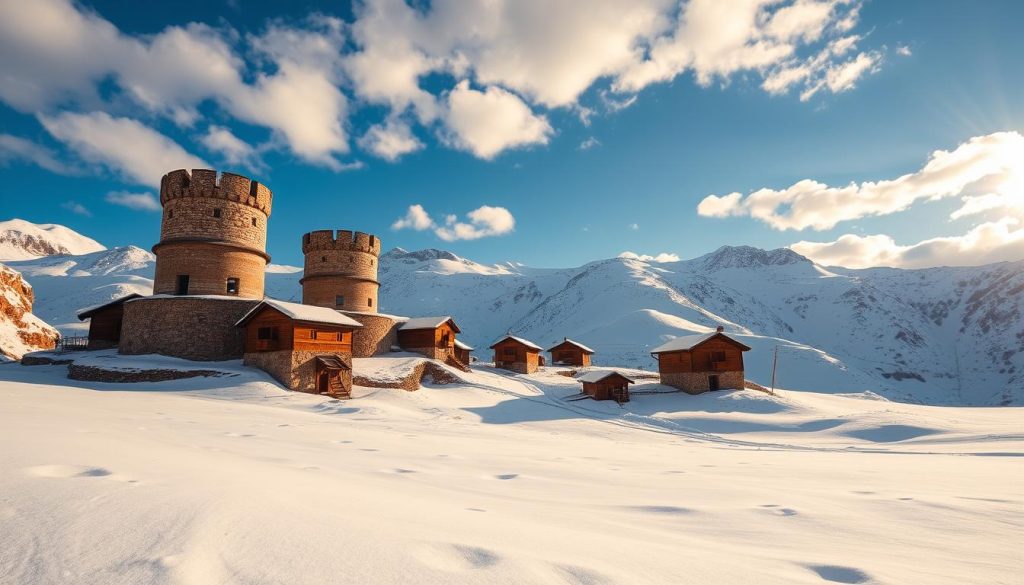
Ushguli is a unique place in the Svaneti region of Europe. It’s very high up, about 2,100 meters (6,900 feet) above sea level. This Georgian village is known for its ancient towers and stunning views. It sits below Mount Shkhara, which is the tallest peak in Georgia.
Getting to Ushguli is an exciting adventure. It’s about 44 kilometers from Mestia and takes around an hour and a half by car. The journey offers incredible sights of the snowy Caucasus Mountains. Thanks to improvements, the road is easier to travel, welcoming more visitors.
Ushguli feels like stepping back in time. The village is famous for its old defensive towers, dating from the 8th and 9th centuries. These towers show the strength and resilience of the local people. Being a UNESCO World Heritage site, it attracts those who love history.
For those who love the outdoors, Ushguli is perfect. The hike to Shkhara Glacier is 16 kilometers long and has beautiful views. It takes about 5-6 hours to finish. There are trails for all abilities, ensuring everyone can enjoy the beauty here.
Ushguli also has great food to try, like kubdari. This is a tasty beef-filled pastry. As tourism grows, so do the amenities, making visits better without losing the village’s charm.
Here’s a quick overview of Ushguli’s charms:
| Aspect | Details |
|---|---|
| Elevation | 2,100 meters (6,900 feet) above sea level |
| Major Peak | Mount Shkhara (5,201 meters) |
| Distance from Mestia | 44 kilometers |
| Main Attractions | Medieval defensive towers, Shkhara Glacier hike |
| UNESCO Status | World Heritage community |
| Local Cuisine | Kubdari (minced beef-filled dough with Svanetian salt) |
Visiting Ushguli is like traveling through time. It mixes cultural heritage, natural wonders, and modern touches. It’s a must-see in Svaneti.
Experiencing Svan Culture and Traditions
Dive into the vibrant Svan culture as you explore Svaneti’s stunning scenery. This area is famous for its remote villages high in the Caucasus. It shows visitors the ancient Georgian traditions that have lasted for hundreds of years.
Joining local festivities is an unforgettable cultural experience. These events, both joyous and solemn, show how deeply Svans value their heritage. Hear the native polyphonic singing. It’s a moving sound that captures the essence of Svaneti.
Don’t miss the lively dance performances. They blend energy and elegance to narrate stories of history, love, and community. The dances, with their dynamic steps and colorful attire, are truly captivating.
The Svan people are incredibly hospitable. Despite tough living conditions, they welcome everyone warmly, ready to share their Georgian traditions. Whether you’re in a local guesthouse or wandering through a village, you’ll feel the Svans’ pride in their culture.
Be sure to see Mestia and its historic towers. Built from the 9th to 12th centuries, these towers were defense sites and homes. They show the Svan people’s resilience and skill in building.

The famous Svaneti region in northwest Georgia is also where you’ll find the Museum of History and Ethnography in Mestia. This museum lets you explore local history, art, and crafts. You’ll see the incredible work of artists who keep old weaving, woodcarving, and metalworking traditions alive.
Try the unique Svaneti cuisine too. Enjoy special dishes like Kubdari, Chvishtari, and Tashmijabi. These recipes, made with care and tradition, are a tasty look into the Svans’ culinary traditions.
As you wander through Svaneti, see yourself not just as a visitor, but as part of ongoing history. By diving into Georgian traditions and cultural experiences, you help keep this extraordinary way of life alive and cherished.
Preparing for Your Journey to Svaneti
Getting ready for Svaneti means careful planning. This region in Georgia is famous for its high mountains and old villages. This guide details travel plans and what to pack. It ensures a smooth and fun journey.
Travel Arrangements and Transportation
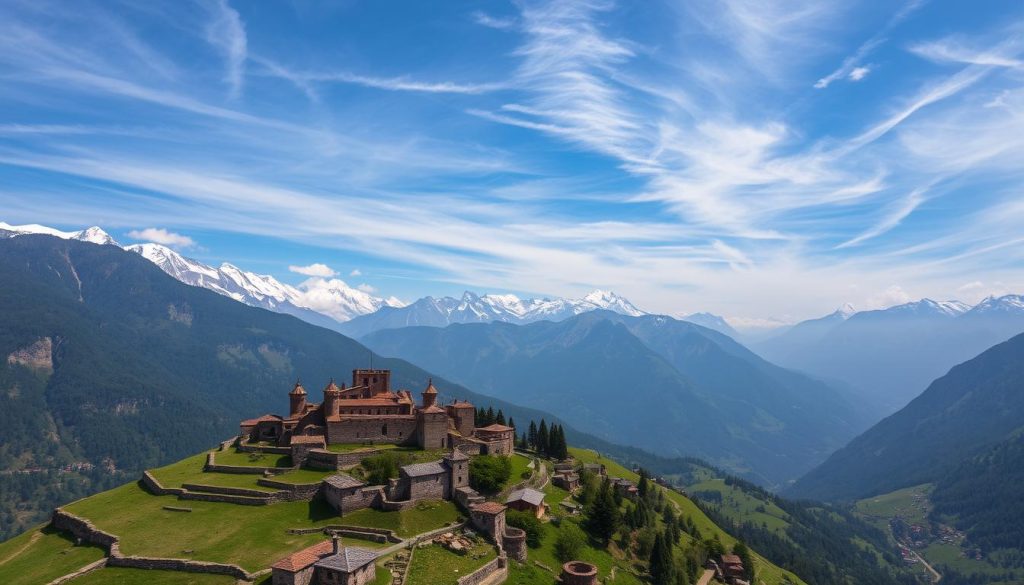
Reaching Svaneti is easier now due to better roads and transport. You can go to Mestia, its central town, all year via the Zugdidi-Mestia route.
- Marshrutkas: These minibuses from Zugdidi take about four hours to Mestia and cost 40 GEL.
- Shared Taxis: They’re quicker, reaching Mestia in 3-3.5 hours, costing 45-50 GEL each.
- Flights: From Tbilisi, flights to Mestia take 45 minutes and cost 90 GEL.
Consider a 4-5 day trip around Mestia and Ushguli. This includes hikes to Koruldi lakes and visiting old watchtowers. Remember, spring and autumn are quieter than summer, making your trip more peaceful.
What to Pack for Your Adventure
Packing right is vital for a great trip. Here are the essentials:
- Clothing: Wear layers for changing weather. Don’t forget thermal wear, rain jackets, hiking boots, and wool socks.
- Travel Gear: Bring a sturdy backpack, trekking poles, and a sleeping bag for camping. A first aid kit is a must for safety.
- Electronics: A portable charger, headlamp, and camera are essential for finding your way and taking photos.
- Provisions: Pack energy-rich snacks, a reusable water bottle, and water purification tablets for long hikes.
Being well-prepared is key to enjoying Svaneti. Whether hiking from Mestia to Ushguli or trying local food, proper preparation makes your trip unforgettable.
| Transportation Modes | Cost (GEL) | Travel Time |
|---|---|---|
| Marshrutka | 40 | 4 hours |
| Shared Taxi | 45-50 | 3-3.5 hours |
| Flight | 90 | 45 minutes |
The Majestic Landscape of the Caucasus Mountains
The Caucasus Mountains create a breathtaking scene that adds beauty to the Svaneti villages. This place is one of the world’s most splendid natural wonders. You’ll find lush valleys, towering snow-covered mountains, and a diverse mix of plants and animals.

Georgia’s rugged landscape is home to 1,751 peaks. The tallest among them include Mount Shkhara, Mount Janga, and Mount Mkinvartsveri (Kazbegi). Mount Shkhara reaches 5,193 meters (17,037 feet) tall, surpassing Mont Blanc of the Alps. The region’s diverse climate zones and soil types make it a perfect spot for trekking, enhancing its allure.
| Feature | Description |
|---|---|
| Highest Peaks | Mount Shkhara (5,193m), Mount Janga, Mount Mkinvartsveri |
| Climate Zones | 12 distinct zones |
| Soil Types | 49 varieties |
| Key Pass | Surami Pass at 949m |
| Wildlife | Lynx, wolves, brown bears, Caucasian tur, red deer, wild boar |
The Likhi Range is a part of the vast Caucasus Mountains. It is known for the Surami Pass which links Northern and Southern Caucasus. This area is teeming with wildlife, including lynx, wolves, and brown bears. Efforts are made to protect these animals and the area’s stunning beauty.
The Northern Caucasus Range has the Svaneti Range, home to the village of Ushguli. Ushguli is the second-highest place in Europe where people live year-round. The Southern Caucasus has the Abul-Samsari and Javakheti Ranges. They are well-known for their unusual volcanic landscapes.
National parks like Borjomi-Kharagauli and Tusheti highlight the region’s varied landscapes. They include alpine meadows and thick forests. The best months to visit the Caucasus Mountains are from May to October. The ideal travel time is late June to early September.
Walking through this area offers serene views, like the Koruldi Lakes above Mestia. They match the beautiful Svaneti landscape well. Hikers should carry maps and stay aware of wildlife. They also need to know about local issues, especially near Abkhazia and South Ossetia.
Local Cuisine and Delicacies in Svaneti
A visit to Svaneti is not complete without trying its unique foods. Its cuisine satisfies both vegetarians and meat lovers. One renowned dish is Kubdari, filled with seasoned beef, onion, garlic, herbs, and Svan salt.
Another local favorite is Chvishtari, combining corn flour and cheese for a tasty treat. There’s also Millet Chvishtari, a blend of corn flour, millet, and Sulguni cheese. This dish is loved by both locals and visitors.
Svaneti offers a variety of Georgian foods. Tashmijabi is a cheesy potato dish, while Mtsvadi is a traditional Georgian BBQ. Pachkhi, or Chkhetvra, is made from bread, cheese, and salt for a hearty meal.
is special to Svaneti’s dishes, made differently by various communities. It often mixes spices like Khmeli Suneli, Utskho Suneli, coriander, and dill.
Here are some specialties of Svaneti cuisine to explore:
| Dish | Description |
|---|---|
| Kubdari | Seasoned beef with onion, garlic, herbs, and Svan salt |
| Chvishtari | Corn flour and cheese |
| Millet Chvishtari | Corn flour, ground millet, and grated Sulguni cheese |
| Tashmijabi | Cheese and potatoes |
| Pachkhi | Crumbled bread mixed with grated cheese and salt |
| Svan Salt | Khmeli Suneli, Utskho Suneli, coriander, dill, and other ingredients |
Try something different like Millet Khachapuri or Fetvraal, a cheese-filled millet dough treat. Or taste Narchvi, a unique preserved cheese with a rich flavor.
Svaneti’s cuisine reflects its culture and tradition. Enjoy its authentic taste and delve into a culinary journey that enriches your experience.
Conclusion
Our Svaneti travel guide wraps up, showcasing a place rich in culture, history, and beauty. The Caucasus Mountains create a stunning background for a memorable Georgian adventure.
In Svaneti, every spot, from medieval villages to ski slopes, has its own tale. Ushguli, Europe’s highest village, reveals an ancient lifestyle. It’s 2,200 meters up and reached by a daring road. Yet, its rough paths make the destination more appealing.
Fans of history will love Svaneti’s old churches, crosses, and artistry. Figures like David IV and Queen Tamar have left their mark. Their influence shines in the area’s sturdy forts and sacred sites.
Feasting on Svanetian salt or touring the Svaneti Museum in Mestia offers deep cultural insight. Despite being remote, Svaneti is buzzing with tourists all year. It’s a favorite for both summer hikers and winter ski lovers.
Consider this guide your map for a Caucasus vacation blending natural beauty with rich culture. Svaneti, with its lofty villages and breathtaking views, offers a peaceful yet thrilling adventure. It’s a true treasure in Georgia’s array of destinations.