Sufi Music & Qawwali in Karachi: Spiritual Sounds
Sufi music festivals and qawwali performances in Karachi offer a glimpse into devotion and ecstasy. These gatherings showcase the universal language of love that has captivated audiences for centuries. The rich tapestry of Sufi music in Karachi reflects the region’s enduring mystical traditions.
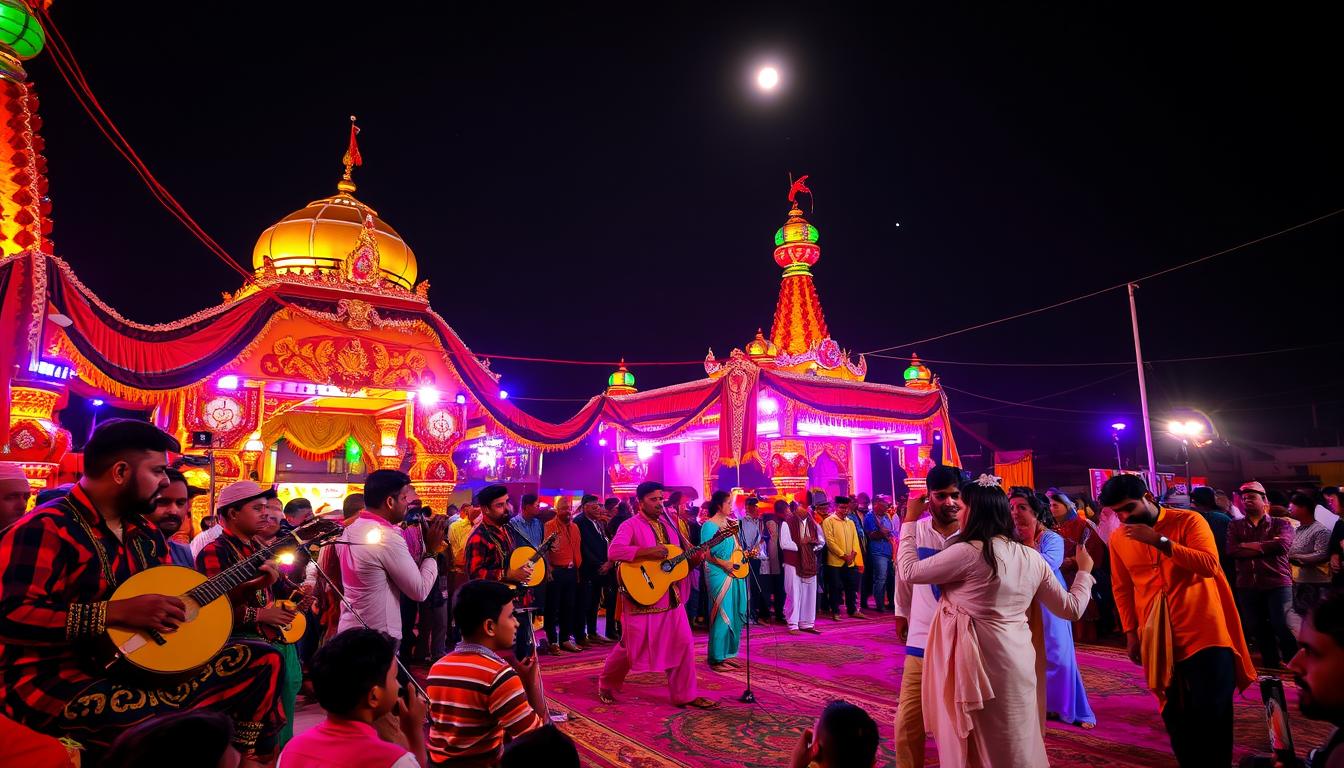
Karachi, the heart of Sindh, echoes with melodies of Sufi saints like Shah Abdul Latif Bhittai. Lal Shahbaz Qalandar’s songs invite you on a transformative journey. Experience the ecstatic dhamal dance and witness mystic poetry exploring human experiences.
Sufi music has the power to ignite the soul and transcend cultural boundaries. Qawwali performances take place in sacred Sufi khanaqahs and dargahs. The devotional repertoire celebrates the Divine, the Prophet, and regional Sufi saints.
Sabri Brothers: A Gateway to Devotion and Ecstasy
The Sabri Brothers have captivated listeners with Sufi devotional music and qawwali for generations. Ghulam Farid Sabri’s rich baritone voice and devotional fervor mesmerized audiences worldwide. The iconic group’s music touches hearts and souls deeply.
Maqbool Ahmed Shah Sabri, Ghulam Farid’s younger brother, played a crucial role in their musical legacy. Born in 1945 in Kalyana, East Punjab, Maqbool came from a 400-year-old musical family. He started his qawwali journey at 10, guided by his father and elder brother.
Amjad Sabri’s Assassination and the Living Tradition
Amjad Sabri, Ghulam Farid’s son, continued the family’s devotional tradition. His tragic assassination in 2016 shocked fans worldwide. Despite this loss, the Sabri Brothers’ qawwali legacy endures, inspiring new listeners to experience devotional ecstasy.
Bhar Do Jholi: A Tender Supplication to the Prophet
“Bhar Do Jholi” is one of the Sabri Brothers’ most beloved compositions. This tender supplication embodies the Sufi tradition’s deep reverence for Prophet Muhammad. Its captivating melody and heartfelt lyrics have become a hallmark of their devotional repertoire.
This soulful rendition resonates with listeners worldwide. It stands as a testament to the enduring power of Sufi devotional music. The song continues to touch hearts and inspire spiritual connection.
The Poetry of Devotion: Ya Habib and Nur-e Mojassam
Sufi poetry and devotional music form the heart of the Sabri Brothers’ legacy. Their compositions “Ya Habib” and “Nur-e Mojassam” showcase profound love for Prophet Muhammad. These enchanting pieces exemplify their spiritual tradition.
“Ya Habib” uses rich imagery to express deep longing for the beloved Prophet. The lyrics create an intimate connection, addressing the Prophet directly. Haunting melodies and soulful vocals transport listeners to a mystical realm.
“Ya Habib, ya Habib, ya Habib-e-khuda
Mera dil mera jaan, mera Mustafa”
“Nur-e Mojassam” portrays the Prophet as divine light incarnate. It describes his radiance, comparing it to celestial bodies. The song exalts his status as God’s chosen messenger.
These Sufi poems, set to qawwali music, open doors to profound mystical experiences. They demonstrate the enduring power of Sufi poetry and devotional music. Their ability to inspire spiritual connection remains undiminished.
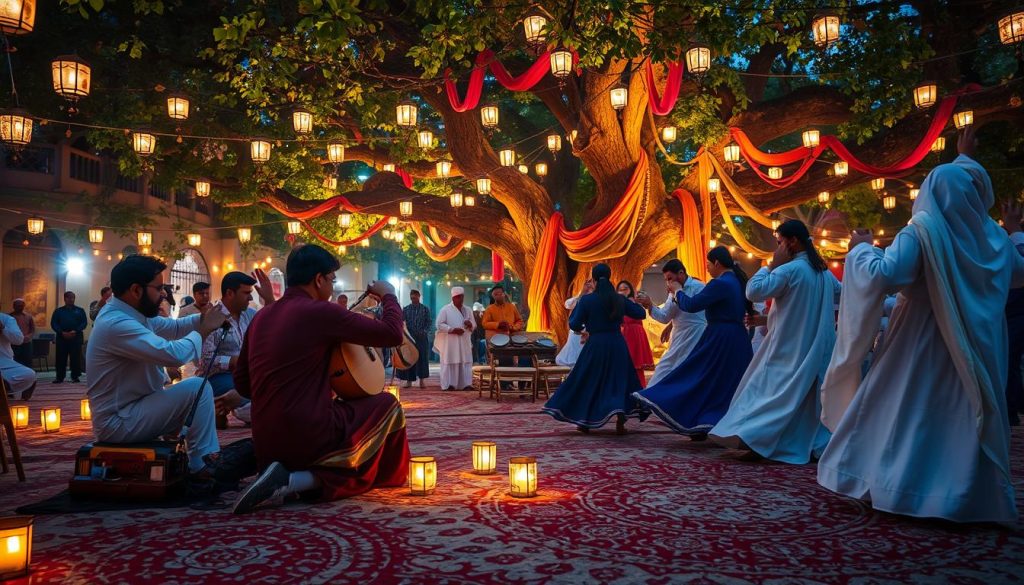
The Qawwali Tradition and the Sufi Path
The qawwali tradition is deeply rooted in the Sufi path of spiritual devotion. This enchanting musical form flourishes in Sufi shrines (dargahs) and lodges (khanaqahs). Qawwali serves as a gateway to divine connection and transcendent experiences.
Jurists’ Perspectives on Music in Islamic Tradition
Music’s place in Islam has been debated by Islamic jurists. Some view it as forbidden, while others allow Sufi music in sacred contexts. This nuanced view has permitted the growth of qawwali in specific settings.
The Sacred Context of Qawwali: Khanaqahs and Dargahs
The khanaqahs and dargahs are the main venues for qawwali performances. These sacred spaces offer a sanctuary for devotees. Here, they can immerse themselves in the spiritual power of this musical form.
Qawwali connects listeners with the divine through love and devotion. It invites participants to experience ecstasy and transcendence. These hallowed spaces amplify the spiritual potency of the qawwali tradition.
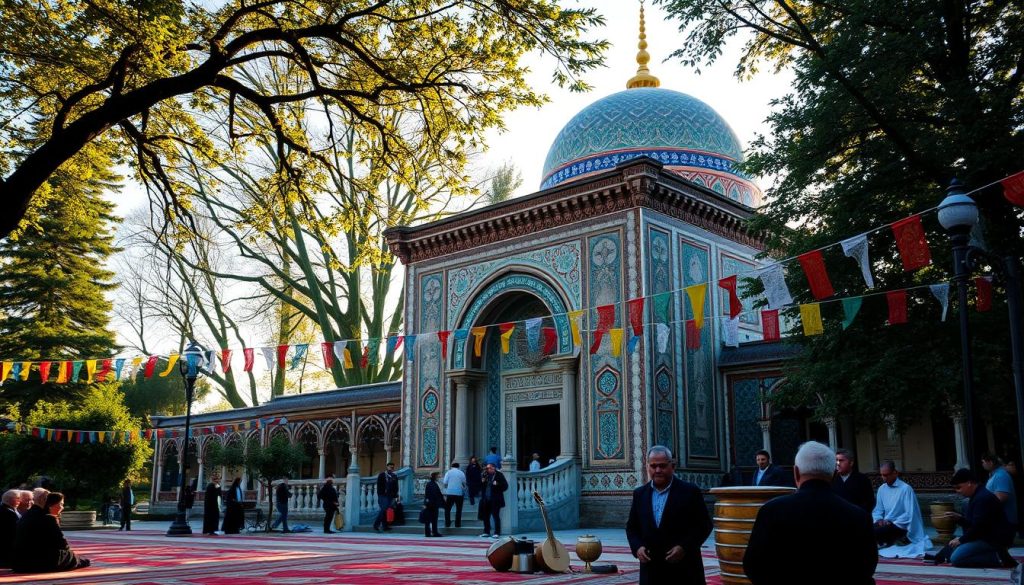
“The qawwali tradition is not merely a musical performance, but a sacred ritual that bridges the earthly and the divine, inviting the listener into a realm of transcendent spirituality.”
Sufi music festivals and qawwali performances in Karachi
Karachi buzzes with Sufi music festivals and qawwali performances. These events showcase the region’s spiritual traditions and musical heritage. They offer a unique glimpse into Pakistan’s rich cultural tapestry.
The Chosen Repertoire: From Praising God to Sufi Saints
Festivals start with praises to the Almighty, reflecting Sufi music’s devotional roots. Performances then honor Prophet Muhammad, whose teachings inspire Sufis. Lastly, they celebrate beloved Sufi saints like Shah Abdul Latif Bhittai and Lal Shahbaz Qalandar.
This sequence mirrors the qawwali’s spiritual journey. It connects listeners to the Divine, the Prophet, and revered saints. The carefully chosen songs create a powerful, transformative experience.
| Event | Award/Recognition | Attendance |
|---|---|---|
| Pakistani music documentary film “Songs of the Sufi” | Best Documentary, Audience Choice Award at the 15th Chicago South Asian Film Festival (2024) | Screened at 16 festivals, literary conferences, and academic institutions worldwide |
| Gandhara Independent Film Festival in Karachi | Special Jury Award (October 2023) | N/A |
| DCSAFF in Washington DC, JIFF in Jaipur | Best Music Documentary, Yellow Rose Award | N/A |
| South Asian Film Festival of Montreal | Runner-up for Best Documentary | N/A |
| Festival marking the death of Lal Shahbaz Qalandar in Sehwan, Pakistan | N/A | Hundreds of men participate in dhamaal dancing |
| Festival honoring Lal Shahbaz Qalandar’s death in Sehwan, Pakistan | N/A | A few hundred thousand Sufis come together for the three-day event |
| Gathering to honor Lal Shahbaz Qalandar in Pakistan | N/A | More than 300,000 Sufis attend |
Sehwan, in Pakistan’s Sindh province, hosts significant Sufi festivals called urs. These events celebrate the union between Sufis and the divine. Thousands gather to honor Sufi saints through music, dance, and devotion.
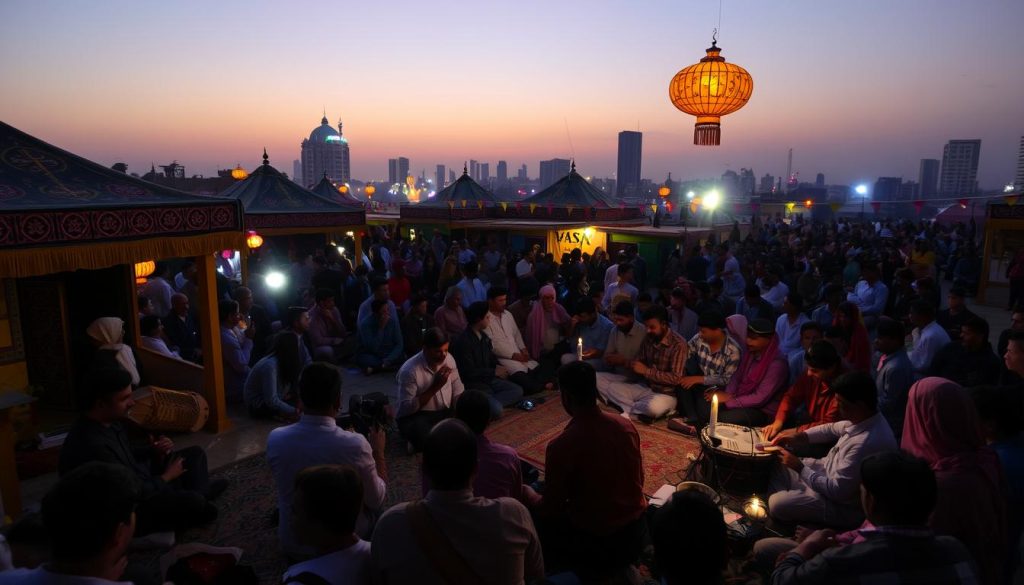
Sufi music faces challenges from fundamentalists in Pakistan and Hindu nationalists in India. However, dedicated artists like Tahir Faridi and Fanna-fi-Allah keep the tradition alive. They share messages of love and devotion with global audiences.
The Qawwali Performance Structure
Qawwali is a captivating Sufi music tradition from South Asia. Its unique structure sets it apart from other North Indian musical forms. The Qawwal, or lead singer, interacts with supporting vocalists and instrumentalists.
A Qawwali performance starts with a Madh, a devotional opening. This honors the divine or a Sufi saint. The Kalam follows, featuring poetic verses about love and devotion.
The Qawwal blends improvisation and fixed melodies to create mesmerizing sounds. They skillfully weave poetic lines into a tapestry of sound.
Kita, or variations, are a key feature of Qawwali. The lead singer and ensemble engage in call-and-response patterns. This builds upon the central theme and creates heightened spiritual energy.
The call-and-response dynamic draws the audience into the experience. It fosters a deeper connection with Sufi music. Audience members often feel part of the performance.
The Qawwali performance climaxes with the Tarana. This section uses rhythmic syllables and vocal improvisations. It creates a sense of ecstasy and transcendence.
Qawwali’s structure showcases South Asia’s rich Sufi musical heritage. It captivates audiences worldwide with its spiritual and emotional depth. This art form offers a glimpse into profound Sufi experiences.
| Key Elements of Qawwali Performance Structure | Description |
|---|---|
| Madh | Devotional opening section that pays homage to the divine or a Sufi saint |
| Kalam | The central core of the Qawwali, featuring poetic verses exploring themes of love, devotion, and the search for the divine |
| Kita | Variations where the lead singer and the supporting ensemble engage in a call-and-response pattern, building upon the central theme |
| Tarana | The climactic section featuring rhythmic syllables and vocalized improvisations that create a sense of ecstasy and transcendence |
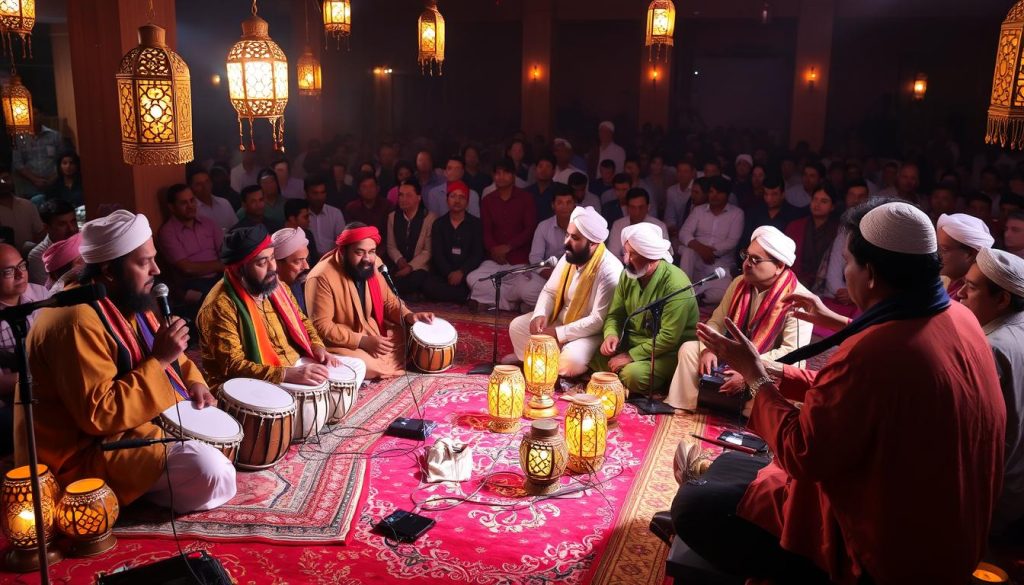
“The Qawwali performance is a captivating journey that transports the listener to realms of spiritual connection and emotional intensity. Each section of the structure plays a vital role in creating a transformative experience for both the performers and the audience.”
The Qawwali Occasion: An Assembly for Listening
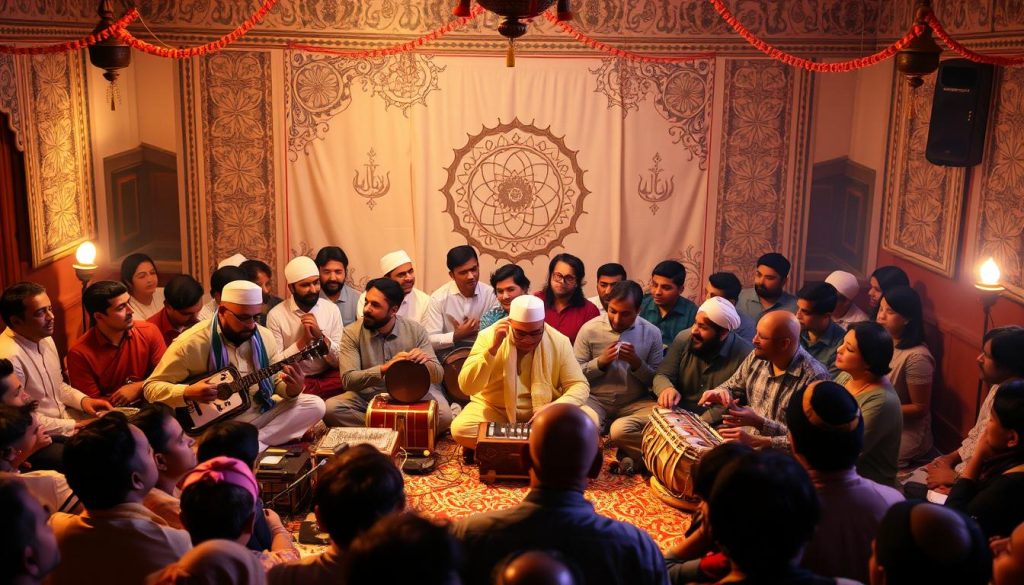
The qawwali tradition in Karachi has deep roots in Sufi practices. Sacred shrines and lodges host these spiritual assemblies. These places provide the ideal setting for qawwali, where devotees gather for transformative devotional music.
A qawwali performance creates an atmosphere of reverence and focus. The audience maintains deep concentration during the event. Mystical verses and rhythmic melodies transport listeners on a spiritual journey.
This isn’t passive listening. It’s active participation in a collective experience. Devotees seek divine love and ecstasy through the music.
The Proper Setting and Procedure for Qawwali
Sufi shrines or khanaqahs provide the proper setting for qawwali sessions. The music resonates with sacred architecture and saintly presence. Audiences sit on the floor in a semicircle facing musicians.
The procedure for qawwali follows tradition. It starts with Quranic verses or invoking Prophet Muhammad’s name. This sets the spiritual tone for the performance.
Poetic compositions and rhythmic patterns build in intensity. They evoke emotions of devotion, longing, and mystical ecstasy.
Audience participation is crucial in qawwali occasions. People respond with clapping, swaying, or spontaneous outbursts of joy. This engagement unites performers and listeners in pursuit of the divine.
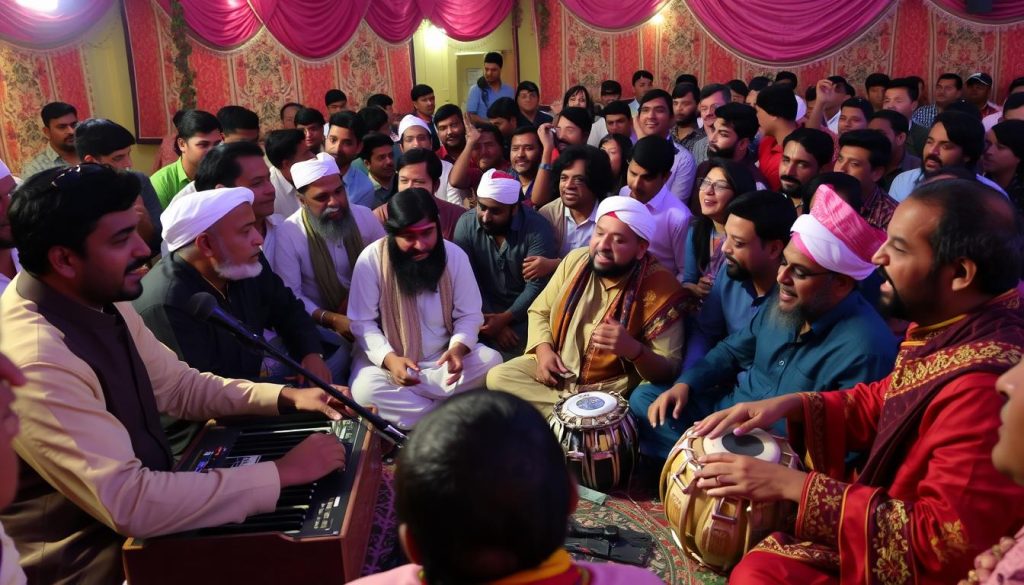
The qawwali occasion is more than entertainment. It’s a sacred gathering for spiritual connection. Devotees immerse themselves in timeless melodies and poetic verses.
Through music and collective expression, they seek to touch the divine. This profound experience transforms both individuals and communities.
Observing and Analysing the Qawwali Performance
Qawwali performances blend artistic expression with spiritual depth. This centuries-old Sufi music tradition weaves meaning and symbolism into every aspect. Its profound impact captivates audiences worldwide.
Qawwali lyrics explore deep devotional sentiments and divine connection. The performers’ arrangement and gestures reflect Sufi hierarchy and identity. These elements highlight the importance of status and lineage.
The performance’s magic lies in collective spiritual awakening. Rhythmic chants and soulful melodies transport performers and audience alike. They journey beyond physical boundaries into the divine realm.
Careful observation reveals layers of meaning in qawwali performances. Intricate poetic symbolism and emotive music power shine through. This art form showcases Sufi spirituality and love’s universal language.
| Statistic | Value |
|---|---|
| Oldest poems in the core Qawwali repertoire | 12th century |
| Contemporary Qawwali poems written in | Urdu, Persian, and literary dialects of classical Hindi |
| Origin of the Chishti order, which embraces music in its ritual practice | Afghanistan, thriving in South Asia since the 13th century |
| Qawwali musicians recognize Amīr Khusro as the original developer of Qawwali music | Indicating a historical lineage dating back to the 13th century |
| Popularity of Qawwali music increased due to | Radio broadcasts, inexpensive recordings, and concert performances |
| Distinct style of recorded Qawwali with devotional lyrics and Islamic themes | Catering to a broad audience |
| Adaptation of Qawwali style in concert performances | Conforming to classical North Indian music conventions, featuring lengthy improvisatory passages |
Exploring Qawwali performance analysis and Sufi music ethnography reveals profound spiritual significance. Each observation deepens appreciation for this timeless art form. Uncover the enduring power of Qawwali’s captivating tradition.
The Universal Message of Love in Qawwali
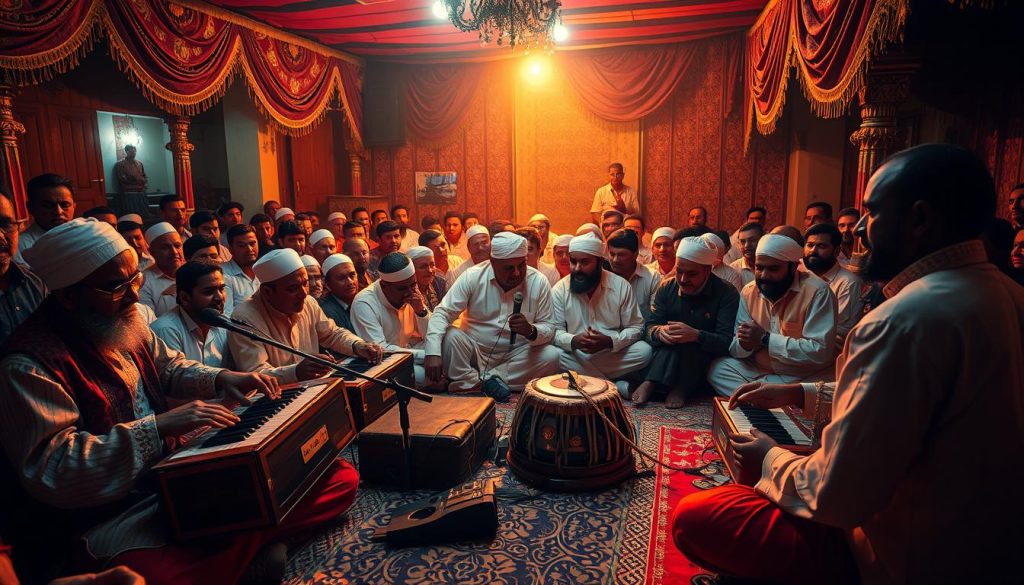
Qawwali, a Sufi musical tradition, transcends cultural and religious boundaries. It offers a transformative experience, connecting listeners to the Divine, Prophet, and Sufi saints. For over 800 years, its universal message of love has captivated audiences worldwide.
Exploring Qawwali’s History, Culture, and Etiquette
Qawwali originated in 13th-century Sufi seminaries. Some families have performed this sacred music for over 25 generations. The tradition’s rich history and cultural nuances underpin its significance in Sufi spirituality.
Dr. Katherine Schofield, a musicologist, highlights qawwali’s global appeal. She notes its powerful expression of devotion and divine connection. The “Songs of the Sufi” documentary celebrates this tradition, offering deeper insights.
This film has garnered numerous awards and accolades. It won Best Documentary at the Chicago South Asian Film Festival. The documentary also received awards in Karachi and Washington DC.
“Songs of the Sufi” has been selected for 16 festivals and academic events. These include the Oscar-qualifying Tasveer Festival and Milton Keynes International Festival. The film explores Qawwali’s universal message, Qawwali history, Qawwali culture, and Qawwali etiquette.
Conclusion
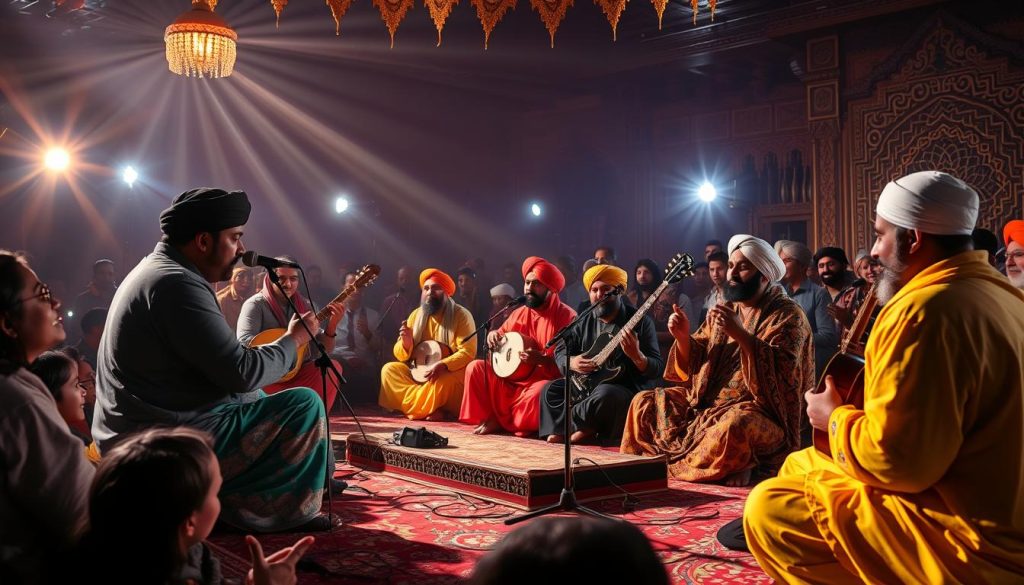
Sufi music festivals and qawwali performances in Karachi offer a gateway to devotional ecstasy. The Sabri Brothers’ legacy has touched hearts for generations. Their music embodies the qawwali tradition’s universal message of love and devotion.
These cultural events inspire audiences worldwide, transcending boundaries. They foster appreciation for Pakistan’s rich artistic heritage. The Sufi Festival showcases qawwali recitals, poetry, and spiritual discussions.
It demonstrates music’s power to promote peace and shared humanity. Despite past repression, Pakistan’s cultural landscape has proven resilient. The PNCA and Lahore Council of Arts lead in celebrating diverse artistic expressions.
Pakistan’s cultural identity continues to evolve. It offers a rich tapestry of Bhangra, Luddi dances, Ghazals, and pop music. These art forms provide audiences with a wealth of experiences to explore.