Karachi’s Street Art: Murals in Vibrant Neighborhoods
Imagine city walls sharing untold stories of its people, their struggles, and triumphs. In Karachi, walls come alive with vibrant street art. The urban landscape transforms into a canvas of cultural expression.
From commercial messages to political slogans, the city’s walls reflect its diverse neighborhoods. Graffiti and community murals give voice to hidden narratives. These artworks breathe life into Karachi’s vibrant streets.
The Power of Wall Chalking in Karachi
Karachi’s walls have been a canvas for political slogans against ruling elites and military establishments. Wall chalking became crucial during censorship, spreading political agendas and supporting pro-democracy movements. Today, these walls still convey diverse political messages and serve as announcement boards.
Historical Significance
Wall chalking has been a powerful tool for political expression in Karachi. It emerged as a pre-digital communication form, allowing people to voice opinions despite censorship. These wall messages became vital for sharing information and rallying support for important causes.
Political Expression
Karachi’s walls display a wide range of political messages. They feature critiques of the government and calls for social justice. Political parties, students, and grassroots movements use wall chalking to raise awareness and promote their agendas.
The city’s walls have become a vibrant public forum. They challenge power dynamics and amplify the voices of the people.
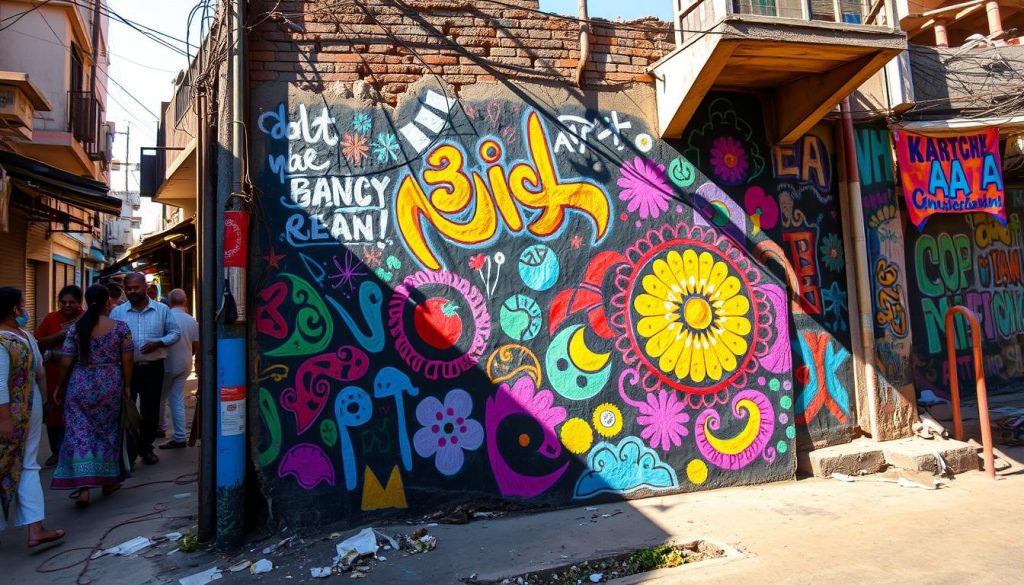
“Wall chalking has been a powerful tool for political communication in Karachi, giving voice to the voiceless and challenging the status quo.”
Authorities have tried to remove or regulate wall chalking. Yet, it remains a vital form of pre-digital communication in Karachi. The walls continue to reflect the city’s diverse political and social movements.
Typologies of Graffiti in Karachi
Karachi’s streets display a wide range of graffiti types. Each type serves a unique purpose in the city’s urban setting. The walls have become a canvas for expression and social commentary.
Commercial Messages
Graffiti in Karachi often advertises prohibited services and businesses. These messages use walls to reach their audience. This method is especially effective for those who aren’t digitally savvy.
Political Content
Political content is a major form of graffiti in Karachi. These murals inform people about party activities and promote various agendas. They also establish territorial influence of political groups in neighborhoods.
A recent study shows that political graffiti accounts for over 60% of Karachi’s total graffiti. This makes it a key feature of the city’s urban landscape.
“Graffiti has become a powerful tool for political expression in Karachi, allowing marginalized groups to voice their concerns and challenge the status quo.”
Graffiti in Karachi showcases the city’s lively and diverse culture. It blends art and politics to shape the urban environment’s narrative.
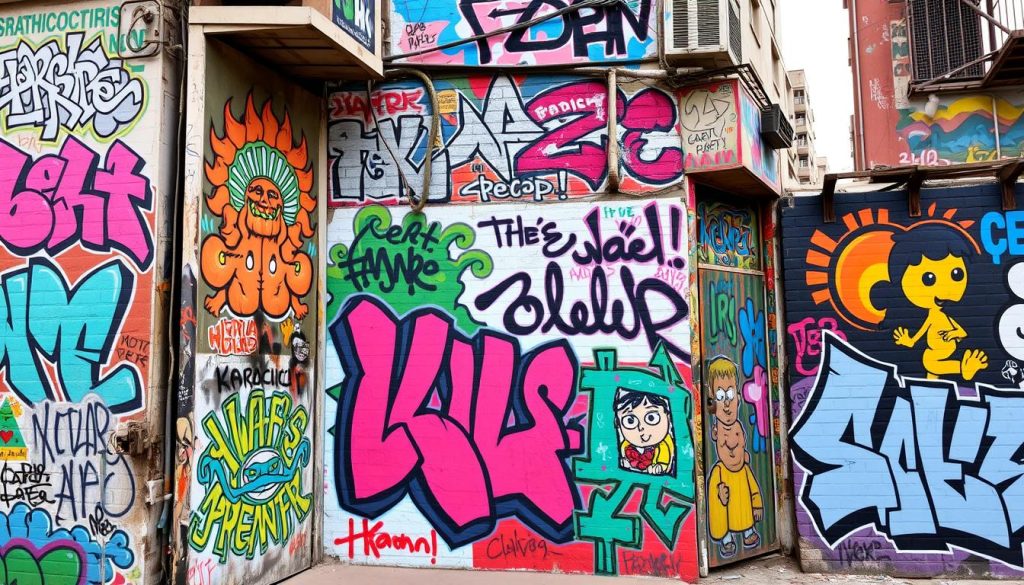
Street art scene and murals in Karachi’s neighborhoods
Karachi’s neighborhoods are alive with street art. Murals and public art installations transform city walls into cultural platforms. These community-driven projects beautify spaces and reflect diverse narratives of Karachi’s residents.
Global events inspire Karachi’s street art. In 2020, George Floyd murals appeared worldwide, including Karachi. Truck artist Haider Ali created a mural with English tags and Urdu lyrics.
Karachi’s street art also showcases the city’s rich heritage. With over 21 million people, mostly young, Karachi has strong artistic potential. Its diverse population from Afghanistan, China, and India contributes to the thriving art scene.
| Artist | Location | Description |
|---|---|---|
| Melodee Strong | South Minneapolis | Created a poignant mural at Cup Foods convenience store, the site of George Floyd’s killing. |
| Dreph | International | London-based artist whose portraits have been displayed in countries like Brazil, Cape Verde, and Accra. |
| Haider Ali | Karachi | Truck artist who created a mural with English tags and Urdu lyrics related to the Black Lives Matter movement. |
Karachi’s street art revival aligns with recent improvements. The city is recovering and reinventing itself. This resurgence has sparked a thriving arts scene and vibrant café culture.
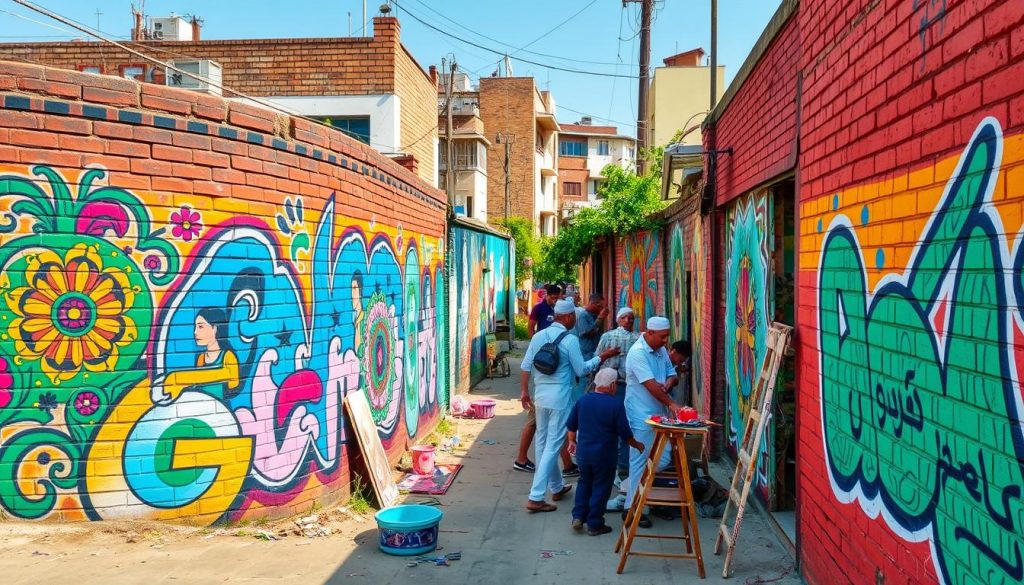
Karachi’s street art beautifies and expresses culture. It reflects the city’s history, diverse communities, and people’s aspirations. As Karachi evolves, its street art remains vital, showcasing residents’ resilience and creativity.
The Fearless Collective’s Murals
The Fearless Collective creates vibrant community-driven murals across Pakistan. In Karachi, they work with locals and NGOs to address gender and transgender rights. Their artwork challenges societal prejudices and reflects residents’ experiences.
These murals empower communities by showcasing their voices. The artwork tackles pressing issues through powerful visual storytelling. Local involvement ensures the murals resonate with the community.
Collaborative Process
The Fearless Collective puts community engagement at the forefront. They work closely with residents to develop narratives for their murals. This approach fosters a sense of ownership among locals.
Community members feel a strong connection to the artwork. Their involvement helps maintain the murals over time. The collective’s process creates lasting impact in neighborhoods.
Themes in Different Areas
- In Rawalpindi, the Fearless Collective engaged with the transgender community to paint a mural honoring Babli Malik, the leader of a local transgender group.
- During the Faiz Festival in Lahore, a four-day celebration of music, art, and literature, the Fearless Collective held workshops to amplify diverse narratives.
- In Karachi, the Fearless Collective conducted a street exhibit of paintings and pictures from their community-driven mural projects, further engaging the public.
Other projects have also brightened Pakistan’s cities. IamKarachi and Lahore’s Street Art Pakistan create eye-catching walls with local artists. These initiatives beautify public spaces and build community pride.
“The Fearless Collective’s intensive community engagement ensures the upkeep of the murals, with the community taking collective ownership and feeling affiliation to them.”
Murals as Cultural Expression
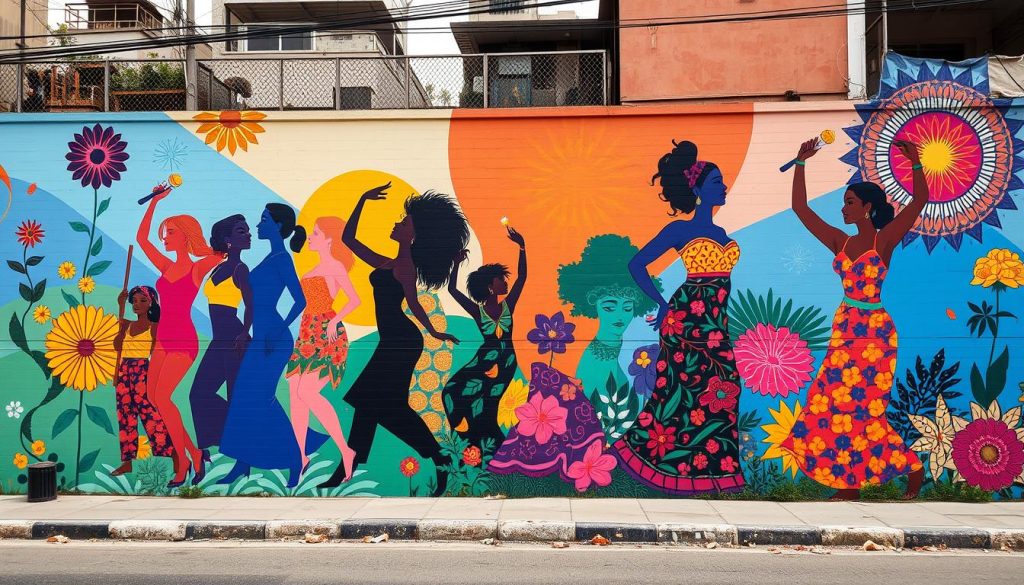
Karachi’s vibrant murals serve as powerful platforms for cultural expression. These public art installations reflect the city’s diverse narratives and experiences. They transform the urban landscape into a canvas for collective storytelling and empowerment.
These murals give voice to the marginalized and underrepresented. They showcase the multifaceted identity of Karachi’s residents. From daily life scenes to social justice themes, the murals preserve and celebrate the city’s cultural heritage.
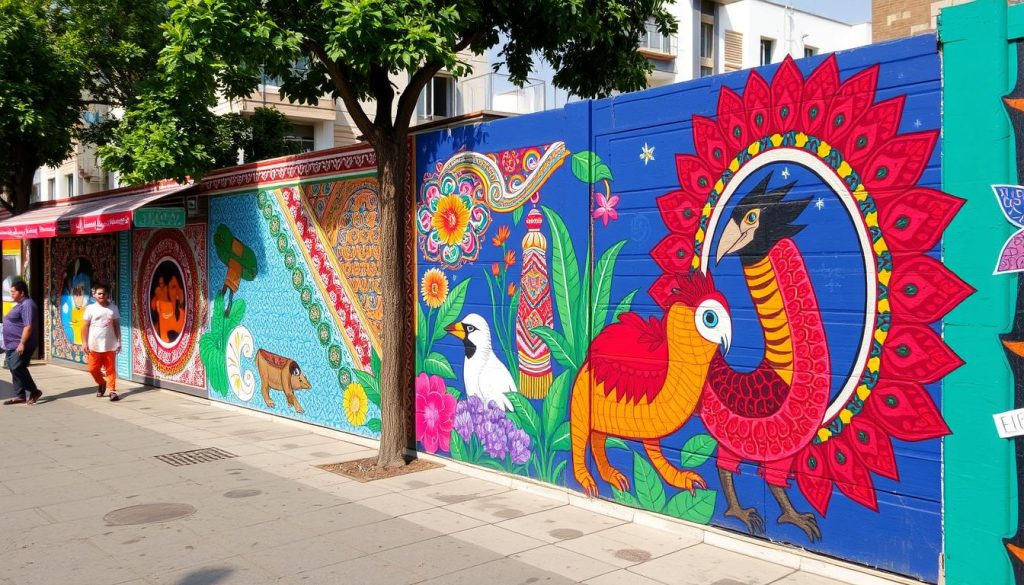
Mural projects often bring together artists, community members, and local organizations. This collaboration fosters a sense of shared ownership and pride. By engaging with neighborhood stories, murals bridge divides and promote inclusivity.
These public art installations serve as a canvas for political and social commentary. They amplify marginalized voices and challenge dominant narratives. Through bold visuals, Karachi’s murals promote civic engagement and inspire collective action.
Outdoor Galleries: Beautifying Public Spaces
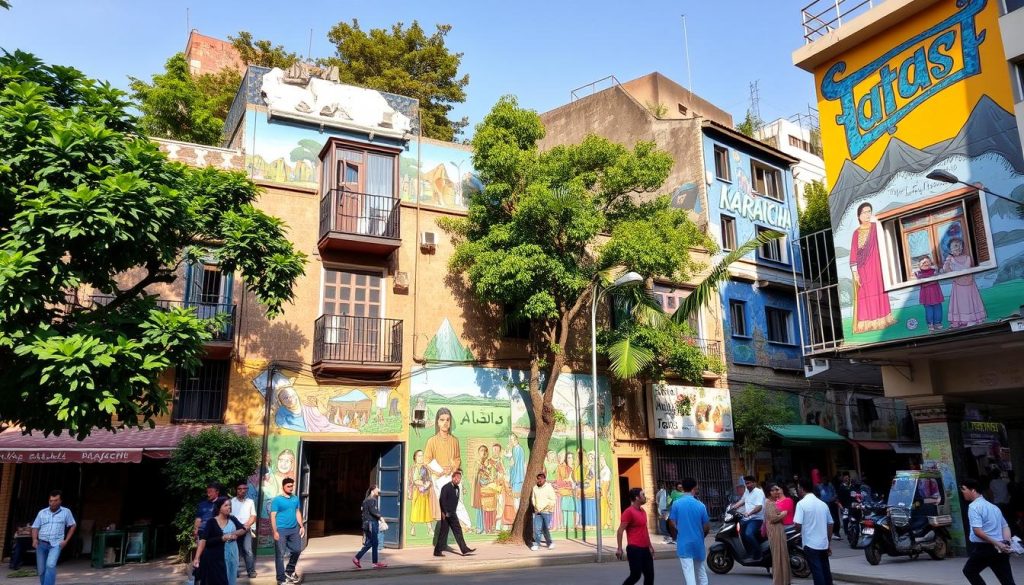
Karachi’s street art has turned city walls into stunning outdoor galleries. These murals and installations add color to the urban landscape. They also serve as platforms for cultural expression and storytelling.
These outdoor galleries showcase local artists’ creativity across Karachi’s neighborhoods. Bold murals depict the city’s history, while thought-provoking installations address social issues. These art pieces inspire, educate, and bring the community together.
A striking example is the Camberwell mural. It depicts the Rotary Sunday Market through a hieroglyphic-style design. The Glenferrie Place Mural in Hawthorn showcases native Australian flora, promoting environmental awareness.
These galleries spark community engagement. The Hawthorn Library mural, created with local children, fosters pride among community members. Daniel Worth’s Suburban Houses (Day) and Fritsch Holzer Park mural revitalize urban spaces.
Karachi’s street art addresses social justice issues. A mural by Truck artist Haider Ali honors victims of police brutality. This artwork resonates across borders, fostering global solidarity.
These outdoor galleries show the power of community-driven art. They inspire, educate, and unite people. These vibrant murals will remain as symbols of Karachi’s creativity and spirit.
Challenges and Controversies
Karachi’s street art scene faces many hurdles. Political backlash and censorship are constant threats. Murals with social or political messages often become targets.
In 2015, Karachi University censored discussions by locking an auditorium. State agencies have also cancelled events featuring Baloch activists at LUMS. These actions show the government’s unease with alternative narratives.
The art community has suffered tragic losses. Influential figures like Parveen Rehman and Sabeen Mahmud were murdered. These incidents highlight the dangers artists and activists face in Karachi.
Despite challenges, the art community remains resilient. The Karachi Art Anti-University (KAAU) was established as a platform for radical knowledge production. It serves as a response to censorship attempts.
Overcoming these obstacles requires teamwork. Artists, local stakeholders, and policymakers must collaborate. They need to create an environment that celebrates artistic expression and encourages open dialogue.
| Challenge | Impact | Response |
|---|---|---|
| Political Backlash | Censorship of murals with social/political messages | Establishment of alternative platforms like KAAU |
| Targeted Attacks | Murders of influential figures in the art and education community | Resilience and commitment to preserving creative expression |
| University Censorship | Locked auditoriums and cancellation of events featuring alternative narratives | Collaboration between the art community and local stakeholders |
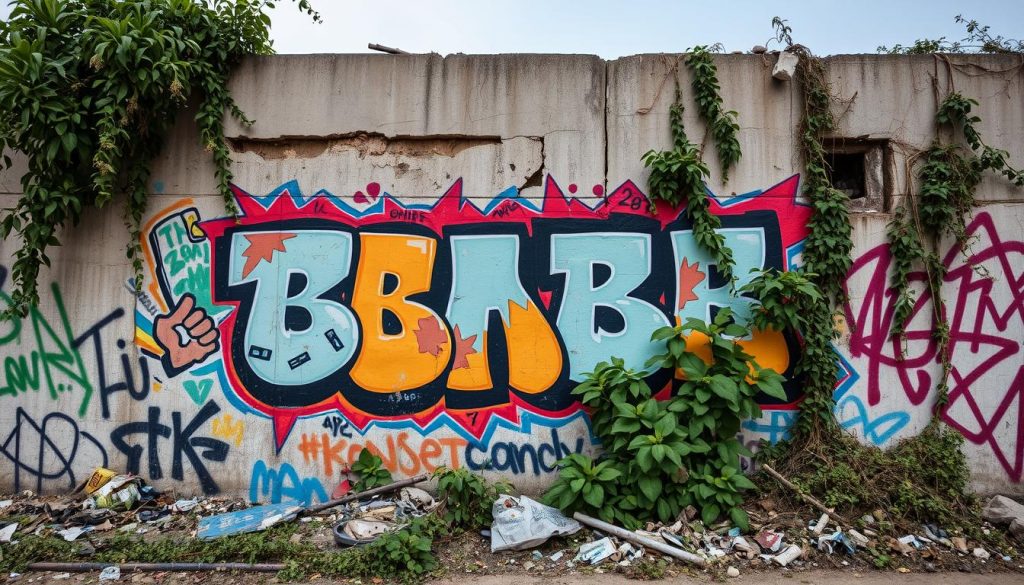
Karachi’s street art community remains determined to express themselves creatively. They work together to advocate for art’s power. Their efforts transform city walls into inspiring canvases that challenge norms.
Community Engagement through Street Art
Karachi’s street art scene engages communities and drives social change. Artists collaborate with locals to create murals reflecting diverse experiences. These projects give residents a voice in shaping their public spaces.
The Reel on Hai project turned an underpass into a vibrant outdoor gallery. It showcased local artists’ work and engaged the neighborhood. Pop-up exhibitions in low-income areas have brought art directly to people.
More universities now offer visual arts degrees, attracting new talent. However, artists often struggle to secure funding for their community projects. This leads to the abandonment of potentially impactful initiatives.
Karachi could establish a Public Art Fund to support creative community initiatives. This fund could be modeled after successful programs like the Prince Claus Fund in the Netherlands. It could attract corporate and private donations for participatory art projects.
Investing in community engagement through street art can empower diverse communities. It fosters social cohesion and amplifies the power of public art. This approach can catalyze positive social impact across Karachi.
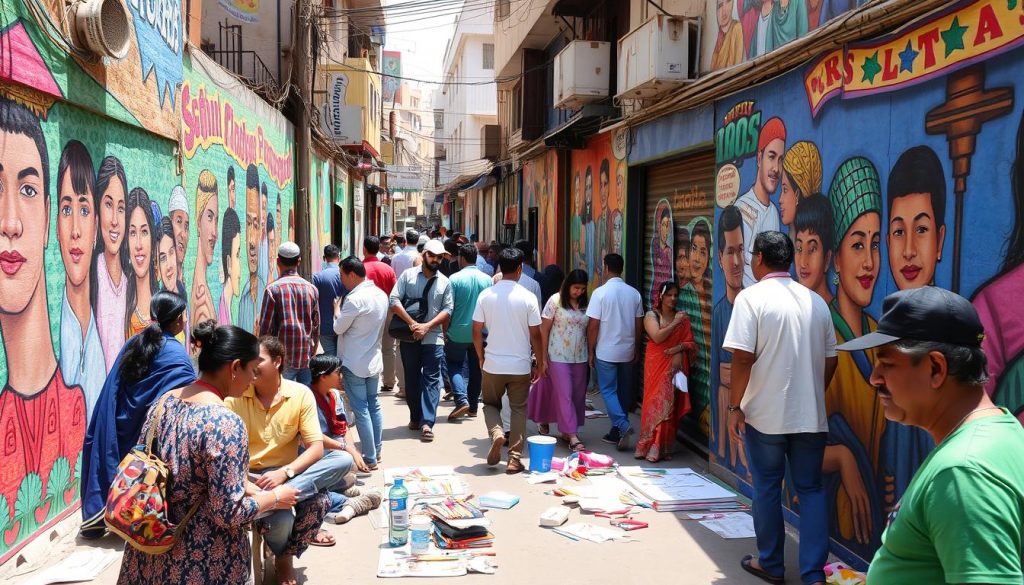
Preserving Karachi’s Street Art Legacy
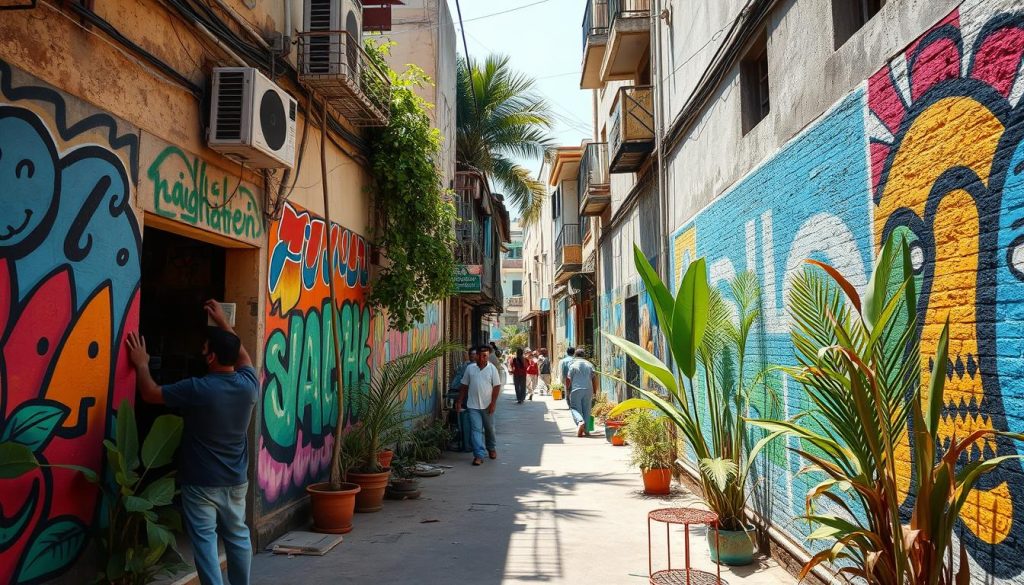
Karachi’s street art scene is evolving rapidly. Efforts are underway to document the city’s captivating murals and public art. This preservation ensures the dynamic cultural expression isn’t lost to time or erased.
Local organizations and artists are creating visual archives of Karachi’s murals. These archives celebrate the diverse stories and perspectives in these vibrant public canvases. This documentation safeguards the cultural heritage that defines the city.
Community-driven projects work to restore and maintain existing murals. These efforts keep the artwork visible and accessible to the public. They also foster civic pride and reinforce the city’s cultural identity.
Preserving Karachi’s street art legacy honors the creative spirit behind the murals. It also protects the social commentary they embody. By safeguarding these visual narratives, Karachi celebrates its preserving street art, documenting murals, and cultural heritage.
“Street art is a powerful medium for expression, and preserving Karachi’s murals is crucial for capturing the city’s vibrant, evolving identity.”
| Initiative | Impact | Significance |
|---|---|---|
| Documenting Karachi’s Murals | Visual archives capture the city’s evolving street art landscape | Safeguards cultural heritage and artistic legacy |
| Community-Driven Mural Restoration | Maintains the physical presence of street art in public spaces | Fosters civic pride and reinforces cultural identity |
| Honoring Creative Expression | Preserves the social commentary and narratives embodied in murals | Celebrates the vibrant, evolving identity of Karachi |
Conclusion
Karachi’s street art reflects its rich cultural expression and community spirit. From historic wall chalking to collaborative murals, these artworks tell powerful stories. They preserve Karachi’s heritage and create social impact.
The city’s street art shapes its identity and fosters unity among residents. Wall paintings showcase Karachi’s resilience, creativity, and diversity. They serve as a canvas for the city’s ongoing transformation.
Karachi’s street art scene proves public art’s power to engage communities. It celebrates the city’s unique character through visual storytelling. Preserving and developing this art form is crucial for Karachi’s cultural legacy.