See the Stunning Flamingos at Lake Nakuru
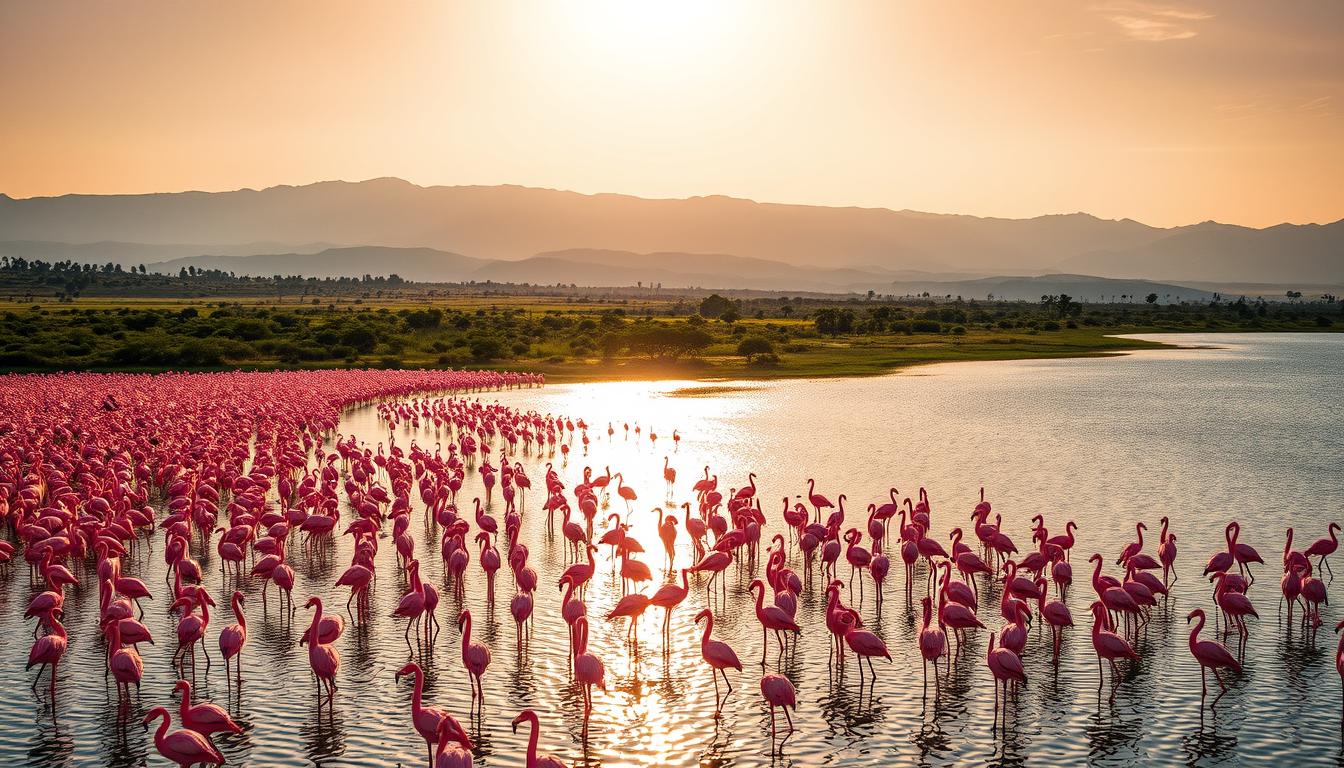
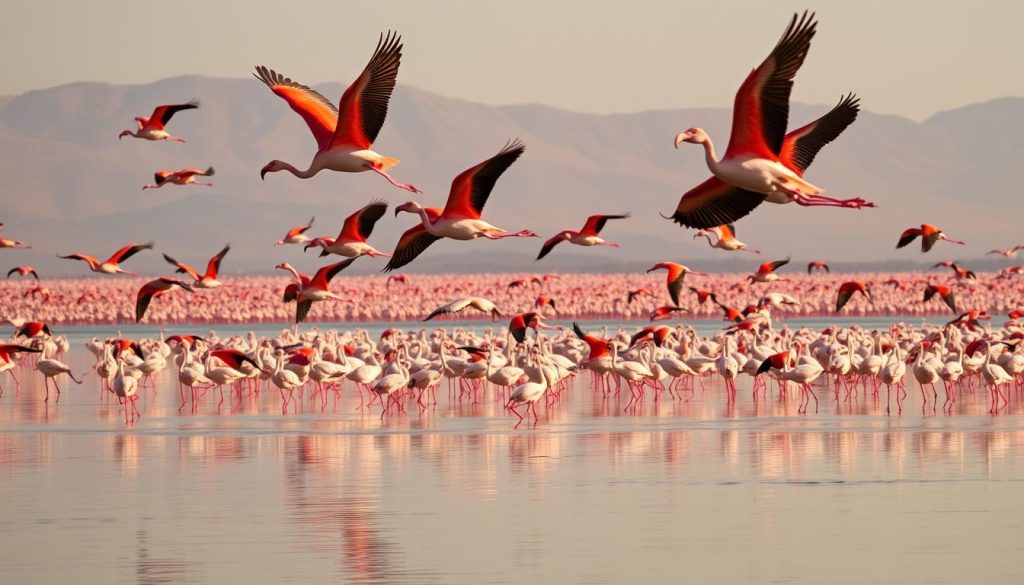
Have you ever seen something that left you speechless? Imagine being by the shores of a famous national park. There, you see a sea of pink as flamingos go on forever.
You’re about to see one of Africa’s most amazing natural wonders. Lake Nakuru National Park is a paradise for wildlife, with millions of flamingos. This sets the stage for an unforgettable journey into the world of these incredible birds.
In this article, you’ll learn about the park’s thriving ecosystem. You’ll see why it’s perfect for flamingo viewing.
The Pink Paradise of Kenya’s Rift Valley
In the heart of Kenya’s Rift Valley lies Lake Nakuru. It’s a paradise for bird watchers and nature lovers. This lake is one of the best places to see flamingos in their natural home.
The Natural Wonder of Lake Nakuru
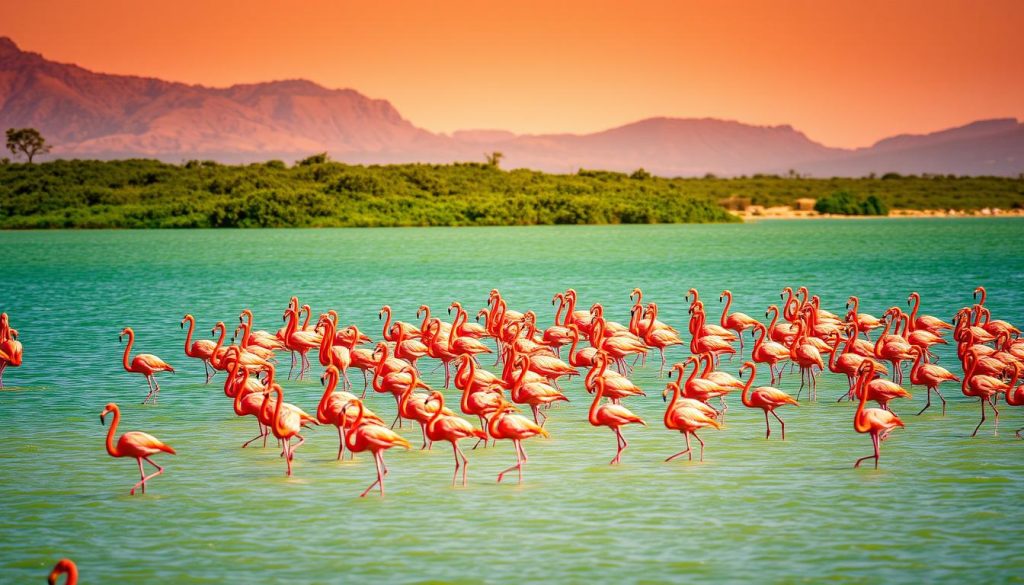
Lake Nakuru is a shallow lake with alkaline waters. It’s part of the Rift Valley ecosystem. The lake’s waters are rich in blue-green algae, which flamingos love to eat.
This natural wonder is a feast for the eyes. It’s also a vital home for many bird species.
| Characteristics | Description | Significance |
|---|---|---|
| Water Type | Alkaline | Rich in blue-green algae |
| Location | Rift Valley, Kenya | Part of the Rift Valley ecosystem |
| Main Attraction | Flamingo populations | Best time to see flamingos |
Why Flamingos Choose Lake Nakuru
Flamingos love Lake Nakuru for its food. The lake’s waters are full of blue-green algae. This algae is the flamingos’ main food.
For those into bird watching in Kenya, Lake Nakuru is a must-see. Its unique features make it a haven for flamingos and other birds. It offers a special experience for visitors.
Understanding Lake Nakuru’s Flamingo Species
Lake Nakuru is famous for its colorful flamingo populations. It has two main species. Learning about these birds will help you appreciate their unique traits and behaviors.
Lesser Flamingos: The Pink Majority
The lesser flamingo is the most common at Lake Nakuru. It’s known for its bright pink feathers. These birds eat algae and small creatures, which makes their feathers pink. Some key traits of lesser flamingos include:
- Deep pink to reddish-pink feathers
- Specialized beaks for filtering algae
- Social birds that thrive in large colonies
Lesser flamingos are highly adaptable. They can live in tough environments. Their presence at Lake Nakuru shows the lake’s rich biodiversity.
Greater Flamingos: The Taller Residents
Lake Nakuru also hosts the greater flamingo, a taller and more slender species. Greater flamingos eat small crustaceans, insects, and algae. Notable features of greater flamingos include:
- Taller stature compared to lesser flamingos
- More varied diet
- Less intensely pink coloration
Greater flamingos are known for their elegant appearance. They have longer legs and necks than lesser flamingos. Seeing these birds up close is exciting during a wildlife safari.
Lake Nakuru National Park: A Protected Ecosystem
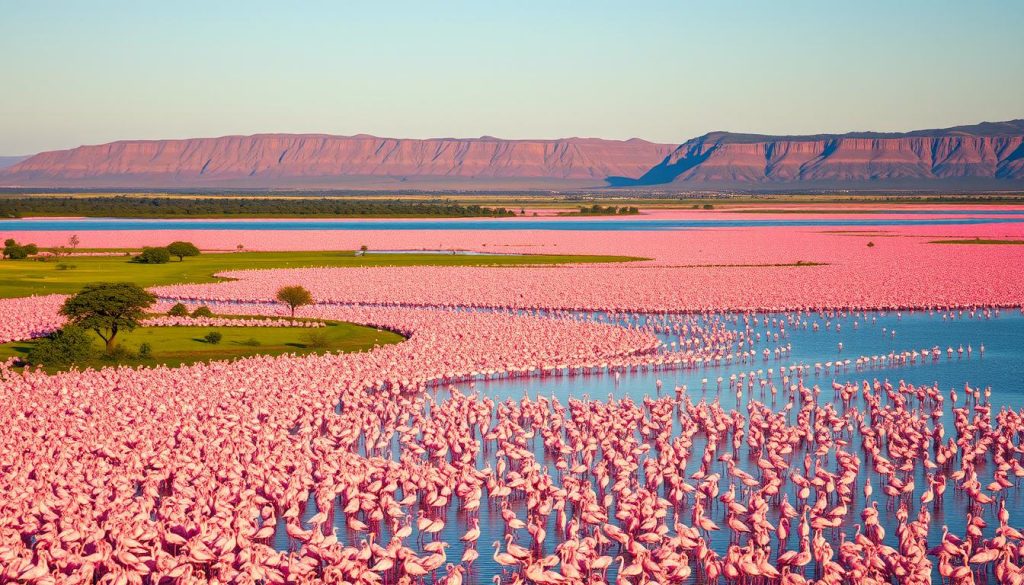
Lake Nakuru National Park was set up to protect flamingos and other wildlife. It’s a key spot for eco-tourism and wildlife watching. This makes it a favorite among nature lovers.
Park History and UNESCO Status
The park was created in 1961 to save lesser flamingos and other animals. In 2011, it was named a UNESCO World Heritage Site. This shows its natural value and the need to keep it safe.
Conservation Efforts and Challenges
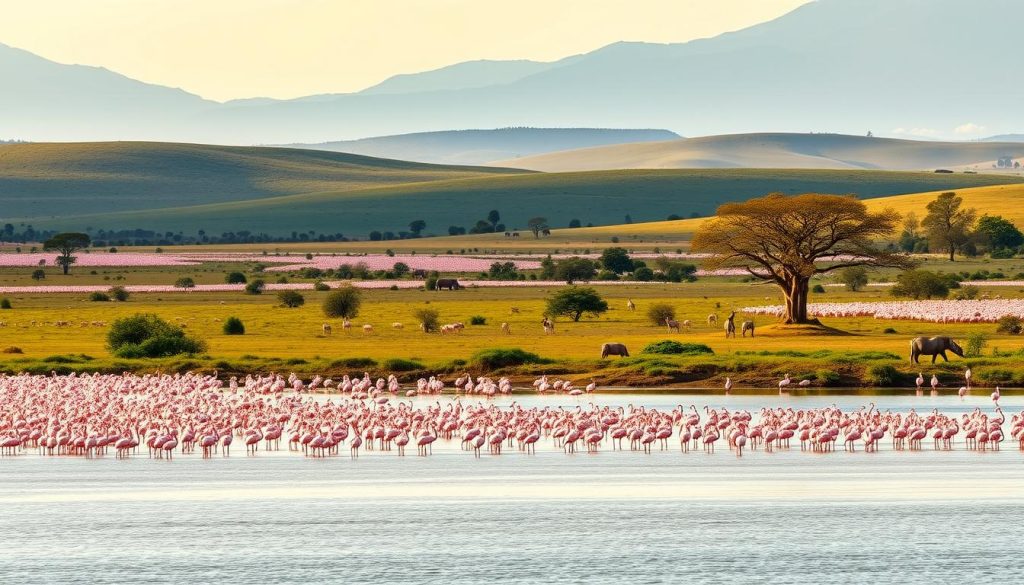
The park has to deal with problems like habitat loss and climate change. These issues affect its water and wildlife. But, there are efforts to keep the park’s nature safe.
These include fixing habitats, stopping poaching, and teaching communities about conservation. By visiting, you help support these efforts. This helps protect the park’s unique environment for the future.
Best Time for Lake Nakuru Flamingo Viewing
To see the amazing flamingos at Lake Nakuru, knowing when to go is key. The lake is home to flamingos all year, but some times are better than others.
Peak Seasons for Maximum Flamingo Numbers
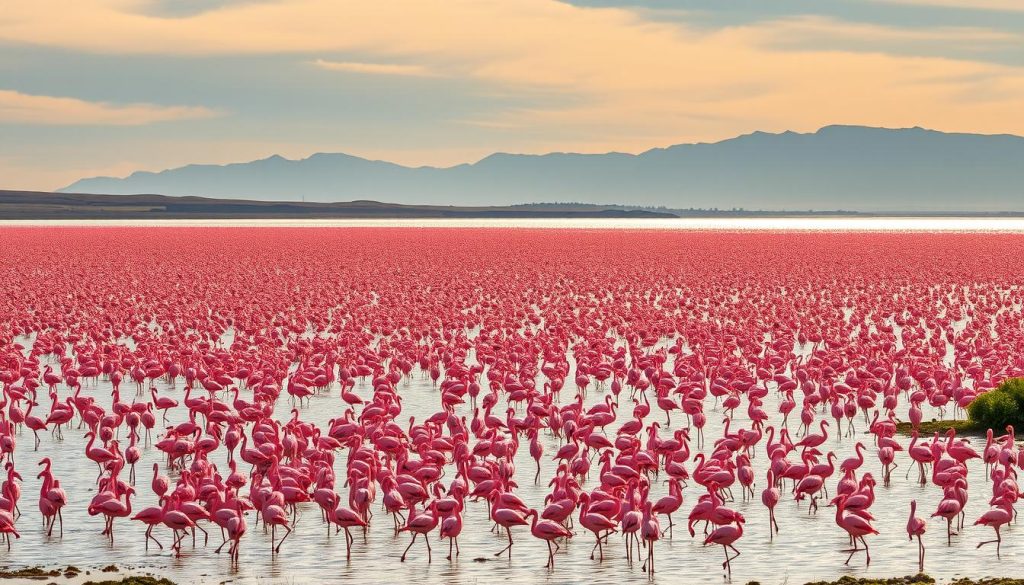
The dry seasons are the best time to see flamingos at Lake Nakuru. The water is perfect for the flamingos to feed, drawing in many. These seasons are from January to March and July to October. You’ll get great photos because of the clear skies and dry land.
Visiting during these peak times means more flamingos and a better experience. The dry weather makes it easy to get around. Plus, you’ll have clear views of the lake and its creatures.
Weather Patterns and Viewing Conditions
Knowing Lake Nakuru’s weather is important for planning your trip. The area gets rain twice a year. The long rains are from April to June, and the short rains from November to December. It’s best to avoid these times because the roads can be tough and visibility is low.
The dry seasons, on the other hand, are perfect for viewing. The weather is calm and clear, giving you a great view of the flamingos and other animals. It’s a great time for anyone, whether you’re just visiting or taking photos.
Planning Your Visit from the United States
Before you go to Lake Nakuru, learn about Kenya’s visa rules and health guidelines. As a U.S. traveler, you must get a visa to enter Kenya.
Visa Requirements and Travel Documentation
You’ll need a valid U.S. passport with at least six months’ validity from your planned departure date from Kenya. You can apply for an eVisa online before your trip or get a visa on arrival at the airport. Make sure your passport has enough blank pages for visa stamps. It’s smart to make photocopies of your passport, visa, and travel plans, and leave a copy with someone you trust back home.
Health Precautions and Travel Insurance
Kenya asks for proof of yellow fever vaccination if you’re coming from or through a country with yellow fever risk. Talk to your doctor or a travel clinic about needed vaccinations, like Hepatitis A and typhoid. Having travel insurance that covers medical evacuations is also wise. Some insurance plans are made for adventure travel, including safaris.
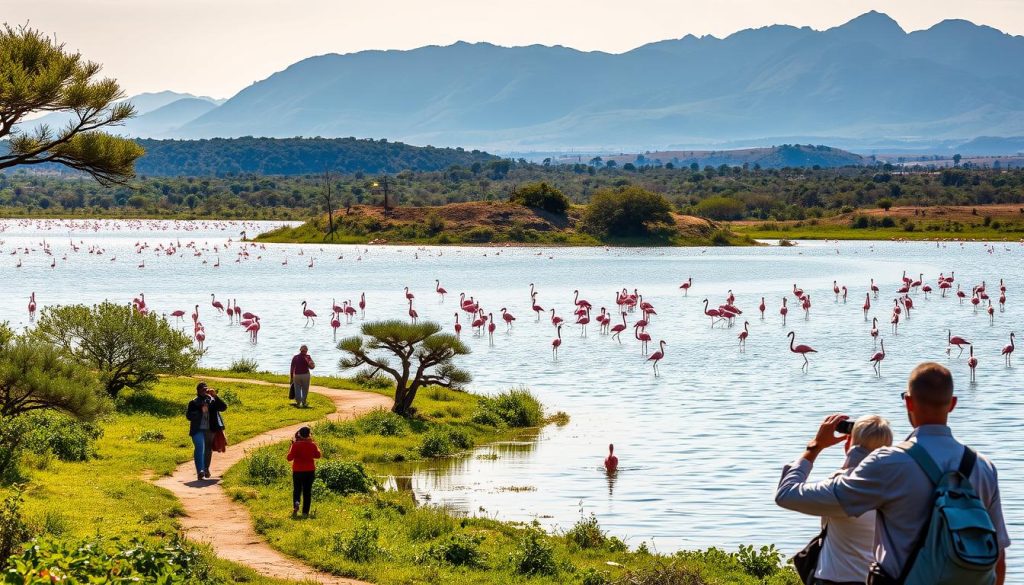
By knowing and following these rules, you can have a great trip to Lake Nakuru. Think about taking guided tours. They can handle the details, so you can enjoy the trip more.
How to Reach Lake Nakuru National Park
Your trip to Lake Nakuru National Park begins with a flight to Jomo Kenyatta International Airport in Nairobi, Kenya’s capital. From there, you have several ways to get to the park.
International Flights to Kenya
To start, book a flight to Jomo Kenyatta International Airport (NBO) in Nairobi. Kenya Airways, British Airways, and Lufthansa offer flights from many international airports. Look for the best flight times and prices. After arriving, you’ll need to clear customs and immigration before moving on.
Transportation Options from Nairobi
There are a few ways to get to Lake Nakuru National Park from Nairobi. You can rent a car and drive, which takes about 3-4 hours. Or, you can take a domestic flight from Nairobi’s Wilson Airport to Nakuru Airport. Then, a short drive will take you to the park. Another choice is a 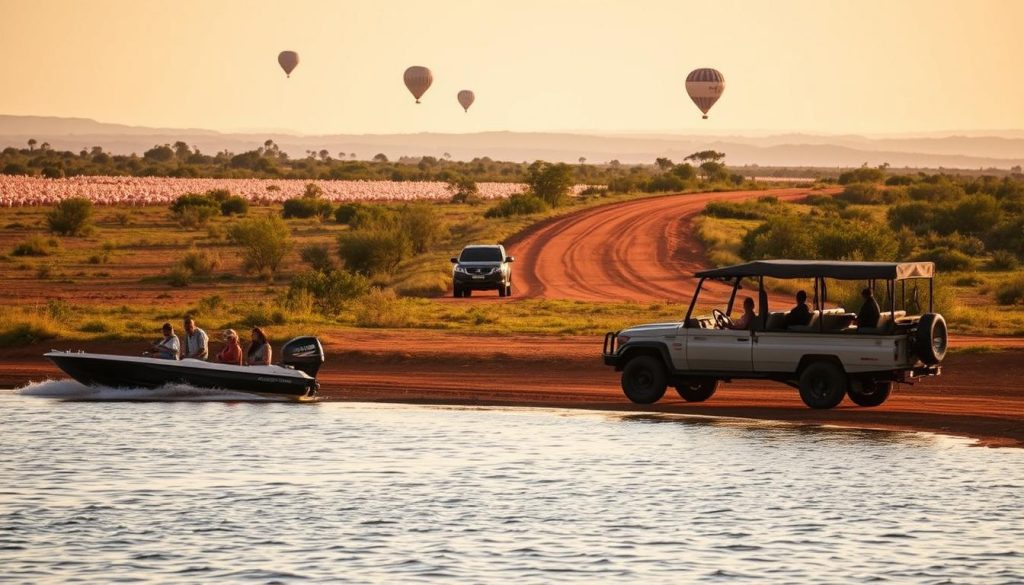
Where to Stay: Accommodation Options
Lake Nakuru National Park and its surroundings offer a wide range of places to stay. You can pick from luxury lodges to budget-friendly campsites. Whether you want to stay inside the park for easy wildlife viewing or prefer the comforts of nearby towns, there’s something for everyone.
Inside the Park: Lodges and Camping
For those who love being in the middle of the action, lodges inside Lake Nakuru National Park are perfect. They offer comfortable stays with amazing views. Here are some top picks:
- Lake Nakuru Sopa Lodge, known for its modern amenities and wildlife viewing opportunities.
- Lake Nakuru Lodge, which offers comfortable rooms and a relaxing atmosphere.
- Camping options are also available for the more adventurous, with sites like Lake Nakuru Campsite providing basic yet essential facilities.
One traveler said, “Staying within the park allowed us to witness the sunrise over the lake, a truly unforgettable experience.”
“The proximity to the lake and the wildlife was incredible. We felt like we were in the heart of nature.”
Nearby Towns: Hotels and Guesthouses
If you’d rather not stay in the park, nearby towns have plenty of hotels and guesthouses. Nakuru town, in particular, has many options for different budgets. You can enjoy amenities like restaurants and shops while still being close to the park.
Some visitors love staying in local guesthouses for the Kenyan hospitality. A local tour operator notes, “Our guesthouses offer a unique chance to experience the local culture, making your visit to Lake Nakuru even more memorable.”
The Ultimate Lake Nakuru Flamingo Viewing Experience
Lake Nakuru is a top spot for flamingo watching, drawing visitors from everywhere. Knowing the best places to see these birds will make your trip even better.
Best Viewpoints Around the Lake
The lake’s edge has great spots for flamingo watching. Baboon Cliff and Lion Hill are favorites. They give you wide views of the lake and its birds. These places are perfect for photography opportunities, letting you capture the flamingos’ colors and actions.
- Baboon Cliff: Offers a broad view of the lake and is a great spot for observing flamingo movements.
- Lion Hill: Provides an elevated vantage point, ideal for capturing the scale of the flamingo colonies.
Boat Tours vs. Shore Viewing
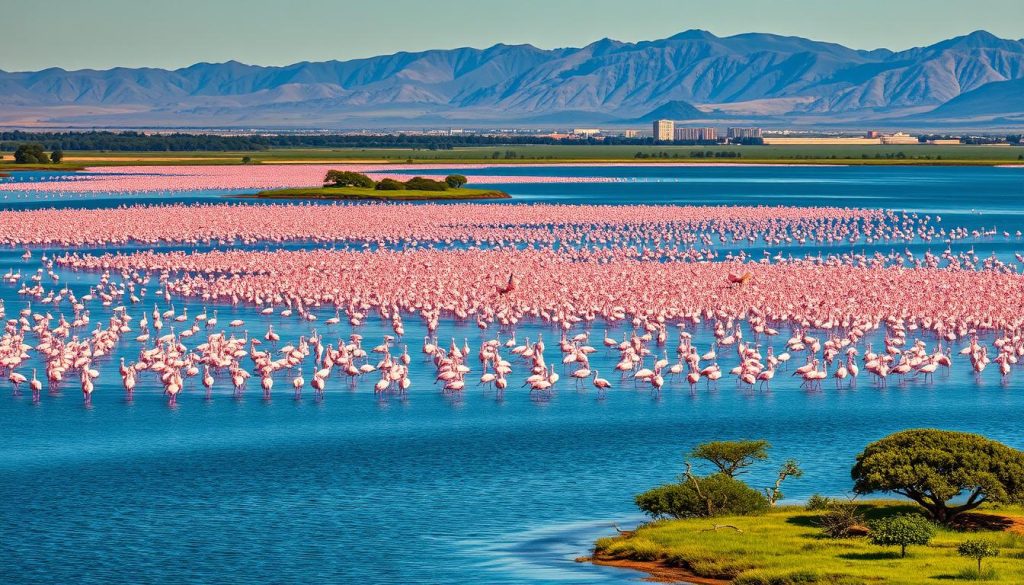
Visitors can choose between boat tours and watching from the shore. Both ways offer special experiences. Boat tours let you get close to the flamingos, giving a closer bird watching in Kenya feel. Shore viewing, on the other hand, lets you see the birds from afar, without disturbing them.
- Boat Tours: Offers a closer look at the flamingos and other aquatic life.
- Shore Viewing: Provides a wider perspective and is generally less intrusive to the birds.
Choosing a boat tour or shore viewing, Lake Nakuru guarantees a memorable flamingo experience. Its diverse wildlife and beautiful scenery make it a key spot for nature enthusiasts and photographers.
Photography Tips for Capturing the Pink Spectacle
To fully enjoy your wildlife safari experience at Lake Nakuru, knowing how to take great photos is key. The stunning scenes of flamingos need a careful approach to capture their beauty.
Camera Equipment Recommendations
For capturing the vibrant colors and movements of the flamingos, the right camera gear is essential. A DSLR or mirrorless camera with a telephoto lens (at least 200mm) is best. This lets you get close-up shots without disturbing the birds. Don’t forget a tripod to keep your camera steady, which is important in low light.
Lighting and Composition Techniques
Good lighting is key for photography. The golden hours of sunrise and sunset offer soft, warm light that brings out the flamingos’ pink hues. Use the rule of thirds to create balanced and engaging images. Try different angles and perspectives to make your photos more interesting.
Ethical Wildlife Photography Practices
When taking photos of wildlife, it’s important to keep a safe distance and not stress the animals. Never bait or lure wildlife for a photo, and wait patiently to capture their natural behaviors. By respecting the environment and the creatures, Lake Nakuru can continue to thrive with its flamingo populations.
| Equipment | Purpose | Recommendation |
|---|---|---|
| DSLR/Mirrorless Camera | High-quality images | Nikon D500 or Sony A7 III |
| Telephoto Lens | Close-up shots without disturbance | At least 200mm, e.g., Canon EF 100-400mm |
| Tripod | Stabilization in low light | Manfrotto or Gitzo |
Beyond Flamingos: Other Wildlife Encounters
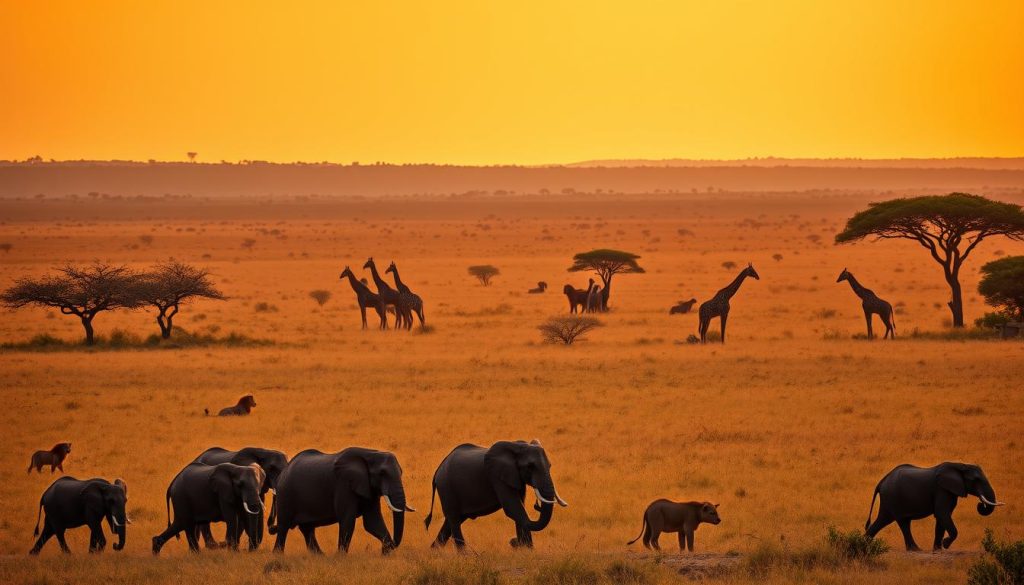
Lake Nakuru National Park is full of wildlife wonders beyond flamingos. As you explore, you’ll see many animals that live here. It’s a unique place to see a variety of wildlife.
The Rhino Sanctuary
The park is famous for its rhino sanctuary. You can see both black and white rhinos here. Thanks to conservation, the rhino population is growing, making it a safe place for them.
Predators and Herbivores
The park has a good balance of predators and herbivores. Look out for lions, leopards, and hyenas. You’ll also see giraffes, buffaloes, and antelopes. This mix makes for an exciting safari, where you can see animals in action.
| Animal | Type | Interesting Fact |
|---|---|---|
| Lion | Predator | Known as the “king of the jungle” |
| Giraffe | Herbivore | Has the highest blood pressure of any animal |
| Leopard | Predator | Excellent climber and nocturnal hunter |
Other Bird Species to Spot
Besides flamingos, the park is great for birdwatching with over 400 species. Look for fish eagles, cormorants, and storks. The park’s different areas support many bird types, making it interesting for bird lovers.
“The diversity of bird species at Lake Nakuru is astounding, with both waterbirds and forest species represented.” – Ornithologist
When you visit Lake Nakuru National Park, watch for these and other animals. It will make your safari in the East African Rift Valley even more special.
Guided Safari Tours vs. Self-Drive Options
Planning your trip to Lake Nakuru means deciding between guided tours or self-drive adventures. Each option offers a unique experience. Your choice depends on what you prefer and what you hope to see.
Choosing the Right Tour Operator
Choosing a guided safari tour means picking the right operator. Look for guides who know the park well. They can share interesting facts about the flamingos and other animals.
Check reviews and ask about their conservation efforts. This ensures you support responsible tourism.
Self-Drive Tips and Route Planning
Going for a self-drive lets you explore at your own pace. Know the park’s rules and have a reliable car. Plan your route to see the best spots and flamingo areas.
Use a park map or GPS to find your way. Whether you pick a guided tour or self-drive, Lake Nakuru’s beauty and wildlife will amaze you.
Conclusion: The Unforgettable Magic of Lake Nakuru’s Flamingos
Planning a visit to Lake Nakuru means you’re in for a treat. You’ll see thousands of flamingos in their natural home. The lake’s unique setting is perfect for spotting a wide variety of wildlife, making it great for eco-tourism.
Seeing the flamingos at Lake Nakuru is truly amazing. They gather in huge numbers along the lake’s edge. It’s a chance to see these incredible birds up close and witness their beauty.
By visiting Lake Nakuru, you help protect this amazing place. It’s full of life and beauty, making it a top spot for nature lovers and wildlife fans.
Whether you love taking photos, birdwatching, or just enjoying the views, Lake Nakuru has it all. So, start planning your trip now. Experience the magic of Lake Nakuru’s flamingos for yourself.